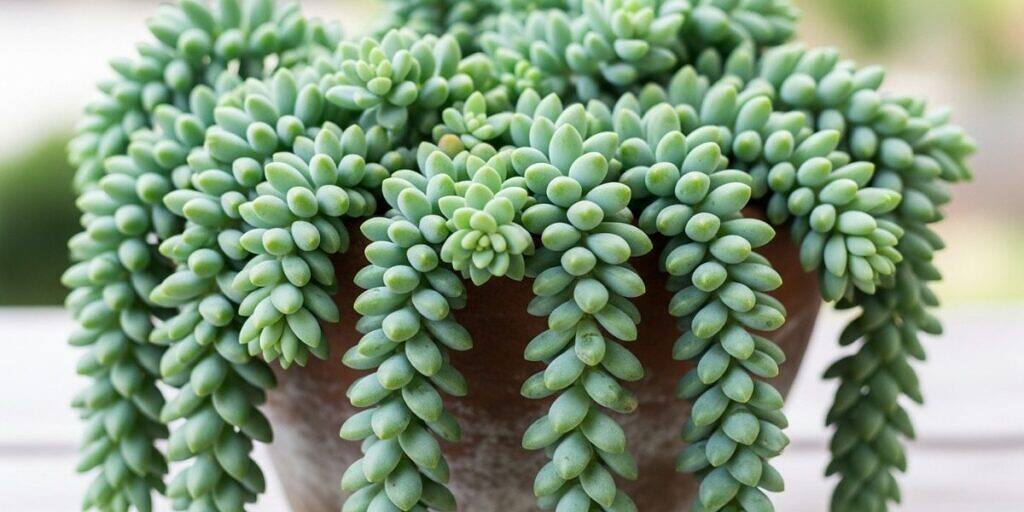
It may grow, but it stays sparse. In some cases, it starts to droop, lose strength, or simply never develops that full, trailing effect you see in photos. If this is happening with your burro’s tail succulent, you can be sure of one thing: something in the way you’re growing it is off — and it’s almost never just bad luck.
The good news is that this succulent responds very well when it gets the right stimulus. A simple adjustment is often enough to completely transform the look of the plant.
Why does the burro’s tail succulent get sparse or start to fall apart?
The burro’s tail succulent, also known as donkey’s tail, is a naturally trailing plant. That means it’s not meant to grow upright like many other succulents. When it’s grown under the wrong conditions, it will still grow, but weakly and with long gaps between the leaves.
Enjoyed this guide? There's more where it came from.
Understanding why plants behave the way they do is what turns guesswork into a thriving garden. That's exactly what we share in the Shrubz newsletter — free, straight to your inbox:
- Seasonal care reminders timed to your gardening calendar
- Propagation and pruning techniques, explained step by step
- Pest and disease alerts — catch problems before they spread
The most common signs of problems with burro’s tail succulent care are:
- Thin, widely spaced stems
- Slow, uneven growth
- Stems that break or fall off with the slightest touch
Most of the time, the issue lies in the environment and in how the plant is being encouraged to grow — not just in how often you water it.

The secret to making your succulent full and trailing
The main secret to keeping a burro’s tail succulent full and nicely trailing is simple: lots of bright, indirect light.
This plant needs plenty of light to develop shorter, thicker stems with leaves that sit close together. When it doesn’t get enough light, the burro’s tail succulent stretches toward the nearest light source, becoming leggy, sparse, and fragile.
Ideally, grow it in a very bright spot, near windows or glass doors, where it receives strong indirect light throughout the day. Gentle morning sun is usually well tolerated, as long as it’s not intense or prolonged.
Dark rooms or spots far from natural light are the main reason a burro’s tail succulent never looks lush.
The common mistake that prevents that cascading effect
Many people believe that watering more will help the succulent grow better. In practice, that only makes things worse. Overwatering weakens the roots and makes the stems even more delicate.
Another frequent mistake is using very deep pots and regular garden soil in the container.
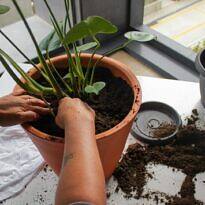
The baby’s finger succulent does best in pots that are wider than they are deep, filled with a well‑draining potting mix formulated for succulents. Even so, it is normal for the potting mix to become compacted over time. Replace the potting mix in the container once a year so it stays fresh and free‑draining.
The less “overcare” it receives, the better the baby’s finger succulent responds.
How to encourage a fuller baby’s finger succulent
In addition to providing the right light, one simple trick helps a lot: light pruning and reusing the cut stems.
When you trim some of the longer stems, you stimulate new shoots near the base. These pruned stems can be replanted in the same pot, filling in empty spaces and making the baby’s finger succulent look denser.
Over time, the growth becomes fuller and naturally trailing, creating the highly sought‑after cascading effect.
A baby’s finger succulent to be proud of!
The baby’s finger succulent is not difficult to care for. It simply responds to the right environment. When it receives good light, an appropriate, well‑draining potting mix and less excess water, the change is obvious.
Once you fine‑tune these details, the baby’s finger succulent changes completely—becoming fuller, healthier, and with the trailing effect that stands out in any space.
If you prefer to see this in practice, the video below shows exactly how the baby’s finger succulent reacts when it is given the right conditions. You can clearly notice details that make all the difference in its growth, in the position of the stems, and in the cascading effect that so many people look for. It is worth watching closely, because seeing the cultivation process helps you understand why small adjustments completely change the final result.