Did you know there are so many types of begonias that two plants with the same name can look like species from completely different worlds?
From flowering begonias used in gardens and containers to exotic foliage species prized by collectors, this genus includes plants that are very different from one another: some are compact and bloom heavily, others have silver, velvety, spotted, scalloped, or so dramatic leaves they look like they were designed by someone with unlimited access to botanical Photoshop.
In this guide, you’ll get to know the main types of begonias, with common names, scientific names, origin, characteristics, and growing tips for each one. The list includes popular nursery varieties, container begonias, trailing begonias, Brazilian species, rex begonias, angel wing begonias, ornamental hybrids, and rare plants that can instantly level up any collection.
If you came here looking for what types of begonias exist, wanting to compare begonia varieties with photos, or trying to choose between a flowering begonia and a foliage begonia, this article is here to sort out the beautiful chaos. After all, not every begonia likes the same environment — and understanding those differences is the first step to choosing the right plant, caring for it better, and avoiding that classic tragedy: buying a gorgeous begonia and only later realizing it never read the manual for your porch.
Popular garden and nursery begonias
This group includes the types of begonia most commonly found at garden centers, nurseries, and supermarkets. These are plants chosen mainly for abundant blooms, compact growth, or good performance in pots, window boxes, shaded beds, and bright porches. Not all of them are true species: many are hybrids and commercial series bred to bloom more, handle cultivation better, and deliver that “I bought one plant and it came ready to shine” effect without requiring a degree in applied begoniology.
1. Wax begonia – Begonia cucullata
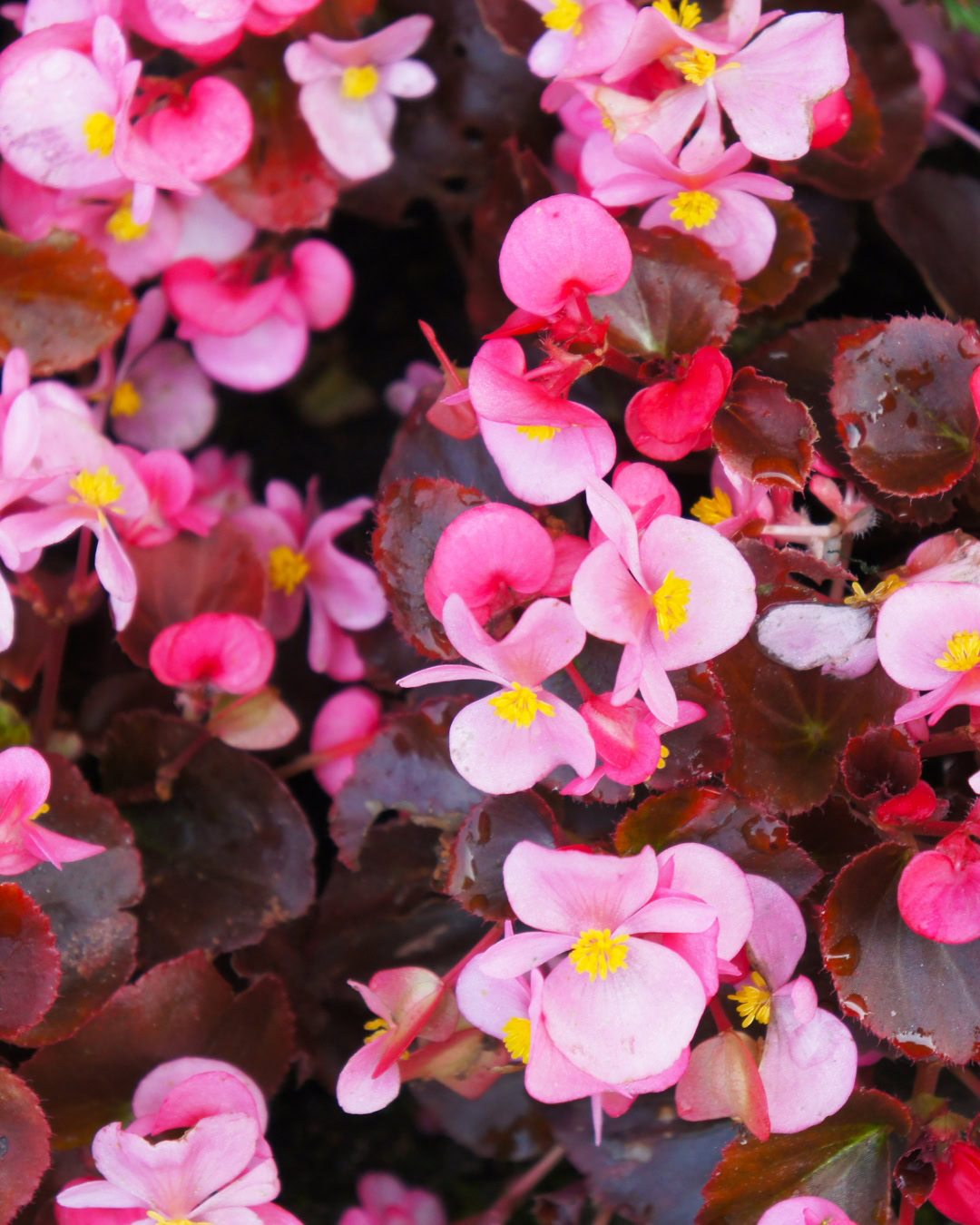
Native to South America, the wax begonia is one of the most popular begonias in the world. It’s the classic garden begonia, with rounded, glossy, succulent leaves that may be green or bronze, paired with simple flowers in white, pink, or red. In the trade, it is often still associated with the older name Begonia semperflorens, which is still widely used in gardening, although it is now treated as a synonym or related to varieties of Begonia cucullata.
It’s one of the best choices for anyone looking for a tough, floriferous begonia. Grow it in bright partial shade or gentle morning sun, in fertile, light, well-drained soil. It tolerates more light than many foliage begonias, but it struggles in strong sun, excessive heat, and soggy potting mix. In beds, it works very well as edging; in containers, it needs regular watering, always avoiding wet leaves and flowers.
2. Elatior begonia – Begonia × hiemalis
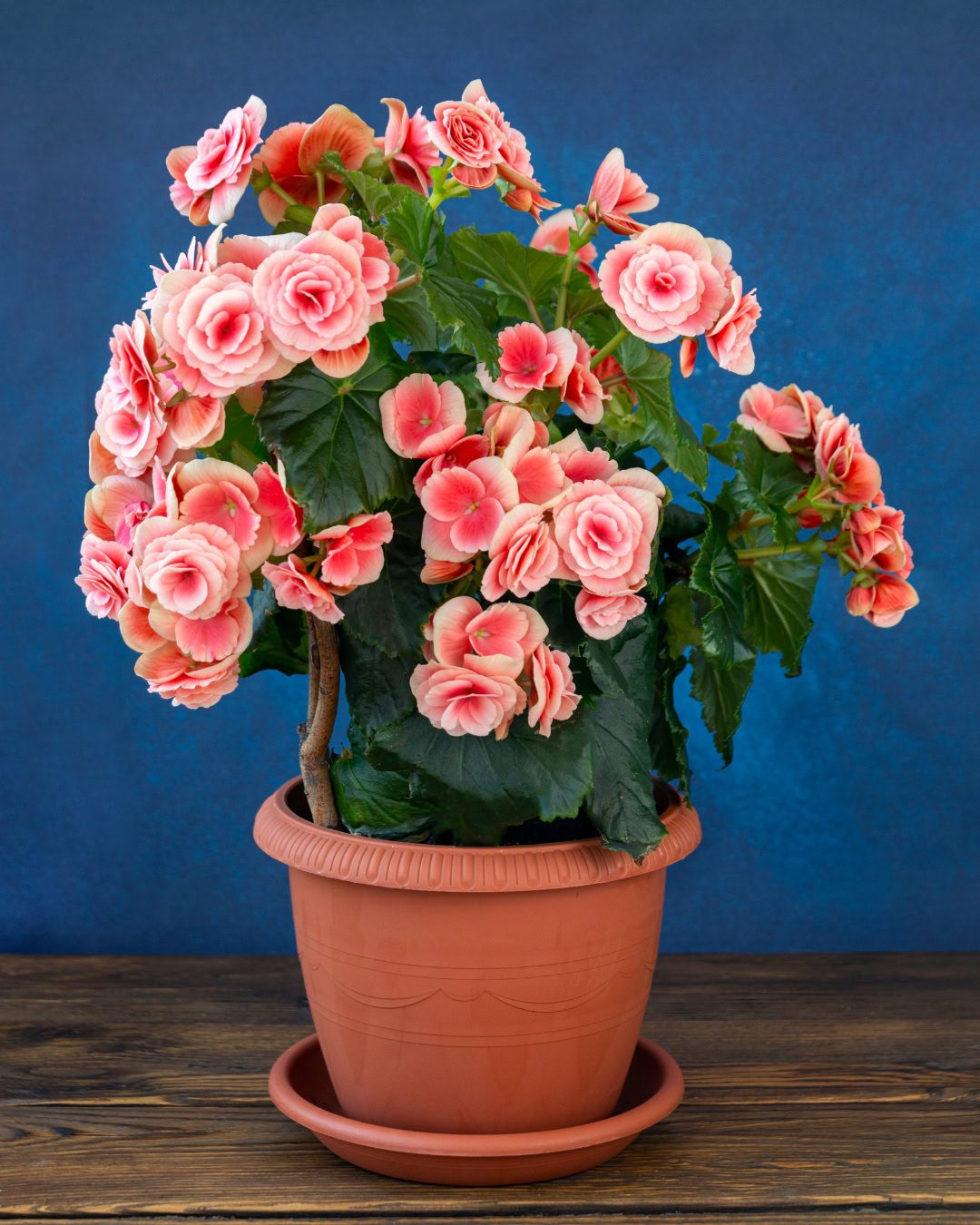
The elatior begonia, also called Reiger begonia in some markets, is a horticultural hybrid often used as a gift plant and for indoor décor. Its main appeal is the large, abundant, showy flowers, which come in yellow, orange, red, pink, white, and salmon. The leaves are green, glossy, and relatively compact, serving more as a frame for the blooms than as the main attraction.
Unlike hardier garden begonias, elatior prefers a protected setting with bright indirect light, good air circulation, and mild temperatures. It does not like direct sun or waterlogged soil. The ideal approach is to water when the top layer of the potting mix starts to dry, without letting water collect in the saucer. After flowering, it may lose vigor; for that reason, many people treat it as a shorter-lived plant, although it can resprout and bloom again with careful care.
3. Tuberous begonia – Begonia × tuberhybrida
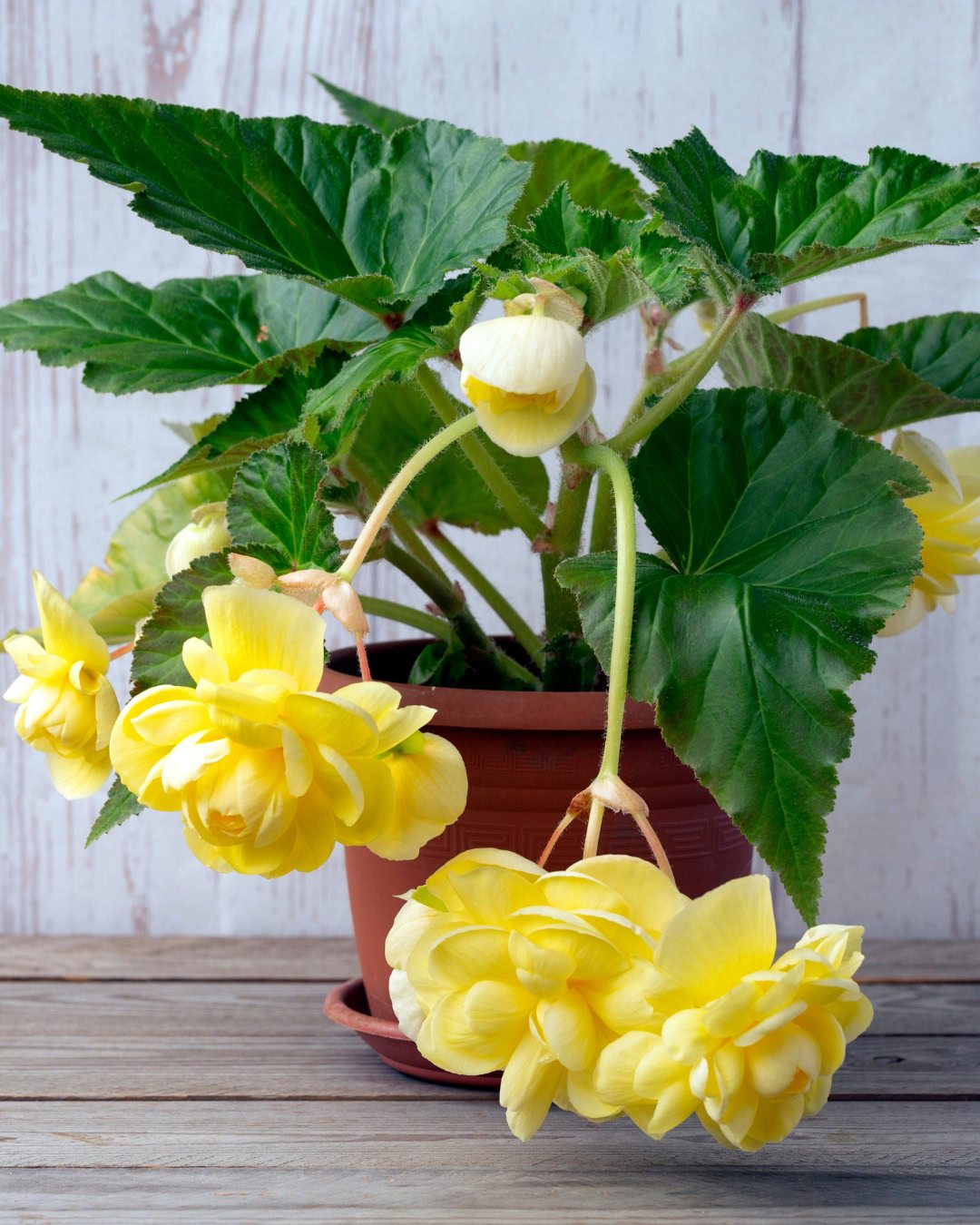
The tuberous begonia is one of the most popular types of begonias for gardeners who want big, showy blooms. This horticultural hybrid group was selected mainly for its abundant flowering. Its flowers may be single, semi-double, or double, resembling small roses, camellias, or carnations in bright, highly decorative colors. Unlike fibrous begonias, it forms underground tubers that store energy and allow the plant to go dormant.
It’s excellent for containers, window boxes, and hanging baskets in partial shade, with filtered light and protection from hot sun. The potting mix should be light, fertile, and very well drained, since the tuber rots easily when the soil stays too wet. During active growth and bloom, water regularly, but do not let it become soggy. When the plant goes dormant and the top growth starts to die back, cut back watering drastically.
4. Dragon Wing begonia – Begonia ‘Dragon Wing’
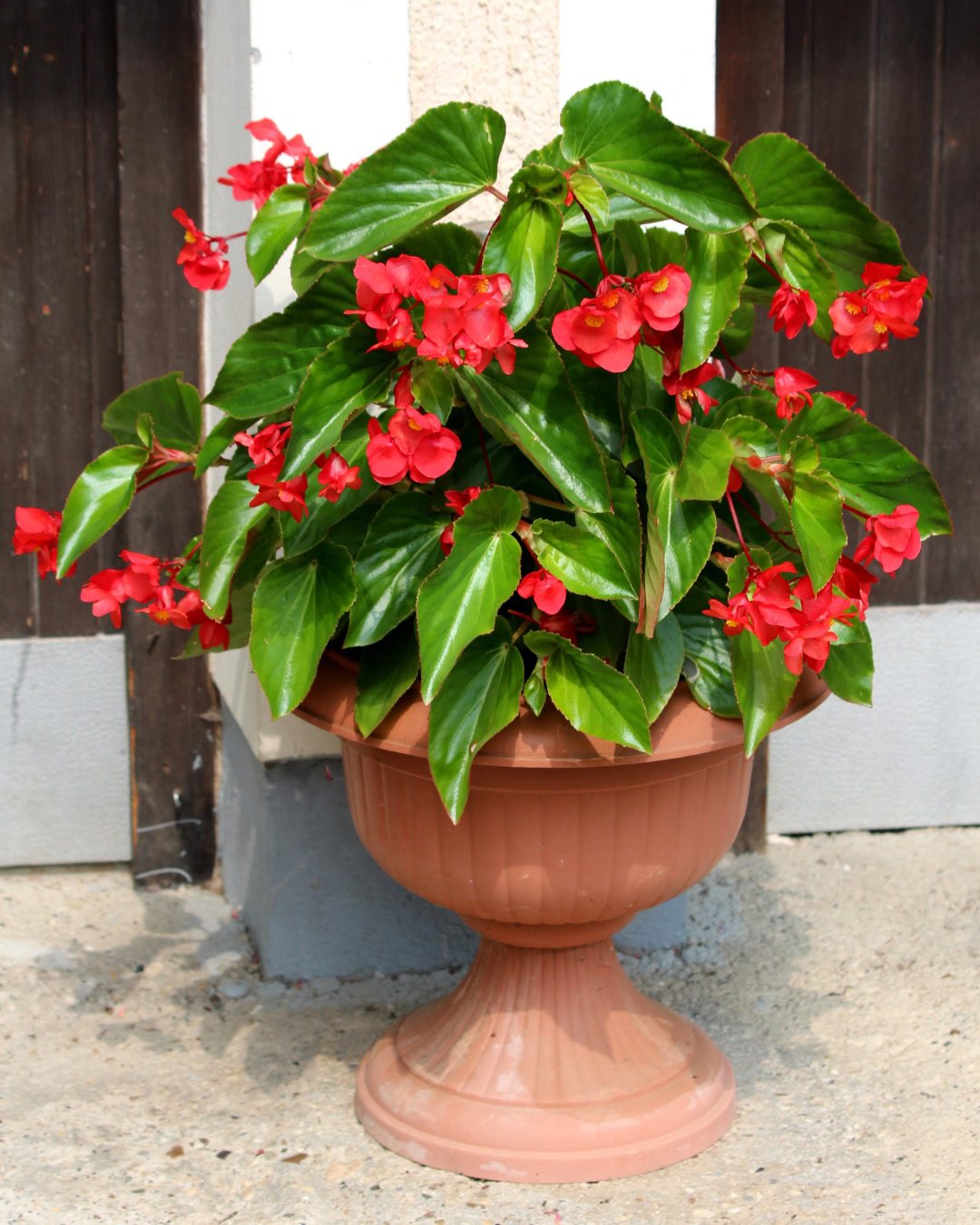
Dragon Wing begonia is a highly ornamental hybrid widely used in large pots, planters, and hanging baskets. It gets its name from the elongated, glossy, slightly arching leaves that resemble wings. The flowers, usually red or pink, appear in drooping clusters and create a lush, tropical, eye-catching effect.
It is more vigorous and heat-tolerant than many delicate indoor begonias. It performs well in bright partial shade, gentle morning sun, or filtered light under trees. In containers, it needs room to grow and a rich, loose, well-draining potting mix. Because it blooms heavily, it responds well to balanced fertilizer during the growing season. Just avoid the classic begonia tragedy trio: scorching sun, dry wind, and a saucer full of water.
5. Megawatt begonia – Begonia Megawatt™
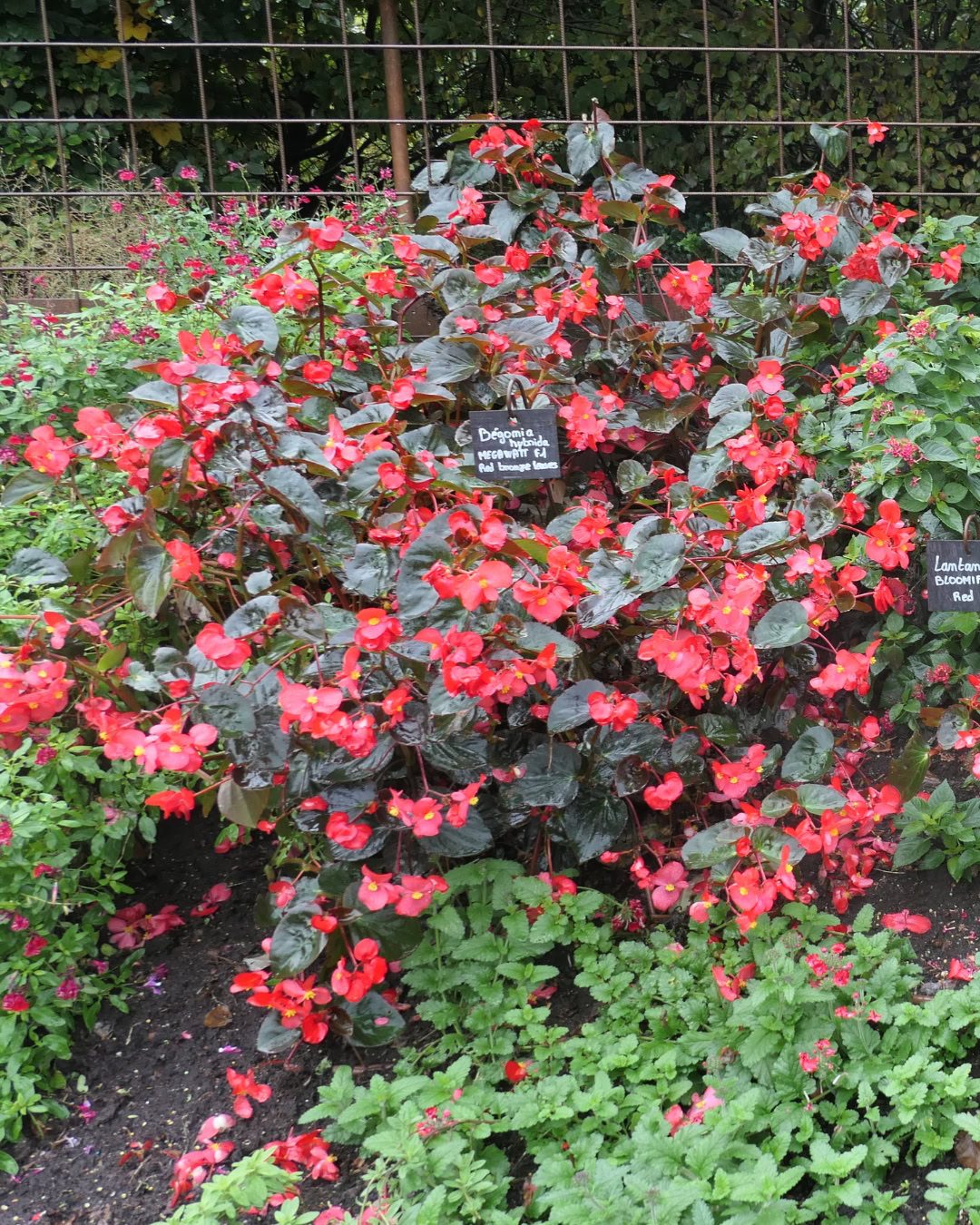
Megawatt begonia is a commercial series of interspecific hybrids bred for a strong, upright habit, large leaves, and intense flowering. It looks like a supercharged wax begonia, with more vigorous growth, a bold presence in the garden, and abundant blooms in red or pink depending on the cultivar. It’s a smart choice for gardeners who want big visual impact without moving into more temperamental collector plants.
It prefers bright partial shade, but it can handle more light than rex begonias and rhizomatous begonias. In hot regions, protect it from harsh afternoon sun. Use a fertile, well-drained potting mix and keep moisture consistent without overwatering. Because it grows vigorously, it needs appropriately sized containers and regular feeding to support large leaves and continuous bloom.
6. I’CONIA begonia – Begonia I’CONIA® Series
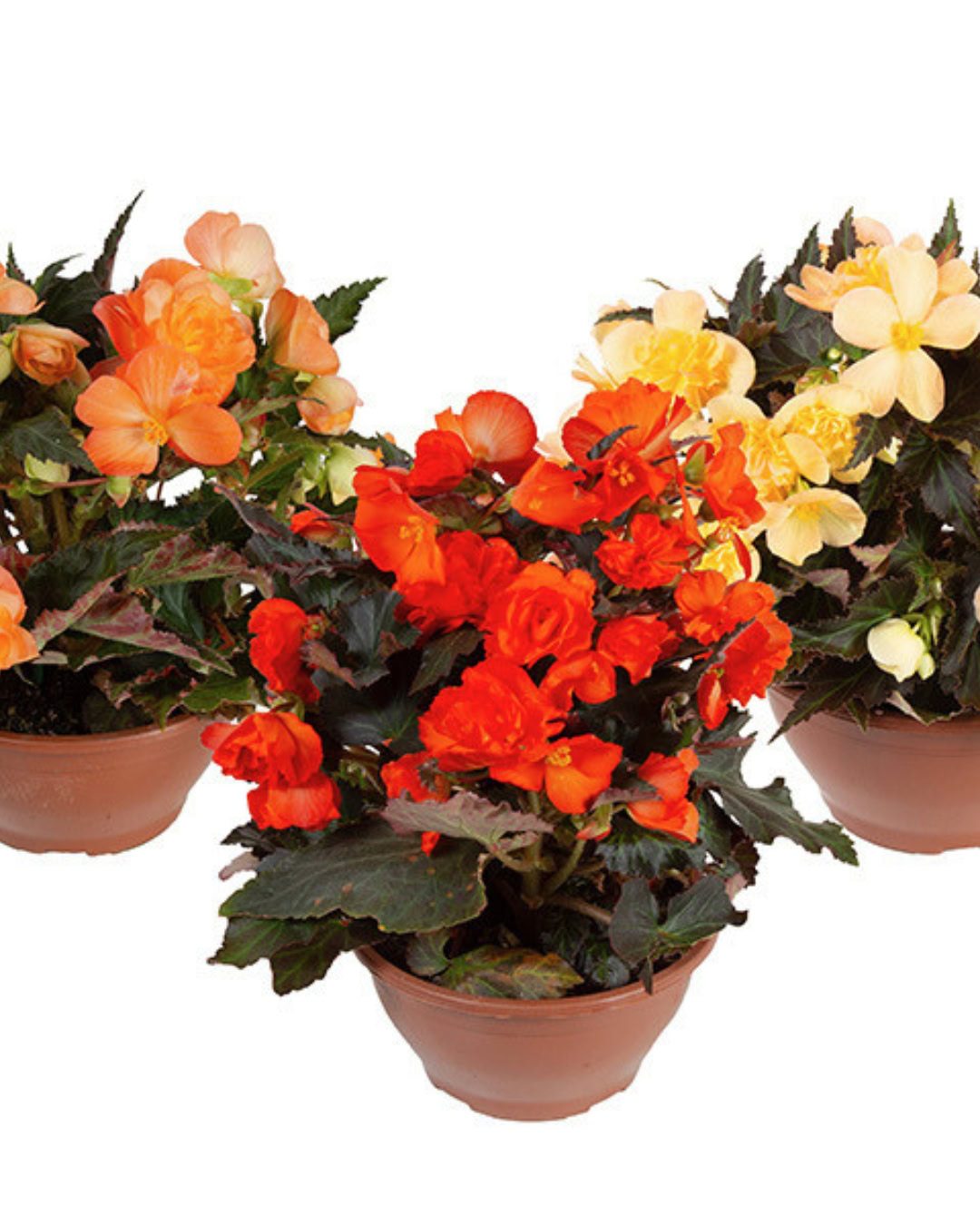
I’CONIA begonia is a modern commercial hybrid series developed for large flowers, good branching, and versatile use in pots, baskets, and mixed plantings. Its cultivars may have upright, semi-trailing, or fuller habits, with single or double flowers in vivid shades of red, orange, pink, cream, and bicolor combinations. It’s a highly ornamental begonia made to stand out on patios, in window boxes, and as a focal point.
Despite its refined look, it should not be treated like a deep-shade begonia. It needs plenty of brightness to flower well, preferring bright filtered light or gentle sun during cooler hours. The potting mix should be light and well drained, with careful watering to keep the plant hydrated without saturating the roots. In hanging baskets, check moisture more often, since the mix tends to dry out faster.
7. Hardy begonia – Begonia grandis
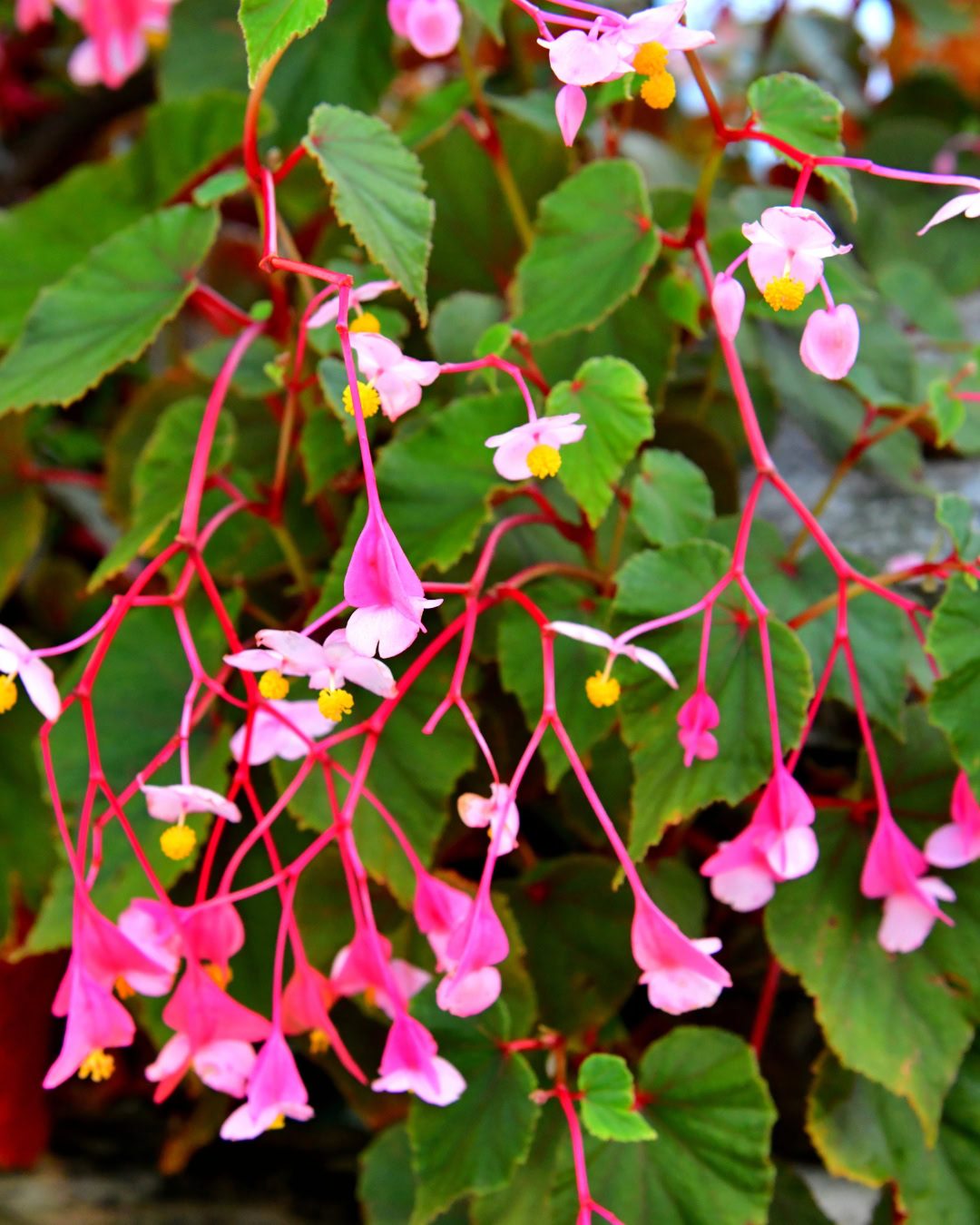
Native to central and southern China, Begonia grandis is known internationally as the hardy begonia because it tolerates cold better than most ornamental begonias. It has an herbaceous habit, tuberous roots, asymmetrical leaves, and delicate, usually pink flowers that appear on arching stems. It has a more naturalistic look, less like a mass-produced bedding plant and more like a well-designed shade garden feature.
Even though it is more cold-tolerant, that doesn’t mean it likes any condition. Grow it in partial shade, in soil rich in organic matter, cool, and well drained. In very hot regions, it needs protection from direct sun and drying out. In areas with a pronounced winter, it may die back aboveground and resprout later; in mild climates, it tends to behave like a shade-loving perennial. It’s excellent for woodland-style gardens.
Famous hybrids and cultivars
This category brings together begonias that became well known not only for their parent species, but also for their horticultural history, striking appearance, or popularity among collectors. These are plants that often show up under a cultivar name, series name, or old hybrid name rather than as a pure botanical species. For the average reader, that may sound like behind-the-scenes detail; for growers, it’s the difference between buying a predictable plant and falling down the bottomless rabbit hole of collector begonias.
8. Gryphon begonia – Begonia ‘Gryphon’
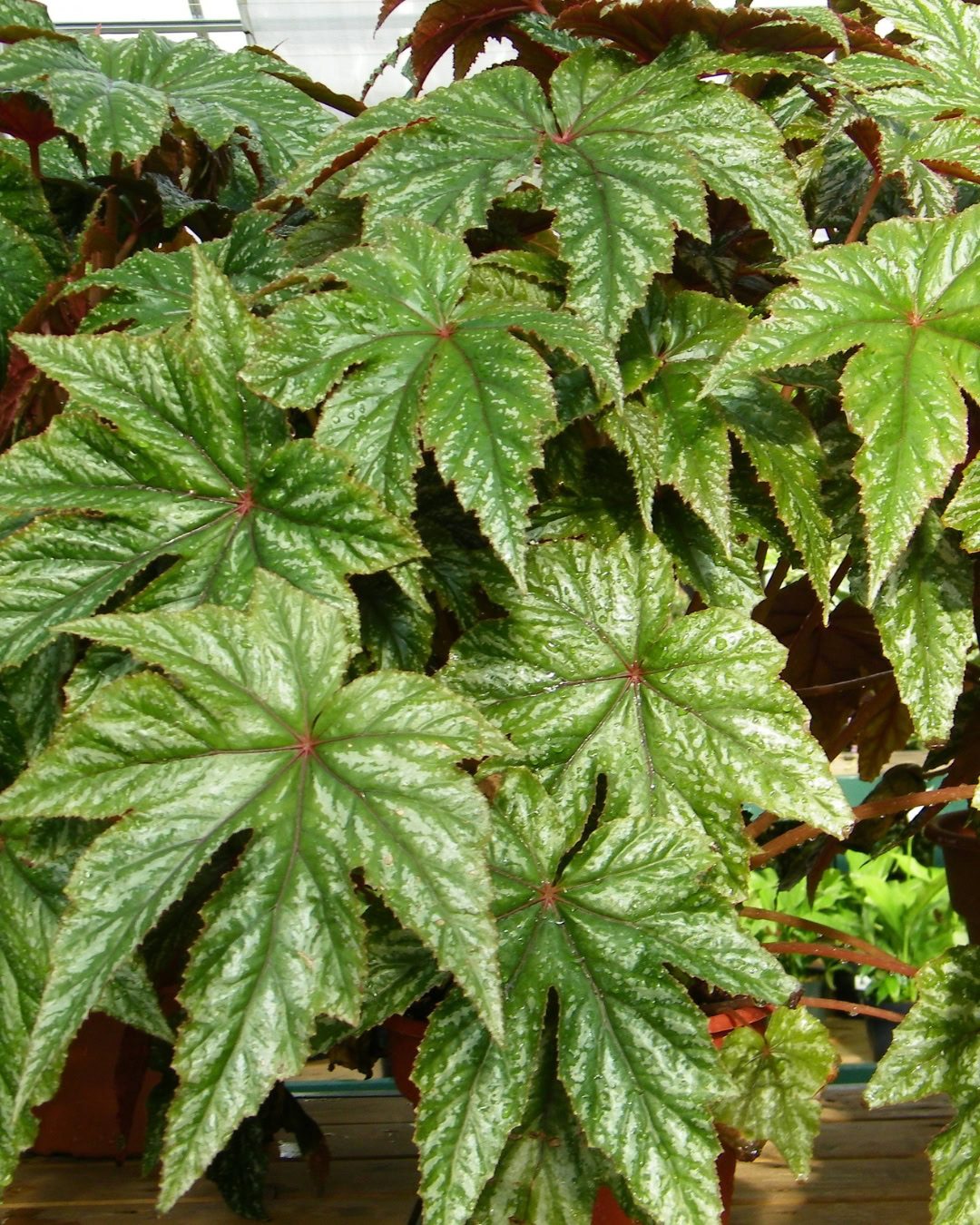
Gryphon begonia is a cultivar known for its large, palm-shaped, highly ornamental foliage. The leaves are green, broad, deeply cut, and marked with silver tones, while the petioles and undersides of the leaves may show reddish or coppery coloring. The name refers to the griffin, a mythological creature with the body of a lion and the head of an eagle — a dramatic choice, but an understandable one for this plant.
It’s a foliage begonia that’s tougher than many rex begonias, making it a good choice for large containers indoors with bright light, protected porches, and shaded gardens. It prefers bright indirect light, moderate humidity, and an airy potting mix. Avoid strong direct sun, which can scorch the leaves, and overwatering, which encourages rot. Because it grows fairly large, it needs room: a pot that’s too small turns a majestic plant into a crushed umbrella.
9. Manaus begonia – Begonia ‘Manaus’
Manaus begonia is a collector’s cultivar valued mainly for its dark, velvety, iridescent foliage. The leaves can show deep shades of green, bronze, burgundy, or nearly black, depending on the light and the plant’s age. It’s a begonia with a strong presence — the kind that seems understated from a distance, but becomes a conversation piece once someone gets close.
Because its foliage is more delicate, it needs protected growing conditions, with bright indirect light, high ambient humidity, and a very well-drained potting mix. It’s not the best begonia for full sun, wind, or a planter forgotten on the porch. Water moderately, keeping the mix slightly moist but never soggy. In dry indoor air, the ideal approach is to raise humidity around the plant without misting the leaves too much, since the velvety surface can spot or encourage fungal issues.
10. Beefsteak begonia – Begonia × erythrophylla
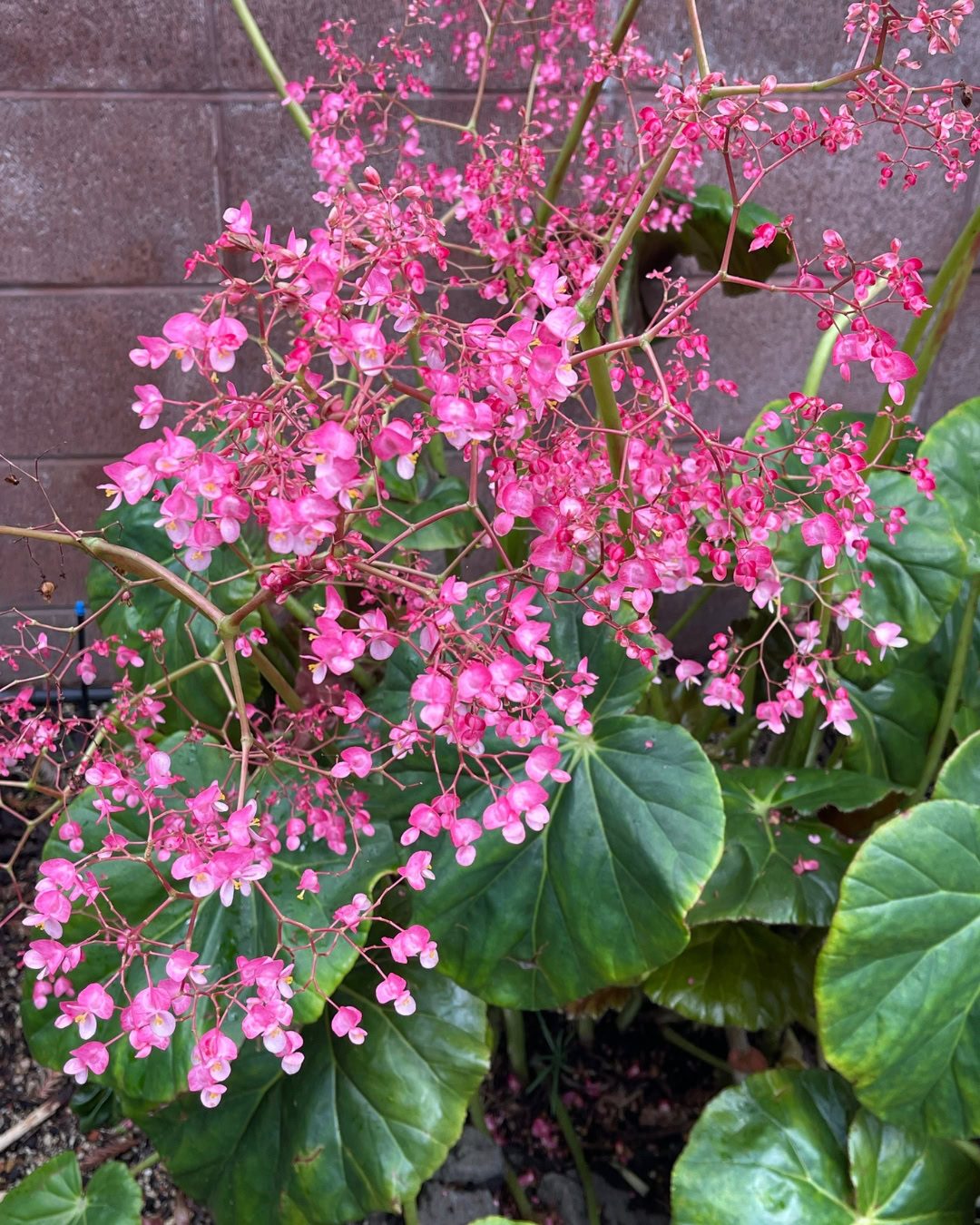
Beefsteak begonia, also called beefsteak begonia in English, is one of the best-known old hybrids in cultivation. It has a horticultural origin and is traditionally associated with a cross between Begonia hydrocotylifolia and Begonia manicata. Its leaves are rounded, thick, glossy, dark green on top and reddish underneath, a trait that inspired the memorable if not especially elegant common name. Points for accidental marketing.
It’s a relatively easy rhizomatous begonia, a good choice for anyone who wants to start with foliage begonias without struggling from week one. Grow it in partial shade or bright indirect light, in a wide, shallow pot with a light, well-drained mix. It tolerates drying slightly between waterings better than very delicate begonias, but it doesn’t appreciate being neglected. Because the rhizome grows horizontally, it looks especially good in low containers, where its rounded leaves can spread naturally.
Rex begonias, rhizomatous begonias, and collector foliage begonias
This group includes some of the most sought-after types of begonias among collectors, especially for their asymmetrical, colorful, textured, metallic, velvety, or wildly patterned leaves — in the best possible way. Many of them are rhizomatous, meaning they grow from modified stems that spread close to the potting mix. In general, they’re less suited to direct sun and happiest in protected, humid, well-lit conditions with no excess water around the roots.
11. Rex begonia – Begonia rex / Rex Cultorum Group
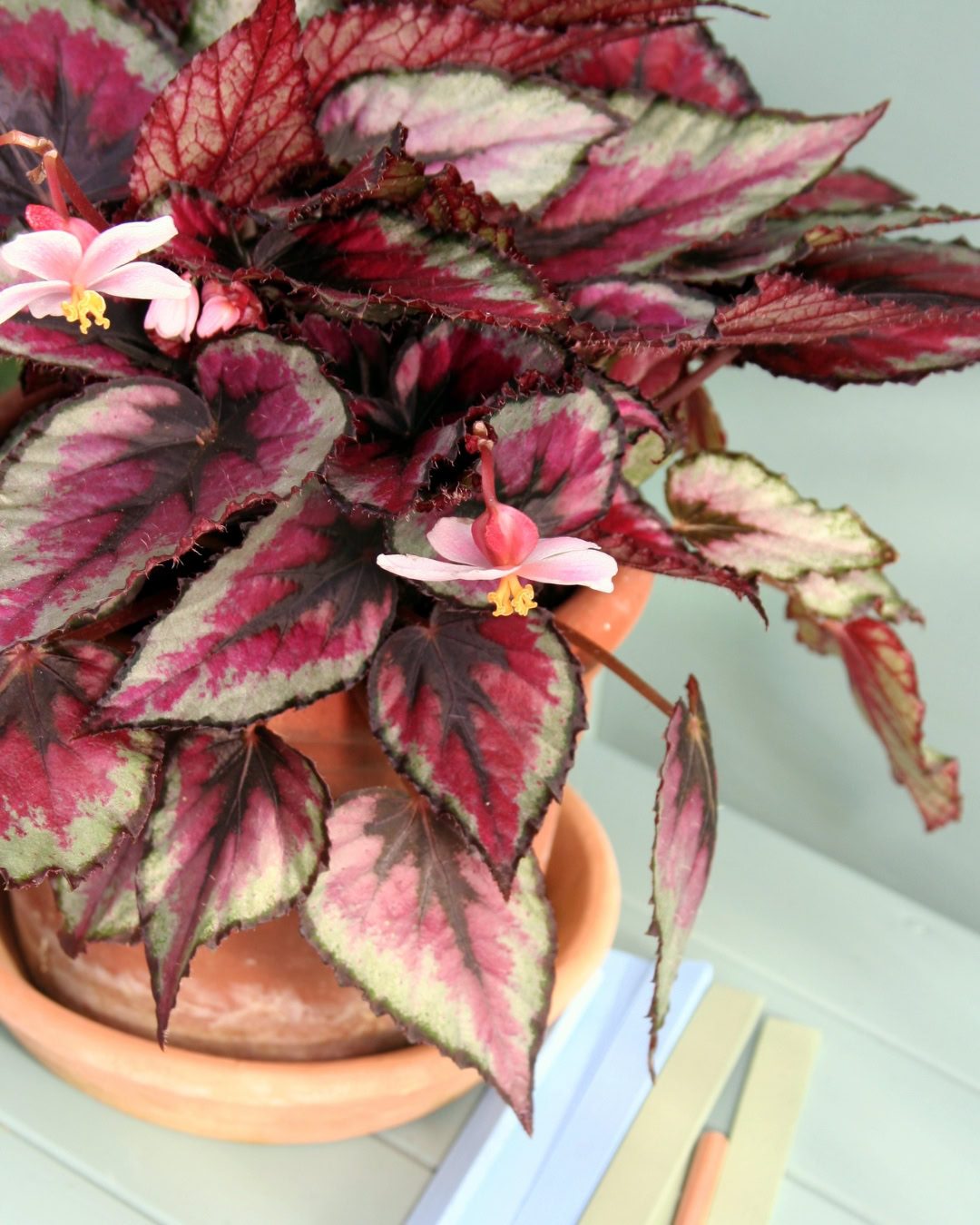
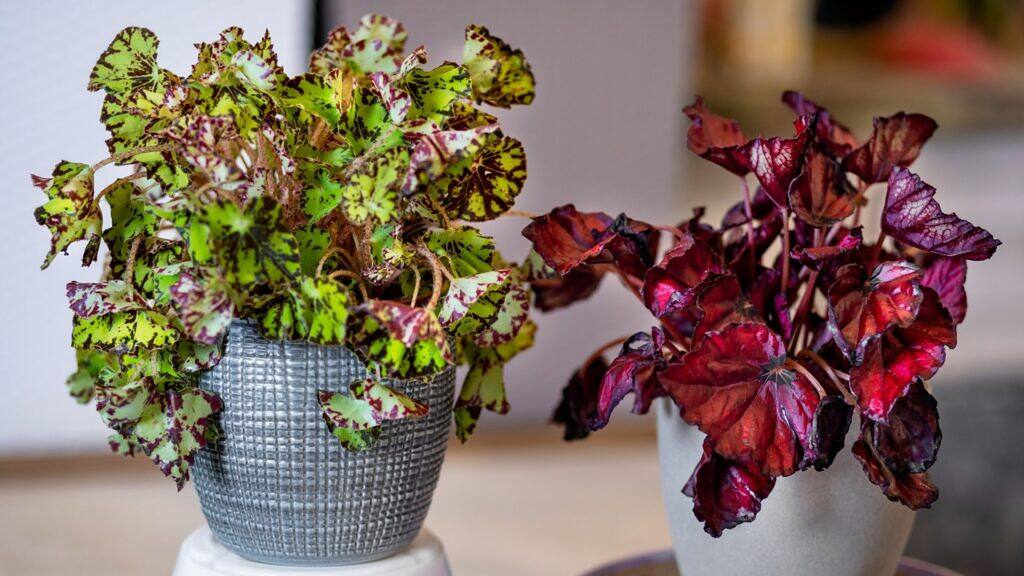
Native to a stretch from southern Bhutan to northern Myanmar, Begonia rex is the species that gave rise to one of the genus’s most famous ornamental groups: hybrid rex begonias, also called the Rex Cultorum Group. Its leaves are large, asymmetrical, and intensely colored, with combinations of green, silver, burgundy, purple, pink, and nearly black. The flowers are there, of course, but here they’re polite supporting actors: the foliage steals the show.
It prefers bright indirect light, with no strong sun hitting the leaves. The potting mix should be light, rich in organic matter, and very airy, because fine roots struggle in compacted blends. Water when the surface starts to dry, avoiding wetting the foliage too much. Very dry conditions encourage scorched edges and distorted leaves, so rex begonia usually does best in moderate to high humidity.
12. Escargot begonia – Begonia ‘Escargot’
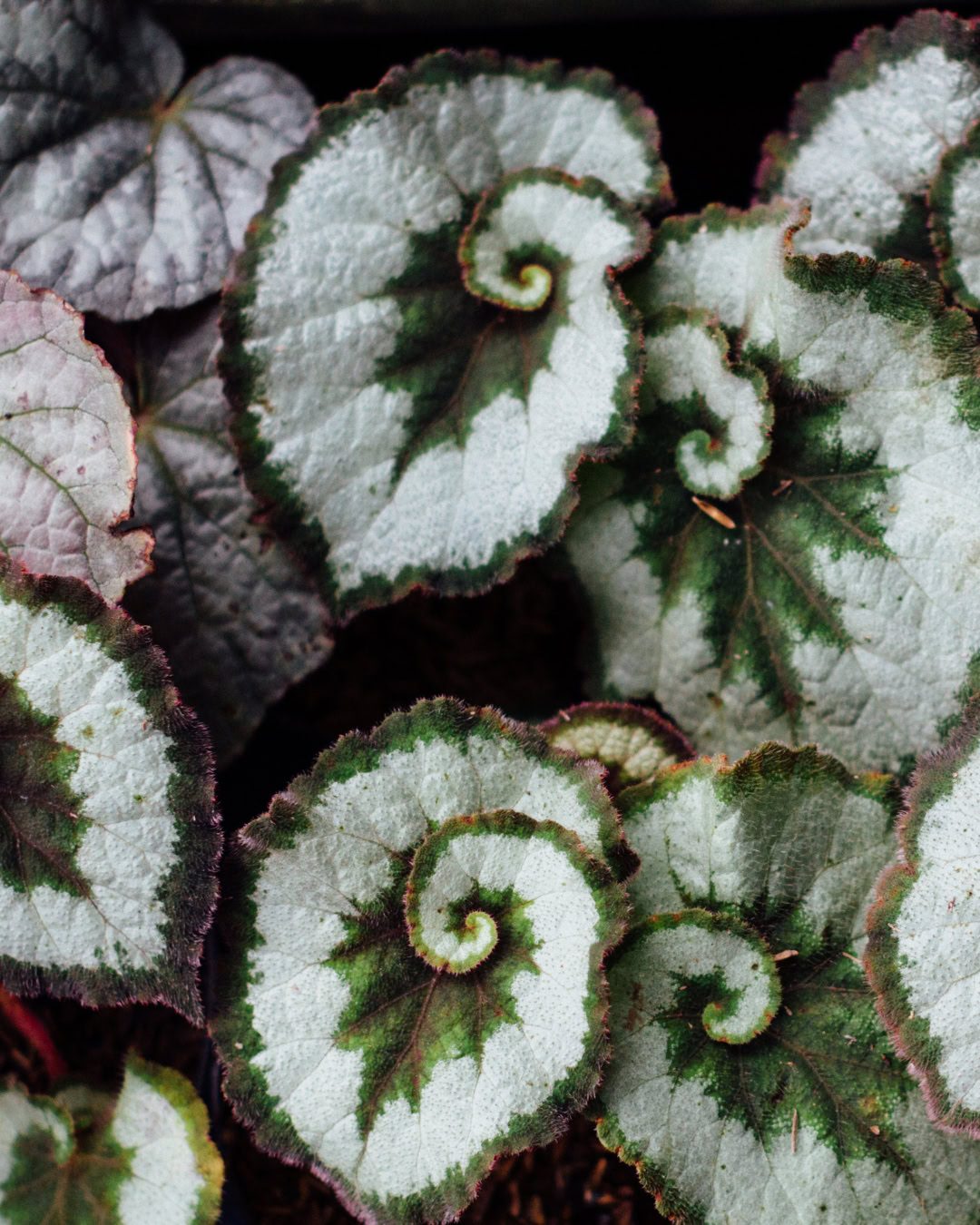
Escargot begonia is a rex begonia cultivar famous for its spiral leaves that resemble a snail shell. It’s so distinctive that it deserves a mention. The foliage blends shades of green, silver, and brown or burgundy, creating a bold, graphic pattern. It’s one of those types of begonias that explains, all by itself, why so many people get into foliage plants and never really leave.
Like other rex begonias, it prefers bright indirect light, moderate to high humidity, and a well-drained potting mix. Avoid strong direct sun, which can scorch the leaves, and overwatering, which encourages rhizome rot. Indoors, place it near a bright window, but out of hot sun. Water when the surface of the potting mix begins to dry, without soaking the leaves.
13. Iron cross begonia – Begonia masoniana
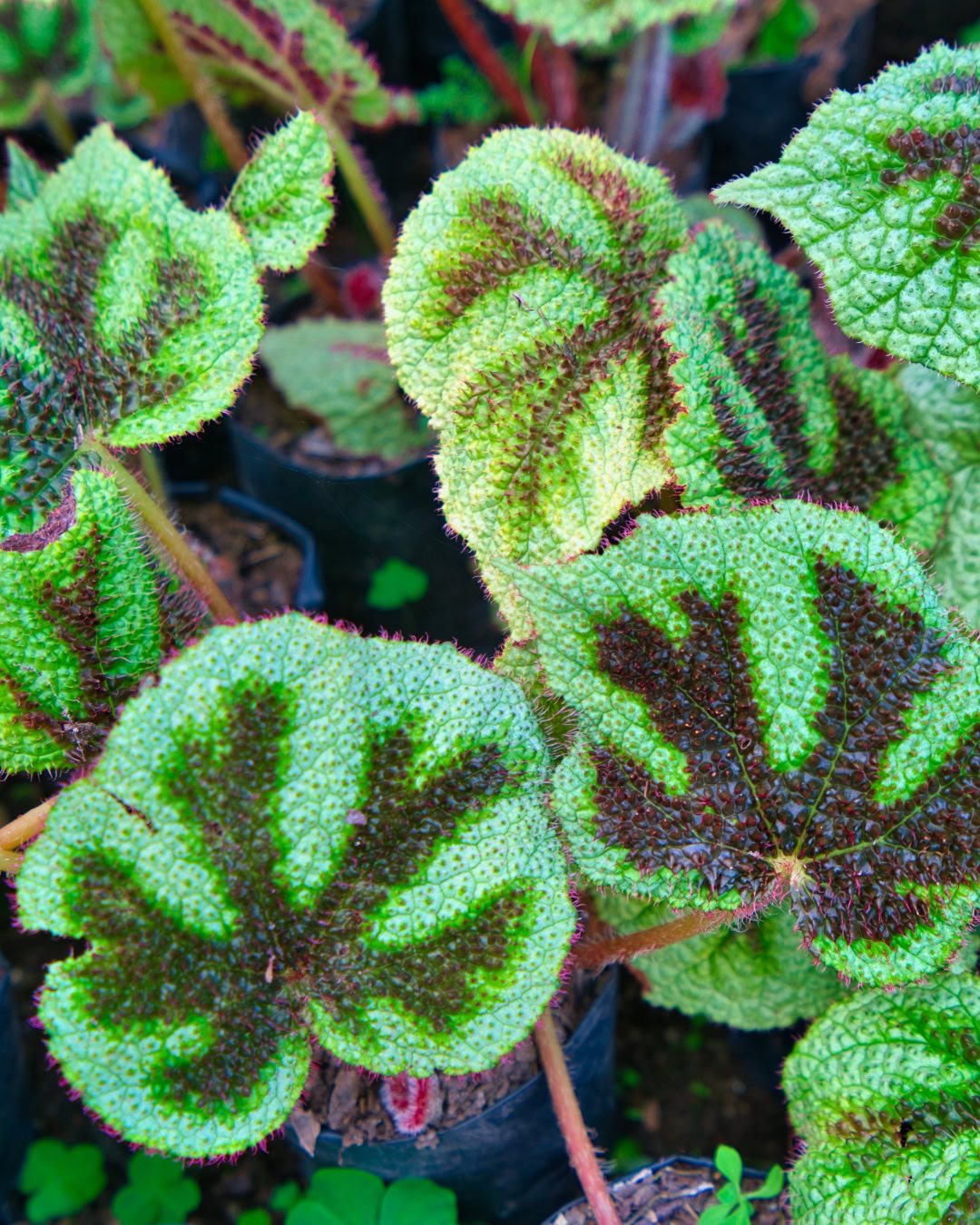
Iron cross begonia is native to southeastern China and Vietnam. Its common name comes from the dark, irregular cross-shaped marking in the center of the green, rough, textured leaves. It’s an instant-impact begonia: it doesn’t need to bloom to earn a spot on the shelf, the plant stand, or your social feed.
Because of its thick, heavily marked leaves, it appreciates bright indirect light, but it does not tolerate strong direct sun. Grow it in a pot with excellent drainage, using a porous mix with organic matter, fine bark, perlite, or another ingredient that prevents compaction. Water moderately; let the potting mix dry slightly between waterings. Cold, excess water, and poor air circulation are the main ways to turn an iron cross begonia into a real cross.
14. Star begonia – Begonia heracleifolia
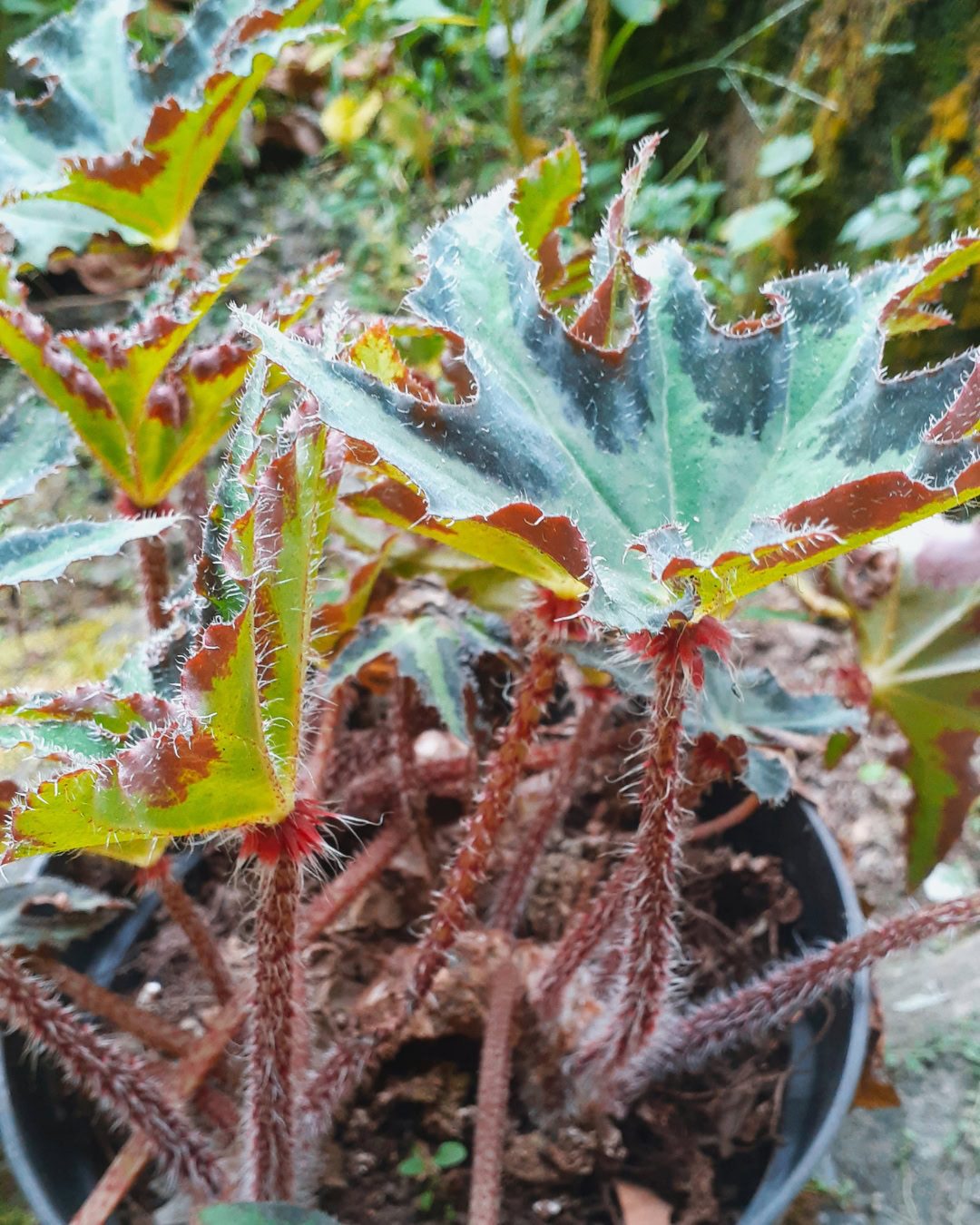
Native from Mexico to Honduras, Begonia heracleifolia is a rhizomatous begonia known for its large, deeply cut, star-shaped leaves that can resemble oak leaves, castor bean leaves, or some young aroids, depending on the variety. The species name refers to its resemblance to leaves in the genus Heracleum. It has a strong architectural presence, making it a great choice for anyone who likes foliage with bold structure.
It does well in bright partial shade, with filtered light and a sheltered setting. Because it forms sturdy rhizomes, it prefers wider pots rather than deep ones, giving the plant room to spread. Use a rich but loose potting mix, and avoid burying the rhizomes too deeply. Water to keep the mix lightly moist, without saturation. In hot regions, protect it from afternoon sun; indoors, place it near a bright window, but not where hot glass will heat the leaves.
15. Eyelash begonia – Begonia bowerae
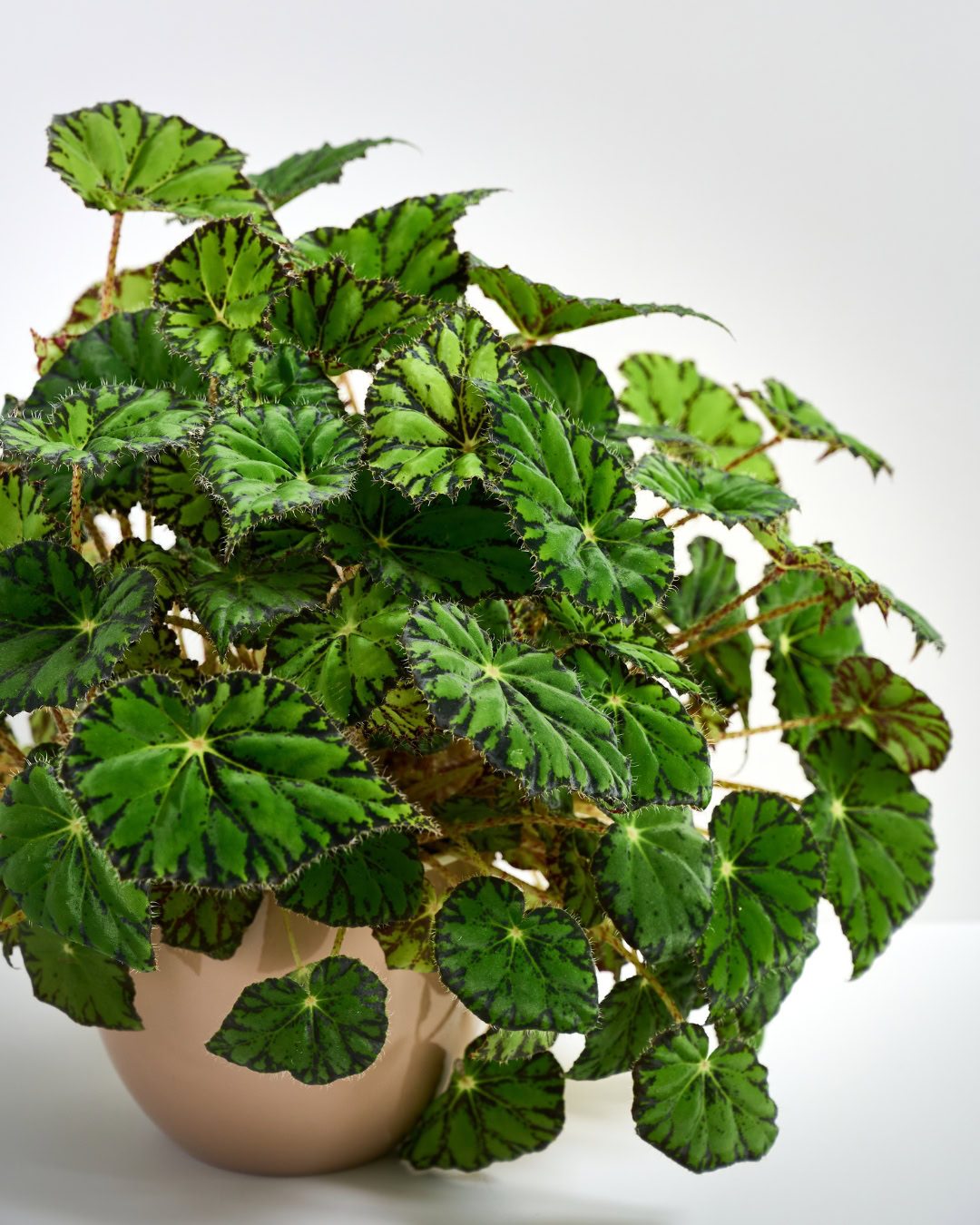
Native to Mexico, especially Oaxaca and Chiapas, Begonia bowerae is a smaller rhizomatous species that’s especially popular in small pots, ventilated terrariums, and collections of delicate foliage plants. In English, it’s called “eyelash begonia” because of the tiny hairs along the leaf margins. Cultivars may have green, bronze, spotted, or dark-edged leaves, always with that small-plant charm that practically requires emotional magnification.
It likes bright indirect light and higher humidity, but it should not sit in stale, stagnant air. The potting mix needs to be fine, light, and well draining, suited to its smaller root system. Water carefully, without letting the pot dry out completely for long periods, but also without waterlogging it. It’s a good candidate for shallow pots and collector displays, as long as it isn’t placed in direct sun or very dry spots.
16. Striped begonia – Begonia listada
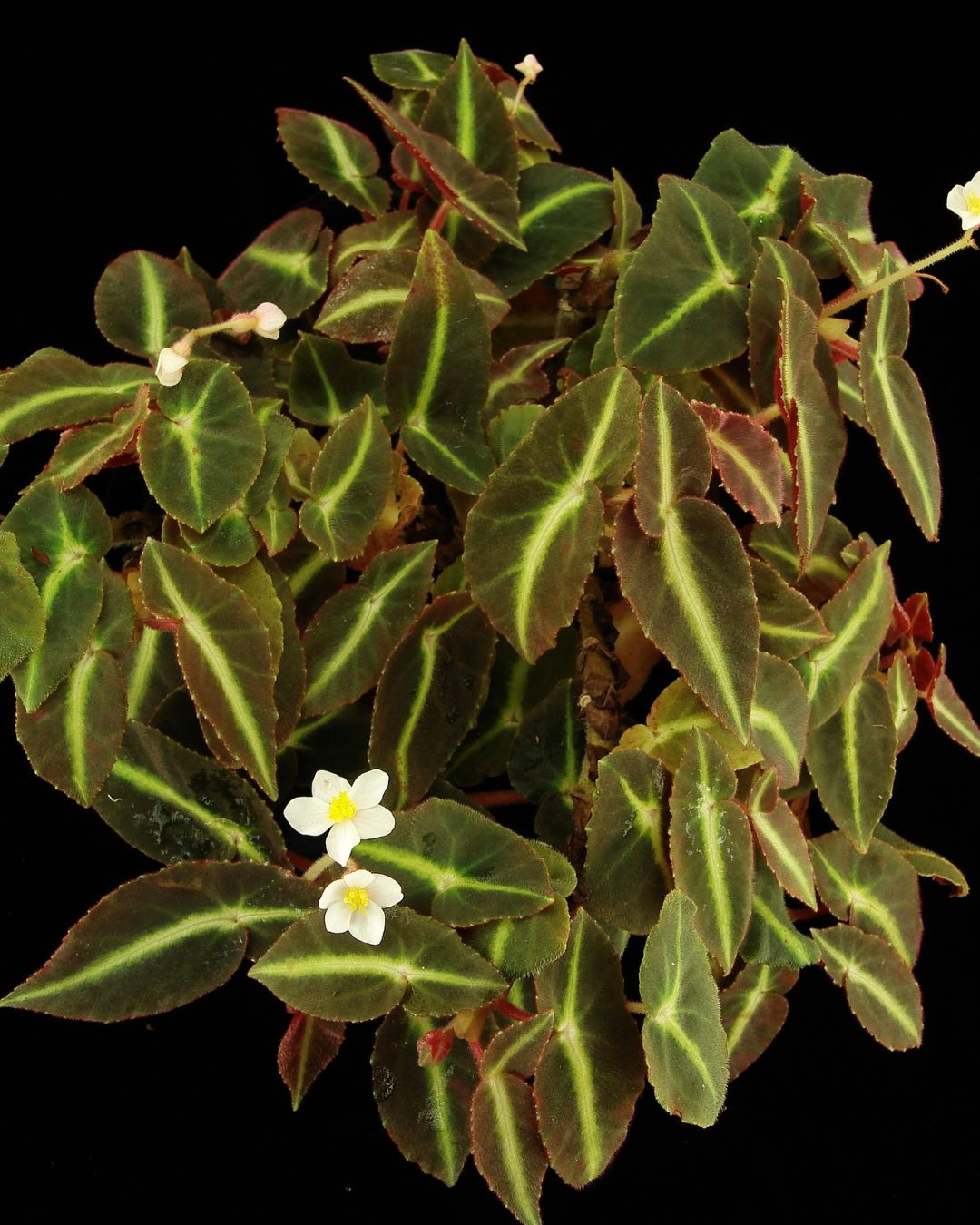
Native to Paraguay, Begonia listada is a shrub-like or subshrub-like begonia prized for its elongated, dark green leaves with a lighter central stripe and velvety texture. The undersides of the leaves can show reddish tones, adding even more contrast. The name is perfect because it tells you exactly what you’re getting: a striped begonia. Botanical marketing, no fluff.
Prefers bright filtered shade, mild to warm temperatures, and high humidity. Because its leaves have a delicate texture, avoid direct sun, dry wind, and frequent misting that keeps the surface wet for too long. Grow it in a fertile, light, well-drained potting mix. Water regularly, but in a controlled way, allowing the mix to lose excess moisture before the next watering.
17. Mutant Sun Begonia – Begonia solimutata
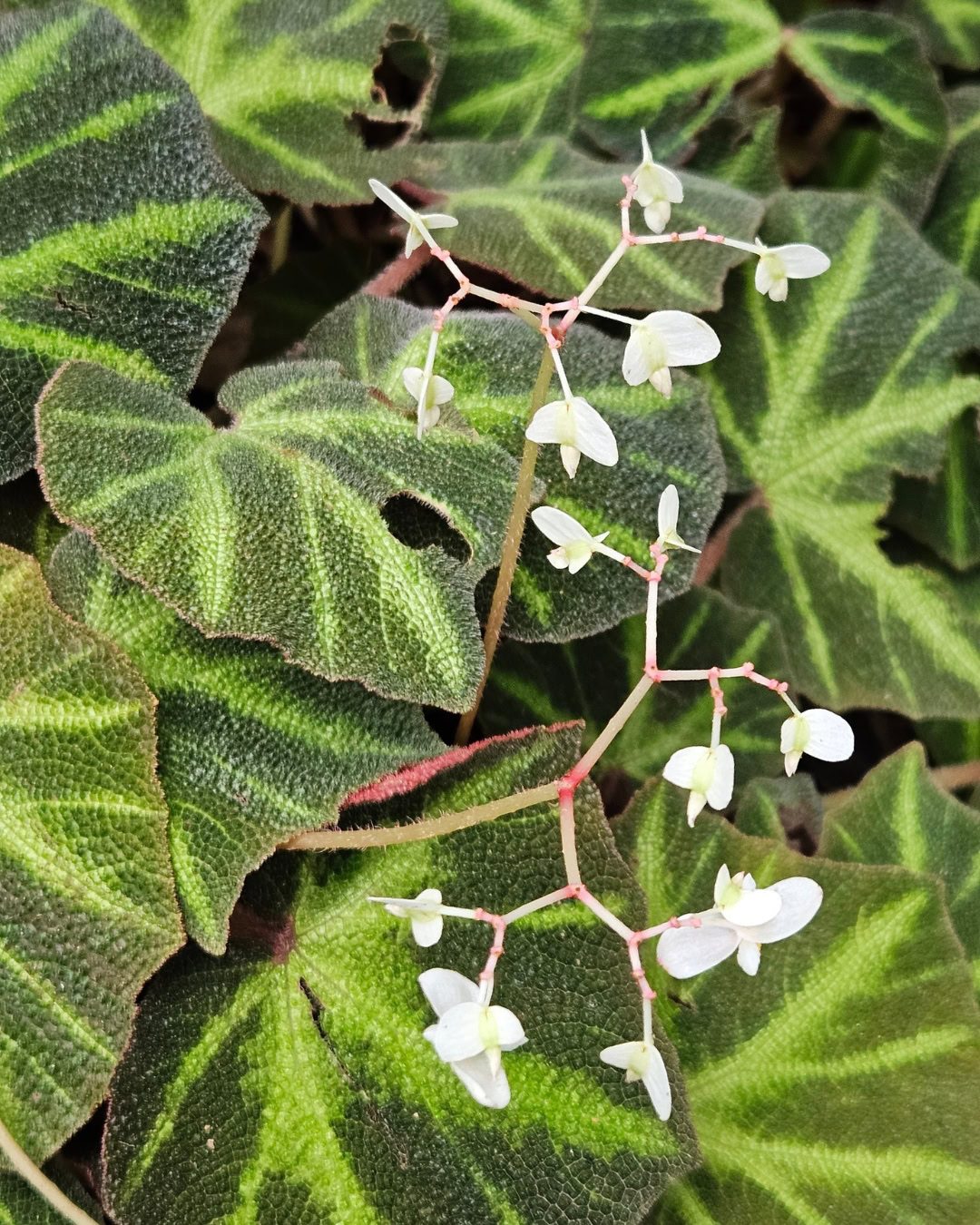
Native to Pará in northern Brazil, Begonia solimutata is a rhizomatous begonia with dark, rounded, deeply textured foliage. The common name “mutant sun” comes from the way its leaves can shift color with the light, showing bronze, green, coppery, or reddish tones. It’s a Brazilian species with the look of a rare greenhouse plant — because, in a way, that’s exactly what it is.
Despite the name, it should not be grown in strong sun. The ideal setup is bright indirect light or very light shade, with high humidity and a well-aerated potting mix. In dry conditions, it can develop scorched edges and slow growth. Keep watering moderate, and don’t let water sit in the pot. Because it’s rhizomatous, it also does well in wider containers, where the stems can spread across the surface of the mix.
18. Peacock Begonia – Begonia pavonina
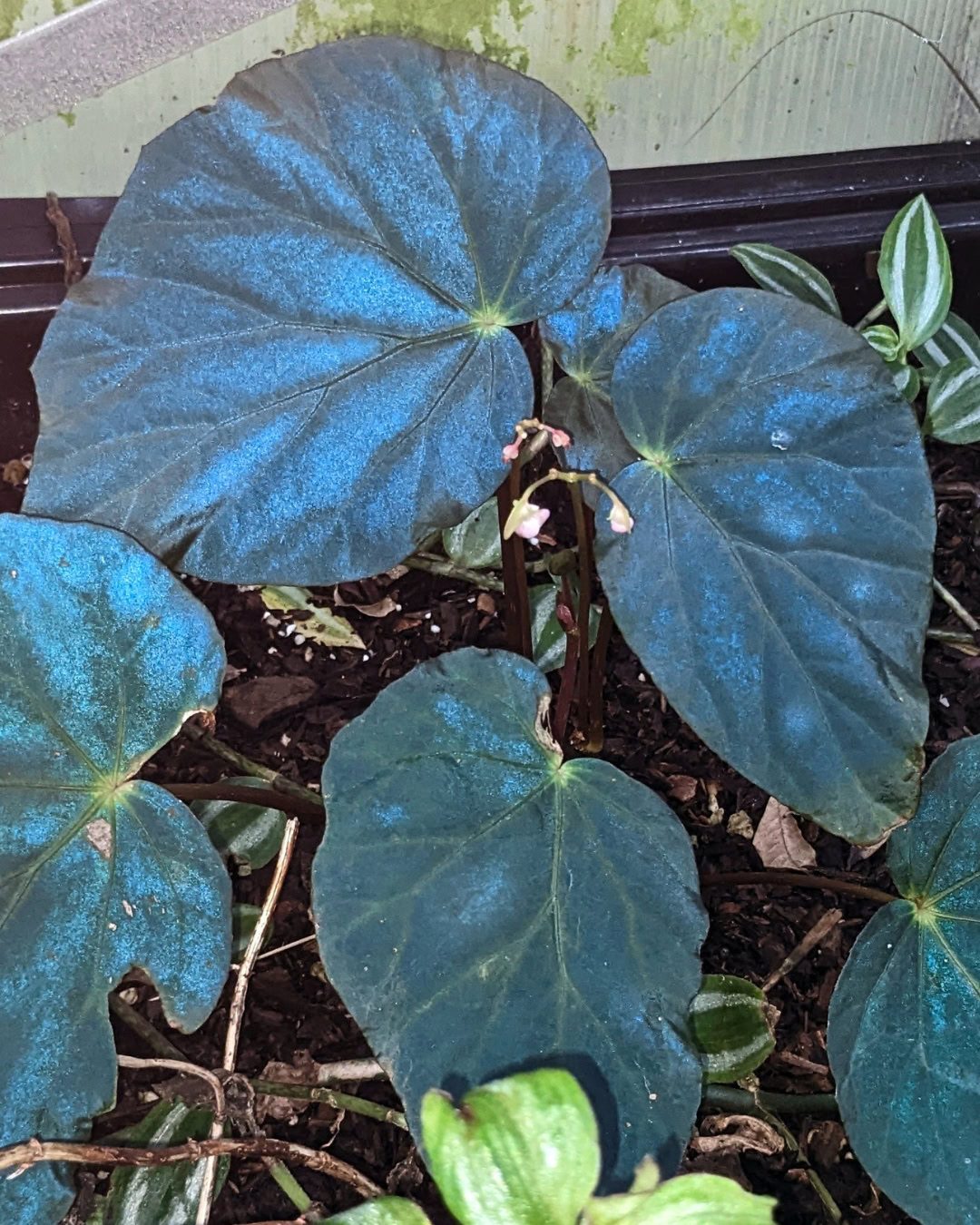
Native to the Malay Peninsula, Begonia pavonina is a rhizomatous species known as peacock begonia or blue begonia. Its main draw is the blue iridescence of the leaves, visible depending on the angle of the light. This is not ordinary blue pigment: it’s an optical effect from the leaf surface, adapted to the deeply shaded conditions of humid forests. In plain gardener terms: it looks like magic, but it’s just botany showing off.
This is a more demanding begonia, best suited to collectors. It needs high humidity, indirect light, mild to warm temperatures, and a very well-drained potting mix that still holds some moisture. It does not like direct sun, dry air, excessive heat, or prolonged drying out. In many homes, it performs best in ventilated terrariums, home greenhouses, or protected spaces with high humidity and good air movement.
19. Sizemore Begonia – Begonia longiciliata (syn. Begonia sizemoreae)
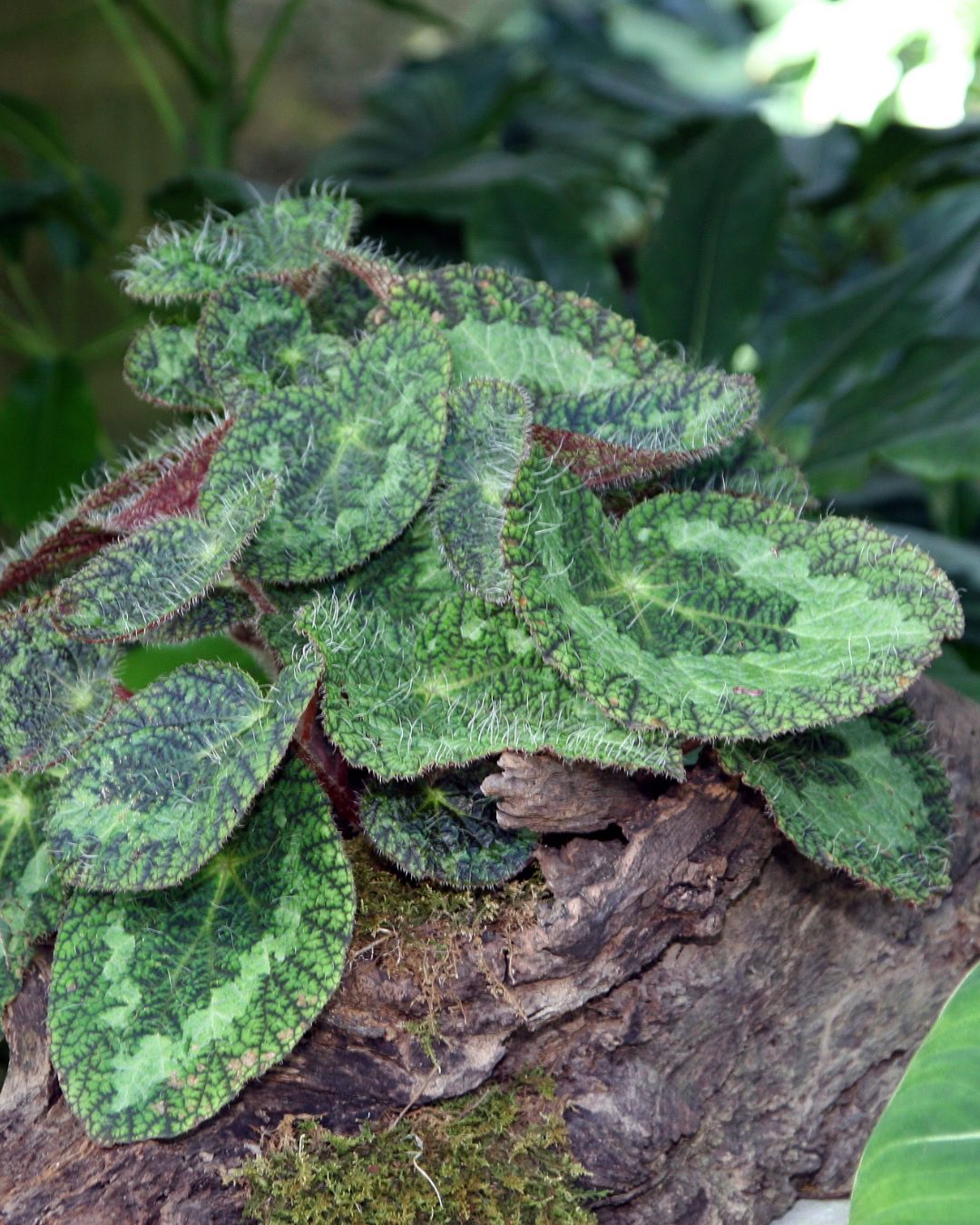
Long known in cultivation as Begonia sizemoreae, this begonia is now treated by many taxonomic sources as a synonym of Begonia longiciliata. It’s an Asian species with striking foliage, featuring large, textured leaves speckled and covered with long, pale hairs that give the plant an almost prehistoric look. The former name honors Mary Sizemore, who was associated with the collection of material that circulated among collectors.
This is a begonia for protected culture, with bright indirect light, good humidity, and a very free-draining mix. The leaf hairs add to its ornamental appeal, but they also mean you should avoid repeatedly wetting the foliage and make sure there is adequate ventilation. It does well in low pots or hanging baskets, as long as the mix does not dry out too sharply. In very dry conditions, it may stall; in soggy conditions, it will complain with stressed roots. A temperamental begonia, but with good aesthetic reasons for it.
20. Shell Begonia – Begonia conchifolia
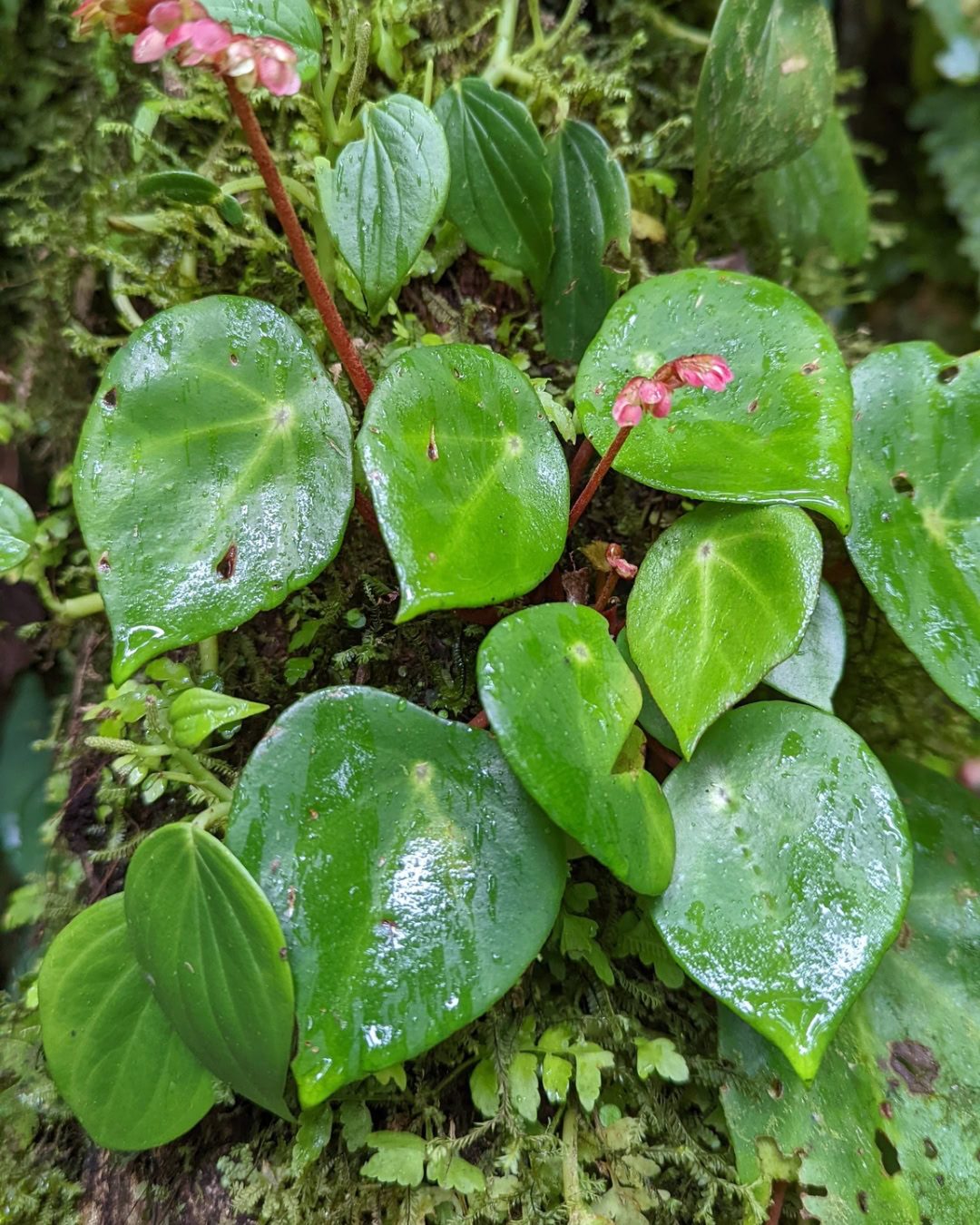
Native to Central America, including Costa Rica, El Salvador, and Panama, Begonia conchifolia is a rhizomatous begonia with rounded, thick, glossy leaves that are often compared to small shells. Some forms and cultivars have reddish markings or highly decorative central patterns, as seen in the well-known selection ‘Red Ruby’. It’s a compact, elegant species that is highly sought after by foliage collectors.
It prefers filtered light, a humid environment, and a light potting mix with good drainage. Because it stays small, it works well in shallow pots and tabletop collections, but it does not tolerate sloppy watering: both prolonged drying out and excess water will damage the plant. Avoid direct sun during the hottest part of the day and maintain good air circulation, especially if humidity is high. Indoors, a bright window without harsh sun is usually the best spot.
21. Water Pennywort Begonia – Begonia hydrocotylifolia
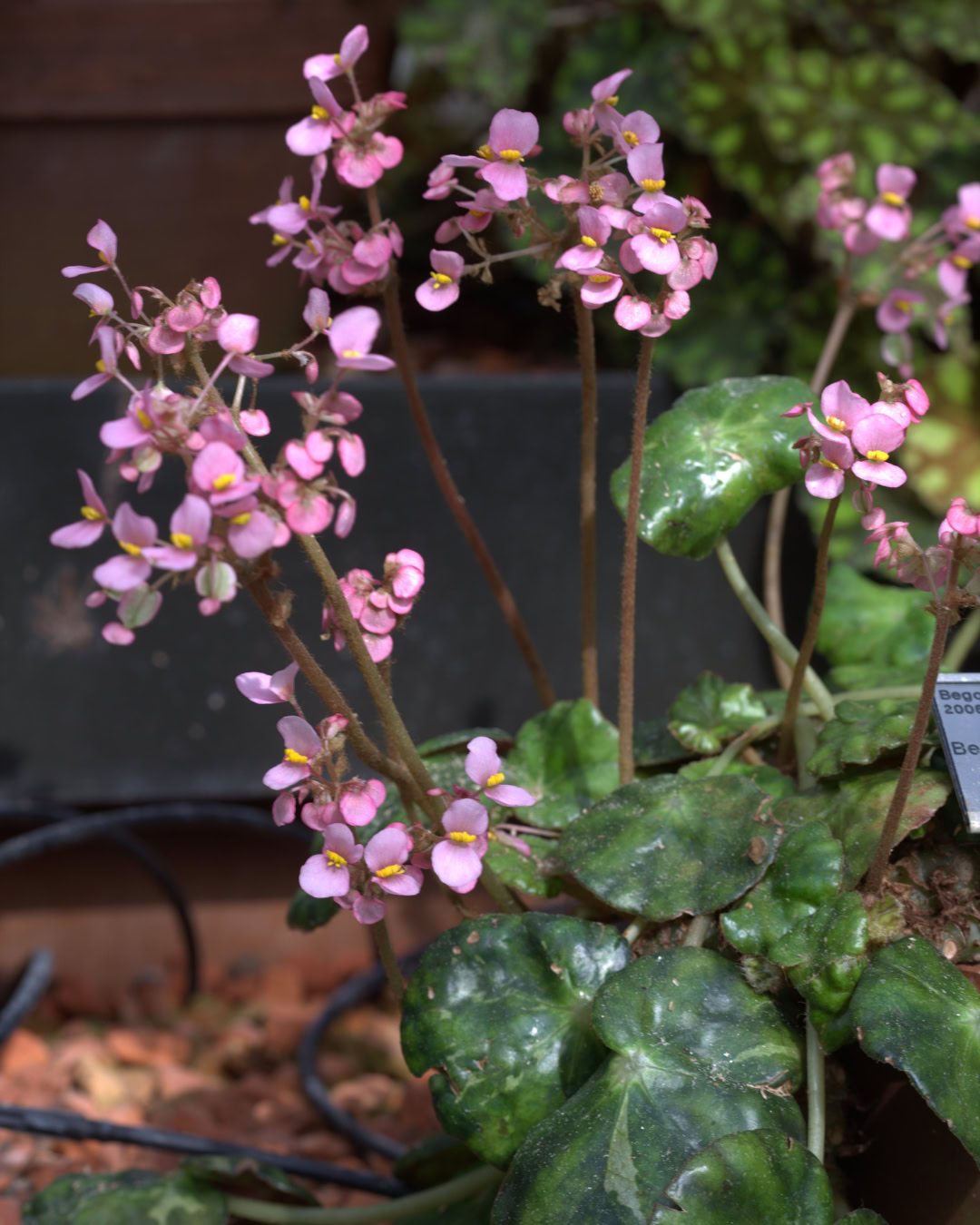
Native to Mexico, especially Veracruz and Oaxaca, Begonia hydrocotylifolia is a rhizomatous species with rounded leaves that resemble small Hydrocotyle leaves, which is where the species name comes from. It has a delicate look, with green, glossy, peltate or nearly peltate leaves that form a low, graceful mound. It’s one of those types of begonias that doesn’t shout for attention, but wins with the overall effect.
It likes abundant indirect light and a loose potting mix that holds moisture well without becoming waterlogged. Because it stays low and grows rhizomatously, it looks best in wide containers where it can spread into a horizontal clump. Water when the top layer of soil is just slightly dry, and reduce watering during cooler periods. Indoors, avoid direct blasts from air conditioning and very dry air, which can leave the leaves smaller and less vigorous.
22. Manicata Begonia – Begonia manicata
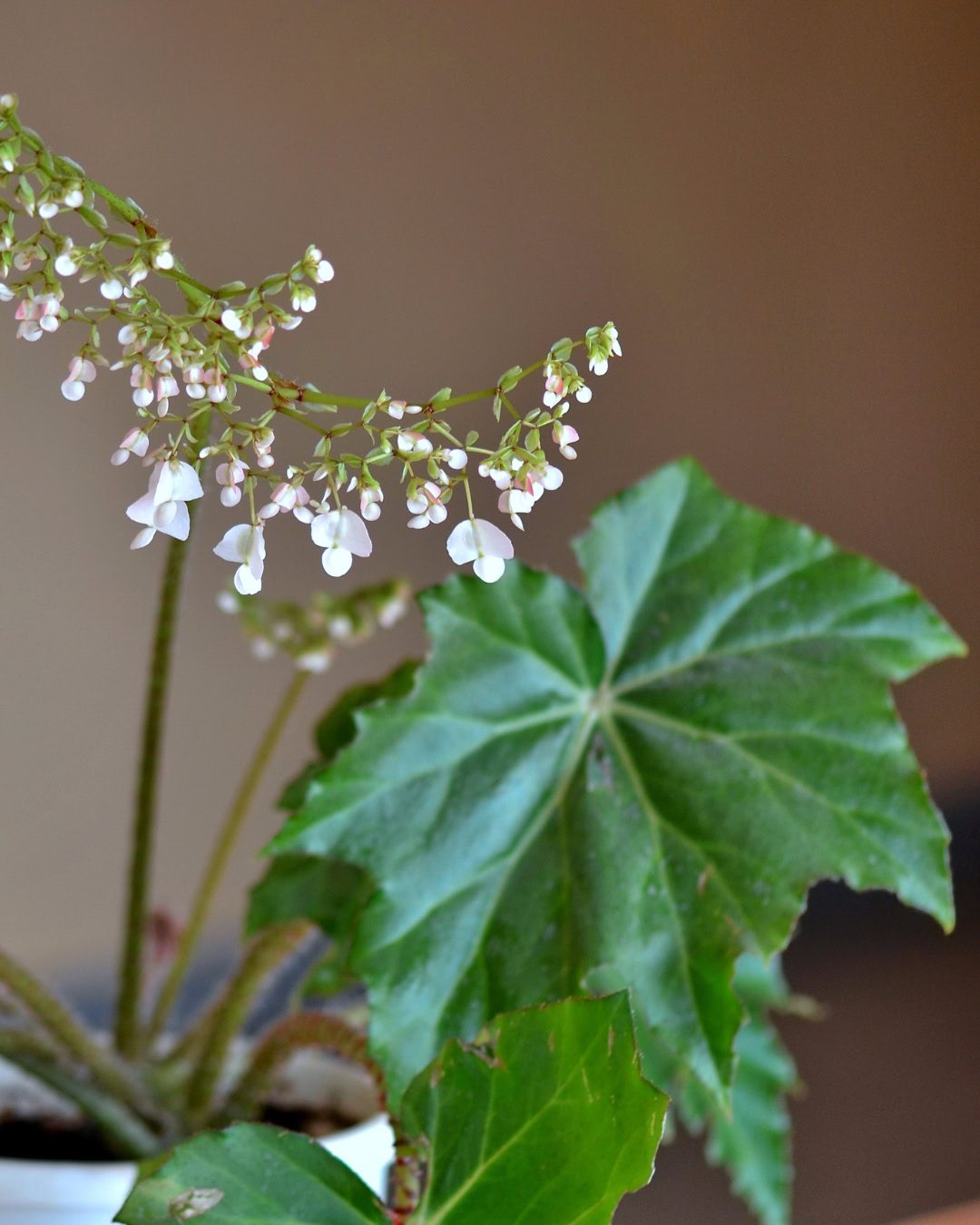
Native from Mexico through Central America, Begonia manicata is a rhizomatous begonia with large, rounded to lobed leaves held on sturdy petioles. One of its best-known ornamental forms has pale markings on the leaves and is often grown as Begonia manicata ‘Aureo-maculata’. This is one of the types of begonias with a distinctly tropical, full-bodied look, making it especially useful for adding presence to larger containers in shaded areas.
Because it is more vigorous than many small collector begonias, it needs a proportionate pot and a well-structured potting mix with organic matter and good aeration. Grow it in bright partial shade, protected from hot sun and dry winds. Water regularly during active growth, but always with excellent drainage. When grown well, it becomes a broad, sculptural plant; when cramped in a tiny pot, it turns into a sculpture of suffering, which is not exactly the goal.
23. Lotus Begonia – Begonia nelumbiifolia
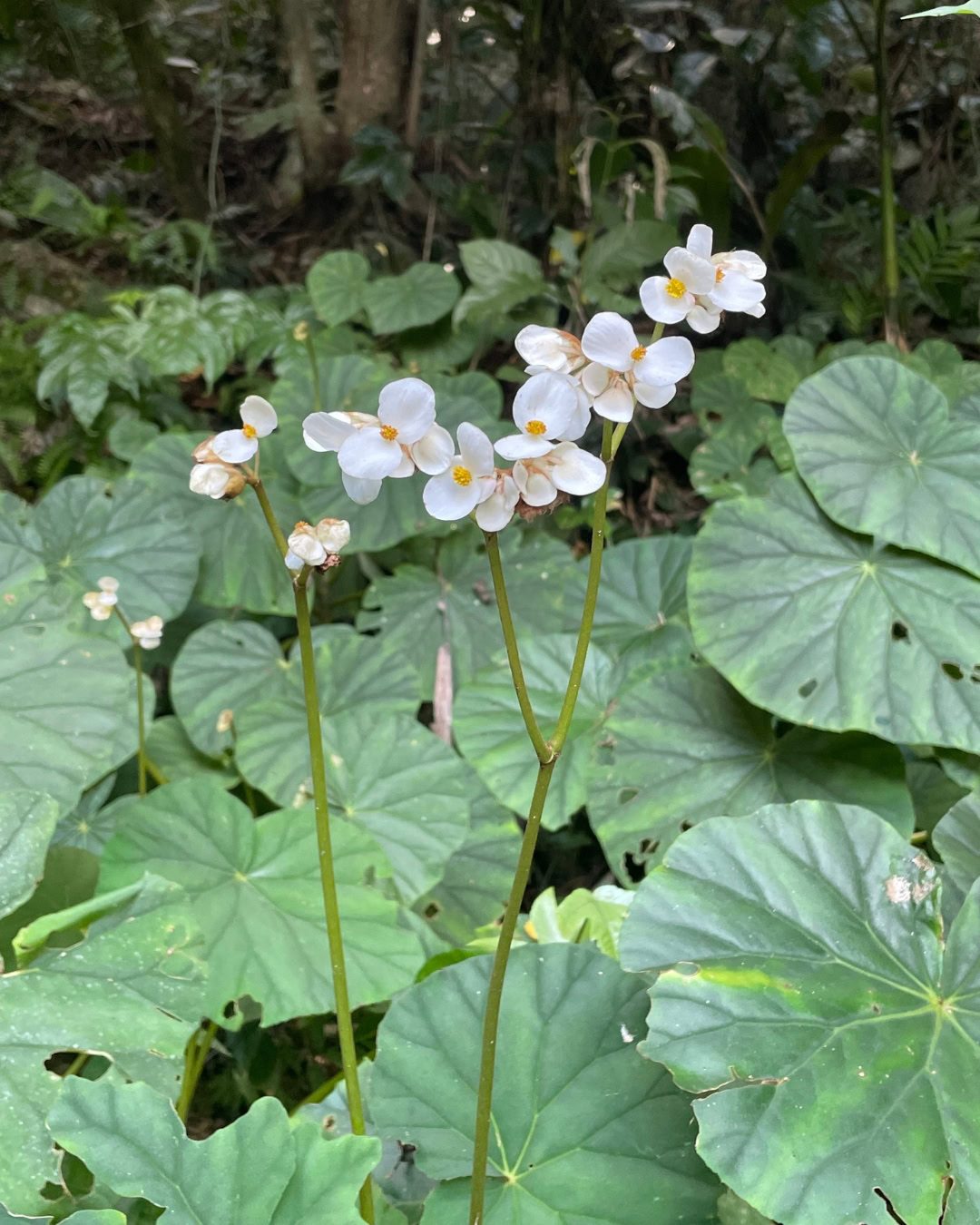
Native from Mexico to Colombia, Begonia nelumbiifolia is a large rhizomatous species known for its broad, rounded, peltate leaves that resemble lotus leaves or miniature water lilies on land. The plant forms a vigorous clump, with long petioles and leaves held above the potting mix, creating a tropical, sculptural effect that looks especially striking in large containers or shaded gardens.
Unlike many small collector begonias, this one needs room. Grow it in bright partial shade, in a rich, organically amended, moist but well-drained potting mix. It likes warmth, humidity, and regular watering, but not soggy soil for long periods. In containers, use wide, stable pots, since the plant can get quite large and may tip if it is cramped. This is a begonia for gardeners with space, not for anyone trying to cram a tropical forest into a coffee cup.
24. Spotted Begonia – Begonia pustulata
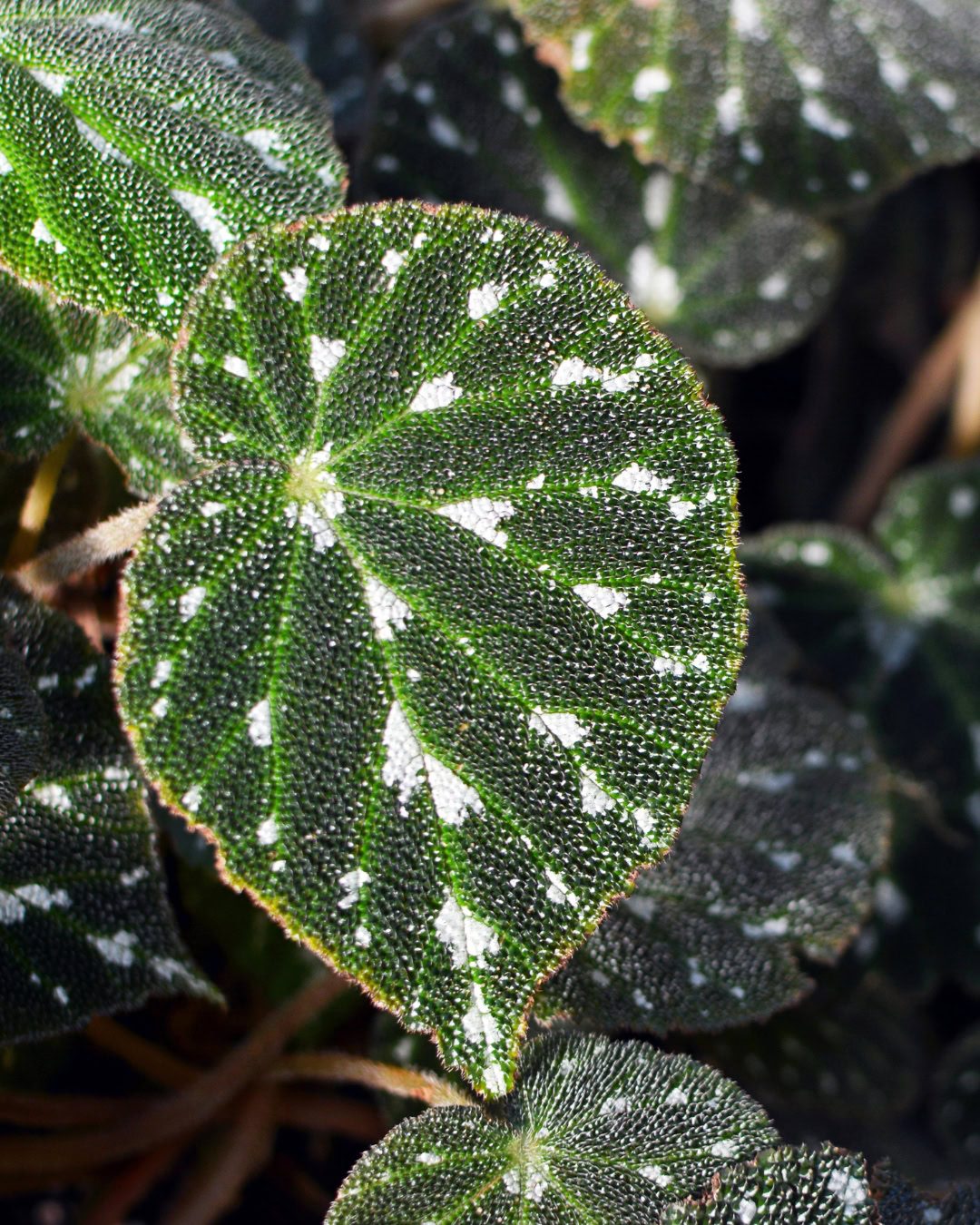
Native to southern Mexico, Begonia pustulata is a rhizomatous begonia with especially unusual foliage. Its leaves have a pronounced texture, with small bumps or “blisters” on the surface, along with spots and patterns that vary by cultivated form. The species name comes from these small pustules, a feature that makes the plant look almost sculpted.
It prefers a protected setting with bright indirect light and good humidity. The potting mix should be light, porous, and rich, holding some moisture without becoming saturated. Like other rhizomatous begonias, it does best in wider pots rather than deep ones. Avoid strong direct sun, overwatering, and stuffy conditions. The leaf texture is part of the plant’s charm, but it also calls for care: don’t turn your begonia into a daily misting target.
25. Red Begonia – Begonia brevirimosa
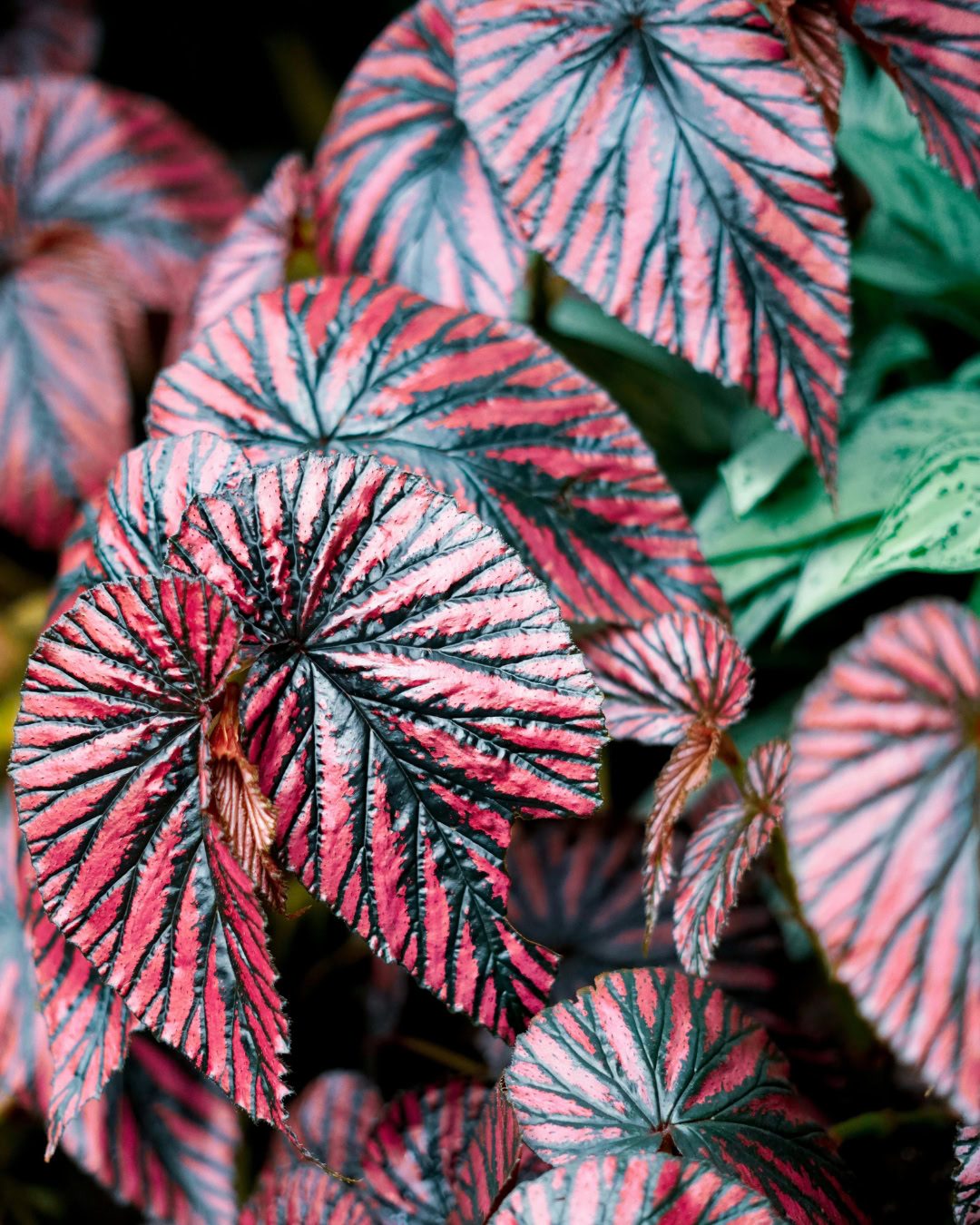
Native to New Guinea and the Bismarck Archipelago, Begonia brevirimosa is one of the most dramatic foliage begonias in cultivation. Its leaves can show irregular markings in vivid pink, red, deep green, and silver, especially in forms such as Begonia brevirimosa subsp. exotica. It is a plant that looks as if it was painted without restraint — and in this case, it works.
This is a tropical humidity-loving begonia and does not like dryness, cold, or strong sun. Grow it in bright indirect light, with moderate to high humidity and a very well-drained potting mix. Water regularly, keeping the mix lightly moist but never soggy. Indoors, it usually needs a bright spot protected from direct air conditioning. The color is best with good light, but too much light will scorch it; it is the classic begonia balancing act of finding the exact sweet spot.
26. Yellow Begonia – Begonia quadrialata
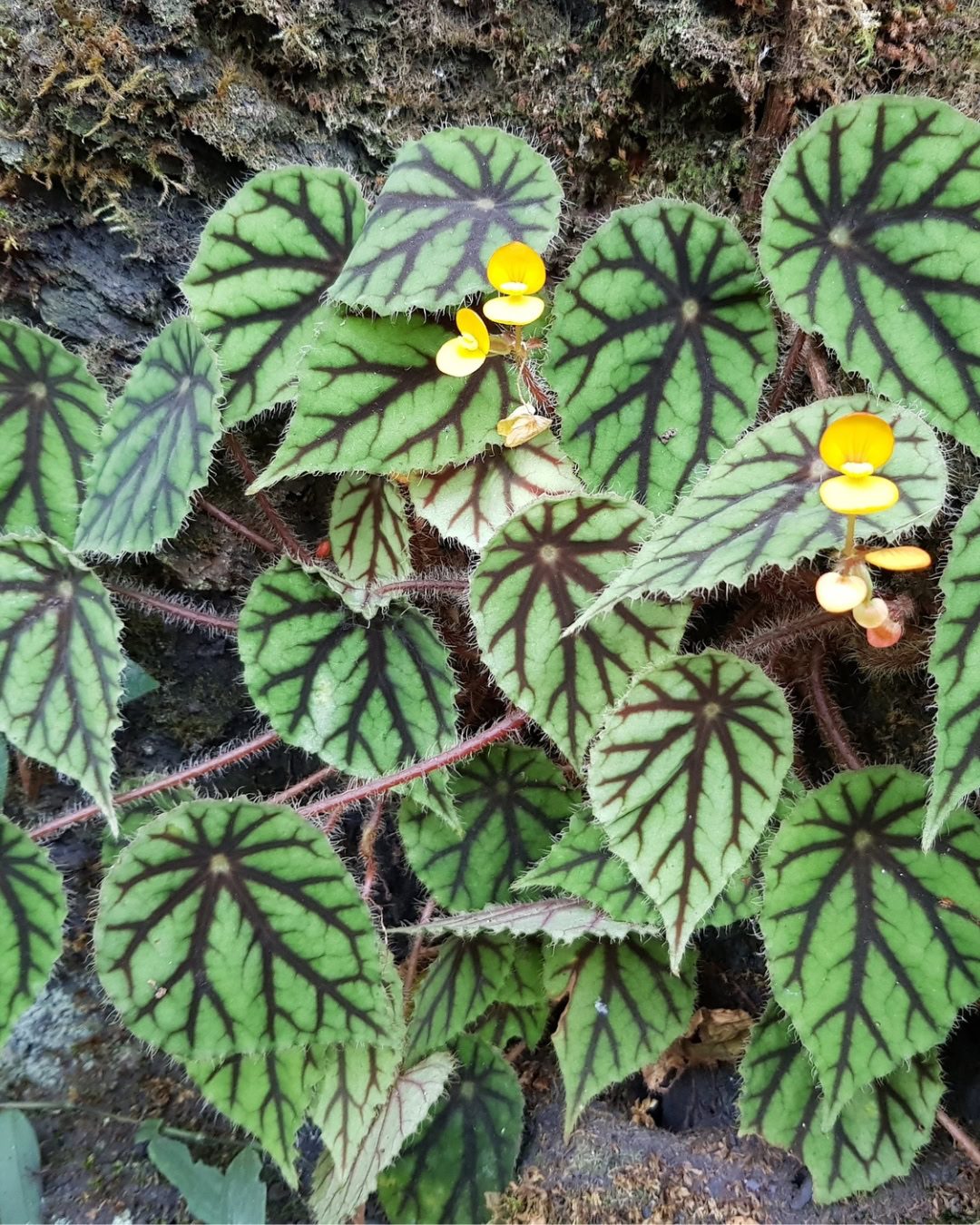
Native to tropical western and west-central Africa to northwestern Angola, Begonia quadrialata is a relatively compact rhizomatous or perennial begonia. It is valued for its green leaves, often with prominent veins, and for its yellow to yellow-orange flowers, a less common color among cultivated begonias. In some forms, such as those associated with the subspecies nimbaensis, the overall look becomes even more delicate and collectible.
It prefers protected growing conditions, with high humidity, filtered light, and a light, airy potting mix. It’s a good candidate for small pots, home greenhouses, or ventilated terrariums, as long as it doesn’t get too stuffy. Water carefully: keep the soil evenly moist, but never soggy. Because it is a less forgiving begonia for everyday growing, it’s worth keeping a close eye on it during the first few weeks, adjusting light and water before it writes a resignation letter in the form of a wilted leaf.
Cane begonias, shrub begonias, and standout Brazilian types of begonias
These begonias have more upright, elongated, or shrubby stems, often resembling slender bamboo or small tropical shrubs. They’re excellent plants for adding height, movement, and presence to a shade garden, porch, or large container. Some have spotted leaves, others stand out for their dangling flowers, and several Brazilian species bring strong ornamental appeal. In general, they need more light than rex begonias, but they should still be protected from strong sun.
27. Angel wing begonia – Begonia maculata
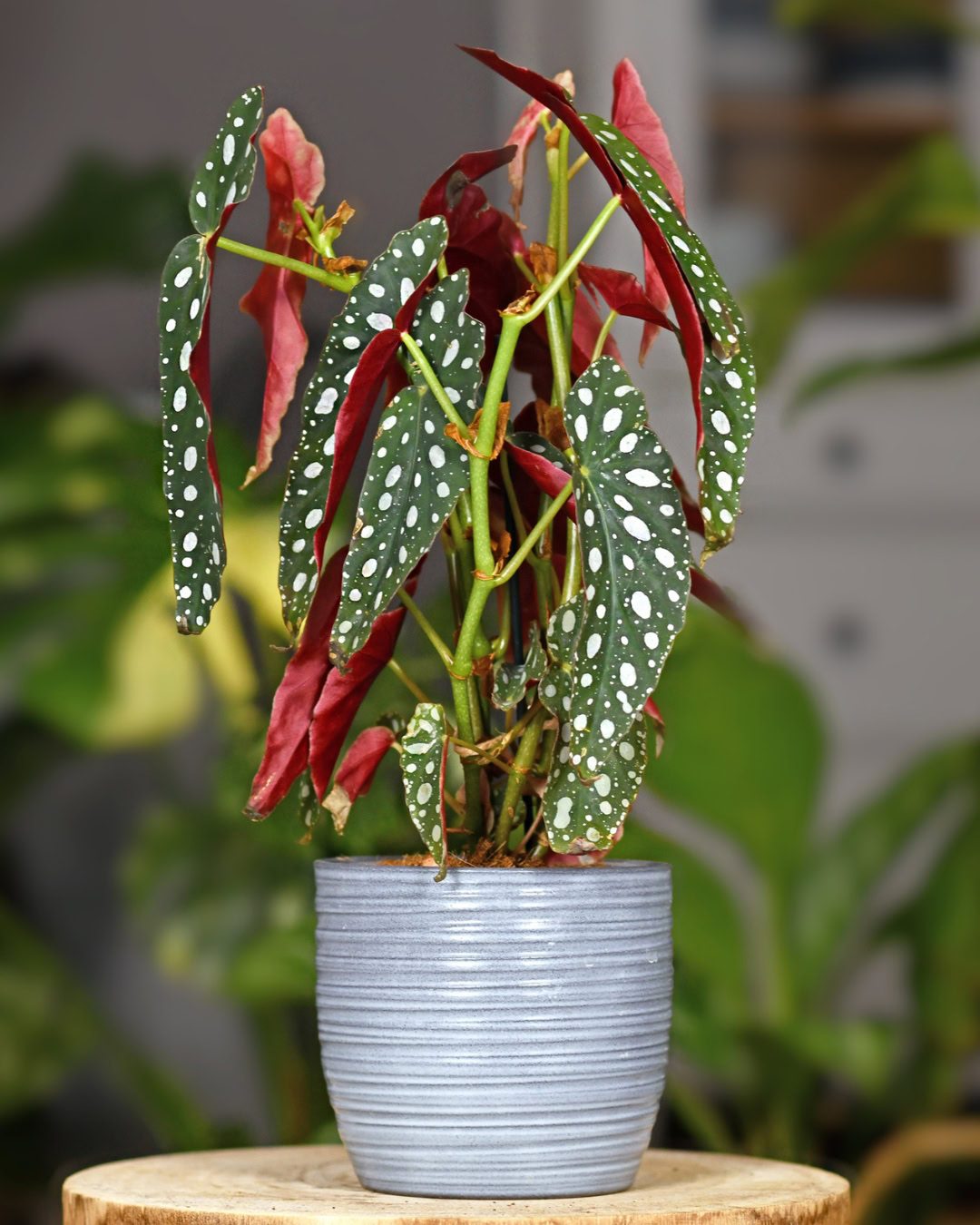
Native to Rio de Janeiro, Begonia maculata is one of the best-known Brazilian begonias in the world. It has an upright stem, elongated asymmetrical leaves that are green on top with rounded silver spots, and a reddish underside. The flowers appear in hanging clusters, usually white to pink, reinforcing its elegant, tropical look. It’s the polka-dot begonia that became a favorite of indoor gardeners, social media, and collectors.
It needs bright indirect light to keep the foliage looking good and to bloom well. In a dark spot, it grows weak, stretched, and dull; in strong sun, it burns. Use a light, fertile, well-draining potting mix, and water moderately when the top layer starts to dry. Because it has a cane-like habit, it may need staking or training prunes to stay fuller. Pinching back the tips encourages branching and keeps the plant from turning into a crooked antenna searching for light.
28. Coral begonia – Begonia coccinea
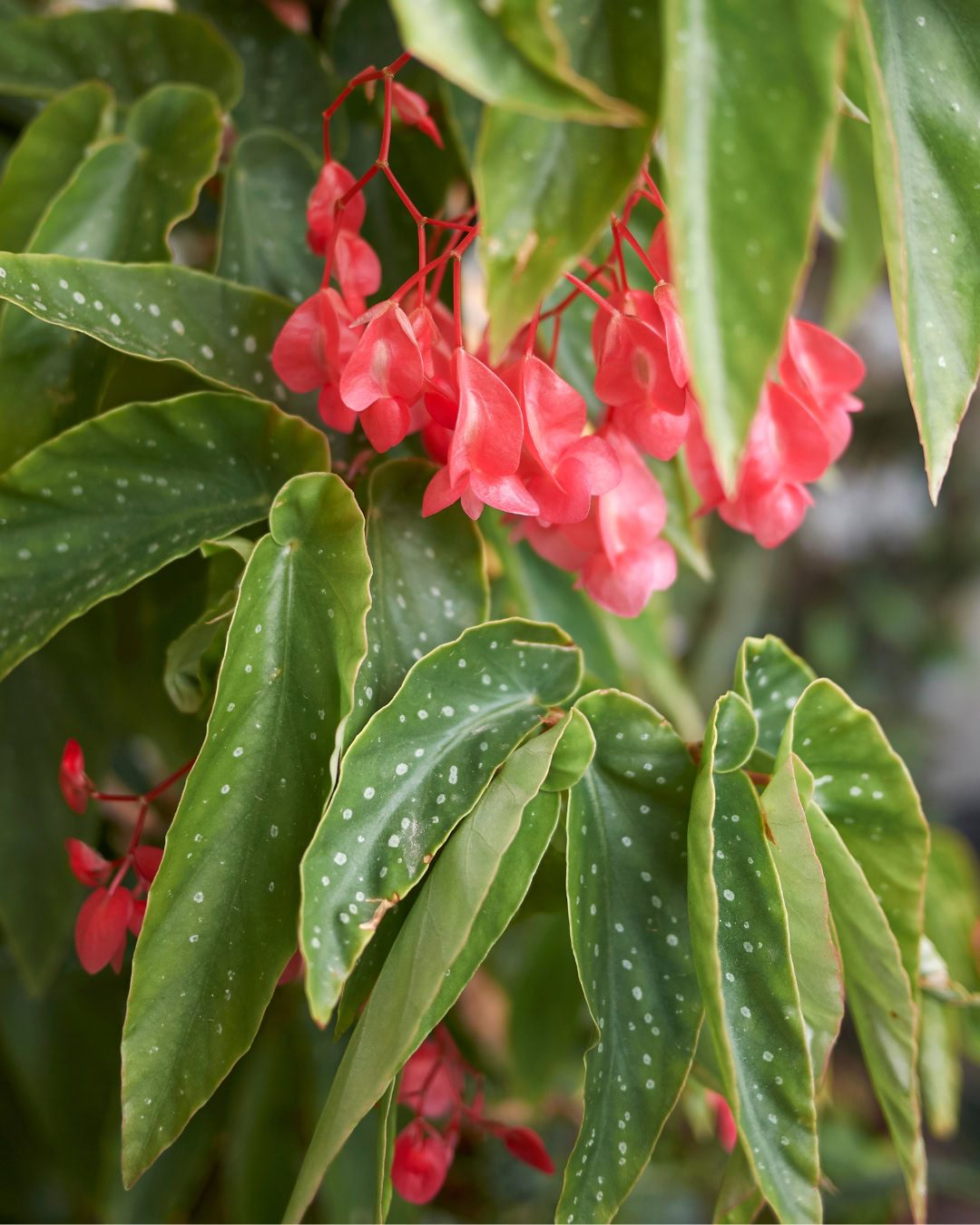
Begonia coccinea is a Brazilian species from the Atlantic Forest, especially associated with submontane and montane forests in Rio de Janeiro and Espírito Santo. It has an upright habit, asymmetrical leaves, and hanging flowers in coral-red tones, which explains its common name. It’s one of the most interesting cane begonias for gardeners who want ornamental blooms with a more natural look and less of a “garden center plant” feel.
It does well in bright partial shade, with good air circulation and a rich but well-draining potting mix. It tolerates more light than rex begonias, but should be protected from hot afternoon sun. Water regularly during active growth, without keeping the mix soggy. In containers, it can be lightly pruned to encourage side shoots and a fuller plant. When it gets too little light, it tends to stretch and bloom less.
29. Begonia × albopicta – Begonia × albopicta
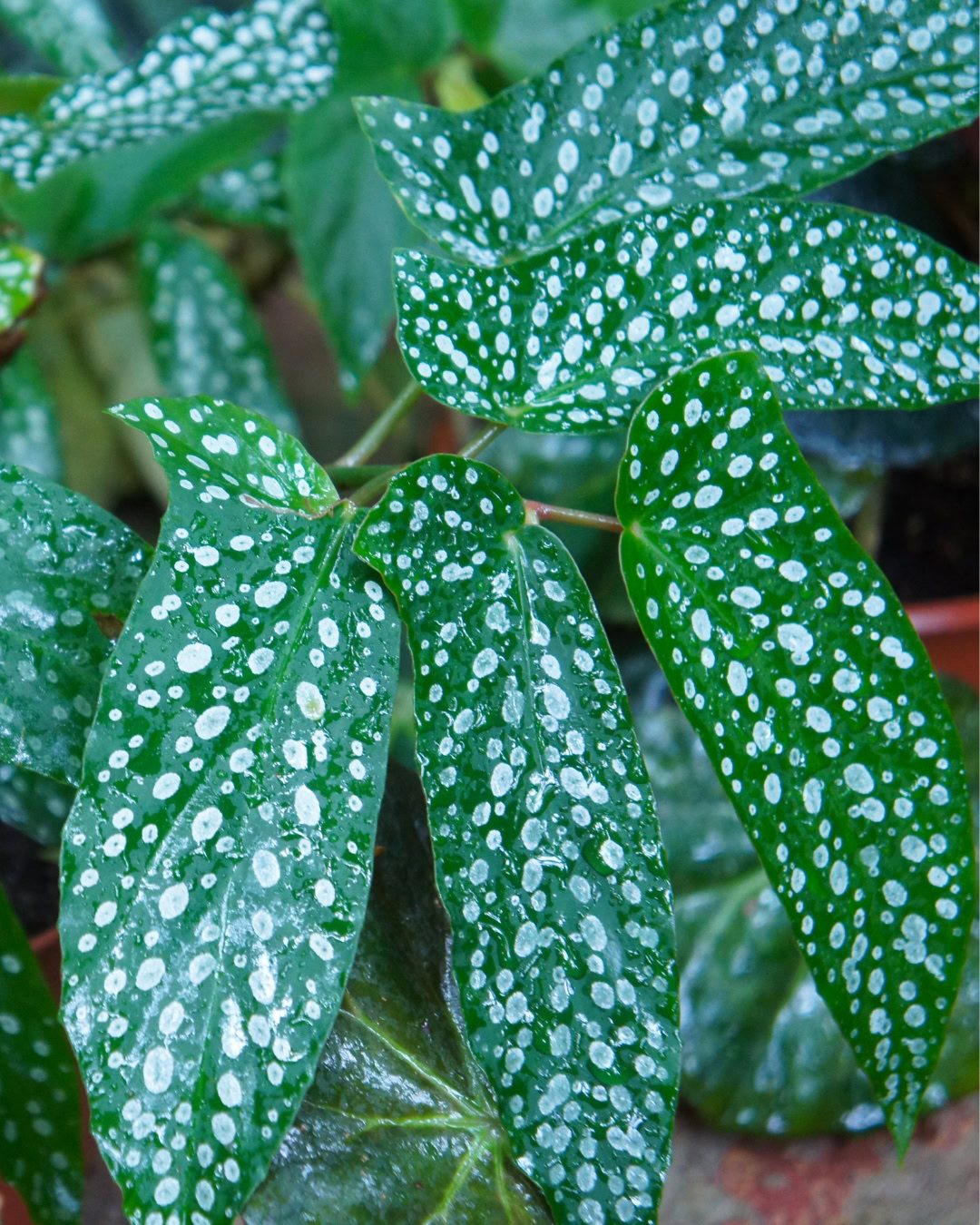
Begonia × albopicta is a natural or horticultural hybrid associated with southeastern Brazil, with the hybrid formula recorded as Begonia maculata × Begonia olbia. It is a shrubby begonia with elongated leaves, usually green and dotted with small pale spots. Visually, it fits into the world of spotted cane begonias, but it usually has a finer, more delicate look than the famous Begonia maculata.
Its care follows the logic of cane-like begonias: plenty of bright indirect light, a light potting mix, moderate watering, and good airflow. Indoors, it should be placed near a bright window, without strong direct sun through the glass. It can be pruned to branch and keep a more compact shape. Too much shade makes the stems long and weak; too much water, on the other hand, solves the problem more decisively than anyone would like.
30. Begonia aconitifolia – Begonia aconitifolia
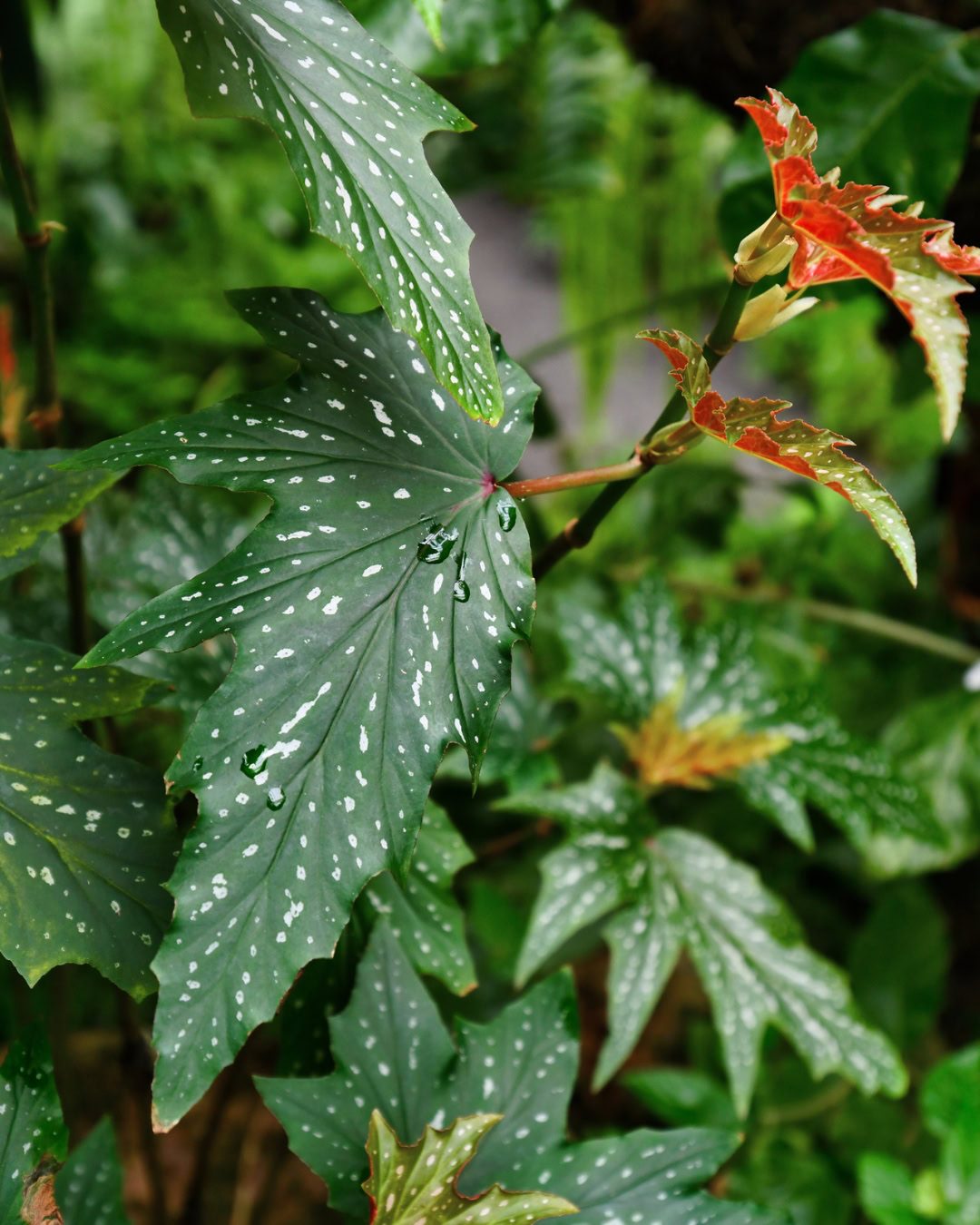
Native to Rio de Janeiro, Begonia aconitifolia is a Brazilian shrubby begonia with deeply cut leaves that resemble the foliage of some Aconitum species, which is where the specific name comes from. Its habit is elegant and more upright, with slender, finely divided leaves that are highly ornamental. It also contributed to the parentage of some famous cane begonia hybrids, underscoring its importance in ornamental gardening.
It prefers bright partial shade, a humid environment, and well-drained soil or potting mix. In containers, it needs room to develop taller stems and well-formed leaves. Good light is essential to prevent legginess, but strong sun can scorch the cut foliage. Light pruning helps control height and encourage branching. This is a great begonia for adding fine texture to tropical plantings without defaulting to the usual big, round leaf.
31. Palm-Leaf Begonia – Begonia luxurians
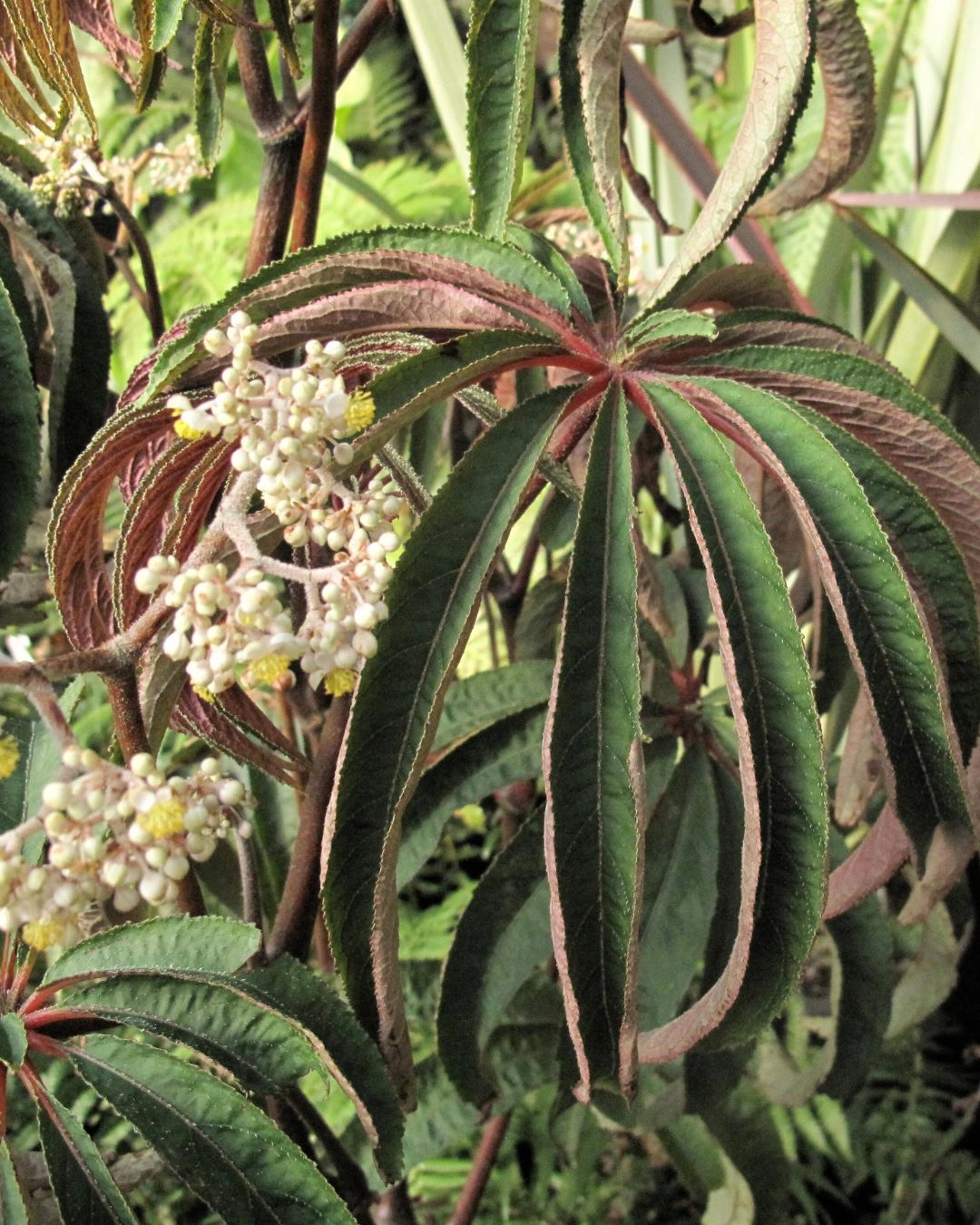
Known in cultivation as Begonia luxurians, this Brazilian begonia is famous for its palmate leaves, divided into narrow leaflets that resemble small palms or very refined cassava leaves. In good conditions, it forms a tall, upright plant with an architectural look, reddish stems, and a strong tropical presence. It is one of the most sculptural begonias for shaded gardens and large containers.
Because it is vigorous, it needs a roomy pot, fertile, well-draining soil, and regular watering. Grow it in bright partial shade or filtered light, protecting it from harsh sun and dry winds. Indoors, it only performs well in very bright spots; in too much shade, it becomes leggy and loses vigor. It also appreciates humidity, but not soggy soil. This is a plant for creating volume and height, not for being forgotten in a dark corner of the living room.
32. Metallic Begonia – Begonia incarnata (syn. Begonia metallica)
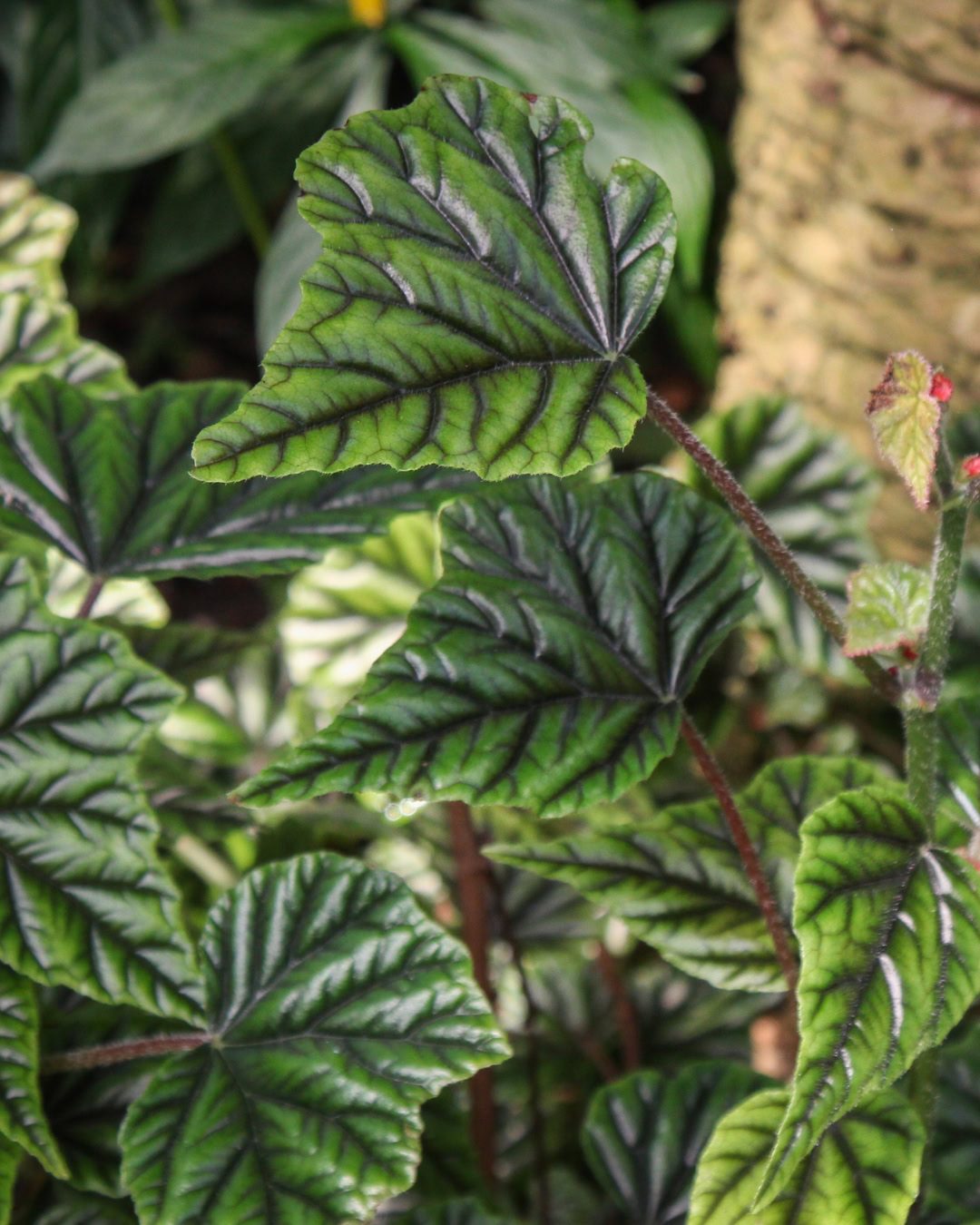
The metallic begonia is still widely known in cultivation by the name Begonia metallica, although current taxonomic databases treat that name as a synonym of Begonia incarnata. It is a shrubby begonia native to Mexico, with asymmetrical green leaves that are slightly hairy and have a subtle metallic sheen, along with pink flowers. Its appeal is not flashy; it has the kind of old-fashioned elegance you expect from a classic collector plant.
It prefers bright indirect light or very light partial shade, with fertile, airy, well-draining soil. It handles a large pot better than a cramped one, since it can form a small shrub. Water when the surface of the potting mix starts to dry, avoiding both prolonged dryness and waterlogging. Light pruning helps keep the plant compact and encourages new growth. In cold climates, it should be protected, since it does not handle low temperatures well.
33. Dichroa Begonia – Begonia dichroa
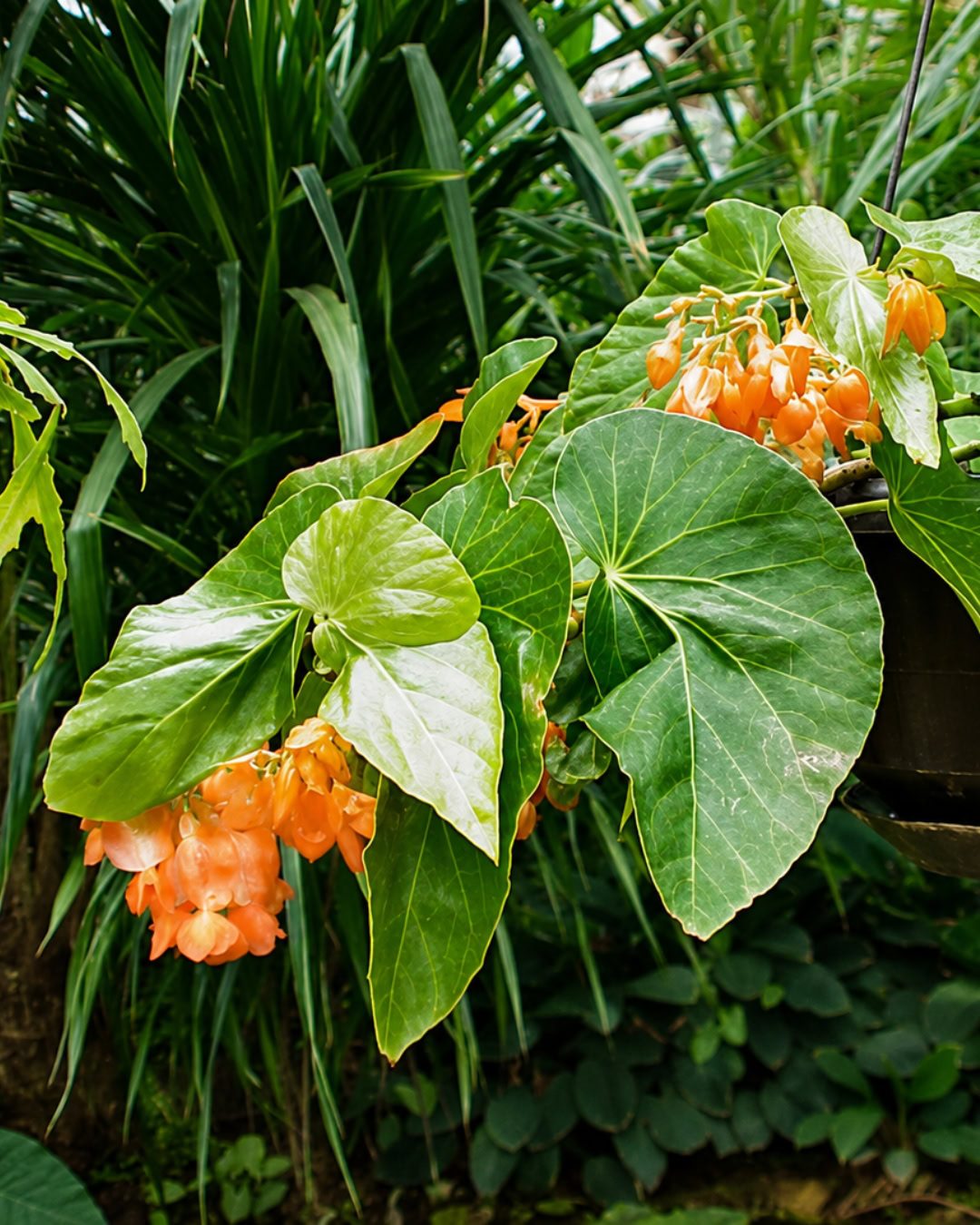
Native to Rio de Janeiro, Begonia dichroa is a Brazilian shrubby begonia with high ornamental value. It has green, elongated, asymmetrical leaves, but its main attraction is the hanging inflorescences, with flowers in orange to salmon tones that contrast beautifully with the foliage. It is a less obvious species than the famous Begonia maculata, but a very interesting one for shaded gardens and tropical collections.
It prefers bright partial shade, fertile, airy, well-drained soil, and moderate humidity. To bloom well, it needs good light, but no harsh direct sun during the hottest part of the day. In containers, it can be pruned lightly to encourage branching and keep a fuller shape. Avoid waterlogging, severe cold, and deep shade, since the plant tends to lose vigor and bloom less.
Trailing, Creeping, and Climbing Begonias
Begonias in this group are great for hanging baskets, tall planters, tree trunks, shaded walls, and compositions where the plant can cascade, spill, spread, or lean on other structures. Some are tuberous, others are epiphytic or semi-epiphytic, and many produce small but abundant flowers. They are excellent choices for adding movement to the garden, while avoiding that overly proper begonia sitting in a pot like it is waiting to be called into an exam room.
34. Bolivian Begonia – Begonia boliviensis
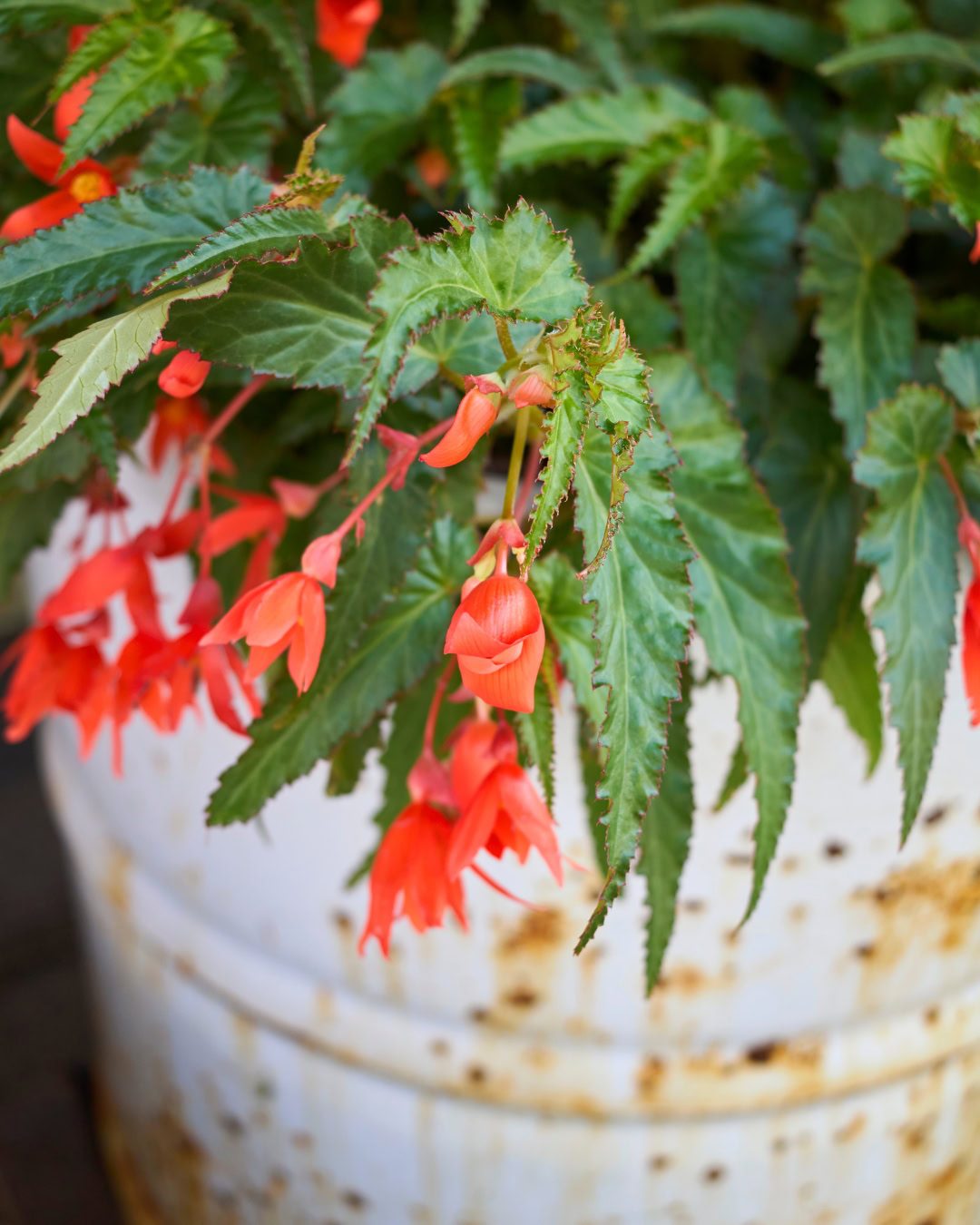
Native to the mountainous regions of Bolivia and northern Argentina, Begonia boliviensis is a tuberous species famous for its trailing habit and elongated flowers, usually in shades of red, orange, or coral.
It was one of the important species in the development of modern tuberous begonias, especially hanging basket varieties. Its leaves are narrow, asymmetrical, and delicate, creating a plant that looks airy, floriferous, and very graceful.
It does best in bright partial shade, with gentle morning sun or filtered light. The potting mix should be light, fertile, and very well drained, since the tuber does not tolerate waterlogging. During the active growth phase, keep watering regular and fertilization moderate to support blooming. During dormancy, reduce watering. It is an excellent choice for hanging baskets, as long as it is not kept in a hot, dry spot exposed to harsh afternoon sun.
35. Sutherland begonia – Begonia sutherlandii
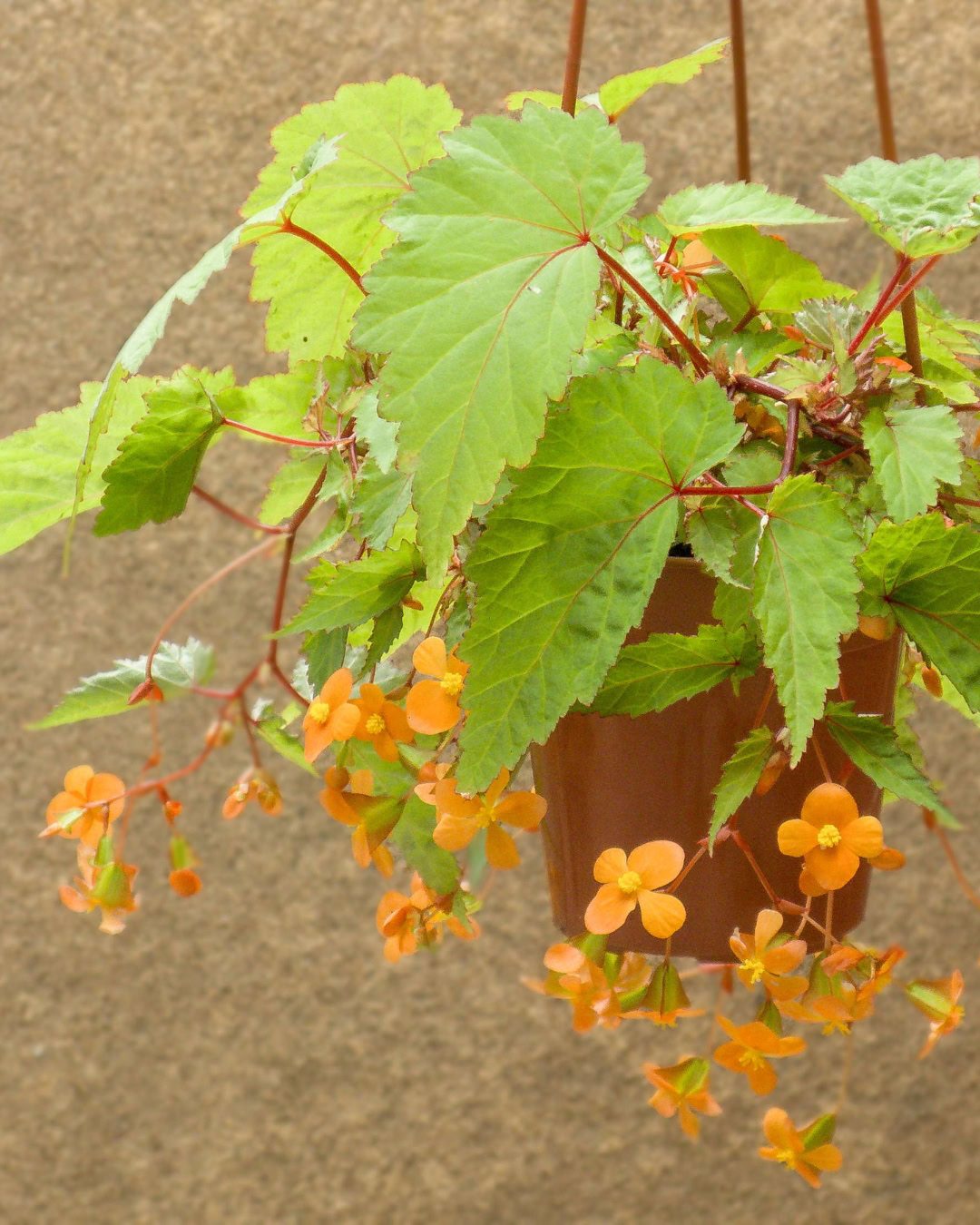
Native to eastern and southern Africa, Begonia sutherlandii is a delicate tuberous begonia with slender stems, asymmetrical leaves, and small flowers in shades from orange to orange-red. It has a trailing or semi-trailing habit and looks especially good in hanging baskets, tall planters, and sheltered corners. Its look is less showy than hybrid large-flowered tuberous begonias, but much more natural and airy.
It prefers partial shade, well-drained soil, and careful watering during active growth. Because it forms tubers, it needs less water when it goes dormant or when growth slows. It does not like severe cold or soil that stays soggy. In mild climates, it can be grown outdoors in a protected spot; in colder areas, it is better kept in a container so it can be moved easily for winter care.
36. Fuchsia begonia – Begonia foliosa
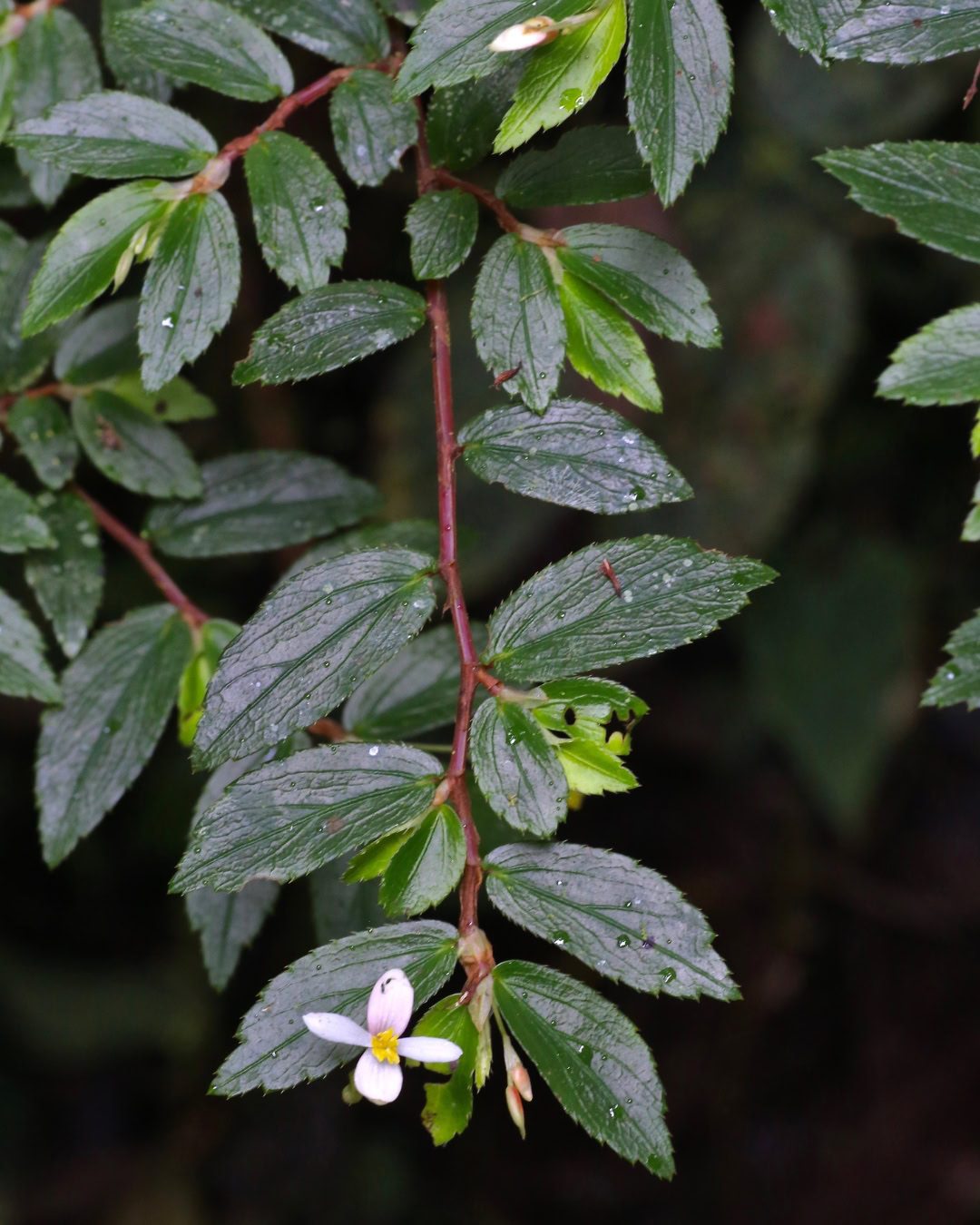
Native to Colombia and Venezuela, Begonia foliosa is a shrubby to trailing begonia with slender stems and many small, glossy green leaves. The most commonly grown form, often associated with Begonia foliosa var. miniata, produces small flowers in pink, red, or coral tones, subtly resembling a miniature fuchsia. It is a delicate plant, but very charming when grown in a hanging basket.
It likes bright indirect light, good air humidity, and a light, fertile, well-draining potting mix. Because the stems are thin and trailing, it looks best in hanging baskets or on high shelves, where it can cascade naturally. Water regularly, without letting it dry out completely for long periods, but avoid waterlogging. Light pruning helps keep the plant fuller and encourages new growth.
37. Fuchsioides begonia – Begonia foliosa (syn. Begonia fuchsioides)
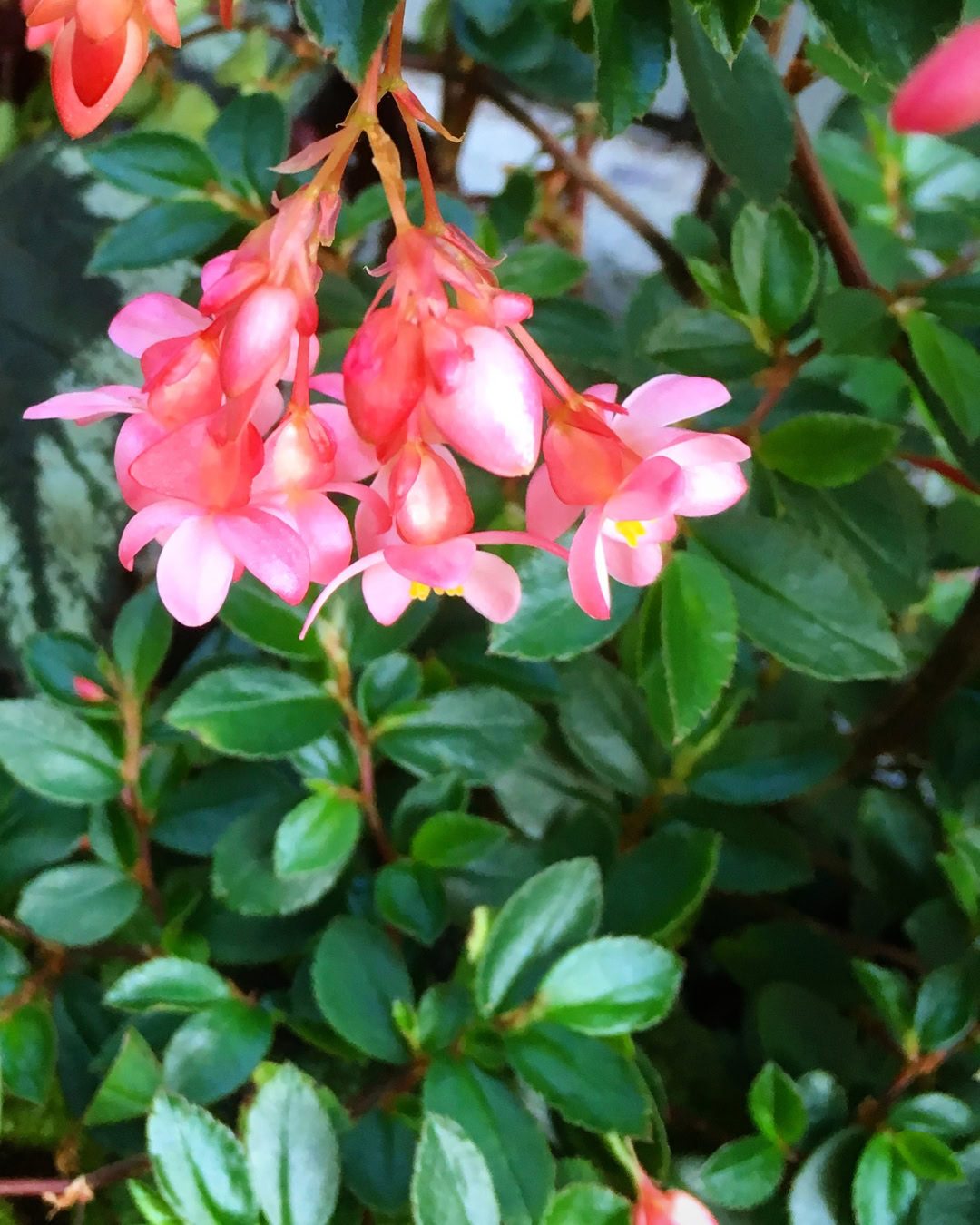
The so-called fuchsioides begonia has long circulated in cultivation under the name Begonia fuchsioides, but current taxonomic databases treat that name as a synonym of Begonia foliosa. Even so, it is worth keeping in the article because many collectors, nurseries, and older plant lists still use this name for forms with slender stems, small leaves, and delicate flowers that look a bit like a small fuchsia.
Its care follows the same approach as fuchsia begonia: bright indirect light, a porous potting mix, regular watering, and protection from strong sun, dry wind, and severe cold. It usually looks best in a hanging basket, where the stems can arch naturally. To keep the plant dense, prune lightly after flowering or whenever the stems get too long. Without pruning, it can become a charming little curtain; with neglect, a rather sad one.
38. Climbing begonia – Begonia fruticosa
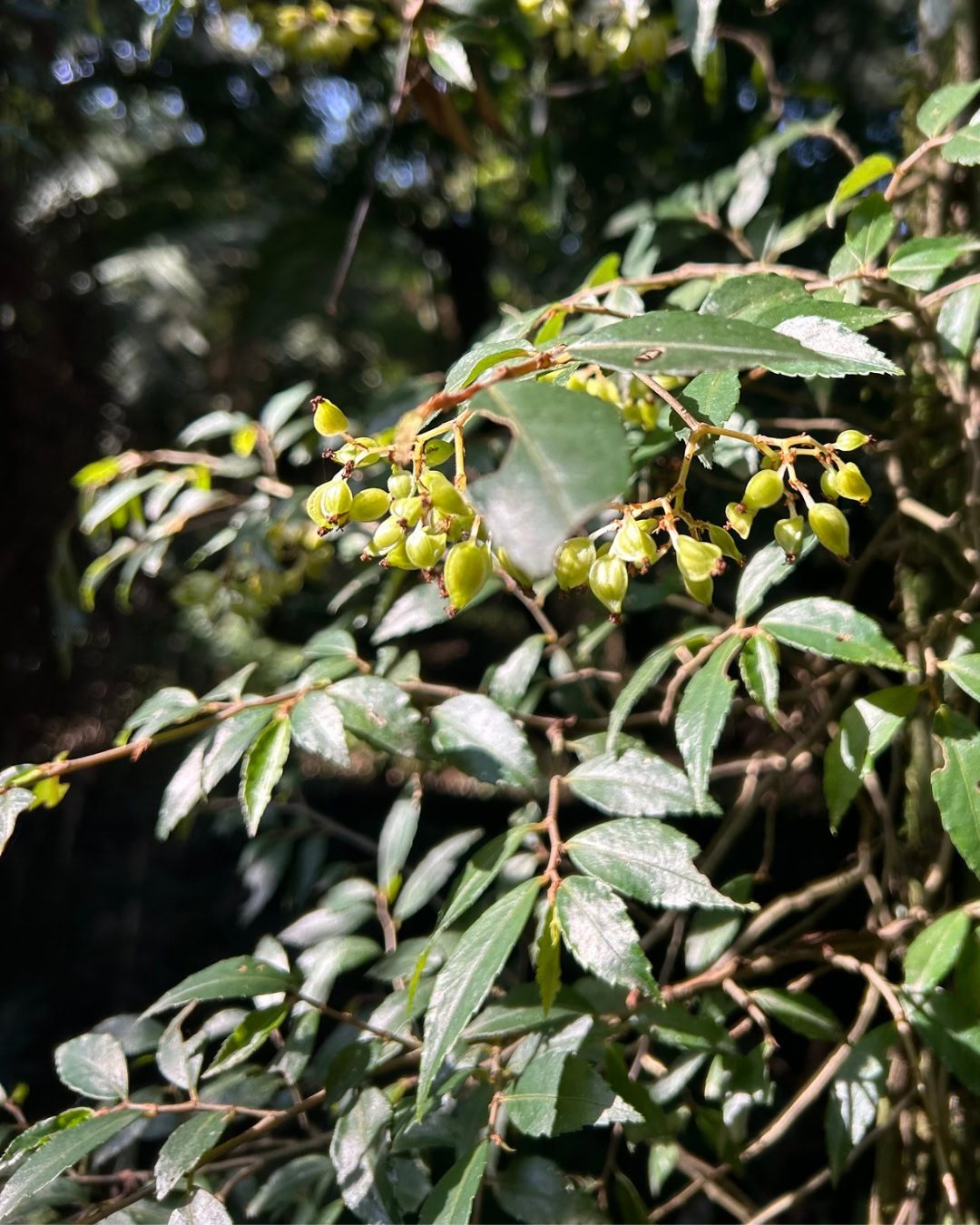
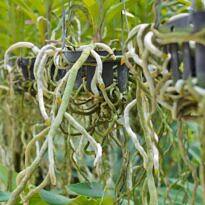
Native from eastern and southern Brazil to northeastern Argentina, Begonia fruticosa is an epiphytic or semi-epiphytic species associated with humid forest habitats. It has elongated stems, a trailing or climbing habit, and small to medium leaves, forming a light, branching plant that is very interesting for hanging baskets, logs, mounts, or supports. Its flowers are subtle, but they add to the plant’s delicate overall look.
It prefers bright partial shade, high humidity, and a very airy potting mix similar to what is used for epiphytic plants, with a good amount of bark, fiber, or other components that prevent compaction. It should not be kept in heavy soil or in a pot that stays constantly wet. Water when the mix begins to dry, keeping moisture steady without suffocating the roots. It is great for shaded tropical garden combinations, especially when it can lean or trail naturally.
39. Begonia radicans – Begonia radicans
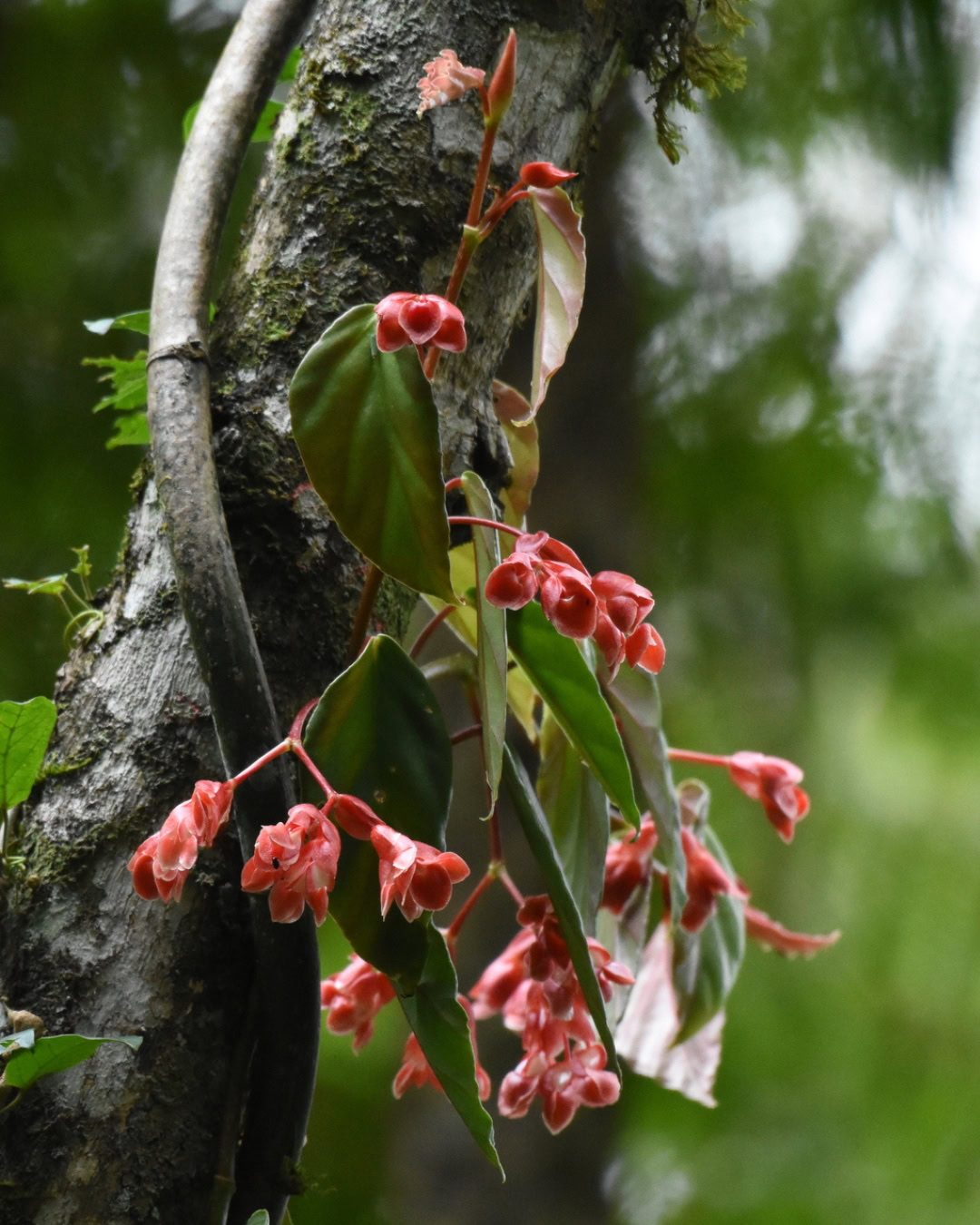
Begonia radicans is a trailing or climbing begonia grown for its slender stems, delicate leaves, and small flowers, usually pink or reddish. In landscape use, it works well as one of the types of begonias for hanging baskets, tall containers, and places where its stems can spill over lightly. Less familiar to the general public, but especially interesting for anyone who wants to move beyond the standard tabletop begonias and explore more natural growth habits.
Grow it in bright, filtered shade with a light, organic-rich, well-draining potting mix. Because it has trailing stems, it appreciates consistent moisture, but it will not tolerate soggy soil. Avoid strong direct sun, which can scorch the leaves and reduce the plant’s overall quality. Occasional pruning helps control stem length and encourage side shoots. If you want a cascading effect, let a few stems grow freely, but don’t let the pot turn into a green bowl of spaghetti.
40. Creeping begonia – Begonia thelmae
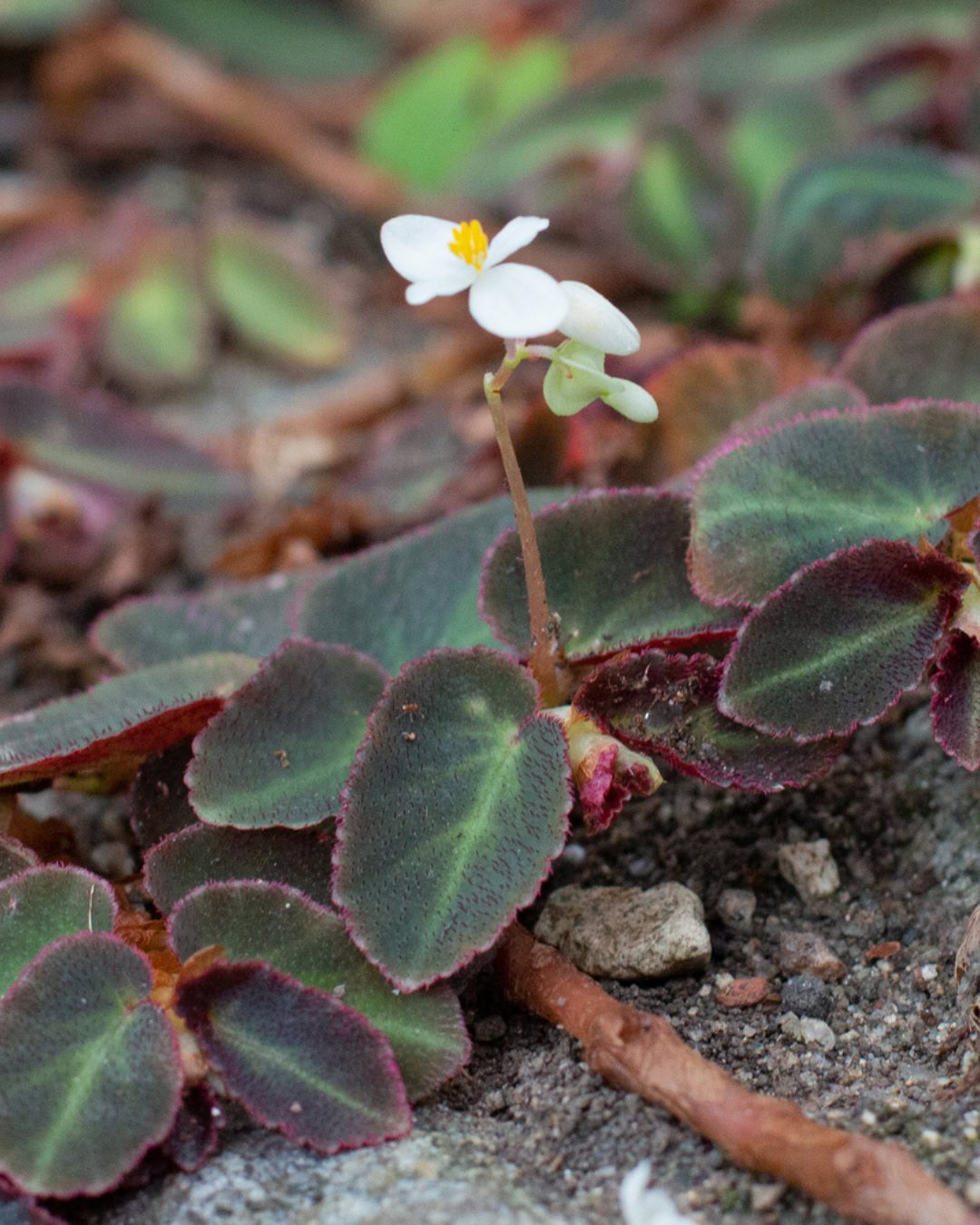
Native to Espírito Santo, Begonia thelmae is a low-growing Brazilian species prized by collectors. It has a creeping or trailing habit, with small, rounded to oval leaves that are velvety in texture and dark in color, usually deep green to coppery. This is a delicate begonia with an elegant look, perfect for shallow pots, small hanging baskets, and protected growing conditions.
It prefers bright indirect light, moderate to high humidity, and a fine, light, well-draining mix. It does not like direct sun, dry air, or excess water. Because it forms a low, delicate mass, it is important to avoid heavy watering that can shift the potting mix or soak the foliage too much. Indoors, it does best near a bright window, out of cold drafts. It may be small, but it is not a plant for casual treatment.
Unusual, thick-stemmed, and sculptural begonias
This final group brings together begonias that break away from the genus’s best-known form. These are plants valued for thick stems, sculptural structure, silvery texture, unusual growth habits, or adaptation to slightly more specific conditions. Some appeal more to collectors than to the general public, but they belong in a definitive article because they show the full range of the genus Begonia: it goes far beyond bedding flowers and painted apartment leaves.
41. Bonsai begonia – Begonia dregei
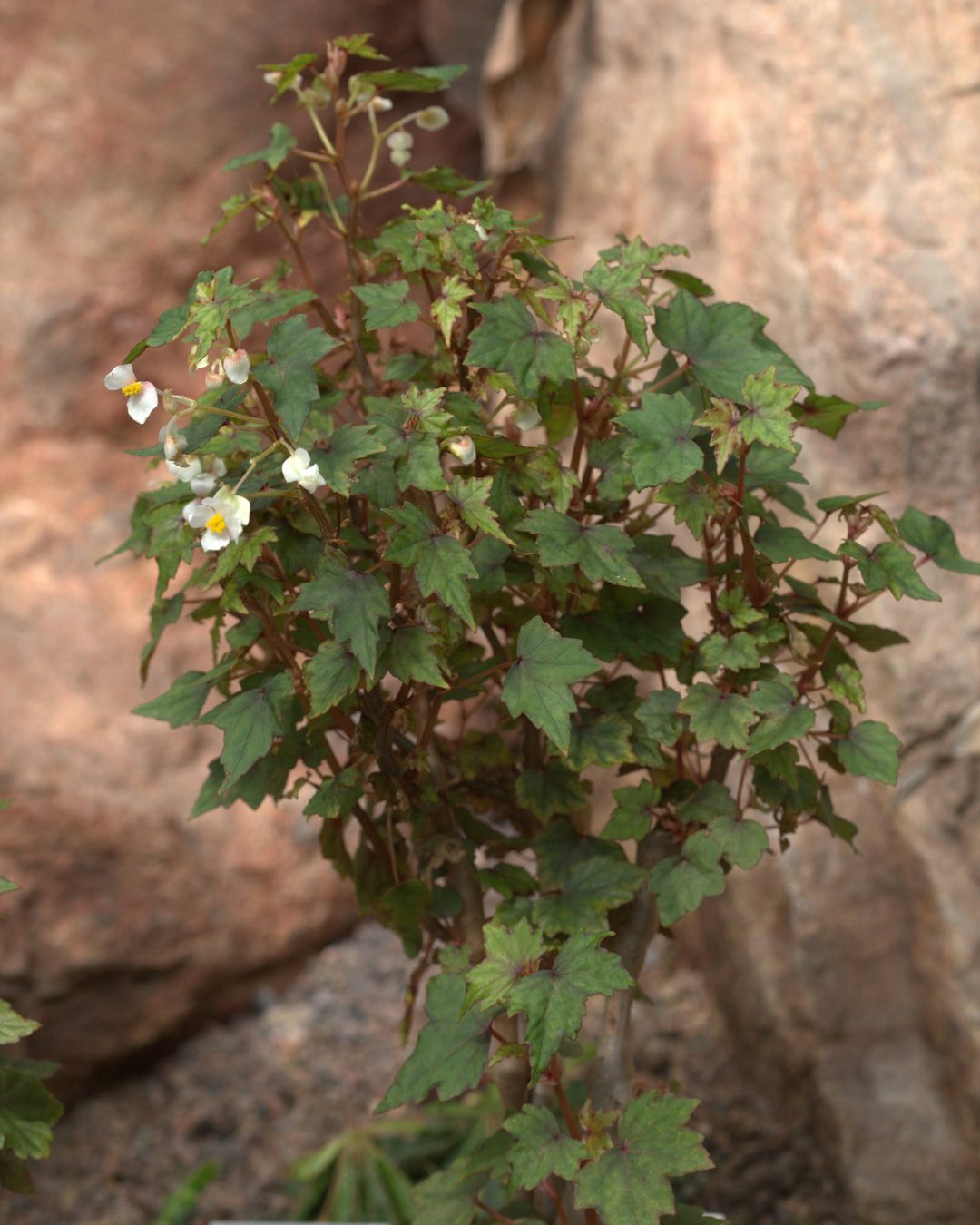
Native to southern Africa, Begonia dregei is one of the most unusual begonias in cultivation. Its standout feature is a thickened base, similar to a caudex, which gives the plant a natural bonsai look. The leaves are small, asymmetrical, and often lobed, while the flowers appear in soft, delicate shades. It is an excellent species for anyone who likes sculptural plants, miniatures, and unconventional botanical forms.
It needs very bright indirect light or gentle morning sun, always with good airflow and an extremely well-draining mix. It can dry out a bit more between waterings than rainforest begonias, but it should not be allowed to go severely dry during active growth. In a pot, show off the caudex by keeping the base partially exposed rather than burying it too deeply. Overwatering is the biggest risk, especially in cool temperatures.
42. Silver begonia – Begonia venosa
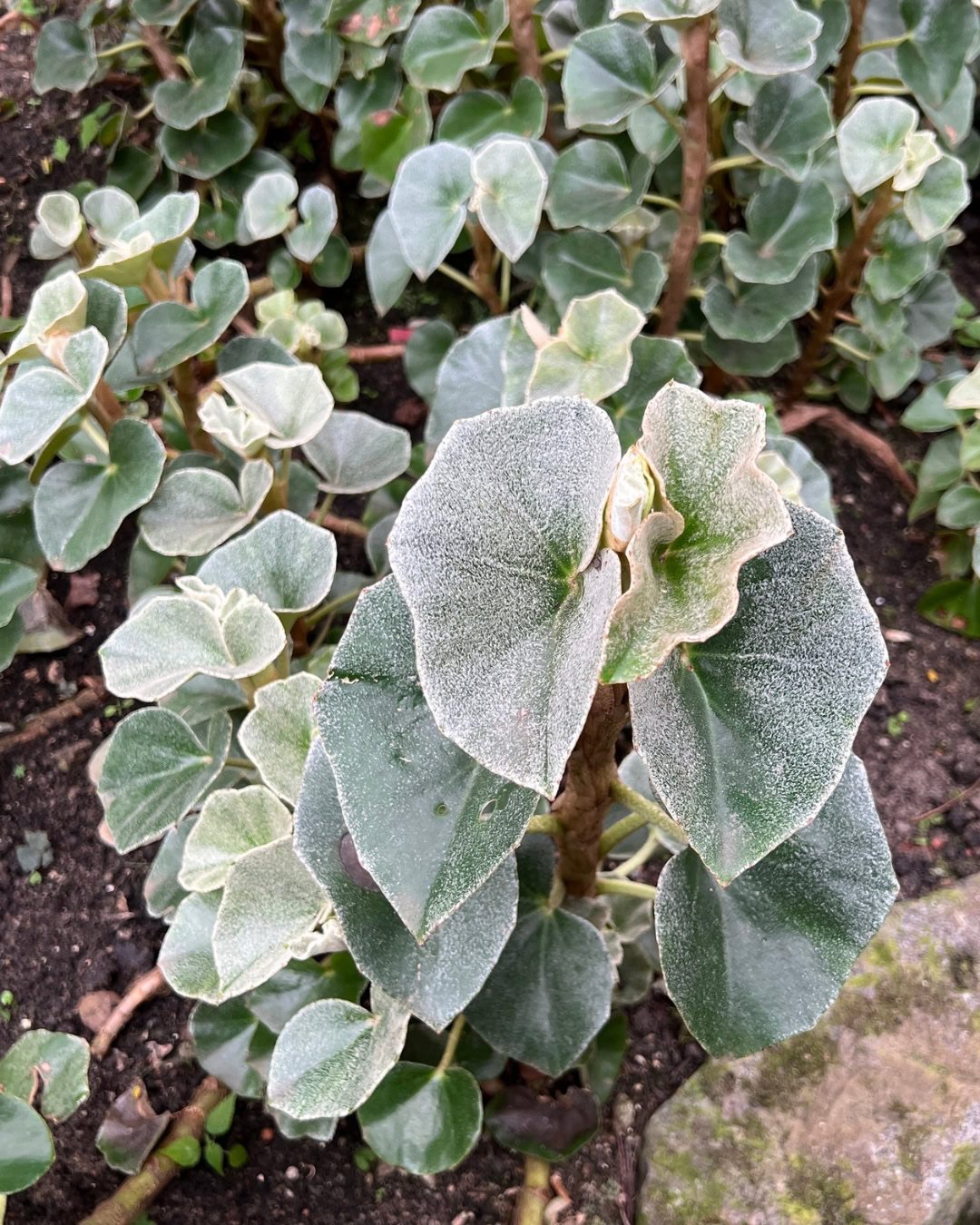
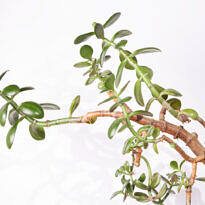
Native to eastern Brazil, Begonia venosa is a shrubby begonia that looks very different from the soft, moisture-loving foliage types. It has thick stems, rounded to oval leaves, and a light fuzz that gives the plant a silvery or whitish appearance. The look is almost succulent, with strong presence and unusual texture, making it a great choice for rare begonia collections and sculptural plant displays.
It is one of the begonias that demands the best drainage. Grow it in a very bright spot with gentle morning sun or strong filtered light, always avoiding harsh afternoon sun. The mix should be mineral-based, light, and airy, with less water retention than what you would use for rex begonias. Water sparingly, allowing the mix to dry partially between waterings. In humid, soggy conditions, it tends to struggle; in a well-ventilated, well-drained setup, it shows why it earned a place on this list with rare-plant attitude.
How to choose the best type of begonia for your home or garden
When choosing among the many types of begonias, start with the space you have, not the prettiest plant in the photo. Rex begonias, rhizomatous begonias, and exotic foliage species usually prefer bright indirect light, moderate humidity, and more protected growing conditions, making them great for covered patios, bright indoor spaces, and container collections. Garden and bedding begonias, such as wax begonia, dragon wing begonia, and some modern hybrids, are better for gardeners who want color, blooms, and immediate ornamental impact in beds, window boxes, and outdoor containers in partial shade.
It also helps to think about size and growth habit. If you are looking for types of begonias for pots, compact, rhizomatous, and foliage types are excellent choices. For hanging baskets, choose trailing begonias such as Begonia boliviensis, Begonia sutherlandii, and Begonia foliosa.
If your goal is to grow flowering begonias that really stand out, go for tuberous begonias, elatior begonias, I’CONIA, Dragon Wing, and Megawatt. But if you want to build a collection of different plants, that’s where things can get dangerous for your wallet: rex begonias, Begonia masoniana, Begonia brevirimosa, Begonia solimutata, and Begonia venosa are all strong contenders for the classic “just one more” purchase.
Now it’s time to choose your next begonia
After learning about so many types of begonias, it’s clear this genus goes far beyond the little flowering bedding plant most people picture. There are begonias for the garden, for containers, for indoor growing, for collectors, for hanging baskets, for flower lovers, and for anyone who prefers foliage so beautiful it doesn’t need blooms to earn its place. The best begonia is not necessarily the rarest, the most expensive, or the flashiest: it’s the one that matches the light, humidity, climate, and level of care you can realistically provide.
If you’re just getting started, choose a tougher species and watch how it responds to your space. If you’ve been growing plants for a while, try branching out into foliage varieties, trailing begonias, or less common Brazilian species. Look at the photos, compare the shapes, read the growing tips, and choose your next begonia with intention — because, let’s be honest, impulse buying is fun, but buying the right plant and watching it thrive is even better.