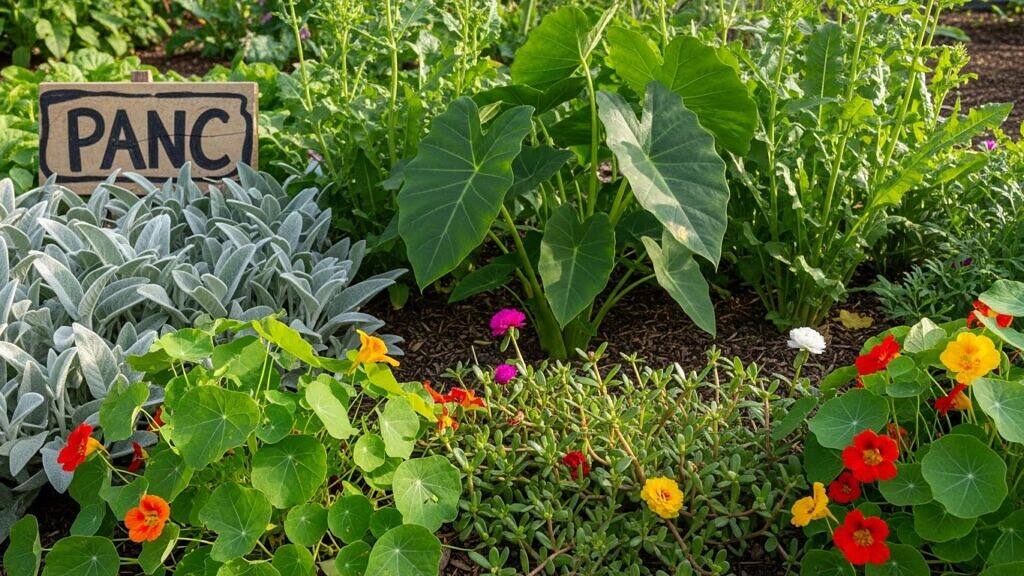
Why are so many people talking about PANC these days?
Have you noticed how, over the past few decades, our diet has become more and more similar, no matter what region of the country you are in? Supermarkets are full, yet they offer the same few vegetables: lettuce, tomato, carrot, kale, potato, onion… Meanwhile, a huge variety of edible plants has been forgotten, often dismissed simply as “weeds.”
In this context, non-conventional edible plants, the well-known PANC, come into play. These plants are, at the same time, a way to reclaim traditional food culture and an opportunity to diversify our meals with more flavor, nutrients, and autonomy. However, to work with PANC safely, it is essential to understand the concept clearly and take some important precautions, especially when harvesting plants from backyards and urban environments.
What are non-conventional edible plants (PANC)
In a technical and straightforward sense, PANC are plants that:
- have one or more edible parts (leaves, roots, flowers, fruits, seeds, shoots);
- but are not part of the daily menu for most of the population;
- may be native or exotic, spontaneous or cultivated;
- often appear as “weeds” in gardens, sidewalks, vegetable beds, and vacant lots.
A few categories help to better understand non-conventional edible plants:
- Native: originally from our biomes, such as Pereskia aculeata (ora-pro-nóbis) in several regions.
- Naturalized exotic: originally from other countries, but very well adapted here, such as Tropaeolum majus (nasturtium), native to the Andean region.
- Spontaneous/ruderal: appear on their own in disturbed areas, sidewalks, gardens, beds, and urban lots, such as purslane (Portulaca oleracea).
- Cultivated: require some level of management, but still have not fully entered routine farmers’ market and supermarket offerings, such as lesser-known species that produce edible roots.
In short, these plants are not necessarily “rare”; many non-conventional edible plants are actually quite common. What is non-conventional is the fact that almost no one uses them as food in everyday life anymore.
How the term PANC emerged and why it became popular
The acronym PANC was coined in 2008 by biologist Valdely Ferreira Kinupp, in an academic work focused on edible plants that are underused in human diets. From there, the term became popular and today it is a key reference whenever we talk about food diversity and non-conventional edible plants.
But why do we need a new name for something our grandparents often already ate?
Throughout the 20th century, agriculture went through a major transformation, marked by heavy mechanization, the use of chemical inputs, and a focus on a few high-yield species. This shift is often associated with the so‑called “Green Revolution,” which favored:
- large‑scale monocultures;
- standardization of varieties (just a few types of vegetables dominating the market);
- the devaluation of local species, labeled as “pests,” “weeds,” or “poor people’s greens.”
In practice, this reduced biodiversity on the plate and weakened many regional culinary traditions. Non-conventional edible plants (PANC) emerge precisely as a counterpoint to this impoverishment of the diet, helping to:
- revive traditional preparations from different regions;
- diversify meals with different textures, flavors, and colors;
- strengthen what is known as food sovereignty, reducing dependence on a few ingredients brought from far away.
Why PANC were forgotten (and why it is worth looking at them again)
Several forces acted simultaneously to make these non-conventional edible plants “disappear” from everyday life:
- Market and logistics: it is simpler for large distribution chains to work with a few standardized species, with predictable shelf life and specialized growers.
- Rapid urbanization: fewer people with backyards, less contact with food production and, in many cases, greater distance from traditional knowledge passed down from generation to generation.
- Cultural stigma: many PANC became associated with poverty, hunger, and “peasant food” in a derogatory sense, which led to their consumption being abandoned.
- Lack of knowledge and fear of poisoning: without proper guidance, many people prefer not to take risks — which is understandable and, to some extent, prudent.
Today we see the opposite trend: chefs, nutritionists, farmers, and consumers are rediscovering these non-conventional edible plants. Interest is growing both because of their gastronomic diversity and their nutritional value: some PANC show noteworthy levels of proteins, vitamins, minerals, and even beneficial fatty acids.
For example, in composition studies:
- ora‑pro‑nóbis shows a high protein content in its dry matter;
- purslane stands out for its omega‑3 type fatty acids;
- taioba is mentioned as a good source of vitamin A, iron, and calcium.
It is no coincidence that these non-conventional edible plants have been gaining space at more curious tables and in discussions on healthy and sustainable eating.
Safety first: identifying PANC without risk
If there is one point I always insist on, it is this: no excitement about PANC justifies neglecting safety. The same nature that offers a vast pharmacy and an abundant farmers’ market also harbors irritating, toxic, and even lethal species.
Some basic principles to avoid problems:
- Never consume a plant unless you are absolutely sure of its identification.
- Do not rely only on “it looks like the picture on the internet.” Small differences can separate an edible species from a toxic one.
- Learn, whenever possible, from experienced people, courses, botanical gardens, reliable publications, and materials that clearly present the scientific name.
- Use the scientific name as your main reference, not the common name, which varies greatly from region to region.
Two classic cases of dangerous confusion, widely discussed by specialists in PANC:
- Taioba (Xanthosoma sagittifolium): it has “look-alikes” from other genera, such as Colocasia spp., which are not suitable for consumption in the same way. Edible taioba requires proper cooking, and correct identification is crucial, because the wrong leaves can cause intense irritation in the mouth and throat.
- Common purslane (Portulaca oleracea): this is a creeping succulent, with fleshy stems and smooth leaves, but it is often confused with weeds from other genera, including Euphorbia species, which may have an irritating milky sap and must not be eaten as leafy greens.
In short: PANC is not a synonym for “any little weed someone said is edible.” It is a technical category that demands responsibility.
Harvesting PANC in urban areas: invisible risks
Even when the species is correctly identified, the place where it grows makes a big difference. In urban areas in particular, there is an additional factor to consider when collecting PANC: environmental contamination.
Some main risks:
- Heavy metals: soils and dust in areas near busy roads, industrial zones, or mining sites can accumulate lead, cadmium, mercury, and other toxic elements.
- Air pollutants: particles released by fuels, and the wear of tires and brake pads, settle on leaves and soil, directly affecting plants that grow in street beds and along busy sidewalks.
- Biological contamination: areas frequented by domestic or wild animals (urine, feces) may harbor parasites and bacteria associated with serious diseases.
Many plants are strong bioaccumulators, meaning they absorb and concentrate these substances in their tissues.

Therefore, here are some practical recommendations for anyone considering harvesting PANC in an urban environment:
- Avoid harvesting along sidewalks and planting strips that are very close to avenues with heavy traffic; as a safety reference, keep a good distance from busy roadways.
- Be wary of potentially contaminated sites (former industrial areas, banks of polluted streams, surroundings of dumpsites, mining areas or places with irregular waste disposal).
- Give preference to growing areas you know well: home gardens, backyards, community gardens with clear and transparent management.
- Even in places considered clean, wash the plants very thoroughly, leaf by leaf, under running water, and perform proper sanitization for eating leafy greens raw or cooked.
If the curiosity to forage for PANC in the city is strong, it is worth first investing time in understanding urban ecology, the history of that soil and, whenever possible, growing in your own pots or raised beds, using potting mix (substrate) from a reliable source.
Edible parts, preparation and hygiene: not all the same
Another essential point: in many PANC, only certain parts are edible, and the way they are prepared makes the difference between a safe food and a nasty bout of discomfort.
Some general precautions:
- Always check which parts of the plant are actually used (young leaves, flowers only, roots, seeds, shoots, etc.).
In some species, the leaves are edible but the fruits are not; in others, the opposite is true. - Respect the preparation method: some PANC require long cooking, blanching, or discarding the cooking water to reduce undesirable compounds.
- Be meticulous with sanitation: wash under running water, inspect visually (remove insects, pebbles, soil residues) and, when eating raw, use an appropriate produce‑sanitizing solution for leafy greens, following the label directions.
- Avoid eating large amounts of a “new” PANC at once; it is safer to start with small portions and observe how your body reacts.
In my experience, those who start with PANC do better when they choose a few well‑known species, with reliable identification, homegrown or from a trusted source, and with simple preparation. This reduces the chance of mistakes and greatly increases the pleasure of discovery.
5 examples of PANC commonly found in backyards and urban settings
To illustrate, here is a brief overview of five species often mentioned when talking about PANC and that, with proper precautions, can be excellent starting points.
1. Ora-pro-nóbis (Pereskia aculeata) – the backyard “vegetable meat”
Ora-pro-nóbis is a climbing plant with succulent leaves of an intense green color and usually thorny stems. It is famous in regional dishes, especially in stews and sautés with meat, eggs, or other sides.
Main highlights:
- Leaves used as leafy greens in sautés, stews, fillings and even in bread and pie doughs.
- Good tolerance to dry periods and low input requirements, which makes home cultivation easier.
- Protein content in the dry matter higher than that of many conventional leafy vegetables.
Basic precautions:
- Confirm the botanical identification, since there are other species in the genus Pereskia with different characteristics.
- Prefer tender, well‑washed leaves; discard very old or damaged parts.
- Avoid harvesting from fences exposed to heavy pollution or from places with a questionable history of contamination.

2. Peixinho (Stachys byzantina) – unusual texture and playful preparation
Peixinho is a plant with soft, silvery, velvety leaves, also widely used as an ornamental in garden beds.
It became famous in gastronomy for a specific preparation: battered and fried leaves that resemble fish.
General characteristics:
- Velvety leaves with a striking ornamental look, forming low clumps.
- Culinary use focuses mainly on the young leaves, thoroughly cleaned.
- Classic preparation is breaded and fried, but they can also be used in fillings and baked dishes.
Care:
- Make sure the plant is indeed Stachys byzantina, purchased from a reliable source or grown from well-identified starts.
- Avoid harvesting from ornamental street beds, where pesticides may be used and where there can be animal urine and heavy metal contamination.
- Wash the leaves very well, taking into account their hairy (velvety) surface, which can trap dust and particles.

3. Taioba (Xanthosoma sagittifolium) – a powerful leaf that demands respect
Taioba is one of the most frequently mentioned leaves when talking about PANC (non-conventional edible plants) with high nutritional value. Its large leaves, shaped like an elongated heart, are used in a similar way to collard greens in various recipes.
Benefits:
- Leaves are used in sautés, stews, fillings, and dishes based on rice, corn, or cassava.
- Vigorous growth in warm, moist locations, forming highly productive clumps.
- Known for its interesting levels of vitamin A, iron, and calcium.
However, this warning is serious:
- It is essential to distinguish edible taioba from other similar-looking plants, such as Colocasia species, which are not used the same way and can cause intense irritation.
- Even the correct taioba must always be eaten cooked, with adequate cooking time, to reduce compounds that irritate the mucous membranes.
- Do not use leaves that are only partially known, or from plants about which there is any doubt regarding identification.
If you are just starting out, it is worth getting to know the plant by visiting botanical collections, small farms, or communities that use taioba traditionally, paying close attention to texture, leaf shape, petiole attachment, and other morphological characteristics.

4. Purslane (Portulaca oleracea) – the “weed” rich in omega‑3
Purslane is a creeping succulent, very common in backyards, between concrete pavers and in poorly managed beds. For those who do not know it, it is easily pulled out as “just another little weed”, but it has excellent culinary potential.
Distinctive characteristics:
- Fleshy stems and leaves, with a crunchy texture and mild, slightly tangy flavor.
- Used in salads, seasoned toasted cassava flour (farofa), quick sautés, stuffings and pickles.
- Recognized in studies as one of the vegetables with the highest levels of omega‑3 fatty acids among common edible plants.
Points of attention:
- Avoid confusing it with plants from other genera, especially some Euphorbia species, which can exude an irritating milky sap when cut. True purslane does not have white latex in its sap.
- Pay close attention to the place where purslane grows: because it is spontaneous, it usually appears in cracks in sidewalks, along streets, and on vacant lots – precisely where the risk of chemical and biological contamination is higher.
- Wash very thoroughly, since it grows in direct contact with the soil.
For regular use, the ideal is to “domesticate” purslane in dedicated beds or containers, with clean potting mix, instead of relying exclusively on plants that appear by chance in urban environments.

5. Nasturtium (Tropaeolum majus) – edible flower and peppery leafy vegetable
Nasturtium is one of the favorites of those who like to combine an ornamental garden with an edible landscape. Its colorful flowers (yellow, orange, red) stand out, and practically all the above‑ground parts can be used in the kitchen.
Highlights:
- Round leaves with a slightly peppery flavor, somewhat reminiscent of watercress.
- Edible flowers, widely used to decorate dishes, salads, and appetizers.
- Seeds also used in some recipes, including pickles.
Care:
- Make sure the plants have not received any pesticides or other chemicals that are not approved for food crops, which can happen in purely ornamental beds.
- Maintain good hygiene, gently washing leaves and flowers to remove dust, insects, and other impurities.
- Observe the soil: beds in highly polluted areas reduce the safety of frequent consumption.
Besides being beautiful, nasturtium is an excellent ally for diversifying salads and cold dishes, adding color and a bold flavor without requiring complicated techniques.

PANC on the table: food culture, nutrition, and autonomy
When we look at these five species together, it becomes clear that PANC is not an “exotic fad,” but rather a way of reconnecting cooking, biodiversity, and health.
Among the main benefits of recovering PANC, we can highlight:
- Nutritional diversity: leaves, flowers, fruits, and seeds of PANC broaden the range of vitamins, minerals, fiber, and bioactive compounds beyond the small group of most common vegetables.
- Use of hardy plants: many PANC require few inputs, tolerate drought and pests, and reduce dependence on pesticides and long transport chains.
- Cultural appreciation: recipes with ora-pro-nóbis, taioba, purslane, and nasturtium appear at festivals, in regional cuisines, and at gastronomic events, reinforcing local identities.
- Food sovereignty: the more species are known and grown on a small scale, the more autonomy families, communities, and farmers have over their own food.
If you want to explore global food diversity in more depth, organizations such as FAO discuss extensively the importance of agrobiodiversity for food security and food sovereignty.
How to get started with PANC safely and responsibly
To finish, here is a brief practical guide for those who want to move beyond theory and start experimenting with these plants with care:
- 1.
Start with just a few species- Give preference to widely known non-conventional edible plants (PANC), such as Barbados gooseberry (ora-pro-nóbis), elephant ear (taioba), purslane, and nasturtium, or other species that are traditional in your region.
- Focus on those PANC you can clearly identify and that have accessible technical literature or professional guidance available.
- 2. Prioritize home growing or trustworthy sources
- Instead of picking from any random sidewalk, grow PANC in pots, planters, or beds with soil and water from reliable, safe sources.
- When buying seedlings, choose reputable nurseries that provide the scientific name and origin.
- 3. Study each plant before putting it on your plate
- Check which parts of the PANC are edible and which are not.
- Find out whether it needs to be cooked, can be eaten raw, and whether any parts must be discarded.
- Look for technical references on that PANC, not just random “tips” on social media.
- 4. Be rigorous with hygiene and moderation
- Always wash very thoroughly; when eating PANC raw, follow proper vegetable sanitizing procedures.
- Start with small amounts and see whether there is any individual discomfort.
- 5. Respect the limits of urban foraging
- Avoid harvesting PANC near busy roads, industrial areas, or questionable soils.
- Keep in mind that heavy metals and some pollutants are not removed by washing alone.
- Whenever possible, turn that “backyard weed” into an intentional PANC crop, with proper management and fertilization.
To better understand air quality and pollution issues that directly affect urban plants and PANC, resources such as air pollution information pages or reports from official environmental agencies can be good starting points.
In summary: PANC are an opportunity, not an excuse to take risks
Non-conventional edible plants (PANC) are a kind of “living memory” of our relationship with nature. They show that the edible world is much larger than the supermarket shelf and that it is possible to eat in a more diverse, flavorful way, deeply connected to the local landscape.
But this rediscovery of PANCs only makes sense when it goes hand in hand with:
- correct identification of the species;
- respect for traditional preparation methods and for the parts that are truly edible;
- attention to the risks of urban contamination;
- a cautious attitude toward new foods on your plate.
Starting with half a dozen ora-pro-nóbis leaves from your own backyard, a portion of purslane grown in a clean pot, or a few nasturtium flowers from a well-tended bed can be the beginning of a completely different relationship with what we call “real food.”
From that point on, the universe of PANCs is no longer just an interesting concept and gradually becomes a concrete part of your kitchen—with safety, responsibility, and a healthy dose of botanical curiosity.