The vanilla orchid is one of those plants that quickly becomes a “must‑have”: exotic, unusual, and with the promise of being the plant that produces true vanilla. In practice, however, many people buy it expecting an experience similar to more common orchids — and that’s where the frustration begins.
If you have already grown Phalaenopsis (the typical supermarket orchid), Dendrobium or even Cattleya, you are probably used to a simple cycle: the plant “stalls”, you adjust watering and light, and at some point it rewards you with blooms. With the vanilla orchid, the game is different: it can grow beautifully for quite some time… and still not flower.
Enjoyed this guide? There's more where it came from.
Understanding why plants behave the way they do is what turns guesswork into a thriving garden. That's exactly what we share in the Shrubz newsletter — free, straight to your inbox:
- Seasonal care reminders timed to your gardening calendar
- Propagation and pruning techniques, explained step by step
- Pest and disease alerts — catch problems before they spread
The difference no one tells you: the vanilla orchid does not behave like a regular potted orchid
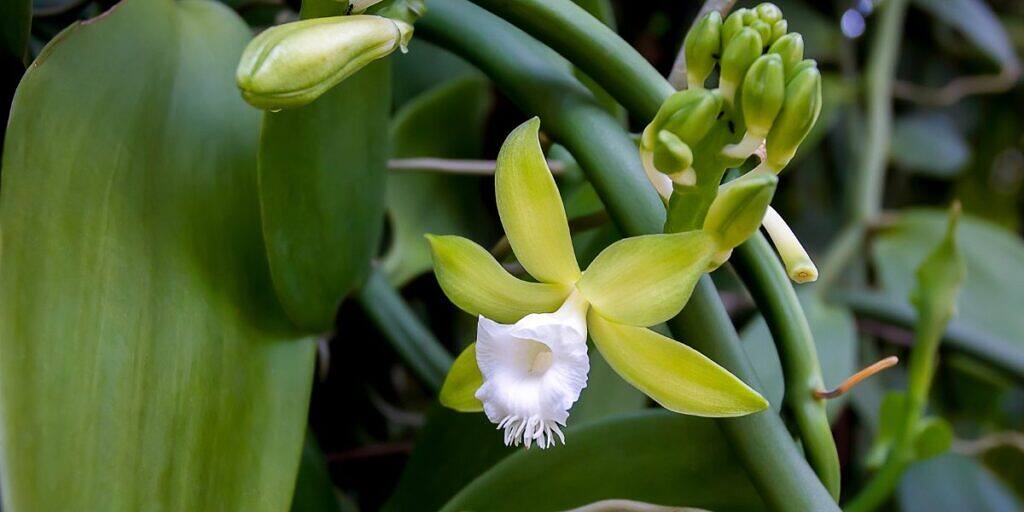
Most of the orchids we see indoors are grown as compact plants, with a predictable routine and an ornamental focus. The vanilla orchid (Vanilla) is different; it is a climbing orchid: it wants to climb, attach itself, spread out, and build structure before even “thinking” about blooming.
In other words, while Phalaenopsis can flower in a relatively small pot with good bright, indirect light, the vanilla orchid requires time, support, and the right environment. And that completely changes the expectations of anyone who is “used to” other types of orchids.

Why do so many people get frustrated with the vanilla orchid?
- Slow to bloom: it needs to mature and reach a substantial size before it will flower.
For anyone expecting flowers within a few months, it can be a shock.
The key point is simple: the vanilla orchid doesn’t disappoint because it’s a bad plant — it disappoints because its cultivation doesn’t match a rushed mindset.
What the vanilla orchid really needs (in real life)
Without turning this into a manual, here’s what most determines whether you’ll love or get annoyed with this plant:
1) Space and support (the real game-changer)
It needs a sturdy support to climb: stake, trellis, small log, panel… If it has nothing to attach to, the vanilla orchid grows in a disorganized way and tends to become a plant that’s “hard to manage.”
2) Plenty of bright light (more than you might think)
Anyone who grows Phalaenopsis usually does well with medium, indirect light. The vanilla orchid generally needs a very bright spot, near a window, in a bright sunroom, or an area with lots of light — without letting the plant scorch in intense direct sun.
3) Balanced humidity (it’s not just “water and done”)
It likes humidity but hates waterlogged conditions. The potting mix needs to breathe. If you’re used to “watering all orchids the same way,” this is where you need to watch the plant and the environment, and observe how the vanilla orchid responds over time.
4) Time (and real patience)
Most orchids grown at home can bloom regularly with good care. The vanilla orchid is usually a plant of process. People who enjoy following its development will love it; those who want fast results may end up frustrated.
So… is it worth growing a vanilla orchid?
It’s worth it if you:
- like unusual plants and have the patience to follow their growth;
- have enough space (or at least a good support) and plenty of bright light;
- don’t buy only for the flowers, but for the overall growing experience.
It will probably turn into frustration if you:
- want an orchid “like the others,” that blooms on a simple routine;
- have very limited space and want everything to stay compact;
- expect flowers within just a few months.
The problem isn’t the plant — it’s the expectation
The vanilla orchid is not the “easy orchid” many people imagine, especially when you compare it with Phalaenopsis and other popular species.
But it also doesn’t have to be a headache: once you understand that vanilla orchid is a vining plant, slow growing and highly demanding in structural support, everything becomes much clearer.
Enjoying this type of content? Follow our site on Google to receive new cultivation guides and plant trends.
Want to see how vanilla orchid cultivation works in practice? To complement this content, it’s worth watching the video below, which shows real-life details of vanilla orchid cultivation, from growth through to everyday care. It helps you clearly see why this vanilla orchid is so different from the ones we’re used to.