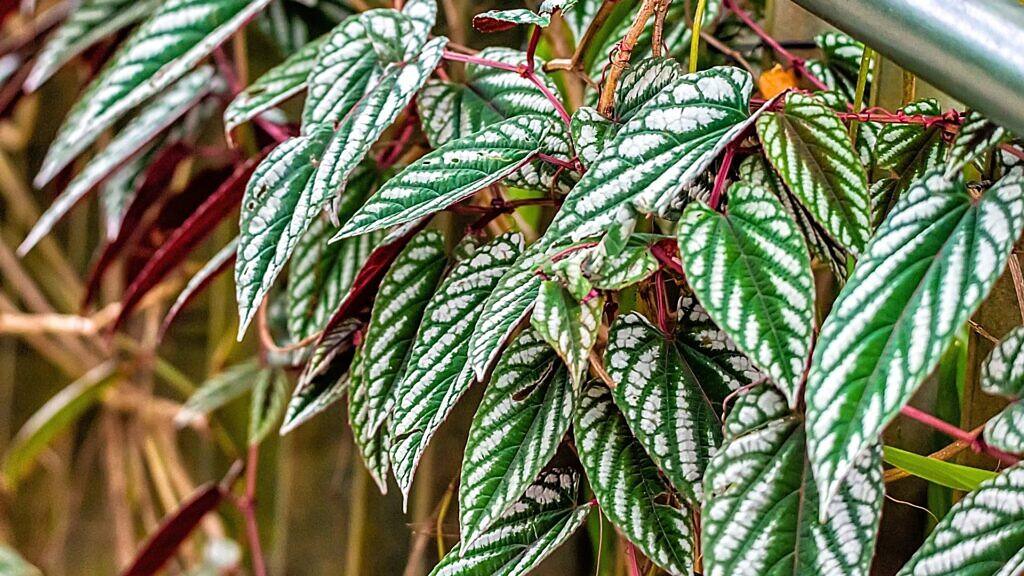
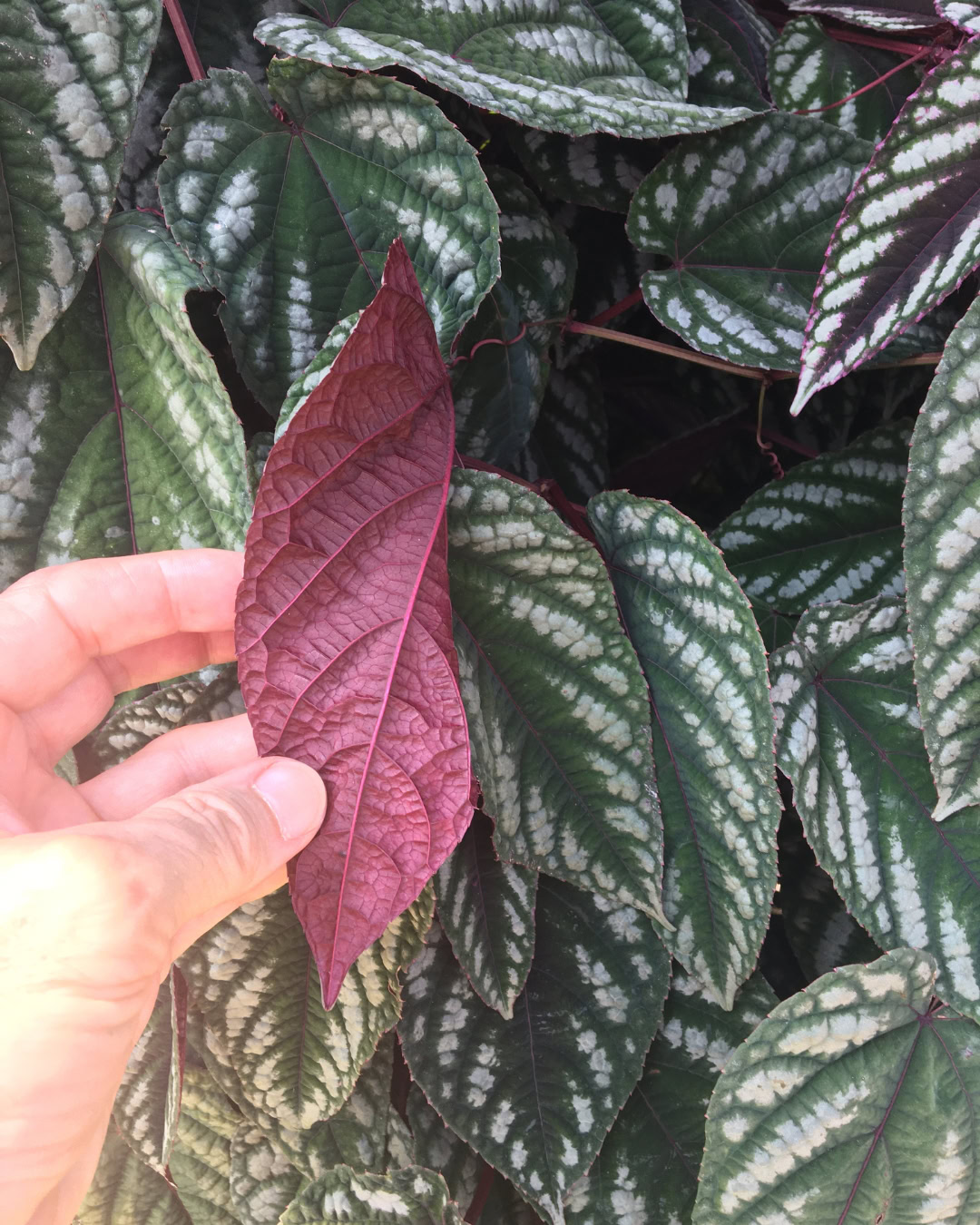
Rex Begonia Vine (Cissus discolor), also known as Java vine and Cissus rex, is a colorful, lush herbaceous climber in the same family as the grape (Vitaceae), and it has been gaining popularity as a houseplant. It stands out for the refined colors of its foliage, which features a pattern of silver spots over a deep dark-green background, creating a striking contrast with the wine-red undersides of the leaves. In interior design and tropical gardens, it plays a dual role: it can be trained as a dense cascade in hanging pots or encouraged to climb supports, where its delicate tendrils cling and create vivid patterns of velvety texture.
Although it may look somewhat delicate, Rex Begonia Vine is a vigorous plant as long as its specific moisture and light needs are met. Its growth is notably rapid during the warm months, and it can transform a shaded corner into a tropical woodland scene in just a few seasons. The popularity of this species lies precisely in its ability to bring complex colors and interesting textures to filtered-light environments, where colorful flowers rarely thrive. Growing it is an exercise in observation, rewarding the gardener with branches that can reach several feet in length, covered in leaves that seem hand-painted.
Origin, Habitat, and Etymology
Cissus discolor is native to the dense, humid tropical forests of Southeast Asia. It is found from southern China to southern and Southeast tropical Asia, occurring in regions such as India, Nepal, Bangladesh, Myanmar, Thailand, Laos, Vietnam, Malaysia, Java, and the Philippines. In these forest biomes, it inhabits the understory, an environment characterized by diffused light filtering through the canopies of giant trees and by high air humidity. Its purplish coloration may be related to adaptation to these shaded environments, helping with light capture and the protection of leaf tissues.
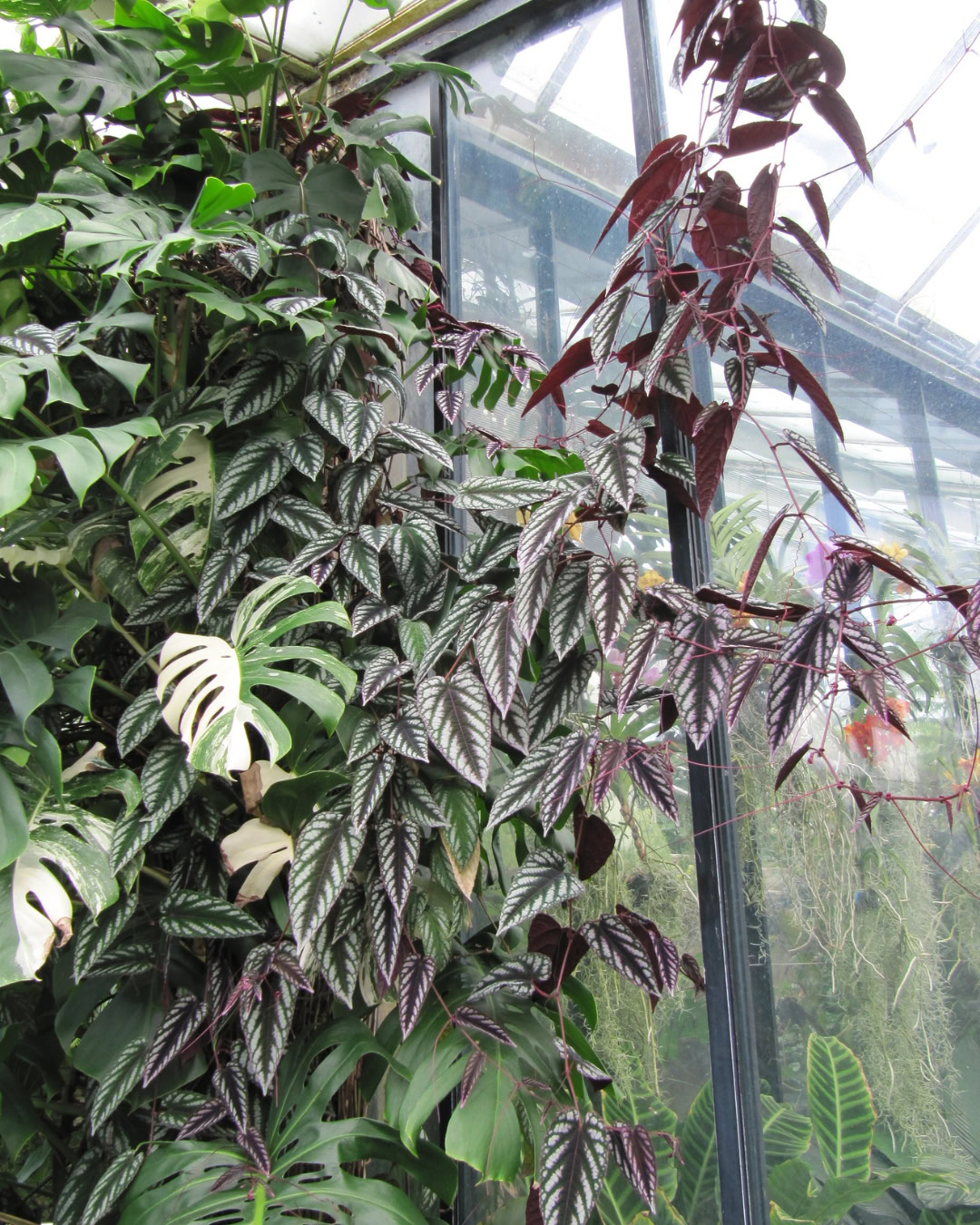
The genus name Cissus comes from the Greek word kissos, translated as “ivy,” in reference to the climbing habit of several species in the group. The specific epithet discolor refers to the striking color difference between the two sides of the leaf. In botanical and horticultural literature, this plant also frequently appears as Cissus javana, a name associated with the island of Java, in Indonesia. Today, taxonomic databases such as Kew’s Plants of the World Online treat Cissus discolor Blume as the accepted name and Cissus javana DC. as a synonym. Even so, Cissus javana remains common in nurseries, collections, and garden centers, which is why both names are useful for correctly identifying the species.
Ornamental Use of Rex Begonia Vine
In interior design and landscaping, Rex Begonia Vine is the focal point of the Urban Jungle trend. Its main role is to add depth and contrast to spaces dominated by strictly green foliage. Because of its trailing habit, it is magnificent in hanging baskets or placed on top of tall shelves, where its foliage can spill down in linear cascades. If the goal is to grow it vertically, the plant responds well to training on sphagnum moss poles or slender trellises, attaching itself through its bifurcated tendrils.
In winter gardens or protected beds, Rex Begonia Vine pairs well with lime-green foliage plants, such as Brazil philodendron (Philodendron hederaceum), creating a vibrant contrast that highlights the metallic markings of Cissus discolor. For a more restrained, textural look, combining it with Aglaonema Silver Bay or different species of Alocasia reinforces the atmosphere of a humid tropical forest, with their deep green tones. The ideal planting spacing for linear planters, when aiming to cover a wall, should be 16 in to 24 in (0.40 m to 0.60 m) apart, ensuring that the branches overlap without competing excessively for nutrients in the potting mix. It needs to be trained with a trellis or other support.
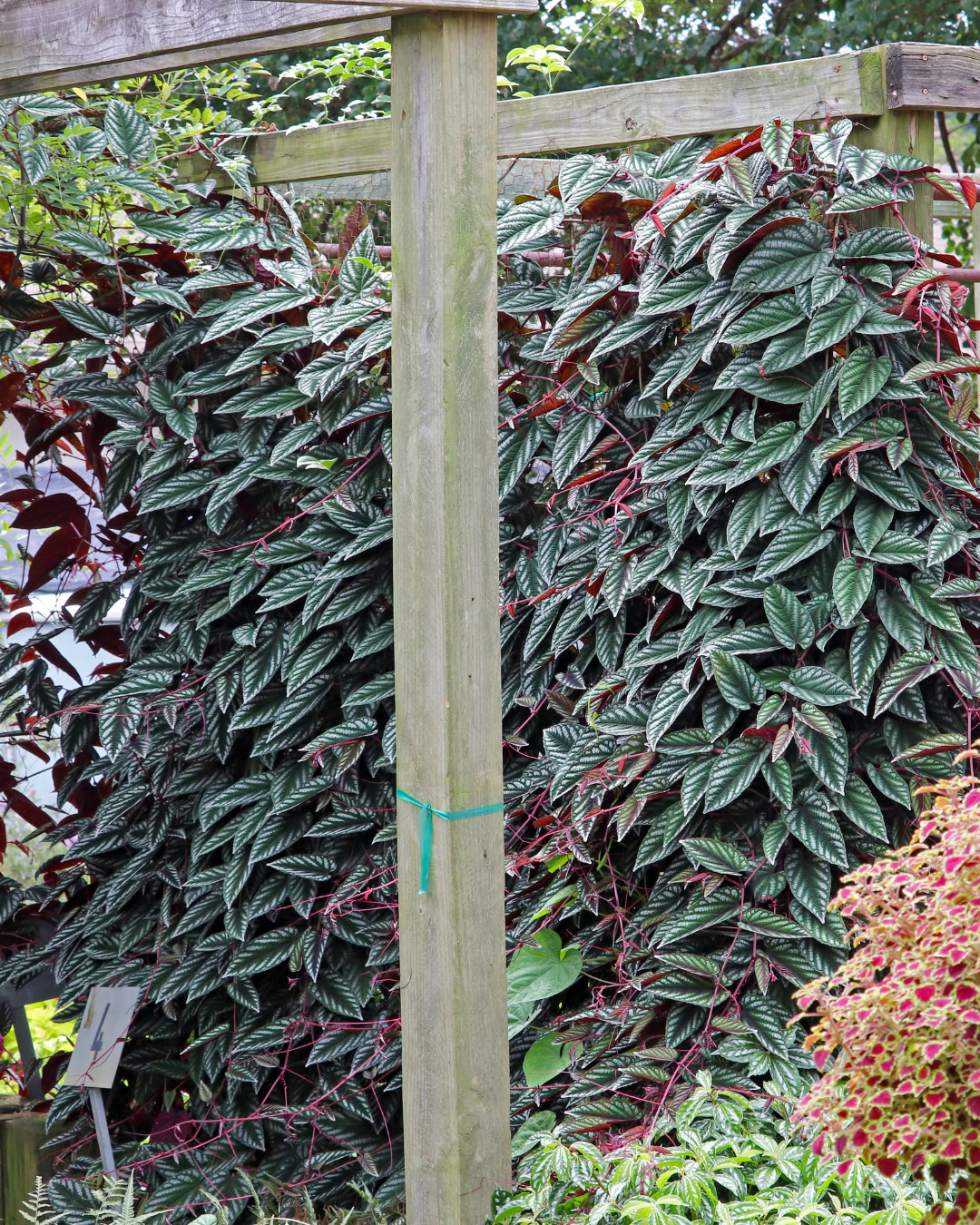
The versatility of this species means it can be grown on balconies and patios, as long as it is protected from strong winds, which can tear its thin leaves.
Its presence in decorative ceramic or terracotta pots instantly elevates the look of any indoor space. This is a plant that demands a leading role, performing best as a focal point rather than as simple background filler.
How to care for Rex Begonia Vine: Growing guide
- Light: Prefers bright, filtered light (partial shade). Direct sunlight, especially during peak hours, causes irreversible leaf scorch and fades the silvery sheen. Indoors (Southern Hemisphere), choose east-facing windows or well-lit spots with filtered light. In north-facing windows, keep the plant protected by a sheer curtain or set back from the glass to avoid intense direct sun.
- Potting mix: Requires a growing medium rich in organic matter, airy, and with excellent drainage. A recommended blend consists of 1 part high-quality topsoil, 1 part coconut coir or peat, and 1 part perlite or coarse river sand to ensure root aeration.
- Watering: The potting mix should remain lightly moist, but never soggy. During summer and active growth periods, water deeply whenever the top layer of soil (the first 2 cm, or 0.8 in) begins to dry. In winter, reduce watering frequency. It is crucial to avoid letting the root ball dry out completely, as this causes the lower leaves to drop immediately.
- Air Humidity: This is the critical factor. It requires relative humidity above 60%. In dry climates or air-conditioned environments, use humidifiers or trays with pebbles and water beneath the pot (without the pot base touching the water). Lack of humidity causes brown, brittle edges.
- Fertilizing: Feed monthly in spring and summer, or every two weeks at a very diluted rate, always with the potting mix previously moistened. Slow-release fertilizers are preferred. Organic options include monthly bokashi or compost spread over the potting mix.
- Pruning: Carry out cleaning prunes to remove dry leaves. To encourage a fuller, more branched plant, practice pinching, removing the apical bud from long stems. This forces the side axillary buds to sprout.
- Temperature: Sensitive to cold. Prefers mild to warm temperatures. Growth slows in persistent cold, and temperatures near or below 10°C (50°F) can seriously damage the plant. It does not tolerate frost. Protect the plant from cold drafts during winter.
- Repotting: Every two years, it is advisable to repot container-grown plants and renew the plant’s potting mix to ensure good drainage and low salt levels. Occasional leaching of the potting mix is also recommended to extend its useful life.
How to propagate Rex Begonia Vine
Propagation of Rex Begonia Vine is most effectively done through stem cuttings. The ideal time for this process is early spring. Select healthy stems and cut 10 to 15 cm (4 to 6 in) cuttings, making sure each cutting has at least 2 or 3 nodes (the points where leaves and tendrils emerge). Remove the lower leaves to expose the node that will be in contact with the rooting medium. The cuttings can be placed directly in a container with clean water (changed weekly) or in a light medium made of moist sphagnum moss or perlite. If you choose a medium, keeping the setup under a clear plastic cover (a humidity dome) speeds up the process, which usually takes 3 to 4 weeks.
Another effective home method is layering. This process consists of taking a long stem from the mother plant and, without cutting it, securing one of its nodes to the soil of an adjacent pot using a gardening clip. By keeping the soil in this second pot moist, roots will develop quickly from the node in contact with the soil. Once the root system is established in the new pot, the stem can be cut from the main plant.
Botanical description of Cissus discolor
The Cissus discolor is a perennial climber with a herbaceous texture that attaches itself by means of tendrils. Its stem is tetragonal in shape (quadrangular in cross section), reddish to purplish in color, smooth, and glabrous. The stems can extend from 1.5 to 3 meters (4.9 to 9.8 ft) in length.
The tendrils are bifid (split into two tips) and emerge opposite the leaves, a distinctive characteristic of the Vitaceae family. The root system is shallow, adapted to absorb nutrients from the forest litter layer.
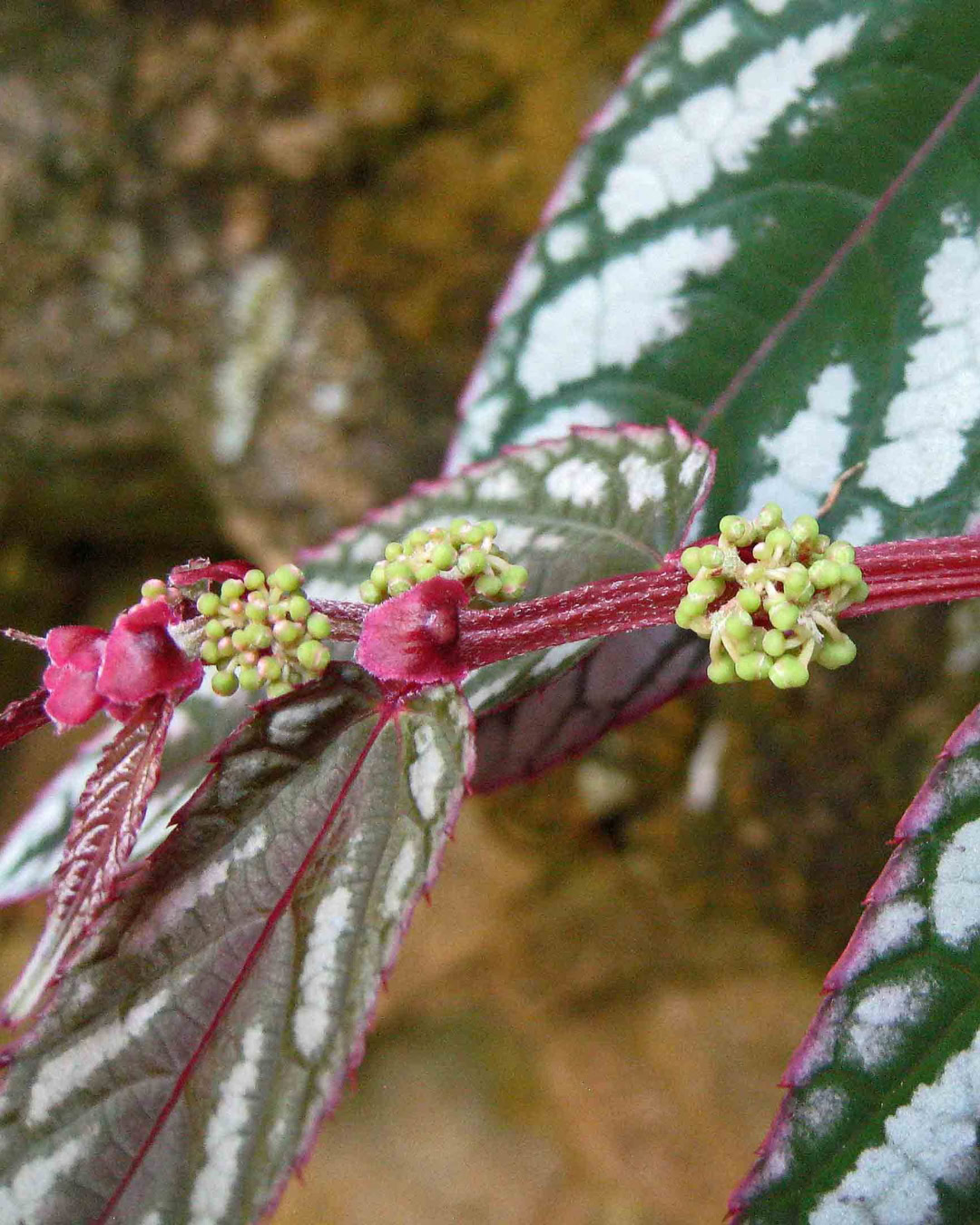
The leaves are simple, alternate, and petiolate. The leaf blade is cordate-ovate to oblong-ovate, measuring 8 to 18 cm (3.1 to 7.1 in) long by 5 to 10 cm (2 to 3.9 in) wide. The apex is distinctly acuminate, and the base is cordate (heart-shaped). The leaf margin is finely serrated. The upper (adaxial) surface has a velvety texture, with a dark green to purplish color, adorned with silvery intercostal markings. The lower (abaxial) surface shows a solid, glossy wine-red color. Venation is palmate at the base and pinnate along the central vein, often standing out in reddish tones.
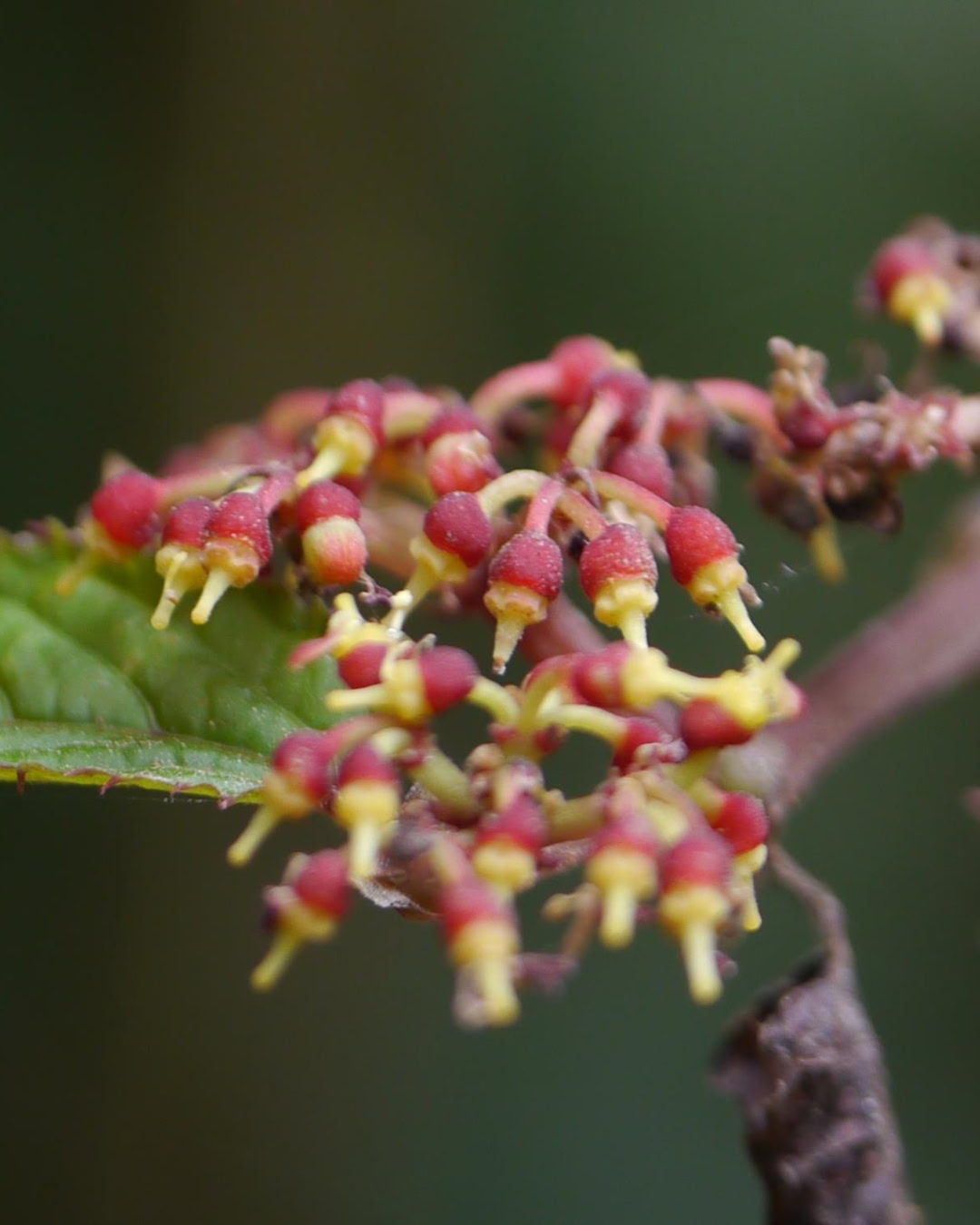
The inflorescences are small, discreet, umbel-like cymes positioned opposite the leaves. The flowers are four-parted and have little ornamental value, with yellow-green petals. Pollination is typically insect-mediated. The fruit is a subglobose berry, 5 to 7 mm (0.2 to 0.3 in), which changes from red to black when ripe and usually contains a single seed.
Pests, Diseases, and Solutions
The biggest plant health challenge for Rex Begonia Vine is spider mites. They appear mainly when air humidity is very low. Signs include fine webbing on the undersides of the leaves and a yellowish speckled appearance on the blade. To solve the problem, increase ambient humidity and wash the plant with gentle water sprays. Avoid heavy mineral oils or neem oil in high concentrations, as Cissus leaves are extremely sensitive and may suffer chemical burn (phytotoxicity). Prefer diluted potassium soap, raw milk, or sulfur-based miticides.
Scale insects and whiteflies may also settle on the quadrangular stems and leaves. Manual removal with a cotton swab soaked in isopropyl alcohol is effective in light infestations. As for diseases, root rot caused by soil-borne fungi is common in cases of overwatering or compacted potting mix. If the branches begin to wilt even with moist soil, check the roots; if they are dark and soft, repot into dry, sterile potting mix, discarding the diseased parts.
Interesting Facts
One of the most intriguing facts about Rex Begonia Vine is the presence of the so-called pearl glands (pearl glands). Beginner growers often mistake the small, transparent spherical granules on the stems and leaves for pest eggs. In fact, they are natural sugar-rich exudates produced by the plant. Although their exact function is still debated, they are believed to attract beneficial ants that protect the plant from herbivores or to serve as a form of water regulation.
Historically, Rex Begonia Vine was a star of Victorian greenhouses in 19th-century England. Its exotic appearance and metallic colors represented the height of luxury at the time. Another noteworthy point is the common name “Begonia Vine.” It is a classic case of visual evolutionary convergence: although the leaves resemble those of Begonia rex, the plants are not botanically related at all.