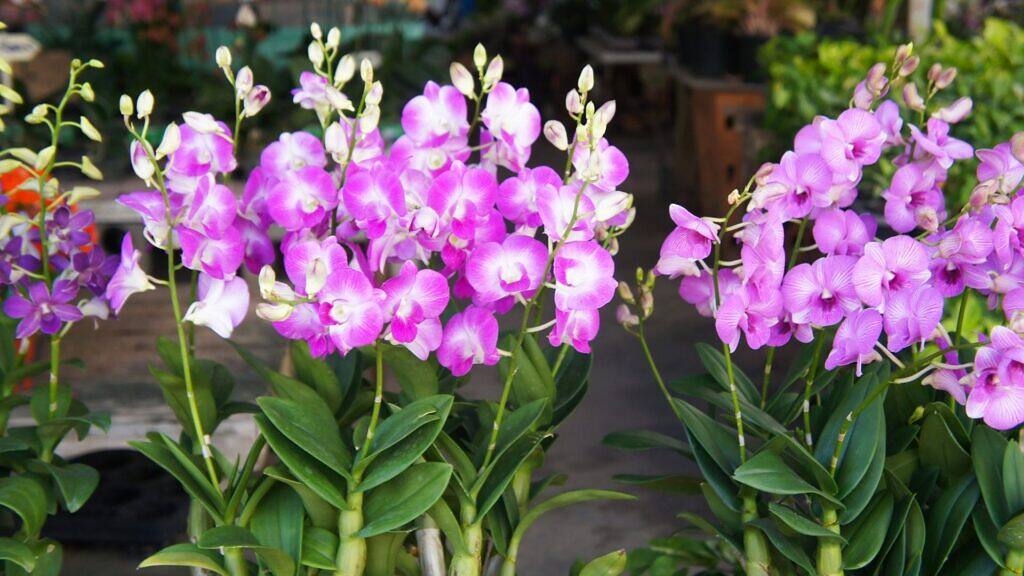
The Cooktown Orchid (Dendrobium bigibbum) is a highly popular epiphytic orchid, widely grown and sold around the world. Native to tropical regions of Oceania, its flowers are colorful, showy, and bring life and elegance to any setting. Interestingly, despite the common names “dendrobium phalaenopsis” suggesting a hybrid with Phalaenopsis, it is a Dendrobium, not a hybrid between the two genera. The association comes from the look of the flowers, which resemble phalaenopsis orchids in their rounded shape, prominent lip, and lush tropical appearance.
This orchid, which belongs to the group of dendrobiums with persistent leaves, is valued not only for its beauty but also for its adaptability. It is a favorite choice for both decorative pots and cut flowers, thanks to the lasting quality and visual impact of its flower spikes. Unlike other orchids that lose their leaves on older pseudobulbs, the Cooktown Orchid keeps its foliage, which adds to its ornamental appeal year-round, as long as growing conditions are ideal, especially when it comes to the warmer temperatures it prefers.
Origin, Habitat, and Etymology
Native to the tropical belt of Oceania, the Cooktown Orchid occurs naturally from the Tanimbar Islands and southern New Guinea to northern Queensland, Australia, especially in the Cape York Peninsula region. In its habitat, it grows as an epiphyte, attached to tree trunks and branches, or as a lithophyte, growing on rocks and exposed outcrops. It is found in tropical environments with a seasonally dry climate, such as coastal scrub, open formations, rocky areas, and forests subject to alternating wet and dry periods.
The genus name, Dendrobium, comes from the Greek “dendron,” meaning tree, and “bios,” life, a reference to its epiphytic habit, characteristic of many species in this genus that live on other plants. The specific epithet, bigibbum, comes from the Latin “bi-” (two) and “gibbus” (hump or swelling). The name refers to the base of the flower, where the foot of the column projects and, together with the lateral sepals, forms a protruding structure with a rounded or doubly swollen appearance. It is this floral form, more than the pseudobulbs or the resemblance to Phalaenopsis, that likely inspired the species name.
Ornamental Use of the Cooktown Orchid
The Cooktown Orchid is a plant with strong ornamental appeal, valued mainly for its showy, long-lasting, and elegant bloom. Its upright stems, with evenly spaced flowers and intense colors, make it an excellent choice for bright indoor spaces, covered porches, living rooms, entry halls, reception areas, offices, and commercial settings. Unlike many plants used in traditional landscaping, its impact does not come from dense foliage or mass plantings, but from the striking presence of the flowers, which function almost like a living arrangement.
In pots, the Cooktown Orchid stands out on consoles, side tables, countertops, decorative cachepots, and pedestals, especially when in bloom. Its upright, relatively tidy growth habit makes it easy to use in contemporary, tropical, or minimalist compositions, and even in Urban Jungle styling, without taking up much side space. It is also widely used in floral arrangements and temporary decor, since its flowers last well and keep a refined look for several days when handled properly. It is a sophisticated and elegant choice for brides, where it can be used in bouquets, boutonnieres, and elaborate hairstyles.
In the garden, its use is more selective. The Cooktown Orchid can be grown in orchid houses, protected porches, orchid vertical gardens, conservatories, slatted structures, pergolas with light shade, and compositions with trunks, wood mounts, or supports that highlight its epiphytic habit. It can also be mounted on tall, open-canopy trees, as long as the site offers abundant light, good air circulation, and protection from excess accumulated moisture. In this setting, it serves as a focal point of color and interest, standing out during bloom.
It pairs well with other orchids grown under similar conditions, bromeliads, tougher ferns, anthuriums, compact philodendrons, and tropical foliage with strong texture. The ideal is to avoid letting overly large plants hide their flower spikes, since the main appeal of the Cooktown Orchid lies precisely in the vertical architecture of its bloom. So whether indoors, on a balcony, or in a protected garden, it should be treated as a focal point: an orchid with a clean, tropical, and elegant presence, capable of transforming a space without having to compete for room.
How to care for the Cooktown Orchid: growing guide
- Light: The Cooktown Orchid prefers bright light, but always filtered or indirect. It can tolerate direct morning sun or late-afternoon sun, which is gentler. In very low light, the plant may survive, but flowering will be significantly reduced or nonexistent. Good light is essential to encourage flower spike development.
- Growing medium: As an epiphyte, the Cooktown Orchid does not require traditional soil. The ideal medium should be airy, drain quickly, and at the same time retain enough moisture for the roots. A typical and effective mix for epiphytic orchids includes tree bark (such as composted pine bark), charcoal in pieces, and coconut chips or fiber. The pH ideal for this medium ranges from 5.5 to 6.5.
- Watering: Watering is crucial for Cooktown Orchid flowering. During the active growth period, which occurs in spring and summer, watering should be generous and regular, allowing the medium to dry slightly between waterings. After the new pseudobulbs have matured, especially in the colder or drier months, gradually reduce watering and stop or cut back fertilizing, keeping just enough moisture to prevent severe pseudobulb shriveling. When flowering begins, resume generous watering, and reduce it again after blooming ends, until new shoots appear. During periods of limited watering, using a spray bottle with water (or a room humidifier) on the leaves and exposed roots is essential to maintain the needed ambient humidity without soaking the medium or allowing water to collect in the leaf axils.
- Climate: This orchid needs warm temperatures and is sensitive to low temperatures and frost. The ideal daytime temperature ranges from 68°F to 86°F (20°C to 30°C). As for nighttime temperatures, it is important that they do not drop below 59°F (15°C) in winter and 63°F (17°C) in summer, to ensure healthy development and flower induction in the plant.
- Air humidity: The Cooktown Orchid benefits from high relative humidity, ideally between 50% and 80%, especially in drier climates. To increase humidity indoors, you can use humidifiers or place trays with stones and evaporating water under the pot, as long as the pot does not sit in direct contact with the water.
- Fertilizing: Fertilization should be adjusted to the plant’s growth stages. During the vegetative growth period (spring/summer), use an orchid-specific NPK formula, such as 20-20-20 or 10-10-10, preferably with micronutrients, applying a reduced dose (approximately 1/4 of the amount recommended by the manufacturer) every 15 to 30 days. During the flowering period, switch to an NPK with a higher phosphorus content, such as 10-30-20 or 4-14-8, to encourage flower formation and opening, keeping the same frequency. You can use either fast-release liquid fertilizers, applied in the watering can or as a foliar spray (at low concentration), or slow-release organic fertilizers, such as tablets or sachets made specifically for orchids.
- Pruning: Pruning on the Cooktown Orchid is minimal and focuses on removing flowers and flower spikes that have already dried out, to maintain appearance and direct the plant’s energy. Old pseudobulbs, even if they lose their leaves, should be kept as long as they remain green and firm, since they continue storing water and essential nutrients for the plant. Remove them only if they are completely dry, soft, or showing signs of disease.
- Repotting: The Cooktown Orchid should not be repotted unnecessarily often, since it usually blooms better when it is well settled in relatively small pots. Repotting is recommended when the medium begins to break down, compact, or hold too much water, when the roots are badly deteriorated, or when the plant has clearly outgrown the pot. In general, this happens every two or three years. The best time is right after flowering or at the start of new shoot and root growth.
Avoid pots that are too large, since excess moist potting mix around the roots encourages rot and can delay growth and flowering. - Species-specific care: Because this is a denphal-type Dendrobium, the plant keeps upright pseudobulbs, leaves that stay on for a long time, and roots that need excellent air circulation. After the new pseudobulbs mature, especially in the cooler or drier months, watering and fertilizing should be reduced, but without subjecting the plant to extreme drought. This moderate rest helps respect the species’ natural cycle and supports more consistent blooming. Older pseudobulbs, even if they are less attractive or partly leafless, should be kept as long as they remain firm, since they serve as water and nutrient reserves for the clump.
How to propagate Cooktown Orchid
Propagating Cooktown Orchid is accessible to the home grower through a few methods. The most common and effective is clump division, which should be done after flowering. In this process, the mature plant is carefully separated, and each new division should keep at least three mature pseudobulbs, connected to the rhizome and with a good root system, ensuring the new plant’s vigor. This minimum number of pseudobulbs ensures the division has enough reserves to establish itself and grow. Trying to make divisions with fewer pseudobulbs is a risky recipe that can cost your plants years of growth.
Another form of propagation happens through keikis, which are small plantlets that occasionally appear at the nodes of the pseudobulbs. To remove a keiki, wait until it develops roots at least 5 cm long. Carefully separate it from the mother plant and pot it in an orchid-growing medium, such as pine bark or coconut chips. Seed propagation, however, is extremely difficult at home, since orchid seeds are tiny, lack endosperm, and depend on mycorrhizal fungi to germinate, requiring tissue culture techniques in a laboratory. At commercial scale, meristem propagation is used to produce identical, healthy clones.
Botanical description of Dendrobium bigibbum
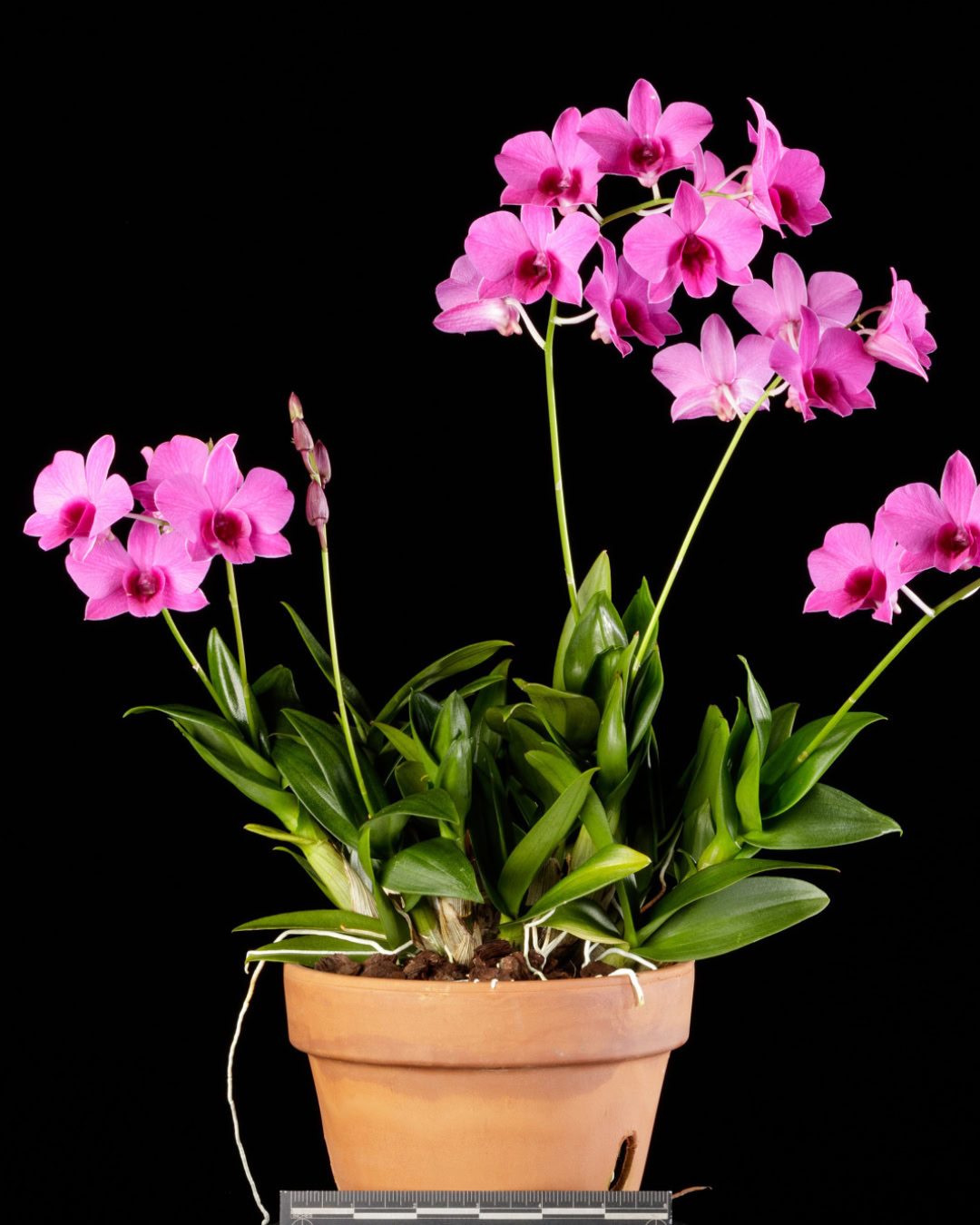
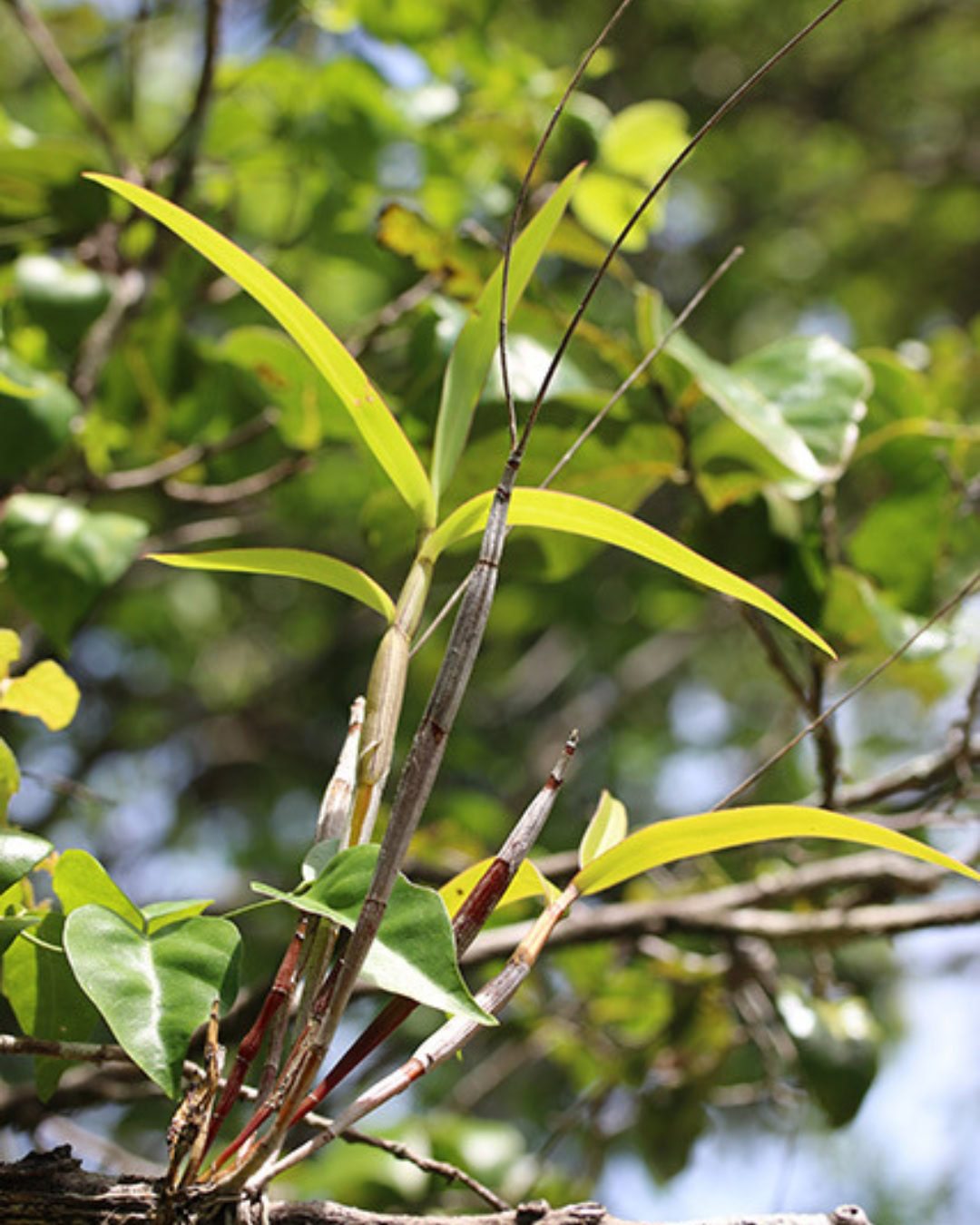
Dendrobium bigibbum is a sympodial orchid with an epiphytic or lithophytic habit, forming narrow clumps. Its pseudobulbs, also called canes, are cylindrical, stiff, and can measure about 20 to 120 cm in length, although many potted plants stay around 30 to 80 cm. The flower spikes, arched or nearly upright, can add another 20 to 40 cm to the plant, giving it a vertical, elegant look in bloom.
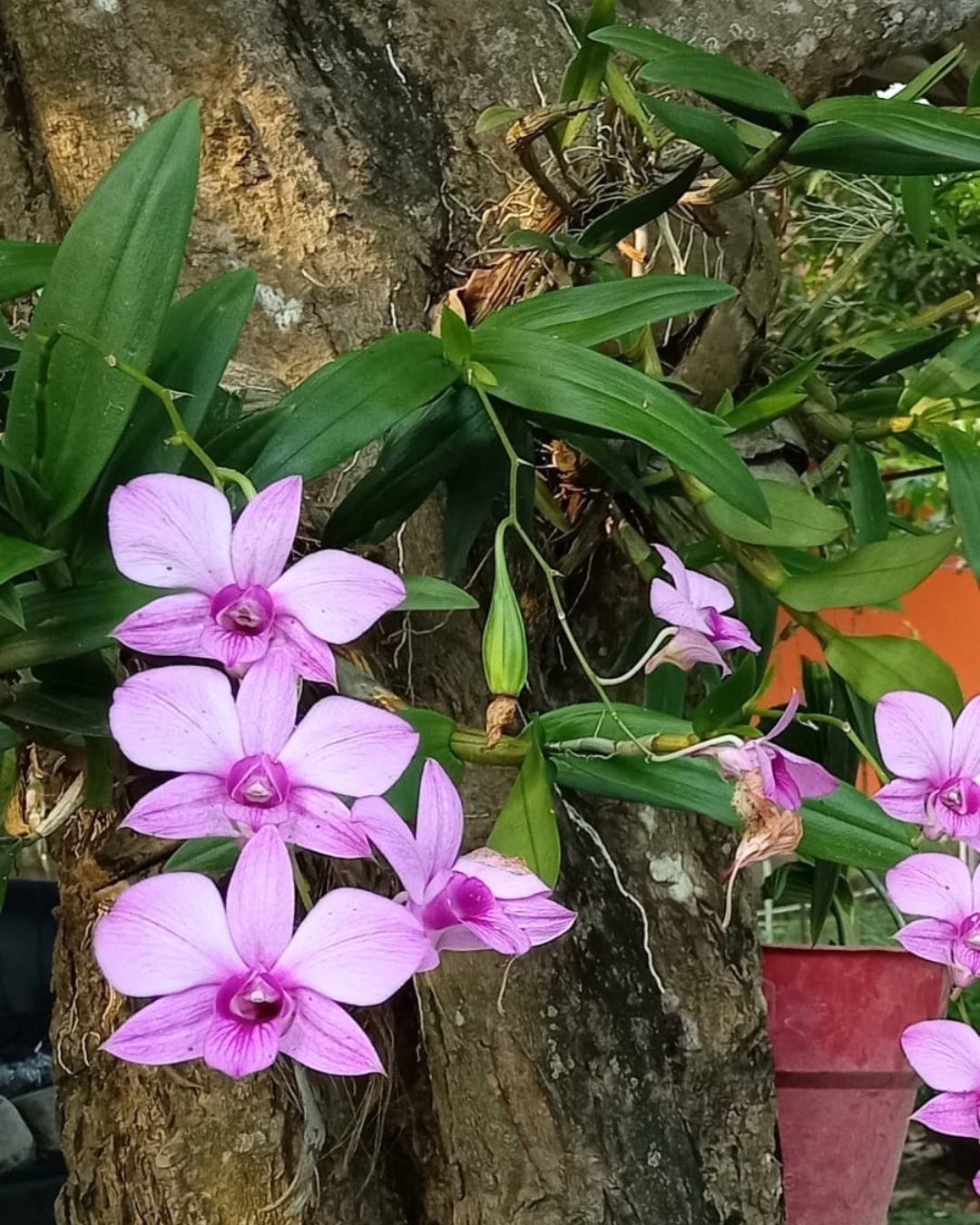
The roots are adventitious, numerous, and produced from the base of the pseudobulbs and the short rhizome. As in many epiphytic orchids, they are covered with velamen, a spongy, whitish tissue that helps with rapid water uptake, protection against drying out, and anchoring the plant to trunks, rocks, or very airy growing media. This adaptation matches its natural growth on trees and rocky outcrops, not in compact soil.
Its structure is typical of hard-caned dendrobiums, with upright, cylindrical to slightly spindle-shaped pseudobulbs that are stiff and green to purplish when young, becoming more wrinkled with age. In botanical descriptions, these pseudobulbs can reach about 20 cm to more than 1 m in length, although potted plants often stay smaller. The rhizome is short and creeping, connecting the pseudobulbs to one another and allowing the clump to expand gradually and laterally.
The leaves are arranged mainly on the middle or upper third of the pseudobulbs, usually in limited numbers per cane. They are ovate to lance-shaped, with a pointed tip, a leathery to slightly fleshy texture, and green coloring, sometimes with a purplish tint on the margins or surface. They average 8 to 15 cm in length, although there is variation among forms and cultivars. The venation is parallel.
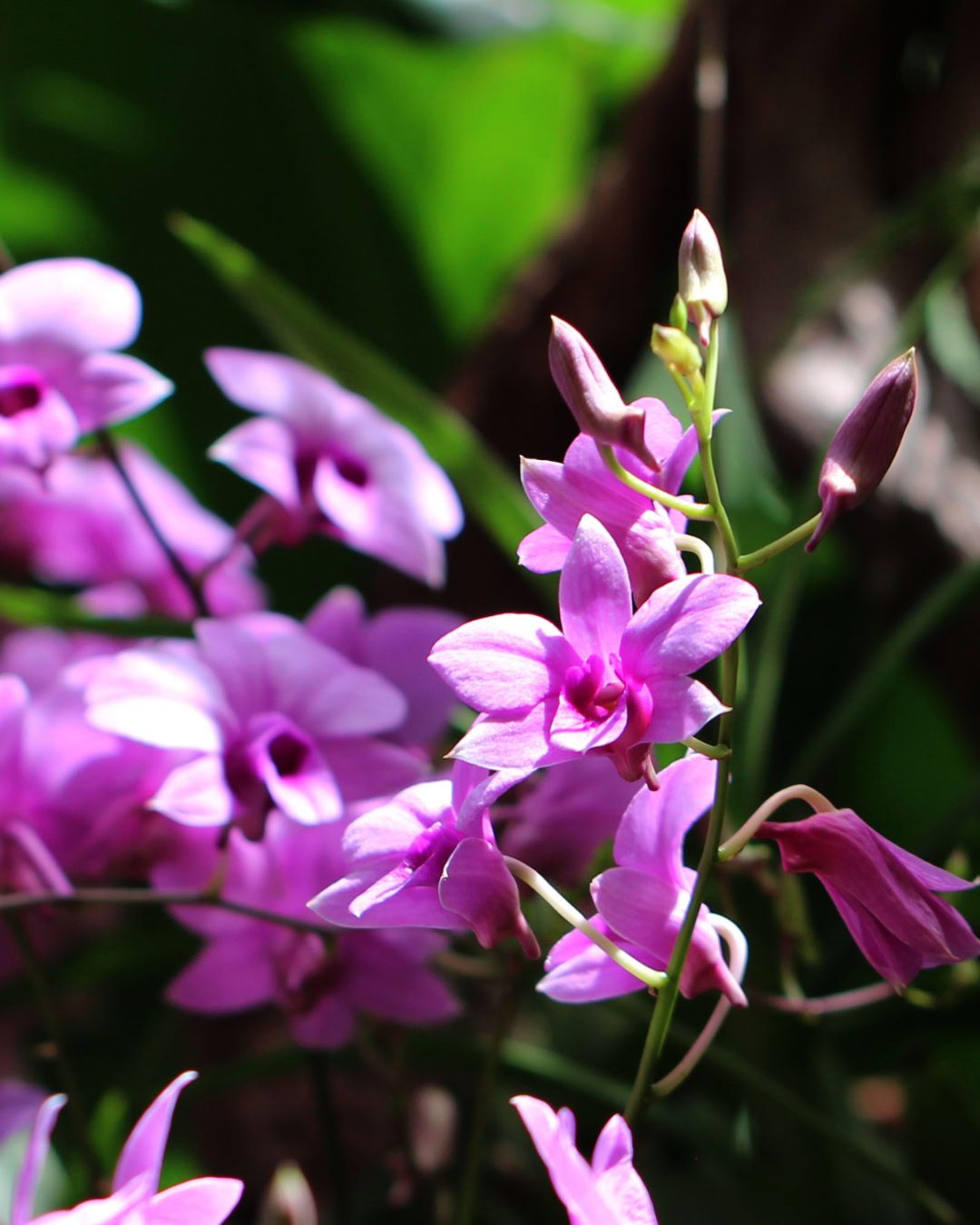
The inflorescence is a terminal or lateral raceme, emerging from the upper portion of mature pseudobulbs. The flower spikes are arched, nearly upright, or almost horizontal, usually leafless, and can carry from a few flowers to about 20 flowers, depending on the variety, the plant’s age, and growing conditions. The flowers last a long time by orchid standards, staying open for about four to eight weeks, with better longevity in environments protected from excessive heat, direct rain, and dry wind.
Blooming occurs mainly in the warmer months, although the exact period varies according to the plant’s genetic background, the local climate, and care.
In its natural range, flowering has been recorded in different months of the year, and with good cultivation the plant may bloom more than once or flower outside the most common season. Individual flowers are long-lasting, a highly valued trait both in pots and in floral arrangements.
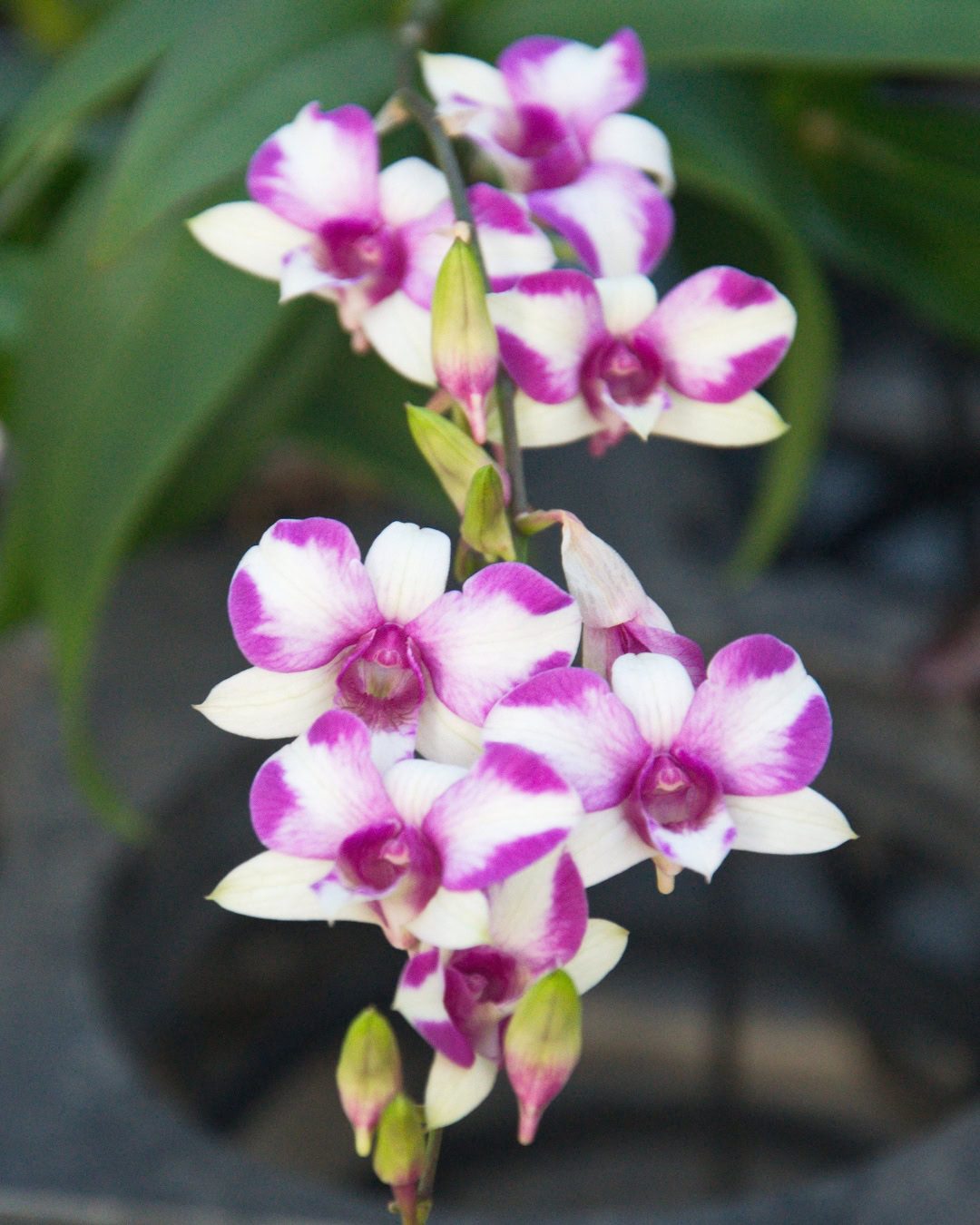
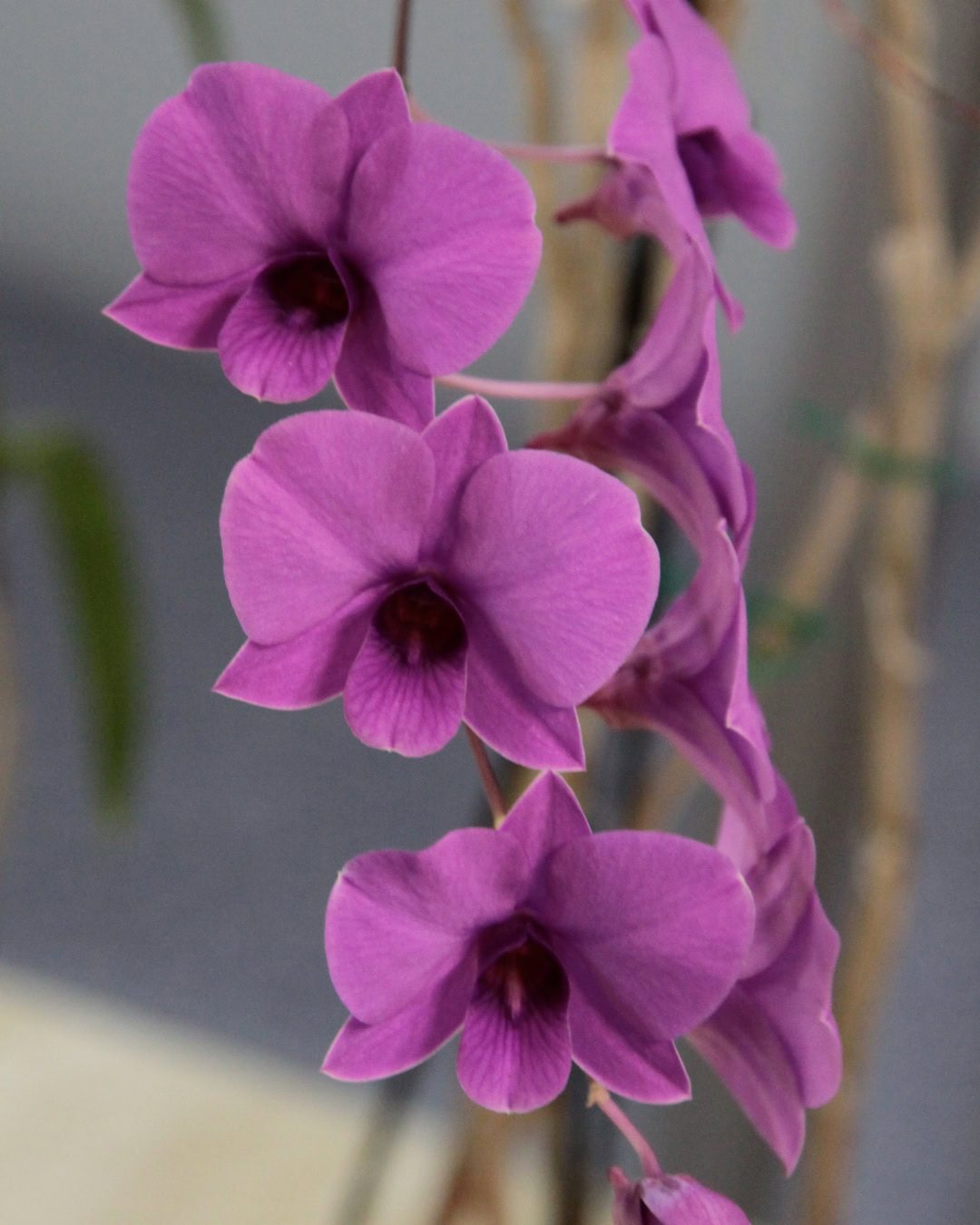
The flowers are large, showy, resupinate, and usually measure 3 to 7 cm in diameter, depending on the variety and cultivar. The sepals and petals are free, broad, slightly recurved, and satiny in texture, in shades of lilac, purple, magenta, pink-purple, or lavender, with white or nearly white forms being less common. The lip is three-lobed, darker than the other floral segments, with upright side lobes that partially surround the column and an expanded middle lobe. Rather than just “two calluses,” botanical descriptions mention ridges or keels on the lip disc, often with hairs in the central area, an important detail for flower identification.
As in other orchids, the male and female reproductive organs are united in a structure called the column. The flowers are bisexual and zygomorphic, with the lip serving as the most specialized part of the flower. Its shape, contrasting color, and distinct surface help attract and guide pollinators.
After fertilization, the plant forms elongated dehiscent capsule fruits, initially green and then dry when mature. When they open, they release numerous tiny, dustlike seeds adapted for wind dispersal. As is characteristic of orchids, these seeds have virtually no nutrient reserves and, in the natural environment, depend on an association with compatible mycorrhizal fungi to germinate and begin development.
Main varieties and cultivars
- Dendrobium bigibbum var. bigibbum: the typical variety of the species, associated with flowers that are usually lilac, pink, or purple, with variable size and upright pseudobulbs. It often shows a lighter or whitish mark in the central area of the lip, a feature mentioned in descriptions of the complex. It represents the classic look of the wild Cooktown Orchid.
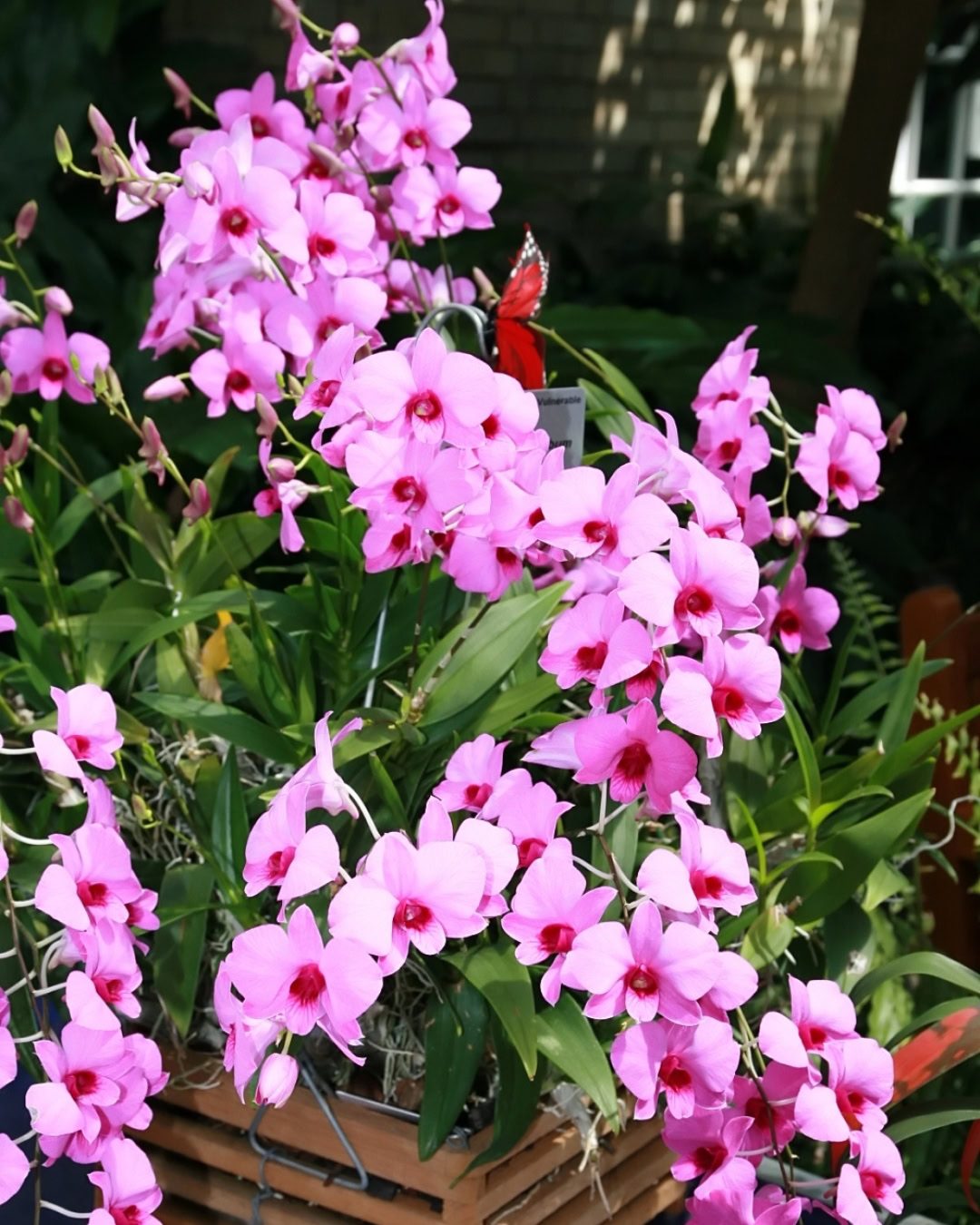
- Dendrobium bigibbum var. superbum: one of the most ornamental and historically important varieties, associated with the so-called Cooktown Orchid, the floral emblem of Queensland. It has large, showy flowers, usually in lilac, magenta, or purple tones, without the obvious white central mark on the lip. It is one of the most important forms for horticulture and for the development of the denphal-type dendrobiums grown today.
- Dendrobium bigibbum var. compactum: this refers to lower-growing, more compact plants, often associated with a lithophytic habit, meaning they grow on rocks. Its reduced size is appealing from an ornamental standpoint, as it works well in smaller pots, home collections, and limited spaces without losing the group’s typical flower form.
- Dendrobium bigibbum var. schroederianum: a variety associated with the Tanimbar Islands in Indonesia and less common in mainstream cultivation. It is distinguished by its own floral variations within the complex, and is more relevant to botanical collections, taxonomic study, and specialized cultivation than to the general ornamental plant market.
- White forms, alba or album: plants with white or nearly white flowers are highly prized for their clean, elegant look. However, it is better to treat them as color forms or horticultural selections, rather than simply as the cultivar Dendrobium bigibbum ‘Album’. Older names such as Dendrobium phalaenopsis var. album now appear as synonyms in taxonomic databases, while in commerce “alba” and “album” are often used more broadly to indicate flowers without the typical purple pigmentation.
- Denphal-type hybrids: many of the plants sold in garden centers as Cooktown Orchid do not correspond exactly to the wild species, but rather to hybrids derived from Dendrobium bigibbum and related species in the section Phalaenanthe. These hybrids were selected for larger flowers, fuller flower spikes, a more compact habit, longer-lasting blooms, and a broad color range, including white, pink, lilac, magenta, purple, bicolors, and nearly blue tones.
Pests, diseases, and solutions
Cooktown Orchid, like many potted orchids, can be attacked by pests and diseases, especially when there is poor air circulation, excess moisture, degraded potting medium, or the introduction of contaminated plants into the collection. Among the most common pests are scale insects and mealybugs, which attach themselves to leaves, pseudobulbs, leaf axils, and roots, sucking sap from the plant. Aphids, thrips, whiteflies, and mites, such as red spider mites, can also occur. Slugs and snails mainly attack new growth, root tips, and flowers, and are more common in humid environments.
Control starts with regular inspection and isolating the affected plant. Light infestations can be reduced with manual removal, cleaning the affected parts, and careful application of insecticidal soap, horticultural oil, neem oil, or insecticides registered for ornamental plants, always following the label. In the case of scale insects, repeat applications are often necessary, since eggs and nymphs may remain hidden. For slugs and snails, nighttime hand-picking, good growing hygiene, and appropriate baits, especially those based on iron phosphate, are the most recommended measures.
Among diseases, rot caused by fungi and oomycetes stands out, such as black rot associated with Phytophthora spp. and Pythium spp., as well as leaf spots caused by fungi such as Cercospora spp. and Colletotrichum spp. Prevention is the best strategy: keep the potting medium well drained, avoid waterlogging, reduce water sitting on the leaves, and ensure good air circulation. In cases of leaf spots or rot, isolate the plant, remove the affected parts with a sterilized tool, and use appropriate fungicides, such as copper-based or systemic products, when necessary.
Bacterial diseases can appear in warm, humid conditions, forming watery, soft, or translucent spots that darken quickly. Management involves isolating the plant, cutting out affected tissue, disinfecting tools, and correcting excess moisture. Viruses, such as Cymbidium mosaic virus (CyMV) and Odontoglossum ringspot virus (ORSV), have no practical cure. Plants confirmed to be infected should be discarded, and prevention depends on strict hygiene, sterilized tools, and care when dividing or handling orchids.
Fun facts
The history of Dendrobium bigibbum goes back to the 19th century, a period of major naval expeditions, tropical plant collecting, and intense European fascination with orchids. The species was formally described in 1852 by John Lindley, one of the most important orchid specialists of his time, from plants collected in northern Australia and grown in English greenhouses. This journey, from collection in remote areas of Cape York to blooming in European collections, reflects the so-called Victorian “orchid mania,” when exotic species were coveted by botanists, collectors, and major nursery growers.
In Australia, its importance went beyond botanical interest. The plant became a cultural symbol of Queensland and was proclaimed on November 19, 1959, as the state’s floral emblem during Queensland’s centennial celebrations. Popularly known as “Cooktown Orchid,” it was chosen for bringing together highly valued regional traits: it is native, showy, ornamental, relatively easy to grow, and has a brownish-purple color associated with the state. Although the common name refers to the town of Cooktown, the taxonomic history of the group is more complex than the nickname suggests, involving older classifications, closely related varieties, and changing botanical interpretation over time.
Frequently asked questions
How many times does the denphal bloom?
Cooktown Orchid usually blooms once a year, mainly in the warmer, brighter months. However, mature, well-grown plants with good light can bloom more than once or send up flower spikes outside the main season, especially when they are modern hybrids selected for greater floriferousness.
Can you cut the denphal flower spike?
Yes. The flower spike can be cut when it is dry or when all the flowers have dropped and the spike is no longer active. Use a clean, sharp tool, cutting close to the base of the spike. What should not be cut without reason are green or firm pseudobulbs, even if they have no leaves, since they continue storing water and nutrients for the plant.
How do you care for Denphalaen flowers?
“Denphalaen” is a popular way to refer to Cooktown Orchid or to Phalaenopsis-type dendrobiums.
To care for it well, provide bright, filtered light, an orchid mix made for epiphytic orchids, deep watering with partial drying between waterings, good air circulation, and warm conditions. After the pseudobulbs mature, reduce watering and fertilizing a bit, without letting the plant become too dehydrated.
Is Cooktown Orchid rare?
No. Cooktown Orchid is fairly common in ornamental cultivation and is often found in flower shops, garden centers, and home collections. What can be rare are some botanical varieties, specific color forms, selected cultivars, or plants from controlled wild origin. Most commercially sold denphals are hybrids produced in nurseries.
Can I plant denphal in soil?
It is not recommended to plant denphal in regular garden soil. This orchid has roots adapted to grow on trees, rocks, or very airy growing media. In compact soil, the roots tend to suffocate and rot. The ideal choice is an orchid mix for epiphytic orchids, with materials such as pine bark, charcoal, coconut chips, gravel, or equivalent blends.
Does Cooktown Orchid like sun or shade?
Cooktown Orchid likes plenty of light, but not deep shade or strong sun all day long. The best approach is to provide bright, filtered light, with the option of gentle direct sun in the early morning or late afternoon. If the leaves become very dark and the plant does not bloom, it may not be getting enough light. If burned spots appear, the sun is too strong.
How long does a Cooktown Orchid last?
The flowers of Cooktown Orchid last, on average, four to eight weeks on the plant, depending on the cultivar, temperature, humidity, and protection from wind, direct rain, and excessive heat. The plant itself can live for many years when grown well, forming clumps that become stronger and more floriferous over time.
What is the denphal plant?
Denphal is the common name given to phalaenopsis-type dendrobiums, especially plants related to the species Dendrobium bigibbum and its hybrids. The name comes from the resemblance of the flowers to orchids in the genus Phalaenopsis, but the plant belongs to the genus Dendrobium. In other words: it looks a little like a phalaenopsis in bloom, but it is not a phalaenopsis.