A friend asked me the other day, with that air of someone who has just discovered a secret: “Raquel, do you rotate your pots regularly?” Before I could answer, she added, “Because I read on Instagram that all plants should be rotated every two weeks.” I smiled, took a deep breath, and told her what I’m going to tell you now: it depends. And that answer, which may seem evasive, is the purest truth about indoor plants. Pot rotation is a real technique, with solid scientific backing — but applying it indiscriminately is like giving the same medicine for different illnesses. What works wonderfully for an African violet can seriously harm an orchid that is setting buds.
The science behind movement: phototropism and auxins
To understand when and why to turn a pot, we need to understand what happens inside the plant when it receives light from only one side. This phenomenon has a name: positive phototropism. When light strikes from one side only, a hormone called auxin migrates to the opposite side — the shaded side — and stimulates cell elongation in that region. The result is that the cells on the dark side grow faster, bending the stem toward the light.
Tropisms are permanent growth responses — not reversible movements like nastic movements — which means that a bend caused by light imbalance is unlikely to correct itself without intervention. The plant does not “turn back” on its own to the center: it needs a new stimulus that rebalances hormone production.
The problem with indoor environments is exactly that: unlike the sun, which moves across the sky and distributes light throughout the day, our windows are fixed. Auxin works on the same side all the time, growth becomes increasingly directional, and over time the plant loses both visual symmetry and structural stability, and may even fall toward the light. That is where rotation comes in — but not for all plants, and not in the same way.
The key question: does this plant have radial symmetry?
This is the point most often missing from discussions about pot rotation, and it changes the approach completely. Plants with radial symmetry growth — those that naturally form a rosette, a rounded canopy, or a set of leaves distributed evenly around a center — are the ones that benefit most from regular rotation. For these species, rotating the pot is almost an act of fairness: it ensures that all leaves have equal access to light, without one side monopolizing the photons.
On the other hand, plants with directional or bilateral growth — those that grow preferentially to one side, climb, hang, or have a naturally defined “front” — may not benefit from rotation, or may even be harmed by it. Changing the orientation of these species interrupts a growth pattern they have already established in relation to the available space and light.
Enjoyed this guide? There's more where it came from.
Understanding why plants behave the way they do is what turns guesswork into a thriving garden. That's exactly what we share in the Shrubz newsletter — free, straight to your inbox:
- Seasonal care reminders timed to your gardening calendar
- Propagation and pruning techniques, explained step by step
- Pest and disease alerts — catch problems before they spread
So, before picking up the pot to turn it, the first question to ask is: does this plant have radial symmetry? And the second, equally important: from what angle will it be viewed?
When turning makes all the difference: radial-symmetry plants
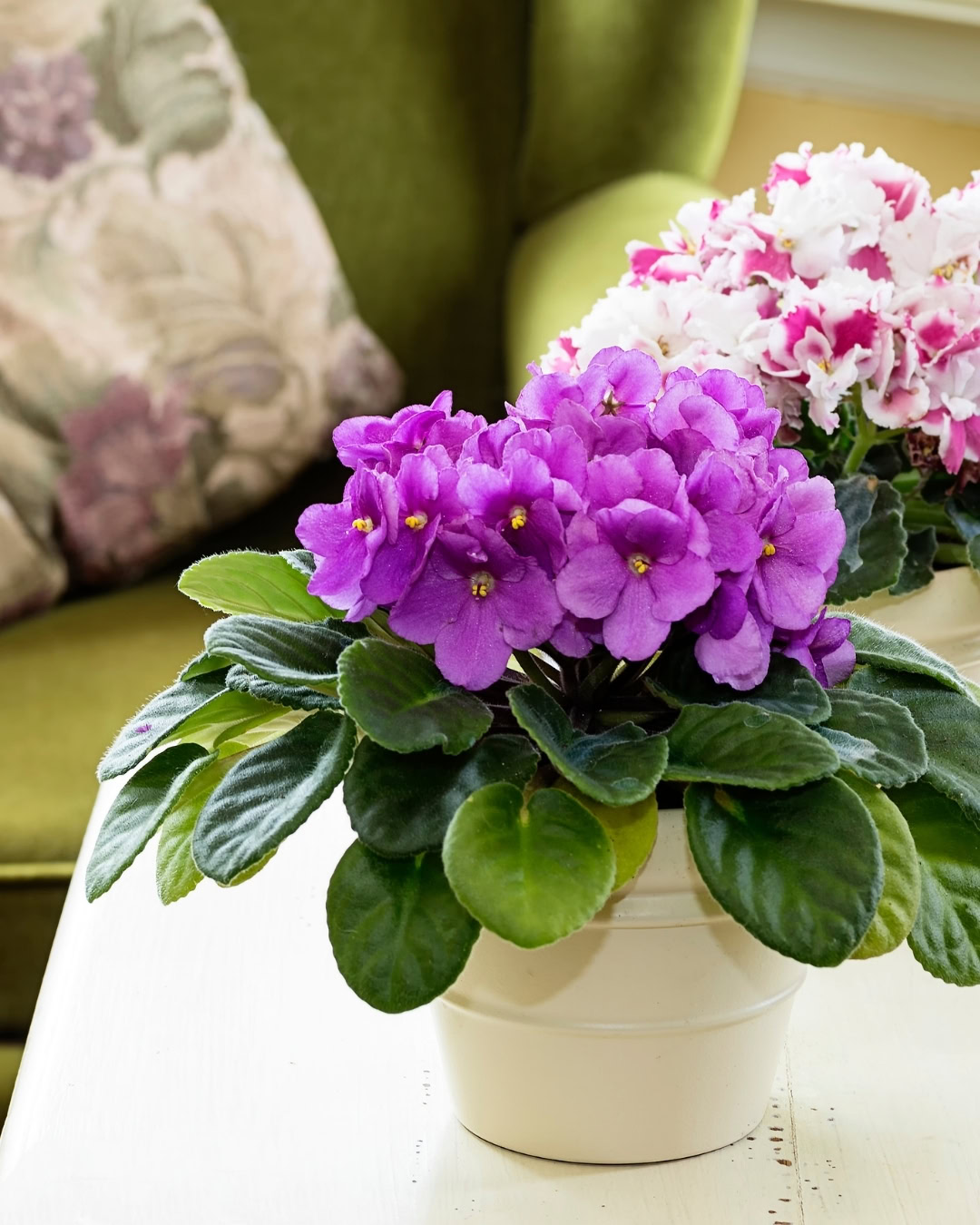
The African violet (Saintpaulia ionantha) is the perfect example of a plant that loves to be rotated. Its leaves are arranged in a rosette around a center, and the aesthetic intention is exactly that: a circular, harmonious form, seen from above or from the front. When light comes from the same side all the time, half of the rosette becomes distorted — the leaves on the lit side stand upright, those on the shaded side lean toward the photons, and the perfection of the rosette goes down the drain.
The recommendation, then, for violets is to turn the pot weekly, always in the same direction, to ensure symmetrical growth of the plant. This advice is not aesthetic — it is functional. A balanced rosette photosynthesizes more efficiently and produces flowers more evenly across the crown.
Other species that fit this logic of radial symmetry and benefit greatly from regular rotation:
- Rosette succulents (Echeverias, Sempervivums): without rotation, they stretch one side toward the light and lose the compact shape that makes them so ornamental. Do not confuse this with etiolation.
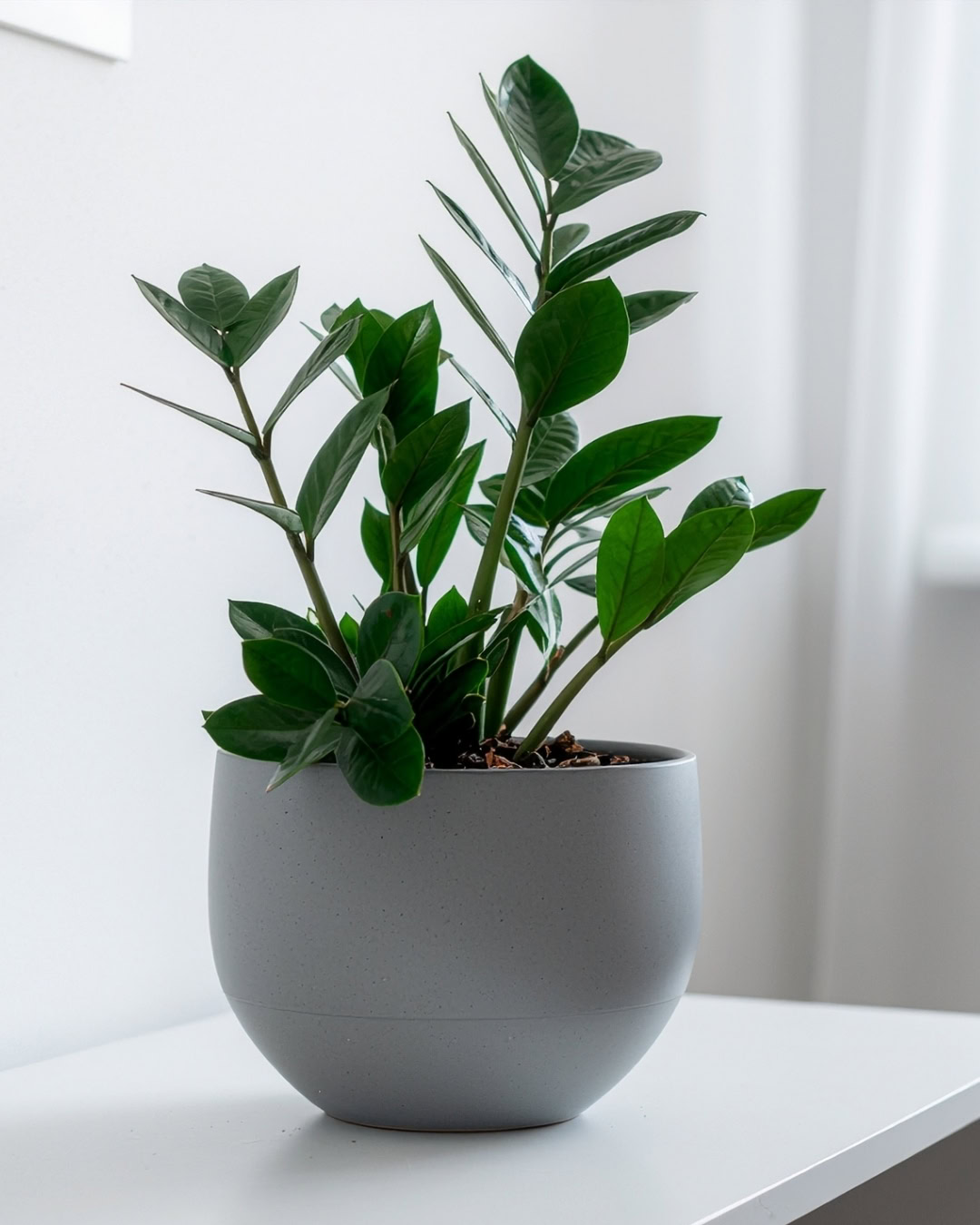
- ZZ plants (Zamioculcas zamiifolia): the stems grow vertically around a center; regular turning maintains the silhouette and keeps the stems upright rather than crooked to one side.
- Ficus lyrata and Ficus elastica: although they are not rosettes, they have canopies that naturally expand in all directions. Without rotation, they lean heavily and lose structural balance.
- Peperomias, bromeliads, and pileas: compact plants that quickly reveal imbalance when one side receives more light than the other. Avoid rotating bromeliads when they are in bloom.
When not to rotate: plants that have a “front” — and should keep it
This is where the most common mistake I see in gardening forums and groups lives. Not every plant wants to be seen from all angles equally. Some species — and some growing situations — require the plant to maintain a fixed orientation in relation to light.
Many orchids work this way. Phalaenopsis, for example, develop their flower spikes toward the light source, and the arrangement of flowers on the stem is designed by the plant itself to be viewed from a specific angle. Rotating the orchid during bud formation or bloom opening causes disorientation — buds may drop, flowers that have already opened are left “facing away” from the observer, and the flower spike may start growing in the opposite direction in an attempt to reorient itself. I’ve already seen people lose Phalaenopsis blooms by turning the pot.
In addition to the flowers, the leaves also orient themselves toward the light, and that serves a very important function. Have you noticed that when we buy them, they usually point upward, and over time they start leaning “to the side”? Besides directing the leaf surface toward the light source, phalaenopsis arranges its leaves so that water does not collect in the center of the plant. When it leans to the side, water does not accumulate, and it stays healthier. It’s even a good idea to place a weight in the pot so it doesn’t tip over.
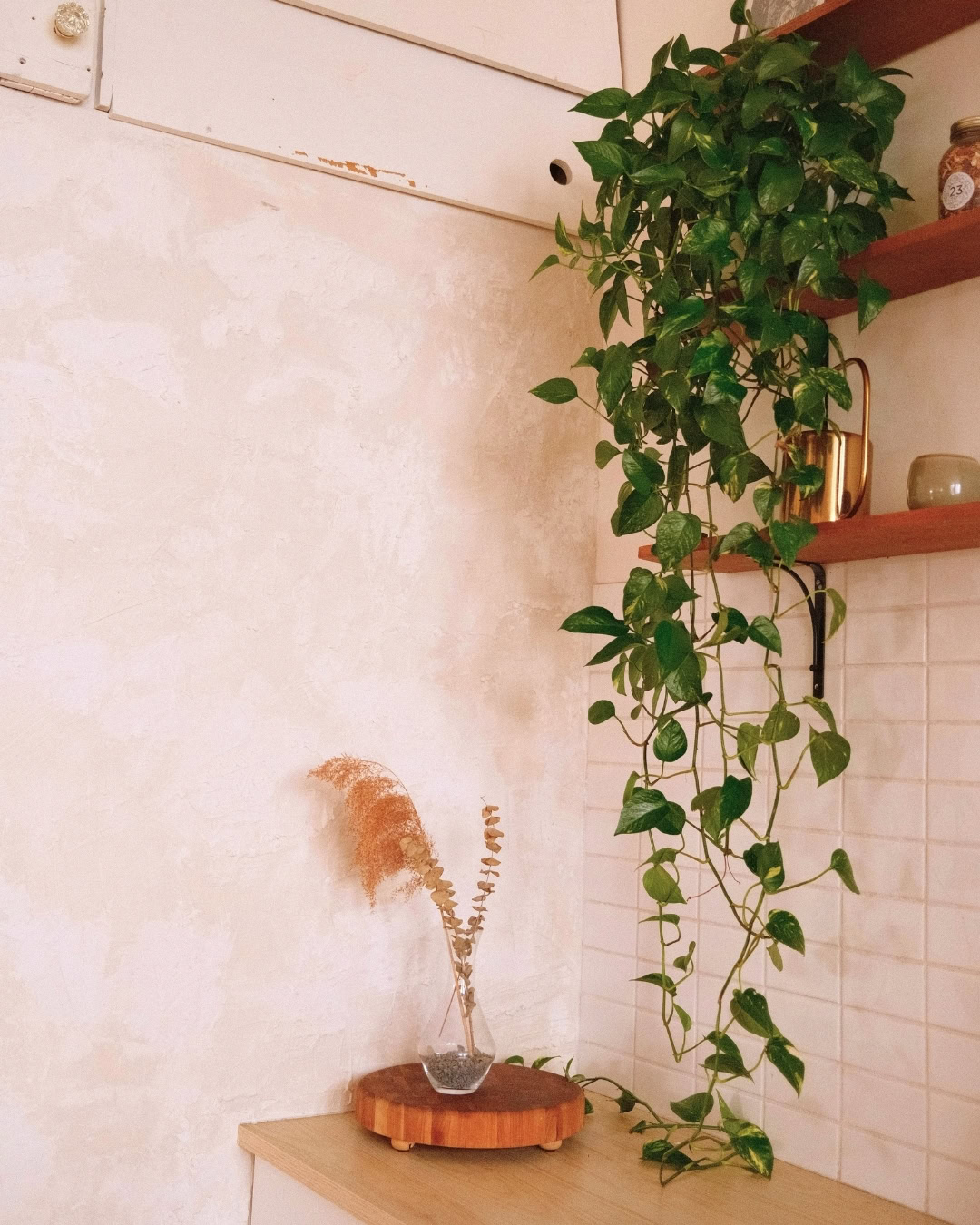
Besides orchids, there is an entire category of plants that should not be rotated when placed in a specific spot in the environment: trailing plants and climbers intended to grow in one direction. Think of a pothos (Epipremnum aureum) placed on a high shelf, with stems cascading freely or trained to climb a wall. This plant has already established a growth pattern in relation to space — its stems follow gravity and light in a coordinated way. Rotating the pot will confuse that pattern and create uneven stem growth, with no aesthetic or physiological benefit. In addition, the leaves will end up looking messy.
The same reasoning applies to:
- Climbing plants on a directed support (ivy, pothos, trained philodendrons): the system is already adapted to the existing orientation.
- Trailing plants in hanging pots viewed from below: the viewing angle is fixed; rotation adds no aesthetic value.
- Ficus benjamina: extremely sensitive to any change in position. It responds with heavy leaf drop even to small moves. If rotation is necessary, turn it no more than 45 degrees at a time and at intervals of several weeks.
The viewing angle as a decision-making criterion
This is a criterion I rarely see mentioned, but I consider it fundamental: from where will your plant be seen? That question completely changes the rotation strategy.
A plant placed on an island in the center of a room, visible from all sides, has everything to gain from rotation — the goal is precisely for it to be beautiful from any angle. But a plant placed against a wall, on a side shelf, or in a corner has a single main viewing angle. In that case, what we want is not total symmetry, but rather for the plant’s most beautiful side to face the viewer.
In this situation, rotation can be used strategically and selectively — not as a biweekly routine, but as an adjustment tool when growth starts to distort the visible side too much. The side that faces the wall may grow a little less than the front side, and that’s fine. Invisible imperfection doesn’t bother anyone.
A pothos placed on a shelf to cascade down a wall should, on the other hand, have its front kept consistently oriented. Rotating this pot regularly will mess up the direction of the stems and create chaotic growth that requires hours of manual training to correct. In this case, leaving it alone is the smartest decision.
How to mark the pot to know the correct position
For anyone who is going to adopt rotation as a regular practice, marking the pot is essential.
Without a reference point, you lose track of how many turns you’ve already made, which side was facing the light, and where the plant is in its cycle. This is especially important to keep the same direction of rotation at all times — alternating between clockwise and counterclockwise can create unnecessary hormonal stress, since auxins will need to redistribute in opposite directions with each cycle.
There are simple, practical ways to mark it:
- Masking tape or colored adhesive on the rim of the pot: mark it with an arrow pointing to the main light source. With each rotation, the arrow “dances” — and you know exactly where you are in the cycle.
- Plant label-type stake in the potting mix: note the date of the last rotation and the direction of the turn. It stays visible, is practical, and also serves as a reminder.
- Pen mark on the bottom of the pot: for pots on shelves, a mark on the bottom with the numbers “1”, “2”, “3”, and “4” representing the four quarter-turns is enough.
- Gardening app or a simple note on your phone: for large collections, digitally recording each plant with the date and current position helps avoid confusion.
The quarter-turn rule — 90 degrees with each rotation — is the most recommended for plants that benefit from turning. I never do 180 degrees at once, except in one specific case: when the plant is already leaning too much to one side and I want to use the light as “physiotherapy,” forcing growth on the opposite side. In that case, I turn it 180 degrees for a week to rebalance it, and then resume the normal 90-degree turns.
Some species enjoy change; others need stability
There is another factor that complicates the one-size-fits-all recipe: temperament. Some plants respond well to stimuli and frequent changes; others are conservative and prefer a predictable environment.
Succulents and crassulaceous plants in general are adaptable. They evolved in environments where light conditions change throughout the day and across the seasons — they have physiological mechanisms to respond quickly to new light stimuli. Weekly rotation is, for them, a routine and well-tolerated event.
Understory tropical plants, such as calatheas and marantas, naturally grew under forest canopy, where light arrives filtered and diffused from all angles. They have less need for rotation because they are adapted to indirect, diffused light conditions — but they still benefit from a biweekly turn if they are near windows with strong one-sided light.
Ficus, especially benjamina, are examples of plants that do not appreciate changes. The leaf drop that occurs when a Ficus benjamina is moved is a real stress response — the plant invests energy to reorient all of its leaves, and during this process it sheds older leaves that are now “mispositioned.” It’s not drama; it’s a survival strategy. But in home cultivation, it’s a cost we prefer to avoid.
An integrated approach to knowing when to rotate plant pots: light, position, and observation
In the end, the decision to rotate a pot or not should never be automatic. It should be part of a careful eye on the plant, the space, and the intention you have for it in the environment. Some questions I ask before deciding:
- Does the plant have radial symmetry or directional growth?
- Is it flowering or forming buds?
- From which angle will it be admired in the space?
- Is it in a fixed position (wall, shelf) or in a central spot?
- Does the species tolerate position changes well or does it react with stress?
- Are there trained, guided, or trailing stems that would be harmed by rotation?
If the answers point to a rosette plant in a central location, with no flowers forming and good tolerance for change — rotate regularly, guilt-free. If the answers point to an orchid with buds on a side shelf — leave it alone and enjoy the show.
Indoor gardening evolves when we abandon generic rules and begin to treat each plant as the unique being it is. Rotating the pot is not a good habit in itself — it is a tool. And like any good tool, its value depends on using it at the right time, in the right way, for the right plant. When you start looking at each little pot with this question — does this plant want to be turned? — the answer you get will always be richer, more precise, and more honest than any universal rule you may find out there.