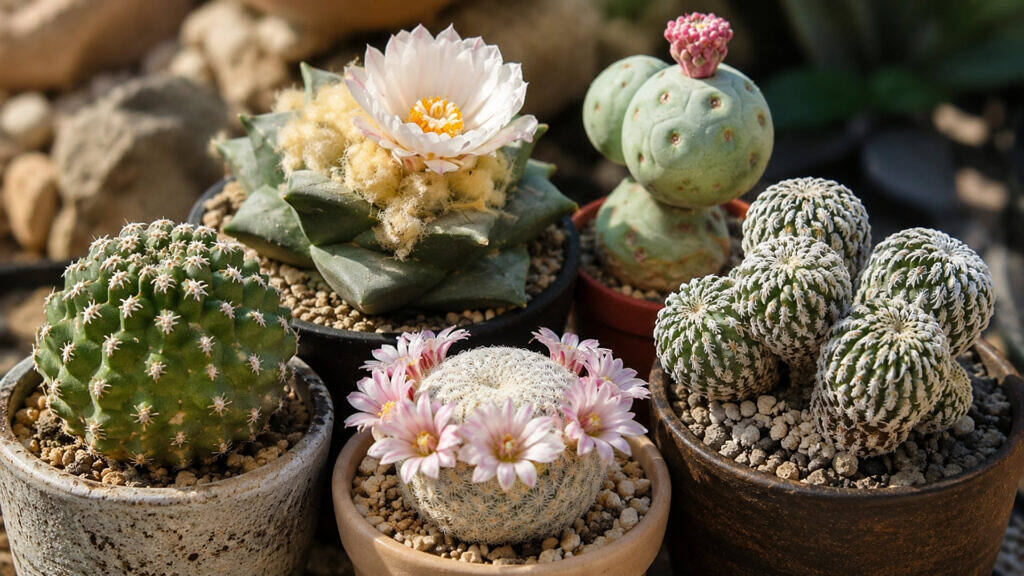
What turns rare cacti into objects of obsession for collectors? The strange geometry? The glacial growth rate? The fact that you can almost never find one for sale? Or that quiet ache you feel staring at a plant the size of a coin, thinking, “that one has to be mine”?
Anyone who grows cacti tends to walk down a one-way road. First comes the little plant on the windowsill. Then a tray of seedlings. Before long you are comparing spines, studying the pattern of the ribs, saving photos of species you can barely pronounce, and chasing names that sound like they came out of some secret catalog. That is exactly where rare cacti enter the picture.
They are not just pretty. They are slow, hard to find, sculptural, and very often tiny. Some look like living stones. Others resemble old buttons, flattened stars, or pieces carved by hand. How does a plant only a few centimeters across stir up so much longing?
Maybe it is because a rare cactus never gives everything away at once. It grows slowly, demands patience, and rewards the person who looks closely. Someone passing by thinks “just another little cactus.” A collector knows that the same plant may hold years of cultivation, a form you almost never see, and a species that shows up for sale only now and then, if it shows up at all.
That fascination is what guides this list. Here you will meet cacti that collectors covet: species rarely seen in cultivation, forms that break the mold, and plants that stop any collection in its tracks. This is not a list only for specialists. It is also for anyone who likes to be surprised, to discover new names, and maybe pick out the next spiny favorite for the shelf.
Before we start, a quick warning, because it trips up so many people: not every spiny succulent is a cactus. Some euphorbias, for example, mimic cacti from a distance, but they belong to a completely different botanical family (Euphorbiaceae). They are gorgeous, rare, and collectible too, they just live in another universe. Here the focus is true cacti: plants in the family Cactaceae, which turned spines, drought, and slow growth into pure survival strategy.
Get ready to meet cacti that stray far from the ordinary. Some are delicate miniatures. Others have geometric shapes that look sculpted. There are the ones that pass for stones, the little spheres, the ones that look like carvings, and the ones that make a collector clear bench space even after swearing that “there is no room for another pot.”
This list brings together 28 rare cacti that stand out for their unusual forms, slow growth, scarcity in cultivation, and strong appeal among collectors.
1. Living Rock Cactus – Ariocarpus retusus
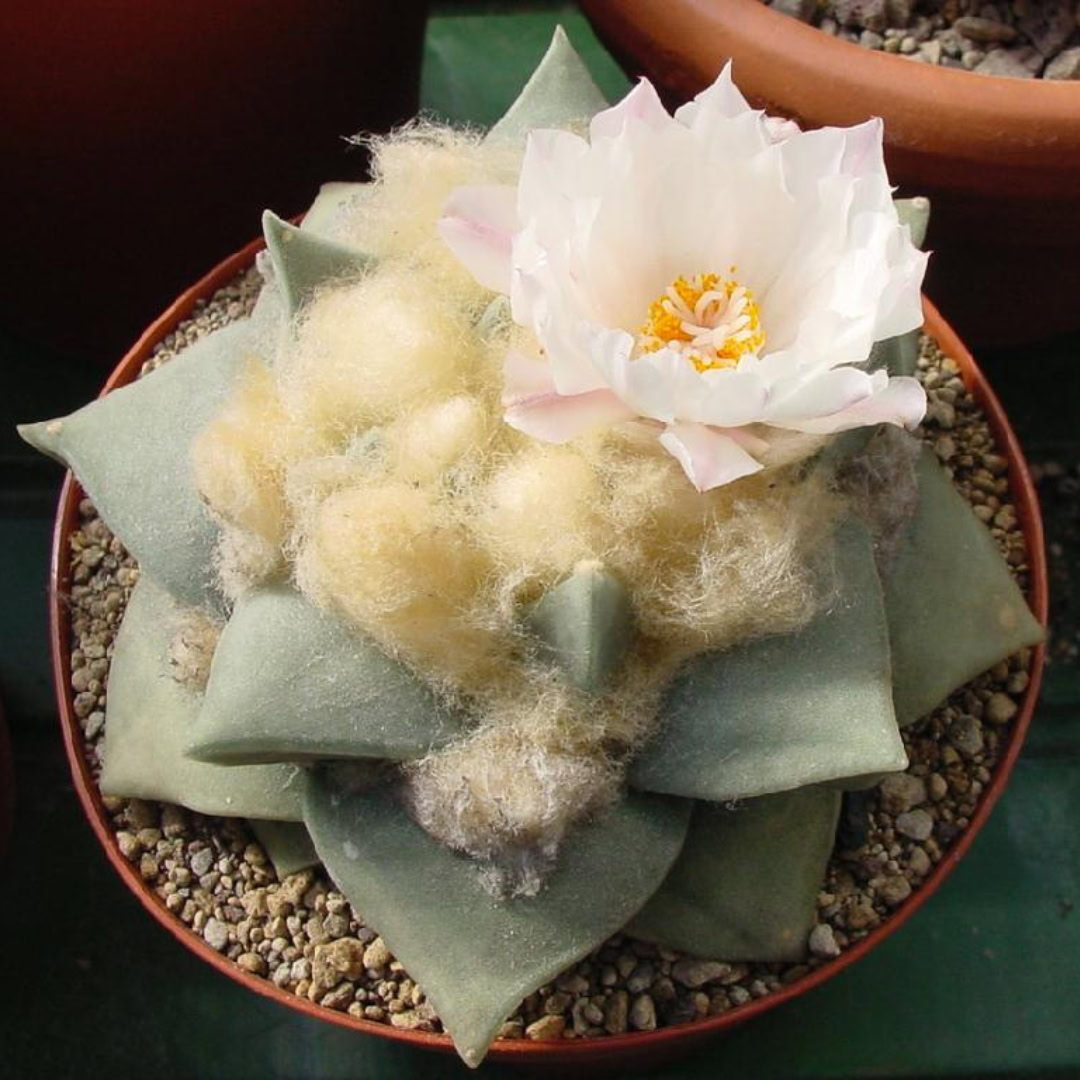
The legendary “living rock cactus.” Native to northeastern Mexico, it grows almost flush with the ground and forms a rosette of thick, triangular tubercles laced with woolly fibers. The charm is in exactly that mineral look: the plant seems to have learned how to vanish into its own desert.
This is one of the slowest cacti you will ever grow, and it is touchy about excess moisture. It prefers a sharply mineral mix, a deep pot to accommodate the swollen taproot, fast drainage, and well-spaced watering. Here, less coddling is more: too much water, too much organic matter, and poor airflow are a recipe for rot.
2. Ariocarpus kotschoubeyanus
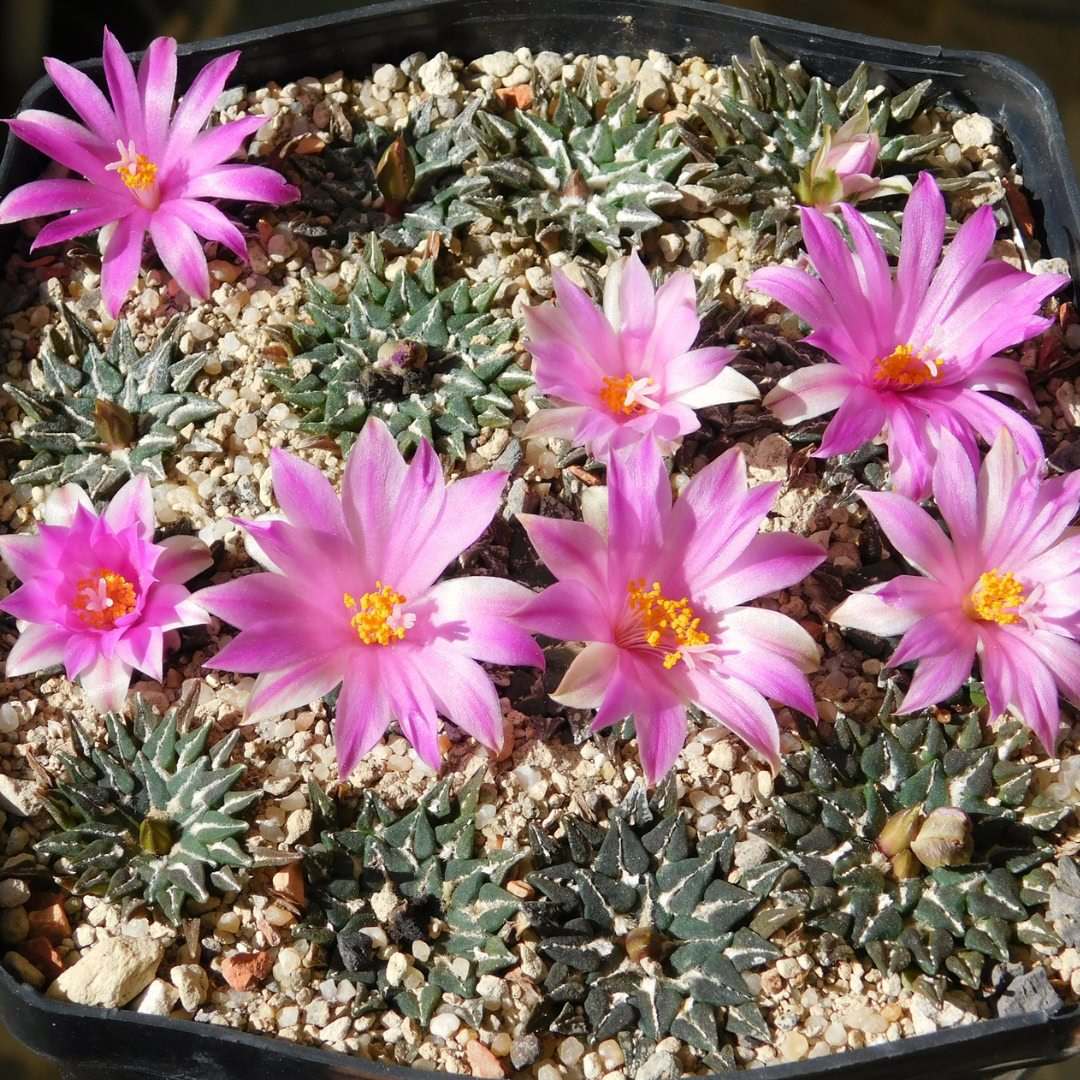
Small, flattened, and nearly buried, Ariocarpus kotschoubeyanus looks more like a collector’s miniature than a garden plant. Native to northeastern Mexico, it forms very low rosettes of triangular tubercles over a turnip-shaped root, often half hidden in the soil.
In cultivation it asks for patience and a light hand. It wants a mineral substrate, flawless drainage, and tightly controlled watering, always letting the mix dry out between sessions. Because it is slow and its root is sensitive, it dislikes frequent repotting and soil that is too rich.
3. Turbinicarpus alonsoi
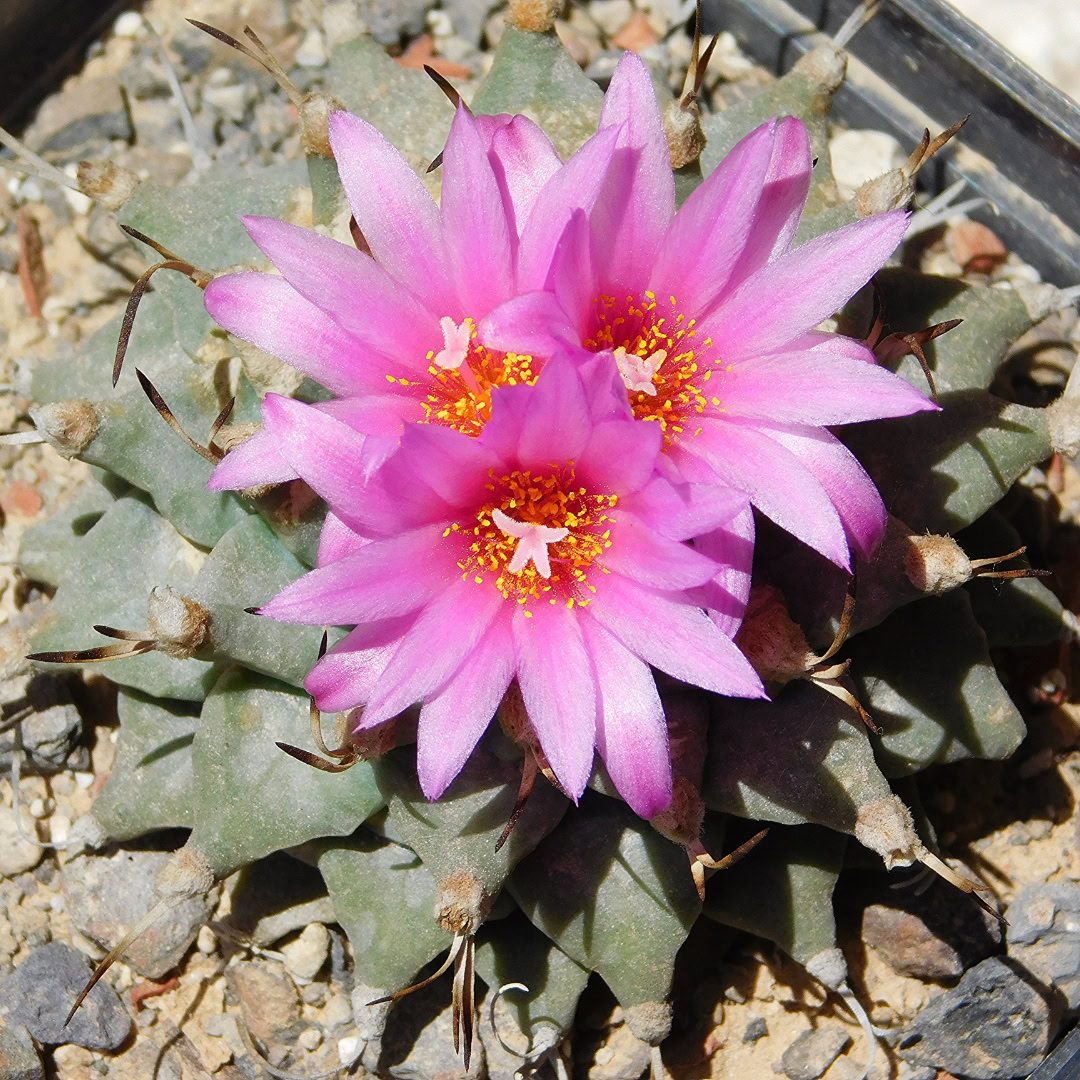
Turbinicarpus alonsoi is a small geophytic cactus from Mexico, native to Guanajuato and San Luis Potosi. It has a flattened to globular body, a large storage root, and strongly marked tubercles that give the plant a compact, almost hand-carved look.
It is a species for careful growing: a well-drained pot, a mineral substrate, and moderate watering during active growth. Like most Turbinicarpus, it will not tolerate waterlogging and stays healthiest with plenty of light, good airflow, and a drier rest through the cold months.
4. Turbinicarpus valdezianus
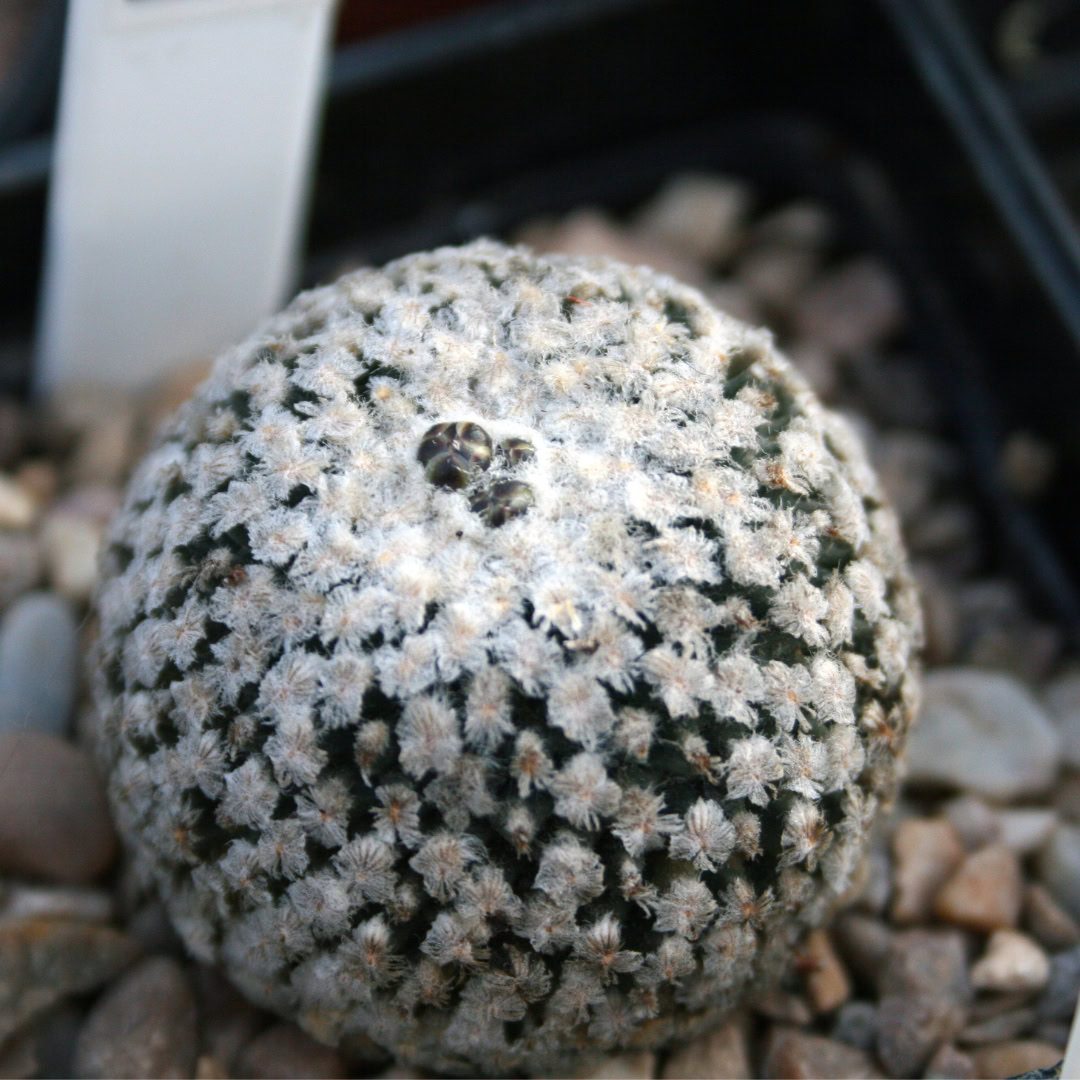
Tiny and covered in fine, feathery spines, Turbinicarpus valdezianus looks more fragile than it really is. Native to Mexico, it stays small and usually solitary, with a low, often globular body almost lost beneath its pale coat of spines.
In cultivation it calls for a very free-draining mix, a small to medium pot, and restrained watering. Too much water distorts the plant and opens the door to rot. Strong light, without trapped, stagnant heat, helps keep the body tight and good-looking.
5. Kadenicarpus horripilus
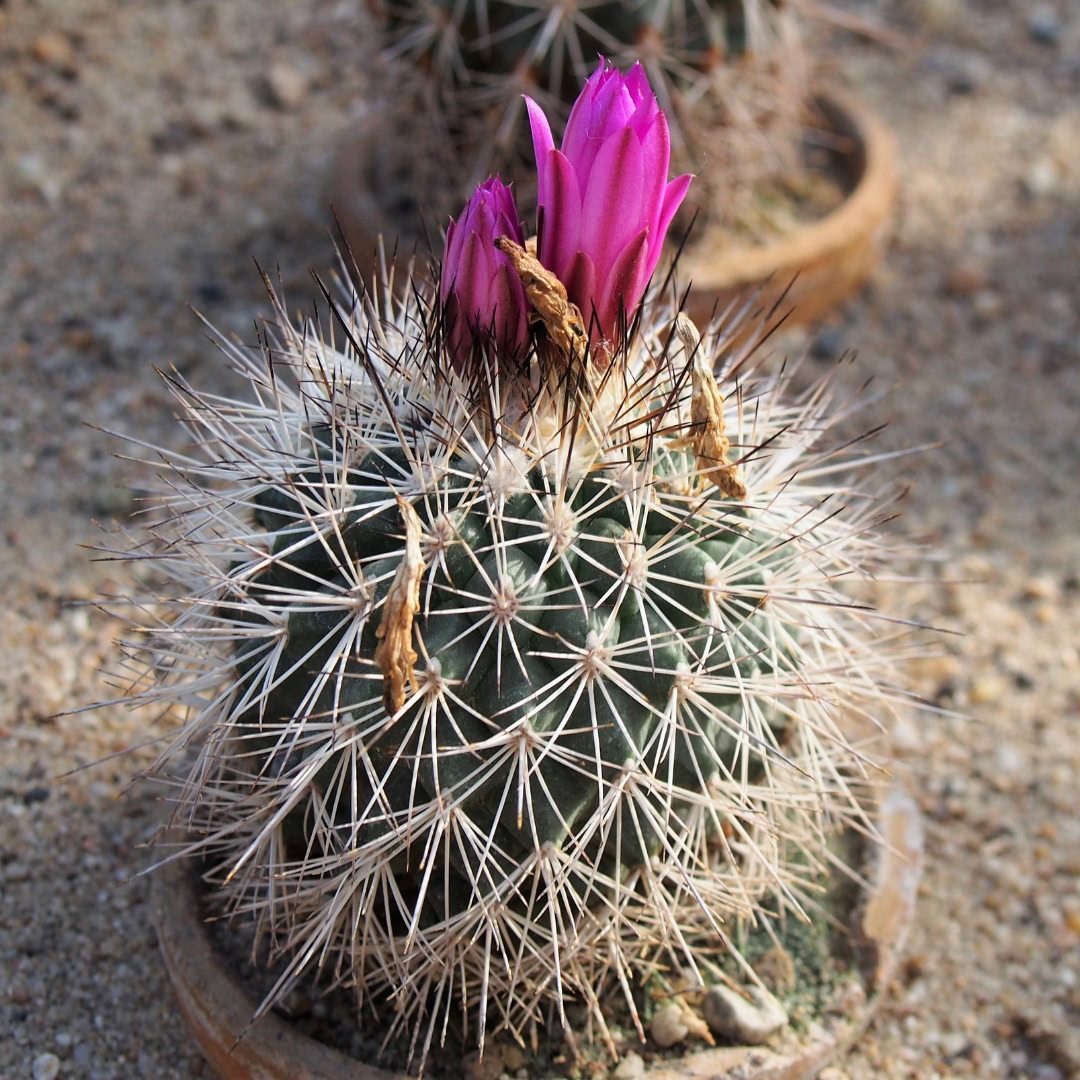
For a long time it was sold as Turbinicarpus horripilus or Gymnocactus horripilus. Today the taxonomic databases place it as Kadenicarpus horripilus. It is native to Mexico, mainly the dry areas between Queretaro and Veracruz, and forms small bodies, globular to slightly elongated, with prominent tubercles and pale spines.
It likes dry, mineral, well-ventilated growing conditions. The root cannot stay wet for long, especially in the cold. It is a good species for anyone who already has the basics of small cacti down, because it responds badly to heavy soil and to automatic watering with no judgment behind it.
6. Aztekium ritteri
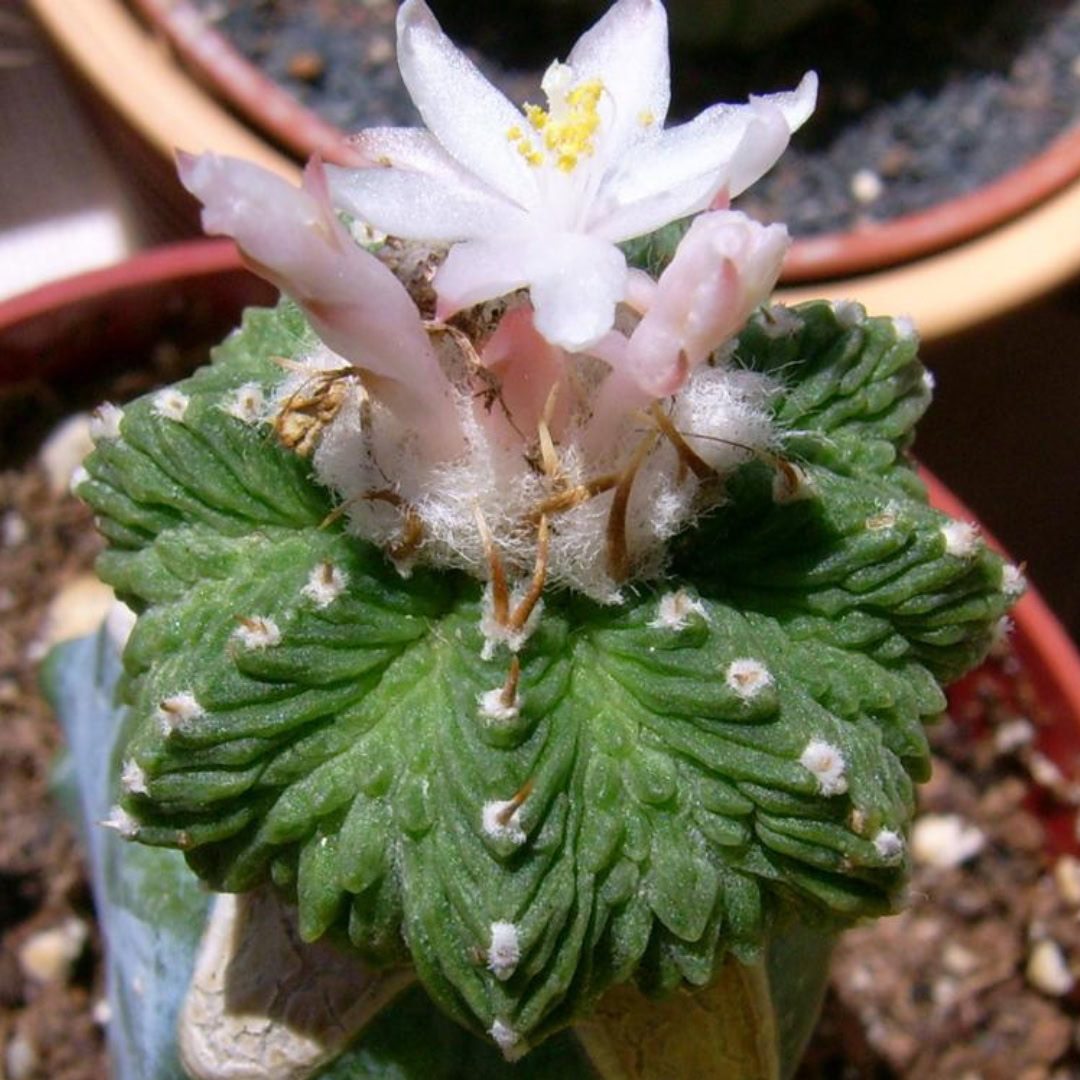
Aztekium ritteri is one of the most coveted cacti among collectors. Native to Mexico, it has a tiny, wrinkled, gray-green body with fine ribs scored by transverse grooves. It is no accident that the genus name evokes Aztec art forms.
It is famous for growing slowly even by cactus standards. In cultivation it asks for a mineral substrate, very little organic matter, controlled watering, and protection from the harshest midday sun. Many plants on the market are grafted, precisely because the species on its own roots grows at a pace that tests anyone’s patience.
7. Aztekium hintonii
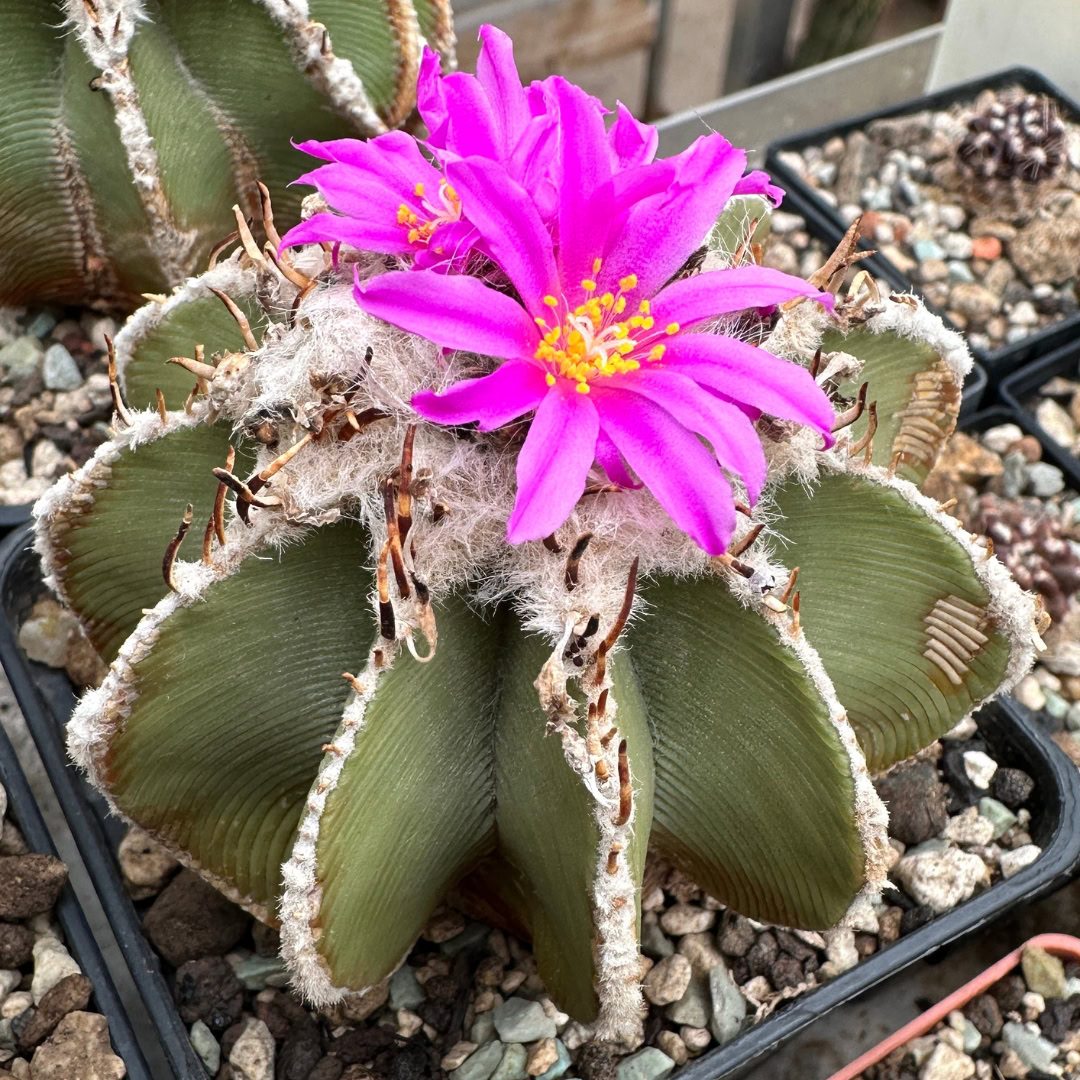
Larger and more robust than Aztekium ritteri, Aztekium hintonii is also Mexican, recorded from Nuevo Leon. It has a globular, ribbed, grayish body that looks like a small stone sculpture forgotten in the planting bed.
In cultivation it remains a slow, demanding plant. It needs plenty of drainage, abundant light with good airflow, and cautious watering. A mineral substrate, poor in organic matter, is usually the safest bet. It is the kind of cactus that forgives neither haste nor an excess of fussing.
8. Geohintonia mexicana
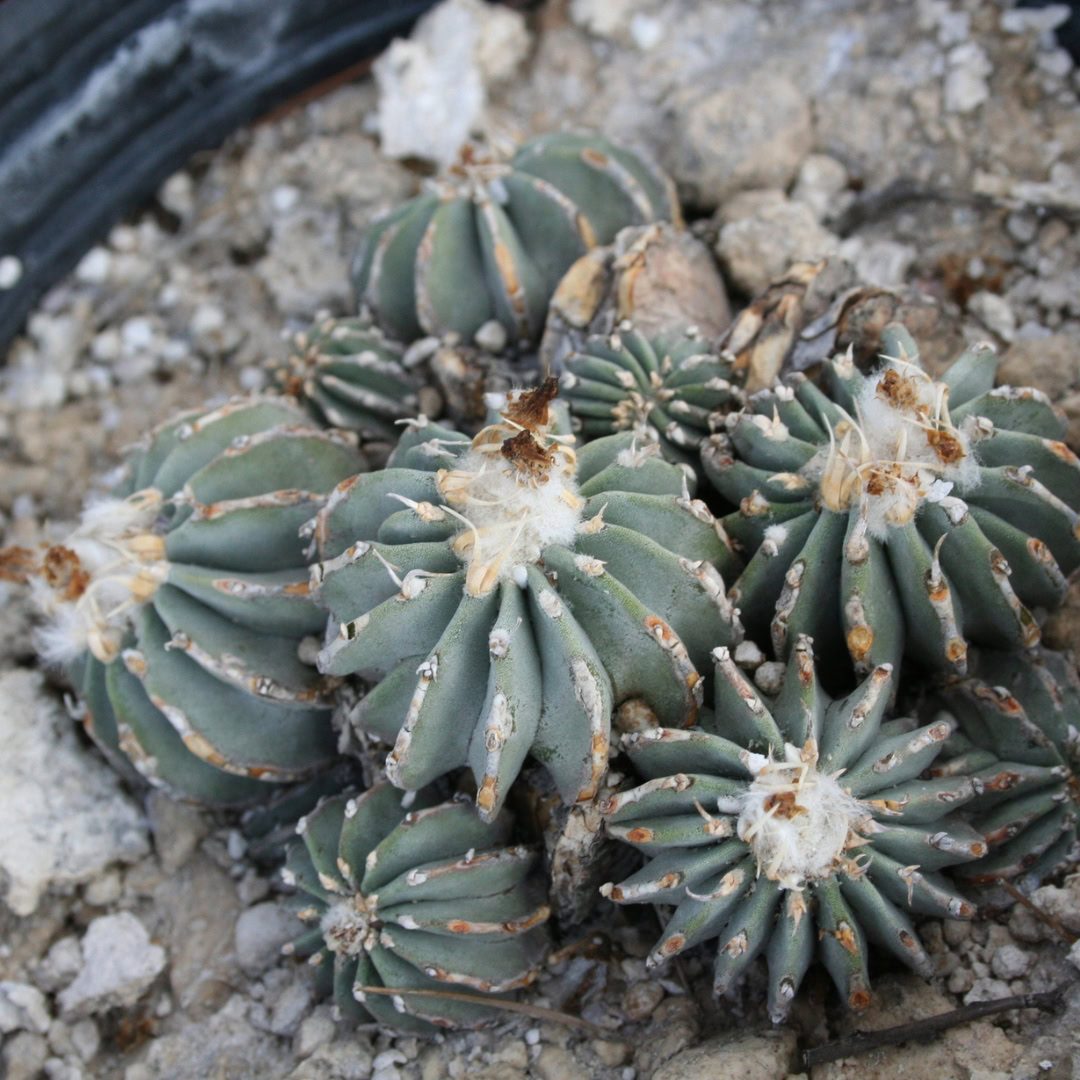
Geohintonia mexicana is a cactus from Nuevo Leon, Mexico, easy to recognize by its globular, glaucous, strongly ribbed body, with ribs so regular they look drawn with a ruler. That clean geometry explains a good part of its fame among collectors.
It grows slowly and wants a mineral, very free-draining mix, well-spaced watering, and good light. The secret is never letting moisture sit at the root. In a humid climate, airflow and the right pot choice make all the difference.
9. Strombocactus disciformis
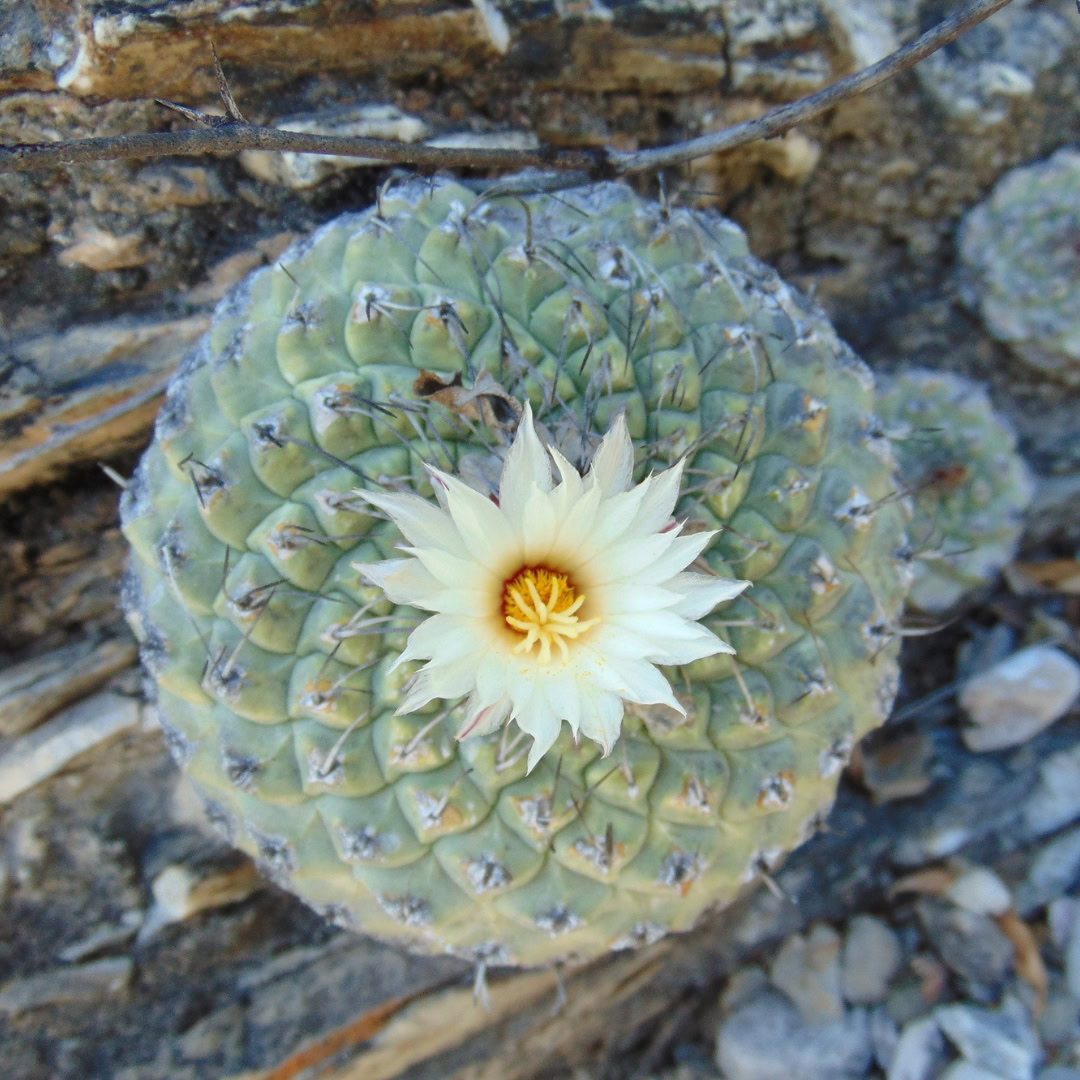
Small, flattened, and thoroughly unusual, Strombocactus disciformis is native to Mexico, especially the strip between Queretaro and Hidalgo. The low, wrinkled, gray-green body has the look of a mineral piece etched with a fractal pattern.
It is a slow cactus with more technical care. It prefers a mineral, alkaline, or stony substrate with fast drainage. Watering should be moderate and spaced out, which means never wetting a plant again before it has even dried out. In the cold, keeping it dry is almost a matter of survival.
10. Artichoke Cactus – Obregonia denegrii
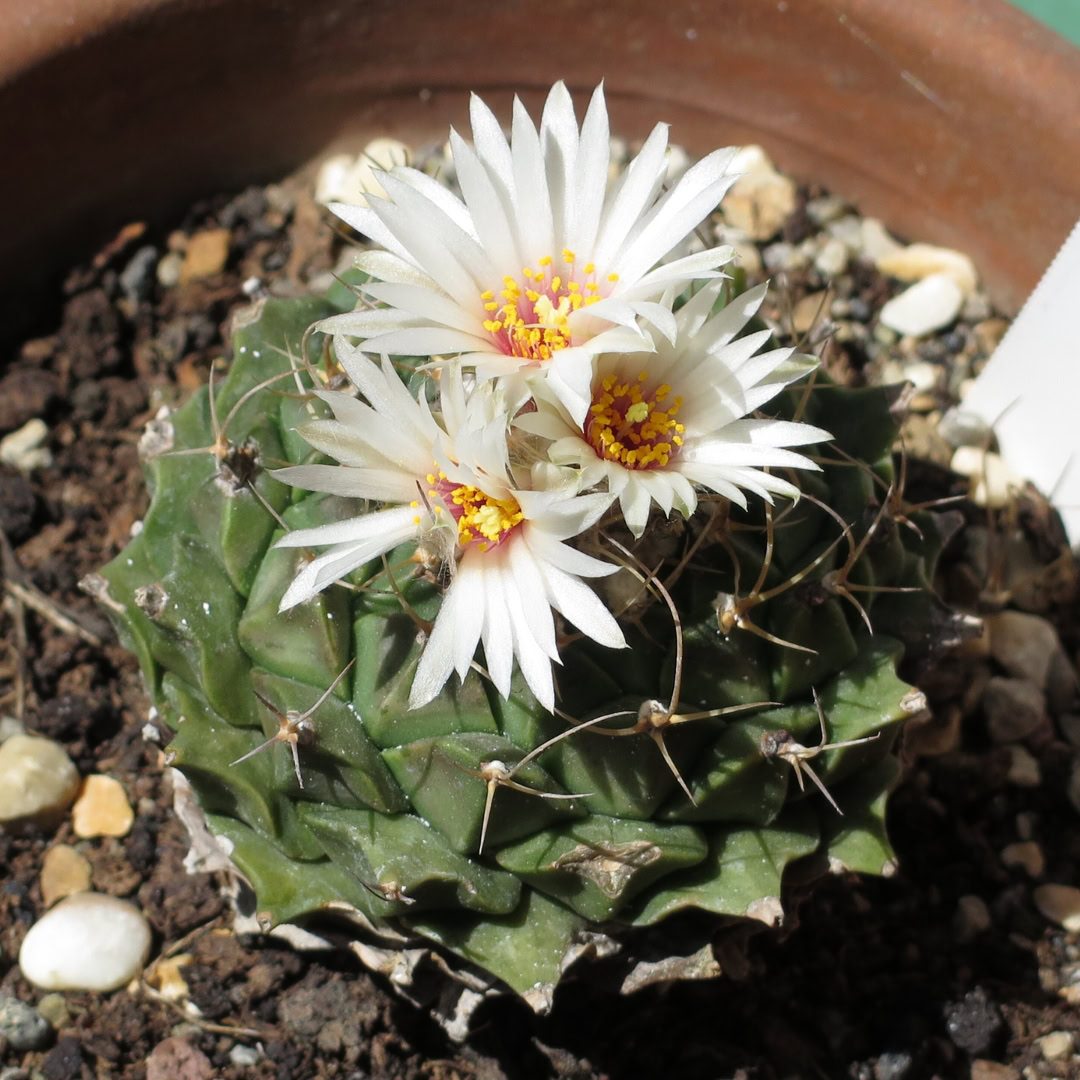
Nicknamed the “artichoke cactus,” Obregonia denegrii is native to northeastern Mexico, in parts of Nuevo Leon and Tamaulipas. It has a solitary, low body built from overlapping triangular tubercles that really do recall a green artichoke, or a tightly closed succulent rosette.
Despite its sturdy appearance, it does not like soggy soil. It does better in a mineral substrate with fast drainage, intense light, and careful watering. Because it grows slowly and has a sensitive root, treat it like the collector’s cactus it is: little fertilizer, little water, and plenty of patience.
11. Hatchet Cactus – Pelecyphora aselliformis
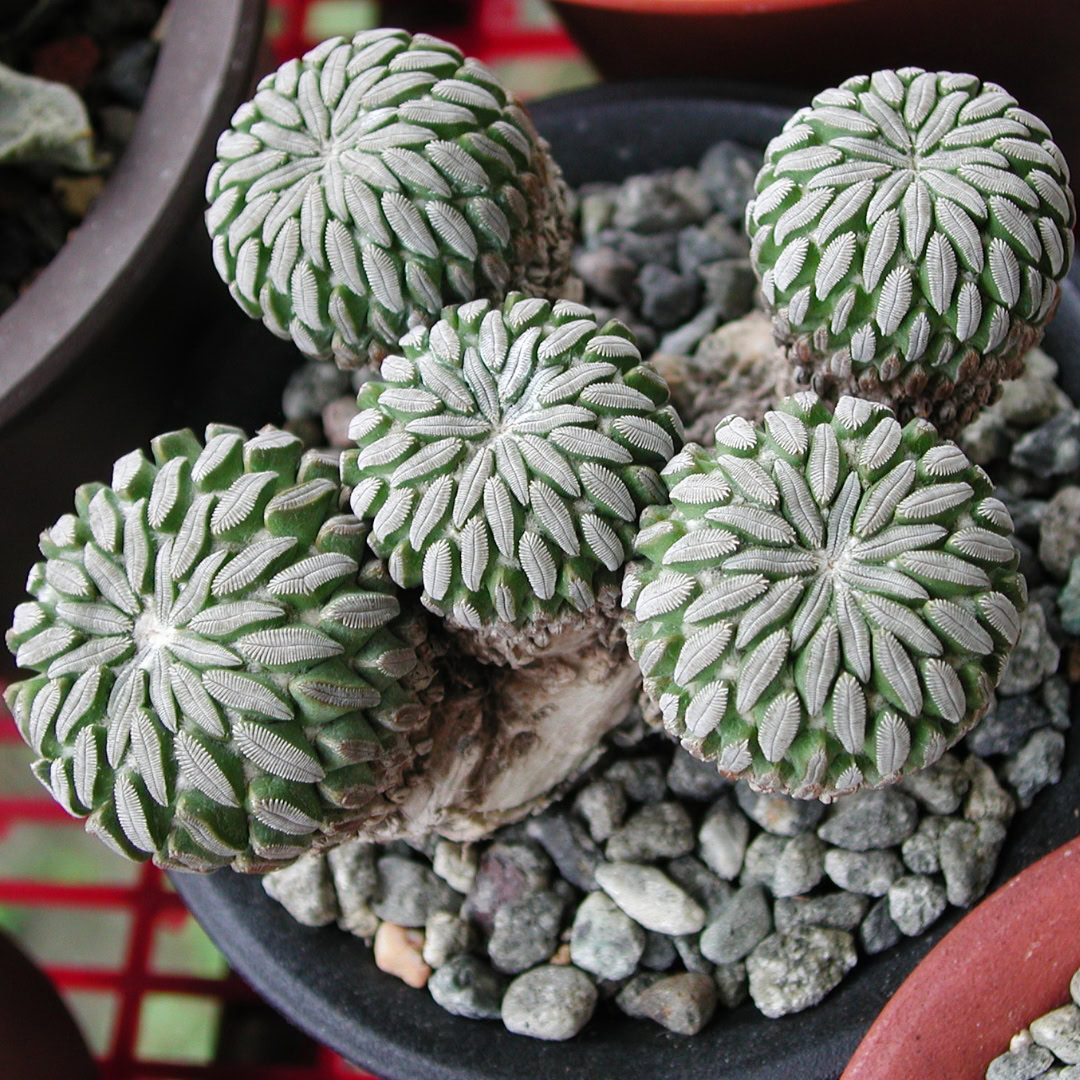
Pelecyphora aselliformis is a Mexican rarity with an unforgettable look. The common name “hatchet cactus” hints at why, since its tubercles carry flattened, hatchet-like areoles. Native to northeastern Mexico, it forms small bodies, globular at first and more cylindrical later, covered in elongated tubercles set with very short, comb-like spines lined up like tiny scales, or like the back of a woodlouse.
Cultivation calls for a mineral substrate, high drainage, and moderate watering during growth. Because it is slow and compact, do not push it with excess fertilizer or water. The more balanced the care, the better the plant’s texture looks.
12. Pincushion Cactus – Mammillaria pectinifera
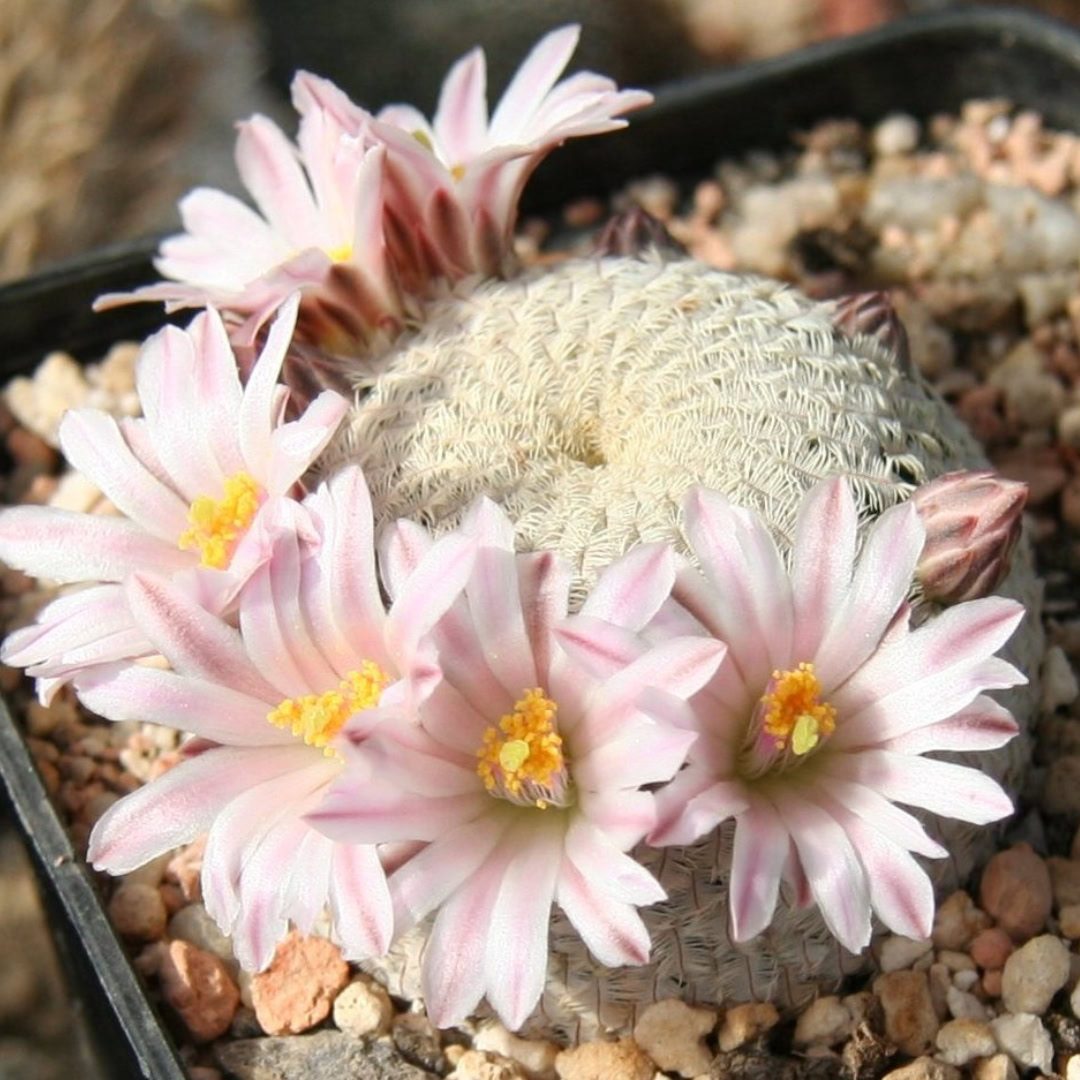
Among the Mammillaria, pectinifera is one of the most sought after. Native to Puebla and Oaxaca, Mexico, it forms small, globular bodies covered in white, comb-like spines arranged like little combs around the plant. The result is a delicate sphere, almost lace-like.
It wants strong light, a mineral substrate, and controlled watering. Being small and slow, it suffers in heavy soil or in a mix kept wet too long. This is a plant for a shallow pot, flawless drainage, and an attentive eye, all the more so in cold or rainy spells.
13. Mammillaria solisioides
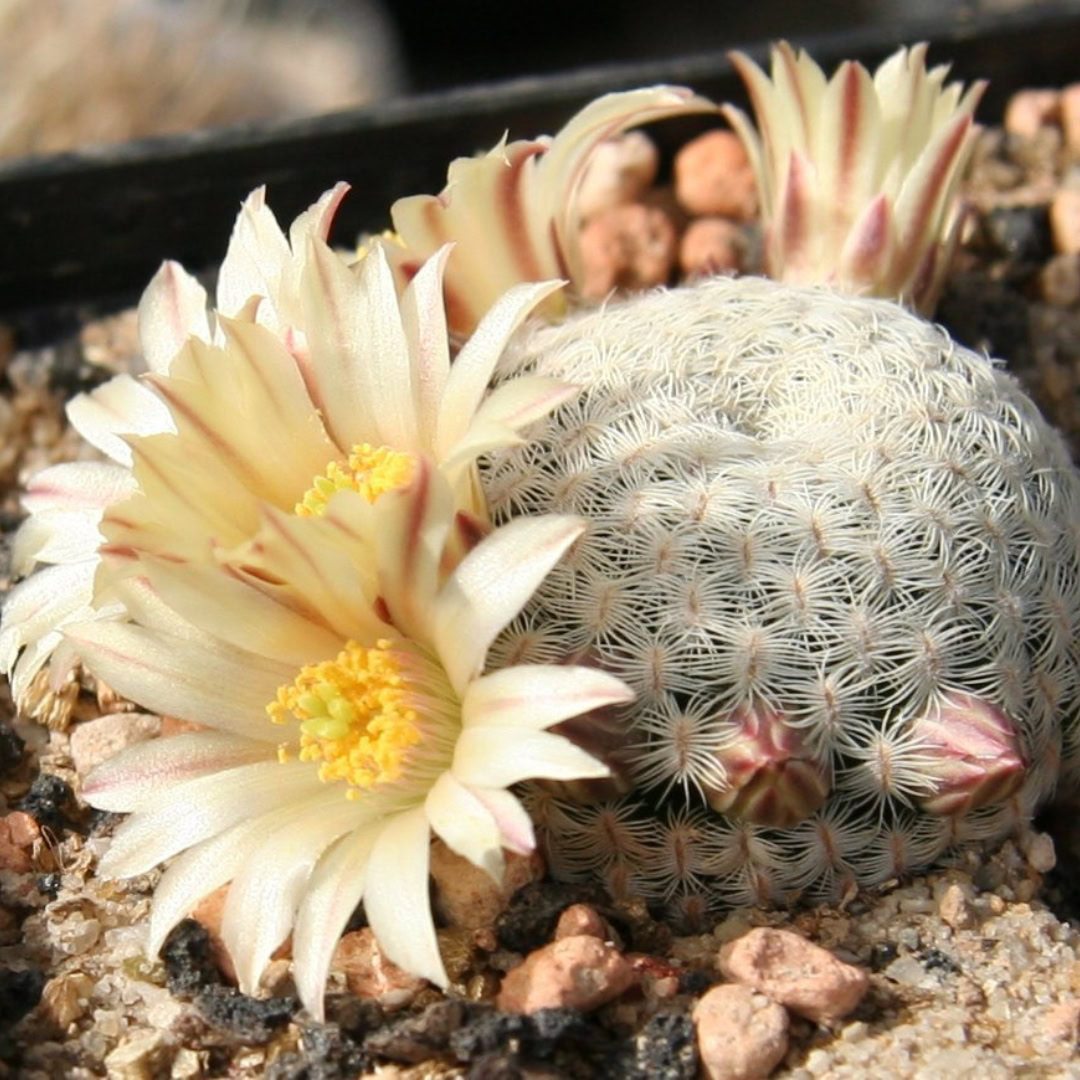
Mammillaria solisioides is another small Mexican gem, native to Puebla and Oaxaca. It has a globular body, pale dense spines, and that “spiny pincushion” look that wins over collectors of miniature cacti.
In cultivation it prefers a well-drained pot, a mineral substrate, and watering only once the soil has dried out. It is not a plant for rich, wet, or overly shaded conditions. With good light and water in the right measure, it keeps a compact body and tidy spination.
14. Ortegocactus macdougallii
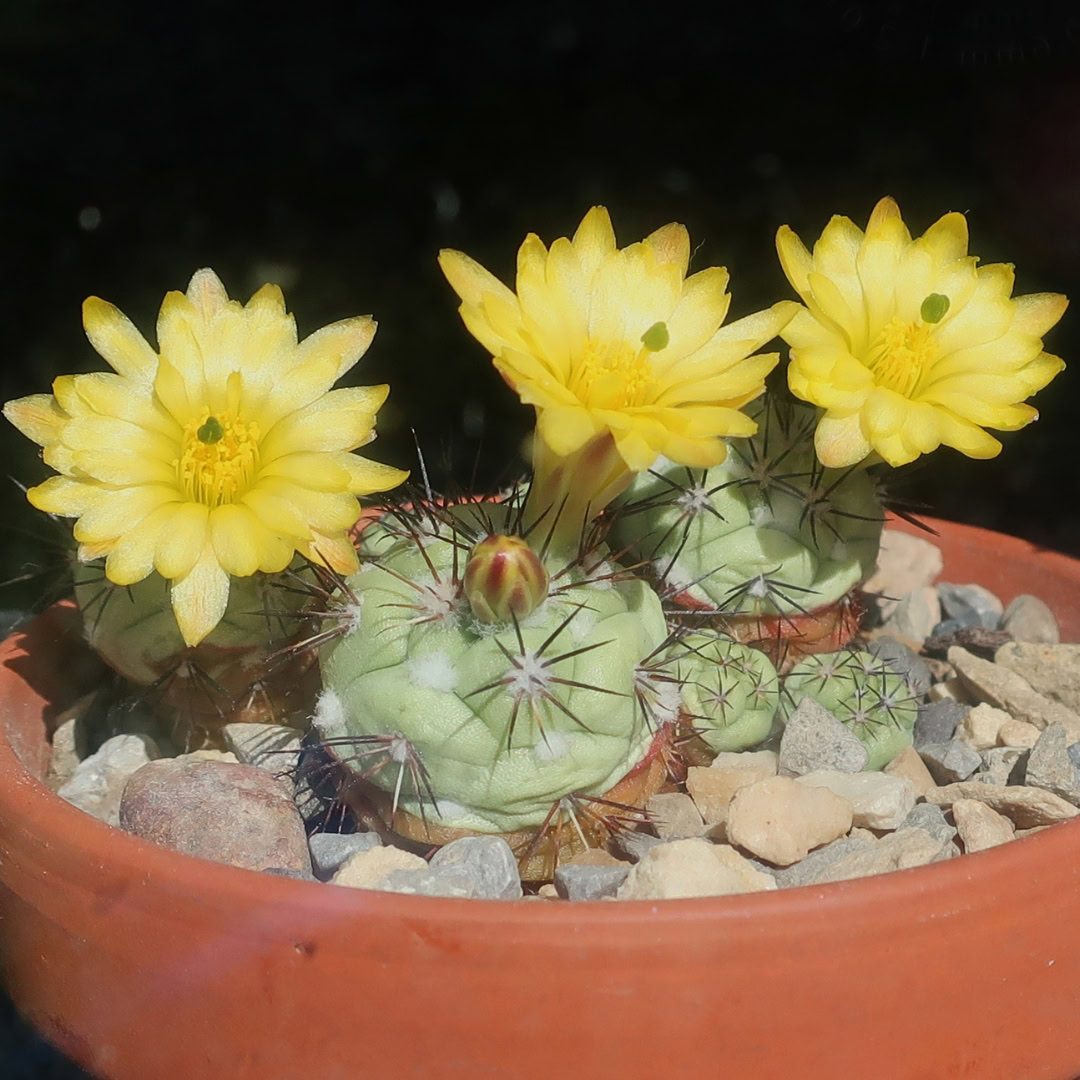
Ortegocactus macdougallii is a Mexican cactus native to Oaxaca, and it draws the eye with its gray-green, almost bluish epidermis set against dark spines. It is a small plant, the kind that goes unnoticed until you get up close.
In cultivation it needs a very free-draining substrate and careful watering, never letting moisture linger at the root. Light should be abundant, but watch the harshest sun in hot regions. It is a species that likes stability: few repottings, good airflow, and no heavy soil.
15. Sand Dollar Cactus – Astrophytum asterias ‘Super Kabuto’
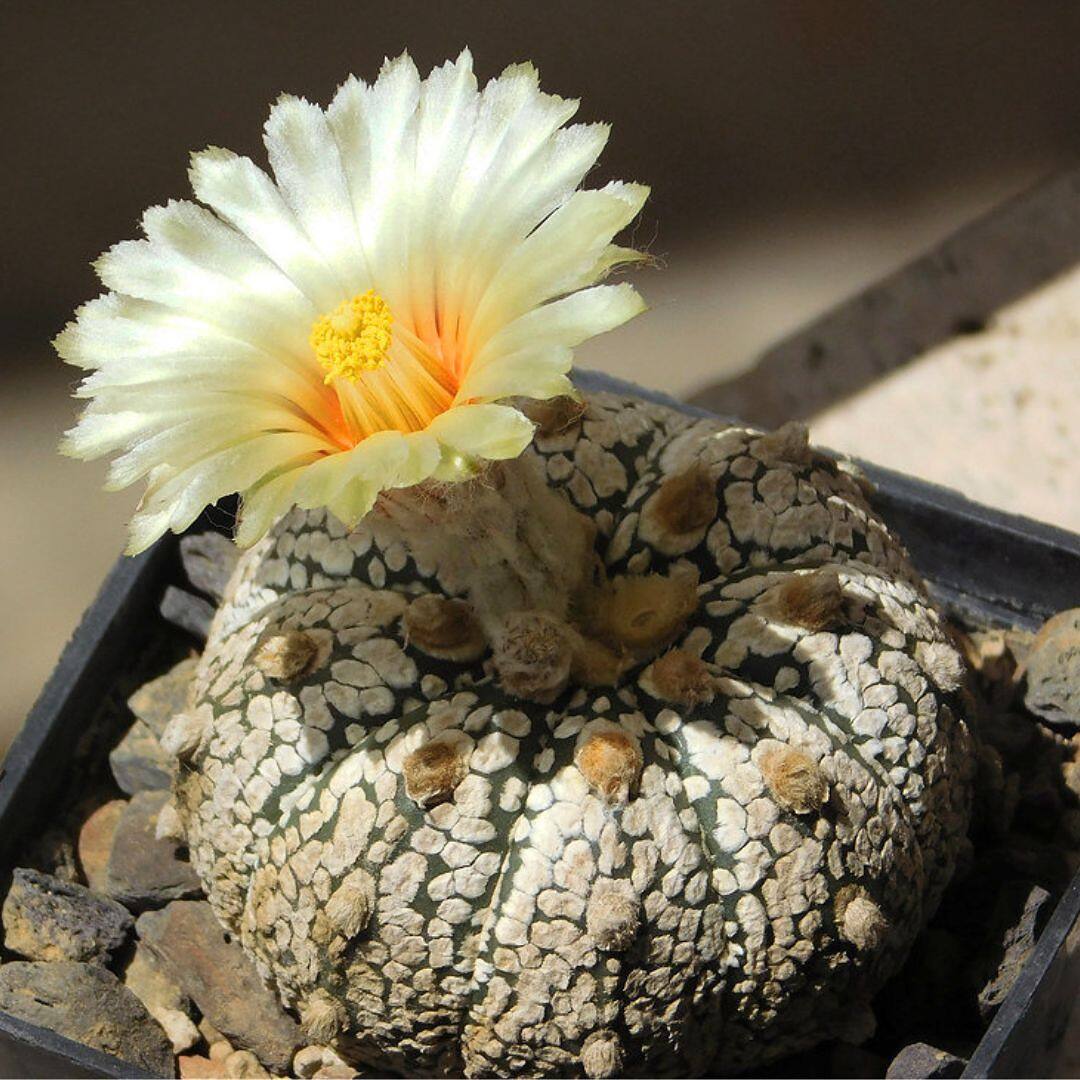
No serious “wanted” list aimed at collectors is complete without Astrophytum asterias, the spineless sand dollar cactus native to southern Texas and northeastern Mexico. Its flattened, ribbed disc is dotted with white woolly flecks, and over decades of selection, especially in Japan, growers refined the cultivar known as ‘Super Kabuto’: a form so densely flecked that the body can look almost snow-dusted. That dense, near-painterly white speckling is exactly what makes it one of the most chased small cacti in the hobby today.
Care is classic Astrophytum. It wants a sharply mineral, free-draining mix, very bright light, and disciplined watering, with the soil drying fully between sessions and a clearly dry rest in winter. Overwatering and poor airflow are the quickest routes to rot. The wild species sits under tight trade protection, so look for nursery-propagated, named selections rather than collected plants.
16. Yavia cryptocarpa
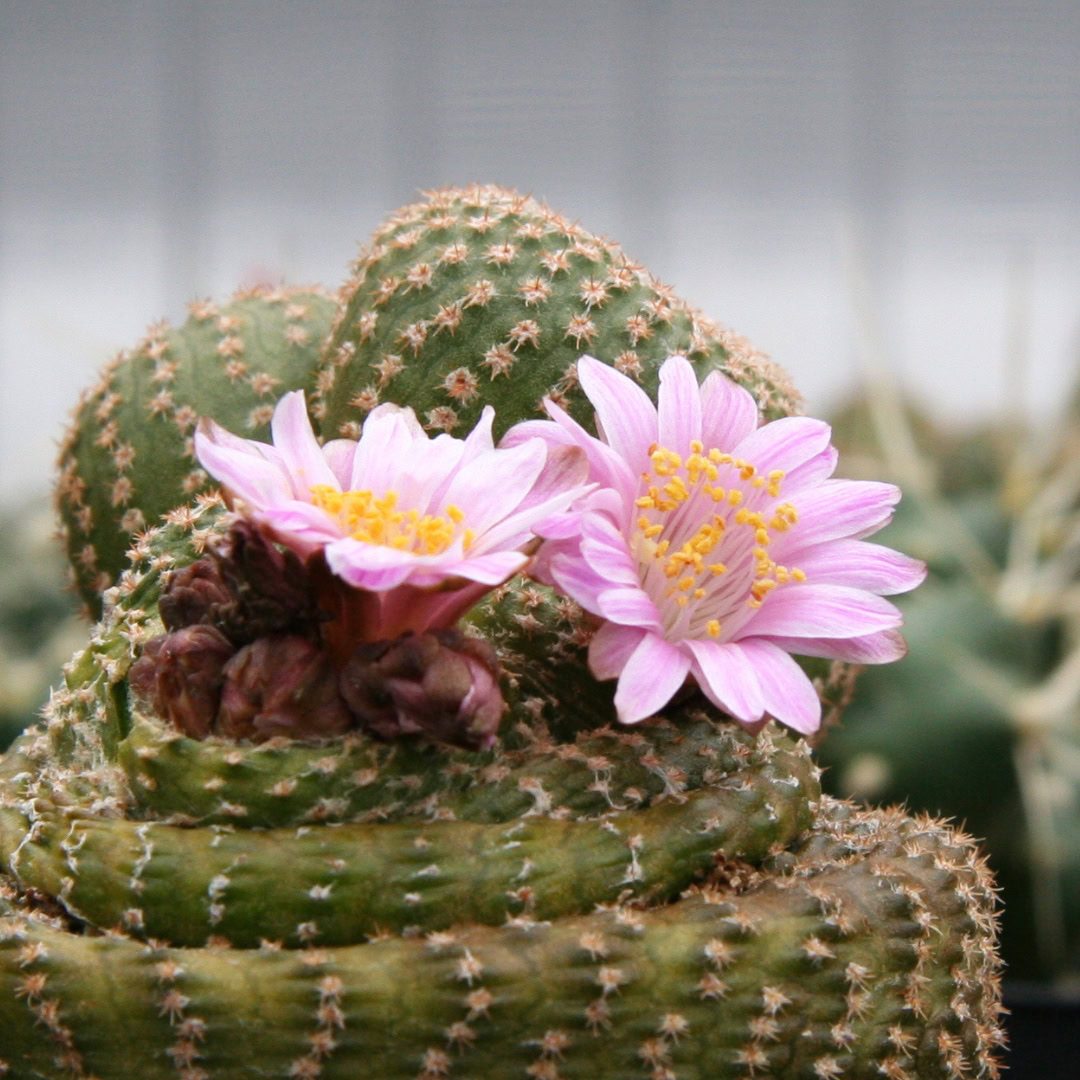
Yavia cryptocarpa is a tiny, nearly hidden cactus native to Argentina. The genus is monospecific, meaning this is the only recognized species in it. In the wild it grows low, with the body half buried and only the top showing, looking like a living coin pushing up between the rocks.
In cultivation it is slow, delicate, and not a great choice for beginners. It prefers a mineral substrate, a well-drained pot, intense light without stagnant heat, and tightly controlled watering. Many plants in circulation are grafted, precisely because on its own roots it demands more patience and stability.
17. Blossfeldia liliputana
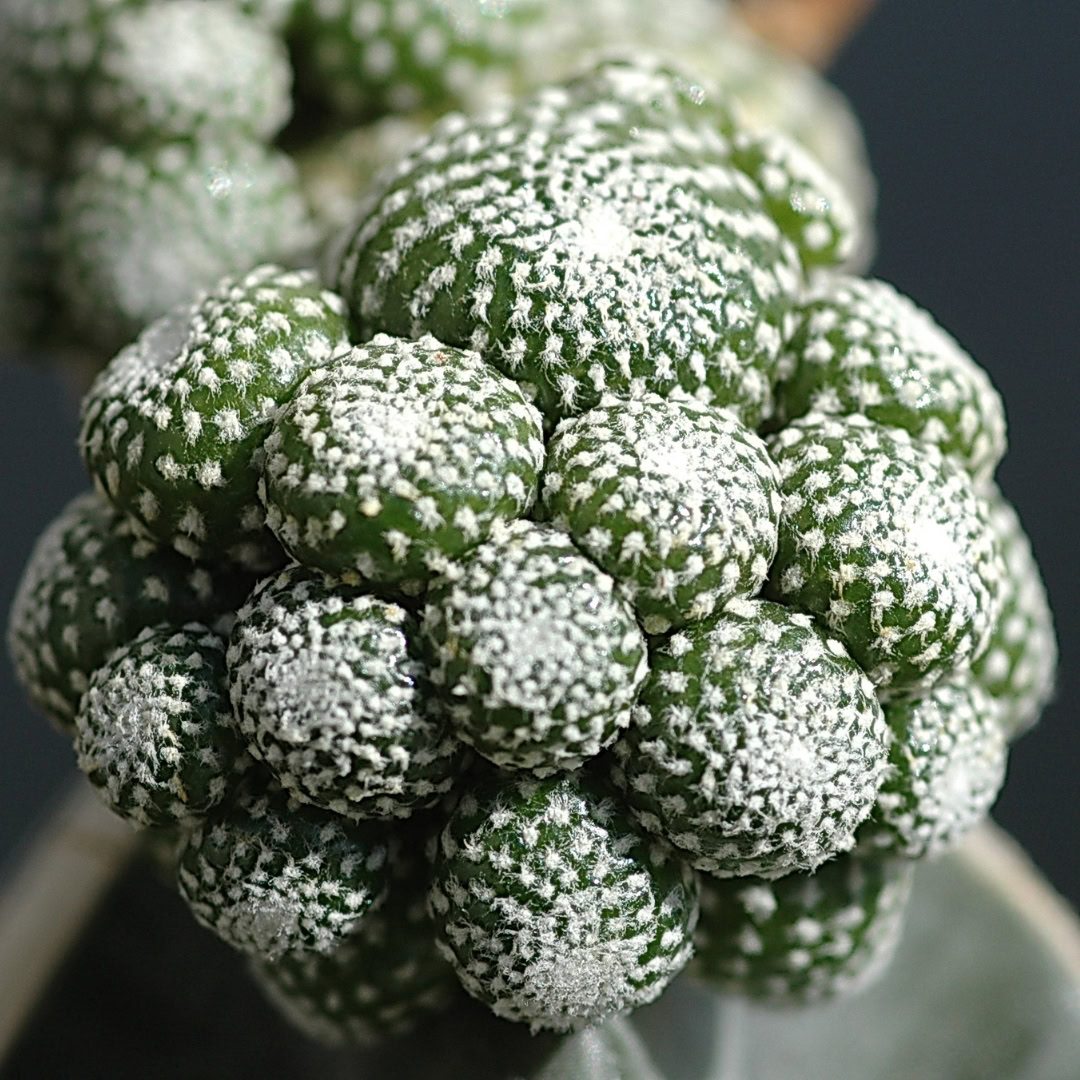
Considered one of the smallest cacti in the world, Blossfeldia liliputana is native to southern Bolivia and northwestern Argentina. It grows in rock crevices, forming little heads with almost no visible spines, so small they slip past even a trained eye.
It is a species of extremely slow growth and more technical care. It needs a very free-draining substrate, good airflow, and careful watering during the growing season, always avoiding standing water at the root. Many cultivated plants are grafted, because on its own roots it is slower and more sensitive.
18. Discocactus silicicola
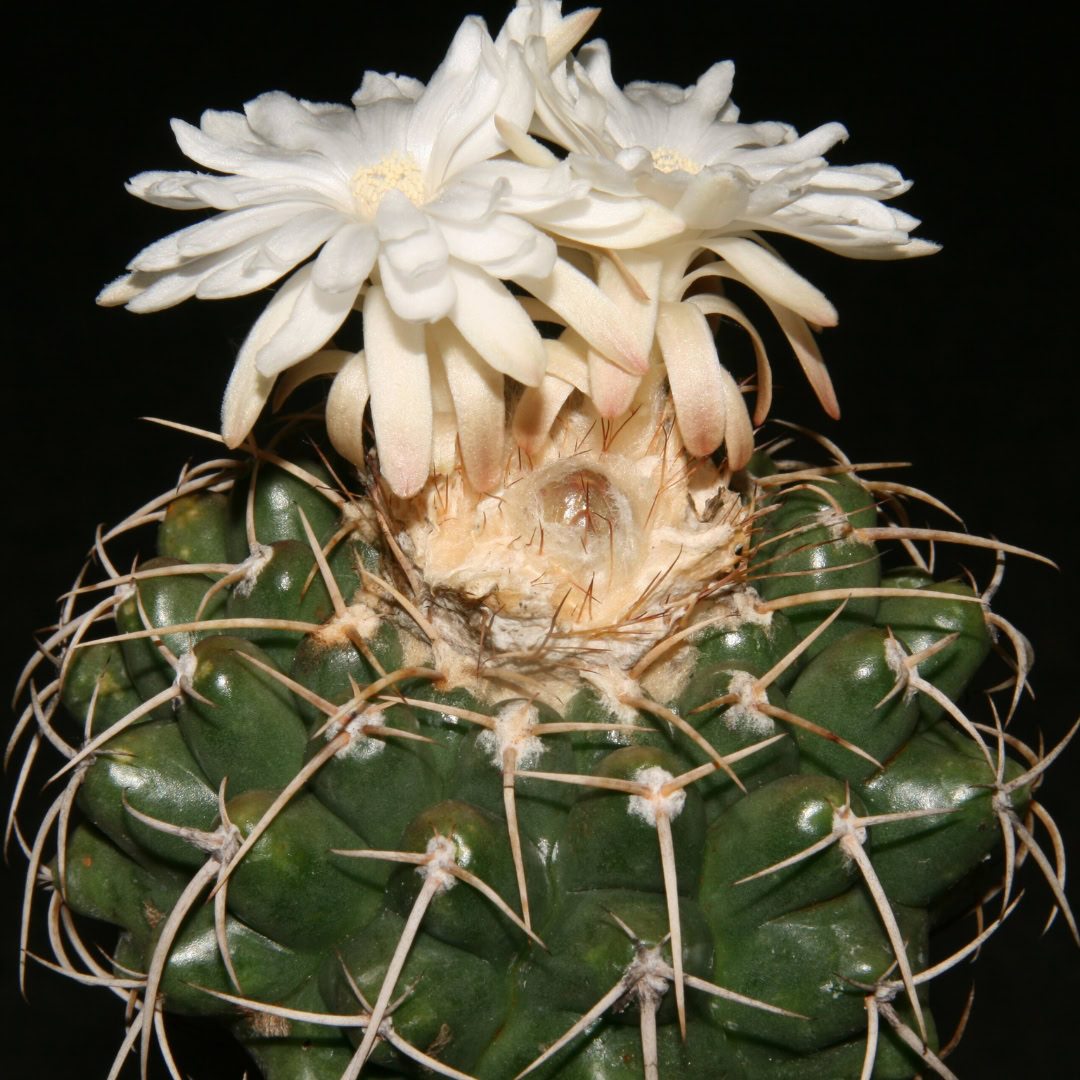
Discocactus silicicola belongs to a group much loved by collectors. It has a low, globular body and, once mature, develops a cephalium, a woolly structure on top from which pale, usually fragrant, night-blooming flowers emerge. The genus occurs in South America, including Brazil and neighboring countries.
In cultivation, Discocactus tends to want more warmth than many cacti of Andean or Mexican origin. It likes a free-draining substrate, moderate watering in the warm season, and protection from hard cold. The classic mistake is treating it like a “cold-desert cactus”: it likes to dry out between waterings, but it hates cold and damp together.
19. Discocactus horstii
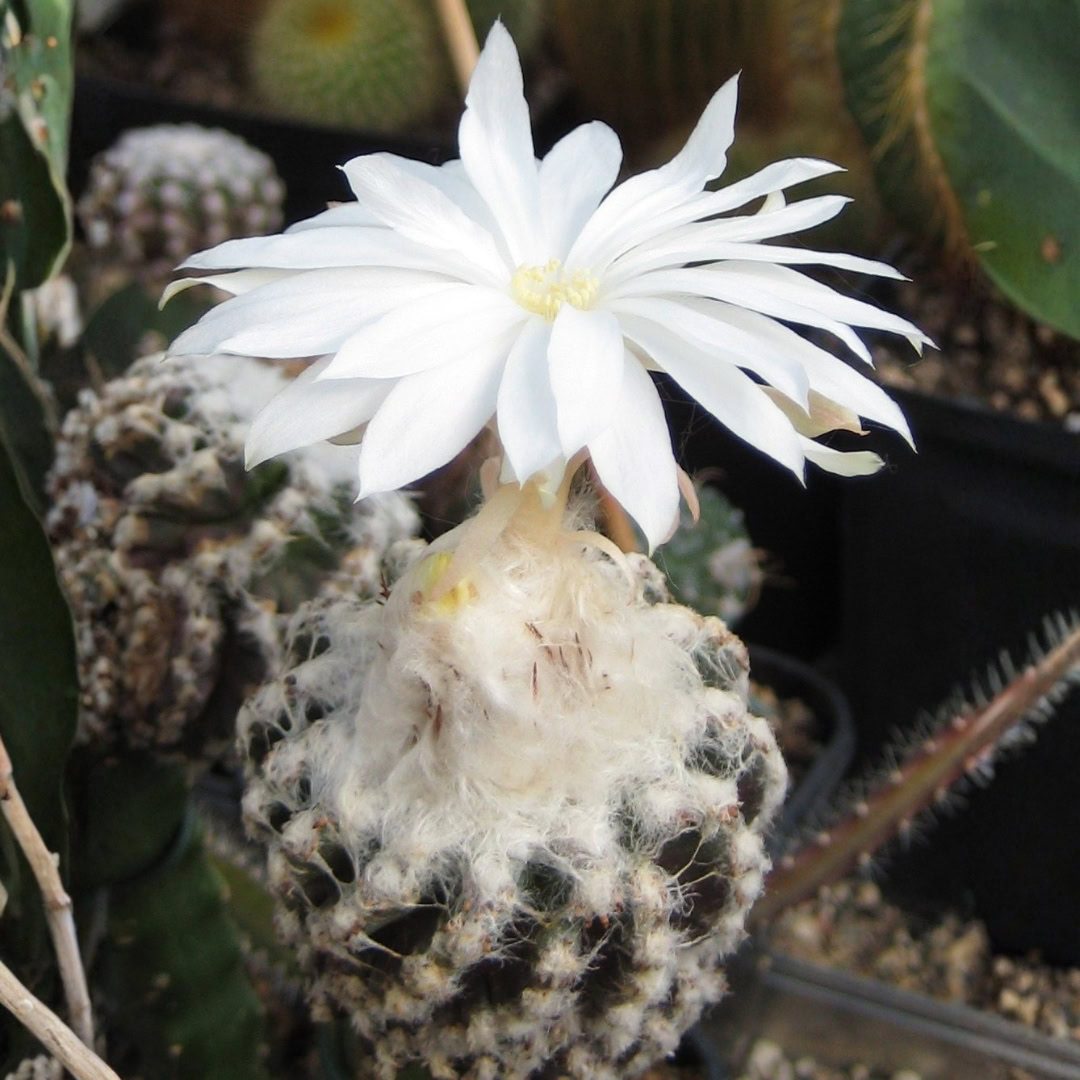
Discocactus horstii is a jewel from Brazil, endemic to the Grao Mogol region in Minas Gerais. It is a small cactus, globular and flattened, with sharply marked ribs and a delicate appearance. When adult, it forms a small cephalium that makes it even more coveted in cultivation.
It prefers a warm climate, abundant light, and a very well-drained substrate. It needs protection from hard cold and from prolonged moisture, above all in winter. Because this is a Brazilian species with a very restricted range, provenance is non-negotiable: in a responsible collection the plant comes from legal propagation, never from wild collection.
20. Cipocereus bradei
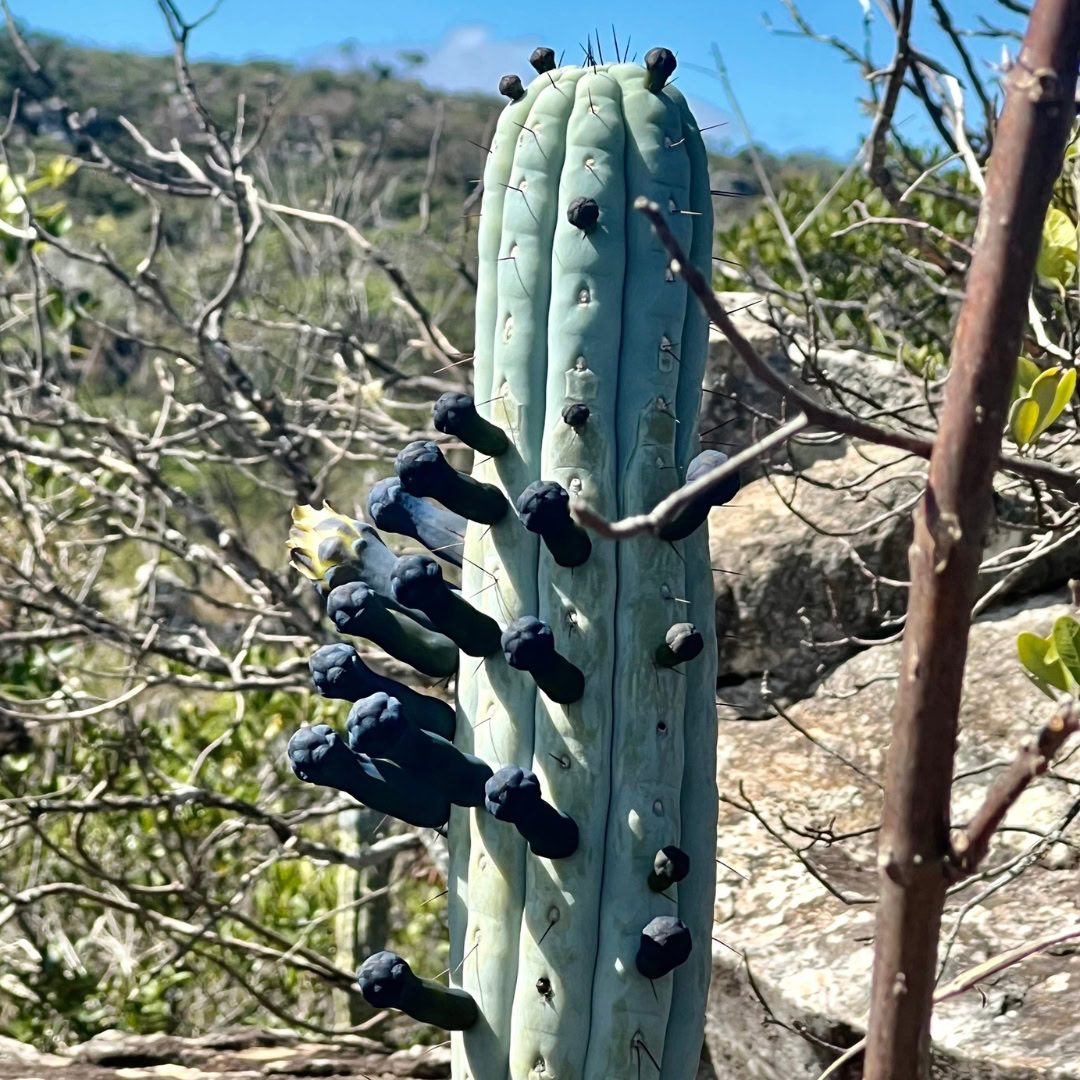
Cipocereus bradei is a columnar Brazilian cactus, endemic to Minas Gerais and tied to the Serra do Cabral and the Serra do Espinhaco. The bluish to grayish body, the marked ribs, and the upright habit give the plant a very different presence from the small globular cacti of most collections.
Even though it is columnar, it does not grow fast like a common cactus. It likes sun, excellent drainage, and a well-ventilated spot. In a pot it needs room to develop roots and careful watering, with no waterlogging. The bluish tone looks best under bright cultivation, without too much shade.
21. Uebelmannia buiningii
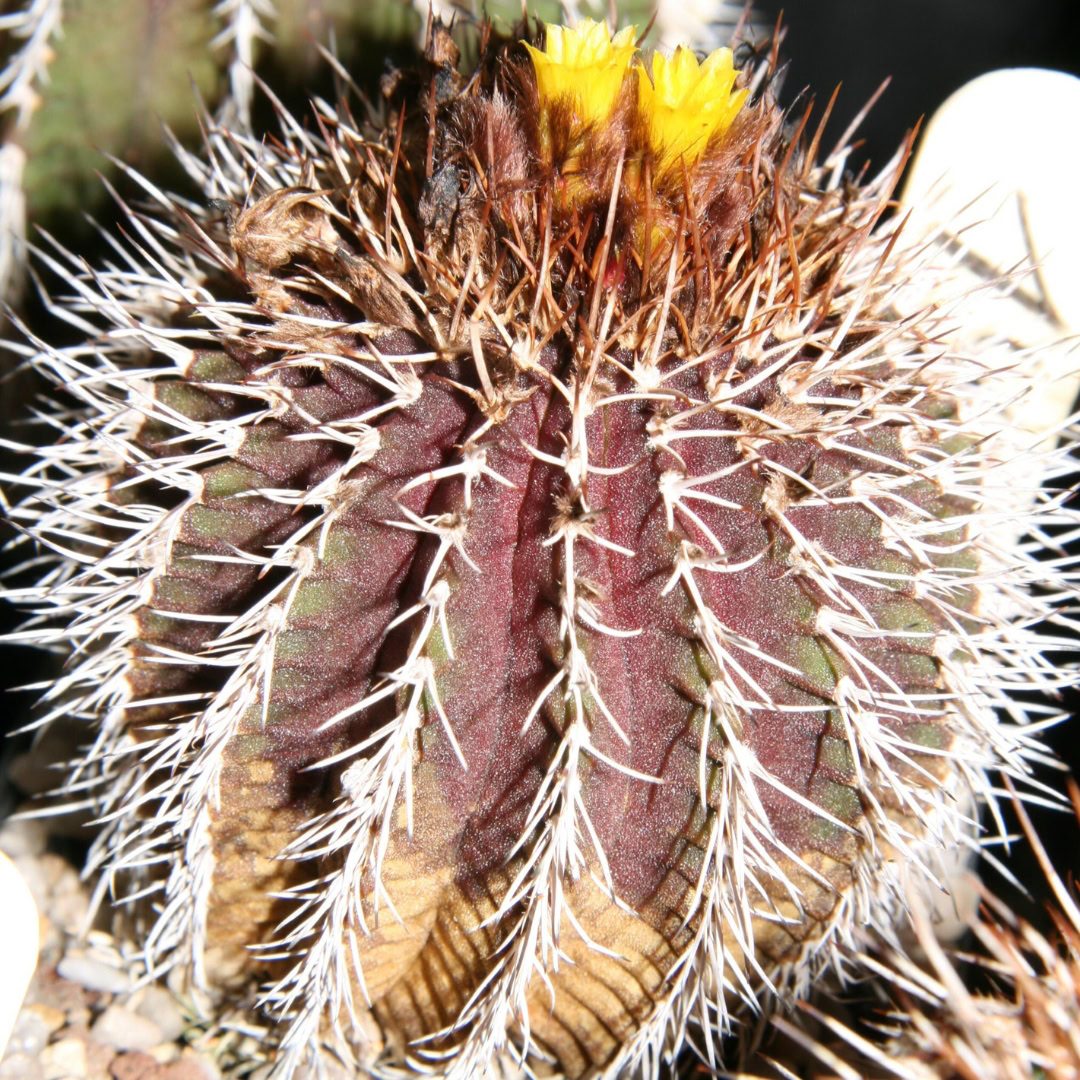
Uebelmannia buiningii is one of the most coveted Brazilian cacti among collectors. Microendemic to Minas Gerais, it stands out for its small body, globular to short-cylindrical, with well-defined ribs and orderly spines. It is modest in size but enormous in botanical value.
Cultivation takes attention. It prefers a mineral substrate, fast drainage, warmth, good light, and moderate watering during the active phase. It dislikes hard cold and persistent moisture. In a damper or colder region, grow it with protection, airflow, and a drier rest in winter.
22. Uebelmannia pectinifera
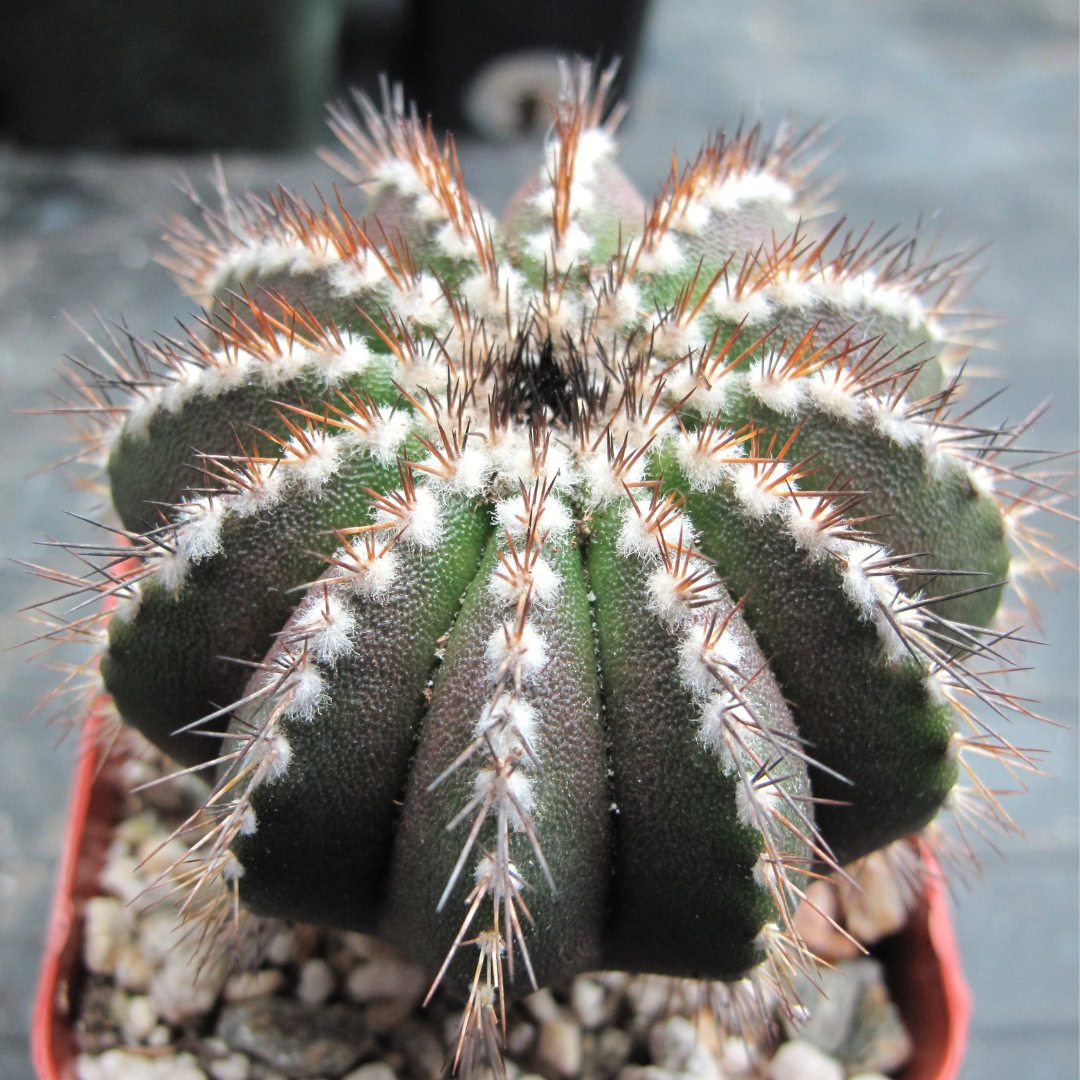
Uebelmannia pectinifera is one of the best-known Brazilian species among collectors of rare cacti. Native to Minas Gerais, mainly the rocky highland fields known as campos rupestres, it has a globular to cylindrical body, dark or grayish skin, and comb-like spines lined up like little combs along the ribs.
It is more common in cultivation than Uebelmannia buiningii, but it still demands care. It does best in a very free-draining substrate with a mineral component, intense light, and controlled watering. Protect it from cold, from excess moisture, and from soil that is too organic. Grown well, it stays compact, dark, and elegant.
23. Copiapoa cinerea
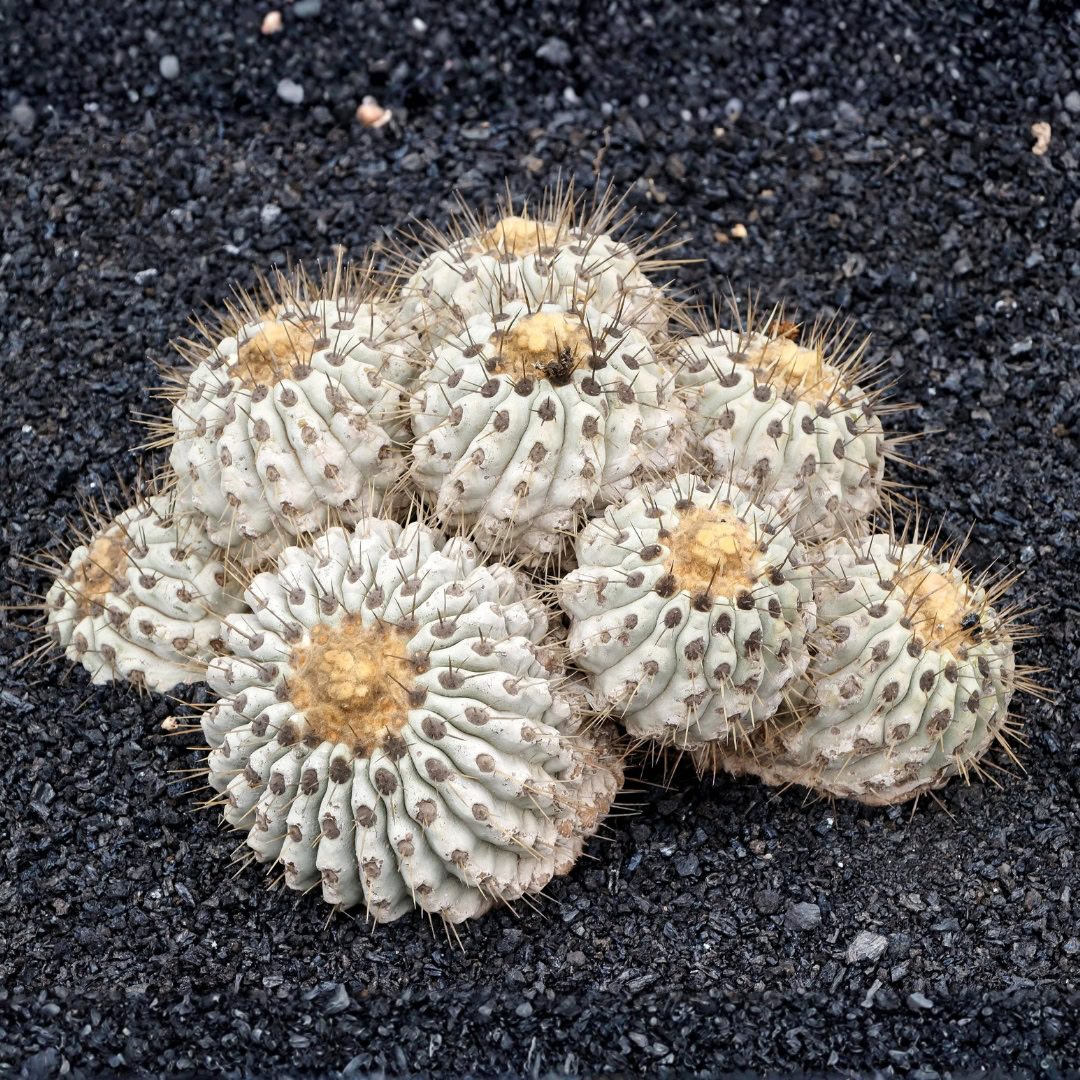
Copiapoa cinerea is native to northern Chile, in the very arid regions between Antofagasta and Atacama. It is famous for its gray to whitish body, coated in a waxy layer that reflects light and holds in water. With dark spines and a sculptural form, it looks like a plant designed by drought itself.
In cultivation it needs plenty of light, a mineral substrate, and economical watering. The big risk is too much water with too little airflow. In a humid spot, it has to dry out fast between waterings. It grows slowly and should not be “fattened up” with heavy feeding, which is exactly how it loses the compact look that makes it so desirable.
24. Pygmaeocereus bieblii
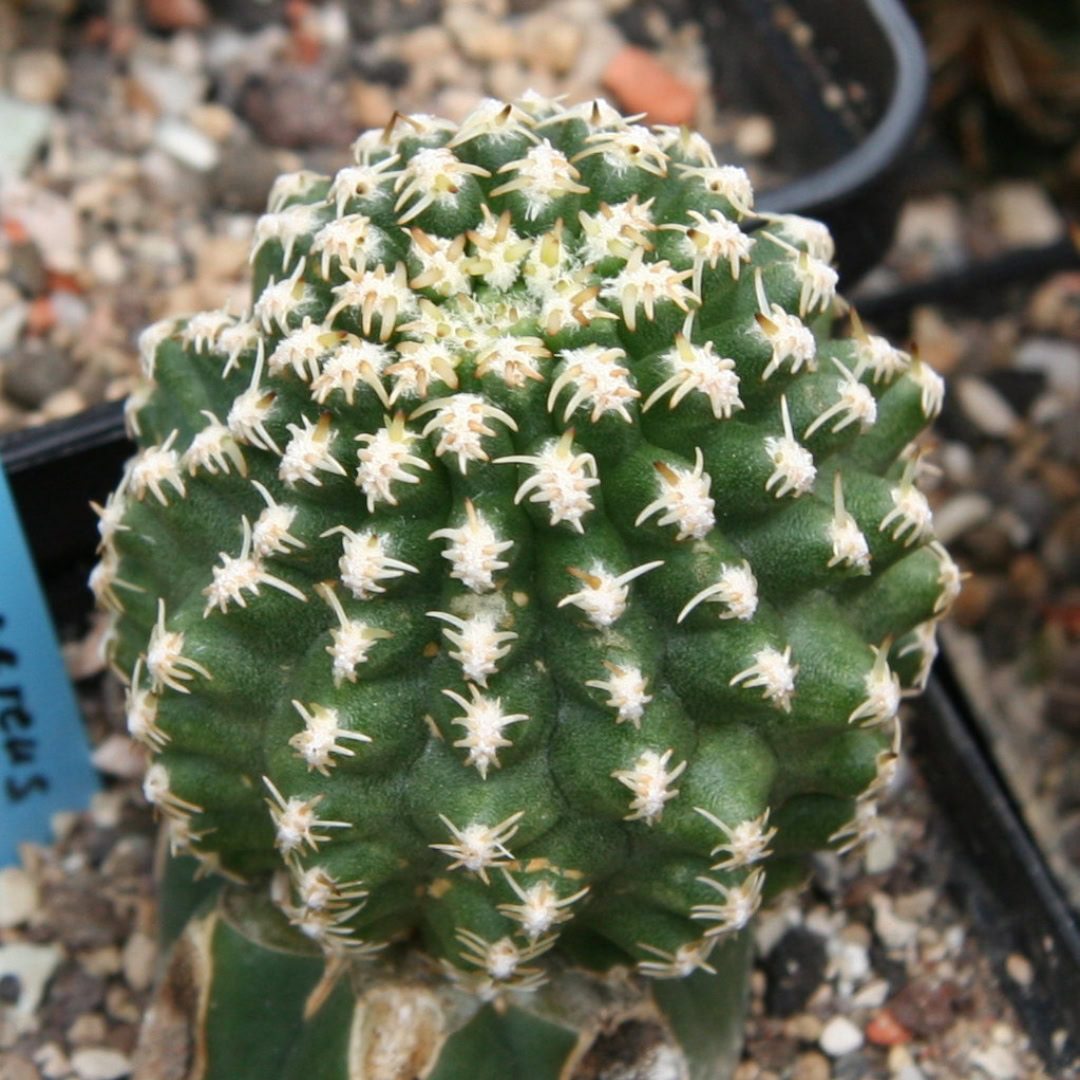
Pygmaeocereus bieblii is a small Peruvian cactus from a genus of dwarf species. It has a low body, usually cylindrical or slightly globular when young, with short spines and a delicate air. The name gives away the appeal: it is a “pygmy cereus,” a miniature version of a columnar cactus.
It likes a free-draining substrate, good light, and moderate watering during the growth phase. Like many small cacti with a storage root, it tolerates neither waterlogging nor heavy soil. Keep it drier in the cold or during periods of little growth, always in a well-ventilated spot.
25. Matucana crinifera
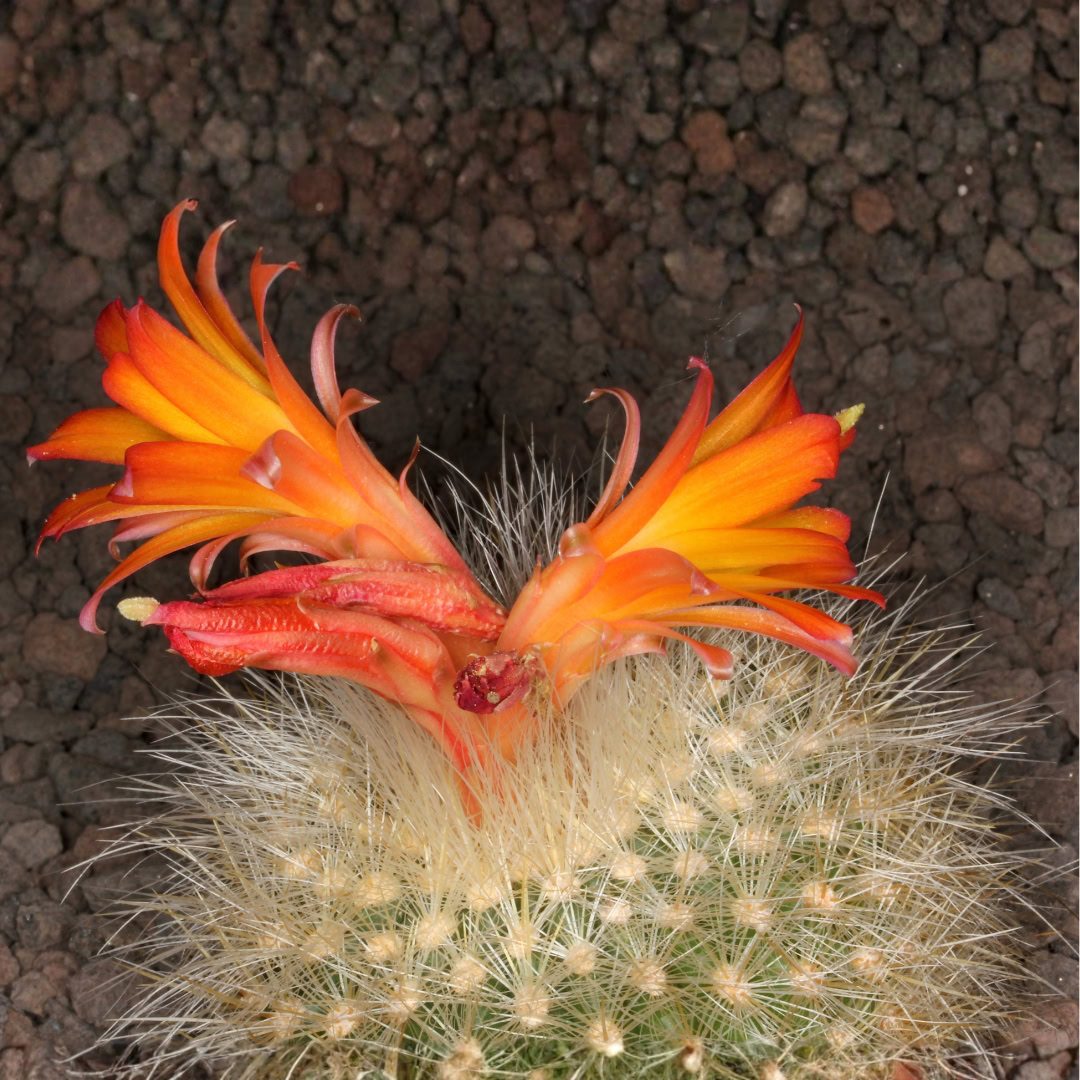
Matucana crinifera is a Peruvian cactus tied to Andean regions and rocky slopes. It forms globular to slightly elongated bodies, with well-defined ribs and spines that give the plant a shaggy, almost “hairy” texture, which is what the epithet crinifera suggests.
In cultivation it is less temperamental than some of the Mexican miniatures, but it still wants a well-drained substrate and careful watering. It likes good light, yet it can suffer under very harsh sun and stagnant heat. In winter keep it drier, especially in a cold or humid region.
26. Tephrocactus geometricus
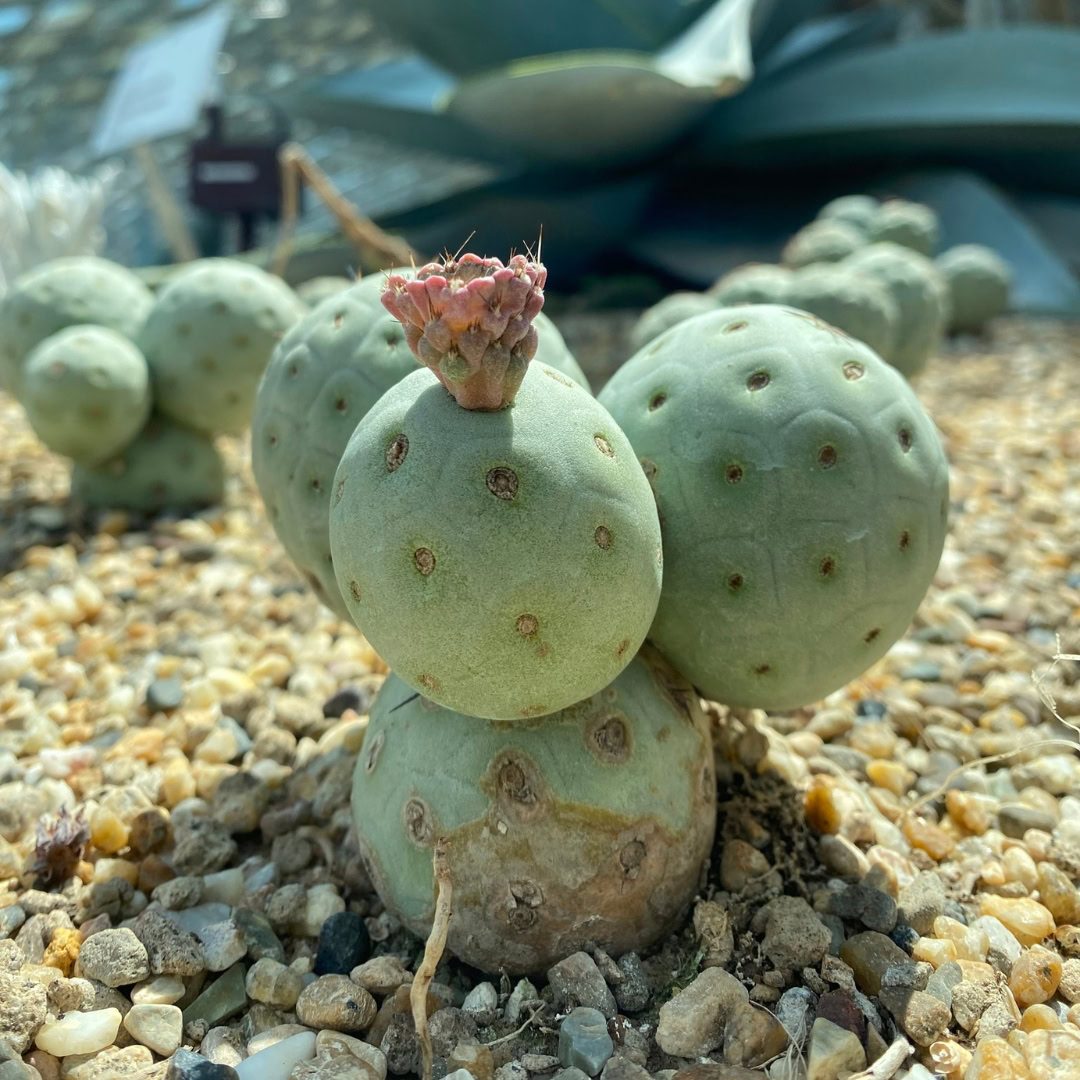
Tephrocactus geometricus is one of the most wanted cacti of the moment among collectors. Native to Catamarca, Argentina, it forms globular, bluish to grayish segments that are almost perfectly spherical. It looks assembled piece by piece, like a sculpture built from little spheres.
In cultivation it prefers sun, a mineral substrate, a very free-draining pot, and well-spaced watering. The segments detach easily, so handle it with care. To keep the plant compact and good-looking, steer clear of too much shade, too much water, and heavy feeding. Here, slow growth is part of the charm, and part of the price.
27. Tephrocactus alexanderi
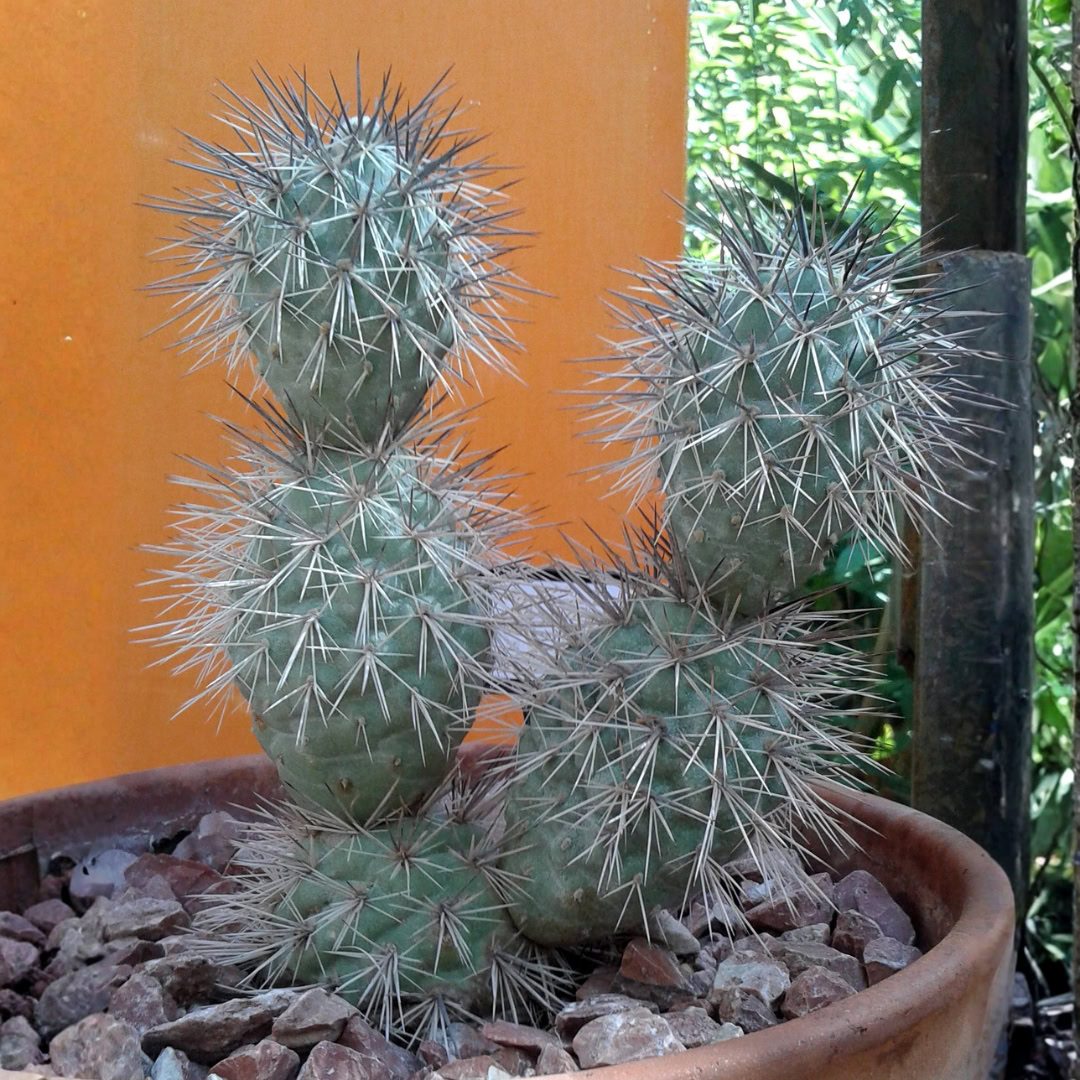
Tephrocactus alexanderi is native to Argentina and belongs to the same group of jointed cacti, built from segments that fit together. The articles are globular to oval, usually with a tuberculate surface and pale spines, creating a rustic, dry, sculptural look.
It is an arid-climate plant: it wants full sun, a mineral substrate, and well-spaced watering. It has to dry out completely between waterings and rest drier in winter. Like the other Tephrocactus, it prefers little intervention. Too much handling, too much water, and a poorly drained pot tend to hurt more than they help.
28. Crested Blue Candle – Myrtillocactus geometrizans f. cristata
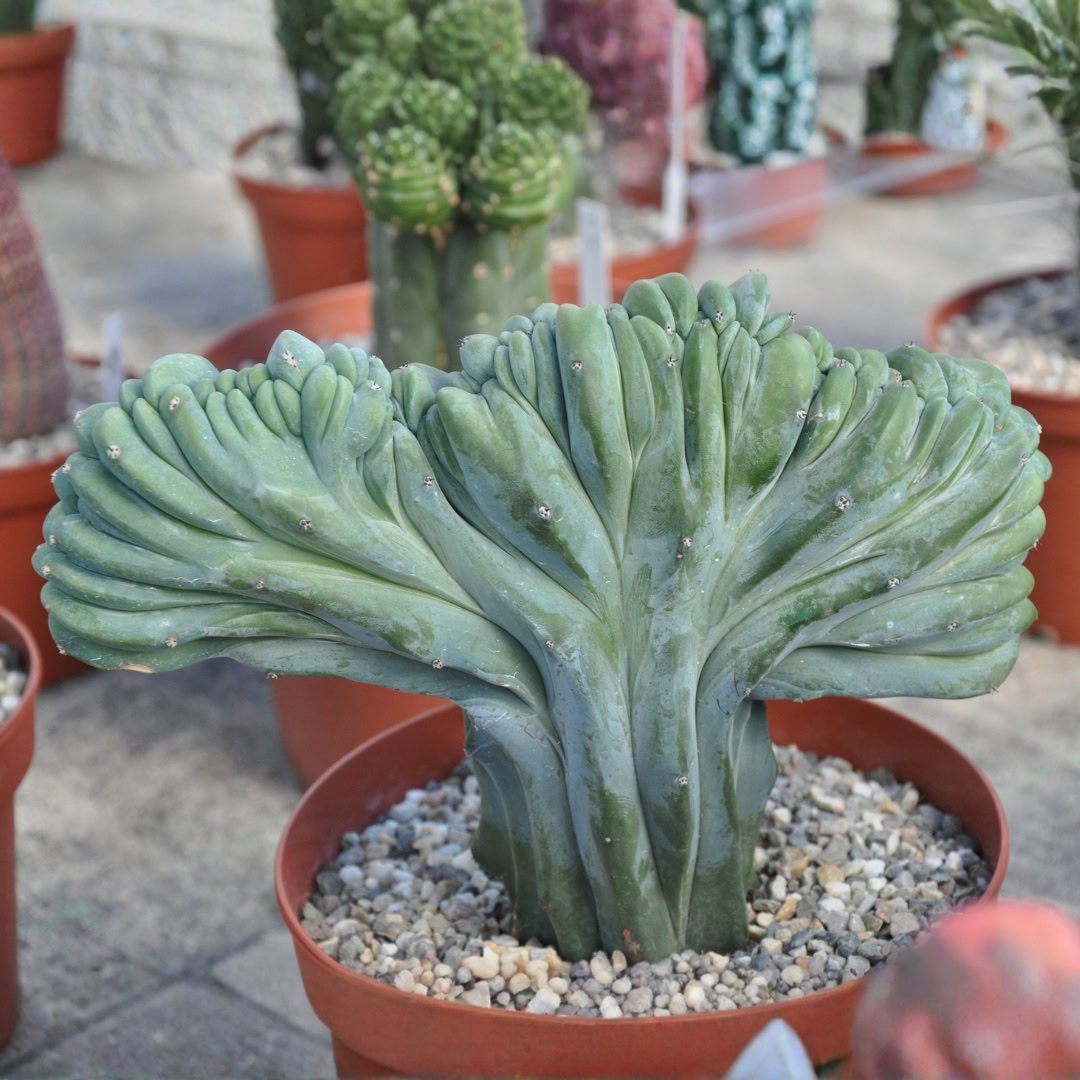
The crested form of Myrtillocactus geometrizans is an ornamental mutation, not a separate species. While the typical plant grows as a branched columnar cactus, the cristate develops crested, wavy growth that brings to mind fans, corals, or the back of some prehistoric creature. That is why it is so sought after as a collector’s piece.
It is easier to grow than most of the rarities on this list, but it still wants abundant light, a free-draining substrate, and moderate watering. Protect it from hard cold and from trapped moisture. Normal shoots can appear on the crest, and in ornamental cultivation they are usually removed to preserve the wavy form.
Which rare cactus would you grow next?
A rare cactus has this curious power: it starts as a simple discovery, and before you know it, you are hunting specialist nurseries, comparing forms, looking up scientific names, and clearing space where, in theory, “no pot could possibly fit.” It comes with the territory. Collecting cacti is, at heart, training your eye for detail: a different rib, denser spination, a bluish tone, a crested or monstrose form, a plant that looks like stone, or a magnificent flower that appears only after years of patience.
More than expensive or hard-to-find plants, rare cacti tell stories of adaptation, time, and survival. Some grow in extreme environments, others became objects of desire because of their sculptural form, and many show their best only to a grower who takes it slow. Maybe that is exactly why they captivate us so much: they are not plants of instant impact, they are plants of long acquaintance and waiting.
If you are thinking about your next cactus, choose with care. I will be direct: find a trustworthy nursery, confirm the species name, look closely at the plant’s health, and favor specimens legally propagated in cultivation. A beautiful rare cactus is great. A rare cactus with the right provenance is even better, and it matters more than ever with these species, since so many of them are protected under international trade rules like CITES. A good collection of rare cacti is not built in a hurry. It grows from careful choices, trusted nurseries, legally propagated plants, and the patience to appreciate species that reveal their beauty slowly.
And if this list sparked the urge to go beyond cacti, take a look at the other oddities in our article 34 Rare succulents to collect and grow. The world of rare succulents is vast, strange, fascinating, and dangerously tempting once you have caught the bug.
Now tell me: which of these rare cacti would be first on your wish list?