There’s a kind of plant that fits in the palm of your hand, grows slower than your patience, and still vanishes from specialty nurseries within hours of being listed. You spot one on a collector’s bench, do a double take, and think: is that a plant, or did somebody leave a little alien sculpture in a pot?
Some look like stones. Others look like tentacles, seashells, tiny green brains, turtle shells, or miniature prehistoric trees. A few grow so slowly that a handsome specimen represents years of someone’s care. They come from deserts, rocky slopes, remote islands, and places where simply surviving is a botanical feat. And that’s exactly what turns certain plants into objects of desire: they don’t look like they were made to decorate a shelf. They look like they were made to challenge your idea of what a plant is.
I’ve lived with plants for years, and I’ll tell you something up front: rare doesn’t always mean pretty. Sometimes it means slow, stubborn to propagate, barely available, too strange for the average taste, or so perfectly adapted to its habitat that it looks almost absurd sitting in a little pot. So I pulled together 34 rare succulents that genuinely move in the collector world here in the US, from the more attainable oddities to the small extravagances that make any plant parent take a deep breath before asking the price.
How I chose these 34 rare succulents
Before the list, a quick agreement between us: I didn’t call something “rare” just because a colorful little rosette went viral on Instagram. The succulent world is full of passing fads, gorgeous hybrids, and plants mass-produced by the thousand, but that’s not the point here. I went after the species and forms that have something extra: history, difficulty, painfully slow growth, an improbable shape, or that quiet magnetism of a plant that looks like it escaped from a private collection.
- Genuinely uncommon in the US trade. The American succulent market is one of the most developed in the world, so the bar for “rare” is high. I left out the species you’ll find on every garden-center shelf and big-box endcap, and focused on plants that still circulate mostly through specialty growers, collector groups, and seed-grown batches. In other words: things you actually have to hunt for.
- Real botanical rarity. I cut most of the commercial hybrids and cultivars that change with the season, those gorgeous-but-everywhere Korean Echeverias, and prioritized poorly propagated species, caudiciforms, succulent geophytes, and special collector forms (crests, named clones, oddball mutations).
One important word before we start digging. So many of these plants are slow-growing or wild-harvested in their native range that ethics matter as much as aesthetics. A lot of them are protected under CITES, the convention that regulates trade in threatened species, so whenever you can, choose nursery-propagated specimens over wild-collected ones. It’s better for the plant, better for the habitat, and honestly, a seed-grown plant is usually a healthier plant.
But first, what even is a succulent? Simply put, it’s a plant that learned to store water in its leaves, stems, or roots to ride out drought. Some do it in plump leaves; others turn the stem into a reservoir; others swell the base or the root into a caudex, that woody “potbelly” that gives a plant the look of a prehistoric bonsai. That’s why the group is so diverse: it stretches from Haworthias with translucent windows to Lithops that pretend to be pebbles, by way of sculptural Euphorbias and caudiciforms that seem to have personalities of their own.
And cacti? They’re succulents too, but they’re so spiny, particular, and dramatic that they deserve an article all to themselves. Here, the journey runs along another branch of the collection: the rare succulents that don’t need to be big to look extraordinary.
Bring your treasure-hunter’s eye, because some of these are easy to love, a few are easy to kill, and several will make you rethink what fits inside the word “succulent.”
1. Horse’s Teeth – Haworthia truncata
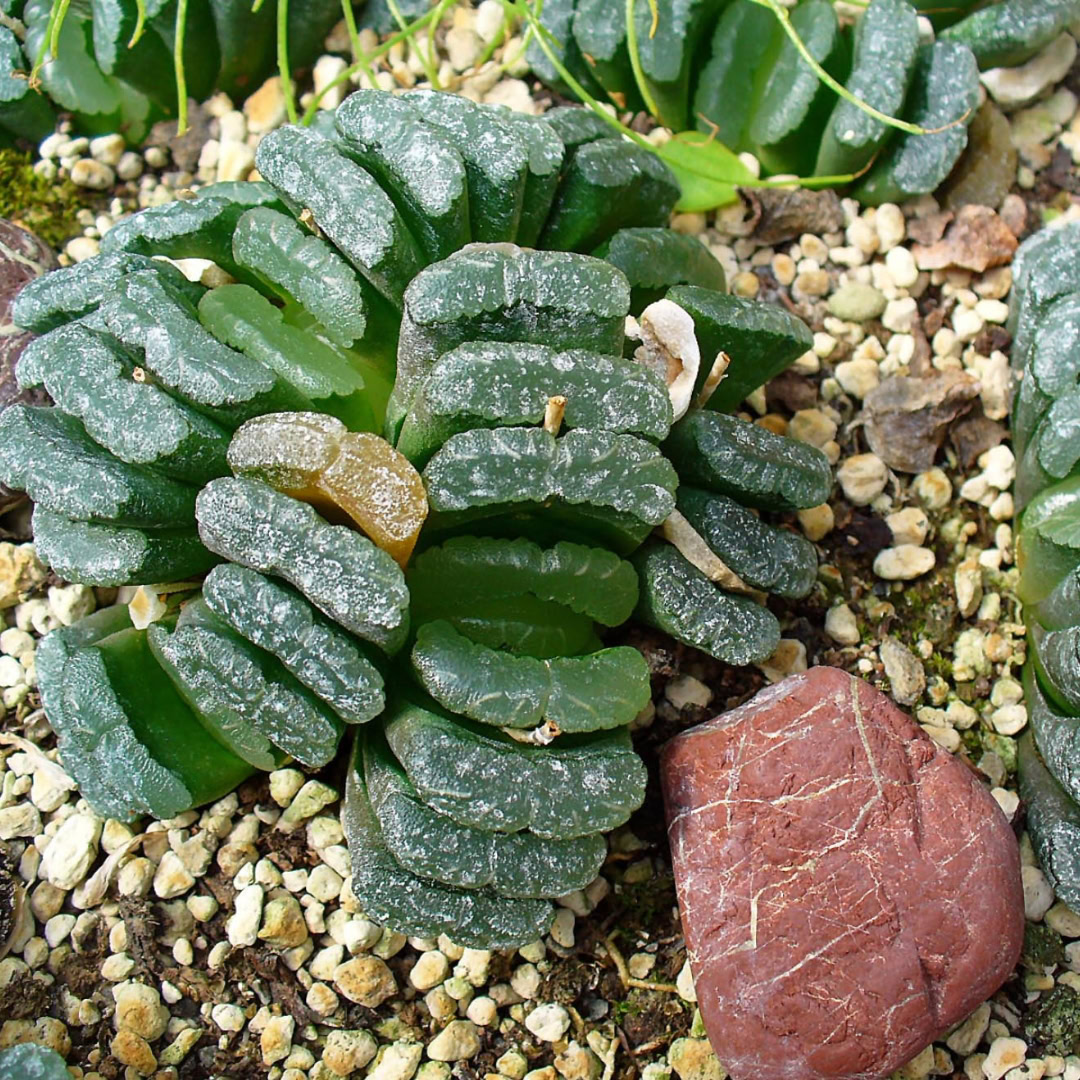
From the Little Karoo in South Africa, this one has a brilliant trick: the leaves are sliced off flat at the top, as if someone ran a knife across them. In the wild it lives almost buried, with only those “windows” exposed to catch light filtered through the dust. Collectors prize the fattest, most symmetrical specimens, and select clones can fetch surprising sums.
It wants strong indirect light, a gritty mineral mix, and moderate watering. It grows slowly, which is exactly why a well-formed plant carries such value.
2. Pygmy Haworthia – Haworthia pygmaea
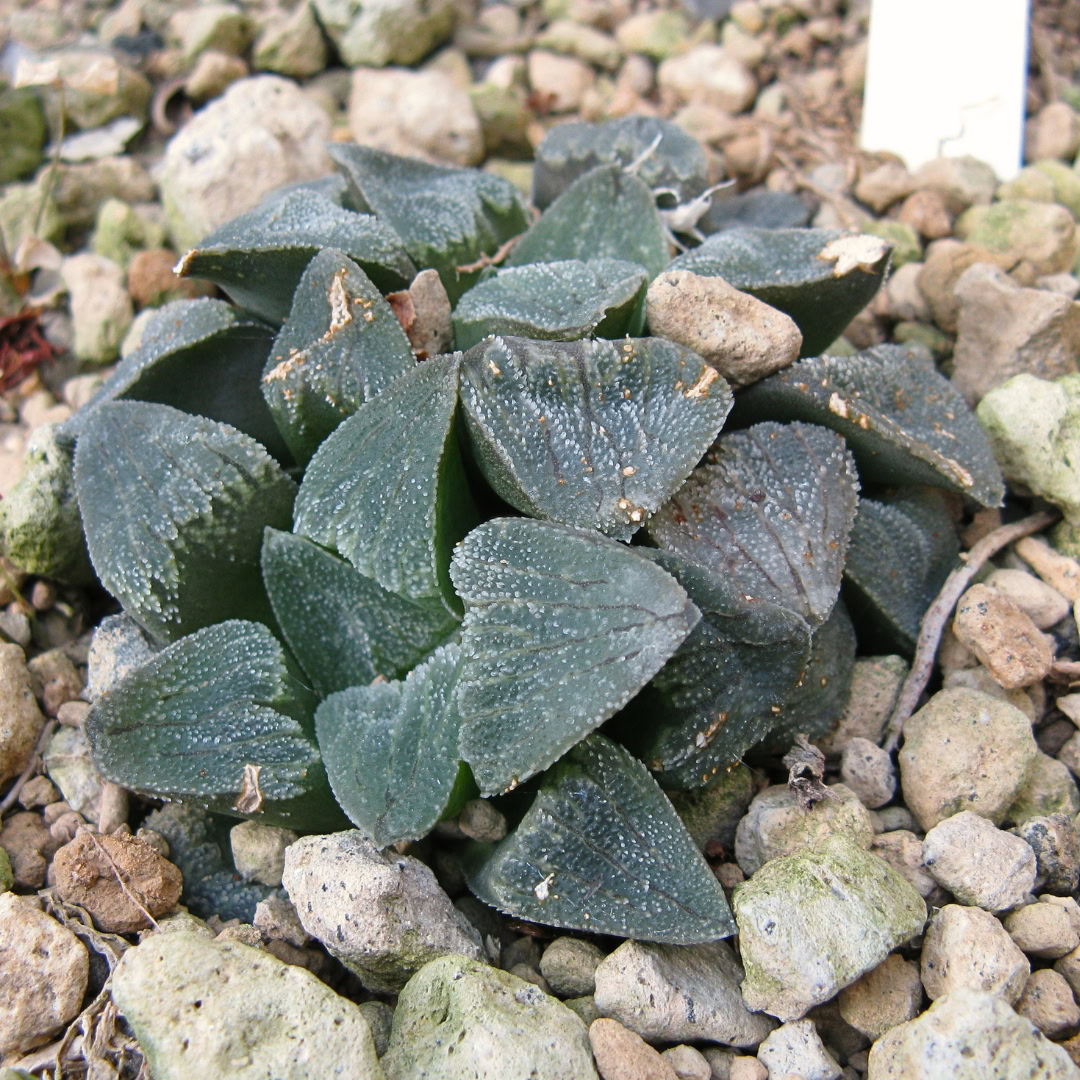
Another South African “window jewel,” this one with leaf surfaces covered in tiny pearly bumps that shimmer like frost. The “super white” selections are objects of pure covetousness in the collector world.
Give it strong indirect light (too much direct sun scorches the windows), a mineral substrate, and measured watering. It grows slowly, and that’s part of the charm.
3. Living Pebble – Conophytum bilobum
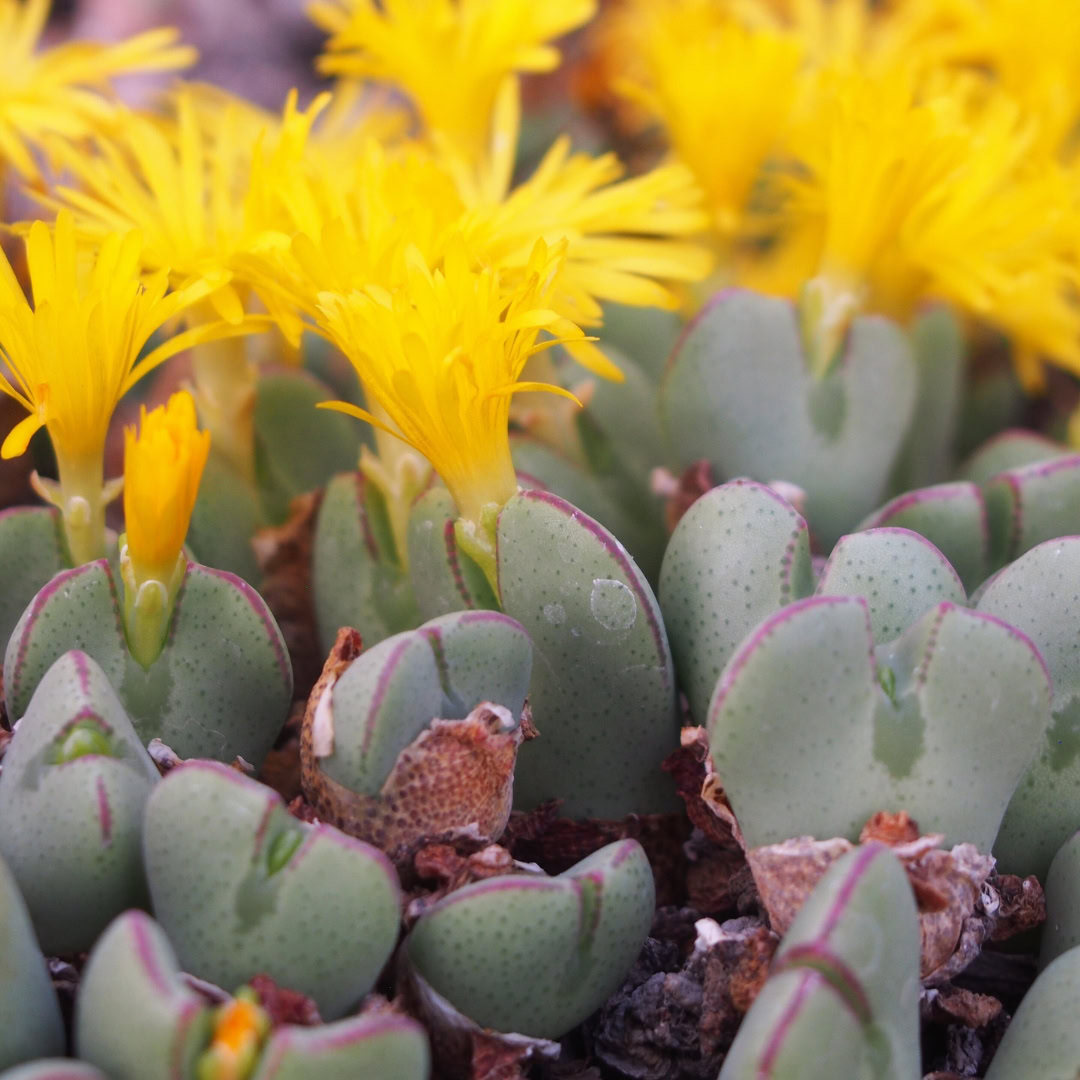
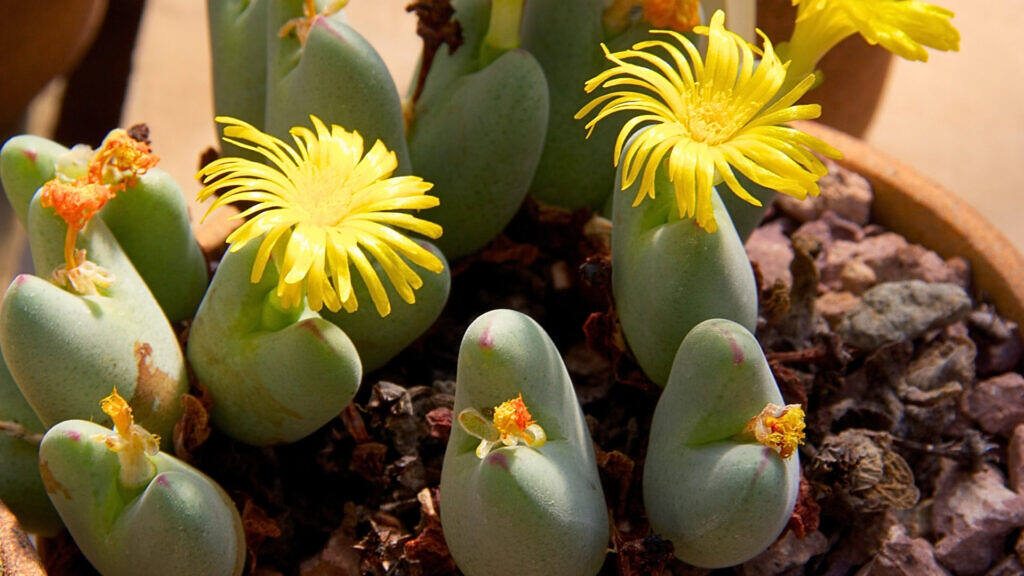
One of the “living stones” of the mesemb tribe, native to Namaqualand. Its little heart-shaped (bilobed) body shrivels under a dry papery skin in summer and re-emerges in fall, when it blooms vivid yellow. It’s one of the more forgiving gateways into the famously addictive world of Conophytum collecting.
It’s a winter grower: water from fall into winter and let it rest bone-dry through summer. Mineral mix and bright light, always.
4. Aloinopsis schooneesii
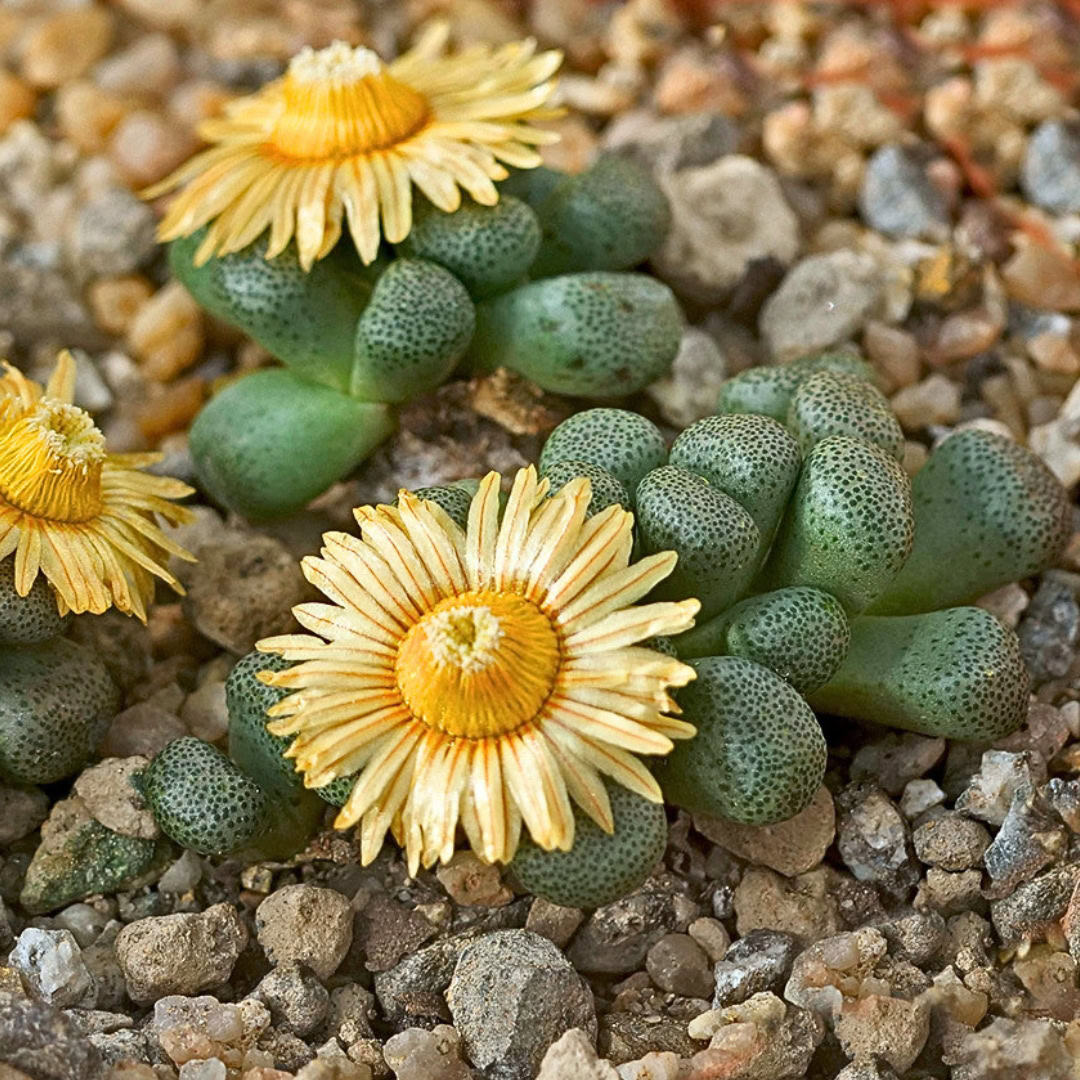
A discreet little South African mesemb with small club-shaped leaves covered in fine dots, and a hidden star: a tuberous root that collectors love to unearth and display as a caudex.
It grows in the cool season, so water more in fall and winter. A very gritty mix and full sun give you that compact, rugged look.
5. Fockea natalensis
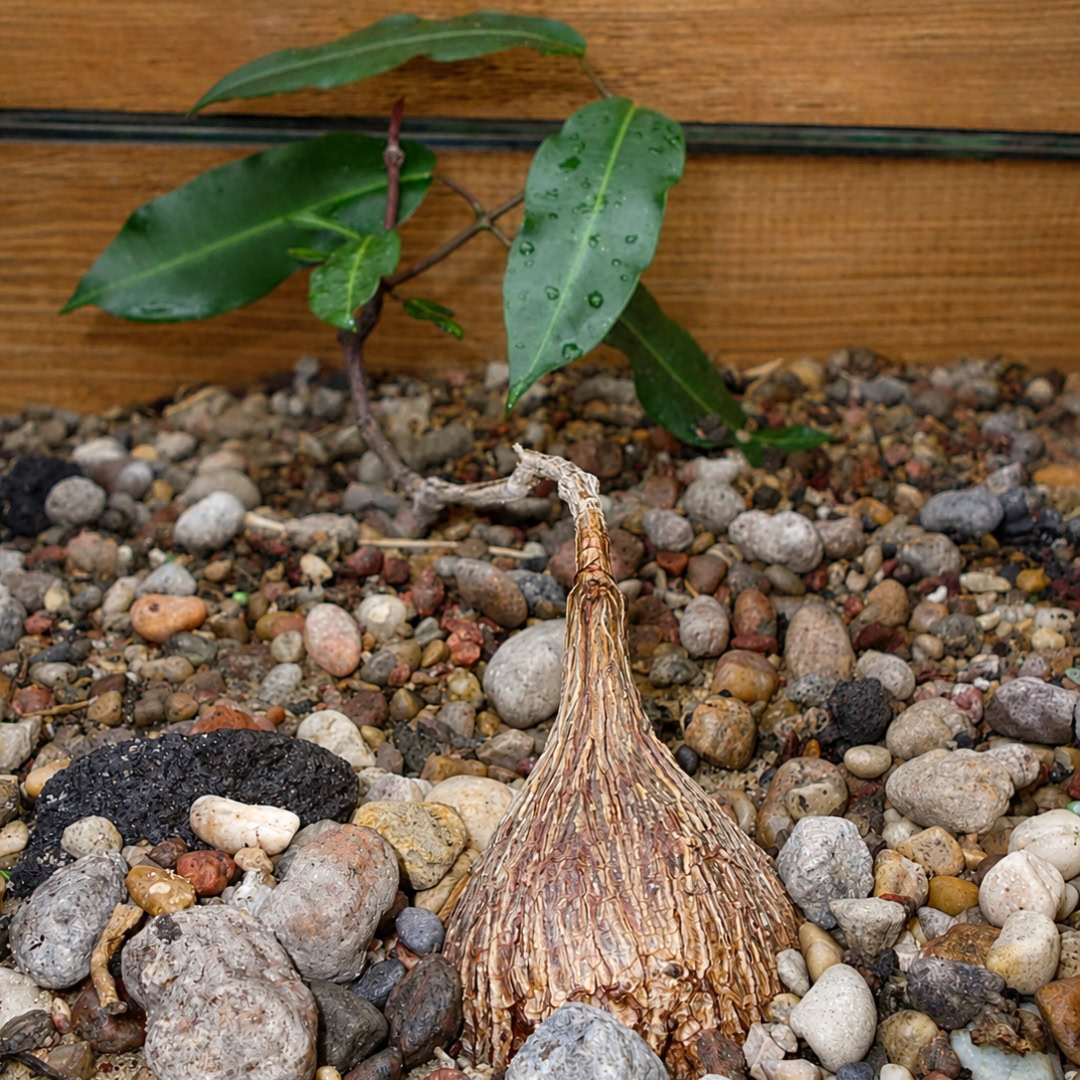
A caudiciform from southern Africa that looks carved: a woody, gnarled caudex (swollen base) with slender climbing shoots branching off it. It’s the plant for anyone who loves that “succulent bonsai” look, and it’s noticeably less common in the trade than its cousin Fockea edulis.
The secret is to grow it with the caudex partly exposed to show off the piece. Regular water in the heat, a dry rest in the cold, and plenty of drainage. It’s tough and lives for decades.
6. Euphorbia francoisii
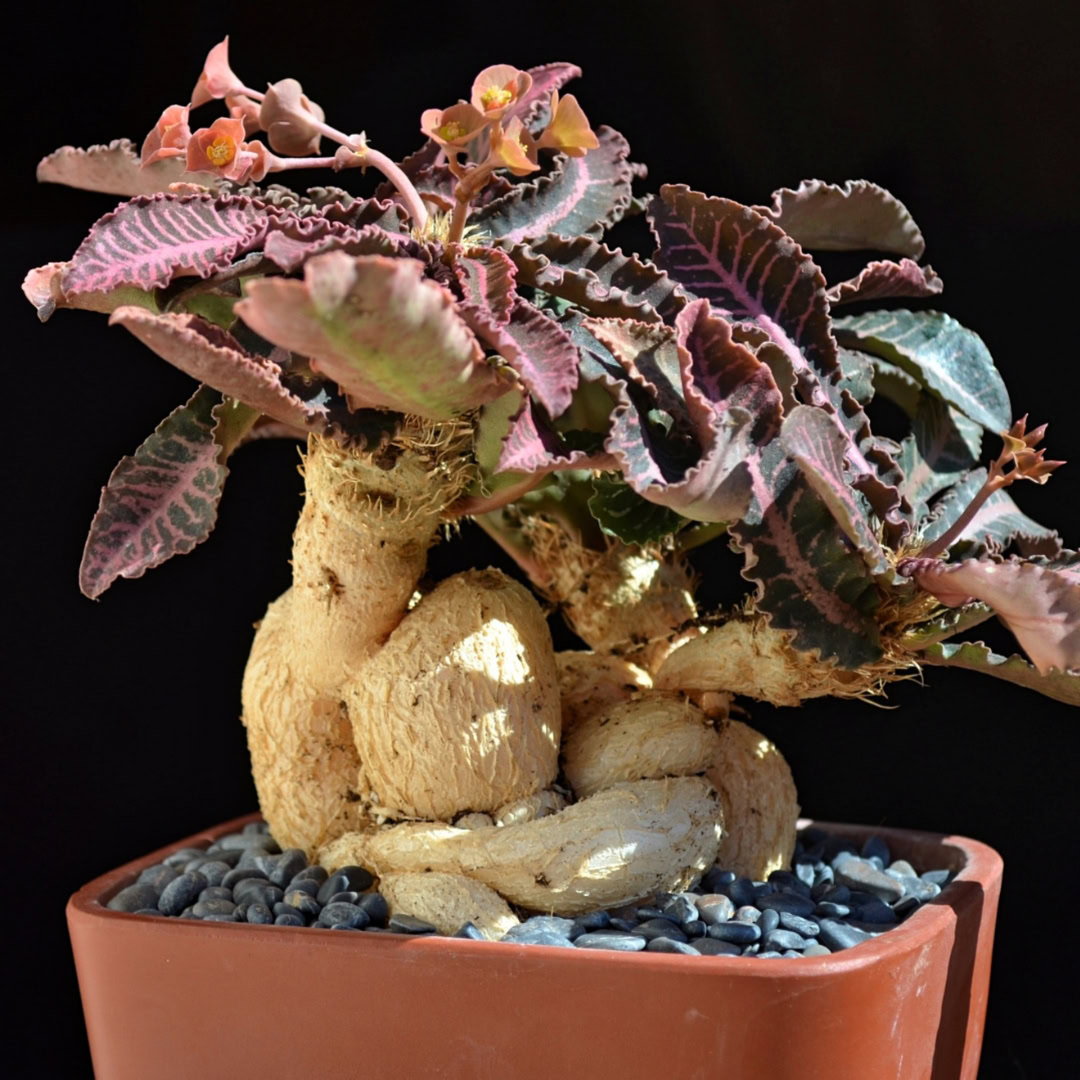
Straight from Madagascar, this is a true collector’s gem: small, with leaves that show patterns and shades of pink, wine, and green as if hand-painted. Every plant is practically unique, and named clones are seriously sought after.
It wants warmth, bright filtered light, and restrained watering. Like many Euphorbias, it’s listed under CITES, so always favor nursery-propagated plants. A heads-up that applies to the whole genus: the milky latex is an irritant, so handle with gloves and keep it away from your eyes.
7. Euphorbia decaryi
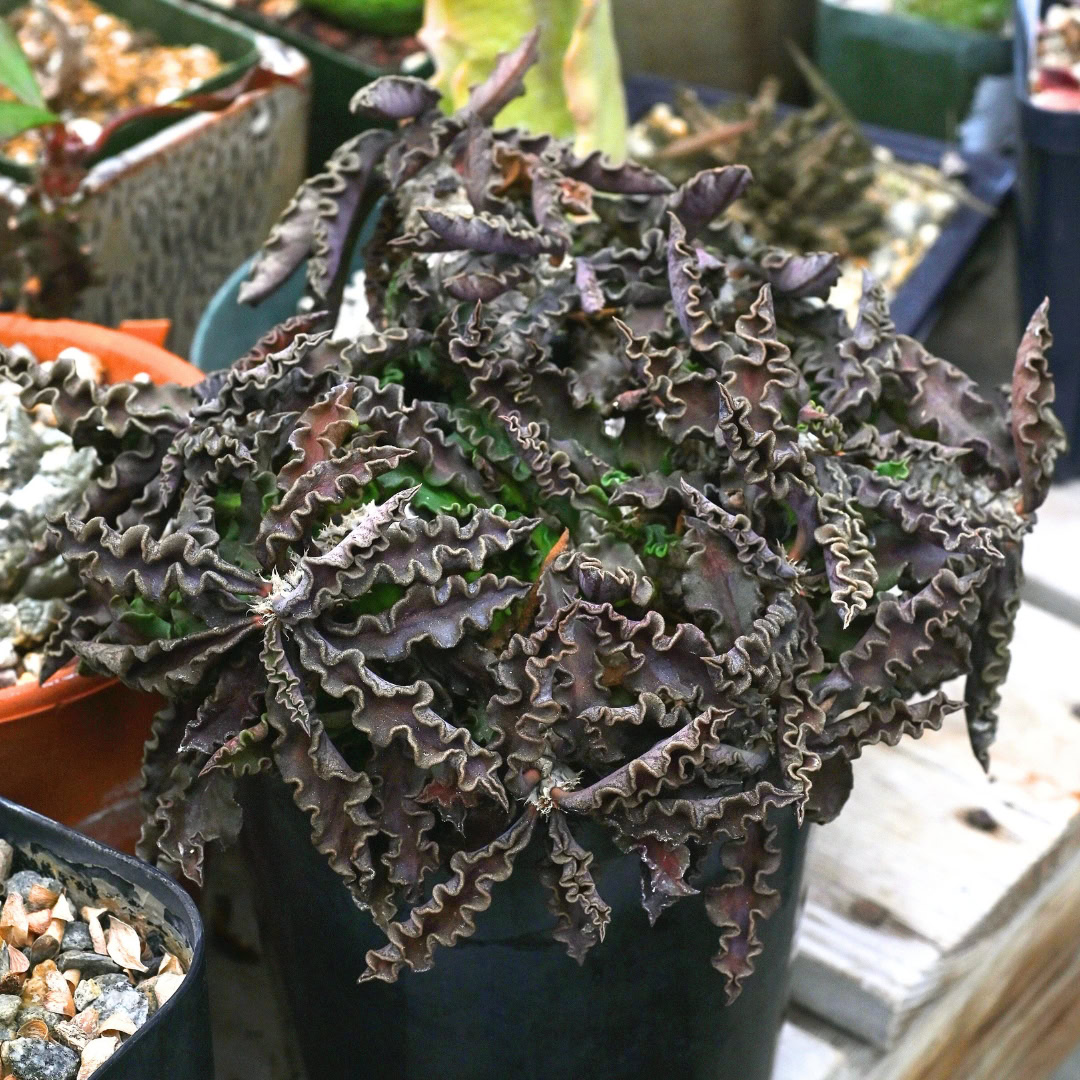
From Madagascar, low and creeping, with wavy leaves that have crisped, almost wrinkled edges, a pattern that makes collectors sigh. It spreads by rhizomes, forming little mats.
It likes warmth, bright dappled light, and regular watering in the growing season. Sensitive to hard frost, and the latex is an irritant, as with all its relatives.
8. Melon Spurge – Euphorbia meloformis
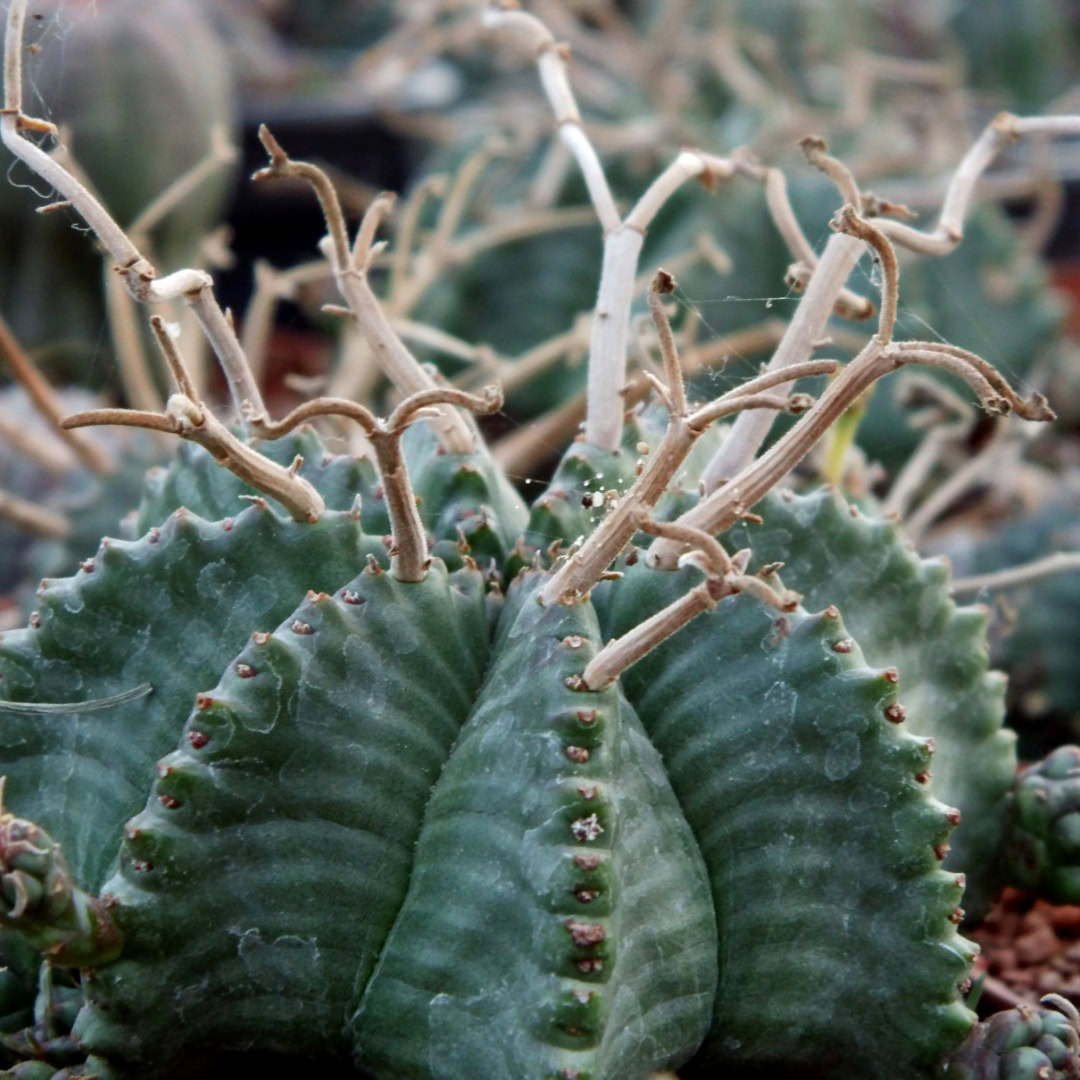
Glance at it quickly and you’d swear it was a cactus, or a striped baseball. But it’s a spineless globular Euphorbia from South Africa, cousin to the famous Euphorbia obesa. Compact and symmetrical, it’s a charmer.
Strong light, sparse watering, and slow growth define its care. Like so many in the genus, it’s CITES-protected, so always of cultivated origin.
9. Euphorbia stellata
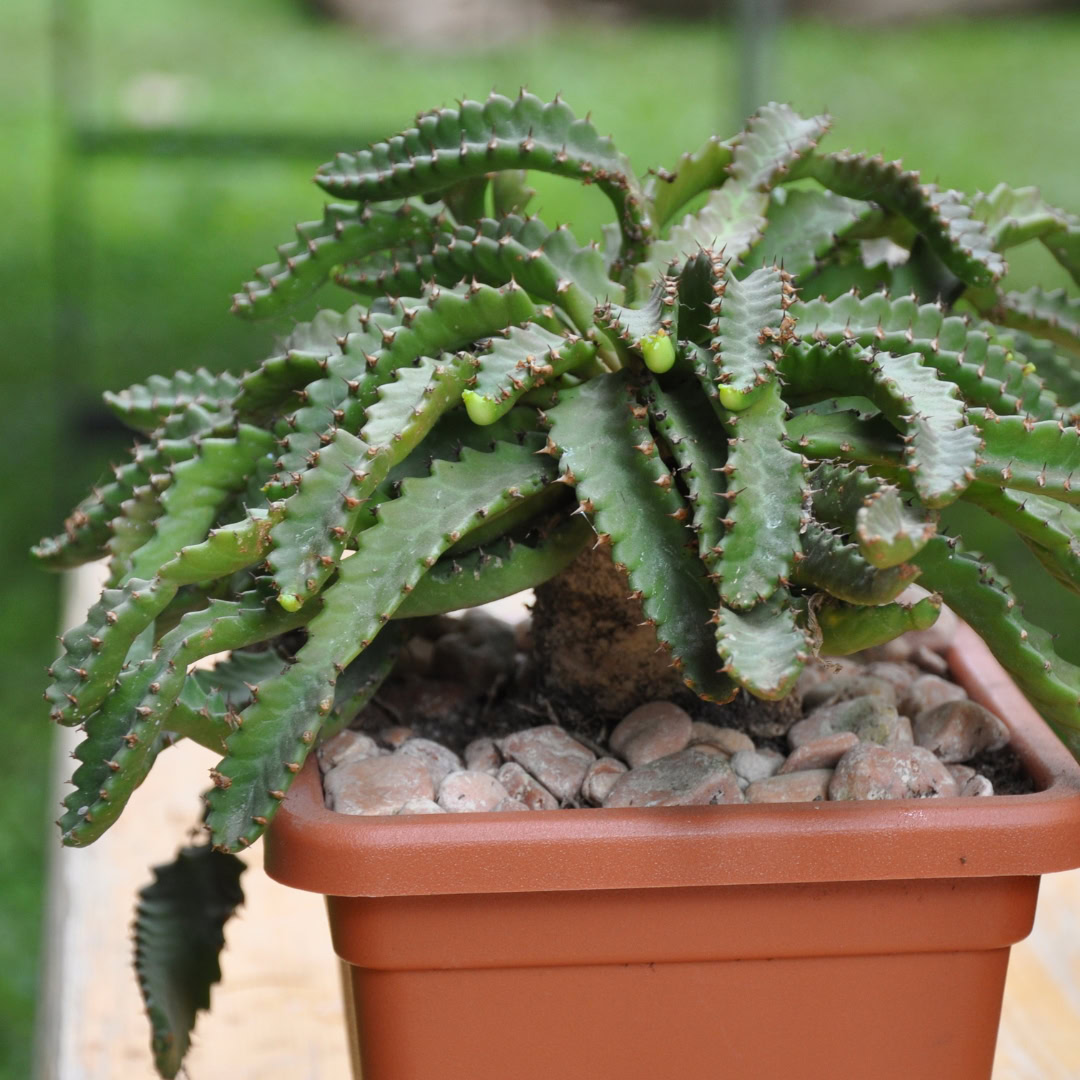
From South Africa, a curious caudiciform: it has an enormous tuberous root, and from it spread flattened stems that sprawl like tentacles right at ground level. Grown with the tuber lifted out, it becomes a sculpture.
Intense light, spaced-out watering, and a very well-drained soil. It grows slowly and appreciates a rest in the cold.
10. Euphorbia aeruginosa
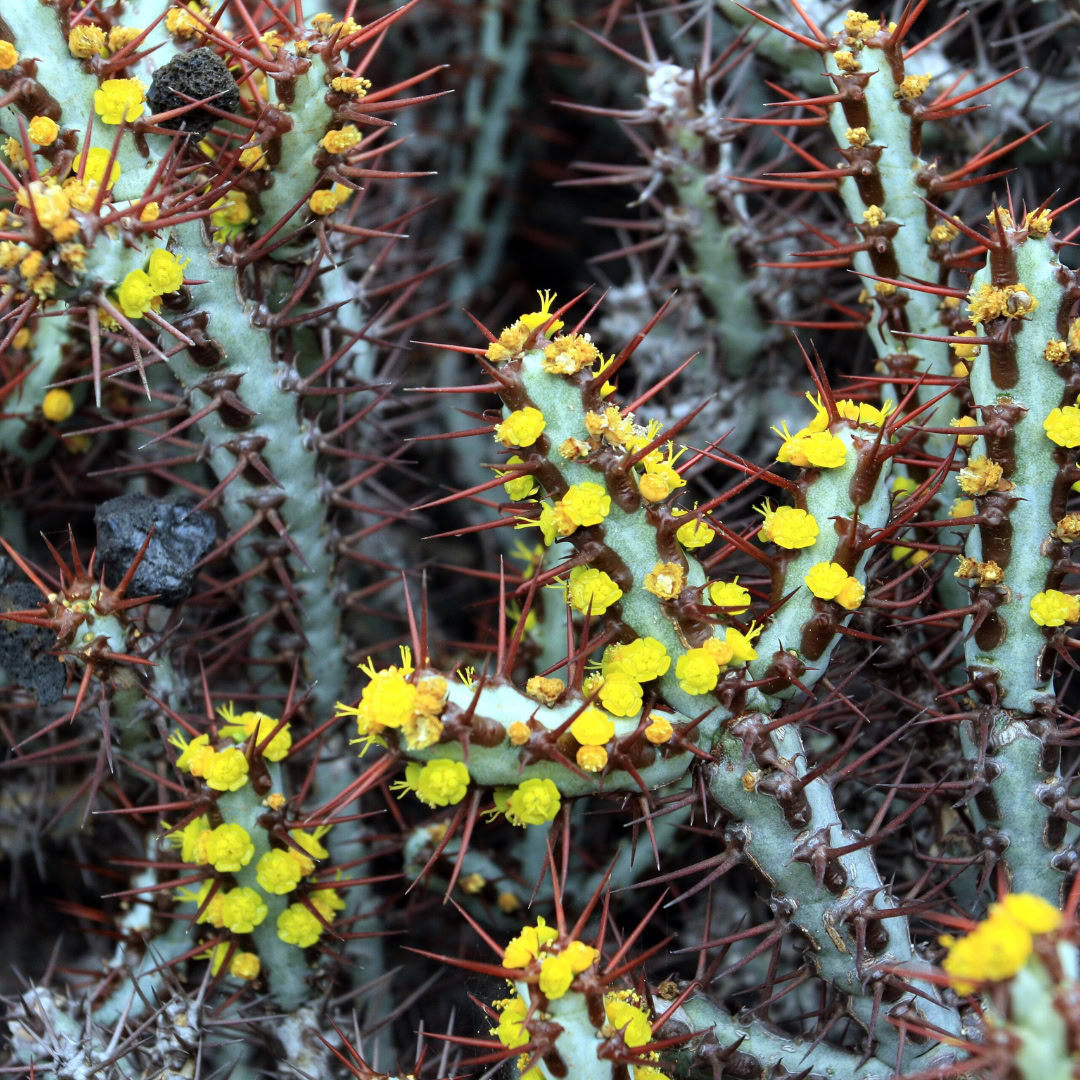
The name refers to the color: slim stems of a metallic blue-green (like the patina on copper), contrasting with rust-colored spines. It hails from Limpopo, South Africa, and forms elegant clusters that some growers nickname the “miniature saguaro.”
Intense light, warmth, and little water. Mind the latex, an irritant like in all its kin.
11. Euphorbia inconstantia
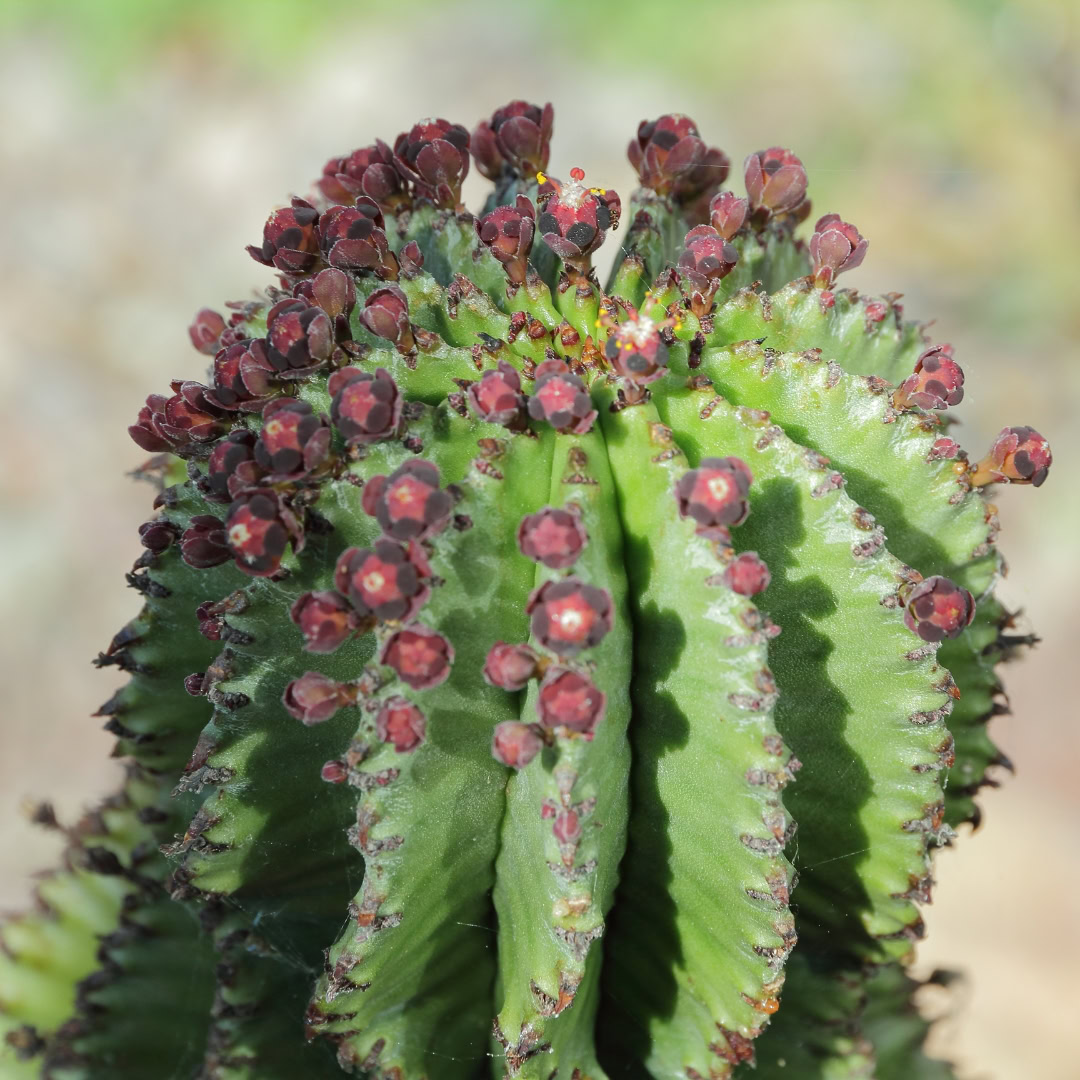
Small and globular, this South African forms clumps of compact, spiny bodies. Understated, but with a symmetry that wins over anyone who loves miniatures.
Classic care for the genus: strong light, little water, and unhurried growth. Impeccable drainage is non-negotiable.
12. Euphorbia tortilis
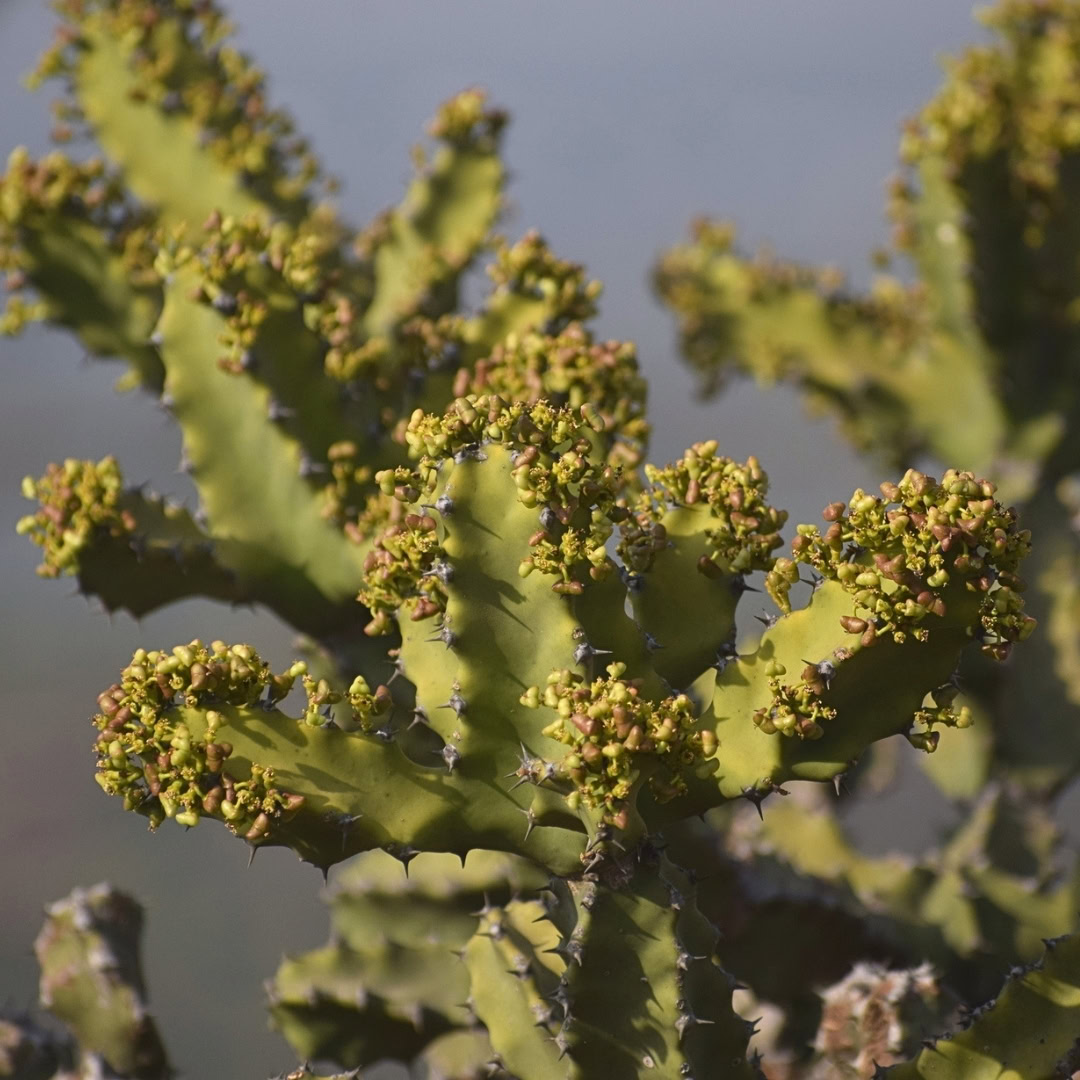
One of the rare succulent Euphorbias from India and Sri Lanka, with twisted stems that earn the name (from “twisted”). It’s an unusual choice, more shrubby than its globular cousins, and precisely for that reason, rarely seen on this side of the world.
It wants tropical warmth, bright light, and moderate watering during growth. Irritant latex, as throughout the family.
13. Paper Avonia – Avonia papyracea (syn. Anacampseros papyracea)
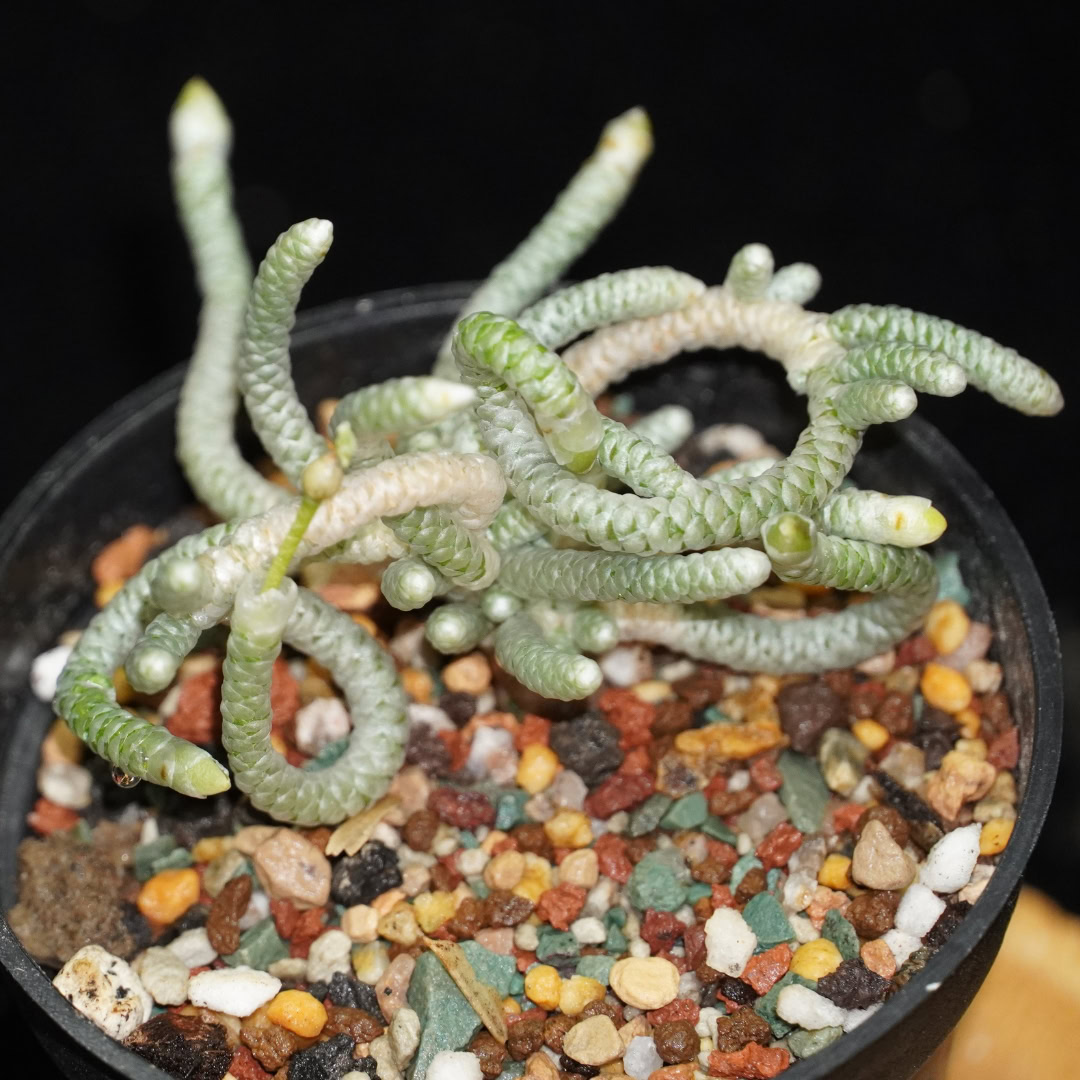
If you think you’ve seen it all, wait until you meet this tiny South African: its little stems are sheathed in white, papery scales, looking like small worms or little cords of paper. Strange in an utterly irresistible way.
It’s demanding: perfect drainage, full sun, and the rarest of waterings. Too much water is a death sentence. A plant for hands that already have some callouses.
14. Spiral Albuca – Albuca namaquensis
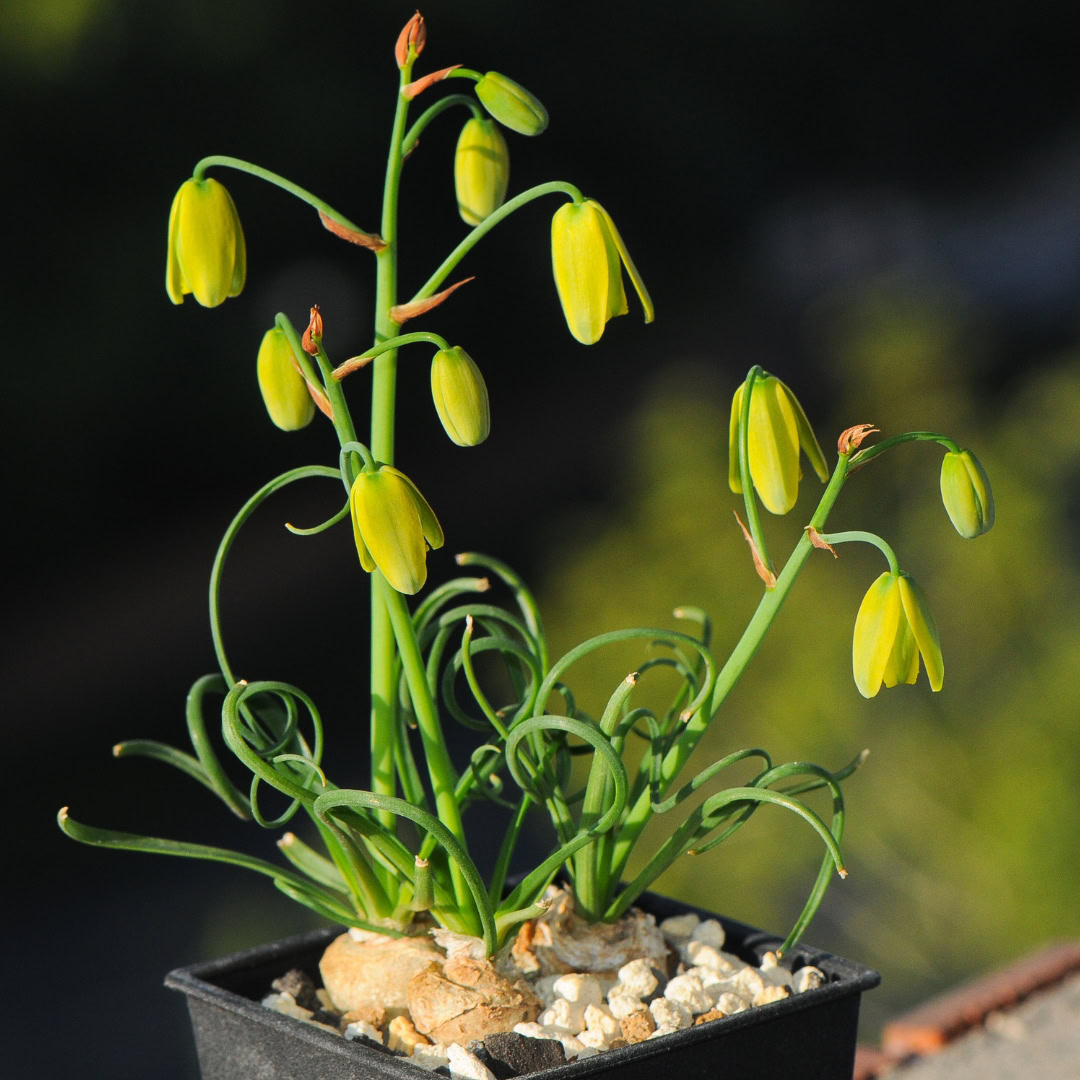
This South African bulb is pure geometry: the leaves grow in tight spirals, like green corkscrews, and the flowers carry a faint vanilla scent. It’s the darling of anyone who loves “weird-on-purpose” plants. Don’t confuse it with the wildly popular Albuca spiralis (sold as “Frizzle Sizzle”), which you’ll find everywhere; namaquensis is the quieter, less common one.
It grows in winter and rests (dry) in summer, when the leaves disappear. The spirals get tighter in very strong light. Treat it like a bulb: let it dry between waterings.
15. Elephant’s Foot – Dioscorea elephantipes
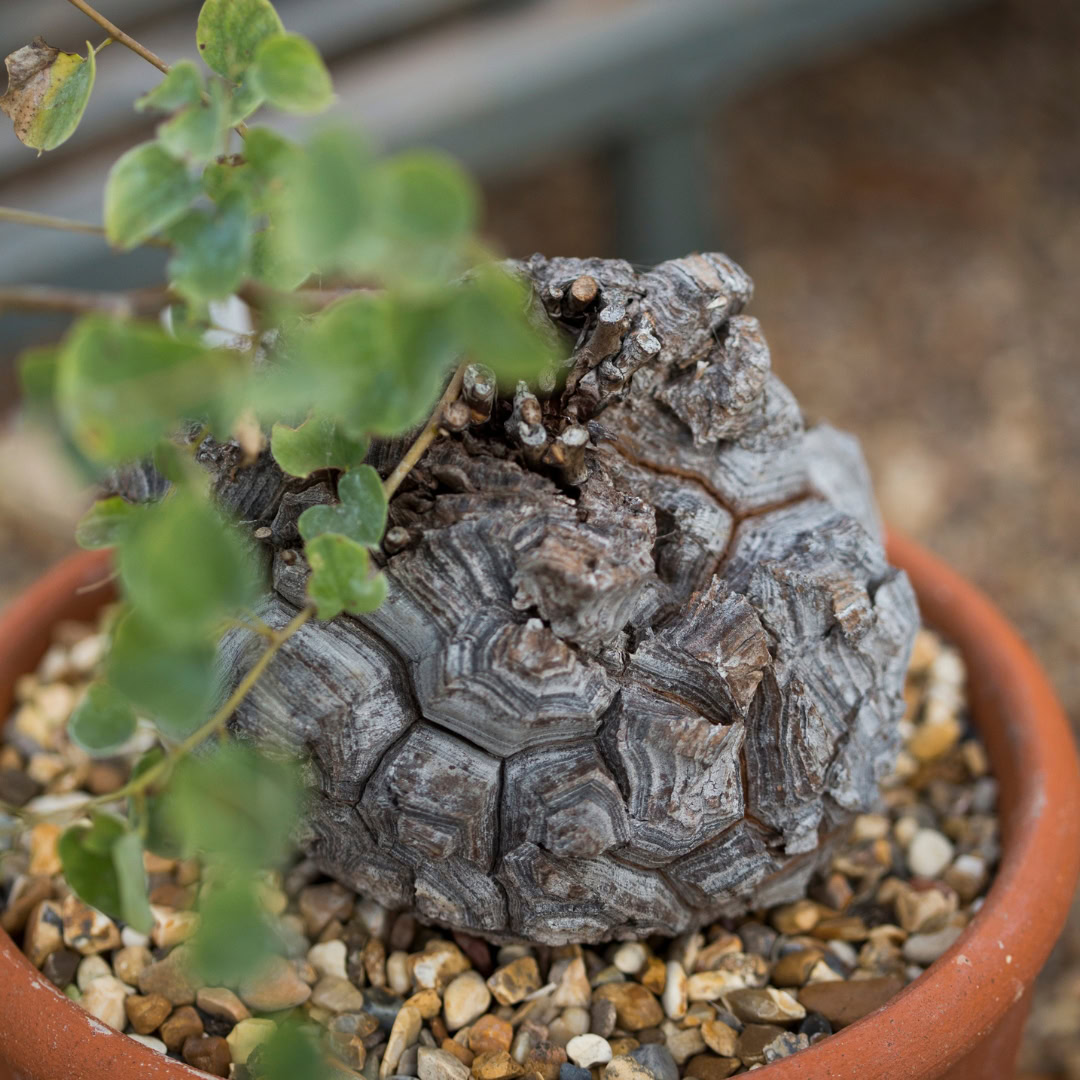
The common name says it all: “elephant’s foot,” also called the turtle-shell plant. This South African forms an enormous caudex, cracked into plates that look like a tortoise’s shell, from which an annual climbing vine sprouts, dies back, and regrows each cycle. It’s one of the most spectacular caudiciforms in the world, and while seed-grown plants do circulate, a sizeable specimen is still a serious collector piece.
Water while the vine is active and keep it dry once it dies back. Caudex always exposed, in a mineral mix. Patience is the keyword: every inch of that “shell” takes years.
16. Caralluma europaea
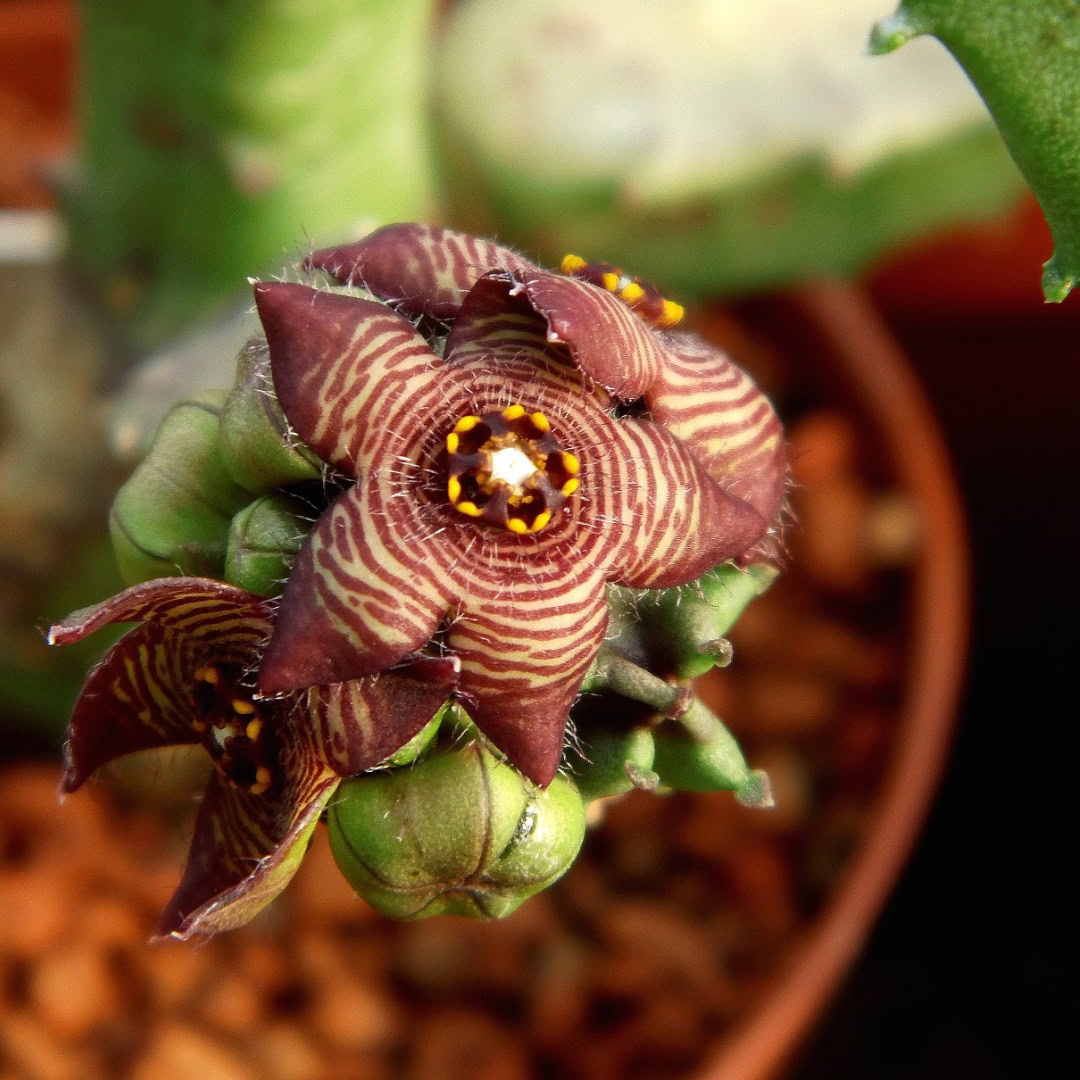
A geographic curiosity: it’s one of the rare succulents native to Europe (plus North Africa), with four-angled, grey-green stems. The star-shaped flowers mimic the smell of meat to attract pollinating flies, fascinating and a touch fragrant, let’s say.
It wants warmth, strong light, and spaced-out watering. It’s hardy, as long as it never sits soggy.
17. Carrion Flower – Caralluma speciosa
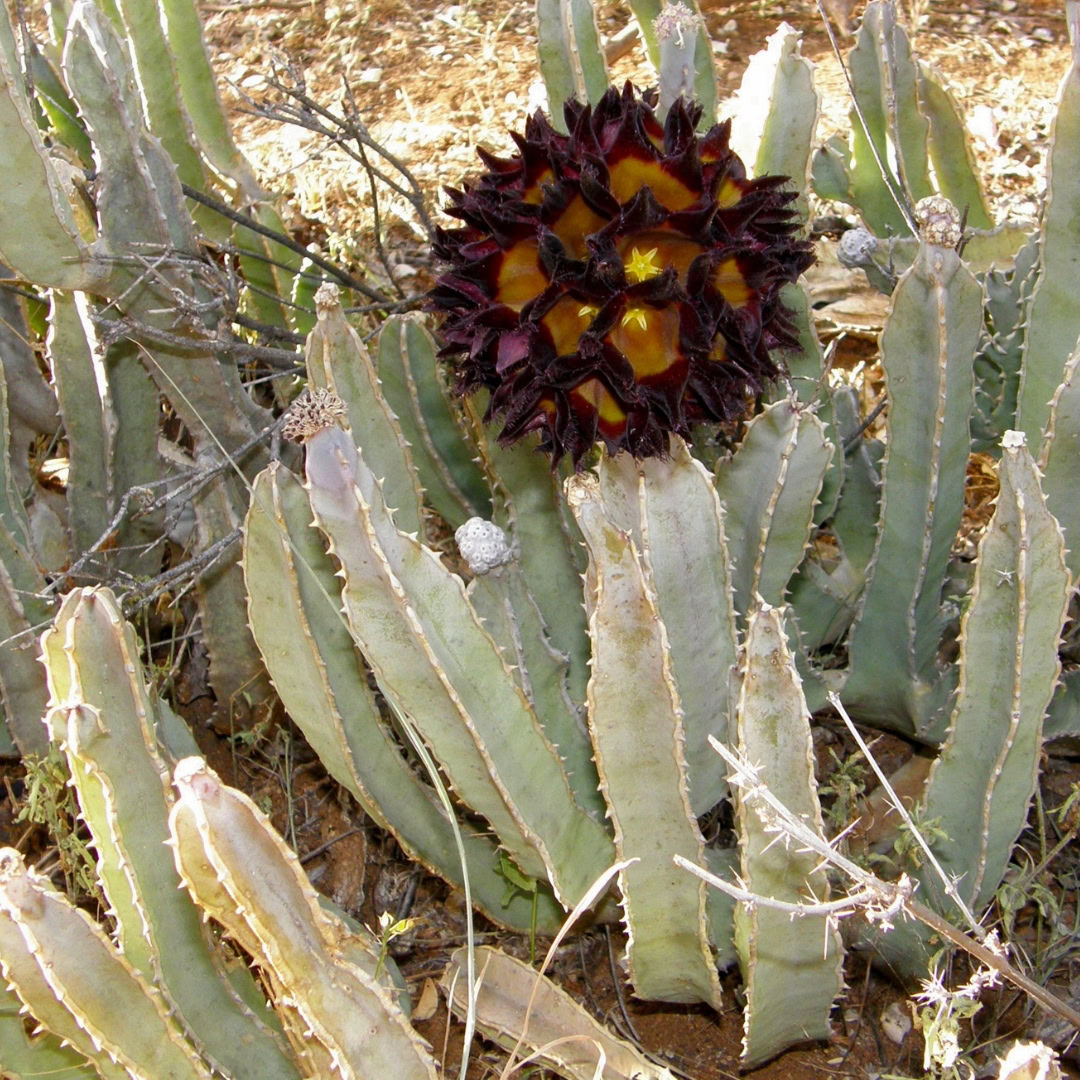
Robust and exuberant, this African has thick, angular stems and produces those star-shaped blooms typical of the “carrion” succulents. Imposing in a pot, and uncommon enough that it mostly changes hands through collector groups and specialist trades.
Warmth, strong light, and spaced-out watering. Hardy, provided it’s protected from waterlogging and cold.
18. Scarlet Kleinia – Kleinia fulgens
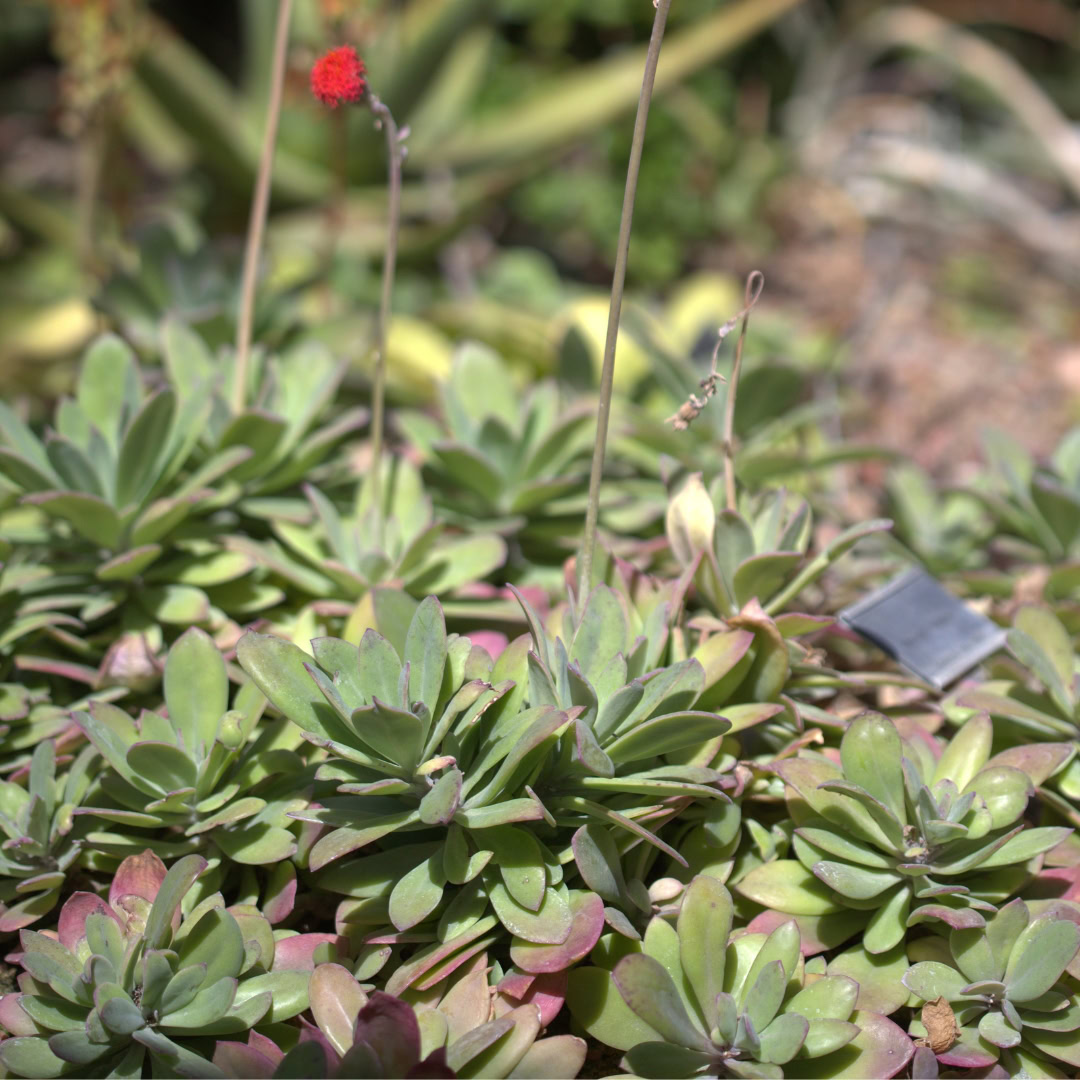
A South African with bluish, glaucous leaves, a thickened root, and showy orange flowers. It belongs to the same group as the Senecios and has a surprisingly sculptural presence.
Bright light, spaced-out watering, and a very well-drained soil. You can grow it with the base lifted to show off the caudex.
19. Monanthes polyphylla
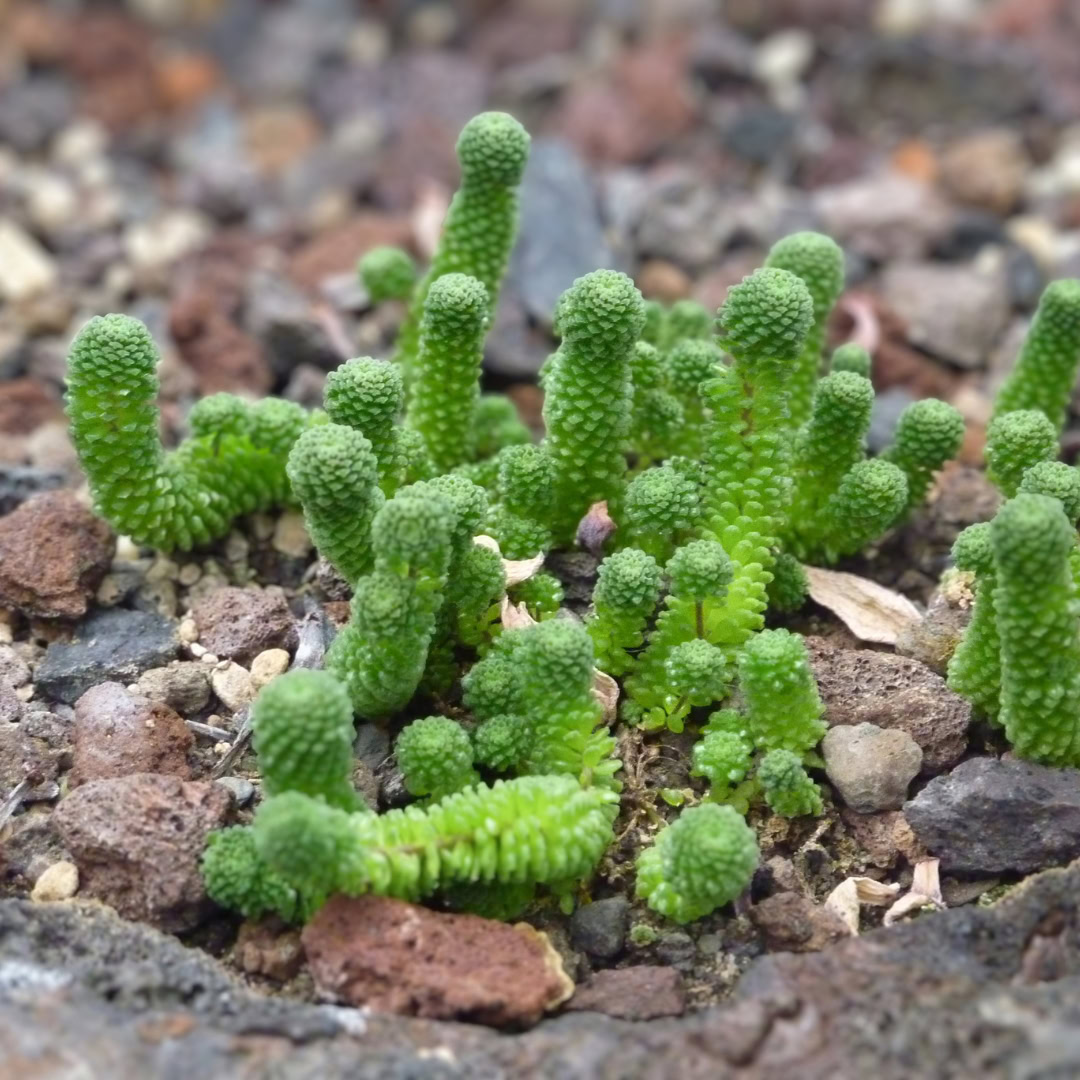
From the Canary Islands, a delicate miniature: dense, tiny little rosettes that form green cushions. Rare in cultivation precisely because it’s sensitive and seldom propagated.
It prefers a mild climate, filtered light, and careful watering; it hates extreme heat and sitting wet. This is a plant to pamper.
20. Sinocrassula densirosulata
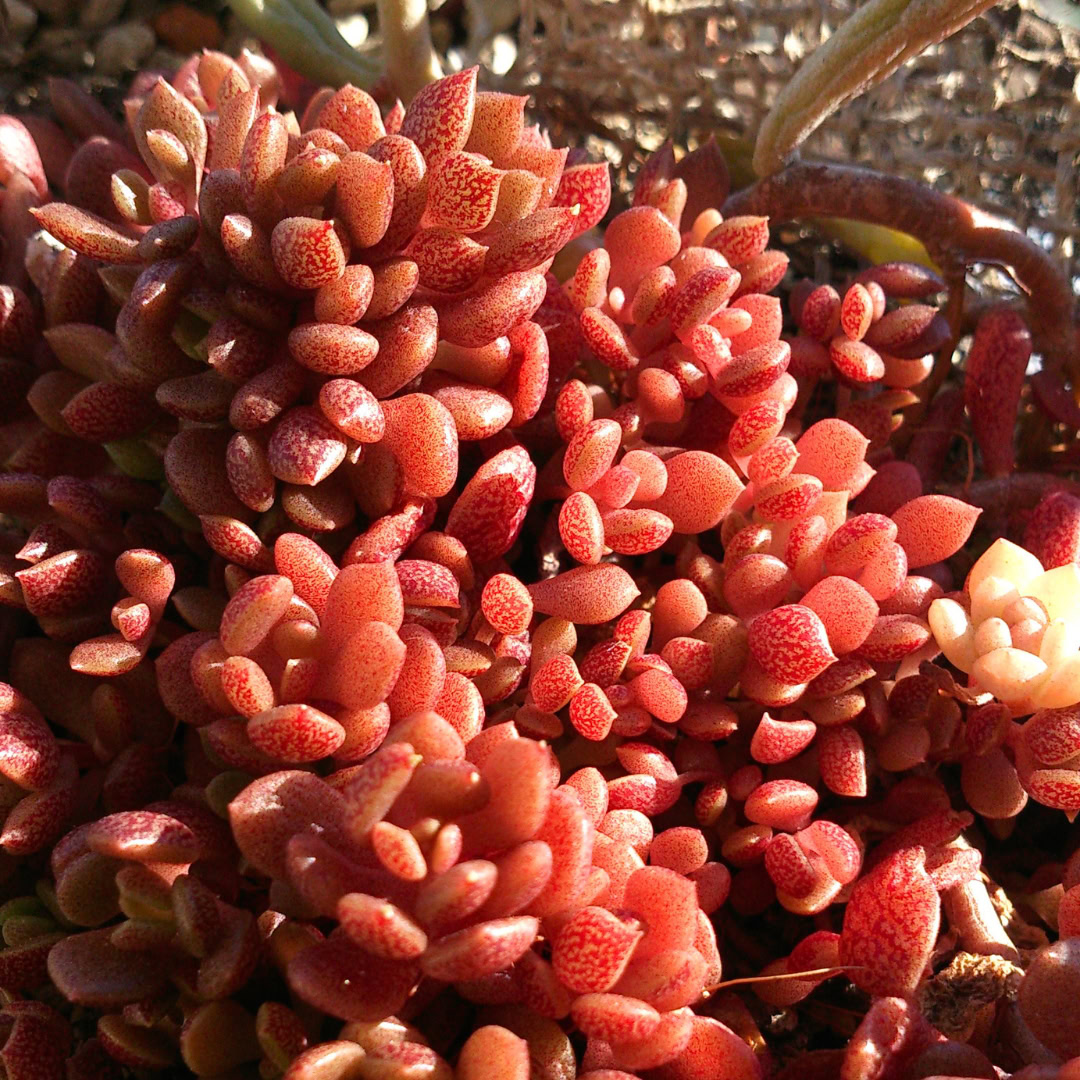
One of the few Asian succulents on this list, native to Yunnan, China. It forms dense, tiny rosettes, often reddish, with a look that recalls miniature artichokes.
Good light, moderate watering, and well-drained soil. A heads-up: some plants are monocarpic (they flower and die), so let the offsets grow to keep the line going.
21. Crassula hemisphaerica
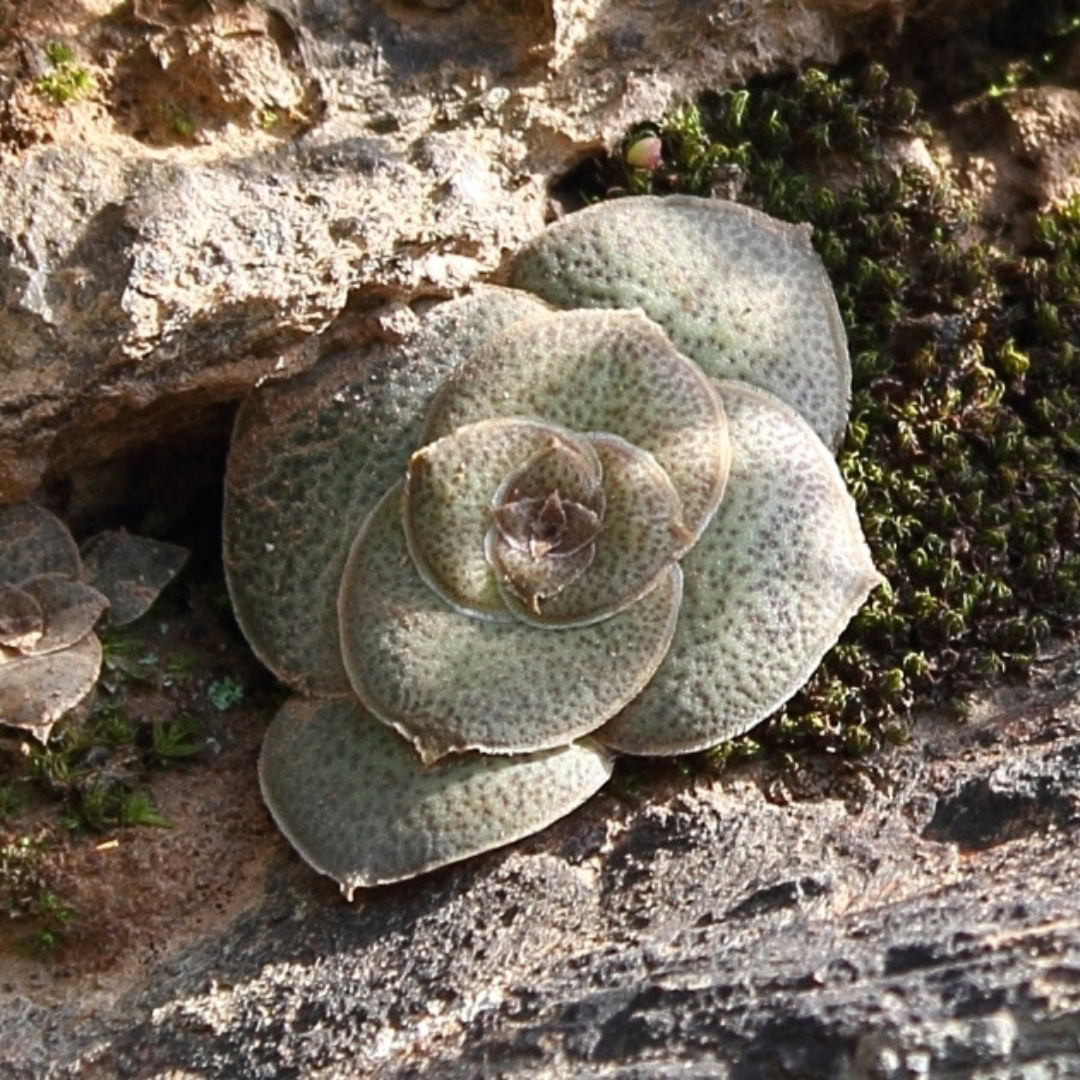
South African, intriguing for its form: the leaves stack into compact, symmetrical discs, building geometric columns that look hand-assembled. Small and architectural.
Bright light, modest watering, and excellent drainage. It grows slowly and looks gorgeous in small ceramic pots.
22. Snowy Panda Plant – Kalanchoe eriophylla
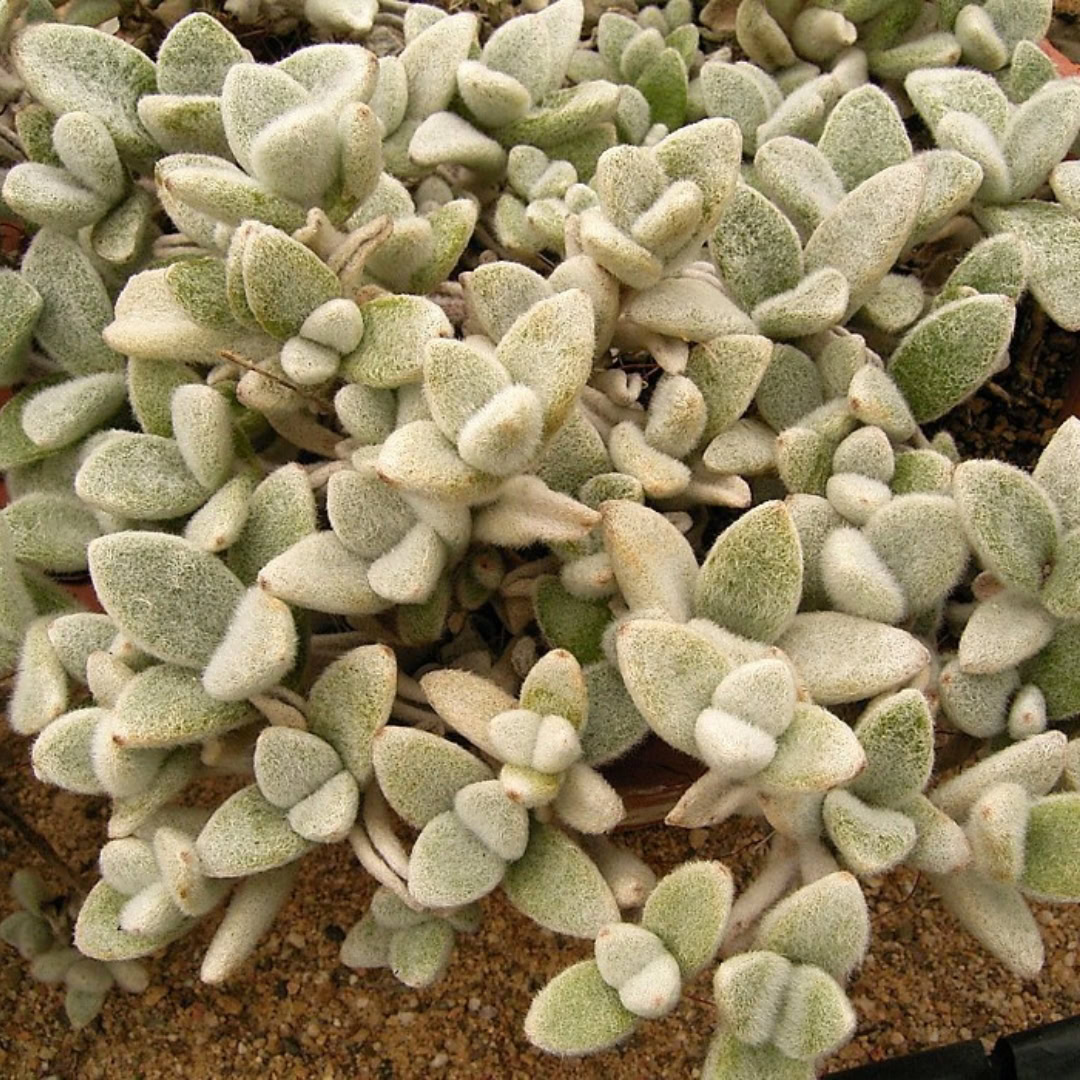
Nicknamed the “snow panda,” this Madagascan is coated in a soft, velvety white fuzz that makes you want to touch it. More delicate and less common than the famous panda plant (Kalanchoe tomentosa), it’s a real find.
Strong light, moderate watering, and well-drained soil. Avoid wetting the velvety foliage so you don’t stain those little hairs.
23. Ledebouria concolor
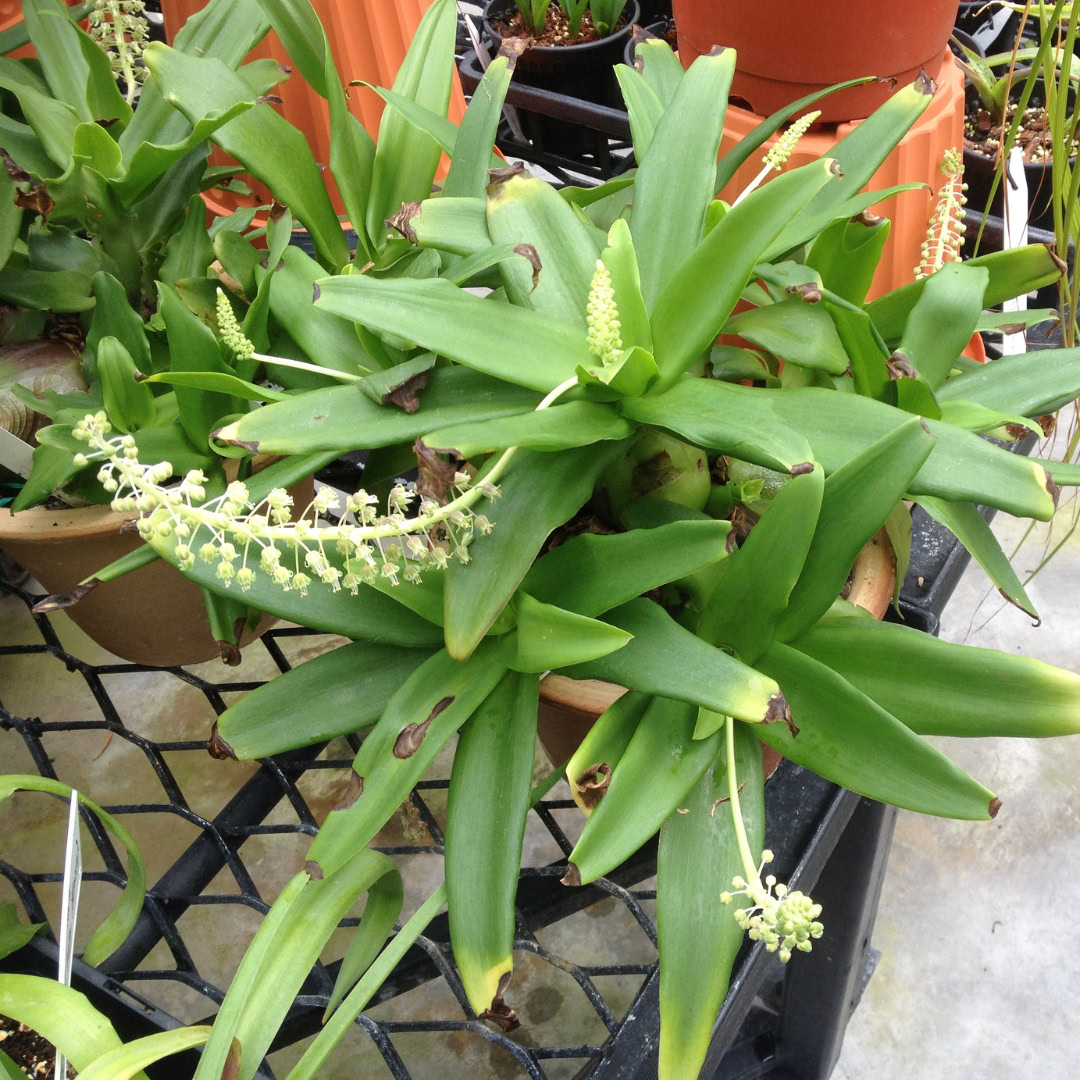
An African bulb, grown for its foliage (in the “concolor” form, a uniform green) and the charm of the half-buried bulb. Like the Albuca and the Rauhia, it makes the list as a succulent-geophyte curiosity, and it’s the less common, plainer-leaved sibling to the widespread silver squill, Ledebouria socialis.
Water in growth, dry rest in dormancy, bright light. It multiplies into clusters of little bulbs.
24. Rauhia peruviana
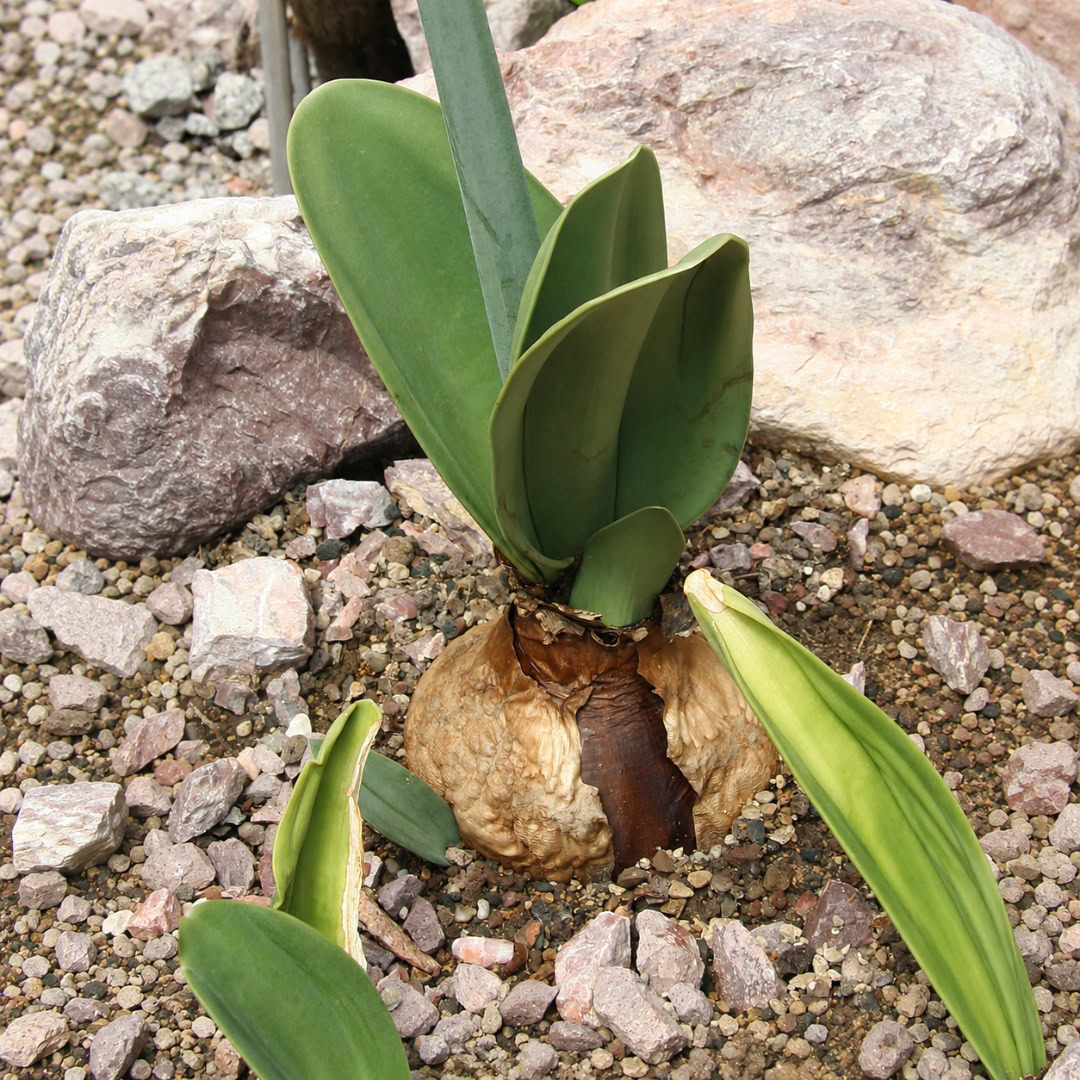
Genuinely rare, it comes from Peru and belongs to the amaryllis family. It has succulent, glaucous, often mottled leaves that emerge from a bulb. It’s one of the hardest pieces to track down anywhere, let alone in the US trade.
Treat it like a dry-climate bulb: water in growth, rest in dormancy, strong light, and total drainage.
25. Madagascar Ocotillo – Alluaudia procera
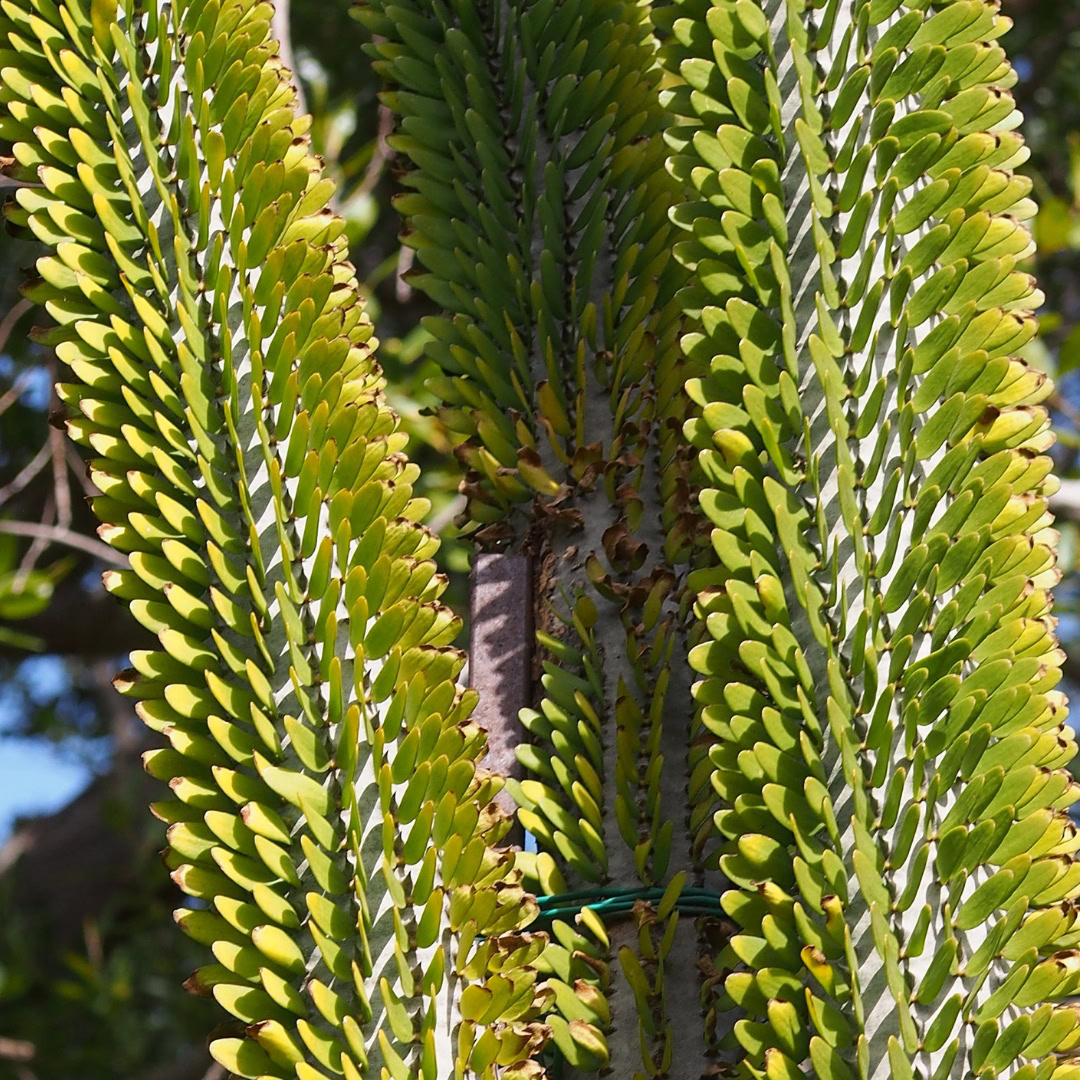
A star of Madagascar’s spiny forest: the “Madagascar ocotillo” grows in tall, silvery columns, studded with spines and small round leaves arranged in rows. An out-of-this-world look, and a plant that rarely leaves the specialist circuit.
It loves heat and full sun, tolerates drought well, but hates cold and excess water. Over time it becomes an imposing specimen, the kind that stops visitors in their tracks.
26. Butterfly Agave – Agave potatorum ‘Cubic’
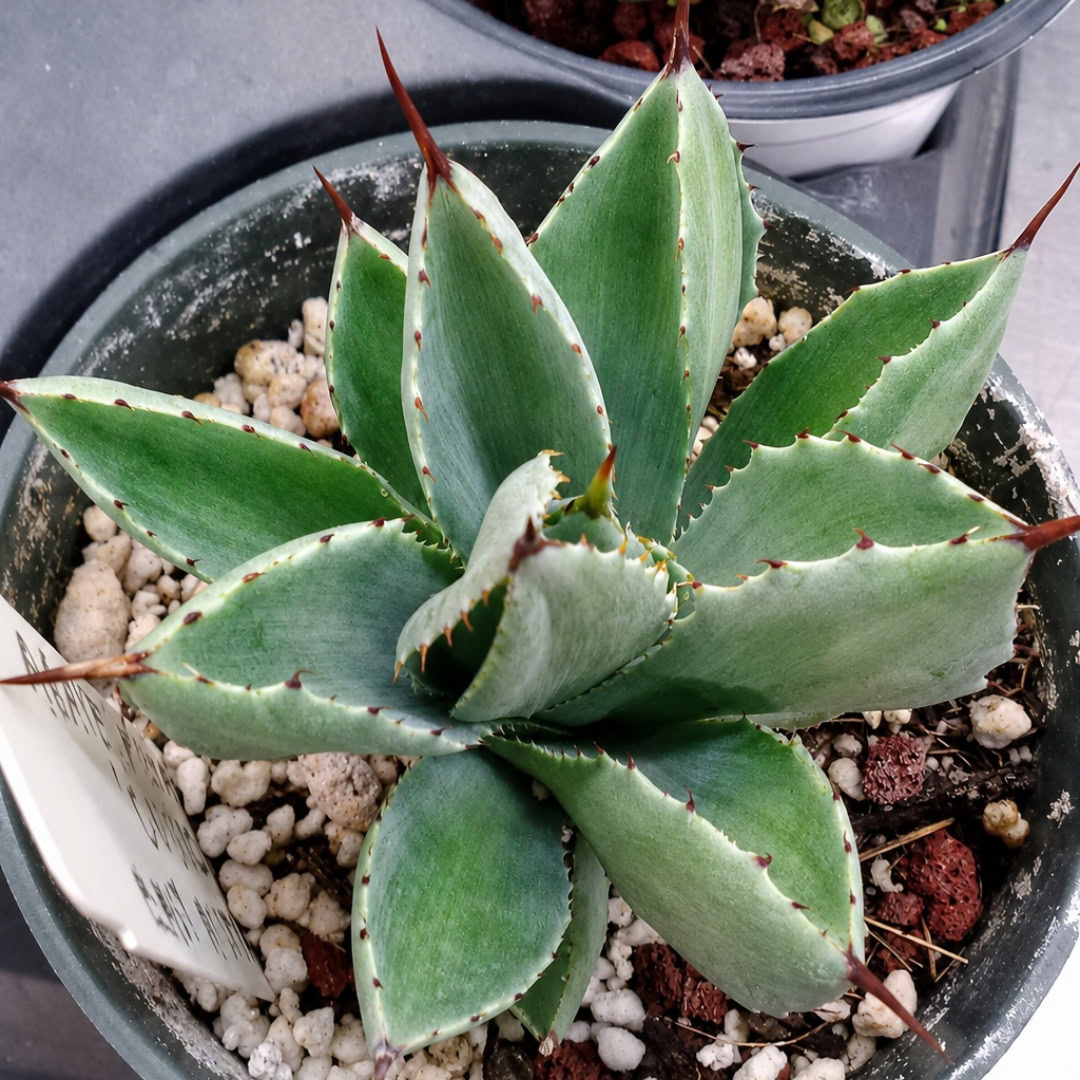
The species comes from Mexico (Oaxaca and Puebla), but the star here is the ‘Cubic’ cultivar, a mutation that stacks the leaves at near-geometric angles, as if it were carved from blocks. Extremely rare and hotly chased. The true ‘Cubic’ tends to move among collectors rather than appearing on retail shelves.
Strong light, well-drained soil, and good drought tolerance. It grows slowly and, like every Agave, flowers just once in its life (and then bows out).
27. Crested Wax Agave – Echeveria agavoides ‘Gilva’ cristata
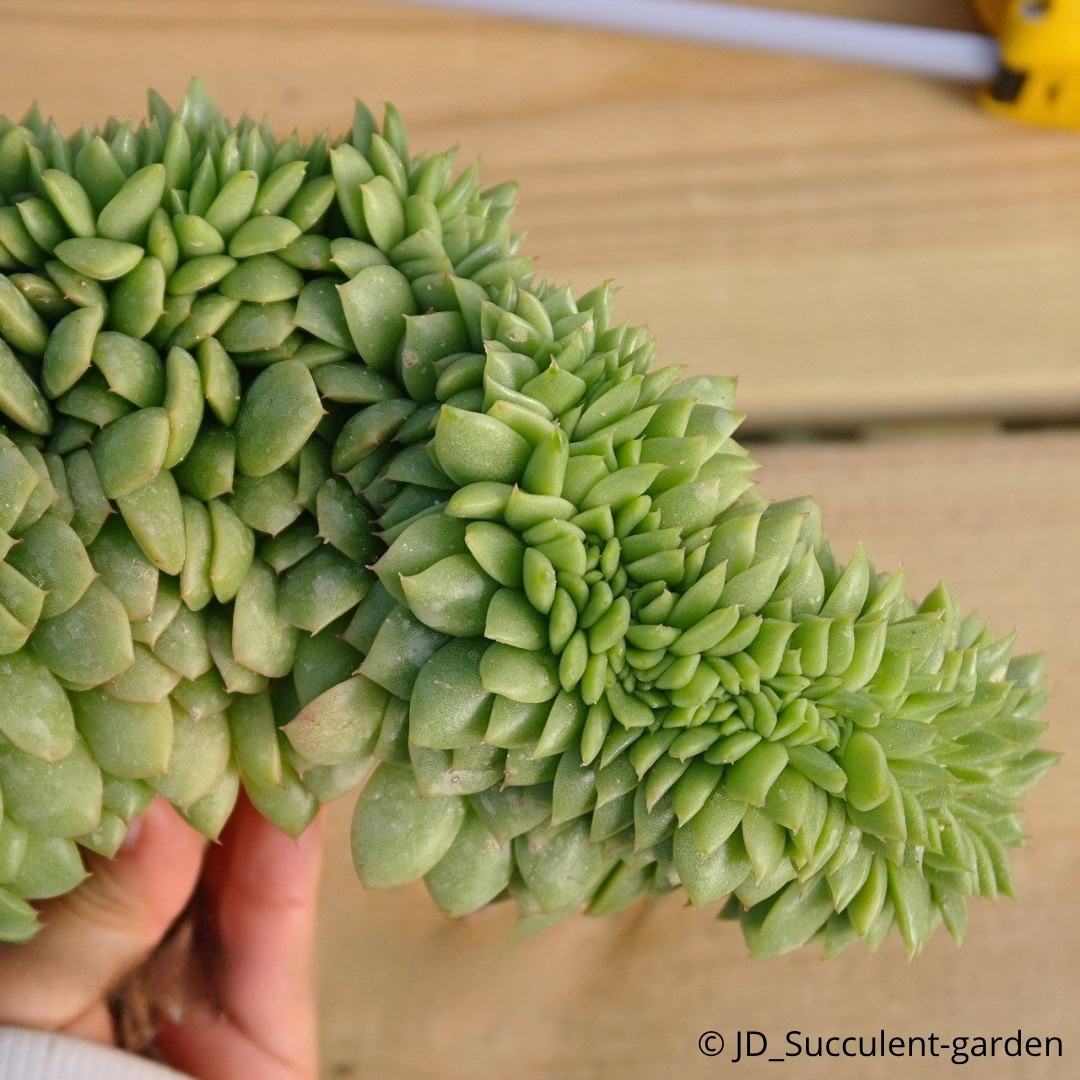
Here the draw isn’t the species (Echeveria agavoides is Mexican and well known), but the crested form: a growth anomaly where the growing point fans out into a “crest,” forming unpredictable undulating ridges. Each plant is a one-of-a-kind sculpture.
Bright light, and water at the edge of the pot, never into the center of the rosette. Crests grow more slowly and demand a watchful eye for any spots of rot.
28. False Stone – Pseudolithos migiurtinus
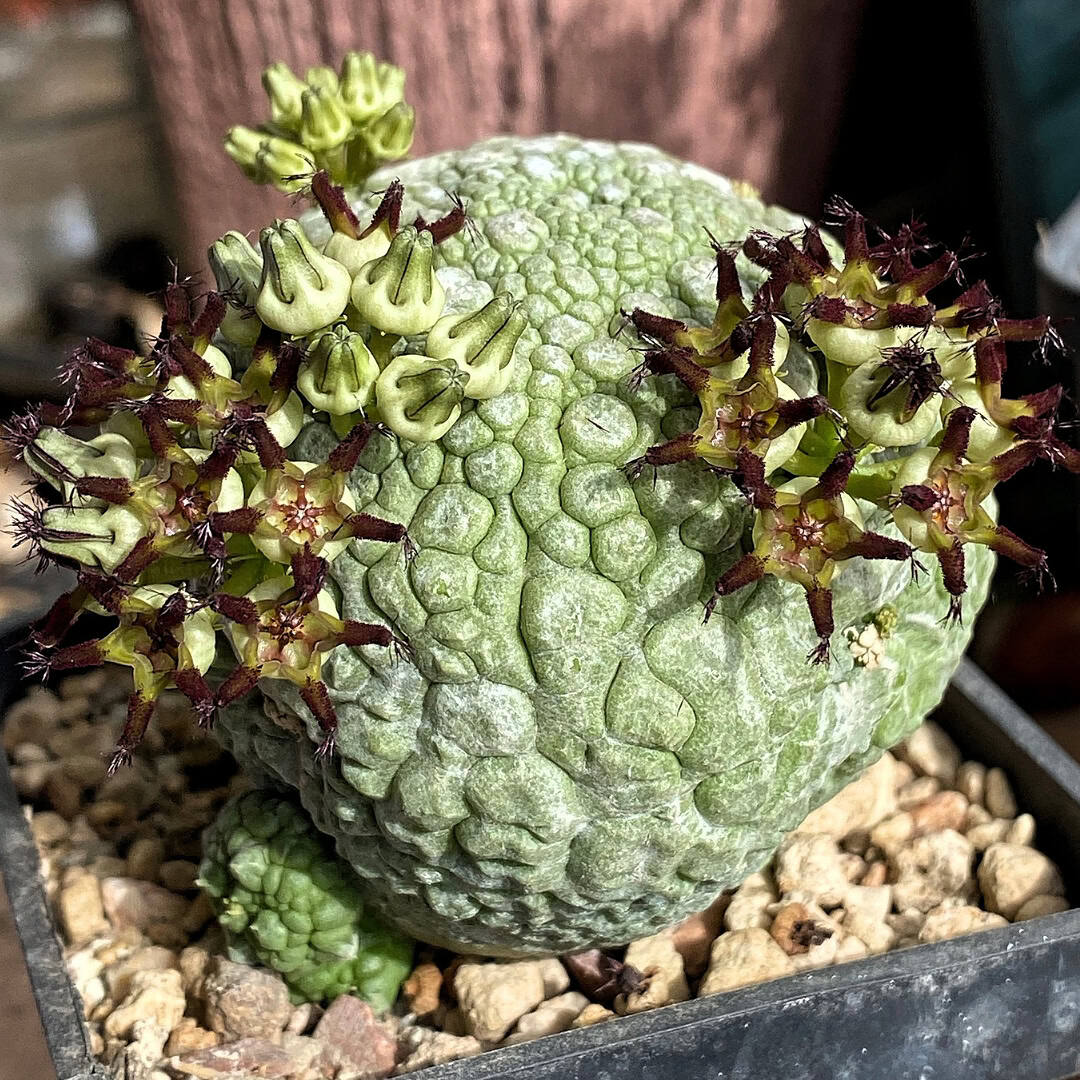
If you want a true grail, here it is. Native to Somalia, Pseudolithos migiurtinus is one of the rarest of the succulent milkweeds (stapeliads), in the same broad family as the Carallumas above. Leafless and knobbly, its tessellated body genuinely looks like a stone, hence the name “false stone.” Its dark-red flowers appear right on the surface and, true to the stapeliad playbook, smell of rotten meat to draw in pollinating flies.
This is a connoisseur’s plant: it wants real warmth (it sulks and rots in the cold), bright light, and careful watering, generous in the heat of summer, sparing the rest of the year. Mostly single-stemmed, so it’s almost always grown from seed rather than cuttings, which is part of why it stays scarce.
29. Dwarf Baobab – Pachypodium brevicaule
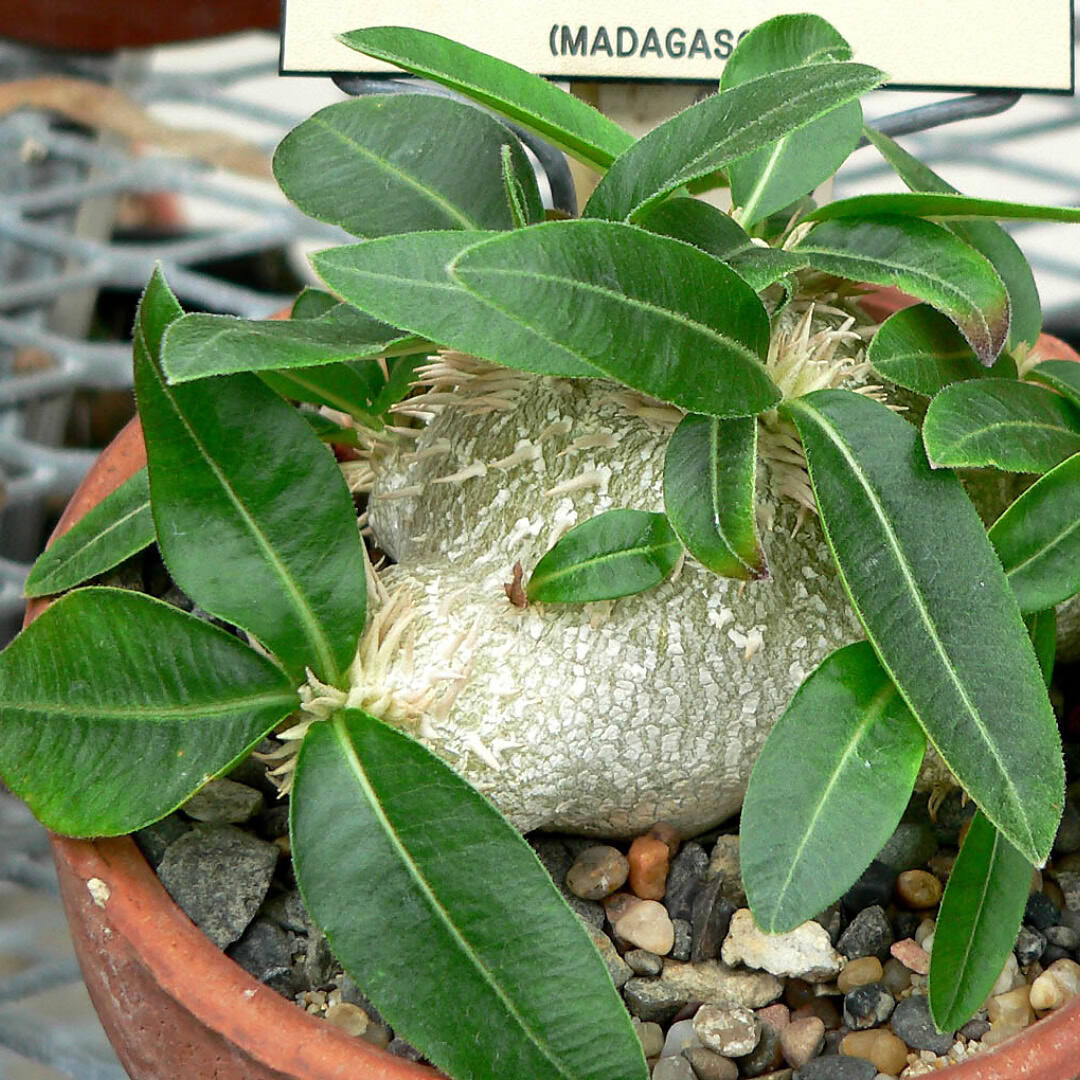
From the highlands of south-central Madagascar comes one of the most coveted caudiciforms on the planet. Pachypodium brevicaule barely has a trunk; instead it forms a flattened, pancake-like, silvery caudex that hugs the ground, studding it with tufts of leaves and bright yellow flowers in season. Collectors call it the “dwarf baobab,” and a well-grown one is a quiet flex.
It’s slow, slow, slow, and demands sharp drainage, full sun, and real warmth, with a dry rest in winter. Like all Pachypodium, it’s listed under CITES (Appendix II) and is assessed as Vulnerable in the wild, so seed-grown, nursery-propagated plants are the only way to go.
30. Blue Elephant’s Foot – Adenia glauca
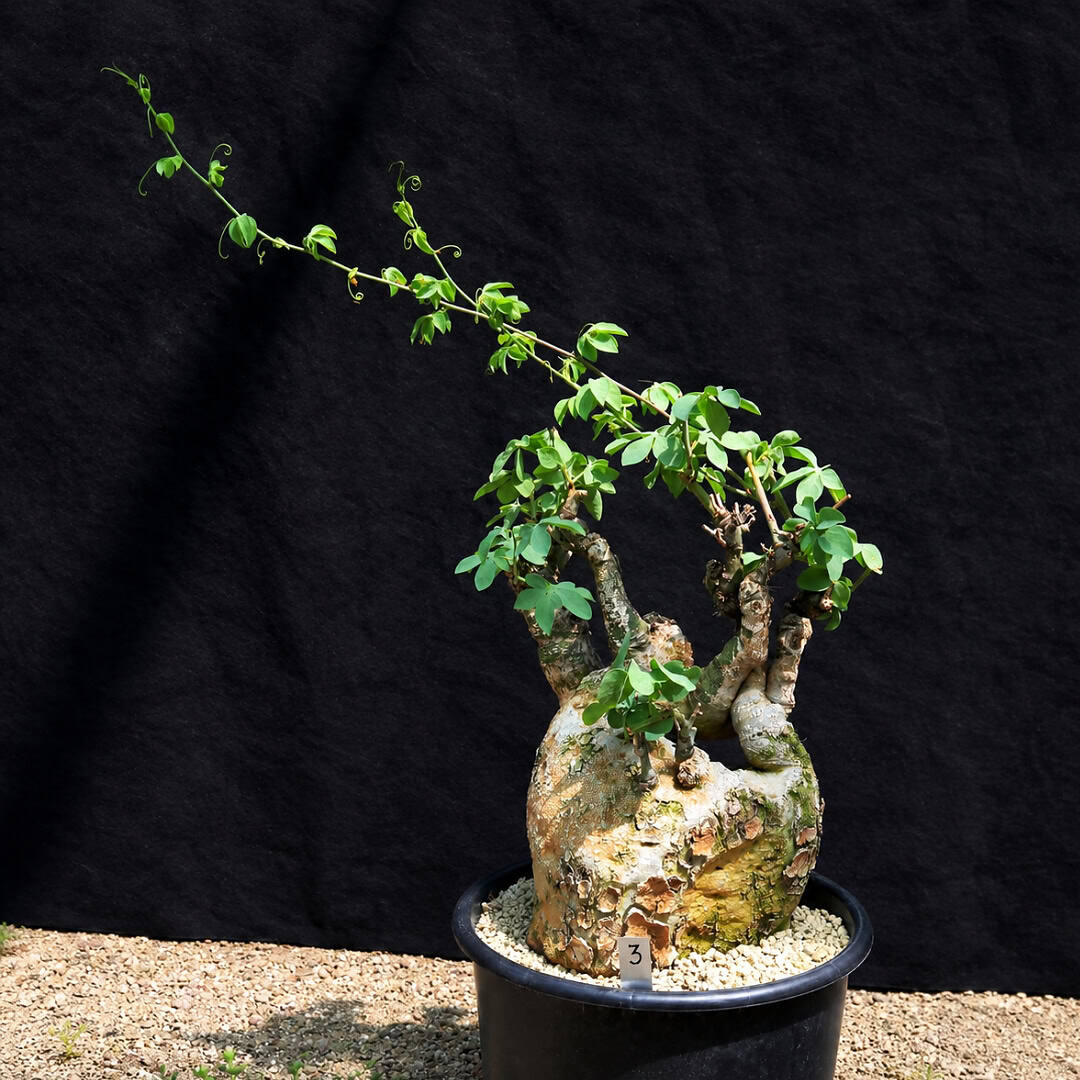
A caudiciform in the passionflower family from southern Africa (northern South Africa into Botswana). It builds a fat, grey-green, bottle-shaped caudex from which thin climbing stems with blue-green leaves emerge, dying back in winter to leave the sculptural base on full display. It’s a favorite among caudex lovers, and still uncommon enough to count as a find.
It’s a summer grower: water and feed lightly while it’s in leaf, then keep it nearly dry and frost-free in winter. A real safety note: the sap is toxic and the leaves are cyanogenic, so wear gloves when pruning and keep this one well away from children and pets.
31. Tylecodon reticulatus
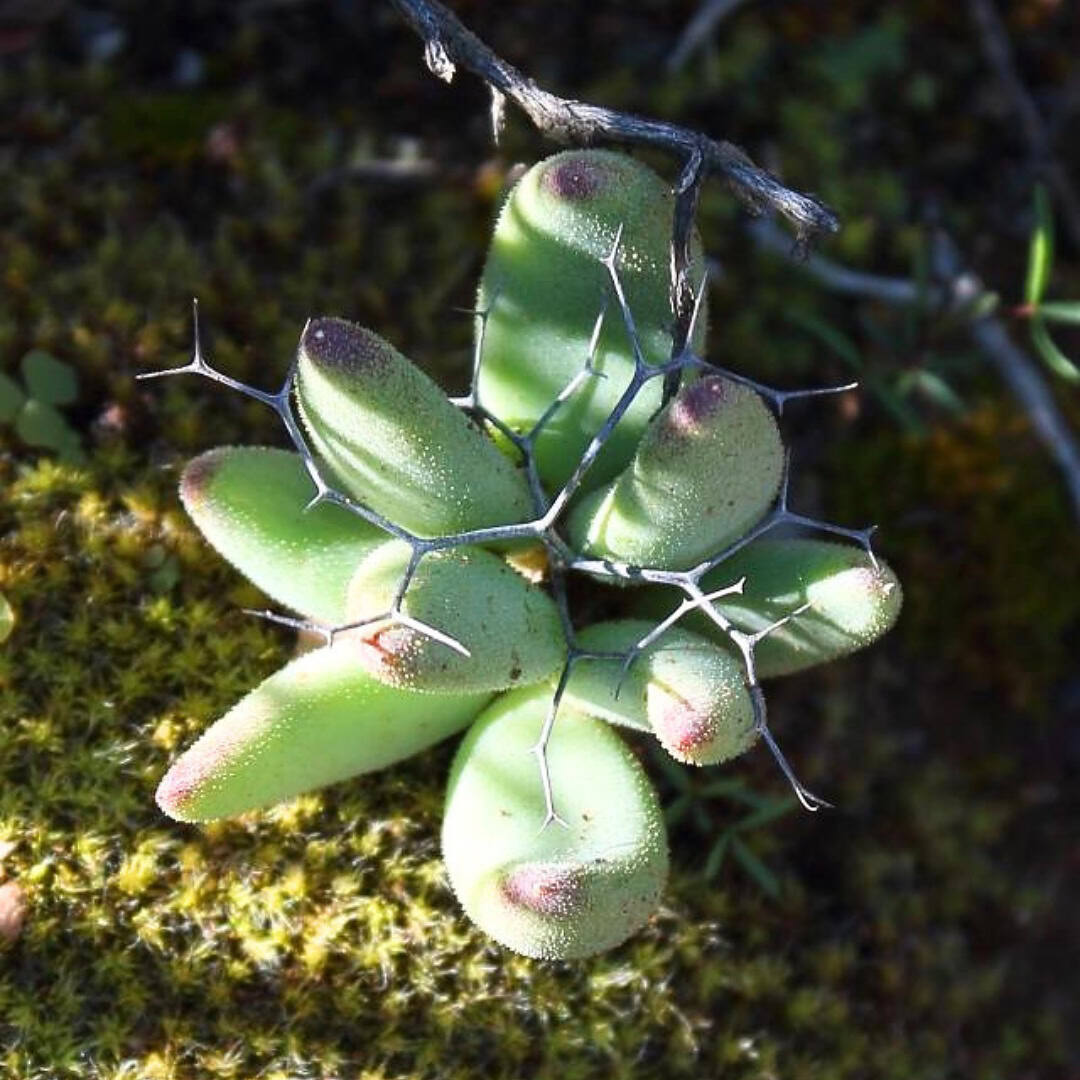
One of the strangest plants you can grow. This South African forms a squat caudex, but its signature is the dense crown of dried, netted flower stalks that persist for years, giving the plant a wild, almost lattice-like halo. Nothing else on a windowsill looks quite like it.
It’s a winter grower (water in the cool months, rest dry in summer heat) with full sun and total drainage. Worth knowing: like other Tylecodon, it contains toxic compounds, so keep it out of reach of curious pets and people.
32. Fish Skin Euphorbia – Euphorbia piscidermis
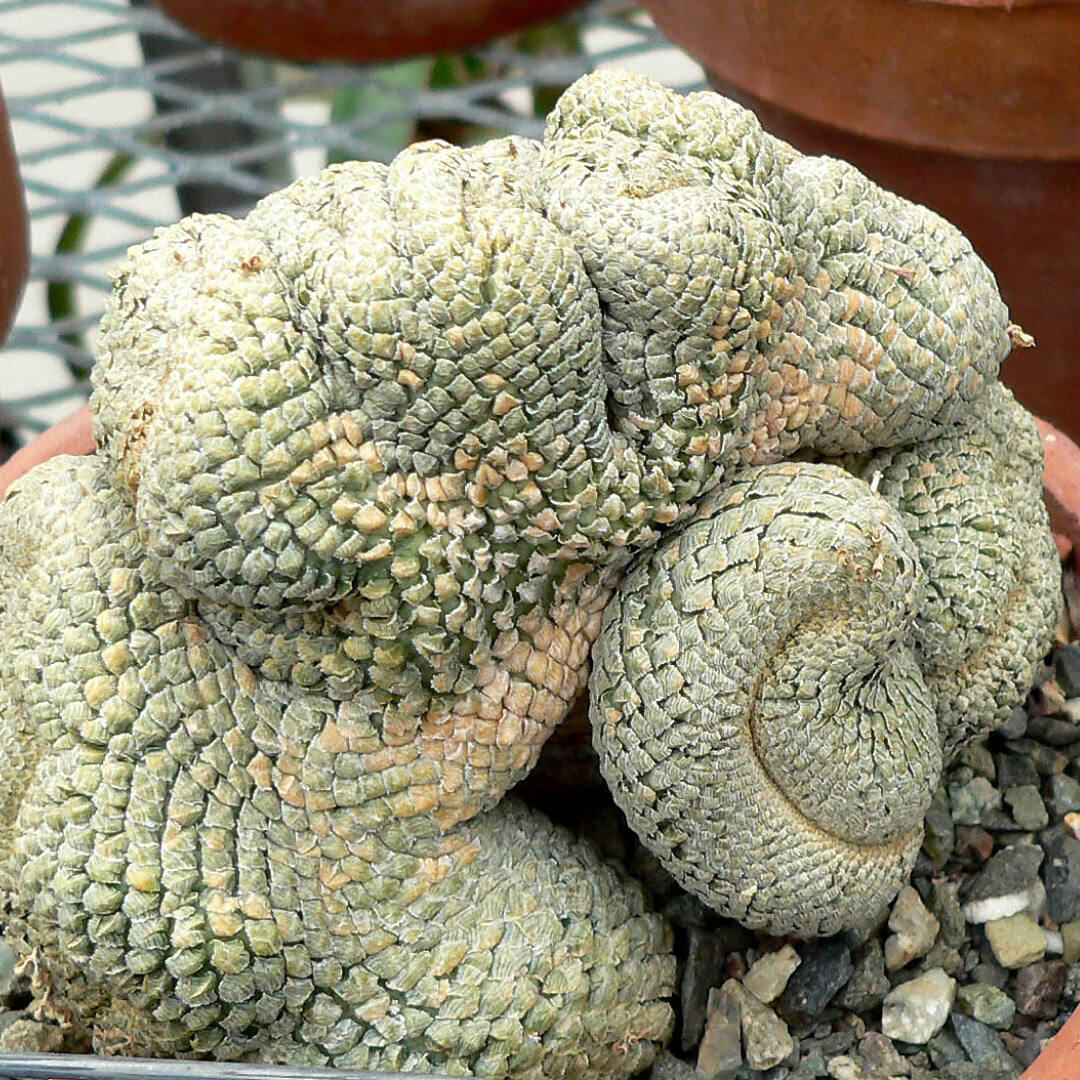
If a succulent could look fossilized, this would be it. Native to Ethiopia, Euphorbia piscidermis is a dwarf collector plant with a rounded body covered in overlapping, pale, fish-scale-like structures. It looks less like a typical houseplant and more like a mineral object someone found in a desert and decided to pot.
It is rare, slow, and often grown grafted because own-root plants can be touchy. Give it warmth, very bright light, a sharply draining mineral mix, and careful watering. Like other Euphorbias, it has irritating milky latex, so handle it with respect. This is not a beginner impulse buy; it is a plant for the collector who wants something genuinely strange.
33. Fairy Elephant’s Feet – Frithia pulchra
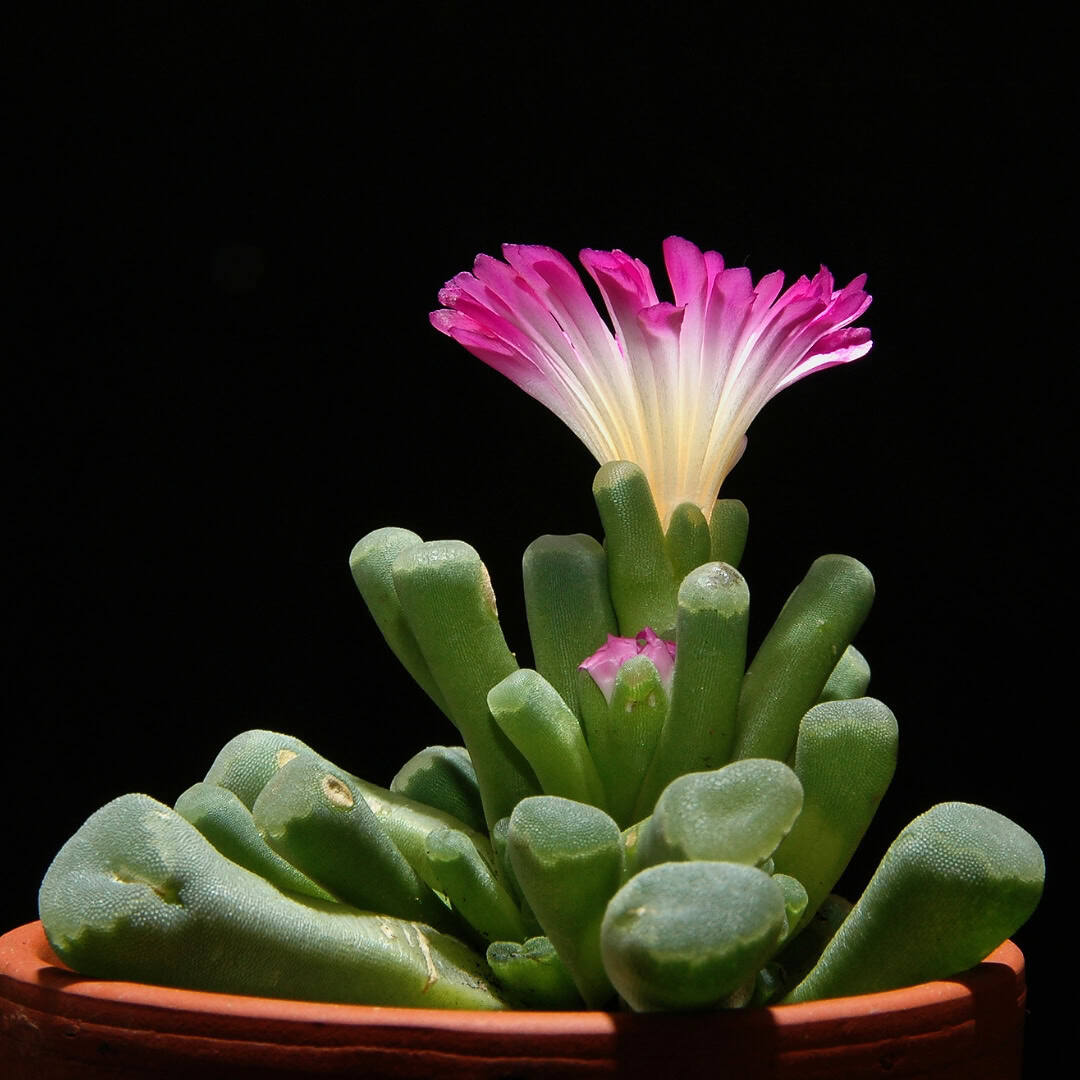
Remember the famous “baby toes” (Fenestraria) you see all over the place? This is its rarer, more coveted look-alike. Frithia pulchra, the “fairy elephant’s feet,” is a window-leaved mesemb from a small area of South Africa, with club-shaped leaves whose flat tops are translucent windows, plus vivid magenta-and-white flowers. It’s the connoisseur’s answer to baby toes.
Like all window plants, it rots easily: a sandy, mineral mix, bright light, and real restraint with water. Grown well, it’s unforgettable.
34. Concrete Leaf – Titanopsis calcarea
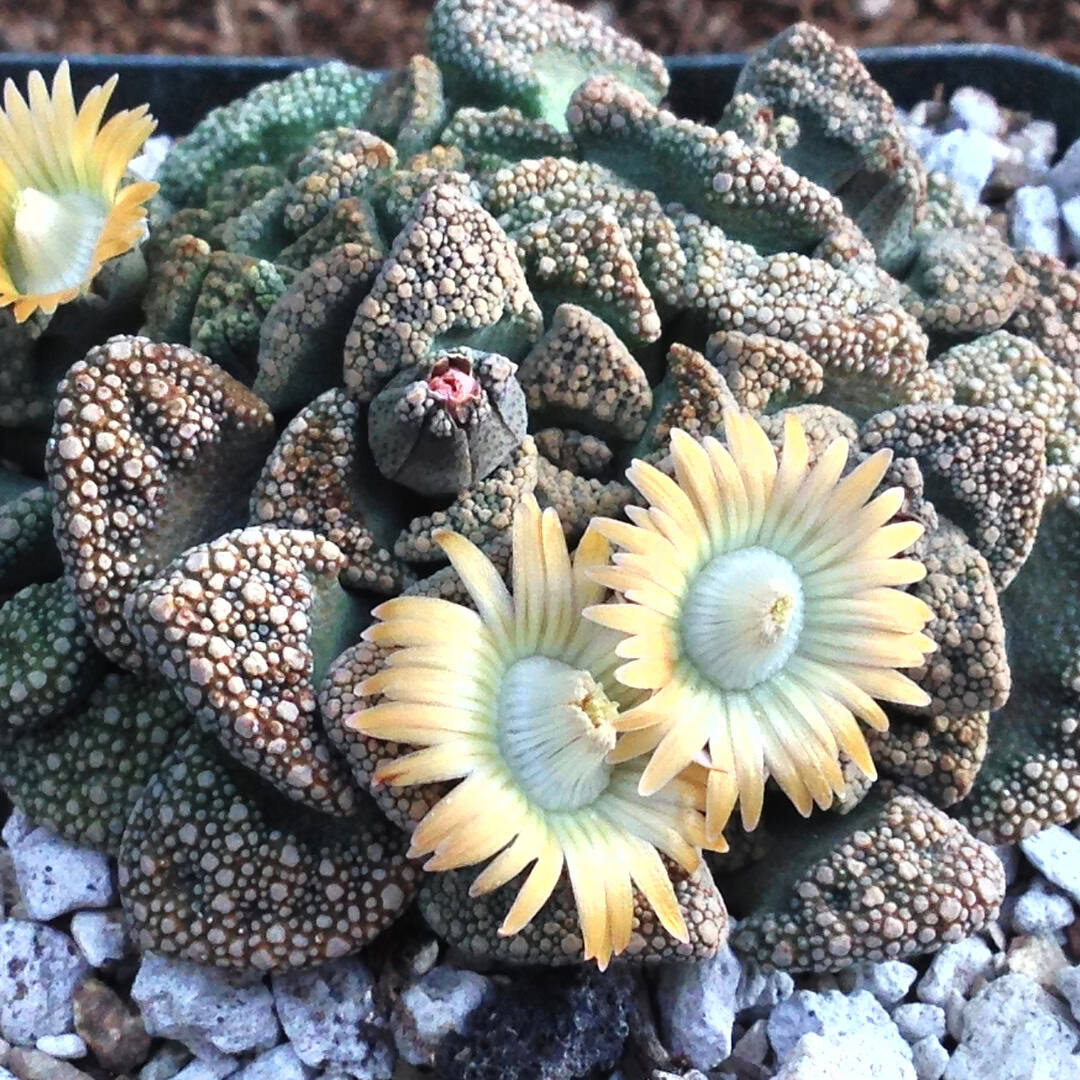
We close with a master of disguise. Titanopsis calcarea, the “concrete leaf,” is a South African mesemb whose leaf tips are crusted with warty, bluish-grey tubercles that mimic the weathered limestone it grows among, near-invisible in habitat until it throws up cheerful yellow daisy-like flowers. A small, fascinating piece for the mineral-loving collector.
It grows in the cooler months, wants full sun and a very gritty, lean mix, and asks for little water. Pure rock-garden charm in a pot.
So, which one’s moving in with you?
Notice something: almost none of these plants is rare because it’s fragile or impossible. They’re rare because they grow slowly, come from forgotten corners of the world, or take shapes that nature only sketches once in a while. Collecting rare succulents is, at heart, collecting patience, and few things feel as good as watching a specimen you’ve grown for years finally bloom.
My advice as a grower: start with one or two of the more forgiving ones (a Crassula hemisphaerica, a Sinocrassula) before reaching for the demanding jewels like Pseudolithos or Pachypodium brevicaule. And whenever you can, choose nursery-propagated plants. Many of these species suffer from predatory wild collection, and you can read more about how that trade is regulated at CITES or look up any species’ native range and status on Kew’s Plants of the World Online.
Remember I said cacti deserved a chapter of their own? They do, and that’s a story for another day, full of the slowest giants and “spiny stones” that look like they fell off Mars.
Which of these rare succulents won you over? Tell me in the comments, I’d love to know which one you’re hunting for.