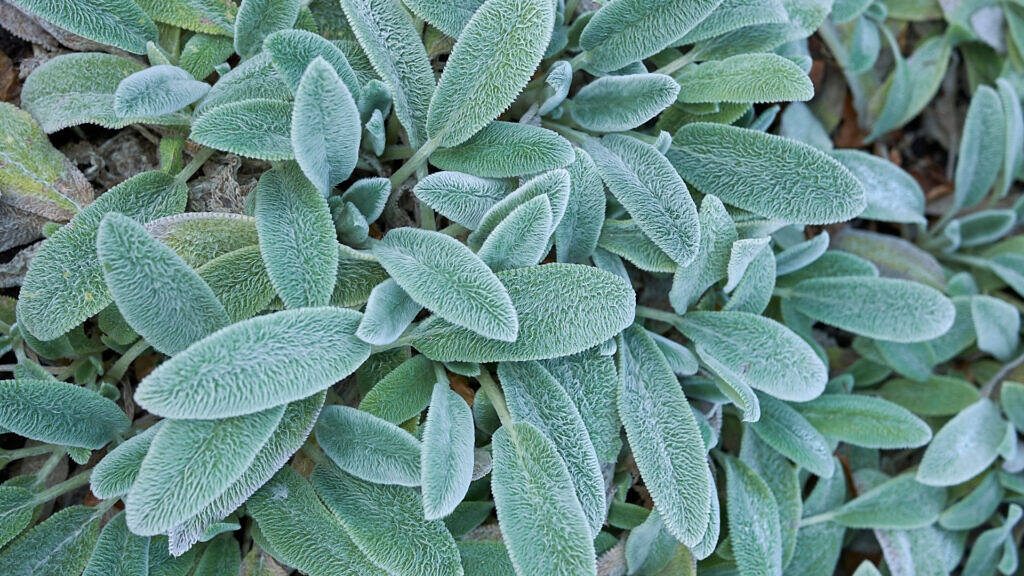
Lamb’s Ear (Stachys byzantina) is a herbaceous perennial in the Lamiaceae family, grown both as a ground cover in the garden and as an unconventional edible plant (PANC). Covered by a dense layer of trichomes (hairs), its leaves have a silvery gray color and a curious velvety, woolly texture that has given the plant popular names such as hare’s ear and lamb’s ear. In addition, when breaded and fried, these leaves develop a flavor reminiscent of fried fish. In the garden, it stands out as a ground cover with unique texture and unusual color, forming dense silver mats that look as if they were coated with a thin layer of frost.
Beyond its ornamental appeal, the species is very hardy and low-maintenance, making it an interesting choice for anyone looking for a refined ground cover instead of a monotonous lawn. The dense, silky coating that covers its leaves is not just a whim of nature that makes us want to touch it; it is an evolutionary adaptation for survival in harsh environments, protecting the plant against excessive water loss and intense solar radiation. Having Lamb’s Ear in the garden means enjoying a constant sensory experience and keeping an always-available, surprising green on hand for the kitchen.
Origin, Habitat and Etymology
Stachys byzantina is native to a region with a demanding climate, spanning parts of Turkey, Armenia, and Iran in the Middle East. In its natural habitat, it is often found colonizing rocky slopes, scrub clearings, and vast steppe areas. These regions are characterized by stony, fast-draining soils and seasonal dry periods, which explains the plant’s drought tolerance and its intolerance of heavy or overly wet ground, where its roots and foliage can suffer from rot.
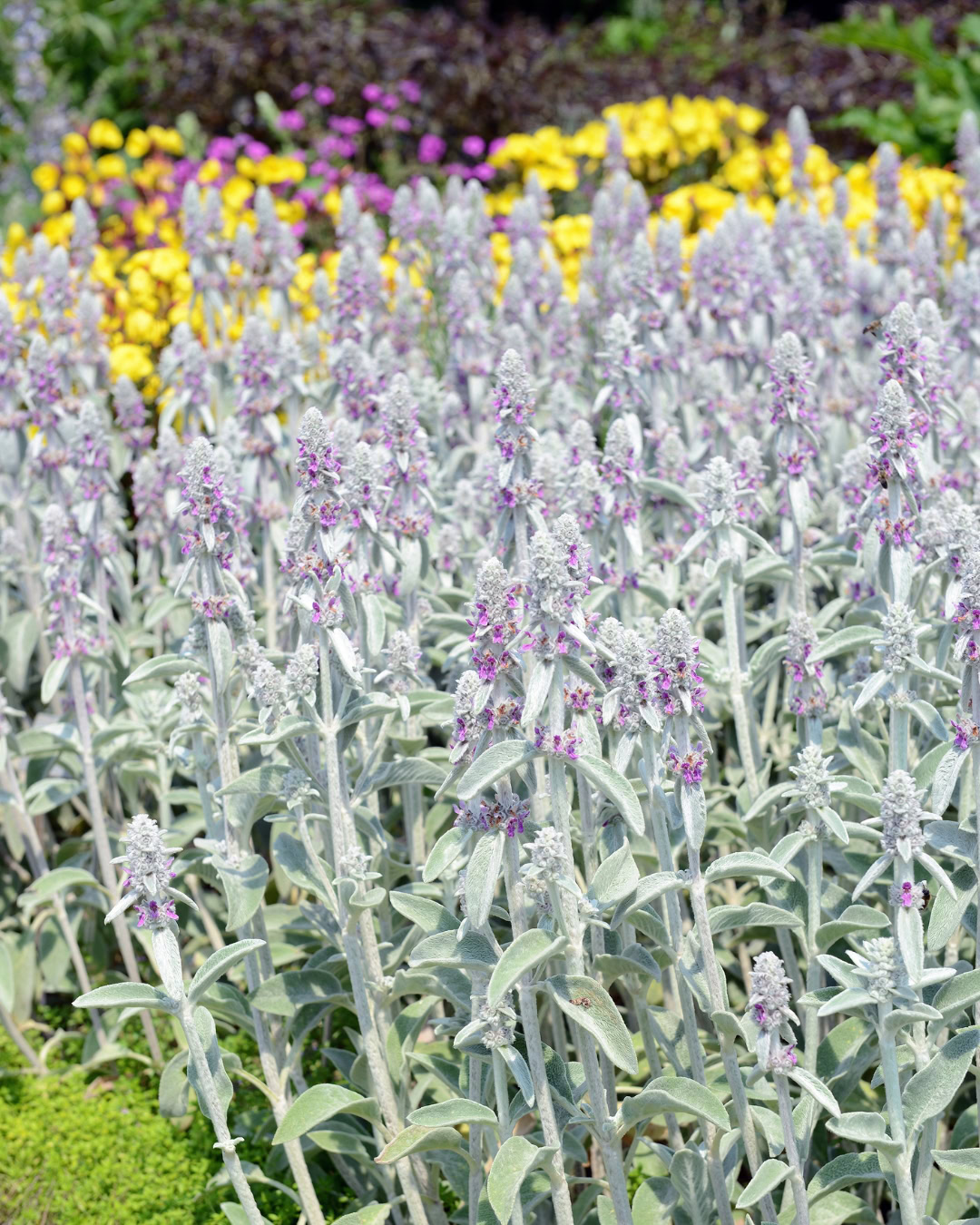
The genus name Stachys comes from Ancient Greek and means “spike” or “wheat ear,” a direct reference to the shape of its inflorescences, which rise above the foliage on upright, spike-like stems. The specific epithet byzantina honors its geographic origin in the region of Byzantium, the former name of the city of Istanbul, Turkey. In older botanical literature, it is often found under the synonyms Stachys lanata (referring to its woolly appearance) or Stachys olympica.
Landscape Use of Lamb’s Ear
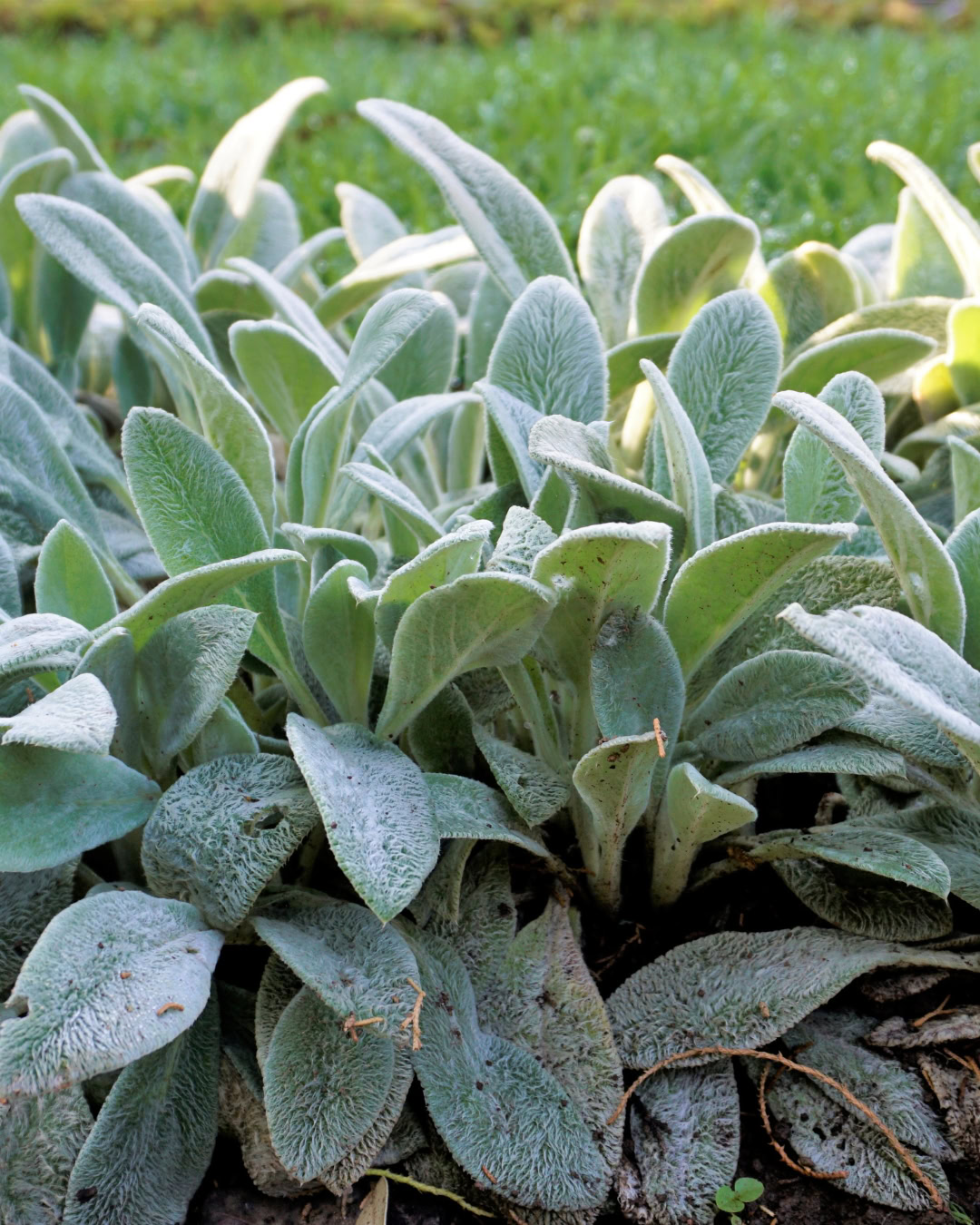
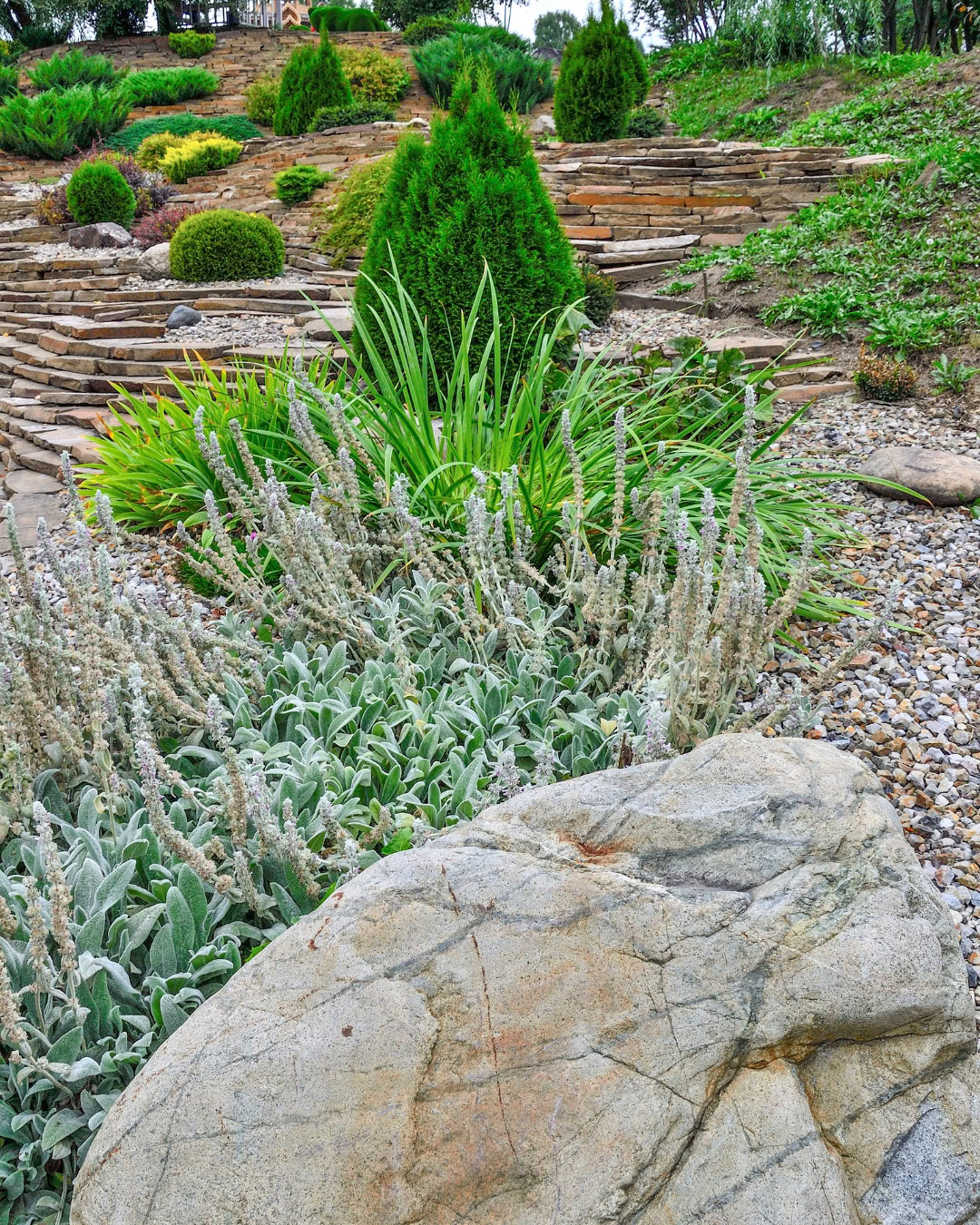
In landscaping, Lamb’s Ear is a powerful ground cover for creating contrast. Its silvery-gray foliage acts as a natural “highlighter,” creating contrast when planted near species with green foliage or purple, blue, or red flowers. It is an interesting plant for mass plantings and borders along pathways, where its stoloniferous growth (stems that grow along the ground and root easily) creates a gentle transition between circulation areas and other beds.
To achieve rapid soil coverage, a spacing of 12 to 18 inches (30 to 45 centimeters) between plants is recommended. Under ideal light conditions, the plant grows at a moderate to fast pace and can completely cover the ground in a single growing season, forming a dense carpet that helps suppress weeds.
It is a classic choice for rock gardens, edible gardens, contemporary gardens, cottage-style gardens, and especially sensory gardens, where children and adults are encouraged to touch its velvety surface. We should not forget that Lamb’s Ear is a valuable addition to the home vegetable garden, where it proves to be an evergreen option capable of providing leaves year-round for the kitchen with minimal maintenance.
In addition to its use in the garden, Stachys byzantina adapts perfectly to growing in pots and planters, provided the container offers excellent drainage. In mixed plantings, it can be combined with Mediterranean herbs and plants that share the same cultural requirements, such as lavender (Lavandula angustifolia), scarlet sage (Salvia splendens), rosemary (Rosmarinus officinalis), parrot’s beak (Lotus berthelotii) or Mexican bush sage (Salvia leucantha). It can also be grown in pots and window boxes, enhancing compositions with other species of different textures and colors.
Its flower spikes are a matter of debate, considered ornamental by some and unattractive by others. Some gardeners appreciate the tall spikes with small purple flowers above the foliage and keep them in the bed, while others prefer to remove them for a more uniform look.
How to Care for Lamb’s Ear: Growing Guide
- Light: Requires full sun to maintain foliage density and the intensity of its silvery color. In tropical and equatorial regions with extreme heat, it may benefit from partial shade during the hottest hours of the afternoon (between 1:00 p.m. and 4:00 p.m.) to prevent leaf scorch.
- Soil: The key to success lies in drainage. It prefers moderately fertile to poor soils. Avoid heavy clay soils; if that is the case, incorporate coarse sand and organic matter to improve porosity. Build mounds or raised beds to promote drainage. The ideal pH is between 6.0 and 7.0 (slightly acidic to neutral).
- Watering: It has a low need for frequent watering. Irrigate during the first few weeks after planting. Once well established, it tolerates short periods of drought. The most common mistake is watering the foliage from above; the fuzzy leaves retain water, encouraging fungal problems. Always water directly at the base of the plant, only when the soil feels dry to the touch.
- Fertilization: It does not require heavy feeding. An annual application of compost, bokashi, rock dust, or worm castings in spring is sufficient. If you choose mineral fertilizers, use formulas with lower nitrogen content, such as NPK 04-14-08, because excess nitrogen makes the plant too green and less resilient.
- Pruning: Remove the flower stalks as soon as they begin to dry out to keep the plant’s energy focused on leaf production and on filling in the beds. At the end of winter, clean up by removing old leaves, those damaged by cold, or those in direct contact with excess soil moisture.
- Air Humidity: Lamb’s Ear is sensitive to high air humidity combined with heat. In very humid or stuffy regions, spacing should be wider to ensure air circulation between plants.
- Harvest: Harvest by removing the youngest, whole, healthy leaves, preferably in the morning, when they are turgid and have the best texture for culinary use. Cut the leaves with clean scissors, without pulling the plant up from the base, and avoid removing more than one-third of the clump at a time, allowing for good regrowth and longer productivity. After harvest, the leaves should be washed, sanitized, and thoroughly dried before storage, as the velvety texture retains moisture and impurities. Store in plastic packaging under refrigeration for up to 8 days, although it is best consumed within the first few days for better flavor.
How to Propagate Lamb’s Ear
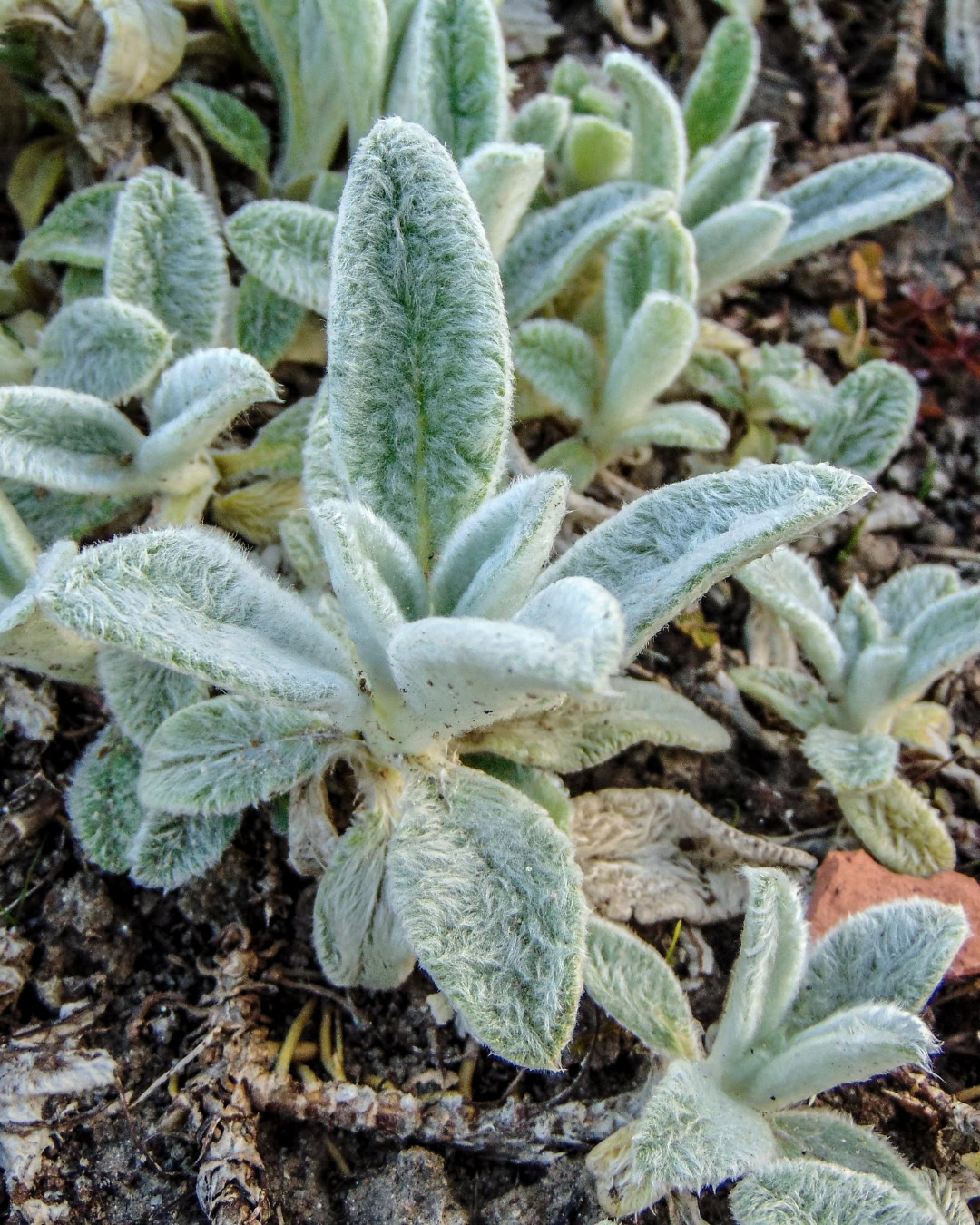
Propagation of Lamb’s Ear is simple, and clump division is the most common and effective method. Since the plant spreads laterally through rhizomes and creeping stems, simply use a sharp spade to separate portions of the plant that already have their own roots. This should preferably be done during transitional seasons, such as spring or autumn, avoiding temperature extremes. After division, the new plants should be planted immediately and kept slightly moist until fully established.
Another viable technique is stem cuttings. Healthy lateral stems can be removed and placed to root in a light potting mix made from a blend of sand and peat. Propagation by seeds is also possible for the species and should be done on the soil surface, since the seeds need light to germinate. The ideal germination temperature is around 68°F (20°C), with sprouting occurring in 15 to 30 days. It is important to note that sterile cultivars, such as ‘Silver Carpet’, can only be propagated by vegetative methods (clump division or cuttings).
Botanical Description of Stachys byzantina
Stachys byzantina is a perennial herb with a rhizomatous and stoloniferous growth habit, reaching 6 to 8 inches (15 to 20 cm) in foliage height, but it can reach 24 inches (60 cm) if the height of the flower spikes is included. Its leaves are opposite and simple, with a shape ranging from elliptic-lanceolate to oblong-ovate, measuring 2 to 5 inches (5 to 12 cm) in length.
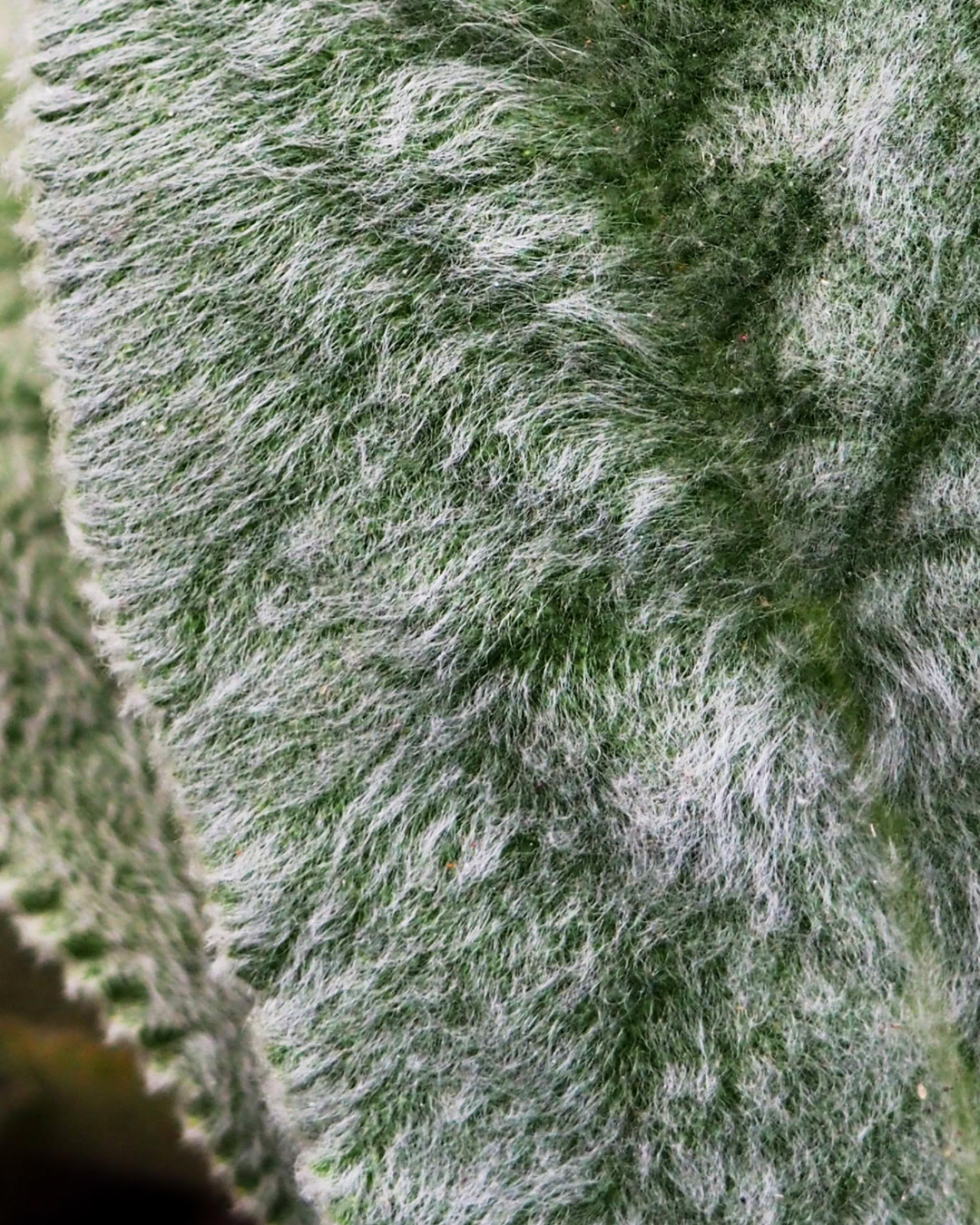
The most distinctive feature is the woolly, silky covering, made up of a dense network of white to silvery trichomes that cover the leaf blade on both sides, giving it a velvety texture and a unique color.
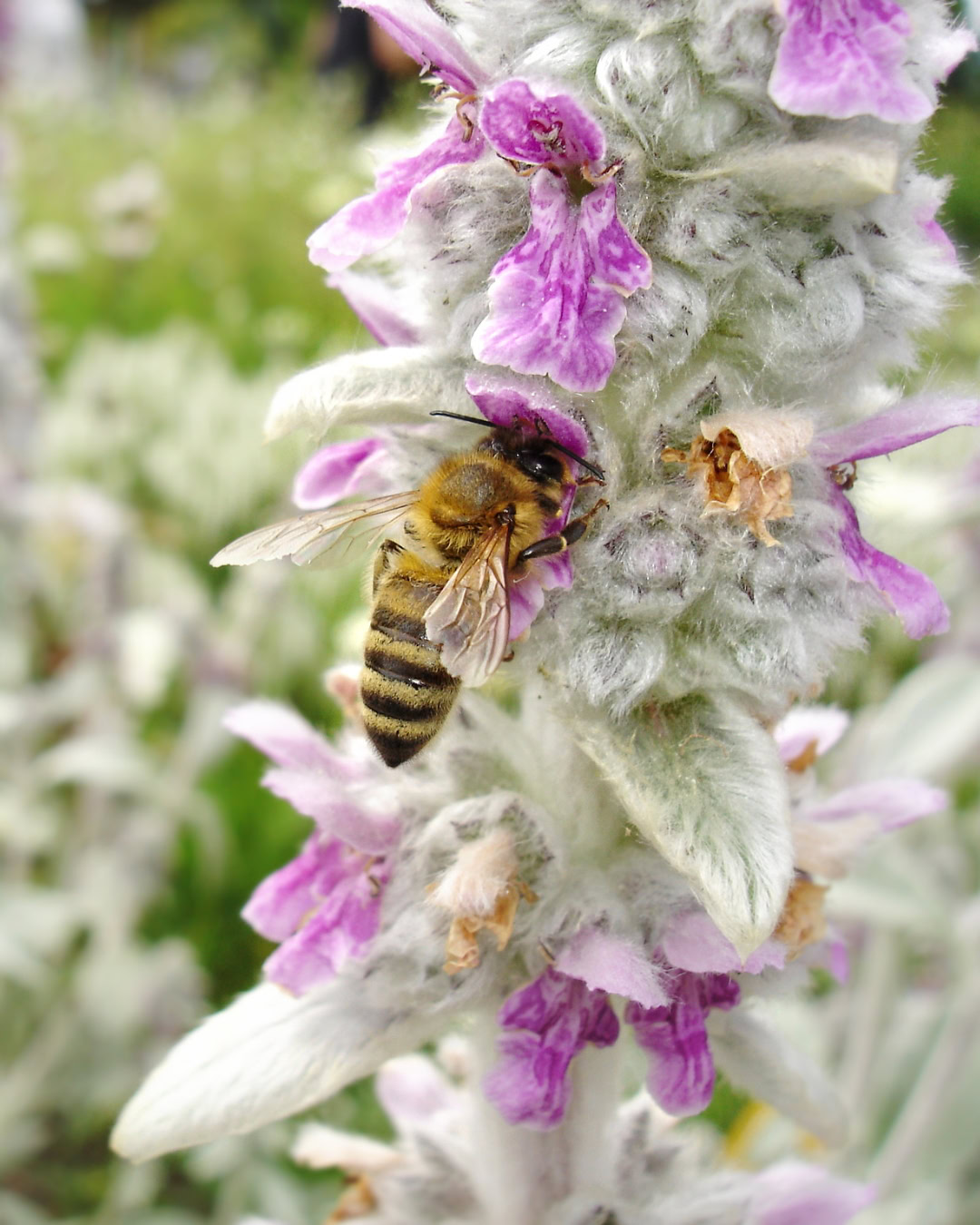
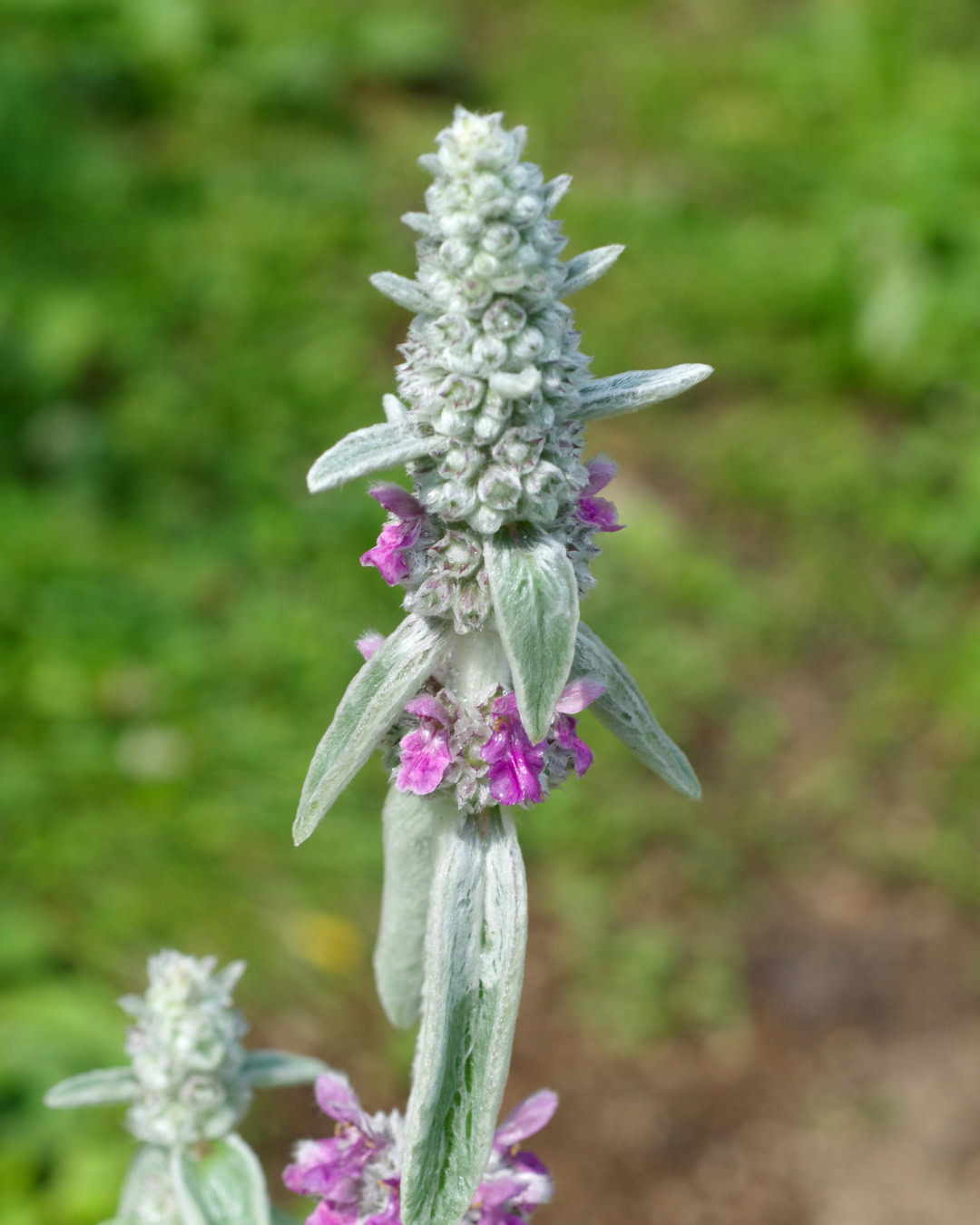
The inflorescence is made up of verticillasters arranged in dense, upright terminal spikes. The flowers are small and bilabiate, a characteristic of the Lamiaceae family, with corollas in shades of purple, lilac, or pink, often partially hidden by the densely hairy bracts. Pollination is entomophilous, attracting bees in particular, although many gardeners prefer the non-flowering varieties to emphasize the plant’s ground-covering habit.
Main Varieties and Cultivars
- ‘Silver Carpet’: The most popular cultivar for ground cover. Because it is sterile, it rarely produces flowers, which keeps the carpet of leaves low, uniform, and looking consistently neat, without the need to remove dried flower stalks.
- ‘Big Ears’ (syn. ‘Helene von Stein’): Stands out for its large leaves, which can reach up to 8 in (20 cm) long. It is more vigorous and shows slightly better resistance to moisture and leaf rot compared with the species type.
- ‘Cotton Boll’ (syn. ‘Sheila Macqueen’): A curious variety in which the flowers are replaced by globular masses of white hairs that resemble cotton bolls, creating an even more playful and distinctive visual effect.
- ‘Primrose Heron’: Offers an interesting color variation, with leaves that emerge yellowish or golden in spring, shifting to the classic gray-green as summer progresses.
Pests, Diseases, and Solutions
The biggest challenge in growing Lamb’s Ear is not pests, but diseases associated with excess moisture. Root and crown rot, caused by fungi and bacteria, is common in poorly drained soils or during excessively rainy summers, appearing as the plant “melting” from the center of the clump. The preventive solution is to ensure a porous soil, never overwater, and avoid excessive mulch and dead leaves.
Powdery mildew can appear as a fine white dust on the plant’s hairs, usually when air circulation is poor. To control it, improve spacing between plants and remove affected parts. In sandy, depleted soils, the species may be susceptible to root-knot nematodes that attack the roots and hinder development; in these cases, crop rotation and the addition of high-quality organic matter help control the population of these soil pests.
Fun Facts
In cooking, Lamb’s Ear is mainly eaten for its young leaves. The most traditional preparation is battered and fried, when its velvety texture creates a crispy crust and resembles the shape of small fish fillets, which is the origin of its common name. It can also be made into tempura, baked, quickly sautéed, or used as a side dish, but it generally works best in hot preparations, as cooking softens the leaf hairs and enhances its fleshy texture.
Historically, its soft, absorbent leaves were used as “natural bandages” in battlefields and rural areas, serving as compresses to stop minor bleeding and protect wounds, thanks to their mild antibacterial properties. It is also worth noting that Lamb’s Ear is considered safe for homes with pets, being classified as non-toxic to dogs and cats.