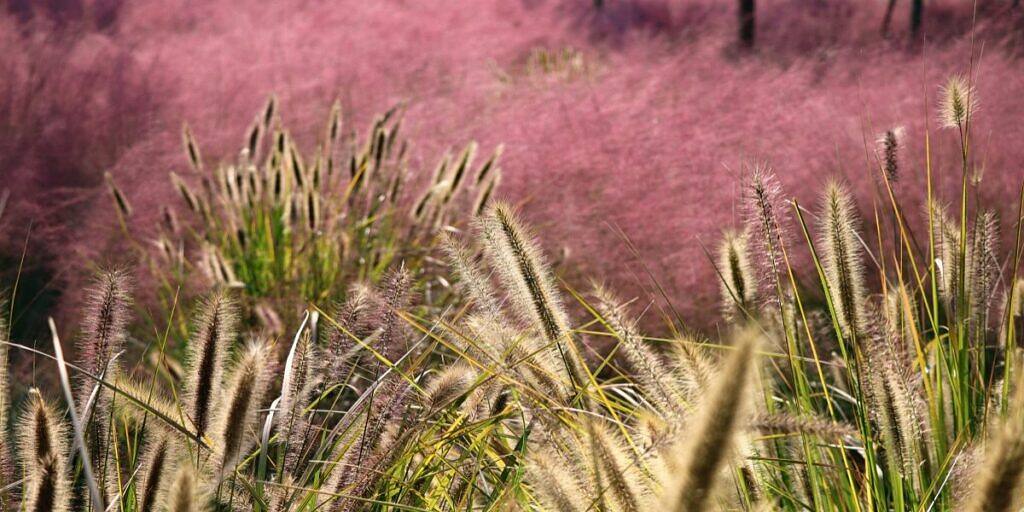
You know that soft breeze that makes the garden sway, as if it were a green wave whispering secrets? That hypnotic movement is the superpower of ornamental grasses — and for years, I completely ignored them, assuming they were “just fancy weeds.” That changed the day I discovered the work of landscape designer Piet Oudolf and realized: grasses are not background extras, they are leading actors in a living performance that changes with the seasons, the wind, and even the late-afternoon light.
If you’re tired of a static garden that looks like a lifeless showroom, or you want plants that require little maintenance but deliver major visual impact, you need to get to know ornamental grasses. They are the backbone of modern naturalistic landscaping, bringing texture, movement, sound and — believe it or not — even winter interest, when almost everything else is dormant.
Why choose ornamental grasses for your garden
Ornamental grasses represent a true revolution in contemporary landscape design. While traditional flowering plants demand constant pruning, frequent fertilizing and lots of water, grasses are absolute champions of resilience. I have clumps of fountain grass that survive weeks without watering in summer — something no hydrangea would ever tolerate.
But what makes these plants so special goes far beyond low maintenance:
- Movement and sound: The rustling of the foliage in the wind creates a unique, almost meditative sensory experience.
- Winter structure: Unlike many perennials that “disappear,” lots of ornamental grasses keep their dry, golden seed heads through the cold months, looking like living sculptures dusted with frost.
- Sustainability: They are pillars of xeric gardens (low-water landscapes) and rain gardens, ideal for regions that face recurring droughts and water restrictions.
- Versatility: Depending on the species, they work beautifully as borders, focal points, privacy screens, or groundcovers.
In nurseries and garden centers, these ornamental grasses are usually sold as clumps or divisions. When it’s time to plant them out, the key is not a special potting mix — it’s well-drained soil. In landscape design, that starts with proper bed preparation: loose soil, no compaction, and a structure that lets water drain quickly.
The naturalistic landscaping movement and the beauty of grasses
The Dutch designer Piet Oudolf is the name behind this shift in perspective. He was the one who showed the world that gardens don’t need to be in constant bloom to be beautiful.
The concept of the “New Perennial Movement” values plants that age with dignity, and ornamental grasses are absolute stars within this design philosophy.
In many gardens, we are gradually moving away from “static” landscapes — those with tightly clipped ball-shaped topiaries and beds that must be in constant bloom — toward the idea of a “dynamic garden” that changes, ages, and adapts over time. It took me a while to accept that leaving the dry inflorescences in place over winter was not neglect, but intentional design. The first time I let my Miscanthus stand uncut until spring, I was amazed by the structure they created.
Ornamental grasses are widely considered “very low-maintenance” plants, ideal for corporate projects and public spaces precisely because they thrive with minimal human intervention. The care we must take in curating species is to choose ornamental grasses that will not become invasive or problematic in the future. Study each option carefully and be very selective in your choices.
The 20 best ornamental grasses to transform your outdoor space
Now to the key question: which species should you choose? This list comes from years of testing plants in real projects, talking with landscape designers, and closely observing what truly performs well in a range of climates. Each ornamental grass has its own unique personality.
1. Fountain grass / purple fountain grass (Cenchrus setaceus (syn.: Pennisetum setaceum))

This was my first love among ornamental grasses. Beyond the typical green form, fountain grass really became popular through the cultivar ‘Rubrum’, with its reddish‑purple foliage and soft, fox‑tail‑like flower spikes that are breathtaking in the late‑afternoon light. But attention: it needs full sun — and by full sun, that means truly intense, direct sunlight. Many beginners plant it in partial shade, and the ornamental grass loses its purple color, turning green and weak.
Key cultivars (common in landscaping): ‘Rubrum’ (the richly colored purple form), and in some markets you may also find ‘Fireworks’ and ‘Cherry Sparkler’ (not always easy to source).
Pro tip: This ornamental grass does not tolerate hard freezes. In colder regions (USDA zones where winters are severe), grow it in containers that can be protected over winter. Carry out a rejuvenation pruning at the end of winter, cutting the clump back to only about 4–6 inches (10–15 cm) in height.
- Climate: Tropical and subtropical.
- Soil: Sandy and well-drained.
- Best use: Mass plantings, borders, or large containers.
2. Pampas grass (Cortaderia selloana)

The dramatic diva of ornamental grasses. Pampas grass instantly brings to mind those huge plumes you see in interior design projects and photo shoots. Those towering white or pinkish plumes are everywhere lately, and for good reason: they are spectacular as a focal point in the landscape or in large arrangements. But here is a hard-learned secret: the leaves cut like razor blades. Literally.
I once decided to prune it without proper gloves and ended up with deep cuts all over my arms. Since then, I only handle it wearing heavy-duty leather gloves and long sleeves. If you have children or pets that run around the yard, plant it away from high-traffic areas.
Notable cultivars: ‘Pumila’ (dwarf; great if you want the plumes without a plant that takes over the whole bed). There is also the ‘Rosea’ cultivar, with pink plumes.
- Climate: Temperate to tropical.
- Soil: Tolerates even poor soils, as long as they are well-drained.
- Best use: As a stand-alone specimen, like a living sculpture.
3. Pink muhly grass (Muhlenbergia capillaris)

If you want to create that “ethereal mist” effect in the garden, this is your ornamental grass. In fall (autumn), the inflorescences explode into rosy clouds that seem to hover above the green foliage. It is pure poetry in motion. However, it only delivers this show in full sun — in shade, flowering is sparse and underwhelming.
Key cultivars: ‘Pink Cloud’ and ‘Regal Mist’ are the best-known internationally.
- Climate: Subtropical to temperate.
- Soil: Well-drained; tolerates periods of drought.
- Best use: Large drifts and mass plantings for a sweeping effect.
4.
Blue fescue (Festuca glauca)

Small but full of character. Its blue-gray foliage forms compact clumps that look like metallic hedgehogs. I use this ornamental grass a lot in edging and containers because it naturally keeps a rounded shape without the need for pruning. Blue fescue is also often sold as blue grass.
Attention in hot climates: In very warm, humid regions, it can rot at the base. Choose well-ventilated spots and avoid watering at night.
- Climate: Cool and subtropical.
- Soil: Sandy, well-drained.
- Best use: Borders, rock gardens, containers.
5. Zebra grass (Miscanthus sinensis ‘Zebrinus’)

The horizontal yellow bands over the green foliage make this ornamental grass look like a piece of kinetic art. Each leaf is a show on its own, and in fall the silvery plumes add yet another layer of beauty. It gets quite tall (up to about 6 1/2 ft or 2 m), so plan your space accordingly.
Other noteworthy and widely used cultivars: ‘Gracillimus’, ‘Morning Light’, ‘Strictus’, ‘Adagio’ (availability varies by region and nursery).
- Climate: Temperate to subtropical.
- Soil: Rich in organic matter, kept slightly moist.
- Best use: Focal point, background screens.
6. Canoe grass (Setaria sulcata)

This is one of those ornamental grasses you plant almost without thinking, and suddenly it becomes the star of the garden. The broad, channeled leaves have a strong presence that contrasts beautifully with fine-textured grasses. It is tough, heat-tolerant, and grows with surprising vigor in warm, fertile soils.
Pro tip: It can become quite exuberant—monitor it so it does not smother smaller neighboring plants. In more controlled gardens, divide the clumps every two years.
- Climate: Tropical and subtropical.
- Soil: Versatile, as long as it is not waterlogged.
- Ideal use: Tropical compositions, transition between lawn areas and planting beds.
7. Mexican feather grass (Nassella tenuissima)

This ornamental grass has an extremely fine texture that moves with the slightest breeze, creating continuous waves. It is mesmerizing to watch. It is widely used in contemporary and minimalist gardens, where simplicity takes center stage. Mexican feather grass is also known as stipa in landscape design.
- Climate: Temperate to subtropical.
- Soil: Well-drained, drought-tolerant.
- Ideal use: Mass plantings, flowing borders.
8. Vetiver grass (Chrysopogon zizanioides)

Far beyond the ornamental garden, vetiver grass is one of the most fascinating ornamental grasses you can grow — its roots can reach several feet (meters) deep, it has an unmistakable fragrance used in perfumery, and a root system that stabilizes slopes like almost no other plant. Aesthetically, it forms dense, upright clumps of medium height, with intense green foliage. It is not the showiest when in bloom, but its usefulness and resilience are truly exceptional.
Pro tip: If you have a site with erosion issues or a sloped bank, plant rows of vetiver grass on contour lines. It is literally living engineering.
- Climate: Tropical and subtropical.
- Soil: Adaptable to almost any type, including clay soils and areas that are temporarily waterlogged.
- Ideal use: Slope stabilization, structural borders, functional gardens.
9. Japanese blood grass (Imperata cylindrica ‘Red Baron’)

The light green leaves with blood-red tips look as if they were dipped in paint. In fall, the red color intensifies and spreads through the entire foliage. It is absolutely striking. However, be cautious: the original species (not the cultivar) is considered invasive in some countries.
Make sure you purchase a certified ornamental variety.
- Climate: Subtropical to temperate.
- Soil: Versatile, prefers slightly moist conditions.
- Best use: Mass plantings for strong color impact.
10. Fountain grass (Cenchrus alopecuroides (syn. Pennisetum alopecuroides)

A close relative of the popular purple fountain grass, this ornamental grass features rounded, fluffy flower spikes that sway with the slightest breeze — hence the common name fountain grass. The light green foliage and plumes that range from creamy white to wine-red, depending on the cultivar, create striking combinations in modern landscapes. It is one of the most photographed ornamental grasses in contemporary gardens.
Important cultivars: ‘Hameln’ (classic), ‘Little Bunny’ (dwarf), ‘Moudry’ (darker plumes), ‘Red Head’.
Pro tip: Check the source before you buy: some cultivars of fountain grass can behave invasively outside their native range. Choose reputable nurseries that work with well-selected ornamental varieties.
- Climate: Temperate to subtropical.
- Soil: Well-drained, tolerates short dry periods.
- Best use: Mass plantings, borders, and mixed designs with ornamental grasses of different heights.
11. White fountain grass (Cenchrus villosus (syn. Pennisetum villosum)

If purple fountain grass is the dramatic member of the family, white fountain grass is the picture of quiet elegance. Its velvety, cream to nearly white plumes glow in the late-afternoon sun and create a refined contrast against dark or purple foliage plants. It is a reliable choice for gardeners who want a light, airy effect without losing visual impact.
Pro tip: Plant fountain grass in odd-numbered groups — three, five, or seven clumps — so the massed effect really works. A single isolated clump often goes unnoticed; a generous drift of fountain grass is unforgettable.
- Climate: Tropical and subtropical.
- Soil: Sandy, well-drained.
- Best use: Mass plantings, edging and borders in contrast with dark foliage.
12.
Palm grass (Setaria palmifolia)

With its broad leaves that look like miniature palm seedlings, this ornamental grass loves constant moisture. It is perfect for tropical-style gardens or areas near ponds, streams, and fountains. I grow a clump next to an outdoor faucet and it has exploded in size. Palm grass is also known as setaria.
- Climate: Tropical and humid subtropical.
- Soil: Rich soil kept consistently moist.
- Best use: Tropical gardens, temporarily waterlogged spots, and edges of water features.
13. Weeping lovegrass (Eragrostis curvula)

The name says it all: the fine, arching leaves fall like a dark green waterfall, creating natural, continuous movement even on still days. Weeping lovegrass is one of the most drought-tolerant ornamental grasses you can grow — plant it once and it largely takes care of itself with impressive resilience. It is an excellent choice for low-maintenance gardens.
Attention: In some regions it is considered invasive in natural areas. Prefer to use it in urban or highly managed gardens and avoid planting near native woodland or conservation areas.
- Climate: Temperate to subtropical.
- Soil: Well-drained soil; tolerates poor, dry ground.
- Best use: Slopes, low-maintenance gardens, and for a cascading effect over walls.
14. Broom beardgrass (Andropogon bicornis)

That white, feathery flower effect you often see in naturalistic gardens and wind-swept photo shoots? Very often, it is this ornamental grass. At the end of its cycle, the flower spikes open into fluffy branches that look like tufts of cotton suspended in the air.
It is one of the favorite ornamental grasses among landscape designers who work with naturalistic aesthetics and gardens that mimic native meadows. Donkey-tail grass is also known as andropogon and horsetail grass (along with other regional common names).
Golden tip: It works especially well when planted in large drifts, where the effect of the flower heads multiplies and creates that open-field feeling within the garden.
- Climate: Tropical and subtropical.
- Soil: Versatile, tolerates poor soil.
- Best use: Naturalistic gardens, mass plantings for visual impact in fall and winter.
15. Capim-de-burro (Paspalum eucomum)

Rustic, adaptable, and with medium-textured foliage that works very well as a filler grass in mixed planting schemes. It is not the star of the garden, but it is that indispensable supporting player that makes everything around it look better. Its good tolerance of moisture makes it interesting for areas where many other ornamental grasses would struggle.
- Climate: Tropical and subtropical.
- Soil: Tolerates wet, clay-heavy soils.
- Best use: Filler in mixed compositions, moist areas.
16. Capim-estrela (Paspalum stellatum)

A native ornamental grass that is often overlooked. The star-shaped flower spikes — which give the plant its name — have a geometric delicacy that appeals to anyone with a keen eye for detail. It is compact, with a low to medium height, and works very well in borders where you want something with a clear visual identity without aiming for large-scale impact.
- Climate: Tropical and subtropical.
- Soil: Versatile, prefers slightly moist conditions.
- Best use: Borders, native-style gardens, small-scale compositions.
17.
Santa Fe bluestem (Coleataenia prionitis (syn. Panicum prionites))

Native and extremely tough, Santa Fe bluestem is the kind of ornamental grass that asks for almost nothing and delivers a lot. Its vibrant green foliage forms bold clumps that withstand intense sun, dry spells, and poor soils without complaint. It is an honest, low‑input choice for anyone who wants an attractive, low‑maintenance garden.
Pro tip: Being native, this ornamental grass attracts wildlife—pollinating insects and birds are frequent visitors. If you are designing a garden with an ecological or habitat‑friendly purpose, it fits perfectly.
- Climate: Tropical and subtropical.
- Soil: Tolerates poor, dry, well‑drained soil.
- Best use: Native gardens, ecological restoration, naturalized areas, and low‑maintenance landscapes.
18. Blue paspalum (Paspalum exaltatum)

The blue‑green foliage, similar to blue fescue but slightly taller, forms compact, elegant clumps. This ornamental grass is an interesting option if you like the look of blue grasses in warmer climates where blue fescue can struggle.
- Climate: Subtropical.
- Soil: Well‑drained; tolerates moderate drought.
- Best use: Borders, containers, and mixed plantings with other contrasting ornamental grasses.
19. Guaçu paspalum (Paspalum mandiocanum)

This is one of the few ornamental grasses that performs well both in partial shade and full sun—and that makes a huge difference in real‑world gardens. Its vibrant green foliage has a refreshing look that brightens any corner of the landscape, and the medium height makes this ornamental grass easy to combine in a wide range of planting schemes.
For gardens with areas shaded by trees, this is one of the most elegant ornamental grass solutions I know.
- Climate: Tropical and subtropical.
- Soil: Rich in organic matter, kept slightly moist.
- Best use: Gardens with dappled light, partial shade, mixed borders.
20. Lemongrass (Cymbopogon citratus)

If you want an ornamental grass that is not only attractive but also useful and fragrant, lemongrass is a sure bet. This ornamental grass forms dense clumps, with long, arching leaves that create a lush, flowing, tropical effect that works beautifully in wide beds and along borders. And it has an obvious — and delightful — bonus: its citrusy scent is released whenever a breeze passes through or someone brushes against the plant. Lemongrass is also known as lemon grass.
Golden tip: Think of this ornamental grass as a “walk-by” edging plant. Planted near paths, outdoor seating, grill areas, or close to a kitchen garden, it becomes a design feature: people touch it and the garden answers with fragrance.
- Climate: Tropical and subtropical; tolerates light cold, but is damaged by hard frosts.
- Soil: Well-drained and fertile. In heavy, compacted clay soil, it tends to look weak, sparse, and with dried tips.
- Best use: Wide borders, mass plantings in tropical and subtropical-style gardens, sensory and aromatic gardens, ornamental kitchen gardens, and light soil stabilization on gentle slopes.
Cultivation guide: ideal soil, watering, and the secret to winter interest
Now that you have chosen your favorite ornamental grass species, it is time for practical care. The good news is that ornamental grasses are very low-maintenance plants — as long as you get the basics right at planting time.
Soil and drainage: Most ornamental grasses dislike “wet feet.” The ideal potting mix or garden soil must be very well-drained. If your soil is heavy clay, work in coarse sand and organic compost before planting. In containers, use commercial mixes formulated for cacti and succulents or prepare your own sharply draining potting mix.
Watering: After they are established (the first 2–3 months), most ornamental grass species tolerate short dry spells. Water deeply but infrequently — this encourages deep root systems and more resilient plants. In many home gardens, ornamental grasses will need irrigation only about once a week during the peak of summer heat.
Fertilization: These are low‑maintenance plants. A single application of organic compost in spring is usually enough. Avoid high‑nitrogen fertilizers, which encourage soft foliage that flops over easily.
The secret to winter interest: Here is the key point most articles never mention. Do not cut back your ornamental grasses as soon as they dry out! The dry flower heads and foliage keep their structural beauty through winter, creating especially attractive silhouettes. Leave them in place until late winter or early spring, when new growth starts to emerge at the base. Only then should you perform rejuvenation pruning. The foliage, even when dry, helps keep the soil warm and protected.
Maintenance and safety: how to perform rejuvenation pruning and which tools to use
Annual pruning is basically the only maintenance your ornamental grasses will require. Many gardeners do this in late winter or very early spring, when the first new shoots appear at the base of the clump.
Required tools:
- Bypass hand pruners for thin stems
- Hand sickle or manual brush cutter for large clumps
- Heavy‑duty leather or nitrile gloves — this is not optional!
- Long sleeves and long pants
Why so much protection? Many species, especially Cortaderia and Miscanthus, have leaves with microscopic silica serrations that cause deep, painful cuts. There are many reports of people pruning without proper protection and ending up injured. Do not make that mistake.
How to prune:
- Tie the clump with twine or rope in 2–3 places to make handling easier
- Cut all the dry foliage back to 4–6 in (10–15 cm) above soil level
- Remove the cut material (it can go into the compost bin or be used as mulch)
- Untie the clump and apply a thin layer of compost around the base
In about 3–4 weeks, you will see vigorous new ornamental grass growth filling out the clump again.
Frequently asked questions about using ornamental grasses in landscaping
Do ornamental grasses attract pests?
Rarely. They are naturally resilient plants. Occasionally, aphids may appear on tender new shoots in spring, but they are usually controlled by lady beetles and other natural predators.
Can I grow ornamental grasses in containers?
Yes. Medium‑sized species such as Pennisetum and Festuca look beautiful in containers. Use pots at least 16 in (40 cm) in diameter and make sure they have adequate drainage holes.
How can I keep them from becoming invasive?
Some ornamental grass species such as Pennisetum setaceum (green), Eragrostis plana and Miscanthus can spread by seed in sensitive ecosystems. Whenever possible, choose sterile cultivars or remove the flower heads before they set seed. In conservation areas, give preference to native ornamental grasses such as Paspalum.
What types of plants do ornamental grasses pair well with?
They are perfect alongside flowering perennials (coneflowers, salvias, agapanthus) and foliage plants with contrasting textures. You can create stunning combinations by mixing the fine texture of ornamental grasses with the broad leaves of hostas or colocasias.
Do I need to divide the clumps?
Every 3–5 years, depending on the vigor of the plant. If the center of the clump starts to die out, it is time to divide. Do this in spring, using a sharp spade to cut the clump into smaller sections, each with its own roots and growing shoots.
Bring more movement and elegance to your home with ornamental grasses
After years growing these remarkable plants, I can assure you: including ornamental grasses in your garden is not just an aesthetic choice, it is a smart decision. They demand little, deliver a lot, and turn any space into something alive, dynamic, and full of character.
The best part is that you can build a distinctive planting palette without overcomplicating things: color with red fountain grass and Japanese blood grass; a soft haze with pink muhly grass; airy, threadlike texture with fine-textured grasses; plumes and drama with pampas grass; structure and mass with setarias. And if you want a garden that also works for you, not just one that looks good in photos, vetiver functions as “living engineering” along borders, contour lines and slopes.
My advice? Start with two or three ornamental grass species that match your climate and light conditions. Plant in odd-numbered groups (3, 5, 7 plants) to create visual impact. And above all: be patient. Ornamental grasses often take one growing season to establish, but once they settle in, they will surprise you year after year with their resilience and beauty.
Now it is your turn: which of these 20 ornamental grass species did you connect with the most?
Visit a reputable garden center, look for healthy clumps, prepare a well-draining potting mix (or garden soil, if planting in the ground), and start bringing more movement and elegance into your home today. Your garden — and your maintenance routine — will thank you for choosing the right ornamental grasses!