
A pallet leaning in a corner can look like nothing more than shipping wood. With the right prep and proportions, it can become a bench, a garden path, a planter, or a wall panel to organize your outdoor space. Pallet garden ideas work best when the wood is safe, kept off ground moisture, and built into the design with a clear purpose.
I like this material for creating seating areas and filling blank walls without stretching the budget. But there’s one step that comes before any cushion, pot, or screw: choosing a pallet that doesn’t pose a chemical risk and preparing it to handle rain, sun, and temperature swings.
How to choose safe, durable pallets for outdoor pallet garden ideas
Reading phytosanitary stamps: avoid methyl bromide
Look for the IPPC stamp, which stands for the International Plant Protection Convention. It usually appears on the sides of the wood and tells you how the pallet was treated. It’s a simple check that helps you avoid bringing contaminated wood close to your home.
- HT, for Heat Treated, means the wood was heat-treated. It was sterilized in a kiln at 133 °F (56 °C) for 30 minutes and can be used for furniture and garden projects.
- KD, for Kiln Dried, means kiln-dried wood. It’s a safe option.
- DB, for Debarked, means the bark was removed. It’s also safe.
- MB, for Methyl Bromide, means the pallet was fumigated with methyl bromide. Because this is a toxic, volatile pesticide, these pallets should never be used in gardens or residential furniture.
Unmarked pallets, as well as pieces painted industrial sky blue or bright red, should also be avoided. There’s no reliable way to know the source of the paint, resins, or any products that may have spilled onto the wood. If I’m unsure where it came from, I pass on the material.
Prepping the wood: sanding, rust-resistant hardware, and a penetrating wood stain
Remove loose nails and sand in three stages: 60-grit to smooth out major rough spots, 120-grit to even the surface, and 220-grit for the final pass, which helps reduce the risk of splinters. Pay special attention to the edges where hands are most likely to rest.
Apply a termite treatment or fungicidal wood preservative, either water- or solvent-based, to protect the wood from termites and fungi. Then apply two to three coats of a penetrating exterior wood stain with UV protection. This type of stain soaks into the wood pores and moves with the wood as it expands and contracts in heat and rain.
Enjoyed this guide? There's more where it came from.
Understanding why plants behave the way they do is what turns guesswork into a thriving garden. That's exactly what we share in the Shrubz newsletter — free, straight to your inbox:
- Seasonal care reminders timed to your gardening calendar
- Propagation and pruning techniques, explained step by step
- Pest and disease alerts — catch problems before they spread
Traditional marine varnish forms a rigid film. In full sun, that coating can crack and peel after six months. To assemble the pieces, use corrosion-resistant lag screws or stainless steel screws. The pallet’s original nails and standard steel nails tend to loosen as the wood flexes, rust over time, and leave dark stains on the surface.
12 practical pallet garden ideas to transform your yard
1. Low modular pallet sofa for a cozy seating area

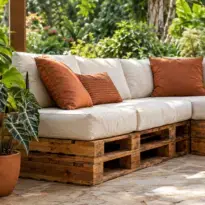
Stack two standard pallets to form the seat, reaching about 11 to 12 in (28 to 30 cm) high before adding cushions. Fasten a third pallet vertically as the backrest using metal L-brackets. Secure bracing matters here: a loose backrest is an accident waiting to happen.
Install 5/8 in (15 mm) plastic feet under the base. That small gap breaks capillary action, meaning it stops moisture from wicking up from the ground into the wood. The sofa creates a natural focal point for relaxing and looks especially good surrounded by groundcovers and medium-size broadleaf potted plants, such as split-leaf philodendron (Monstera deliciosa).
2. Vertical pallet garden to dress up a blank wall

Mount the pallet to masonry using #10 nylon wall anchors and heavy-duty shelf brackets. Leave 1 3/16 in (3 cm) between the wall and the wood. That gap allows air to circulate, reduces the risk of mildew on the stucco or masonry surface, and lets rainwater evaporate.
Half-moon wall planters or built-in cachepots set into the pallet rails help break up the monotony of a long wall. Pothos (Epipremnum aureum) and mistletoe cactus (Rhipsalis baccifera) spill between the slats and soften the structure. Before hanging everything, calculate the combined weight of the pots, soil, and water: even the best pallet garden ideas should never overload a wall.
3. Low rolling coffee table for pots and trays

Use one or two stacked pallets and close the gaps on top with slats taken from another dismantled pallet. A solid top keeps cups, trays, and small pots from tipping between the boards.
Install four swivel rubber casters with a minimum diameter of 3 in (75 mm). At least two should lock so the table stays put when someone leans on it. Under a pergola, it helps tie the seating area together and gives you a spot for peperomias (Peperomia obtusifolia).
4. Practical potting bench to organize your work area

A potting bench solves a common problem: pots, pruners, and bags of material scattered across the ground. Make the side supports from two pallets, set a third pallet as the top at 35 in (90 cm) high, and keep another one at the back for hanging tools.
Reinforce the top with 3/4 in (20 mm) eucalyptus battens or pressure-treated pine. That extra support handles the concentrated weight of larger pots. Place the bench in partial shade or near a water source to create an organized transition between the utility area and the outdoor living space.
5. Raised rectangular planter to showcase foliage at ground level

Take the pallet apart and build a box using the stringers and boards. The bottom should be slatted and raised 4 in (10 cm) off the ground. That height adds structure to borders and helps define pathways without taking up much width.
Never let the soil sit directly against the wood. Line the inside with self-adhesive waterproof membrane or apply asphalt waterproofing paint, a bitumen-based sealant. The planter has more presence when filled with upright foliage plants like snake plant (Dracaena trifasciata).
6. Mobile slatted screen to divide outdoor spaces

Join two or three upright pallets with metal piano hinges or brass hinges. The screen visually separates a clothes-drying area, tool storage spot, or utility zone without completely blocking airflow and light.
Add 16 in (40 cm) perpendicular feet at the base. They help keep the piece from tipping in gusty wind. The structure can also support lightweight climbers, such as wax plant (Hoya carnosa), as long as the screen is firmly anchored.
7. Wall-mounted console shelf to improve circulation on balconies

Cut a pallet in half and turn the front face into a hinged drop-leaf panel. Galvanized steel chains limit the opening to 90 degrees, creating a handy surface for drinks, plates, and potted plants when entertaining.
The wall needs hardware rated for a static load of up to 55 lb (25 kg). Use concrete anchors or heavy-duty #10 wall anchors. On a compact porch or balcony, this kind of fold-down shelf is one of those pallet garden ideas that stays closed when not in use, keeping the passage clear.
8. Tiered step shelf among pallet garden ideas for showing off potted plants in layers

Cut the stringers at alternating angles to create flat steps 8 to 12 in (20 to 30 cm) deep. Each pot gets its own spot and receives light without being hidden behind another. It’s a practical way to group plants without turning the corner into a cluttered jumble.
Use steel cable or crossed wood slats on the back to form an “X.” This bracing prevents lateral bowing, or side-to-side warping of the structure. Boston fern (Nephrolepis exaltata) works especially well in this layered arrangement.
9. Hanging garden swing for a quiet spot under the trees

A standard pallet can become a swing seat when reinforced underneath with solid 2 x 2 in (5 x 5 cm) battens. These strengthen the points where ropes or chains will be anchored. Without that reinforcement, the wood can give way under weight and movement.
Use marine-grade carabiners and 1/2 in (12 mm) nylon or polyester rope with a load rating above 660 lb (300 kg). The swing works beautifully beneath mature trees or on a wood pergola, where it creates a relaxing pause along the garden path.
10. Reclining lounge chair for a sunny patio or poolside area

Build the lounge chair with two pallets joined in the upper third using heavy-duty metal hinges. A notched adjustment rack, a piece with a series of fitted slots, allows three backrest angles.
Make beveled feet, with the ends cut at an angle, to reduce friction against the ground. Protect those cut ends with marine varnish or rubberized paint. On lawns and decks, the piece pairs nicely with groupings of areca palm (Dypsis lutescens).
11. Modular pallet deck for defining garden paths and walkways

Set the pallets side by side and fill all the surface gaps with staggered boards. Level the whole assembly over a layer of gravel. The deck defines straight paths and helps prevent repeated foot traffic from compacting the soil in planting beds.
Lay geotextile fabric under the gravel and use concrete or rubber shims beneath the pallets. The fabric separates the soil from the gravel, while the shims keep the wood from sitting directly on bare ground.
Wood set directly on damp ground loses the battle against fungi fast.
12. Wall-mounted pallet organizer for tools and a garden hose

Mount a pallet vertically on an exterior wall and use J-hooks for shovels and rakes. A hose reel keeps the hose coiled neatly, off the ground, and free of kinks. It’s a simple pallet garden idea that helps a utility area look clean and organized.
Install a metal drip edge or a simple plastic gutter along the top edge. It diverts rainwater before it can run down the boards and over the hooks. That small detail can save a lot of waterlogged wood.
Common mistakes when using pallets in landscaping that shorten their lifespan
- Using a pallet stamped MB, with no stamp, or with industrial paint of unknown origin.
- Letting the wood rest directly on soil or damp lawn. Wood-decaying fungi can cause rot in less than a year.
- Reusing bent nails or using standard steel nails, which rust and stain the boards.
- Applying a glossy varnish that forms a rigid film and peels in sun and rain.
- Building vertical planters without calculating the weight of the structure when wet, causing the pallet to warp or overload the wall.
My best tip is to create a mechanical barrier at every point where the pallet touches the ground. HDPE feet, 3/4 in (2 cm) thick, or marine-grade rubber pads help isolate the wood from moisture. That tiny gap can extend the life of the piece by up to three times.
Frequently asked questions
How do you keep pallet wood from rotting from ground moisture?
Don’t let the piece touch bare soil or damp grass. Use plastic feet, marine-grade rubber pads, or concrete spacers, and keep the bottom of planters raised off the ground. A fungicidal wood preservative and exterior wood stain help, but they don’t replace that separation.
What’s the difference between regular varnish and penetrating exterior wood stain?
Regular varnish forms a surface layer over the wood. With sun and rain, that layer can crack and peel. Penetrating stain soaks into the pores and moves with the wood’s natural expansion and contraction, which makes it a better choice for most outdoor pallet garden ideas.
Can I use painted pallets or pallets without a stamp in home landscaping?
I don’t recommend it. Unmarked pallets and pallets with industrial paint may contain unknown substances. Choose pieces stamped HT, KD, or DB, without industrial paint, and discard any wood marked MB.
Prepared wood, a garden with purpose
Well-chosen pallets can create places to sit, move through, and stay organized in the garden. Start with a project that solves a real need in your yard: a bench where you need shade, a potting surface where you need more workspace, or a planter that adds height to an empty corner.
Take your time with prep, prioritize wood safety, and protect every base from moisture. Then let the garden show you where that structure makes sense. That’s how a pallet stops being leftover shipping material and becomes part of the landscape.