
Some gardens look like they were installed all at once, while others feel as if they’ve grown along with the house. A vintage garden belongs to the second group. It brings together flowers, pathways, antique furnishings, and the marks of time without ever looking neglected. The secret is creating a composition with warmth and character, while still leaving room to walk, sit, and care for the plants.
I like this style because it makes it easy to use an inherited chair, a weathered terracotta pot, or an iron bench that had been forgotten in the backyard. Nothing needs to look too new. But everything does need to have function, proportion, and safety.
What defines a vintage garden style
The look of Victorian gardens and the English cottage garden style
The vintage garden draws inspiration from the romantic gardens of the 19th and early 20th centuries, including Victorian gardens and cottage gardens. The look is lush, with plants at different heights, curving paths, and a soft transition between the house and the surrounding greenery.
Instead of rigid beds with sharply defined edges, this style favors drifts of flowers, shrubs, and climbing plants that seem to meet naturally over time. The result feels country-like, welcoming, and a little nostalgic, without requiring the garden to be filled with decorative objects.
Curving lines play an important role. A path with a gentle bend reveals a bench little by little, draws the eye toward a fountain, or creates a small retreat beneath the canopy of a tree. It’s a garden meant for slow strolling.
Patina as a design element
Patina is the look materials acquire over time: moss on stone, worn paint on wood, pale marks on terracotta, or visible oxidation on iron. In a vintage garden, these signs are not flaws in themselves. They help build the atmosphere of the space.
Enjoyed this guide? There's more where it came from.
Understanding why plants behave the way they do is what turns guesswork into a thriving garden. That's exactly what we share in the Shrubz newsletter — free, straight to your inbox:
- Seasonal care reminders timed to your gardening calendar
- Propagation and pruning techniques, explained step by step
- Pest and disease alerts — catch problems before they spread
There’s an important difference between beautiful aging and a piece that is actually deteriorating. An iron bench can keep its oxidized surface, as long as the metal is still sound. Wood can have a washed, timeworn look, as long as it’s protected from sun and rain. Patina should tell a story, not signal a safety hazard.
5 essential landscaping elements for creating a romantic space
1. Curving paths with reclaimed brick and pea gravel

Start with the route itself. Straight, overly rigid paths are less suited to this approach. Choose gentle curves that lead from the porch to a bench, from one planting bed to a pergola, or from a gate to a hidden corner.
For one person to walk comfortably, a path should be 31 to 39 in (0.80 to 1.00 m) wide. If you want two people to walk side by side, make it 47 in (1.20 m). That width helps avoid a common problem: plants spilling into the walkway and guests turning sideways to dodge branches.
- Fine gravel or pea gravel creates a surface with a light, old-fashioned look.
- Solid reclaimed brick laid in a herringbone pattern adds warmth and visual interest underfoot.
- Joints filled with sand allow moss or grass to appear between the bricks.
- Irregular aged stone pavers make the layout feel less formal.
Avoid placing thorny roses right along the edge of a narrow path. They may look beautiful in the bed, but the canes can catch clothing and scratch anyone passing by. Leave a buffer between the plant and the walkway, especially near doors and benches.
2. Classic focal points with arches, benches, and wall fountains

Every garden needs something that catches the eye and makes you want to move closer. In a vintage garden, the most natural focal points are a cast-iron arch, a terracotta wall fountain, a bench in the shade, or a small tea table.
An arch works especially well as a transition between two areas. It can mark the entrance to a more secluded space, almost like a doorway without walls.
Covered in climbing vines, it adds volume and changes with the seasons.
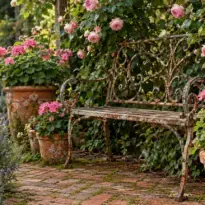
An iron or wooden bench under a tree also helps organize the space in a vintage garden. It doesn’t need to be large. What matters is that it feels inviting—like it’s asking someone to sit down, admire the flowers, and stay awhile.
Secret garden nooks are small tucked-away spots in the planting with a chair or bistro set. They work best when they aren’t fully visible from the gate all at once. A curve in the path, a shrub, or a trellis helps create that sense of gradual discovery.
3. Wrought iron furniture and weathered wood

Iron tables, chairs, and benches with scrollwork are a natural fit for a vintage garden. Victorian-style pieces have real presence, but they do need maintenance so they don’t lose their strength over time.
When iron starts to oxidize, apply a rust converter and then a waterproof matte varnish. That way, the aged texture stays visible, but corrosion doesn’t keep spreading into the piece. A high-gloss finish usually feels out of place here, which is why matte makes more sense.
Pergolas, gates, and trellises made from reclaimed wood also work beautifully. The patina technique known as decapé leaves parts of the wood or old paint layers exposed, creating a worn, time-softened look. To protect the surface without creating a shiny plastic-like film, use a clear or matte penetrating wood stain.
4. Terracotta pots, copper tubs, and zinc watering cans

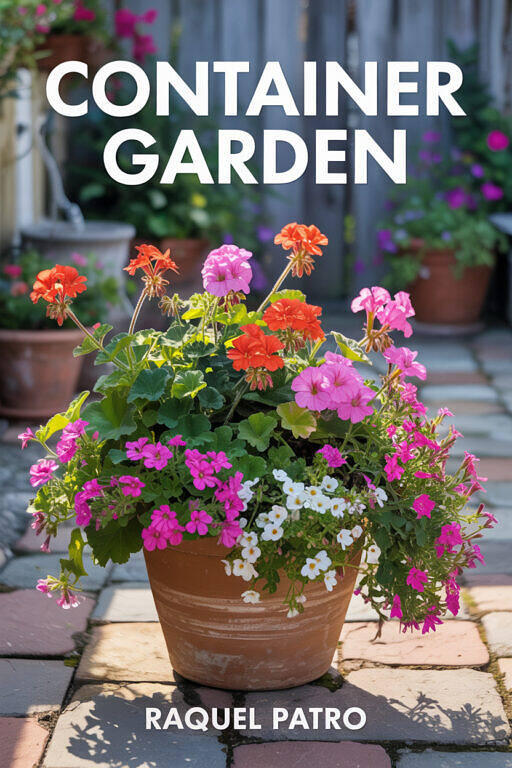
Containers help carry the style throughout the garden. Classic terracotta urns and clay pots become even more beautiful with age, as they develop moss and pale markings on the surface. A new pot can look antique after a few years, and there’s no need to hide that.
Copper or bronze tubs can become large ornamental planters, as long as they have drainage holes in the bottom. Wall-mounted iron planters and old zinc or galvanized metal watering cans also work well as cachepots—the decorative outer containers that hide the actual planting pot.
Don’t reuse teapots, kettles, drawers, or old bathtubs without planning for drainage. Roots rot in waterlogged containers, and standing water after rain encourages mosquitoes. A repurposed piece without a drainage hole is a problem, not a charming detail.
5. Layered planting with romantic plants

That full, welcoming look comes from layering. Vines cover arches, walls, and pergolas. Shrubs create the body of the bed. Lower-growing plants fill the spaces near the ground. This arrangement keeps the garden from looking flat or the decorative pieces from seeming scattered across the yard.
In hot, humid gardens, it’s worth choosing plants that deliver that romantic vintage garden feel without insisting on species that struggle. I recommend looking closely at the light and climate in your space before falling in love with a European garden reference.
The plant palette for a vintage garden
Climbing plants for arches and walls
The climbing rose, Rosa x hybrida, needs full sun and training on a trellis. In milder climates, it often blooms repeatedly from spring through fall. In hotter regions, flowering may be lighter.
For arches in subtropical climates or mild high-elevation areas, poet’s jasmine, Jasminum polyanthum, is a very beautiful choice.
Its foliage is fine-textured, and the fragrant flowers appear in white and pink from late winter into spring.
When the goal is to cover a wall with a dense, pastoral look, bush clockvine, Thunbergia erecta, or blue skyvine, Thunbergia grandiflora, both do the job beautifully.
Medium-structure shrubs
Hydrangea, Hydrangea macrophylla, is a standout in romantic, part-shade gardens. It blooms in summer and performs best in cooler climates. In hot, low-elevation tropical conditions, it tends to struggle.
Camellia, Camellia japonica, offers glossy dark green foliage and flowers from fall through winter. It adapts well to sites with gentle sun or partial shade.
Classic shrub roses, such as Rosa chinensis and old hybrid garden and cutting varieties, form the emotional heart of a vintage garden bed. Give them a spot with at least five to six hours of full sun.
Flowering ground covers and borders
French lavender, Lavandula dentata, tolerates heat and humidity and brings silvery foliage along with that unmistakable fragrance. It delivers the romantic effect many gardeners want from lavender, with more reliable performance in those conditions.
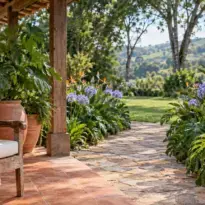
African lily, Agapanthus africanus, keeps its strap-like leaves year-round and sends up stems of sky-blue or white flowers in spring and summer. It gives the planting bed structure when other flowers are less showy.
In shaded areas beneath shrubs, busy Lizzie, also known as impatiens, Impatiens walleriana, fills in mass plantings. For sunny borders, China pink, Dianthus chinensis, brings small flowers, a light fragrance, and a cottage-garden look.
Common design mistakes and how to avoid them
Too many decorative objects with no connection to the planting
Sewing machines, bicycles, birdcages, ladders, and old pots can be charming, but not when they all show up together. The garden stops feeling romantic and starts looking like a salvage yard.
Choose just a few pieces and give each one room to breathe. Place the object where it relates to the path, the planting bed, or the sitting area. An old chair under a trellis makes sense. Five chairs scattered at random create visual clutter.
Thorns too close to walkways
Roses are highly desirable in this style, but they need to stay out of the traffic zone. Plan the bed so the branches do not jut into the path. A beautiful vintage garden should not demand scratches from anyone stopping to sit down with a cup of coffee.
Repurposed containers without drainage
A client once showed me a row of old teapots planted with flowers. The arrangement had potential, but none of them had drainage holes, and all were full of water after the rain. The problem was not the idea, but the detail no one noticed.
The fix was simple: adapt the drainage before planting. Drill holes in the bottom of the containers and use them in a way that lets water escape. The piece stays beautiful, but it no longer compromises the plant.
Modern materials and polished finishes
Bright plastic, polished porcelain tile, and chrome tubular furniture break the sense of age created by the rest of the space. Choose materials with texture instead: irregular stone, brick, matte iron, weathered wood, and terracotta.
That does not mean everything has to be genuinely old. A well-chosen new piece without too much shine can still work with the overall look. What matters is keeping the flooring, furniture, containers, and plants visually consistent.
The floating layer rule
To keep an old bench, a large pot, or a statue from looking dropped into the yard, plant low-growing ground covers around the base. English ivy, string of nickels, or China pinks can soften the foot of the piece and create a visual link to the planting bed.
When the plant touches the base of the object, the garden looks as if it grew up around it. That small detail adds depth to the scene and avoids the impression of last-minute decorating.
Frequently asked questions
How can you speed up the patina and moss effect on new pots?
Brush the outside of the clay pot with a mixture of plain yogurt and bits of moss collected from sidewalks. Keep the pot in a humid, shady spot until the moss attaches to the surface.
Can you create a romantic vintage garden corner on a balcony or in a small space?
Yes. Use an ornate wrought-iron plant stand to group terracotta pots vertically, along with a small iron bistro table and just a few well-chosen containers. Miniature roses, fringed lavender, and English ivy, Hedera helix, create a delicate arrangement without blocking the flow of the space.
How do you protect old iron furniture from rain without losing its aged look?
The furniture can stay outdoors as long as it gets periodic protection against deep structural rust. Use a rust converter and a clear matte marine varnish. The weathered texture remains, while the piece keeps its strength for everyday use.
A vintage garden that grows more beautiful over time
A vintage garden doesn’t need to look finished from day one. It gets better as the rose bush grows over the arbor, the terracotta pot develops a coat of moss, and the bench becomes part of the home’s daily rhythm. Start with a path, a special planter, or a trellis, and let the layers build gradually.
Create a space that invites you to pause. When every plant, stone, and object seems to have found its place, the garden stops being just scenery and becomes a living part of the home’s memory.