
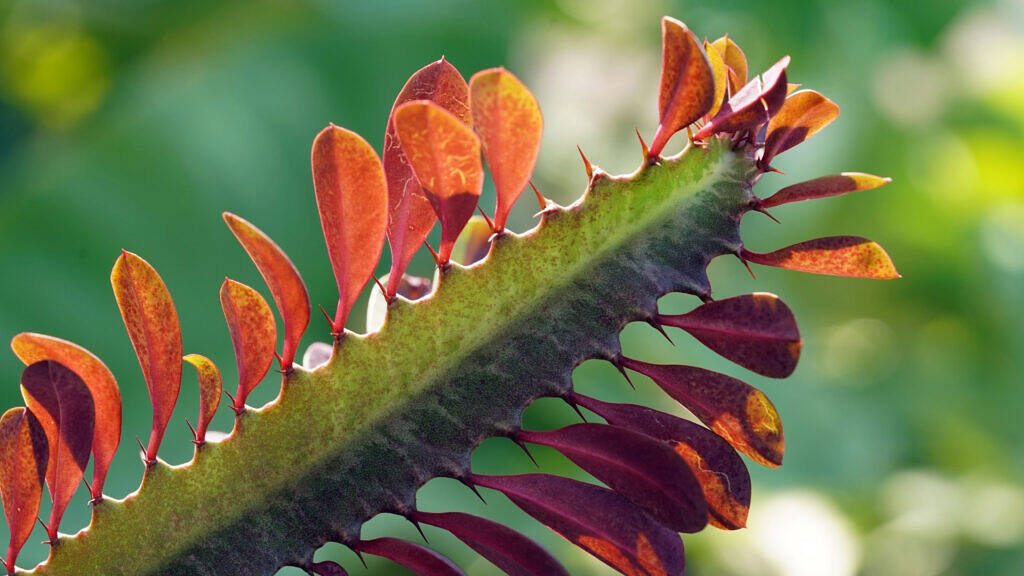
The African Milk Tree (Euphorbia trigona) is a succulent shrub with milky sap that makes a strong statement through its strict vertical habit and branches that look as though they were drawn with geometric precision. Although the common name suggests otherwise, it does not belong to the Cactaceae family, but rather to the Euphorbiaceae, a vast group that includes everything from the popular crown-of-thorns to the rubber tree. The African Milk Tree combines hardiness and visual impact in a compact, spiny silhouette that delivers presence even in simple arrangements, making it a reliable choice for anyone looking for a tough plant.
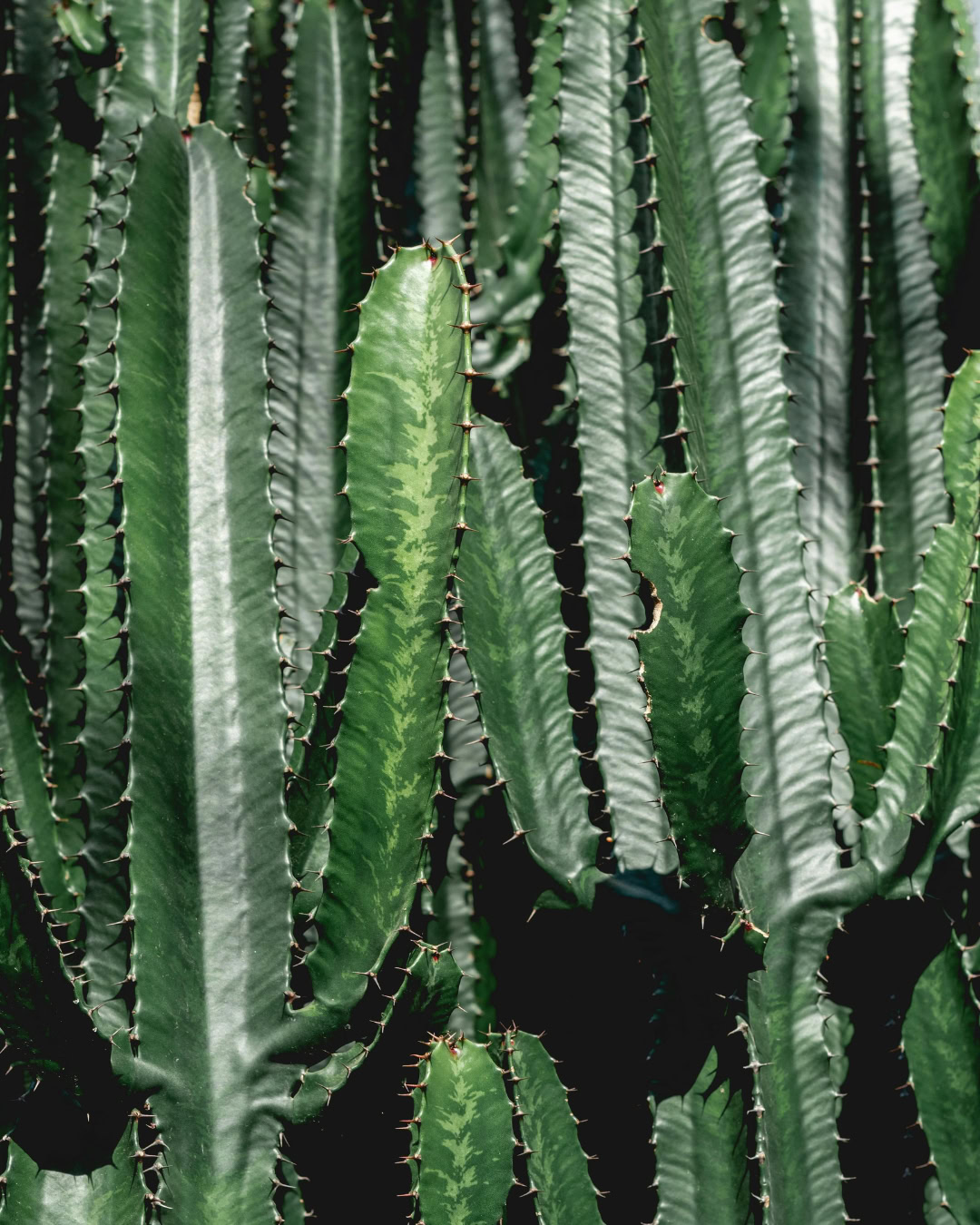
Its popularity in landscaping and interior decoration comes from its resilience and adaptability. With deep green branches and silvery markings that form V-shaped patterns along the faces, the African Milk Tree acts as a structural element in the garden. It brings a rigid texture that contrasts with plants with softer shapes and textures, creating depth in the landscape. It is a plant that lasts for decades, gaining substance and becoming a true living structure over time.
Origin, Habitat, and Etymology
The African Milk Tree is native to tropical Africa, in a belt extending from Gabon to Malawi, including Angola, Congo, and the Democratic Republic of the Congo. In its natural habitat, it occurs mainly in seasonally dry tropical environments, where it faces periods of drought, high light levels, and well-drained soils. These conditions help explain its succulent structure: the fleshy stems store water, while the small leaves arranged along the ribs may drop during periods of greater water stress, reducing moisture loss.
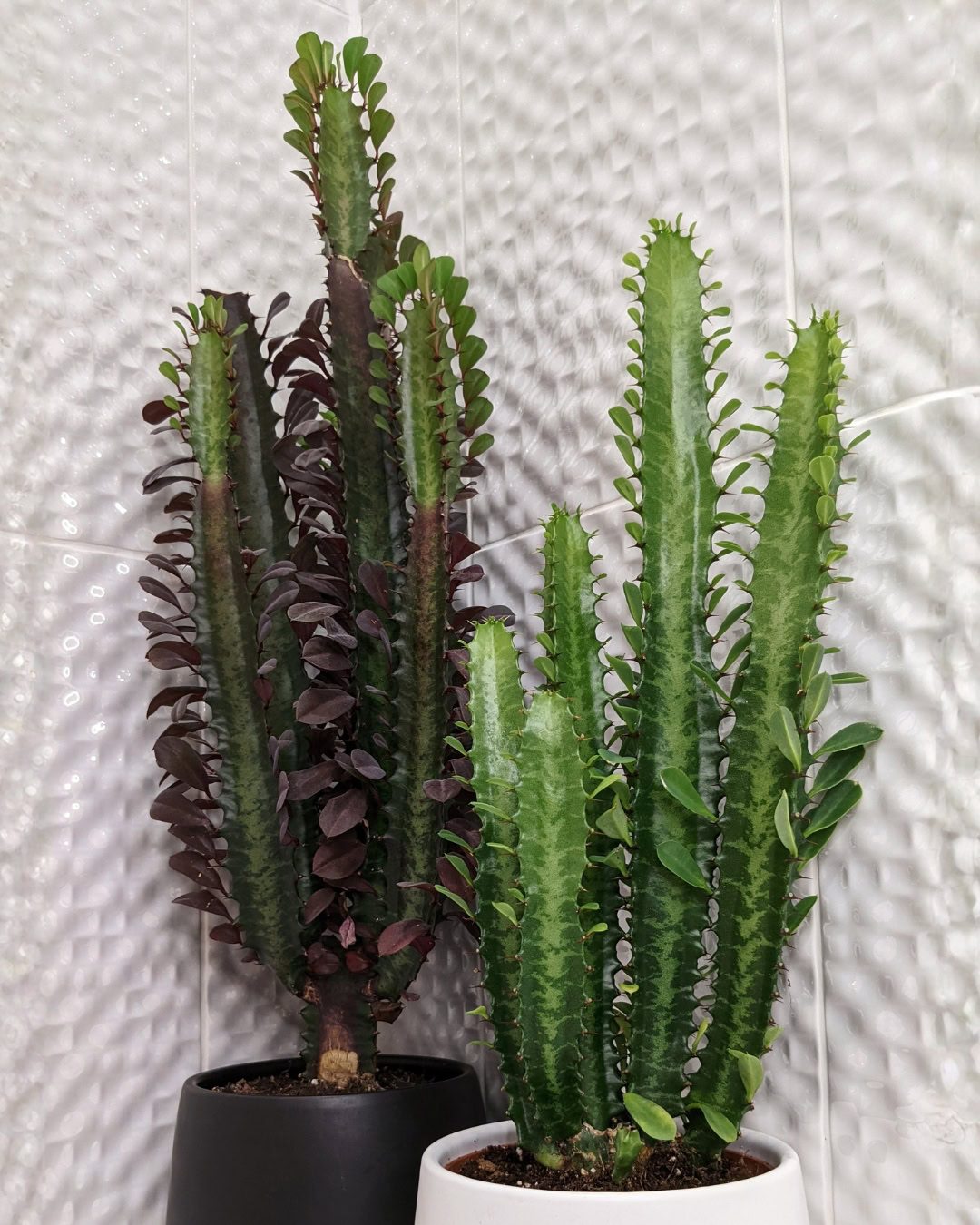
The genus name, Euphorbia, honors Euphorbus, who was the personal physician of King Juba II of Numidia. According to history, the physician used the latex of certain species in this genus for medicinal and purgative purposes. The specific epithet trigona derives from the Greek terms tri (three) and gonos (angle or corner). This is a direct reference to the cross-section of its branches, which typically show three well-defined angles, giving the species its characteristic triangular shape.
Landscape Use of the African Milk Tree
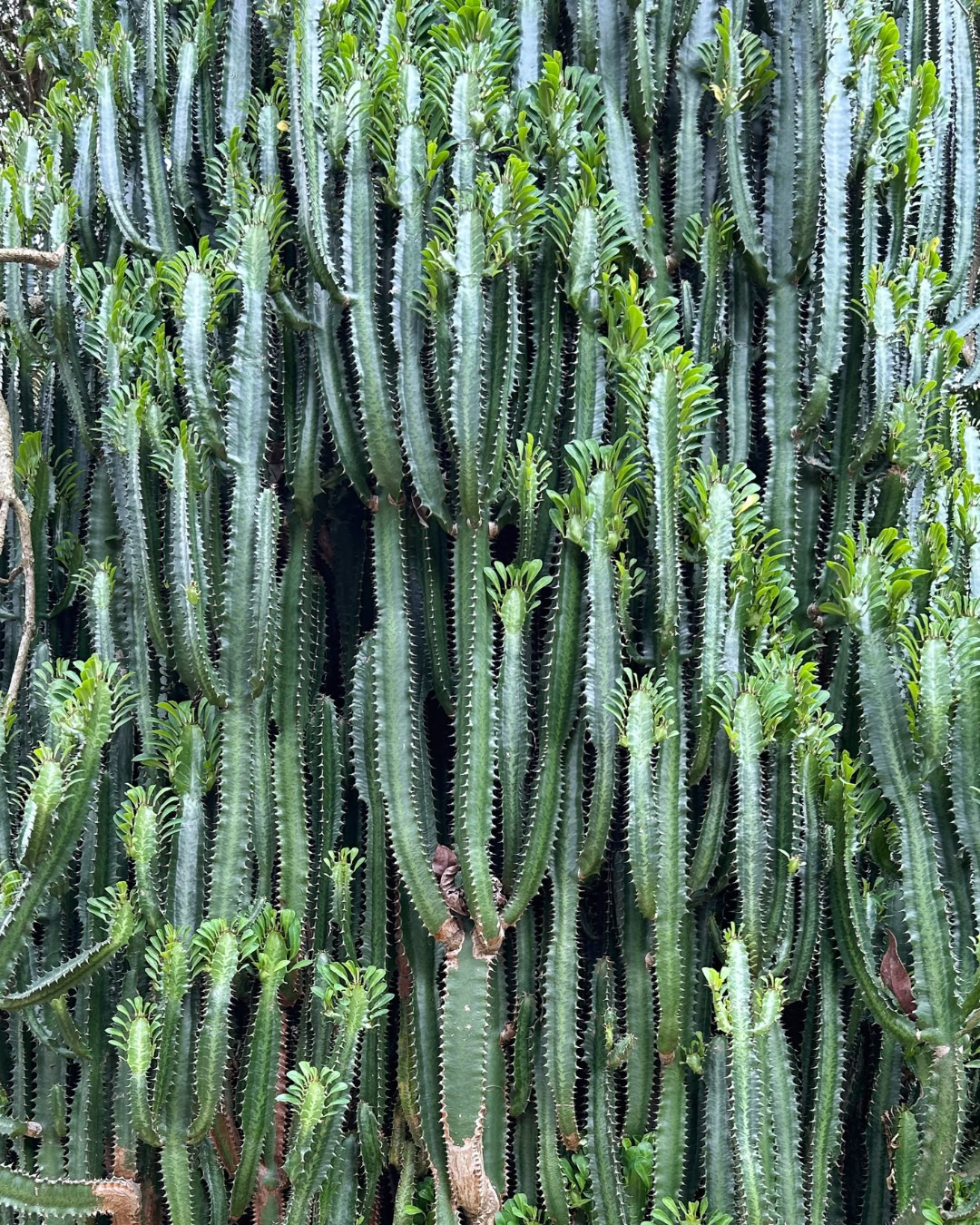
In landscaping, the African Milk Tree is valued for its ability to serve both as a high-impact focal point and as a backdrop, depending on the setting. In desert, contemporary, or minimalist gardens, it works as a living sculpture that does not require constant pruning to maintain its shape. When planted in rows, with spacing of 2.6 to 3.9 feet (0.8 to 1.2 meters), it creates a dense, spiny visual barrier, excellent for defining areas or providing privacy in a natural, defensive way.
One effective strategy for balancing the rigid verticality of this plant is to combine it with species that have different growth habits. The shrub pairs well with the softness of the Dragon Agave (Agave attenuata), which has broad, light green leaves that break up the rigidity of the African Milk Tree’s vertical branches. To cover the base of the soil and hide bare ground, using Parrot’s Beak (Lotus berthelotii) creates a contrast in color and form, with its warm-toned flowers and blue-green foliage softening the overall composition.
For those growing it in pots, the African Milk Tree is a solution for rooms with high ceilings or balconies that receive direct sunlight for at least 4 hours a day. It is a better substitute for indoor trees that require more humidity and filtered light. Because it has moderate to fast growth, it fills vertical space quickly. However, care is needed with the weight of mature plants: since they store a lot of water in their upper tissues, they tend to become top-heavy. The use of sturdy ceramic or concrete pots (preferably wider than tall), or even adding a ballast of stones inside the container, is essential to ensure stability and prevent the plant from tipping over.
How to Care for the African Milk Tree: Growing Guide
- Light: It is best grown in full sun or very bright light, conditions that keep growth firmer, more compact, and more vigorous. In the ‘Rubra’ variety, strong light also helps intensify the reddish tones of the stems and leaves. Indoors, place the plant no more than 3.3 feet (1 meter) from a very bright window, preferably with several hours of direct sun or strong filtered light. Plants accustomed to partial shade should be acclimated to full sun gradually to avoid tissue burn. For indoor-grown plants, be alert for etiolation, which distorts the plant’s sculptural form and makes it more fragile. Rotate the pot so the plant receives light evenly on all sides and maintains its symmetry.
- Soil: It requires light, porous soil with excellent drainage. In the garden, choose elevated spots, slopes, well-drained beds, or areas where rainwater drains away quickly. Avoid clayey, humus-rich, compacted soils, or places where puddles form after watering. The ideal pH is between 6.1 and 7.8, that is, from slightly acidic to slightly alkaline. The main goal is to prevent waterlogging, which is the classic mistake when growing the species.
- Potting mix for containers: For container growing, use a potting mix made for succulents, or prepare a very mineral, airy mix, such as 50% washed coarse construction sand, 25% organic compost, and 25% composted pine bark or coconut chips. You can also replace part of the sand with perlite, fine gravel, pumice, or small crushed stone, as long as the final mix is loose and drains quickly. Always use pots with large drainage holes at the bottom and avoid saucers with standing water, since the roots of Euphorbia trigona do not tolerate persistent moisture.
- Watering: Watering should be infrequent and always guided by how quickly the mix dries out. Water thoroughly, until water runs out through the drainage holes, and only water again when the mix is completely dry. In winter, or during cold, humid periods, reduce watering drastically, as the plant slows its metabolism and uses less water. Slightly wilted stems may indicate thirst, but darkening at the base, softening, and an unpleasant odor suggest excess water and the onset of rot.
- Climate: It grows best in tropical and subtropical climates and hot, low-humidity regions. It is sensitive to frost and should not be exposed to temperatures below 50 °F (10 °C) for extended periods. In regions with cold winters, it is best grown in a pot so it can be protected on a covered porch, in a cool greenhouse, or in a well-lit indoor space during the harshest weeks. Cold combined with wet mix is the perfect recipe for losing the plant, and usually without room for negotiation.
- Fertilizing: Fertilizing should be light, since the species is undemanding. In spring and summer, apply NPK 10-10-10 to encourage balanced growth, or NPK 4-14-8 when the goal is to promote rooting and structural support. Always use smaller doses than those recommended for common foliage plants, especially in pots. Excess nitrogen can produce softer, more elongated growth that is more vulnerable to breakage. Stop fertilizing during cold winter weather and avoid feeding newly transplanted, dehydrated, or rotting plants.
- Pruning: Pruning is done for training, by cutting off the top of the plant to encourage the development of several branches. After that, prune only when necessary, mainly to control height, remove crooked branches, eliminate diseased parts, or reduce the weight of very elongated plants. Use clean, sharp pruning shears or a saw, always with thick gloves, long sleeves, and eye protection. The white latex released by cuts is toxic and can cause irritation to the skin and eyes. After cutting, let the area heal in a dry, ventilated place. Never prune the plant on rainy days or when the mix is waterlogged, as moisture increases the risk of infection.
How to Make African Milk Tree Cuttings
The most efficient method for propagating this species is by taking cuttings from side branches. The process should preferably be carried out during the warm months of spring and summer, when the plant’s metabolism is active, making rooting easier. Choose a healthy branch and make a clean cut at the base, where it joins the main stem.
Immediately after the cut, the plant will begin to release a white latex. Wash the base of the cutting and the wound on the parent plant under cold running water, and dry with paper towels to stop the flow of this sap. Then leave the cutting in a shaded, ventilated place for 3 to 7 days. This period is necessary for the wound to heal and form a callus, which prevents fungi and bacteria from entering after planting.
After healing, plant the cutting in a pot with sandy, slightly moist potting mix. Do not bury it deeply; just enough for the cutting to stand upright. If necessary, use a small bamboo stake to provide initial support. Keep the pot in bright, indirect light until you notice signs of new shoots at the top, which indicates that the roots have begun to develop. Only then should gradual exposure to direct sun begin.
Botanical description of Euphorbia trigona
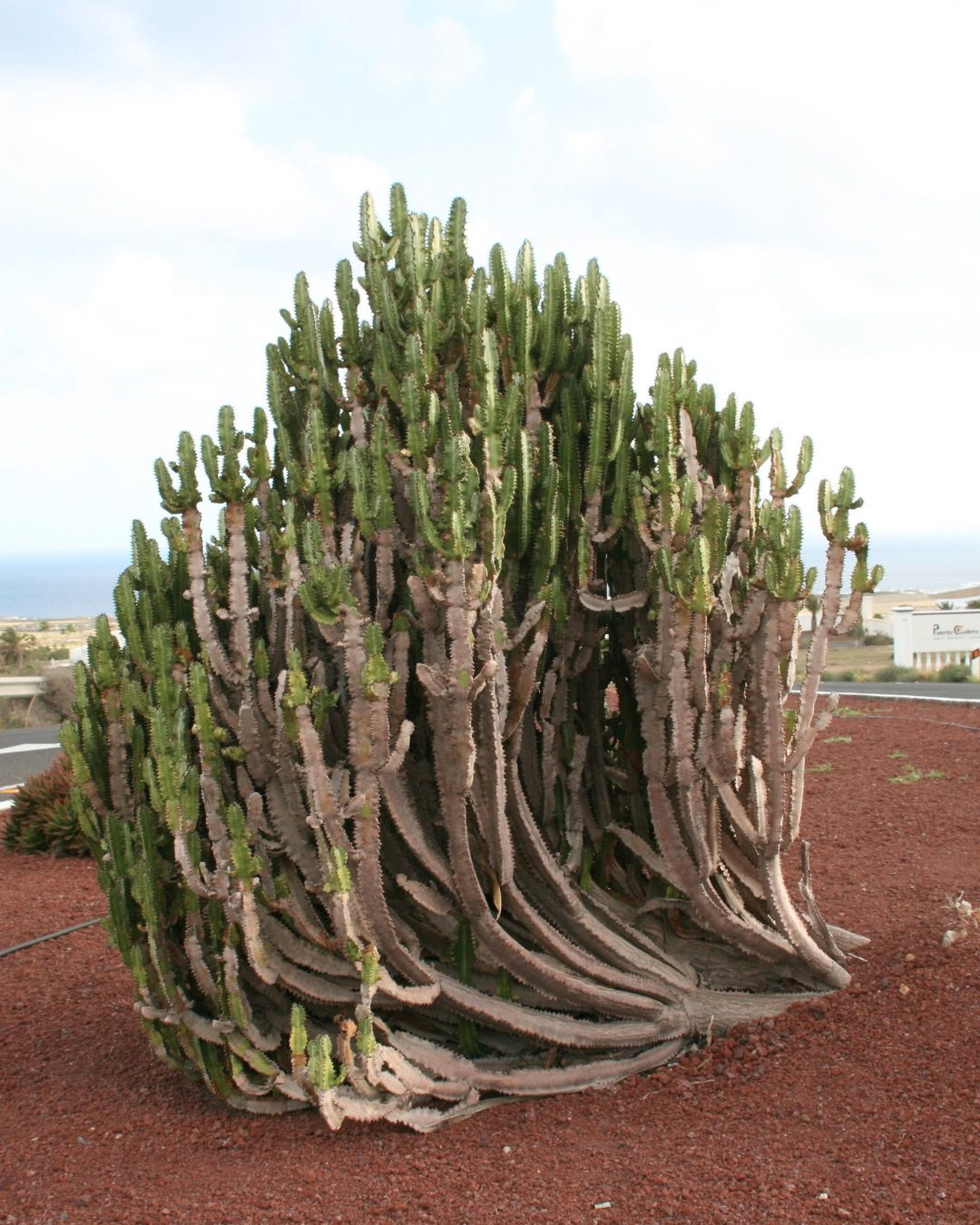
In its natural habitat, the African Milk Tree reaches 6.5 to 13 feet in height (2 to 4 meters), although in home cultivation it is commonly kept between 3 and 6.5 feet (1 and 2 meters). The plant has a succulent texture, but as it ages, the base of the main stem tends to become semi-woody to support the weight of the upper branches. It has a taproot, but it also develops a fibrous, relatively shallow secondary root system, capable of quickly absorbing water from brief rainfalls.
The branches are its most distinctive feature. They are upright, branched, and have a triangular or quadrangular cross-section. Their color is a deep dark green, decorated with light green or silvery marbled markings that form V-shaped patterns. The edges of the branches are wavy and protected by short spines, about 0.2 in (5 mm) long, which grow in pairs and range in color from brown to reddish.

The leaves emerge between the spines along the ridges of new branches. They are small, fleshy, and spatulate, measuring 0.6 to 1.6 in (1.5 to 4 cm). An important detail is that the African Milk Tree is deciduous: it loses its leaves during periods of extreme drought or when exposed to intense cold, retaining only the green branch structure to carry out photosynthesis.
The species is monoecious, producing reduced male and female flowers in the same cyathium. Flowering is rare in ornamental cultivation, usually occurring between late spring and summer. The flowers are tiny, without true petals, and protected by yellowish bracts. When pollination occurs, usually carried out by flies and bees, tri-lobed globose capsule fruits are formed, which, when mature, may release small seeds explosively.
Main varieties and cultivars
- ‘Royal Red’ (or ‘Rubra’): This is the most popular and widely sold cultivar. It differs from the typical species by having stems and leaves in intense purplish and reddish tones. This coloration becomes more vibrant when the plant is kept in full sun, creating a striking visual contrast with other green garden plants.
Pests, diseases, and solutions
Although it is a very resilient plant, the African Milk Tree can be affected by scale insects and mealybugs, which settle in the branch crevices or leaf axils. Poor air circulation favors these pests. Control can be achieved by applying neem oil or diluted coconut soap, using a soft brush to remove insects from hard-to-reach places.
As for diseases, root and stem base rot is the main problem, caused by fungi or bacteria under conditions of overwatering or poor drainage in the potting mix. If the base of the plant shows dark, soft patches, it is necessary to cut healthy sections to make new cuttings, since rot spreads quickly and is rarely curable. In places with high humidity and low light, powdery mildew may occasionally appear as a fine white dust on the branches, and it can be treated with Bordeaux mixture.
Interesting facts
The African Milk Tree is a classic example of convergent evolution. Although it looks very much like the cacti of the Americas, it developed these succulent forms and spines independently, as an adaptive response to Africa’s arid climate. In its native region, this plant is traditionally used by local communities as a living fence. Thanks to its spines and irritating latex, it forms an effective barrier for marking property lines and protecting animal pens from predators.