
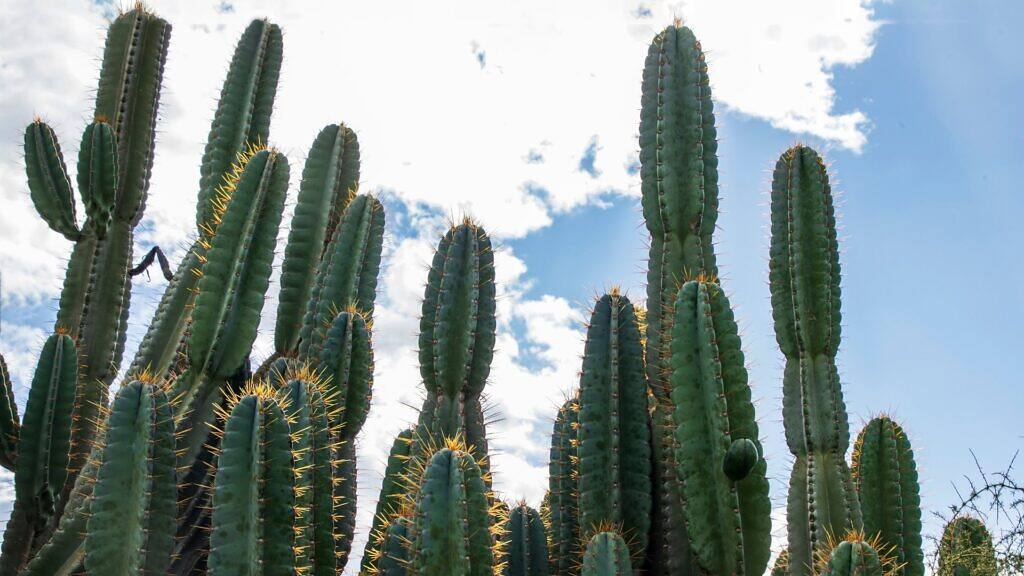
Few plants capture the power of the Brazilian landscape as well as the Mandacaru (Cereus jamacaru), a tree-like columnar cactus that stands with quiet authority in the hottest, driest parts of its native range. Its sculptural silhouette and commanding branching make an impression from a distance: upright stems point skyward like giant green candles, capable of anchoring an entire garden on their own. In landscape design, it works like a living sculpture, creating a striking contrast with straight-lined masonry and the rugged texture of large stones.
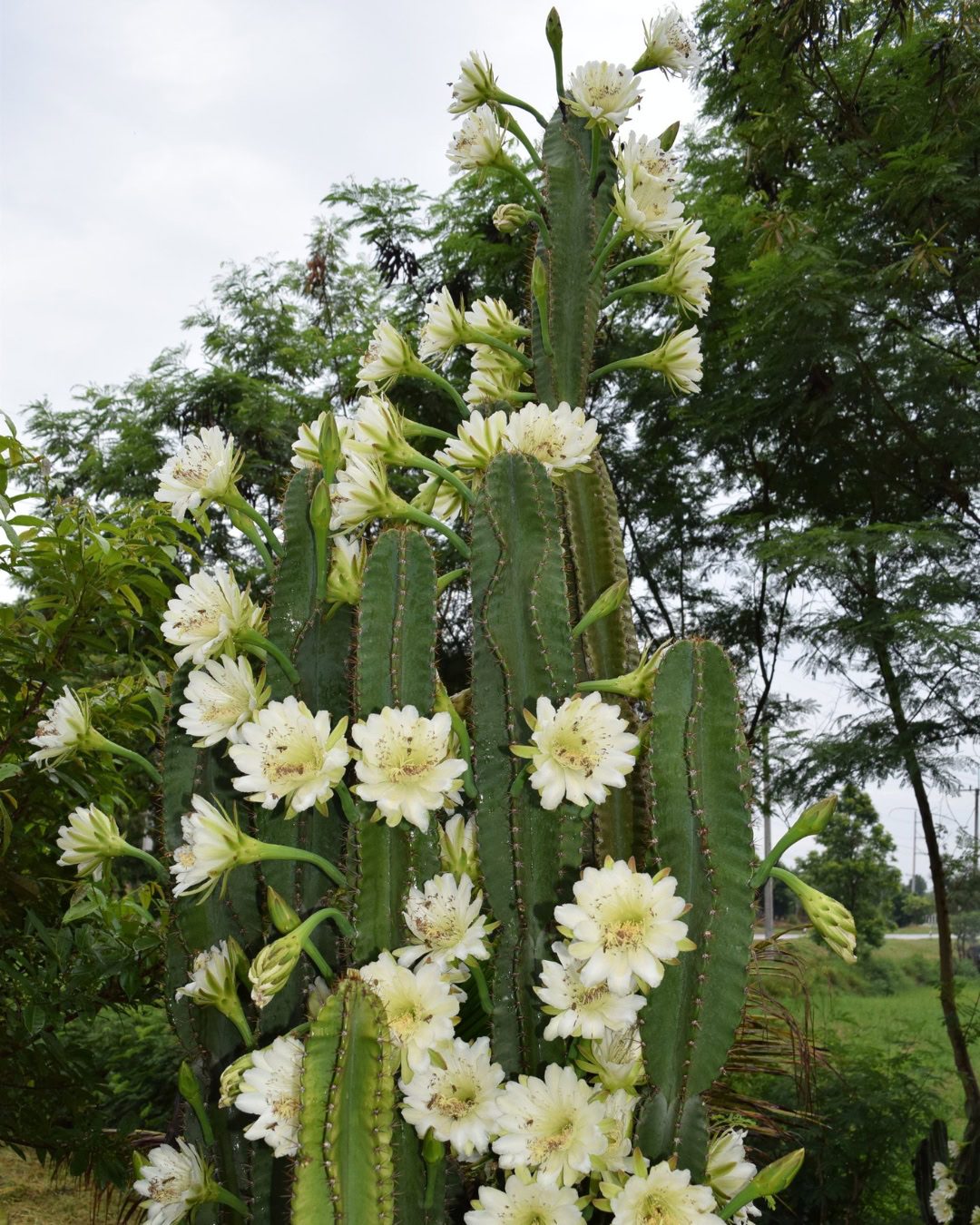
But it is on warm summer nights that the Mandacaru reveals its most surprising side. In the moonlight, its enormous flowers open in pure white petals that last only until dawn, creating a fragrant, fleeting display. That brief cycle, combined with an abundance of deep reddish-purple fruit, turns the plant into a true magnet for local wildlife, bringing life to the space. Best of all, it does all this while asking very little of the gardener.
Origin, habitat, and etymology of Mandacaru
Mandacaru is a species endemic to Brazil, with its natural occurrence concentrated in the Caatinga biome and transition areas into the Cerrado. Its original distribution extends throughout northeastern Brazil and into the northern portion of Minas Gerais. It thrives exactly where few plants can persist: in rocky, shallow, dry soils, under intense sun exposure and infrequent, concentrated rainfall.
The etymology of the genus Cereus comes directly from the Latin term cereus, meaning candle, taper, or made of wax, a clear reference to the cylindrical, upright shape of its branches, which resemble large altar candles. The specific epithet jamacaru is a Latinization of the Tupi term îamanakarú (or manda’karu), and some interpretations relate the word to a bundle or cluster of spines, although according to local linguistic studies, the term may also carry the meaning of food that stores water.
Landscape use of Mandacaru
With its clean, sculptural lines and strong visual impact, Mandacaru has become a frequent choice for contemporary, minimalist, and desert-style landscape designs. Its vertical presence enhances straight-lined facades and creates focal points in broad lawns or planting beds covered with gravel. For the best effect and to ensure healthy development, the recommended spacing is at least 10 ft (3.0 m) of open space around isolated specimens. In row plantings, such as visual or defensive barriers, spacing of 6.6 to 8.2 ft (2.0 to 2.5 m) on center is used, while always maintaining a minimum distance of 5 ft (1.5 m) from walls and structures.
Its growth rate is slow to moderate, becoming more active during the first three years after planting, especially if the plant receives strategic watering during that phase. Once it reaches maturity, the pace slows down. In the garden, Mandacaru creates an excellent dynamic combination when paired with plants of different habits. One harmonious approach is to use it as a vertical backdrop with a low-growing groundcover in front, such as Evolvulus alsinoides or Arachis repens, whose small flowers and foliage cover the soil and soften the cactus’s imposing presence. Another option with strong textural contrast is to place it behind Crown of Thorns (Euphorbia milii), which brings blood-red flowers and small leaves, protecting the base and adding depth to the planting bed.
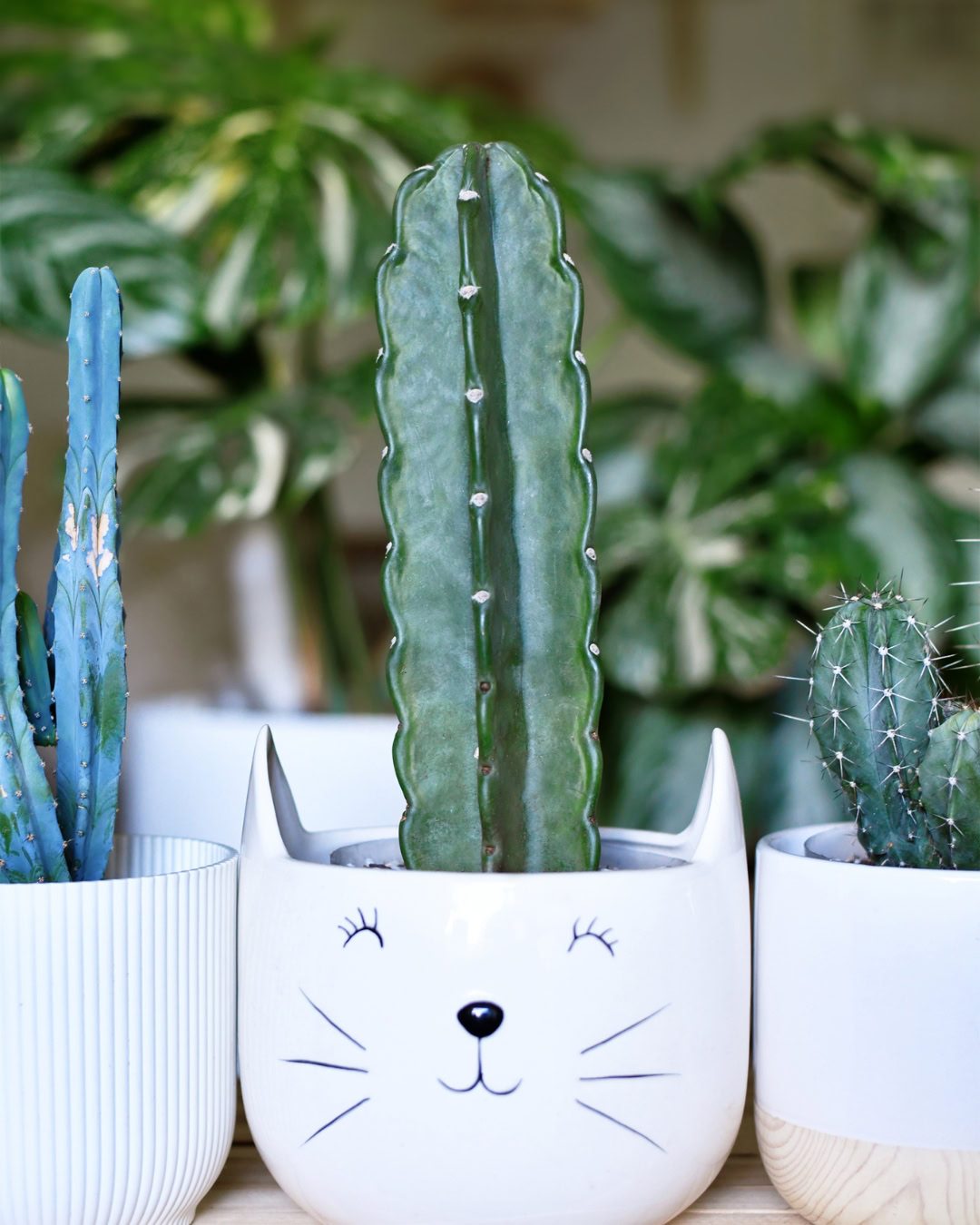
This species also adapts very well to large containers, as long as they are heavy and structural, such as concrete or thick terracotta ceramic pots, which can support the weight of the top growth without tipping. On balconies or patios, the container should receive direct sun for at least 6 hours a day. Growing indoors is discouraged, except for young plants and in spaces beneath large skylights or windows that allow direct, continuous sun exposure, preventing etiolation, which deforms the stems and weakens the cactus. The exception to this rule is using it as a temporary decorative plant that can be moved outdoors to grow actively, while serving a short-term ornamental role indoors. Finally, be mindful of the sharp spines: avoid planting it near high-traffic walkways and children’s play areas.
How to care for Mandacaru: growing guide
- Light: full, direct sun. The plant needs intense, direct solar exposure to develop sturdy stems, maintain its characteristic bluish-green color, and store enough energy for flowering.
If kept in shade, the cactus becomes thin and grows weak (etiolation). - Soil: highly permeable, sandy, and fast-draining. For planting directly in garden soil, prepare a mix with 1 part local clay-sandy soil, 1 part washed coarse river sand (avoid beach sand because of the salt), and 1 part well-decomposed organic compost, to provide support without trapping moisture around the roots.
- Watering: controlled and infrequent. After full rooting, which takes six months to a year, watering in the ground can be stopped completely, since the plant will then live only on local rainfall. In containers, water thoroughly only when the potting mix is dry all the way to the bottom, testing with a deep wooden skewer. In cold fall and winter weather, suspend watering almost completely.
- Climate: ideal for tropical, semi-arid, and subtropical climates. It tolerates high temperatures without any stress, but is sensitive to severe frost. It can handle occasional lows down to 41°F (5°C), as long as the soil is dry.
- Humidity: low to moderate. Avoid excessively humid or stuffy locations, which encourage fungal infections on the epidermis of the stems.
- Fertilizing: low demand. At the beginning of spring and summer, apply a slow-release mineral NPK fertilizer or formulas made for cacti and succulents, worked into the soil at the drip line, or use a soluble fertilizer at half the manufacturer’s recommended rate. Once a year, apply very well-aged manure on the surface (garden plantings only). Avoid fertilizers high in nitrogen (such as urea or straight 10-10-10) and organic fertilizers such as worm castings for container-grown plants.
- Pruning: only for cleanup and plant health management. Remove dry, damaged, or spotted stems using clean, sharp tools. Seal the cuts by applying ground cinnamon or copper paste to block moisture from entering.
- High-drainage management: in areas with heavy rainfall, the cactus should be planted on raised beds (berms or mounds) or on steeply sloped ground. This prevents frequent rainwater from collecting at the base of the trunk, which would cause root rot.
How to Propagate Mandacaru
Propagation from stem cuttings is the fastest and most efficient method for producing new plants that are healthy and identical to the mother plant. The step-by-step process is simple:
- Using a sharp, disinfected knife, make a clean cut at the joint where the selected stem connects to the main stem.
- Keep the cutting in a dry, shaded, well-ventilated place for 7 to 10 days. This resting period allows a dry, rough layer (the healing callus) to form over the cut area, preventing pathogens from entering and stopping the base from rotting too early.
- Insert the base of the callused cutting vertically into a pot with a substrate made of coarse river sand and light garden soil, without burying it too deeply, to avoid basal rot. Use bamboo stakes tied with soft rubber strips to keep the cutting stable until the first roots appear.
- Do not water for the first 15 days. After this initial period, begin misting water very lightly around the base to encourage the first roots to form. Full rooting occurs within a few weeks.
Propagation by seed is also possible by spreading the black seeds over a tray filled with a fine, sandy substrate. Cover them with a paper-thin layer of sand and keep everything moist under bright, indirect light, using a clear plastic cover. Germination takes place in 15 to 30 days, although the initial development of the small plants is quite slow.
Botanical Description of Cereus jamacaru
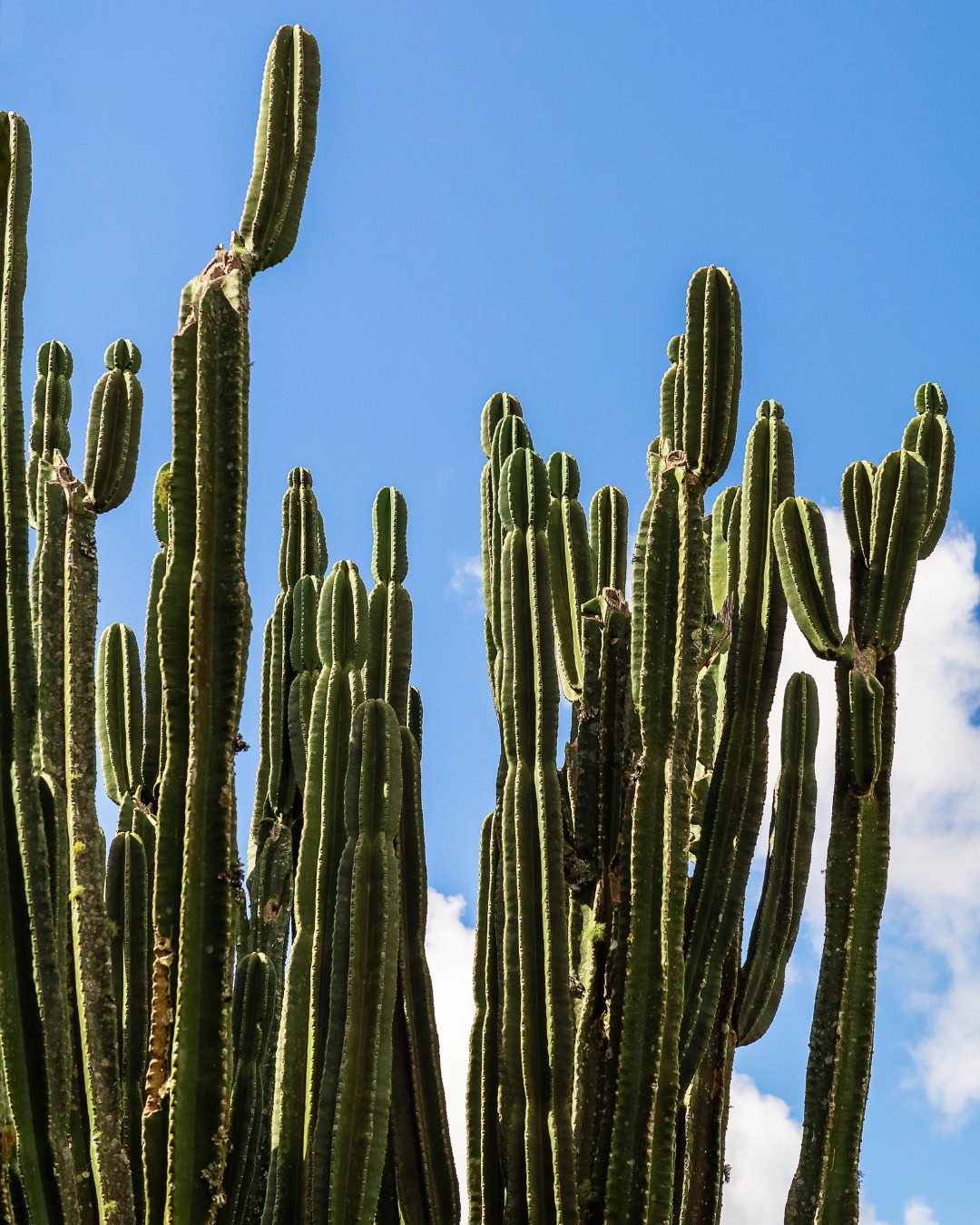
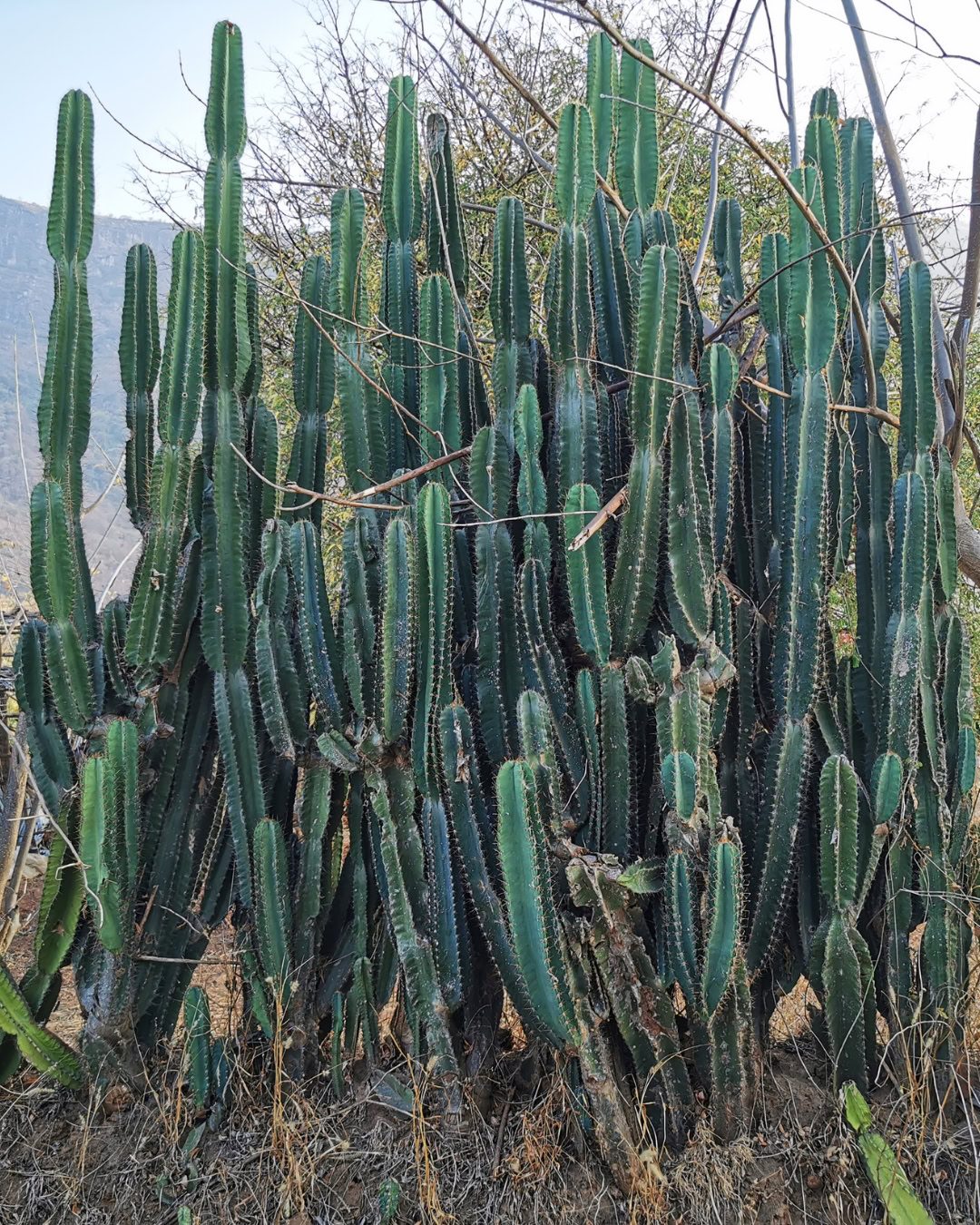
Mandacaru has a tree-like or shrubby habit and is large for its family, reaching 16.4 to 32.8 ft (5 to 10 meters) tall in its natural habitat. The spread of its crown, formed by its branching stems, reaches 9.8 to 16.4 ft (3.0 to 5.0 meters) across at maturity. The texture of its tissues is succulent in the younger stems, which store large amounts of water and mucilage, while the base of the main trunk becomes woody or semi-woody in mature plants.
The species has a hermaphroditic reproductive system, with functional male and female organs in the same flower. The roots form a taproot system, with a deep central root that anchors its large aboveground mass against strong winds, complemented by a shallow secondary network of fibrous roots that quickly absorb brief rainfall.
The main stem is cylindrical, thick, and develops a rough, dark gray, corky bark on mature specimens. Its branches (jointed segments) grow upright, with dark green to bluish-green (glaucous) coloring in newer tissue. They have 4 to 6 deep ribs, with areoles spaced 0.8 to 1.6 in (2.0 to 4.0 cm) apart. Each areole bears 8 to 20 stiff spines, yellowish to grayish, ranging from 0.6 to 3.9 in (1.5 to 10.0 cm) long.
Mandacaru does not have true leaves. They have been completely modified into sharp spines, an adaptation that drastically reduces water loss through transpiration. Photosynthesis takes place directly in the green stems through Crassulacean Acid Metabolism (CAM), in which the plant’s pores open at night to conserve water.
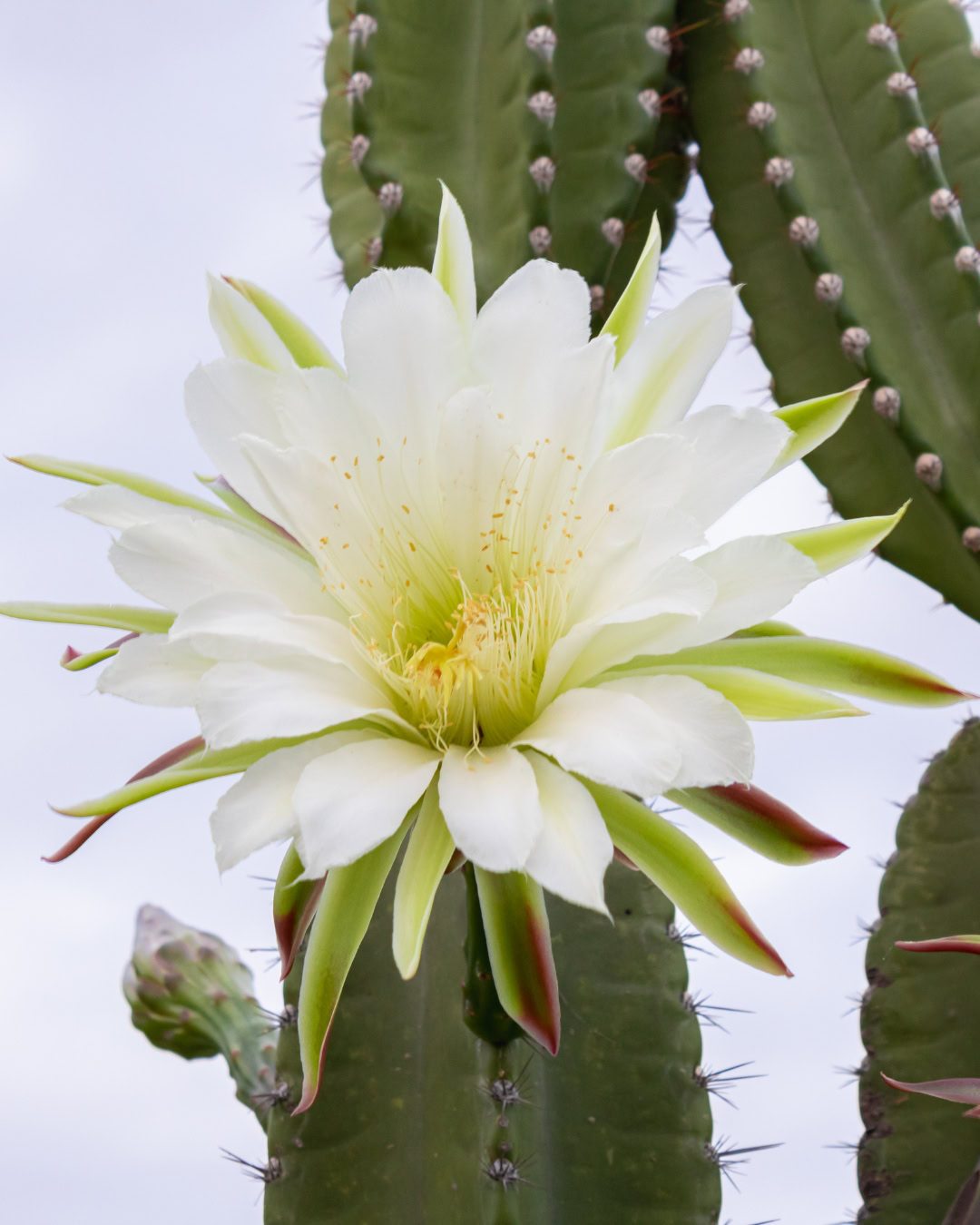
Flowering occurs mainly from late spring through late summer. The flowers are ephemeral and nocturnal: they open at dusk, reach peak anthesis during the night, and wilt permanently by the early hours of the following morning. They appear singly from the areoles of mature branches. Each flower is large, radially symmetrical, measuring 7.9 to 11.8 in (20 to 30 cm) long and supported by a long green floral tube. The outer tepals show greenish or reddish-brown tones, while the inner tepals are pure satiny white, surrounding numerous stamens with yellow anthers and a cream-colored multilobed stigma. Pollination is carried out mainly by nocturnal moths (sphingophily), attracted by the scent and the size of the flower as it opens at night.
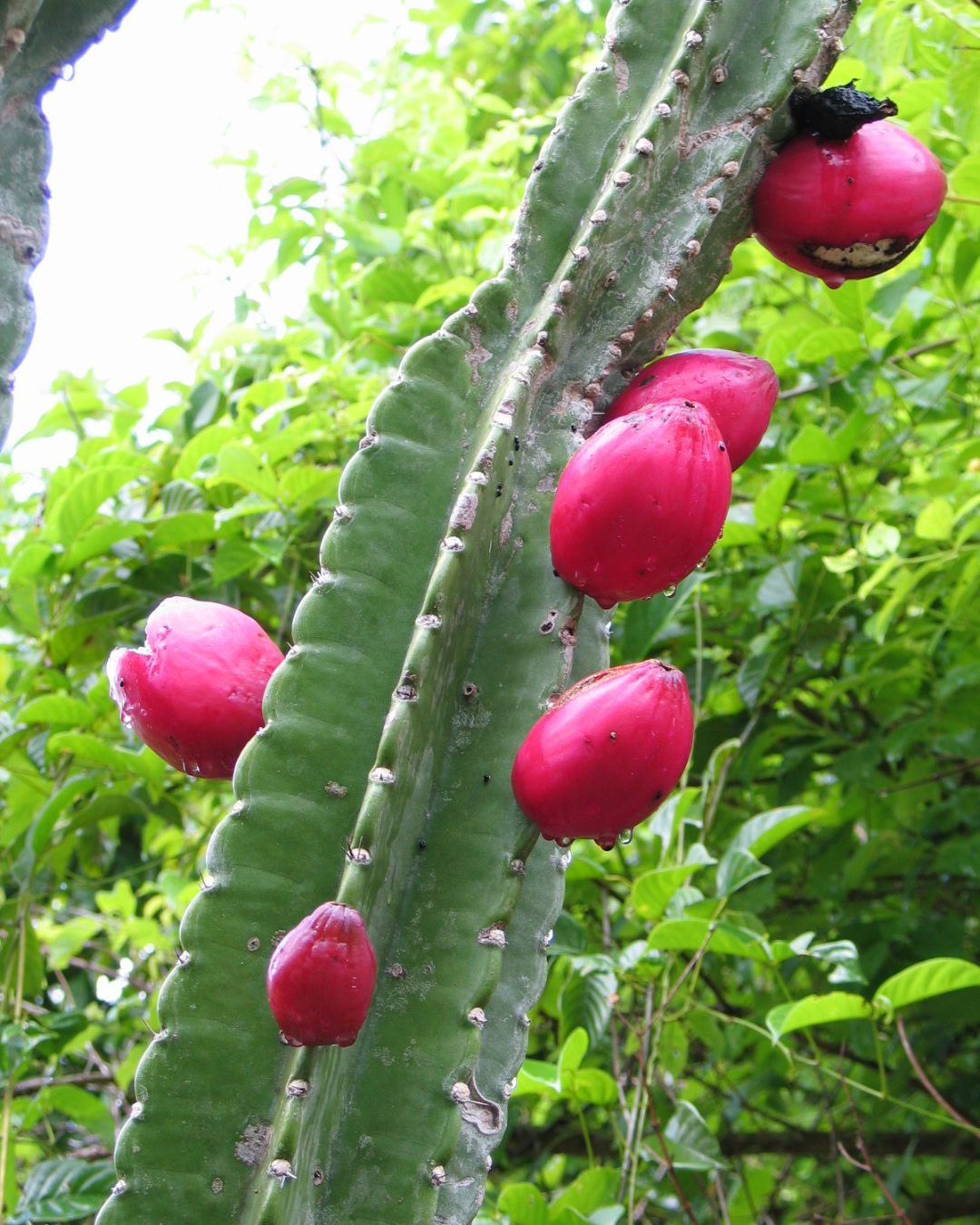
The fruit is a fleshy, edible berry, oval to ellipsoid in shape, measuring 3.1 to 4.7 in (8 to 12 cm) long, with a smooth, glossy skin that turns reddish-purple to deep pink when ripe. As it matures, it splits open lengthwise, exposing a dense, white, mucilaginous, sweet pulp. The seeds are small, about 0.08 to 0.12 in (2 to 3 mm) long, black and glossy, with a shape ranging from pear-like to kidney-shaped. Dispersal is carried out by animals, especially birds and small mammals that feed on the sweet pulp.
Main varieties and cultivars
Although the wild species is the best known, there are several types of Mandacaru that are highly sought after by collectors and landscape designers, each with its own distinctive silhouette and ornamental appeal. Here are the main ones:
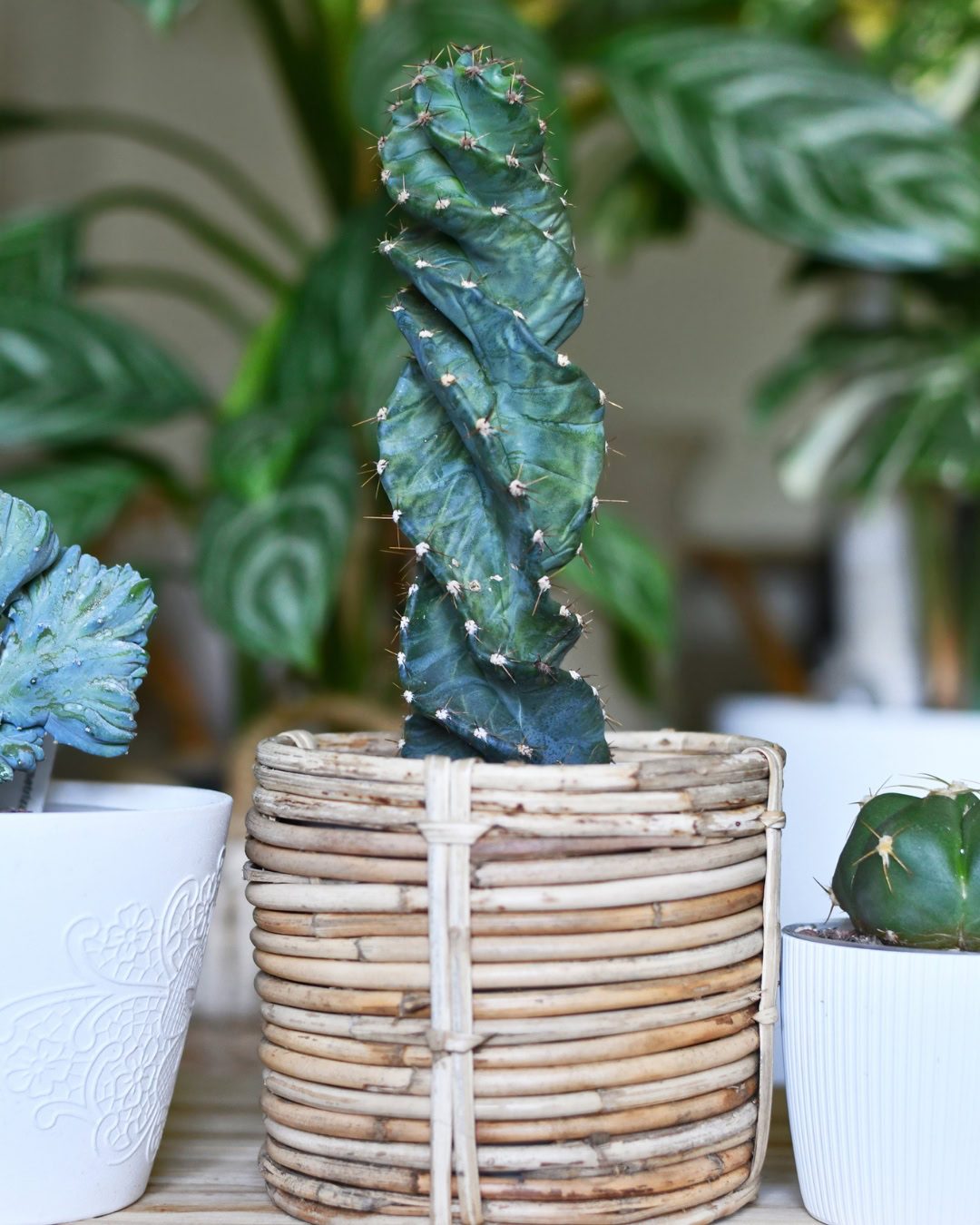
- Cereus jamacaru f. monstruosus (or ‘Monstruosus’): a mutation that shows irregular, asymmetrical cell growth. It has a smaller stature, twisted sculptural branches, interrupted ribs, and dense clusters of short spines, making it especially desirable in the ornamental plant market.
- Cereus jamacaru ‘Spiralis’ (Screw Cactus or Spiral Cactus): one of the most sought-after cultivars among collectors and landscape designers because of its sculptural appeal. In this form, the stems grow by twisting around their own axis, forming pronounced spirals along the ribs, which gives the plant a corkscrew-like appearance. Interestingly, plants grown from seed usually start out with straight branches and only begin to show the spiral effect once they reach about 3.9 in (10 cm) tall, and they do not always inherit the trait. For that reason, propagation from cuttings is the most reliable way to preserve the spiral form.
- Cereus jamacaru var. caesius: a variety characterized by young branches covered with a much heavier and more persistent grayish-blue waxy coating than in the typical species.
- Cereus jamacaru f. inermis (spineless Mandacaru): perhaps the most surprising form, the result of a natural mutation that does not develop rigid spines. The plant still shows the beginnings of areoles, but without fully developed spines, making it much more user-friendly for urban gardens, containers, and spaces with children. In the international market, it is sold under the nickname “Cuddly Cactus.” Beyond its ornamental appeal, this form has also attracted agronomic interest, with spineless plants being multiplied for use as forage cactus, eliminating the need to burn off spines before feeding livestock.
Pests, diseases, and solutions
Mealybugs: these sap-sucking insects settle into the grooves of the ribs and around the areoles, weakening the plant.
Control should be done by removing the infestations with an old soft-bristled toothbrush dipped in a solution of water and mild coconut soap, gently scrubbing the deep grooves of the ribs where the insects hide. Then apply neem oil in weekly sprays at dusk.
Spider mites: these usually appear during extended periods of dry heat, leaving the epidermis with dull grayish or bronzed patches. They can be managed with periodic applications of soluble sulfur.
Root and crown rot: this is a fungal infection, almost always caused by excess water in the soil. The basal tissues soften, darken, and give off an unpleasant odor. If the damage is extensive, the plant dies. In the early stages, cut off the healthy upper portion, discard the diseased base, and replant the top cutting only after it has fully callused.
Interesting Facts About Mandacaru
Mandacaru is a powerful symbol of resilience and survival in Brazil’s semiarid region. During severe droughts in the Caatinga, ranchers commonly burn off the plant’s spines with a flame so the water- and mucilage-rich stems can be fed to livestock as emergency forage, saving entire herds from hunger and dehydration.
In local cuisine, its ripe fruits are considered unconventional edible plants. The sweet, highly refreshing pulp can be eaten fresh or made into jams, juices, and deeply colored homemade liqueurs. The young shoots, which have not yet developed stiff spines, are also eaten cooked as a mild-flavored vegetable.
And even after the end of its life cycle, the plant remains useful. As its succulent pulp decomposes, all that remains is the inner vascular skeleton, made of a lightweight, hollow wood. This dry, fibrous material is traditionally collected by artisans to make lamps, decorative boxes, ceiling panels, and musical instruments such as rain sticks, keeping alive the strong cultural identity tied to this distinctly Brazilian species.
Frequently Asked Questions About Mandacaru
What is Mandacaru used for?
Mandacaru has many uses. In landscaping, it works as a living sculpture that gives structure to dry, contemporary, and minimalist gardens. In the Caatinga, it serves as an emergency reserve of water and forage for livestock during drought, when ranchers burn off the spines and feed the stems to their herds. Its ripe fruits are considered unconventional edible plants, with sweet pulp used for jam, juice, and liqueur, and the young shoots are eaten cooked. Finally, the dried woody skeleton of the plant is used in crafts to make lamps, ceiling panels, and musical instruments.
How do you care for Mandacaru in a pot?
Choose a large, heavy, sturdy pot, such as concrete or thick terracotta, that can support the weight of the top without tipping over. Use a very well-draining potting mix with coarse sand and organic matter, and provide direct sun for at least 6 hours a day. Watering is the most delicate part: water thoroughly only when the potting mix is dry all the way to the bottom, checking with a wooden skewer. In fall and winter, reduce watering almost completely. Fertilize lightly in spring and summer, and keep the pot away from cold drafts and frost.
Is there a spineless Mandacaru cactus?
Yes. Although Mandacaru’s spines are modified leaves that help the plant conserve water, there is a spineless form: Cereus jamacaru f. inermis, commonly called spineless Mandacaru. It is a natural mutation found in parts of northeastern Brazil, especially in Rio Grande do Norte and along the coast of Ceará. Botanically, it still forms the beginnings of areoles but does not develop rigid spines, which makes it ideal for urban gardens, containers, and spaces with children. Outside Brazil, it is sold under the nickname “Cuddly Cactus,” and Embrapa also studies it as livestock forage since it eliminates the need to burn off spines.
Can you keep a Mandacaru cactus in the living room?
It is only worth trying if the room has a large window or skylight that provides direct sun, and preferably with young, small plants, which are more tolerant of the lower light levels indoors. Mandacaru is a true full-sun plant, and in indoor spaces with too little light, it becomes etiolated: the stems grow thin, become misshapen, and the plant weakens. If you do not have that level of light at home, this cactus will be much healthier on a sunny patio, in the yard, or in the garden. It’s also worth remembering that the spines require caution in areas with children and heavy foot traffic.
What are the types of Mandacaru?
Besides the wild species, the most sought-after types are the monstrous form (‘Monstruosus’), with irregular growth and twisted, sculptural branches; the cultivar ‘Spiralis,’ known as screw cactus or spiral cactus, whose stems grow by twisting around their own axis; the inermis form, the spineless Mandacaru, ideal for urban gardens and forage use; and the caesius variety, with young branches covered in a grayish-blue waxy coating that is more intense than that of the standard species.
How do you prune a Mandacaru cactus?
Mandacaru should be pruned only for cleanup and plant health management, never to shape the plant. Remove only dry, damaged, or spotted branches, always using clean, very sharp tools. After cutting, let the area callus over by applying ground cinnamon or copper paste, which helps block moisture from entering and prevents fungal infections. If you need to save a specimen with rot at the base, cut off the healthy upper portion, discard the diseased base, and replant the top cutting only after it has fully callused.