

Moonlight Philodendron (Philodendron ‘Moonlight’) is a perennial herbaceous plant with an upright, compact growth habit that stands out for the distinctive brightness of its leaves. Unlike the vast majority of philodendrons, this plant is not a climber, instead maintaining a well-defined rosette form. Its main ornamental feature is the color of its foliage: new leaves emerge in a vivid, almost glowing neon yellow, gradually shifting through lime green before maturing to a medium green tone.
Highly valued in interior decor and landscape designs that call for a modern tropical touch, Moonlight Philodendron brings a natural point of light to shaded areas. Its orderly growth and lack of spreading stems make it easy to grow in limited spaces. It is a low-maintenance plant that wins over both beginners and demanding collectors thanks to its great resilience.
Origin, Habitat, and Etymology
Moonlight Philodendron is an interspecific hybrid developed in horticultural cultivation, with a selection history carried out in nurseries in the state of Florida, in the United States. Because it is the result of controlled crosses, it does not occur naturally in any wild ecosystem. However, the genetic heritage of its parent species is deeply rooted in the humid tropical forests of Central and South America, with a strong presence in the Amazon Rainforest and the Atlantic Forest, where its ancestors inhabit the shaded, moist understory.
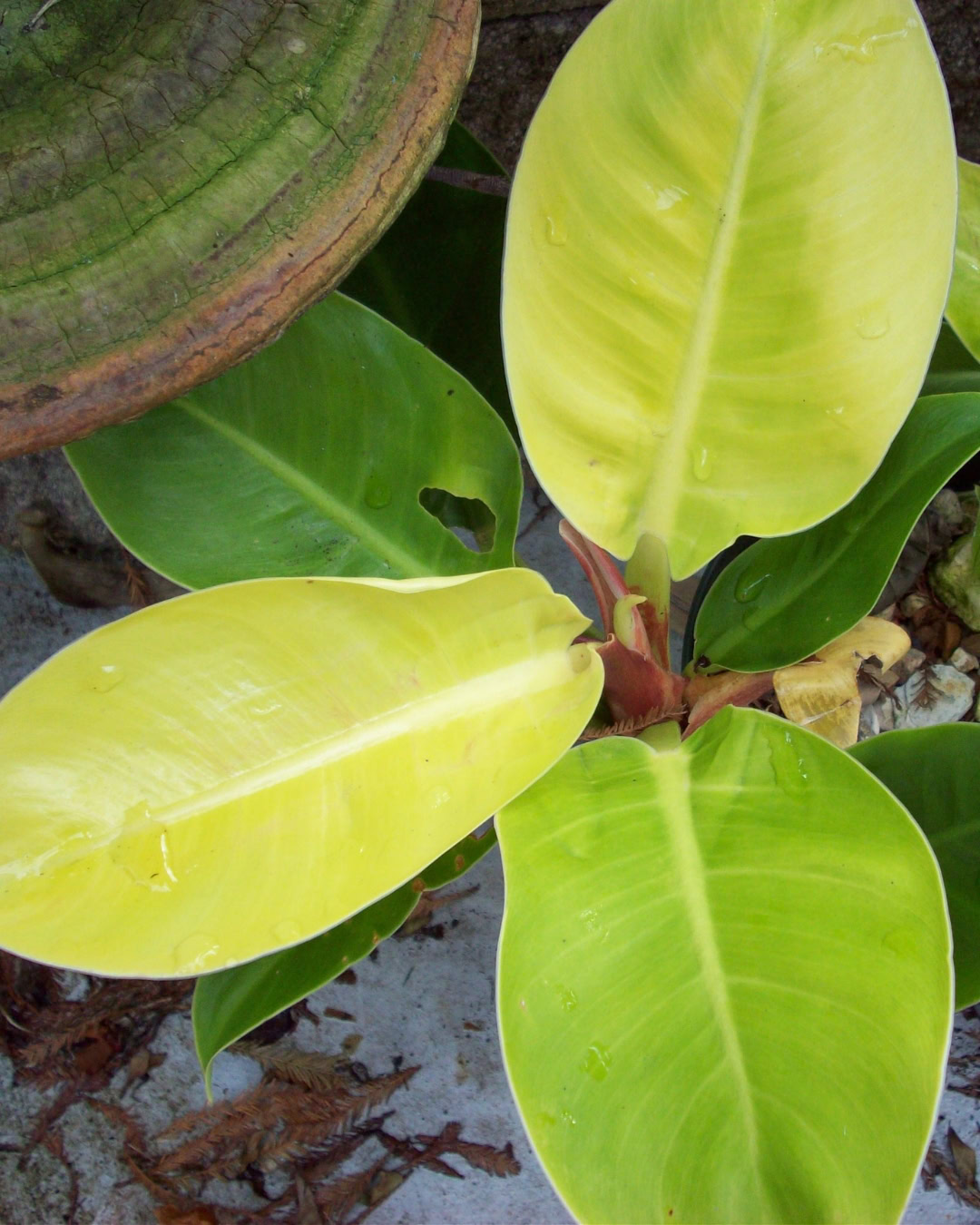
The generic name Philodendron comes from the Greek words philo, meaning love or affection, and dendron, which translates as tree. Together, they form the expression “friend of trees,” a direct reference to the epiphytic habit of many species in this genus, which climb trunks to reach light. The cultivar name, ‘Moonlight’, means “moonlight” in English. It is a poetic allusion to the almost luminous glow of its young leaves, which brighten the darkest corners of the garden.
Landscape Use of Moonlight Philodendron
In landscaping, Moonlight Philodendron stands out as an element of contrast and brightness in partial shade or under the canopy of trees. With a moderate growth rate and a compact form that reaches 50 to 80 centimeters in height (20 to 31 in), it maintains a symmetrical structure that does not encroach on neighboring plants. For creating dense, uniform mass plantings, a spacing of 0.6 to 0.8 meters between plants (2 to 2.6 ft) is recommended, ensuring that each specimen develops its leaf rosette without distortion from space competition.
Its light color allows for interesting visual arrangements when paired with plants of different textures and sizes. It works especially well planted beneath the canopy of trees and shrubs with dark green foliage, which serves as a backdrop to highlight the neon yellow of Moonlight Philodendron. Another high-impact option is mass planting at the base of the Blue Palm (Bismarckia nobilis), where the stiffness and blue-gray tone of the palm’s leaves contrast with the glossy texture of Moonlight Philodendron.
Enjoyed this guide? There's more where it came from.
Understanding why plants behave the way they do is what turns guesswork into a thriving garden. That's exactly what we share in the Shrubz newsletter — free, straight to your inbox:
- Seasonal care reminders timed to your gardening calendar
- Propagation and pruning techniques, explained step by step
- Pest and disease alerts — catch problems before they spread
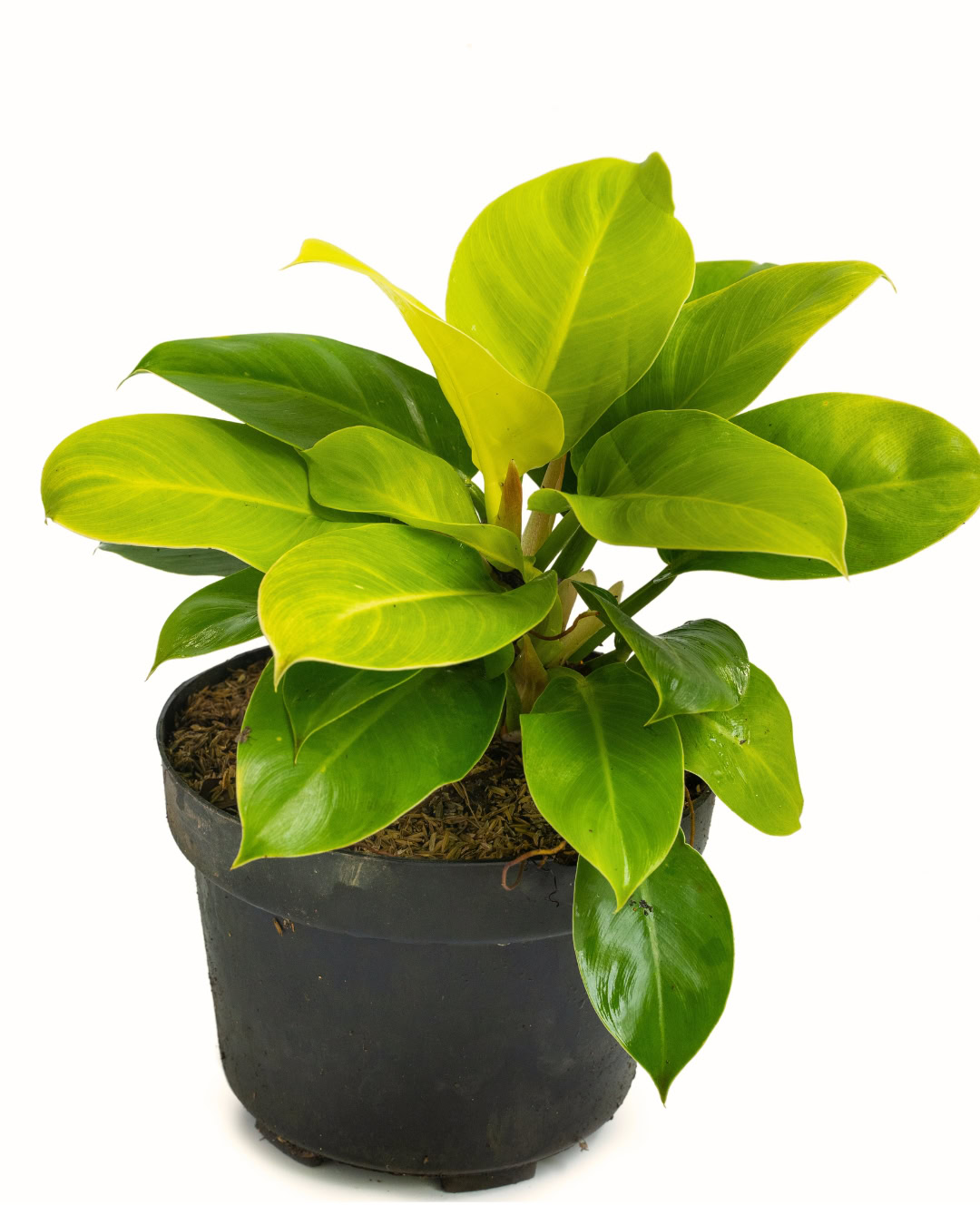
In tall containers on sheltered patios, it is possible to create striking compositions by combining Moonlight Philodendron with species in bottle green, burgundy, and even grayish foliage. Mixing textures is also an interesting choice, helping to showcase both Moonlight Philodendron, with its large upright leaves, and other species with trailing habits, small leaves, or deeply cut foliage.
This philodendron is an ideal choice for Tropical, Contemporary, and Modernist gardens, as well as for indoor compositions in the Urban Jungle style. Indoors, it adapts well to sunrooms, as well as medium-sized pots placed in living rooms, offices, and bright hallways. It is also a frequent choice for dynamic vertical garden designs, where it stands out among other plants.
How to Care for Moonlight Philodendron: Growing Guide
- Light: Grow in bright, filtered light or partial shade. Avoid direct sun between 10 a.m. and 5 p.m., as strong sun causes burns and dry brown spots on the neon foliage. Too little light causes new leaves to lose their characteristic yellow tone and emerge a dull green.
- Substrate: The ideal soil should be porous, well-drained, and rich in organic matter, with pH between 5.8 and 6.5. For container growing, prepare the potting mix by blending one part topsoil, one part fine pine bark, one part washed coco chips, and one part washed coarse river sand to ensure good root aeration.
- Watering: Keep the substrate slightly moist, but never soggy. Let the top layer of soil, about 2 to 3 centimeters, dry out completely before watering again. During the winter months, reduce watering frequency significantly to prevent root rot.
- Climate: Grows very well in warm Tropical, Equatorial, and humid Subtropical climates. The ideal growing temperature ranges from 18°C to 28°C. The plant does not tolerate frost, cold winds, or temperatures below 10°C, which cause dormancy and damage to leaf tissues.
- Air humidity: Requires relative humidity above 55%. In dry locations or under air conditioning, the edges of the leaves may dry out. Mist clean water over the leaves early in the morning or use humidifiers in the room.
- Fertilizing: To keep the colors vivid and growth healthy, apply slow-release NPK 10-10-10 fertilizer to the substrate at the beginning of spring. If you prefer organic fertilizing, work well-decomposed compost and very well-aged barnyard manure into the soil twice a year, at the beginning of spring and at the beginning of fall. Avoid fertilizers with excess nitrogen so the neon-yellow tone of the young leaves is not lost.
- Pruning: Do only cleanup pruning to remove old, yellowing, or dry leaves at the base. Cut the petiole flush with the stem using a previously sterilized pruning shear to prevent disease from entering.
- Leaf cleaning: The broad leaves collect dust, which reduces photosynthesis. Clean the leaf surface once a month with a soft microfiber cloth dampened with warm water. Never apply commercial leaf-shine products, as they clog the plant’s pores.
How to propagate Moonlight Philodendron
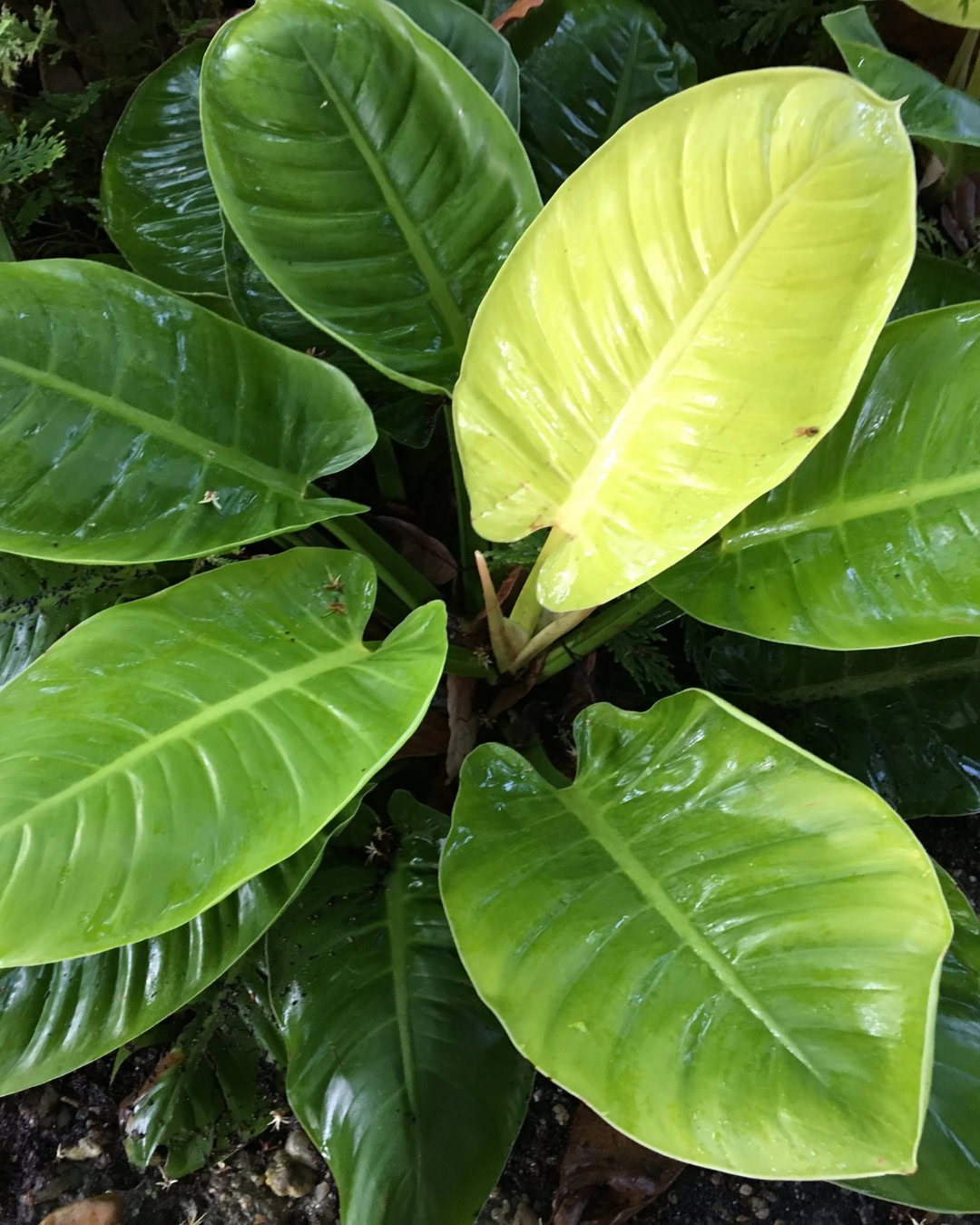
Propagation of Moonlight Philodendron can be done successfully by dividing clumps. Over time, the mature plant develops side shoots at the base of the main stem. In spring, remove the plant from the pot carefully and use a sharp, sterilized blade to separate these secondary shoots. Make sure each new plant has its own active root system. Plant the divisions individually in smaller pots with the recommended light potting mix and keep them in bright indirect light and high humidity until they show signs of new leaves.
Another viable method is stem cuttings, which can be used when the plant ages and develops a small upright trunk with visible nodes. With a clean cutting tool, cut off the top of the plant (the rosette top) and place it to root in a moist mix of fine pine bark and sand. The remaining base of the stem left in the original pot will begin producing new shoots from the axillary buds within a few weeks.
Some collectors have success multiplying the plant by creating small controlled wounds on the stem and applying auxin-based products that stimulate side shoots. But this practice requires care and technique, because stem wounds can become an entry point for disease and harm the plant instead of producing new plants. In commercial and industrial production, it is propagated through laboratory micropropagation, a technique that ensures the multiplication of identical, disease-free clones.
Botanical description of Philodendron ‘Moonlight’
Moonlight Philodendron is a monoecious plant with a compact, symmetrical form, reaching an average height of 50 to 80 centimeters and a rosette diameter of 60 to 80 centimeters under ideal care. Its texture is semi-herbaceous, with semi-succulent tissues in the petioles and stem, which help store water.
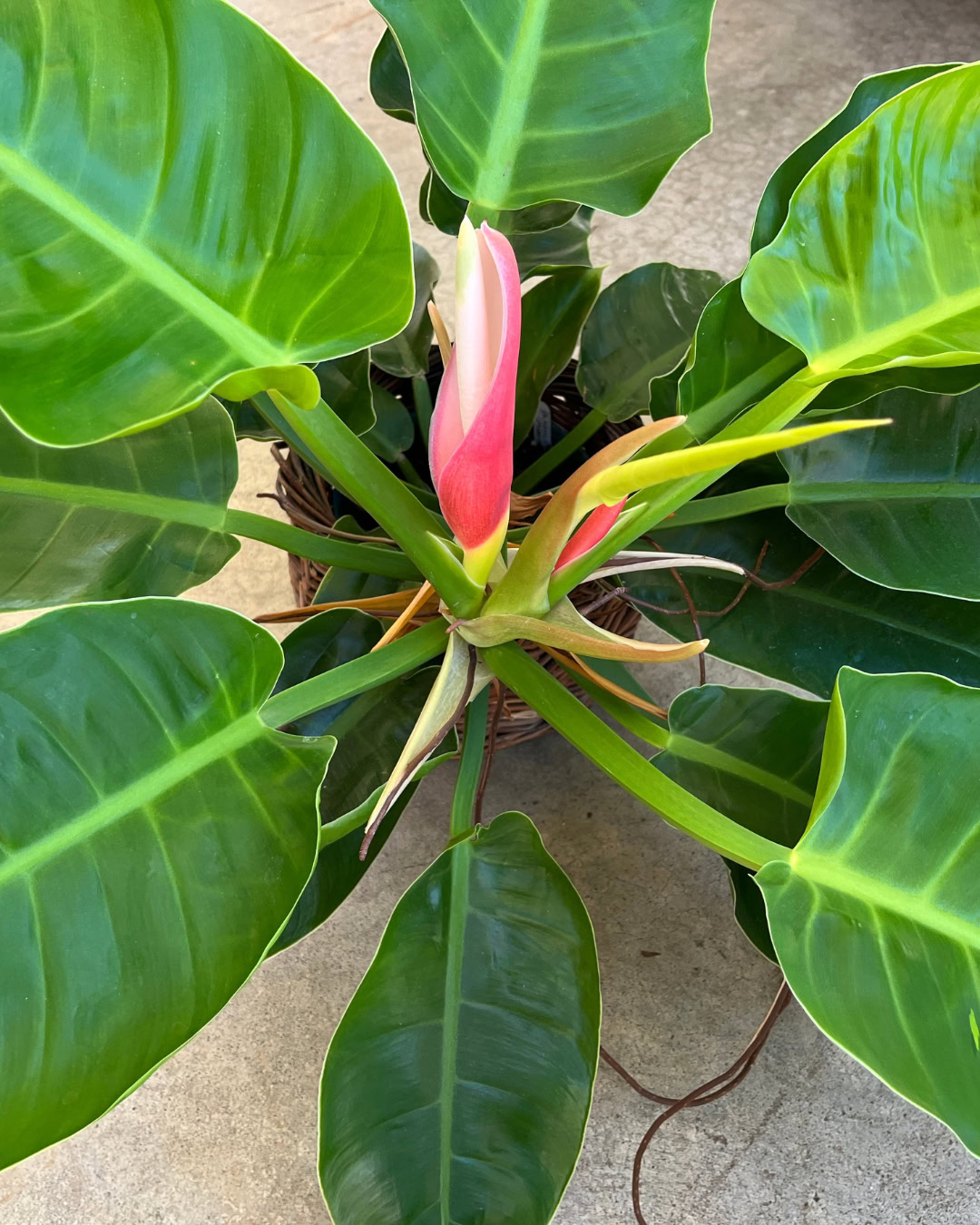
Its roots spread laterally through the substrate. In addition, the plant develops small adventitious aerial roots at the nodes of its short stem, which help retain moisture and nutrients suspended in the air. The main stem is upright, thick, and very short, with nodes very close together. Its color ranges from light green in younger portions to gray-brown in mature parts, which show striking scars left by fallen leaves and cataphylls. The cataphylls are narrow, elongated, and papery to semi-leathery, usually light green with pinkish or reddish tones when young, enclosing the developing leaf before drying out and gradually detaching along with the nodes.
The leaves are arranged in a very dense spiral phyllotaxy around the stem. They are simple, with an oblong-lanceolate to ovate-lanceolate shape, a truncated or slightly cordate base, and an acute tip. Each leaf measures 20 to 35 centimeters long by 10 to 15 centimeters wide. The texture is leathery and smooth, with no hairs. The venation is pinnate, with a thick, prominent midrib on the underside. The main visual appeal is the color: young leaves emerge in bright neon yellow, shift to lime green, and settle into medium green. The petioles are fleshy and show a reddish or pink tone at the base.
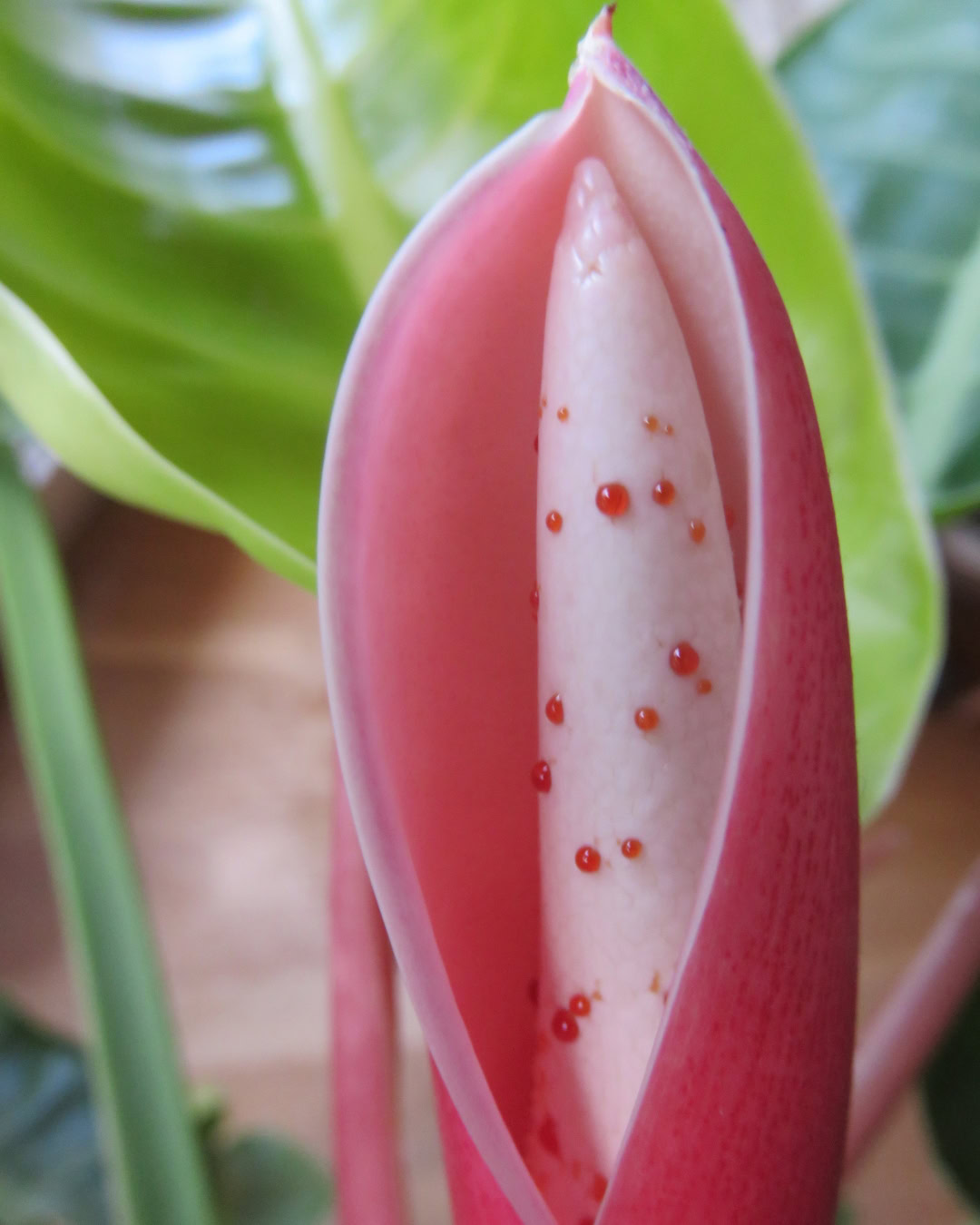
The inflorescence appears singly in the leaf axils and stands upright, protected by a thick spathe 10 to 15 centimeters long. The spathe is light green with pink tones on the outer surface, and a dark red shade on the inner face at the base, contrasting with the cylindrical spadix, which is white to cream. Blooming occurs from late spring to late summer, although it is a rare event when grown indoors. The flowers are tiny and lack petals or sepals, arranged in an orderly way on the spadix. The female flowers occupy the base and the male flowers the tip.
As in many members of the genus Philodendron, natural pollination is associated with cantharophily, with the participation of scarab beetles attracted to the inflorescence during anthesis, when odors are released and, in several species, the spathe and spadix warm through thermogenesis. When fertilization occurs, berry-type fruits may form along the spadix; however, in ornamental cultivars such as Moonlight Philodendron, fruiting is rare in home cultivation.
Pests, diseases, and solutions
Mealybugs and scale insects are the most common pests, settling into the folds of the petioles and on the undersides of young leaves. To control them, apply diluted neem oil or remove them by hand with a cotton swab soaked in a 1:1 mixture of water and isopropyl alcohol. Spider mites attack in dry air, leaving the foliage dull and marked with tiny pale spots. The solution is to apply sulfur-based miticides, wash the plant, and use humidifiers to raise humidity. Thrips can also attack new growth, deforming the leaves and leaving silvery patches.
Root and stem base rot is the main disease, and it develops when excess water in the soil encourages fungal infections. The base of the plant turns dark and soft, the leaves wilt, and the plant can die quickly. Treatment involves stopping watering immediately, removing affected tissue, and repotting the philodendron in fresh, light, dry potting mix. Bacterial leaf spots cause wet, foul-smelling lesions on leaves in hot, overly humid conditions. In this case, isolate the plant, cut off diseased leaves, and avoid wetting the foliage when watering.