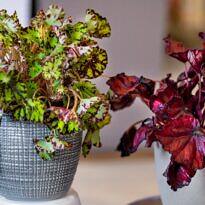
When we think about colorful gardens, we usually imagine vibrant, fragrant flowers. But how about creating a space full of color using foliage instead? Plants with colorful leaves are an excellent option for anyone who wants a striking garden throughout the entire year, without relying exclusively on seasonal blooms. They guarantee long-lasting color and visual interest in your garden all year round.
In this article, you’ll discover 50 outstanding species that bring shades of red, purple, yellow, pink, white, and much more to transform your garden into a true living work of art.
Why choose plants with colorful foliage?
Ornamental plants with colorful foliage offer several advantages for landscaping. Unlike flowers, which have specific blooming periods, the foliage remains decorative year-round, ensuring consistent color in the garden. In addition, these plants are generally hardy and require relatively simple maintenance, making them ideal for both beginning and experienced gardeners.
Enjoyed this guide? There's more where it came from.
Understanding why plants behave the way they do is what turns
guesswork into a thriving garden. That's exactly what we share in the
Shrubz newsletter — free, straight to your inbox:
Seasonal care reminders timed to your gardening calendar
Propagation and pruning techniques, explained step by step
Pest and disease alerts — catch problems before they spread
Shrubs
1. Snowbush (Breynia disticha)
Snowbush or Snow-on-the-mountain
Snowbush is a versatile choice for low hedges and borders, especially when the goal is to brighten the garden with variegated foliage (green with white/cream). It responds well to pruning and can be trained as a small, dense mass with fine texture and a consistently neat appearance. In very hot, dry climates, its color looks better in slightly moist soil with some protection from intense afternoon sun.
Mature size: 2.6 to 6.5 ft (0.8 to 2.0 m) tall (can be kept lower with pruning)
Light: Full sun to partial shade (best color in gentle sun or bright partial shade)
Overall appearance: Compact shrub with small variegated leaves, forming a light-colored, finely textured mass.
Use: Low hedge, edging, mass plantings for contrast, and bright focal points in tropical or subtropical gardens.
2.
Triangle fig (Ficus triangularis)
Triangle fig
The triangle fig stands out for its distinctly shaped foliage — truly triangular leaves — and for its elegant appearance as a shrub or small tree. In warm climates it can be used as a structural element and green backdrop, and some forms are attractively variegated. Like other ficus species, this triangle fig prefers bright light and tolerates pruning well, but it needs enough space to develop a well-balanced canopy.
Height: 6.5 to 20 ft (2.0 to 6.0 m) (may grow taller in ideal conditions)
Light: Full sun to partial shade
Overall appearance: Glossy, well-defined foliage with triangular leaves, creating a strong identity in the landscape.
Uses: Structural element, background planting, medium-sized focal point, and combinations with tropical foliage.
The mirror plant has leaves so glossy they look as if someone has polished them with furniture wax (no one has; that shine is natural). Some cultivars of mirror plant display coppery, reddish, or variegated tones, and the plant responds extremely well to pruning, making it excellent for low to medium-height hedges. It is widely used in coastal gardens because it tolerates wind and salt spray, provided the soil offers good drainage.
Height: 2.5 to 8 ft (0.8 to 2.5 m)
Light: Full sun to partial shade
Overall appearance: Compact shrub with small, very glossy leaves; coloration varies by cultivar.
Japanese pittosporum is practically a textbook example of a privacy hedge: leathery foliage, good branching and excellent response to pruning, with a clean, elegant look. Some cultivars are variegated, providing attractive light-colored contrast. During the blooming season, this privacy hedge can subtly perfume the garden. It is quite tolerant of wind and performs well in urban areas.
Height: 5 to 13 ft (1.5 to 4.0 m)
Light: Full sun to partial shade
Overall appearance: Dense shrub with thick, glossy leaves and very good ability to form neat green “walls.”
Flowers: Small, pale and fragrant, usually in spring; they may go unnoticed on heavily pruned plants.
Uses: Formal privacy hedge, rows, light windbreak and permanent structure in the landscape.
5. Japanese euonymus (Euonymus japonicus)
Japanese euonymus
Japanese euonymus is one of the most widely used shrubs for privacy hedges and formal edging, especially in its variegated forms (green with cream or yellow). It fills in quickly, tolerates frequent pruning and allows for very geometric shaping of a privacy hedge. In very hot climates, some cultivars can suffer under intense afternoon sun; in bright partial shade the foliage tends to stay more attractive.
Height: 3 to 10 ft (1.0 to 3.0 m)
Light: Full sun to partial shade
Overall appearance: Compact, well-branched shrub with small, variegated leaves, excellent for lines and crisp outlines.
Flowers: Small and not very ornamental; small fruits may occasionally appear.
Uses: Low to medium privacy hedge, formal borders, topiary, and compositions in both classic and contemporary gardens.
6.
Pleomele (Dracaena reflexa)
Pleomele
Pleomele works very well in rows and contemporary hedges, with its narrow, glossy leaves, including the variegated cultivars. It does not form a hedge as solid as privet, for example, but it creates an elegant visual barrier with low litter (it drops very few leaves when well established). In areas without severe frost, pleomele is an excellent option for planting along walls, fences and entryways.
Mature size: 5 to 13 ft (1.5 to 4.0 m)
Light: Gentle full sun to partial shade
Overall appearance: Shrub/small tree with dense foliage at the tips of the branches, a distinctly tropical look and a clean, tidy finish.
Landscape use: Informal rows, light hedges, contemporary compositions, sides of walls, fences and entrances.
7. Chinese privet (Ligustrum sinense)
Chinese privet
Chinese privet is practically a synonym for a traditional hedge: it grows fast, branches readily and tolerates hard, frequent pruning. However, the same vigor that makes Chinese privet so effective as a privacy hedge can become a problem in some regions, as it may spread easily (always check local regulations and invasive-species lists, and manage fruiting carefully). For those who want a very dense privacy hedge that can handle regular clipping, Chinese privet fulfills this role efficiently.
Mature size: 6.5 to 16.5 ft (2.0 to 5.0 m) (kept lower with regular pruning)
Light: Full sun to partial shade
Overall appearance: Very well-branched shrub with small to medium leaves, forming a thick, compact wall when trained as a hedge.
Flowers: Fragrant white panicles that can attract pollinators and are followed by dark, berry-like fruits.
In landscaping, this shrub is also widely known as Chinese fringe flower — and despite the similar common name, it is not part of the classic cold-climate witch hazel group. The main highlight is its purple foliage (in many cultivars) and the pink, “fringed” blooms, which create a delicate, distinctive effect in more ornamental hedges. It tolerates pruning, but usually looks best with light, occasional shaping rather than being sheared hard every week.
Mature size: 3.3 to 10 ft (1.0 to 3.0 m)
Light: Full sun to partial shade (good light keeps the purple foliage more intense)
Overall aspect: shrub with colorful foliage (often purple), fine texture and dense branching.
Flowers: small, pink, with narrow, shredded-looking petals; highly ornamental in bloom season.
Uses: ornamental hedges, colorful mass plantings, focal points at entrances, and contrast with green foliage plants.
9. Heavenly bamboo (Nandina domestica)
Heavenly bamboo
Heavenly bamboo is an elegant option for low hedges and mass plantings, with fine-textured foliage and a light, airy look, plus year-round color changes (shades of green, bronze and red, depending on the cultivar and local climate). In landscape design, it works very well to create a structured border without feeling visually heavy. It produces small, white flowers and, in many situations, showy red berries.
Mature size: 2 to 6.5 ft (0.6 to 2.0 m) — varies greatly by cultivar
Light: Full sun to partial shade
Overall aspect: delicate-looking shrub, with fine compound leaves and seasonal/variable coloration.
Flowers: small, white, in clusters; often followed by ornamental red berries.
Uses: low hedges, borders, mass plantings, and compositions in light, refined, Zen- or Japanese-inspired gardens.
Groundcovers
10.
Coleus (Plectranthus scutellarioides)
Coleus
Coleus is a winner when it comes to foliage color. Its leaves can display striking combinations of purple, pink, red, yellow, green and even nearly black. Perfect for containers and shaded beds, this tropical plant prefers evenly moist soil and partial shade.
Height: 4 to 16 in (10 to 40 cm)
Light: Partial shade
Overall aspect: Soft, very colorful leaves with unusual shapes, depending on the cultivar, forming a dense, compact mass.
Flowers: Upright purple flower spikes, of secondary ornamental value.
Landscape use: Edging, mass plantings beneath trees, and borders along paths.
11. Caladium (Caladium bicolor)
Caladium
Caladium is the showpiece of the tropical garden: heart-shaped leaves with patterns that look hand‑painted, in combinations of white, pink, red and green. Because it is a tuberous plant, it tends to have a well‑defined growth cycle in many climates — it sprouts vigorously in warm, humid weather and may lose much of its vigor during cold or dry periods. In landscape design, it performs best in shaded mass plantings, where its color stands out without the foliage scorching.
Height: 12 to 24 in (30 to 60 cm)
Light: Partial shade to bright shade (gentle morning sun can be beneficial)
Overall aspect: Broad, thin, highly colorful foliage, creating bold blocks of color in mass plantings.
Landscape use: Mass plantings beneath trees, partial‑shade borders, combinations with green foliage plants, and lush, humid tropical‑style gardens.
12.
Calatheas, stromanthes, goeppertias and prayer plants (Marantaceae)
Marantaceae
The Marantaceae family is the tropical elite of shade groundcovers: geometric patterns, stripes, blotches and purple leaf undersides, with a fun botanical bonus — many species move their leaves throughout the day. Their success depends on moisture: they dislike dry wind and soil that turns dusty. In gardens, these shade groundcovers thrive in protected beds, with filtered light and consistent watering.
Height: 8 to 32 in (20 to 80 cm) (varies greatly between genera and cultivars)
Landscape use: Shade groundcover, mass plantings in moist, sheltered areas, tropical understory and beds along shaded walls or fences.
13. Nerve plant (Fittonia albivenis)
Nerve plant
Fittonia, commonly called nerve plant, is small but visually striking: white, pink or red veins over green leaves create a “mosaic” effect that is perfect for shaded borders and delicate compositions. This shade groundcover prefers consistently moist conditions and suffers when the potting mix dries out too much — it is the kind of plant that tolerates very little neglect, but rewards you when well established in a humid, partially shaded spot.
Height: 4 to 8 in (10 to 20 cm)
Light: Partial shade to bright shade
Overall appearance: Low groundcover with small leaves and colorful veins, forming a compact carpet.
Flowers: Small and not very ornamental; often go unnoticed.
Landscape use: Shaded borders, moist beds, areas protected from wind, and detailed planting in tropical-style gardens (especially under tree canopies).
14.
Moses-in-the-cradle (Tradescantia spathacea)
Moses-in-the-cradle
Moses-in-the-cradle is a hardworking groundcover: it tolerates heat, is very resilient, and still delivers strong contrast with its lance-shaped leaves, green on top and purple underneath. In garden beds, it forms dense clumps and is excellent for edging pathways and filling gaps. In full sun the foliage color tends to be more intense; in partial shade it grows softer and greener.
Height: 8 to 16 in (20 to 40 cm)
Light: Full sun to partial shade
Overall appearance: Compact rosettes/clumps with rigid leaves and purple undersides, creating a well-defined mass of foliage.
Flowers: Small, white, protected by purplish bracts; they appear frequently.
Landscape use: Edging, mass plantings, slopes, and low-maintenance beds where a strong color contrast is desired.
15. Bloodleaf (Iresine herbstii)
Bloodleaf
Bloodleaf is the “red paint” of tropical landscaping: foliage in wine-red, crimson and magenta tones, with very pronounced veins. As a groundcover plant it works extremely well in mass plantings and patterned designs, because it responds well to pruning and resprouts vigorously. To maintain its strong color, it needs good light and reasonably fertile potting mix — in deep shade it tends to stretch and lose intensity.
Height: 12 to 32 in (30 to 80 cm) (can grow taller if not pruned)
Light: Full sun to partial shade (more sun = richer color)
Landscape use: Colorful mass plantings, borders and edging, garden designs, and strong contrast with green or yellow foliage plants.
16.
Lysimachia (Lysimachia procumbens)
Lysimachia. Photo courtesy of Proven Winners
Lysimachia (widely used as a trailing or creeping ground cover) forms a low mat of small leaves, excellent for visually “tying together” a bed and creating smooth transitions between taller plants. Depending on the cultivar, the effect can range from bright green to golden, and performance improves in soil kept lightly and consistently moist. Under very hot, dry full sun it tends to struggle; in light shade or partial shade it stays more stable and attractive.
Height: 2 to 6 in (5 to 15 cm) (stems can spread much farther)
Light: Gentle full sun to partial shade
Overall habit: Dense, low-growing lysimachia ground cover with small leaves and fast, filling growth.
Flowers: Small, usually yellow, delicate, with secondary ornamental effect.
Uses: Front of borders, between stones, filling gaps, and as a “finishing” layer in mass plantings.
Alternanthera ‘Periquito’ is one of the best ground covers for gardeners who want vibrant color that can be easily controlled by pruning. It forms dense carpets and allows you to create edging patterns and arabesques with ease, thanks to its compact growth and rapid regrowth after trimming. Cultivars range from chartreuse to burgundy, purple, and pink, and the foliage color becomes more intense with good light and moderate feeding.
Height: 6 to 16 in (15 to 40 cm)
Light: Full sun to partial shade
Overall habit: Compact alternanthera ground cover with small, very colorful leaves, excellent for geometric bedding designs.
Uses: Edging, garden patterns, low beds, borders along paths, and focal planting areas.
18.
Ornamental sweet potato (Ipomoea batatas)
Ornamental sweet potato
Ornamental sweet potato is a fast-growing groundcover that fills empty spaces in record time — and it comes in foliage color palettes that range from lime green to nearly black purple. This ornamental sweet potato produces long vines, works very well as a cascading plant along borders, and also as a ground cover. It is excellent for instant impact, but it does need management: without pruning, it will quickly take over the area.
Height: 4 to 12 in (10 to 30 cm) (vines can spread 3 to 10 ft or more (1 to 3 m or more))
Light: Full sun to partial shade
Overall appearance: vigorous groundcover, with leaves of varied shapes (lobed or entire), forming a wide, fast carpet.
Uses: rapid ground cover, edging for beds, slopes, and compositions that call for strong color contrast.
19. Purple heart (Tradescantia pallida)
Purple heart (Tradescantia pallida)
Purple heart is a tough, low-maintenance groundcover with intense color when well established. In full sun, the foliage develops a deeper purple color and stays more compact; in partial shade, the stems elongate and the leaves turn a bit greener. It is excellent for edging and slopes, and also works well as a continuous “line of color” in tropical or modern mixed beds.
Height: 6 to 12 in (15 to 30 cm)
Light: Full sun to partial shade (more sun = more intense purple)
Overall appearance: trailing stems with narrow purple leaves, forming a dense, uniform mat.
Flowers: small, pink to lavender, delicate, and frequent under good growing conditions.
Uses: low-maintenance groundcover, edging, slopes, dry to moderately moist beds, and bold color contrast.
Amethyst ground cover works beautifully as a shade-loving foliage plant with a more understated texture and color palette, usually with soft leaves in tones that range from green to purplish, depending on the cultivar and light conditions. This amethyst prefers fertile, slightly moist soil and typically performs best in partial shade—under strong, direct sun it tends to scorch and lose quality. It is excellent for filling in under shrubs and along protected borders.
Height: 8 to 20 in (20 to 50 cm)
Light: Partial shade to bright shade
Overall appearance: Low amethyst ground cover with soft foliage, forming a dense, well-filled mat in sheltered areas.
Flowers: Small, usually borne on upright spikes/inflorescences with purple blossoms.
Uses: Amethyst ground cover under shrubs, shaded borders, moist beds, containers, and compositions combined with larger foliage plants.
21. Polka dot plant (Hypoestes phyllostachya)
Polka dot plant
The polka dot plant looks as if it has been splashed with paint: green leaves speckled with pink, red, or white, depending on the cultivar. It works well as a “detail” plant for edging and as filler in shaded, evenly moist beds, where its pattern stands out clearly. In intense sun it can suffer; in very deep shade it loses vigor and color. It is ideal for small-scale color accents.
Height: 6 to 12 in (15 to 30 cm)
Light: Partial shade (bright shade also works)
Overall appearance: Low ground cover with small leaves marked by colorful spots/veins, creating a “confetti” or polka dot effect.
Uses: Edging, low drifts in partial shade, compositions in moist beds, and colorful detail near paths.
22.
Purple shamrock (Oxalis triangularis)
Purple shamrock (Oxalis triangularis)
Purple shamrock is an unusual groundcover, with deep purple, triangular leaves that move (opening and closing) according to the light and time of day. In tropical or subtropical gardens, purple shamrock is excellent for contrast in partial shade, forming low, delicate clumps. In intense, direct sun it can scorch and become stressed; in bright shade it usually remains more stable. Purple shamrock also tends to go through phases of stronger and weaker growth throughout the year, depending on the climate.
Height: 6 to 10 in (15 to 25 cm)
Light: Partial shade to gentle sun (avoid scorching midday sun)
Overall appearance: low clumps with purple, triangular foliage, creating fine texture and elegant contrast.
Flowers: small, usually pink or white, delicate and frequent.
Landscape use: edging in partial shade, low mass plantings, contrast under shrubs, and beds along pathways.
23. Neoregelia (Neoregelia spp.)
Neoregelia
Neoregelia are bromeliads that are ideal for providing long-lasting color in beds and borders: many Neoregelia develop a reddish or pinkish center and leaves with spots or stripes. They form rosettes that hold water in the central “cup”, enhancing tropical compositions and low‑maintenance gardens in bright, filtered shade. The effect is very sculptural, and a planting of Neoregelia looks even more striking when used in groups (preferably repeating the same cultivar to create a cohesive mass).
Size: 8 to 24 in (20 to 60 cm) (the spread can be greater than the height)
Light: Partial shade to filtered sun (good light intensifies the color; strong direct sun can scorch the foliage)
Landscape use: tropical mass plantings, shaded bed borders, compositions under trees, and dedicated bromeliad gardens.
24.
Tampala (Amaranthus tricolor)
Tampala (Amaranthus tricolor)
Tampala foliage is color in “turbo mode,” especially in warm weather: it combines shades of green, yellow, orange, and red in leaves that create vibrant patches. Tampala is a short‑cycle plant (often grown as an annual), excellent for filling borders with a fast, intense effect. In landscape design, tampala works as a temporary mass planting to provide instant color while shrubs and perennials take time to mature.
Height: 16 to 48 in (40 to 120 cm)
Light: Full sun
General appearance: Layered, colorful foliage forming showy, fast‑growing clumps.
Uses: Fast‑effect mass plantings, sunny borders, temporary tropical compositions, and contrast with green foliage.
25. Purple fountain grass (Pennisetum setaceum)
Purple fountain grass
Purple fountain grass is an ornamental groundcover grass (used in bold drifts or mass plantings) that delivers texture, movement, and burgundy to wine‑red tones in many cultivars. It works as a voluminous mass, creating rhythm along paths and borders and contrasting beautifully with broad tropical foliage. In full sun, it tends to stay more compact and more intensely colored. As an ornamental grass, it prefers well‑drained soil and responds well to periodic clean‑up pruning.
Height: 24 to 48 in (60 to 120 cm), depending on the cultivar and maintenance
Light: Full sun
General appearance: Clump‑forming plant with fine, arching leaves, reddish to purple in color, with a strong sense of movement.
Flowers: Very ornamental, feathery plumes that greatly enhance the overall visual effect.
Uses: Mass plantings of ornamental grasses, sunny borders, contemporary garden beds, contrast with broad leaves, and for creating rhythm in the garden.
26.
Ajuga (Ajuga reptans)
Ajuga
Ajuga is a classic carpet-style ground cover: it grows low, quickly closes in the soil, and offers foliage in shades of green, bronze, and purple (depending on the cultivar). In warm climates, this ground cover usually performs best in partial shade and evenly moist soil; in intense sun and high heat, it can lose vigor and open up bare patches. When ajuga is thriving, it forms a very uniform, low-growing mat.
Height: 4 to 8 in (10 to 20 cm)
Light: Gentle sun to partial shade
Overall appearance: Dense, carpet-like ground cover with small leaves in variable colors (bronze/purplish/variegated, depending on the cultivar).
Flowers: Small flower spikes, usually blue‑purple, held above the foliage.
Uses: Ground cover for bright shade, edging, between stones, and as a finishing layer beneath shrubs.
27. Mondo grass (Ophiopogon japonicus)
Grama-preta (Ophiopogon japonicus)
Mondo grass is one of the best options for creating dark, contrasting lines and borders. It forms low clumps with fine texture and provides that clean, tidy edge that makes a garden look more carefully designed. In partial shade, this ground cover tends to look lusher and is less prone to water stress.
Height: 6 to 12 in (15 to 30 cm)
Light: Full sun to partial shade (performs best in partial shade in hot regions)
Overall appearance: Compact clumps of narrow, very dark leaves, creating strong contrast and well-defined borders.
Uses: Edging, design lines, low mass plantings, and combinations with light or variegated foliage.
The variegated spider plant is perfect for part-shade areas where you want a constant, bright “light green” look, with a clean appearance and simple maintenance. In the garden, it works very well as an edging plant and groundcover under shrubs, as long as the soil does not dry out for long periods. This variegated spider plant also produces stolons with baby plants — great for filling in empty spaces, and also great at spreading farther than planned if you are not paying attention.
Height: 8 to 16 in (20 to 40 cm)
Light: Partial shade (tolerates gentle sun)
Overall appearance: clumps of arching, variegated leaves (green with light stripes), forming a light, bright mass of foliage.
Flowers: small, white, on thin stems; often accompanied by plantlets.
Uses: edging, groundcover under shrubs, shaded beds, and transition areas between sun and shade.
Variegated dianella is one of those “structural foliage” plants that solve planting beds with very little fuss: fan-shaped clumps of variegated leaves, with strong presence and a contemporary look. It performs well in medium-sized masses and borders, and helps create rhythm in the landscape. In general, this variegated dianella prefers well-drained soil and regular watering while it is establishing.
Height: 16 to 36 in (40 to 90 cm)
Light: Full sun to partial shade
Overall appearance: upright clumps of linear, variegated leaves, with a geometric look and a very “clean” finish.
Flowers: small, usually bluish to lilac; may be followed by decorative berries depending on conditions.
Uses: medium borders, mass plantings, contemporary gardens, and combinations with broadleaf shrubs.
Variegated liriope is one of the most practical groundcovers for bright shade: it fills in well, visually anchors empty planting areas, and offers a fine texture with soft, light stripes. This variegated liriope performs beautifully as an edging plant, in mass plantings, and even as a lawn alternative for small, shaded spots. In general, the more light it receives (without heat or drought stress), the sharper and more defined the variegation becomes.
Mature height: 8 to 18 in (20 to 45 cm)
Light: Partial shade to gentle full sun
Overall appearance: dense clumps of narrow, variegated leaves, forming a uniform, low-maintenance mass.
Flowers: spikes with small, lilac to violet flowers; small dark berries may follow.
Landscape use: edging, groundcover under trees, mass plantings in bright shade, and finishing along garden paths.
31. Red ivy (Hemigraphis alternata)
Red ivy (Hemigraphis alternata)
Red ivy is a shade-loving groundcover for consistently moist spots, with textured foliage and a rich wine-purple underside (often also coloring the upper surface). It looks stunning as a dense, living carpet in protected beds where the soil does not dry out quickly. Frost and prolonged cold quickly spoil its effect — this is a true warm-climate foliage plant.
Mature height: 4 to 10 in (10 to 25 cm)
Light: Shade to partial shade
Overall appearance: low, spreading groundcover with wrinkled, textured leaves, purple tones and a subtle sheen.
Flowers: small, pale blooms of secondary ornamental value.
Landscape use: shade groundcover, edging in sheltered areas, moist beds, and mixed foliage compositions.
32.
Cineraria (Senecio douglasii)
Cineraria
Cineraria is the “contrast plant”: silver, finely cut, velvety foliage, excellent for breaking up solid blocks of dark green and highlighting plants with warm colors. In general, it performs best in full sun and well-drained soil, and once established it tolerates drier periods. It is widely used in edging and low mass plantings, especially in more structured, formally designed gardens.
Uses: borders, contrast plantings, combinations with colorful flowers, and “color breaks” in flowerbeds.
33. Aluminum plant (Pilea cadierei)
Aluminum plant
The aluminum plant has leaves with pale markings that look like metallic brushstrokes—and this works extremely well in shaded beds, where few plants offer such a crisp pattern. In the garden, it prefers shade or partial shade and consistently lightly moist soil, without waterlogging. In warm climates, when protected from harsh sun, it can form a very attractive groundcover.
Height: 6 to 12 in (15 to 30 cm)
Light: Shade to partial shade
Overall appearance: compact groundcover with green leaves marked by silver patches, creating a “metallic mosaic” effect.
Uses: shade groundcover, edging in protected beds, and combinations with dark foliage plants.
34.
Arrowhead vine (Syngonium podophyllum)
Arrowhead vine
The arrowhead vine is a shade-loving climbing plant that also works very well as a groundcover in protected beds: without support it will “walk” along and cover the soil; with support, it climbs and creates a lush green panel (often variegated). It is excellent for bringing light color and distinctive arrow‑shaped foliage to areas where flowers tend to struggle. In the landscape, think of this foliage plant as suited to partial shade and consistently moist, well‑drained soil.
Size: 8 to 24 in (20 to 60 cm) as a groundcover; 3 to 10 ft (1.0 to 3.0 m) when trained to climb
Light: Bright shade to light partial shade
Overall appearance: Arrow‑shaped leaves, often variegated, with versatile growth habit (spreading or climbing).
Uses: Shade groundcover, planters, along walls and tree trunks, and as a climbing foliage plant on supports.
35. Persian shield (Strobilanthes dyerianus)
Persian shield
Persian shield is a dramatic foliage plant with a truly “special‑effects” look: metallic purple leaves with pronounced veins that seem to change depending on the light. In garden beds and containers, it performs best in partial shade and evenly moist soil (but not waterlogged). In intense, direct sun the leaves may scorch and lose their sheen; in deep shade, the purple color can become less vibrant.
Flowers: Small, usually lavender, occasional; the main feature is the striking foliage.
Uses: Partial‑shade borders and mass plantings, color accents, contrast with green and variegated foliage, and protected beds.
Tropical and Sculptural Shrubs
36.
Philodendron (Philodendron spp.)
Pink Princess Philodendron
Philodendrons are versatile tropicals: some are climbing, others form clumps, and many have foliage in striking colors or tones (bronze, reddish, variegated) that look outstanding in shade gardens. The key is to treat each philodendron as an architectural foliage plant for protected areas, in rich soil and with consistent moisture. In intense, direct sun, most will lose quality or suffer leaf burn.
Size: 2 to 10 ft (0.6 to 3.0 m), depending on species/cultivar and training
Light: Partial shade to bright shade
Overall appearance: Broad, ornamental foliage, with wide variation in leaf shape and color among species and cultivars.
Landscape use: Shade borders, tropical-style compositions, along walls and under tree canopies, with support when used as a climbing philodendron.
37. Furcraea (Furcraea foetida)
Furcraea
Furcraea is the kind of structural plant that solves a landscape when you need bold presence with very low maintenance. It forms a large rosette with long, rigid leaves (sometimes edged with spines), creating a sculptural effect that works beautifully in tropical, desert-inspired, or contemporary designs. After it is established, this furcraea is highly drought-tolerant and prefers full sun. The main consideration is space: it becomes quite large, can obstruct narrow walkways with its sharp foliage, and, at maturity, may send up a tall, dramatic flowering stalk.
Size: 3.3 to 8.2 ft (1.0 to 2.5 m) in diameter at the rosette (height around 2.6 to 4.9 ft / 0.8 to 1.5 m); the flower stalk can exceed 13–26 ft (4–8 m)
Light: Full sun (tolerates bright, open partial shade, but loses vigor and its architectural “outline”)
Overall appearance: large rosette with rigid, lanceolate leaves and a strong structural effect; some variegated forms brighten planting beds.
Flowers: tall, branched inflorescence, very showy due to its size; after flowering, the main rosette generally declines.
Uses: focal point, dry tropical-style gardens, low-maintenance borders, compositions with rocks and gravel, widely spaced rows, and contemporary gardens.
38. New Zealand flax (Phormium tenax)
New Zealand flax
New Zealand flax is a plant with a strong presence and a very architectural look: it forms clumps with rigid, strap-like leaves, long and upright or gracefully arching, creating clear, graphic lines within the planting area. Many cultivars of New Zealand flax have highly ornamental coloring — bronze, burgundy, deep purple, and cream/yellow variegation — which makes this plant an excellent choice to bring contrast and structure to the garden. In general, New Zealand flax prefers full sun and well-drained soil; when the soil stays waterlogged for long periods, the plant loses vigor and becomes more susceptible to rot at the base.
Size: 3.3 to 8.2 ft (1.0 to 2.5 m) tall (varies according to cultivar and growing conditions)
Light: Full sun to partial shade (better size and coloration with more light)
Overall appearance: dense clump of sword-like, firm, linear leaves, in colors ranging from green to bronze/burgundy, often variegated.
Flowers: tall flower stalks with tubular blooms, of secondary to moderate ornamental value.
Uses: accent plant, mass plantings, broad borders, compositions in clean-lined, modern gardens, and contrast with fine-textured plants.
39.
Indian shot (Canna indica)
Indian shot
Indian shot combines usefulness with striking looks: some varieties have bronzed or purplish foliage and, on top of that, large, showy flowers. It is excellent for adding fast color and volume to sunny borders, especially where the soil is fertile and consistently moist. In tropical-style compositions, Indian shot delivers almost “instant impact.”
Height: 2.5 to 8 ft (0.8 to 2.5 m)
Light: Full sun
Overall appearance: Large, broad, blade-like foliage, sometimes bronze to purple, forming vigorous clumps.
Flowers: Large and eye-catching, in colors that vary with the cultivar.
Landscape use: Tropical mass plantings, edges of moist areas, back of sunny borders, and high-impact gardens.
40. Red imperial bromeliad (Alcantarea imperialis)
Imperial bromeliad
The imperial bromeliad is a true “living sculpture”: a large, symmetrical, imposing rosette, with foliage that can take on deep reddish tones in good light. It is excellent as a focal point, especially in tropical and contemporary gardens. Maintenance is simple, but it does require space — it is not a plant for narrow beds.
Height: 2.5 to 5 ft (0.8 to 1.5 m) for the rosette, with a flower stalk that can exceed this
Light: Full sun to partial shade (more sun tends to intensify the red tones)
Overall appearance: Large, architectural rosette with broad, rigid leaves and a monumental presence.
Flowers: Tall, ornamental inflorescence, appearing when the plant reaches maturity.
Landscape use: Focal point, tropical gardens, contemporary designs, feature beds, and low-maintenance areas.
41.
Sanquesia (Sanchezia speciosa)
Sanquesia
Sanquesia is a tropical shrub for partial shade, well known for its green leaves with strongly marked yellow veins (and yellow to orange flowers in the right season). This tropical plant works very well to “light up” shaded beds, forming medium-sized clumps. Rich, well‑drained soil and consistent moisture keep the plant looking like a magazine-cover specimen.
Mature height: 3.3 to 6.6 ft (1.0 to 2.0 m)
Light: Partial shade
Overall appearance: shrub with large, strongly contrasted foliage, prominent light-colored veins, and a lush tropical look.
Flowers: showy tubular blooms in warm tones; they may appear in flushes throughout the year, depending on climate.
Landscape uses: shaded mass plantings, back of mixed borders, combinations with dark foliage plants, and tropical gardens.
42. Taro (Colocasia esculenta)
Taro ‘Black Magic’
Taro is a classic tropical plant for moist gardens, with huge leaves, bold texture, and that lush, “controlled jungle” look. In the ‘Black Magic’ cultivar, this tropical plant develops velvety foliage in a deep, dramatic purple. It thrives in areas with abundant water (or very consistent irrigation) and can be used as a focal point in beds or along the edges of ponds and water features. If water is lacking, it responds quickly — no tragedy, but the leaves flag and wilt to make the message very clear.
Mature height: 2.6 to 5.9 ft (0.8 to 1.8 m)
Light: Full sun to partial shade
Overall appearance: very large leaves, shaped like a shield or heart, creating instant impact and substantial volume.
Landscape uses: focal point in tropical gardens, edges of ponds and water features, moist beds and borders, and large-scale compositions.
43.
Caricature plant (Graptophyllum pictum)
Caricature plant
The caricature plant offers large leaves with splashes and color variations that look almost hand‑painted — hence the name. This caricature plant works well as a tropical shrub for bright shade to gentle full sun, filling in beds and creating volume with a lot of character. With light pruning, you can keep the caricature plant more compact and encourage brighter, more colorful new growth.
Mature size: 3.3 to 8.2 ft (1.0 to 2.5 m)
Light: Partial shade to gentle full sun
Overall look: shrub with large, mottled or variegated leaves, lush appearance and medium texture.
Uses: borders, mass plantings, back of mixed beds, informal hedges, and tropical foliage combinations.
Red leea is a tropical shrub for gardeners who want volume with a slightly dramatic touch: broad foliage, new growth that is often more colorful, and a strong presence in bright shade. The dark leaves, with metallic tones, can even be mistaken for preserved foliage used in arrangements. In general, red leea prefers fertile soil and consistent moisture, without waterlogging. In mass plantings, this caricature plant works well as a background shrub and also as a foliage “block” to create depth in the landscape.
Mature size: 4.9 to 9.8 ft (1.5 to 3.0 m)
Light: Partial shade to gentle full sun
Overall look: full, substantial shrub with large, tropical foliage, good massing effect, and medium to coarse texture.
Uses: back of borders, shaded mass plantings, tropical compositions, and filling large areas.
45.
Dwarf umbrella tree (Schefflera arboricola)
Dwarf umbrella tree
The dwarf umbrella tree is a classic, low‑maintenance choice: it grows vigorously, fills in quickly and tolerates pruning very well, becoming a hedge, a green wall or even a topiary figure if you want to experiment. There are variegated forms (lighter foliage) that brighten the overall planting. In intense sun and very dry conditions it can scorch new leaves; in bright partial shade it usually maintains a more even, stable appearance.
Size: 5 to 13 ft (1.5 to 4.0 m), easily kept smaller with regular pruning
Light: Gentle full sun to bright partial shade
Overall habit: Woody shrub with umbrella‑like compound leaves, forming a rounded, dense mass when pruned.
Flowers: Not very significant for residential ornamental use; may appear on larger, mature plants.
Uses: Medium hedges, rows, evergreen backdrops, topiary and privacy screens.
46. Croton (Codiaeum variegatum)
Croton
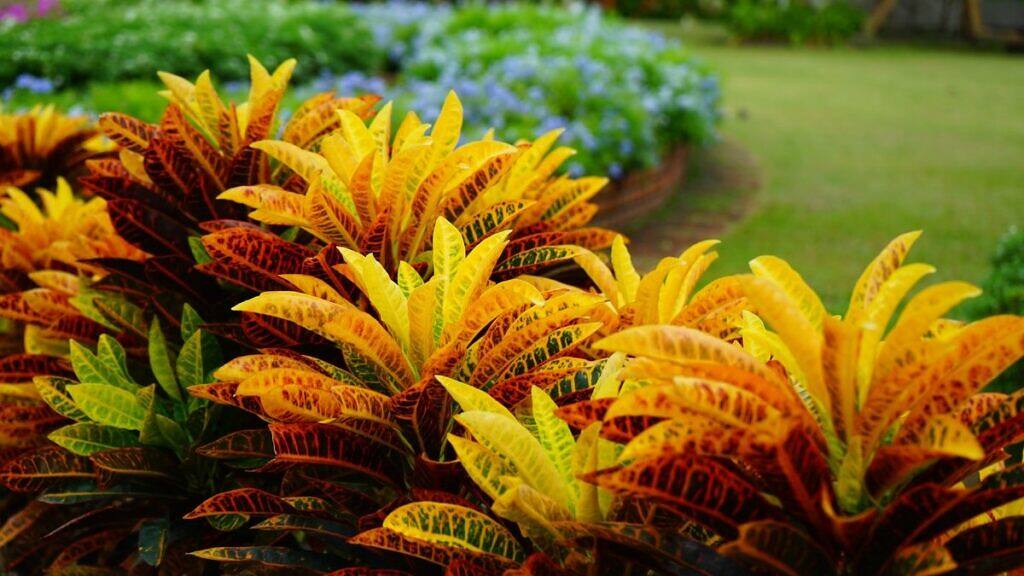
The croton is colorful foliage with no half‑measures: yellows, oranges, reds, purples and greens can coexist on the same plant, varying widely with the cultivar and the light levels. Used as a hedge, croton works well as a bold accent, as long as it receives plenty of light and is not allowed to dry out too often. In deeper shade, the color palette usually fades and shifts more toward green.
Size: 3 to 10 ft (1.0 to 3.0 m), potentially taller in ideal climates and without pruning
Light: Full sun to very bright partial shade (more sun = more intense color)
Overall habit: Woody shrub with leathery leaves, highly variable in shape and color, creating strong visual impact in the landscape.
Uses: High‑impact hedges, colorful rows, focal points and combinations with green foliage plants for contrast.
47.
Turkey’s tail (Acalypha wilkesiana)
Turkey’s tail
Turkey’s tail is a classic tropical shrub for anyone who wants masses of intense color, with large leaves that can be copper, burgundy, red, or variegated. It tolerates frequent pruning well, which makes it easy to maintain a uniform hedge. In general, the more light it receives (without water stress), the more intense the foliage color tends to be.
Height: 3.3 to 9.8 ft (1.0 to 3.0 m)
Light: Full sun to partial shade (stronger color with good light)
Overall appearance: vigorous shrub with large, very colorful leaves, forming a dense mass when regularly pruned.
Flowers: of secondary ornamental value; may produce elongated, fuzzy, pendulous spikes.
Uses: medium hedge, borders, “walls” of colorful foliage, and background planting for flowering plants.
48. Madagascar dragon tree (Dracaena marginata)
Madagascar dragon tree
The Madagascar dragon tree performs very well in tropical and subtropical gardens, as well as in bright indoor spaces, especially in rows and linear plantings that act as a light visual screen. It has a vertical silhouette, narrow leaves, and an elegant color pattern (green with light stripes and pinkish edges). As a traditional formal hedge it is not the best choice — but as a structural hedge or architectural accent plant, it is excellent.
Height: 4.9 to 13.1 ft (1.5 to 4.0 m)
Light: Gentle full sun to partial shade (avoid scorching sun with limited water on young plants)
Overall appearance: clumping shrub with an upright habit, linear foliage and a “sword-like” effect, creating verticality and rhythm in the landscape.
Uses: rows, light and modern “hedges,” contemporary compositions, and along paths and entrances.
49.
Venus palm (Cordyline fruticosa)
Venus palm
The venus palm (also known as red dracaena) delivers dramatic tropical foliage: long leaves in deep burgundy, magenta, pink, green, and variegated tones, depending on the cultivar. In borders and mass plantings, it creates very bold “bands” of color. In general, this plant prefers warmth, humidity, and well-drained soil, and responds well to bright light (as long as it is not kept under constant water stress).
Height: 3.3 to 10 ft (1.0 to 3.0 m)
Light: Full sun to partial shade (good light enhances foliage color)
Overall appearance: Shrub with upright canes and lance-shaped leaves, featuring intense coloration and an instantly tropical look.
Uses: Medium hedges, colorful mass plantings, rows, and compositions with green foliage for contrast.
50. Variegated shell ginger (Alpinia zerumbet)
Variegated shell ginger
Variegated shell ginger works like a tropical “screen”: instead of a classic woody hedge, it forms tall clumps with striped leaves (green and cream) and strong visual presence. When planted in a row, it creates an efficient visual barrier with graceful movement. It needs fertile, consistently moist soil (without waterlogging) and is excellent for areas where you want volume and a more naturalistic look.
Height: 5 to 11.5 ft (1.5 to 3.5 m)
Light: Full sun to partial shade
Overall appearance: Vigorous clump with large variegated leaves and a lush tropical aspect.
Flowers: Pendulous white clusters with yellow details (may appear depending on climate and care); high ornamental value when in bloom.
Uses: Clumping “live screen,” green privacy screens, back-of-border planting, and visual barriers in tropical-style gardens.
Tips for growing plants with colorful foliage
Proper light: Many plants with colorful foliage need the right amount of light to maintain their vibrant leaves.
Crotons and iresines, for example, develop more intense colors in full sun, while calatheas and begonias prefer partial shade.
Soil and drainage: Most of these plants prefer soil rich in organic matter and with excellent drainage. Mix in organic compost or worm castings when planting, and make sure the soil does not become waterlogged.
Humidity: Tropical plants with colorful foliage generally thrive in humid environments. Water regularly, but avoid leaving the soil soggy. Misting the leaves can help increase the humidity around the plant.
Fertilizing: Feed monthly during spring and summer with a balanced fertilizer or one higher in nitrogen to stimulate foliage growth, along with potassium and magnesium to enhance the colors. Follow the specific recommendations for each foliage plant species.
Pruning and cleaning: Remove old or damaged leaves to keep the plant healthy and attractive. Some species, such as coleus, benefit from light shaping prunes to encourage a denser habit.
Creative combinations in the garden
To create harmonious designs, combine colorful foliage plants of different heights, textures, and colors. For example, a border with red alternanthera in front, variegated coleus in the middle, and a bold, architectural foliage plant at the back can create a striking visual effect.
Another idea is to work with contrast: pair dark foliage (such as black mondo grass) with silvery leaves (such as dusty miller) or white-variegated foliage (such as dianella). The result is a dynamic, interesting garden through all seasons.
How about adding a splash of color to your garden?
Plants with colorful foliage are powerful allies for anyone who wants a vibrant garden full of personality. With options for all tastes, climates, and growing conditions, these foliage plants prove that it’s not only flowers that bring color to landscape design.
Try incorporating some of these colorful foliage plants into your garden and see how their leaves can completely transform the look of the space, creating a cheerful, tropical-inspired, and lively atmosphere throughout the year. Hands in the soil, and happy gardening!
Raquel Patro is a landscaper and founder of the Shrubz.us. Since 2006, she has been developing specialized content on plants and gardens, as she believes that everyone, whether amateurs or professionals, should have access to quality content. As a geek, she likes books, science fiction and technology.