Among all the trees cultivated by humans, few carry as much history, symbolism, and practical value as the olive tree. Today it is no longer restricted to the shores of the Mediterranean Sea: the olive tree is increasingly planted in home orchards and gardens, combining beauty, hardiness and, where the climate allows, the possibility of harvesting olives at home. But how to plant olive trees correctly, without illusions about climate and with truly appropriate care? This guide sets out to answer that, with a focus on growing olive trees in gardens and orchards, and on their ornamental use.
From mythology to the backyard: why the olive tree is so fascinating
The olive tree, species Olea europaea, is a classic Mediterranean-climate tree, associated for millennia with peace, longevity, and fertility. In Greek mythology, the goddess Athena is said to have gifted the city of Athens with an olive tree, winning her contest with Poseidon and securing her place as protector of the polis (city). Since then, olive branches have appeared in religious rituals, political ceremonies, and even on athletic medals in Antiquity.
Enjoyed this guide? There's more where it came from.
Understanding why plants behave the way they do is what turns guesswork into a thriving garden. That's exactly what we share in the Shrubz newsletter — free, straight to your inbox:
- Seasonal care reminders timed to your gardening calendar
- Propagation and pruning techniques, explained step by step
- Pest and disease alerts — catch problems before they spread
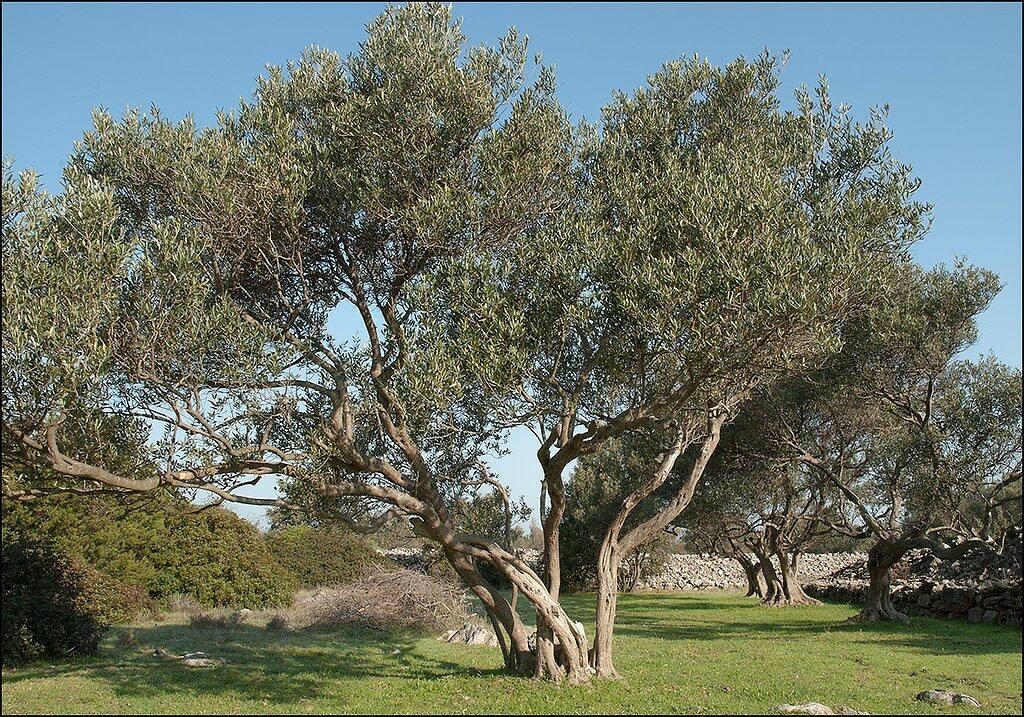
From a botanical standpoint, the olive tree is a perennial woody species with relatively slow growth, forming a dense, rounded canopy with small, leathery leaves, grayish‑green on the upper surface and silvery on the underside. This silvery foliage, combined with the twisted trunk seen in older specimens, explains much of the ornamental appeal of the olive tree in gardens and landscape design.

In addition to its aesthetic value, there is, of course, strong interest in its fruits: olives, the basis for producing precious, healthy olive oil and also widely eaten preserved. However, for this to be viable outside the Mediterranean region, it is essential to understand, with full honesty, the role that climate plays in the development of the olive tree.
Ideal climate and where olive trees really thrive
Olive trees are, essentially, plants of a Mediterranean climate: hot, dry summers, mild springs, and cool winters. An olive tree tolerates heat well, with temperatures up to about 40 ºC (104 ºF) without major damage, as long as the soil does not stay waterlogged and there is good air circulation. On the other hand, it is sensitive to extreme cold: hard frosts, with temperatures below approximately -7 ºC (19 ºF), can seriously damage branches and tissues.
The crucial point for an olive tree, however, is something else: the need for winter chill in order to achieve good flowering and fruit set. The plant must accumulate a certain number of chilling hours, generally around 200 hours per year with temperatures below 10 to 12 ºC (50 to 54 ºF) for low-chill cultivars. Without this stimulus, it may survive, grow, and look attractive, but it tends to produce few or no olives. In other words, depending on your local climate, you may have beautiful olive trees in your garden, but that does not necessarily mean they will yield a good olive crop.
Why olive trees do not produce well in year-round hot climates
In regions with a distinctly tropical or subtropical climate, with poorly defined winters and warm nights throughout the year, an olive tree usually shows:
-
- reasonable vegetative growth, provided the soil is well drained;
- low floral induction (few or irregular blooms);
- very low fruit set compared to areas with a colder winter.

In these locations, it is best to think of the olive tree mainly as an ornamental tree, not as a reliably productive fruit tree. This helps avoid frustration and guides your management choices (for example, there is no point in heavy fertilization aimed at yields that the climate will not allow). Even so, do not give up entirely on your olive tree. Keep an eye on new heat-tolerant olive cultivars released by research institutions or specialized nurseries.
Where olive trees find good growing conditions
In general, the olive tree adapts best to regions with:
- cool winters, with several cold nights throughout the season;
- hot summers that are relatively dry, with most rainfall occurring outside the flowering period;
- no severe or prolonged frosts;
- the ability to accumulate, over the winter, the chilling hours required for the chosen olive tree cultivar.
Areas with mild climates, often at higher elevations, tend to offer the “intermediate climate” that the olive tree appreciates, where altitude helps moderate temperatures. Hillsides, mountain slopes, and higher regions usually provide these conditions. In places with mild winters but frequent cold nights, olive trees can still produce a reasonable crop if cultivars with low chilling requirements are selected.
In warmer and more humid regions, the olive tree can still be grown with some success if the focus is mainly ornamental, prioritizing the appearance of the canopy, the sculptural trunk, and the silvery texture of the foliage, rather than expecting a large harvest of olives.
Soil, drainage, and choosing the planting site
The olive tree originates from naturally rocky environments, often with shallow, calcareous, well-drained, and relatively poor soils. In other words, the olive tree is quite tolerant, as long as waterlogging does not occur. Excess moisture around the roots is, by far, one of the main factors that harm home olive tree cultivation.
For planting in the ground, look for areas with:
- good sun exposure (at least 6 hours of direct sunlight per day, and ideally full sun all day long);
- loose soil, deep enough to allow proper root development;
- efficient drainage – water must not remain standing after rain;
- a slightly acidic to neutral pH, with the option to correct it with lime if necessary.
A soil test carried out in advance allows you to adjust soil acidity (with liming) and supply phosphorus and potassium at adequate levels before planting the olive tree. This preparation is far more effective than trying to “fix” the soil later using only top-dressing fertilizers.
How to choose olive tree seedlings and cultivars
The quality of the olive tree seedling directly influences the health of the tree and its future production potential.
When buying, look for:
- reliable sources (licensed, specialized nurseries or garden centers);
- grafted olive trees or plants propagated from cuttings, 12–24 in (30–60 cm) tall, well shaped; (when planting from seed, you run the risk of getting
- a well-developed root system, without roots excessively circling at the bottom of the container;
- a firm trunk, free from signs of disease, suspicious spots or rot.
Avoid very tall olive tree seedlings in narrow containers, as their roots are usually pot-bound, which compromises development after transplanting.

But what if I plant from seed?
Growing olive trees from seed is possible, but rarely used in practice when the goal is to produce olives within a reasonable time. Olive trees obtained from seed grow more slowly, show wide genetic variability, and enter their productive phase much later, usually 8–12 years after germination, and potentially longer in less favorable climates. In addition, there is no guarantee that the resulting olive tree will preserve the characteristics of the “mother” plant, either in vigor or in fruit quality and yield.
Grafted olive trees or plants propagated from cuttings, on the other hand, are clones of selected cultivars. They start bearing much earlier—often 3–5 years after planting—and offer predictable traits such as size, climatic adaptation, and productive behavior. For this reason, growing olive trees from seed is usually limited to experimental, educational, or ornamental purposes, while grafted olive trees are by far the most rational choice for anyone who wants to harvest olives or establish a productive home orchard.
Olive cultivars with good adaptation
Choosing the right cultivar is just as important as climate itself. In regions suitable for olive growing, the best results tend to come from low- to medium-chill cultivars, many of which have already been tested by research institutions and commercial growers. Among the most widely used and well-adapted olive cultivars, the following stand out:
- Arbequina: one of the most widely planted olive tree cultivars worldwide. It has a low chilling requirement, adapts well to a range of mild-climate regions, and comes into production early.
It is widely used both for olive oil production and in ornamental yet productive plantings. - Arbosana: similar to Arbequina in terms of climate requirements, but with a more compact growth habit and more consistent yields. It is a good option for home orchards and areas with limited space.
- Koroneiki: a Greek olive variety that is widely planted in regions with higher elevations. It produces high-quality olive oil, but requires slightly more careful management in terms of nutrition.
- Grappolo: an Italian variety that has shown good performance in areas with a well-defined winter, being used for both olive oil and table olives.
- Maria da Fé and Ascolano 315: selected cultivars evaluated in research projects focused on adaptation to subtropical and warm-temperate conditions.
In regions with mild winters, choosing olive tree cultivars with low chilling requirements is crucial to avoid having attractive but unproductive trees. In colder areas, with adequate accumulation of chill hours, the range of viable olive varieties expands, allowing more interesting combinations for cross-pollination and crop stability. Regardless of the cultivar, there is no “universal” olive tree: real performance will always be the result of the interaction between genetics, climate, and management.
Instant effect, long bill: mature olive trees in landscaping
In recent years, the use of mature olive trees transplanted into landscaping projects has become common, especially in high-end gardens seeking an immediate visual impact. Twisted trunks, full canopies, and an “ancient” appearance appeal to both clients and landscape designers. However, this type of intervention demands extra technical care and critical judgment. Transplanting a mature olive tree involves significant loss of fine roots, which are responsible for absorbing water and nutrients, increasing the risk of water stress, leaf drop, dieback of branches, and even total loss of the olive tree in the first few years. To reduce these risks, prior preparation of the tree is essential (including root pruning carried out in advance to allow healing), correct excavation of the root ball, proper transport, immediate planting, and a strict irrigation and post-planting monitoring plan for at least 12 to 24 months.
A critical — and often ignored — point is the origin of these mature olive trees. Olive trees imported illegally, without proper plant health documentation and without traceability, pose a real risk not only to the project but to the broader environment and to existing olive groves in the region.
In addition to the high mortality rate after planting, there is a real risk of introducing exotic pests and pathogens, some of them difficult to control, which can affect other olive trees and woody species in the area and even damage commercial orchards. From a technical, legal and ethical perspective, the use of mature olive trees of unknown origin should be avoided. In many situations, a young olive tree, well managed from the beginning, will develop into a healthier, more stable and longer‑lived specimen than a “ready‑made” tree that has undergone severe stress during extraction and transport.

Pollination and the need for more than one cultivar
Olive trees produce small flowers in clusters, and pollination is carried out mainly by the wind. Some olive tree cultivars are considered more self‑fertile, while others clearly benefit from the presence of a second compatible variety nearby, which increases fruit set and production consistency.
In home orchards, a reliable rule of thumb is: if your goal is truly to harvest olives, it is well worth planting at least two different olive tree varieties, well adapted to your climate, positioned close to each other. This favors cross‑pollination and reduces the risk of extreme alternate bearing.
To find out which olive tree cultivars perform best in your area, the best approach is to consult local agricultural extension services, universities, or research centers specializing in tree crops. These institutions usually have regional data on how each variety performs, including its chilling requirements.
Planting in the ground: spacing, soil preparation and initial training
Once you have defined the location and selected the young trees, it is time to plan how to plant olive trees in a home orchard.
Basic spacing for a backyard orchard
For backyards and small family orchards, spacing olive trees about 13 to 20 feet (4 to 6 meters) apart, both within and between rows, is usually appropriate. This allows good air circulation, light penetration into the canopy, and enough room for pruning and harvesting, without excessive root competition.
Preparing the planting hole and soil
Dig generous planting holes, significantly larger than the root ball of the young olive tree (for example, around 20 x 20 x 20 inches (50 x 50 x 50 cm)), loosening the topsoil and keeping it separate from the deeper soil layer.
Preferentially use this upper, more fertile portion to refill the planting hole, mixing:
- good-quality soil from the site itself;
- well-aged organic matter (compost or cured manure);
- pH amendments indicated by the soil test;
- phosphorus and potassium in appropriate doses, incorporated into the bottom and sides of the hole.
It is important that the organic matter is fully decomposed so it does not ferment in contact with the roots. The olive tree soil mix needs to be loose and well structured, but not so rich that it only stimulates excessive vegetative growth.
Planting the young tree
On planting day:
- water the plant thoroughly while it is still in its original container;
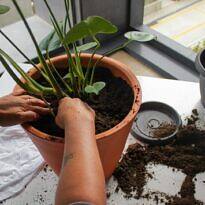
- carefully remove the rootball, preserving the roots as much as possible;
- position the tree in the hole, keeping the crown (transition between trunk and roots) at the same height it was in the container;
- backfill with the prepared olive tree soil mix, gently firming the soil around the rootball;
- shape a shallow watering basin around the plant to make the first irrigations easier;
- water deeply right after planting to eliminate any air pockets.
In areas with strong winds, a temporary stake can be useful, tied to the trunk with soft ties that do not constrict the cambium. The goal is to keep the recently planted tree from moving too much and tearing the fine new roots.
How to plant an olive tree in a container: advantages and limitations
Container growing has become popular on balconies and in small gardens, both for the Mediterranean look and for the idea of harvesting homegrown olives. Does it work? It works, but with some important caveats.
When an olive tree in a container makes sense
A pot is a good option when:
- space is limited (balcony, paved patio, rooftop);
- the focus is mainly ornamental (shape of the canopy, trunk, foliage);
- there is interest in better controlling the size of the plant through pruning and root restriction;
- the climate is too warm for heavy production, and the expectation is, at most, to harvest a few olives from time to time.
Container size, potting mix and drainage
For a reasonable result, avoid tiny pots. Containers with a volume of at least 10–15 gallons (40–60 liters) allow the plant to develop more comfortably.
Always use:
- a container with generous drainage holes;
- a drainage layer at the bottom (coarse gravel, broken pottery, for example);
- a light, well‑aerated potting mix, combining good‑quality soil, well‑aged organic matter, and an inert component that improves structure (washed coarse sand, well‑decomposed pine bark, etc.).
In a container, it is even more critical to avoid waterlogging. After watering, water should flow freely out through the bottom. Saucers can be used, but they must not be left full of water.
Limitations of container production
Even in a suitable climate, olive tree production in containers will almost always be lower and less consistent than in the ground. The reasons are straightforward:
- limited root volume, which reduces the plant’s ability to absorb water and nutrients;
- greater temperature stress (the potting mix heats up and cools down more quickly);
- complete dependence on human watering and fertilizing;
- a necessarily smaller canopy.
In summary: a potted olive tree is an excellent ornamental choice and may occasionally produce some olives, but it should not be viewed as a miniature, high‑yield olive grove.
Watering: how to avoid the two classic mistakes
People growing an olive tree at home usually make one of two opposite mistakes: either they water too much, suffocating the roots, or they let the plant go too dry at critical times. The olive tree is relatively drought‑tolerant once well established, but that does not mean it can be forgotten in hard, dry ground or a dry pot for weeks on end. It may even survive, but it will not grow or bear fruit satisfactorily.
A few principles help you get watering right:
- Newly planted olive trees: keep the soil slightly moist, but never saturated. Frequent, lighter waterings are better than occasional heavy soakings.
- Mature olive trees in the ground: after establishment (1–2 years), the olive tree becomes more tolerant of dry periods. In regions with very hot summers, it is helpful to provide supplemental water during prolonged droughts, especially during fruit fill when there is a crop on the tree.
- Olive trees in containers: monitor moisture regularly. Inserting your finger about 1–1.25 inches (2–3 cm) into the potting mix is usually a good indicator: if it feels dry at that depth, it is time to water.
Water that remains around the roots for long periods encourages root rot and fungal diseases. That is why good drainage is just as important as the frequency of watering. In containers, it is essential to renew the potting mix periodically, at least in part, to prevent the excessive compaction that naturally occurs in this type of cultivation.

Fertilization and nutrition of the olive tree
The olive tree is not as “hungry” as some tropical fruit trees, but it responds very well to a balanced olive tree fertilization program, especially in poor soils. The foundation is always a well-amended soil, with phosphorus and potassium adjusted before planting.
After establishment, useful practices include:
- annual application of well-composted organic matter under the canopy drip line, lightly incorporated into the surface;
- maintenance mineral fertilization, using nitrogen, phosphorus, and potassium in moderate rates, adjusted to the size of the tree and expected yield;
- visual monitoring for deficiency symptoms (unusual yellowing, very weak growth) and, whenever possible, new soil testing for more accurate corrections.
In containers, the need for olive tree fertilization is greater, as the plant depends entirely on what is supplied. Small doses, applied in split applications throughout the year, tend to be safer than large amounts all at once.
Training pruning, canopy aeration and production balance
Pruning is one of the key tools in olive tree management, both in orchards and in ornamental landscaping. In general, pruning is used to:
- define the basic architecture of the plant (trunk and main branches);
- allow good light penetration into the interior of the canopy;
- renew fruiting branches and avoid an excess of old, unproductive wood;
- facilitate harvest and plant health management.
Training pruning
In the first years, the goal is to form a well-defined trunk and a few main branches arranged in a balanced way. A widely used structure is the vase- or goblet-shaped canopy, with 3 to 4 scaffold branches arising from a relatively low trunk.
Once the tree is mature, pruning becomes more of a maintenance practice, removing:
- dead, diseased, or broken branches;
- very vigorous, upright shoots that excessively shade the canopy;
- branches that cross and rub, creating wounds in the bark.
Ideally, pruning is done during periods with lower risk of severe frost and heavy rains, to reduce stress and the chance of infections in freshly made cuts.
Pests, diseases and small-scale integrated management
As olive cultivation expands, some pests are becoming more common even in small home orchards and landscape plantings.
In general, the most common problems involve insects that attack leaves and fruits, as well as mites and fungal diseases favored by excessive humidity.
Some general guidelines for integrated pest management on a home scale include:
- Frequent monitoring: carefully observe young leaves, new shoots, and developing fruits, looking for damage, tunnels, fine webs, sooty mold, or deformities.
- Cultural hygiene: remove heavily damaged fruits that have fallen to the ground, prune and discard heavily infested branches, and keep the canopy well ventilated.
- Judicious use of inputs: in small olive orchards, biological solutions and low-impact registered products, applied with proper technical criteria, are usually more appropriate than frequent applications without a clear diagnosis.
In cases of severe infestation or uncertainty about identifying a specific pest, seeking technical guidance from a qualified professional is always the best approach. This helps avoid unnecessary use of pesticides and improves the effectiveness of interventions.
It is also very helpful to develop the habit of keeping a field notebook, recording dates of pruning, flowering, pest and disease occurrences, and products used. Over time, this makes it much easier to understand olive tree behavior and to make better-informed management decisions.
Fruit set, harvest, and differences between productive and ornamental cultivation
Assuming the climate is suitable and management practices are well adjusted, the olive tree begins bearing fruit a few years after planting, with a progressive increase in crop volume as the tree gains structure.
In orchards focused on production, olive tree care tends to be more technical, with close attention to fertilization, pest control, and production pruning, all aimed at maximizing yield and stabilizing annual crops. Olive harvest takes place when the fruits reach the ideal stage for their intended use (oil or table olives), which involves evaluating color, firmness, and oil content.
In ornamental cultivation, however, the priority is different: the visual appeal of the plant. Pruning emphasizes the shape of the trunk, the overall silhouette, and the visual balance of the canopy, often accepting lower fruit production in exchange for a cleaner, more elegant design in the landscape. In containers, the same logic applies, with regular pruning to contain the height and spread of the canopy, keeping it in harmonious proportion to the pot.
Even in gardens where production is not the main goal, harvesting a few olives from an olive tree you planted yourself is a very rewarding experience. It is important to remember, though, that the volume and consistency of olive production will always be directly linked to the local climate and the quality of your olive tree care.

To succeed in growing olive trees:
When considering how to plant olive trees, it is worth reviewing the key points:
- They are classic Mediterranean-climate trees that thrive in hot, dry summers and cool winters, with enough chill hours to induce flowering.
- In regions without a clearly defined winter, the olive tree can be an excellent ornamental tree, but it will generally produce few fruits.
- Choose very well‑drained, sunny locations, with amended, well‑structured soil.
- Use healthy young trees from reliable sources and, if you want a good olive production, plant at least two compatible varieties to facilitate cross‑pollination.
- In containers, prioritize large pots, a light, well‑aerated potting mix and impeccable drainage, accepting the natural limitation in size and productivity.
- With balanced irrigation, moderate fertilization and well‑planned pruning, the olive tree tends to reward you with vigor and longevity.
Ultimately, the decision to focus on olive production or on ornamental value will depend on your climate, the space you have and your expectations. The most important step is to start realistically, adjusting the project to the conditions where you live. From there, with careful observation and a few years of experience, your olive tree can become one of the focal points of the garden—whether for its silvery shade or for the pleasure of harvesting, with your own hands, olives that carry a millennia‑old history.