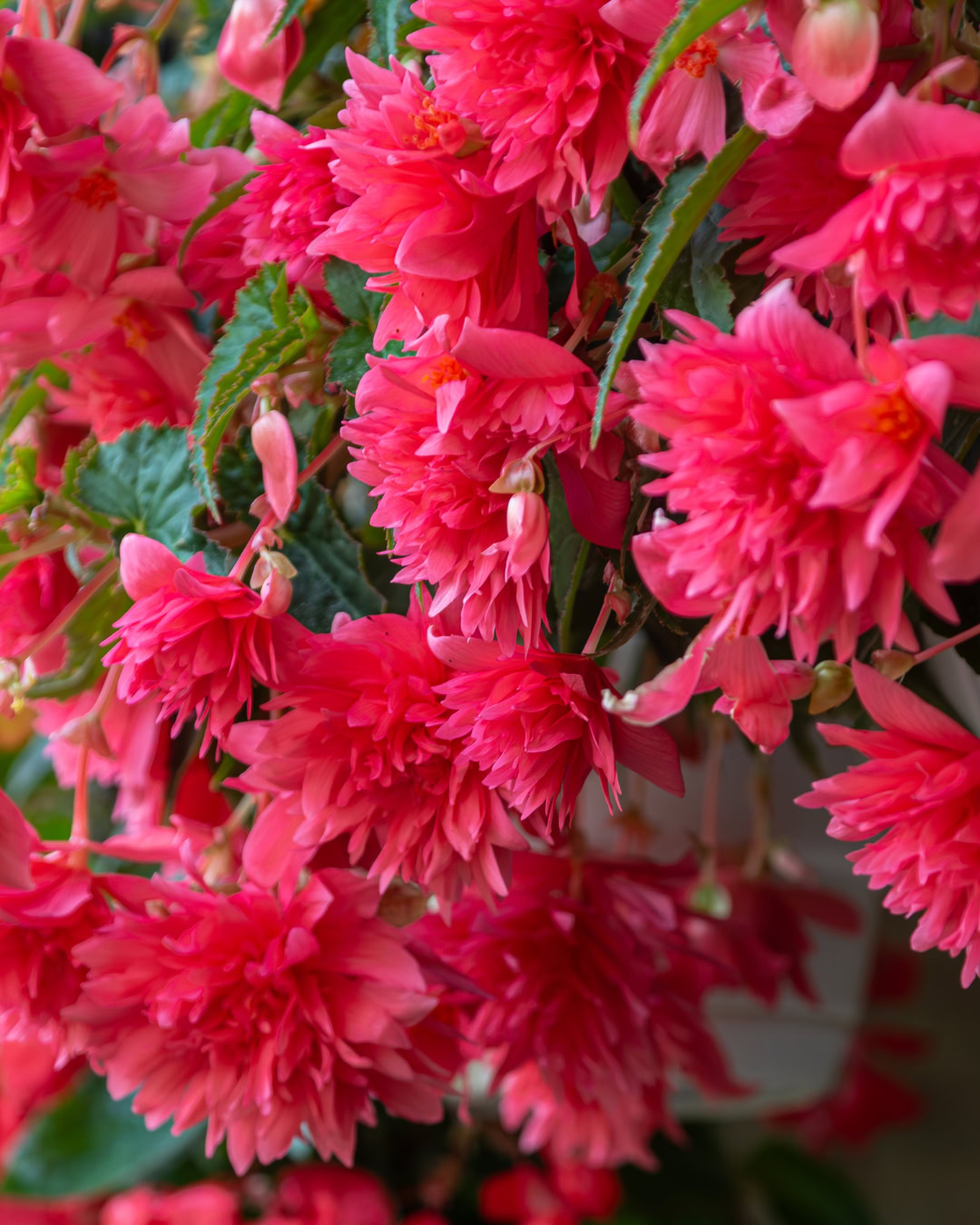
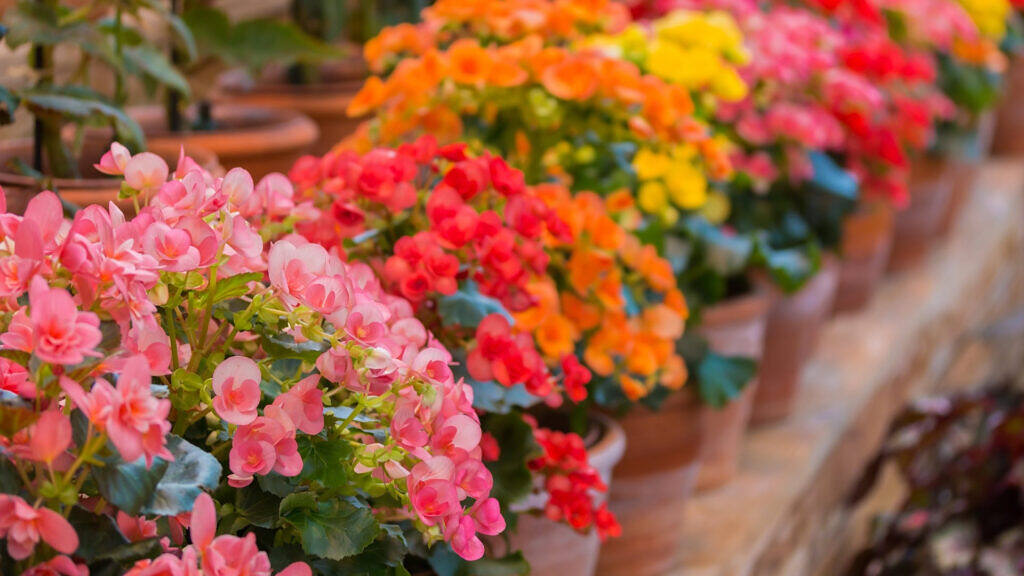
A Tuberous Begonia (Begonia × tuberhybrida) is a herbaceous, tuberous plant prized for its large flowers and vibrant colors, capable of turning any corner into a showpiece. With a range of forms from compact, upright plants to trailing varieties, it is one of the favorite begonias for pots, window boxes, and hanging baskets, offering a profusion of colorful blooms from spring through fall.
Growing Tuberous Begonia means taking part in an annual cycle of renewal, in which the plant puts on its display and then retreats into its tuber, waiting for the next season to sprout again. Understanding this process keeps you from throwing your begonia in the trash during dormancy. The reward: the plant’s delicacy contrasts with the visual impact of its flowers, which come in vibrant colors and are perfectly suited to sheltered spots protected from strong sun and excessive wind.
Origin, Habitat, and Etymology
Tuberous Begonia represents one of the great achievements of 19th-century ornamental horticulture. From crosses of tuberous species native to the Andes, European growers developed flowers that were increasingly larger, fuller, and richer in color, cementing their popularity in the gardens and greenhouses of the time.
Tuberous Begonia is not a single species found in nature, but a horticultural hybrid complex, the result of intensive selection work that began in the 19th century. Its botanical parents are tuberous species native to the moist montane forests and cloud forests of the tropical Andes, environments characterized by shade, mild to cool temperatures, and high atmospheric humidity.
The name Begonia was given in honor of Michel Bégon, a 17th-century French colonial administrator and a great enthusiast of botany. The epithet × tuberhybrida indicates its hybrid origin (the “×” symbol) and the nature of its storage organ, combining “tuberous” (bearing a tuber) with “hybrida” (hybrid).
Landscape Use of Tuberous Begonia
Tuberous Begonia is an interesting option for bringing flower color to sheltered areas where most garden species do not bloom. It creates focal points of color in covered entryways, porches, conservatories, shaded patios, and any spot that needs life without receiving intense direct sun. Its versatility makes it ideal for compositions that aim for sophistication and a romantic or tropical atmosphere. That said, its seasonal nature should be considered, and it is important to understand that during dormancy, beds will look empty. Pairing it with evergreen species can help cover its temporary disappearance in the garden.
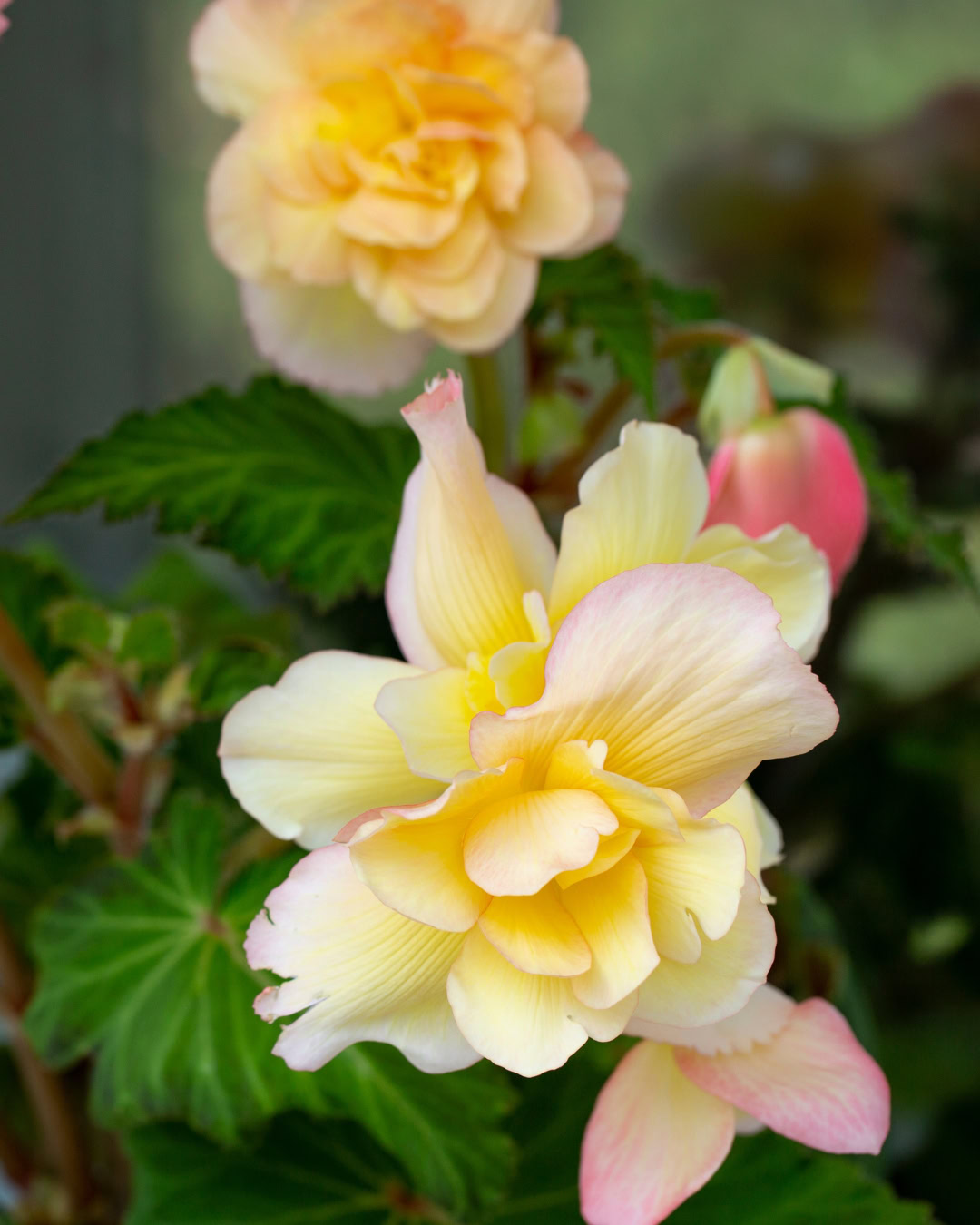
Tuberous Begonia pairs well with structural shrubs such as azalea (Rhododendron simsii) in mild-climate partial-shade gardens, where the azalea provides volume while the begonia brings color at ground level. With groundcovers such as spider plant (Chlorophytum comosum) or wandering dude (Tradescantia zebrina), it stands out as a floral accent in sheltered planters, using foliage to fill in and create contrast. In protected outdoor settings, it can be planted beneath the filtered canopy of lightly shaded trees, as long as there is no intense root competition.
Because of its growth, flowering, and dormancy cycle, Tuberous Begonia is also very popular when grown in pots and window boxes. For mass plantings, borders, or groupings with other plants, a spacing of 8 to 12 inches (20 to 30 cm) between plants is recommended, allowing each one to develop fully. In protected beds, this can be increased to 10 to 14 inches (25 to 35 cm). Trailing cultivars and larger plants require 14 to 18 inches (35 to 45 cm) for good air circulation and an elegant cascading effect. Its growth rate is moderate to fast during warm, humid seasons, following a seasonal cycle of sprouting, flowering, and dormancy.
This begonia is not an aggressive or invasive plant.
Its hardiness is moderate: it thrives in ideal conditions, but it is sensitive to extremes such as strong sun, waterlogged soil, excessive heat, frost, constant wind, and direct rain on the flowers. It is an excellent choice for creating a cottage garden or a romantic balcony garden, with colorful containers and seasonal combinations that create a charming, tropical atmosphere.
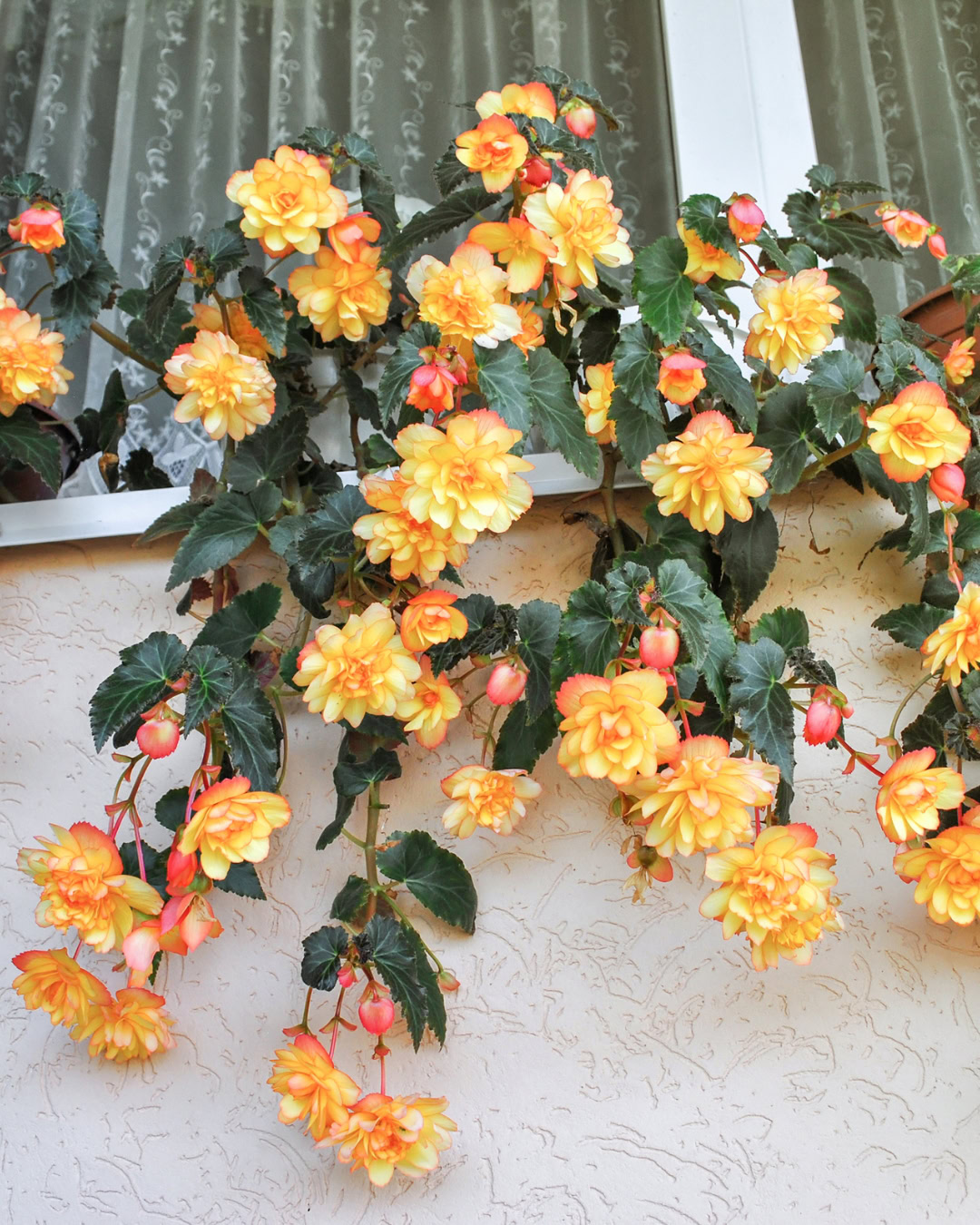
How to care for Tuberous Begonia: growing guide
- Light: Tuberous Begonia prefers bright partial shade or filtered light. Morning sun or late-afternoon sun is ideal, with protection during the strongest hours. Strong direct sun, especially between 10 a.m. and 4 p.m., can scorch the leaves and make the flowers wilt quickly. In very shady spots, it grows weakly, with stretched stems and sparse blooming.
- Soil and potting mix: It needs a light, fertile, airy potting mix rich in organic matter and with excellent drainage. The ideal pH ranges from slightly acidic to neutral, between 5.5 and 6.5. For containers, a mix of 40% well-aged organic compost or a quality plant-based growing medium, 20% composted pine bark, 20% peat moss or well-rinsed coconut coir chips, and 20% washed coarse sand is suggested. A small amount of well-aged barnyard manure can be added, always fully decomposed and in a low dose, avoiding direct contact with the tuber. The mix should hold moisture without becoming waterlogged, since waterlogging is the main cause of rot.
- Watering: Keep the potting mix lightly moist, but never soggy. Water only when the top layer begins to dry to the touch. Avoid wetting the flowers and leaves, especially at night, to prevent fungal diseases. Water in the morning so the surface can dry during the day. During dormancy, cut back watering drastically, keeping the tuber just slightly moist to avoid both rot and complete dehydration.
- Climate: Tuberous Begonia prefers mild, humid, well-ventilated conditions, with ideal temperatures between 59 F (15 C) and 75 F (24 C). It struggles in intense, prolonged heat above 82 F to 86 F (28 C to 30 C) and does not tolerate frost. In warmer regions, grow it in cool, shaded spots with good air circulation. In subtropical or mountain climates, it usually performs better.
- Air humidity: It appreciates moderate to high humidity, but needs good airflow to avoid stagnant conditions. Avoid frequent misting directly on the leaves and flowers, as this can encourage powdery mildew and gray mold. In dry environments, a tray of moist pebbles under the pot (without the bottom of the pot touching the water) can help increase the humidity around it.
- Fertilizing: It responds well to light, regular feeding during active growth and flowering. At planting time or when new growth starts, use a controlled-release fertilizer such as Osmocote mixed into the potting mix. During vegetative growth, a fast-release 10-10-10 NPK fertilizer can be applied at low concentration every 20 to 30 days, avoiding excess nitrogen. In the pre-bloom stage and during flowering, a soluble 4-14-8 NPK fertilizer in moderate doses will encourage bud and flower formation. Organic fertilizers such as compost and well-aged barnyard manure are equally beneficial.
- Pruning: Remove spent flowers to encourage new blooms and help prevent disease. Remove yellowed, spotted, or rotting leaves. Broken or diseased stems should be cut with a clean, sharp tool. At the end of the cycle, when the top growth yellows and dries naturally, stop fertilizing and reduce watering. After it has fully dried, cut back the dry stems and store the tuber in a cool, dry place or keep it dormant in the pot.
- Staking: Cultivars with very large flowers and more fragile stems may benefit from staking. Use thin bamboo stakes or discreet supports, tying the stems loosely with flexible tape to avoid injuring the plant, which has succulent, brittle tissues.
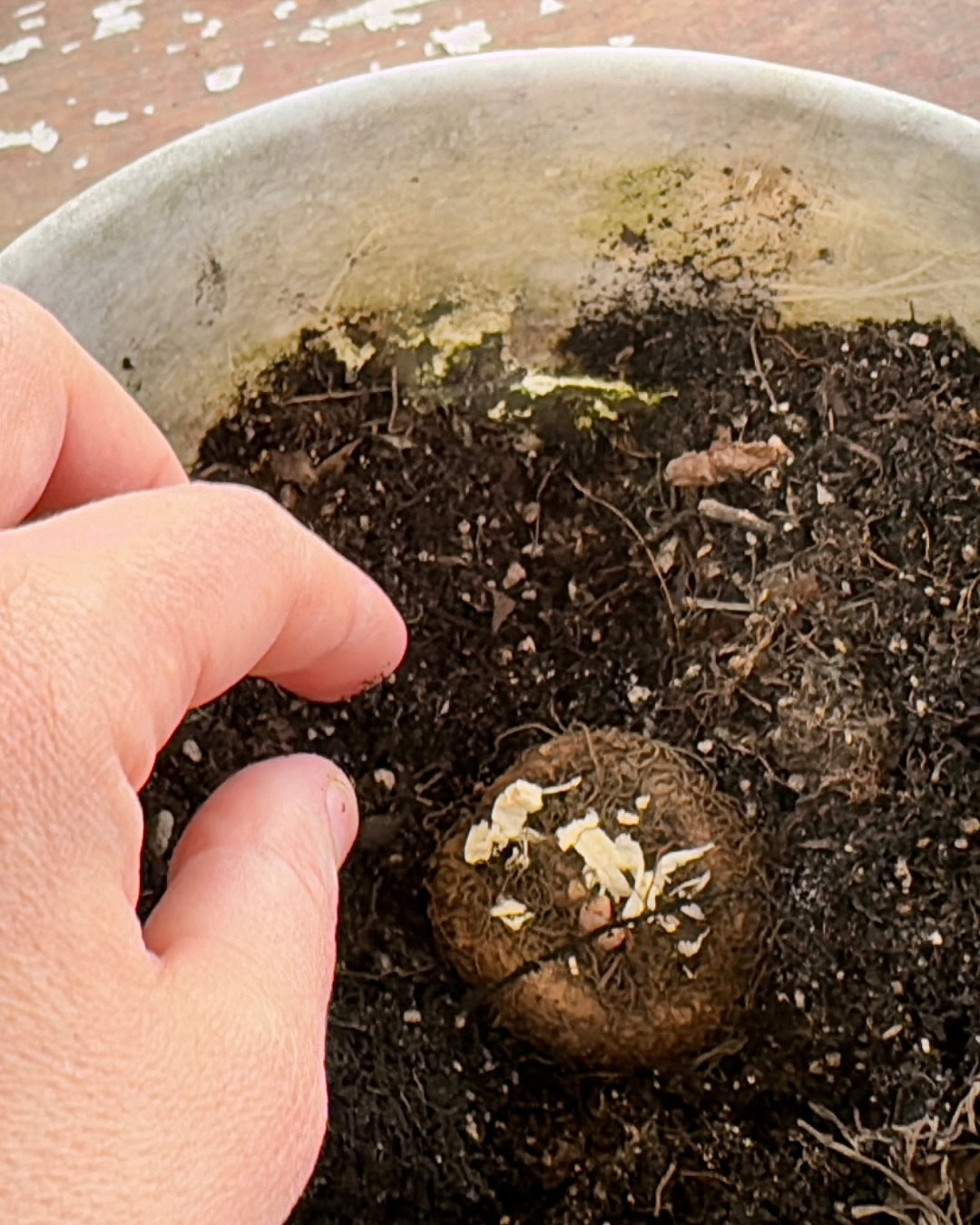
- Specific care: When planting the tuber, position it with the concave side and the buds facing up. Cover it lightly with growing medium, leaving the top area close to the surface, without burying it deeply. Avoid letting water collect on top of the tuber. Keep good spacing between plants to ensure air circulation, and protect them from direct rain to prevent flower spotting and fungal development. During dormancy, do not discard the pot; the tuber is alive and ready to sprout again in the favorable season.
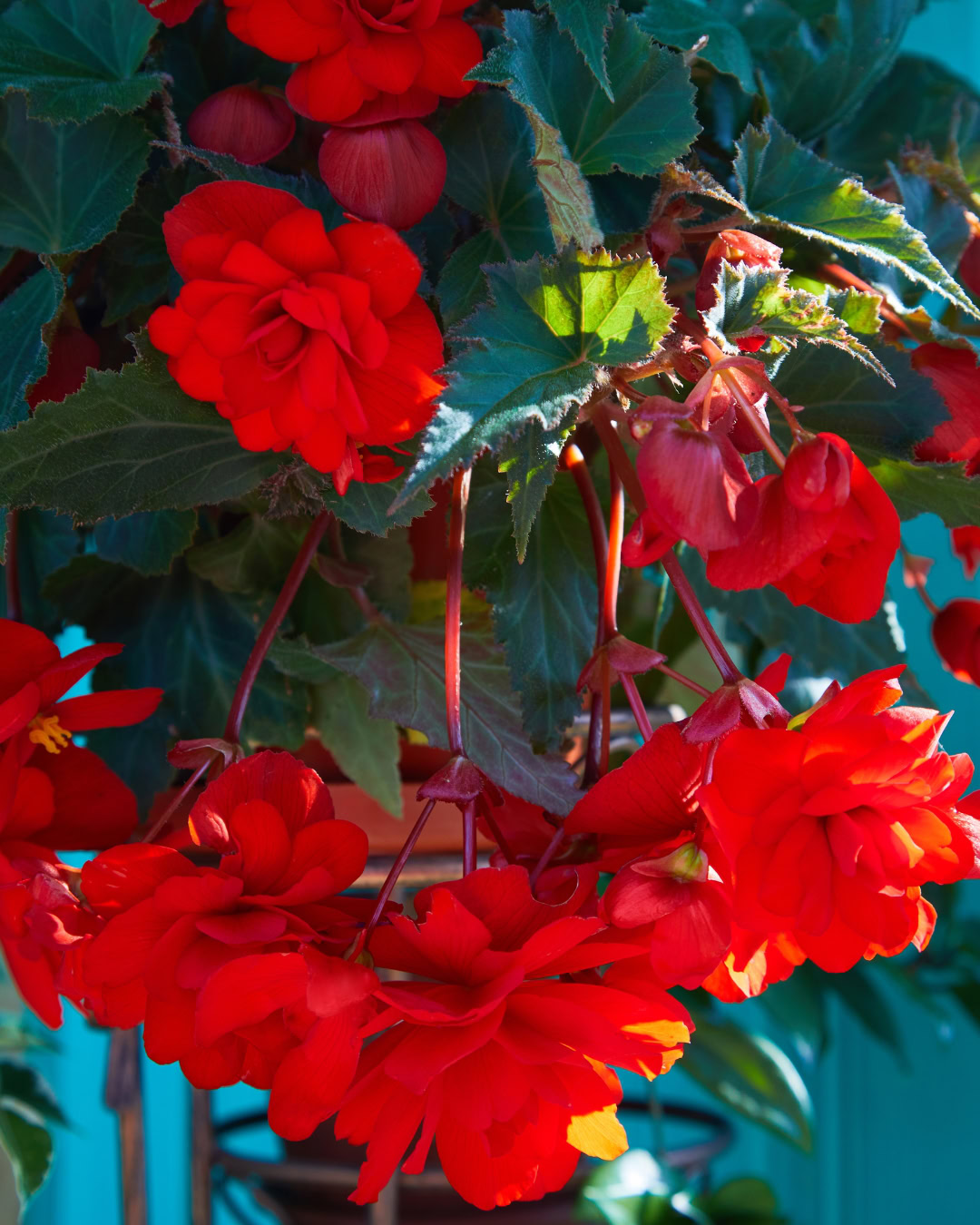
How to propagate Tuberous Begonia
Propagation of Tuberous Begonia can be done in several ways, the most common being by seed and by dividing tubers, as well as by taking cuttings from young stems.
Seed propagation is a widely used commercial method, especially for producing F1 hybrids. The seeds are tiny and should be sown directly on a fine, sterilized, moist, well-drained growing medium, without being buried deeply. They generally need light to germinate or, at the very least, a very light covering. The ideal germination temperature is around 68°F to 75°F (20°C to 24°C). It is important to note that plants grown from regular seed may vary and may not keep the exact characteristics of the mother plant.
Dividing tubers is a practical method when the tuber is large enough and has multiple viable buds. Divide only healthy, firm tubers, making sure each section contains at least one bud. After cutting, it is crucial to let the cut surfaces heal for a few days in a cool, dry place before planting. To prevent rot, you can dust with an appropriate fungicide or maintain strict sanitation practices. The sections should be planted in a slightly moist growing medium, never waterlogged.
Tuberous Begonia can also be propagated by cuttings from young shoots or stem sections. To do this, remove vigorous, healthy shoots, preferably those that are not yet in full bloom. Root the cuttings in a light, airy growing medium. Keep the cuttings in a moderately humid environment and protected from direct sun, since too much moisture without ventilation can lead to rot.
Botanical description of Begonia × tuberhybrida
Tuberous Begonia is a low- to medium-growing plant that generally reaches 0.20 to 0.60 meters in height and 0.20 to 0.45 meters in width, and can be more sprawling in trailing cultivars grown in hanging baskets and window boxes. Its texture is herbaceous, with fleshy, succulent stems and petioles, and tender leaves. The tuber is the most distinctive storage structure, usually flattened or irregular, with a brown to tan surface and buds on the upper side that allow new growth after dormancy.
The fleshy stems are fragile and brittle, emerging from the tuber. They may have an upright, semi-upright, or trailing habit, depending on the cultivar. Their color ranges from light green to reddish green, often with pinkish or bronze tones, especially at the nodes and petioles. The texture is smooth, watery, glabrous, or slightly pubescent. The stems grow during the growing season, flower, and at the end of the cycle turn yellow and dry out, while the tuber remains dormant. The branches are sparsely to moderately branched, with marked nodes, alternate leaves, and axillary or terminal inflorescences.
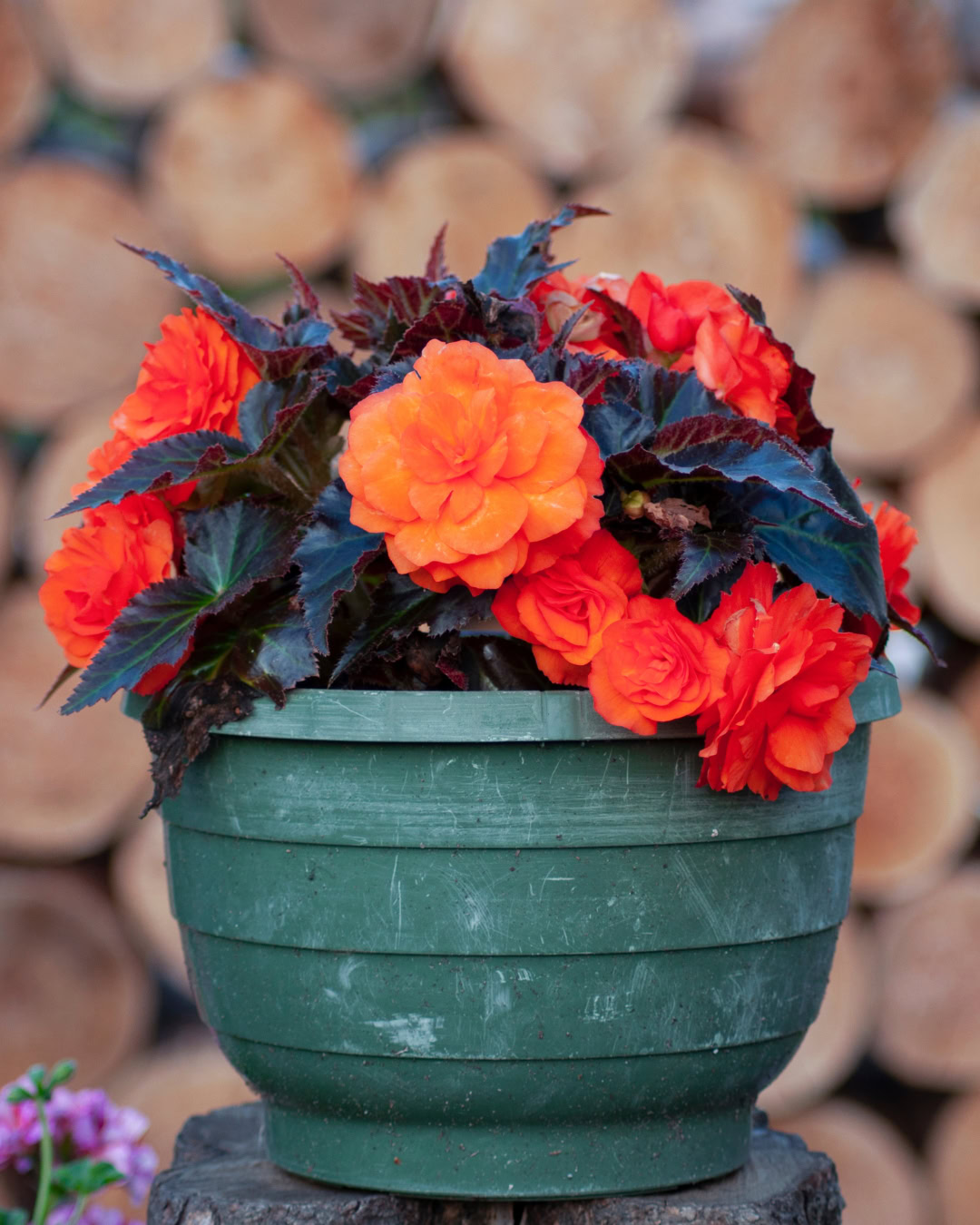
The leaves are alternate and asymmetrical, typical of the genus Begonia, generally ovate to heart-shaped with an uneven base, measuring between 8 and 20 cm in length. The margin is serrated, toothed, or irregularly crenate. The texture is tender to slightly fleshy, with a smooth or slightly pubescent surface. The color ranges from light green to dark green, with some cultivars showing bronze or coppery foliage. Venation is palmate, with main veins radiating from the leaf base. The petiole is generally long and fragile. Small, deciduous stipules are present in the genus.
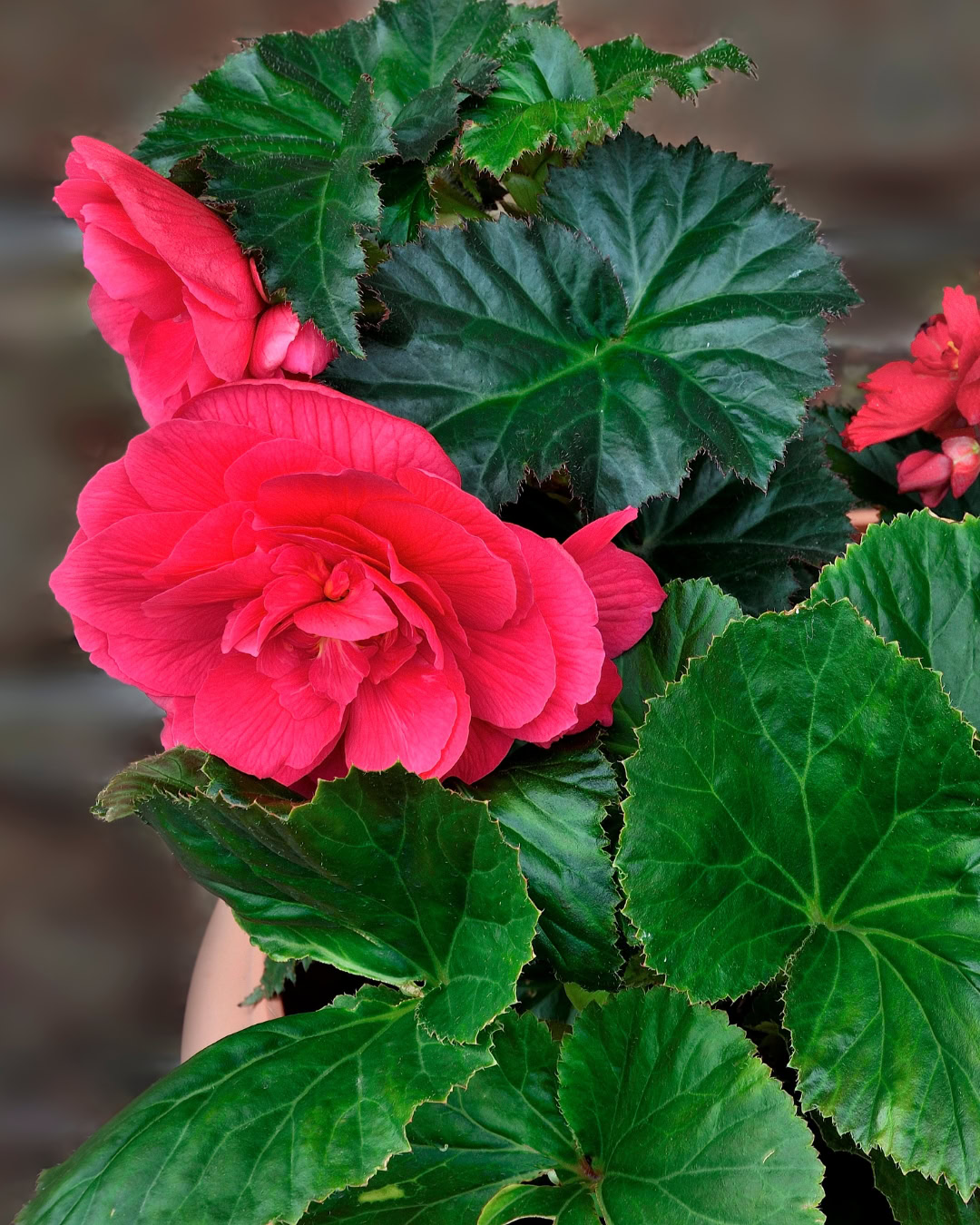
This begonia is monoecious, with separate male and female flowers on the same plant. In very double-flowered cultivars, fertility may be reduced due to the transformation of stamens into petaloid tepals.
Blooming occurs mainly from spring through fall, peaking in summer and early fall. In very hot climates, blooming may slow at the height of summer.
The inflorescences are cymose, axillary, or terminal. In modern ornamental cultivars, the flowers may be solitary or grouped in small clusters. The flowers may be single, semi-double, or double, in a wide range of colors: white, cream, yellow, gold, orange, salmon, coral, pink, red, burgundy, and various bicolor combinations, including contrasting edges (picotee) or gradients. Male flowers are usually showier and more numerous, while female flowers are identified by the winged inferior ovary just behind the tepals.
Natural pollination is carried out mainly by insects such as bees, attracted by pollen. When fertilization occurs, the fruit is a dry, dehiscent, winged capsule typical of the genus Begonia, measuring about 0.4 to 1.2 in (1 to 3 cm). Its texture is dry and membranous to papery at maturity. In commercial double-flowered cultivars, fruiting is uncommon and sometimes undesirable, since it diverts the plant’s energy from flower production. The seeds are very small and numerous, measuring less than 1 mm. In natural conditions, dispersal occurs as the capsules open, aided by wind, gravity, and rain splash.
Main varieties and cultivars
- Nonstop Series: A group widely grown in containers and protected beds, known for compact plants, large flowers, and extended blooming.
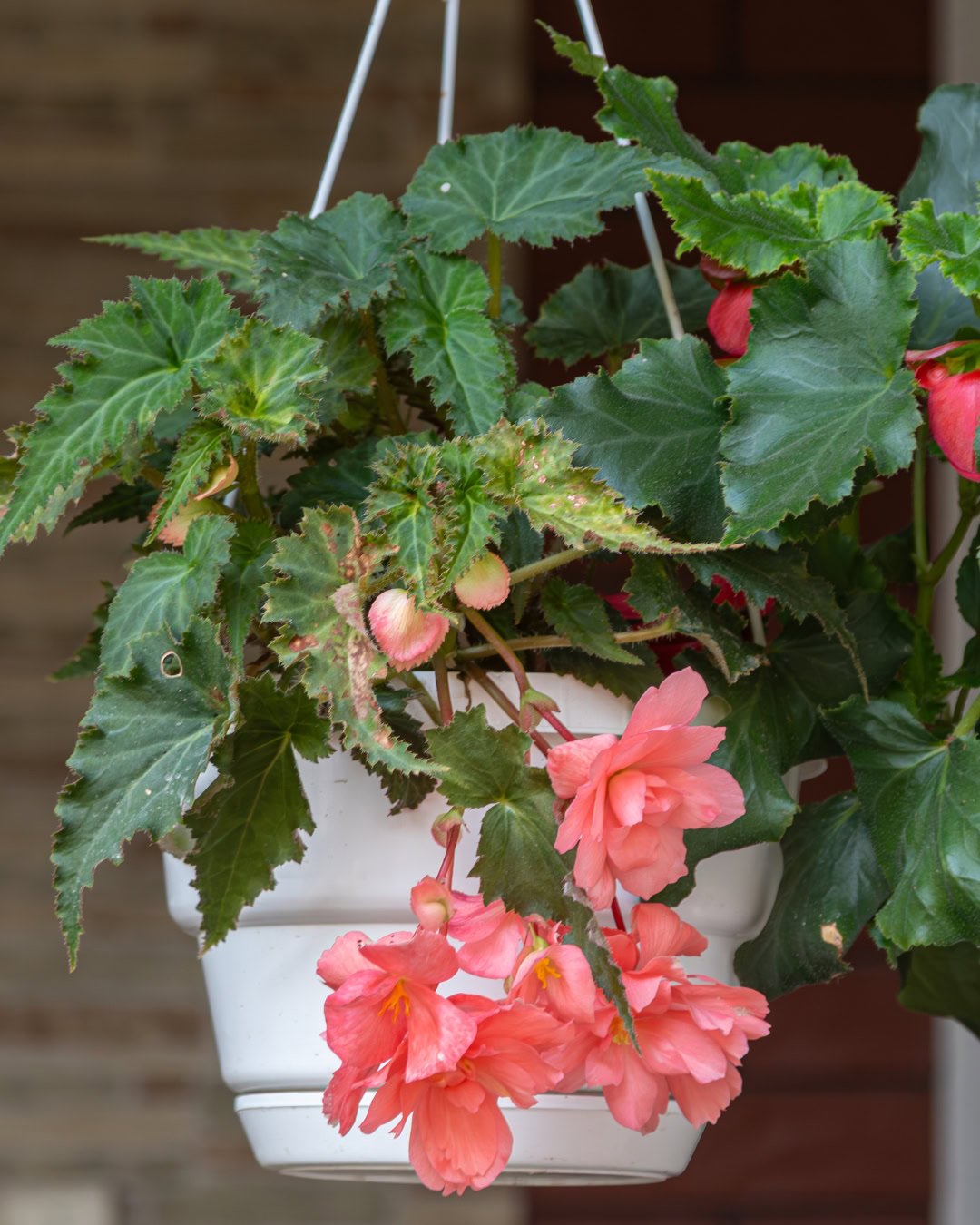
- Illumination Series: Trailing selections ideal for hanging baskets, tall planters, and balconies, with full flowers and gracefully cascading stems.
- Mocca Series: Compact cultivars that stand out for their dark to bronze foliage, creating a striking contrast with their intensely colored flowers.
- Picotee Group: An ornamental group characterized by flowers with contrasting edges, usually in shades of white, yellow, or pink with red, pink, or orange margins.
- Pendula Group: Trailing tuberous begonias often used in hanging pots, raised planters, and protected balcony boxes, where the cascading flowers are especially valued.
Pests, diseases, and solutions
Among the common pests are aphids, scale insects, thrips, and mites, which can be controlled with applications of neem oil or insecticidal soap. Fungus gnats may appear in very moist potting mix, and slugs and snails are attracted to buds and tender leaves, requiring physical barriers or specific baits. Caterpillars may also occasionally occur in the cultivation of Tuberous Begonia.
As for diseases, gray mold is a frequent problem, favored by high humidity, wet flowers, and poor air circulation. Root, tuber, and crown rots are associated with waterlogged potting mix. Bacterial leaf spots and powdery mildew are common in environments with fluctuating humidity and poor ventilation.
For disease prevention, always use fresh, clean, very well-drained potting mix. Avoid waterlogging and wetting the leaves and flowers. Keep adequate spacing between plants to ensure good air circulation, and remove diseased or yellowing flowers and leaves immediately. Disinfect pruning tools before and after use. During dormancy, make sure the tubers are stored dry and undamaged to help prevent rot.