
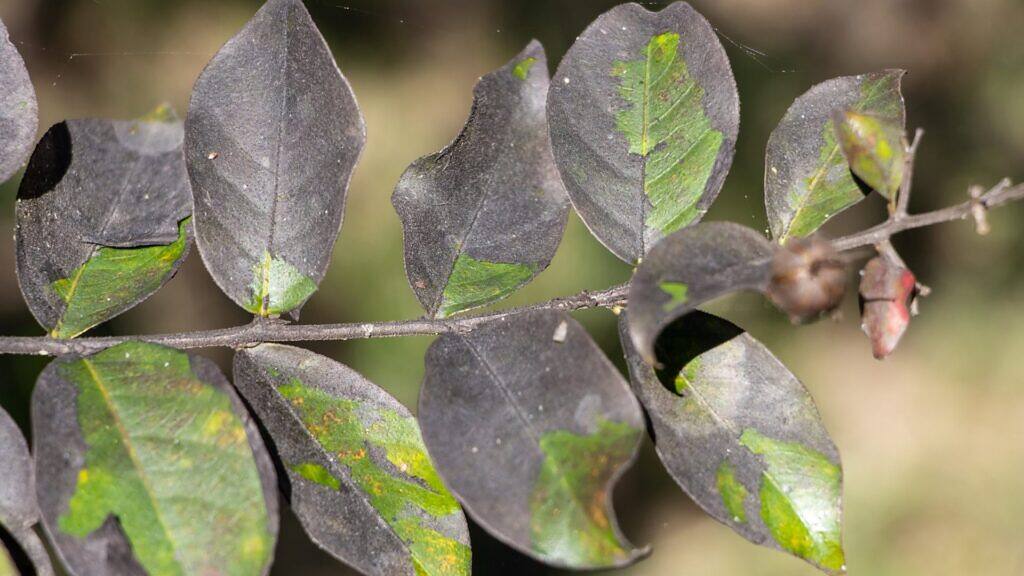
Sooty Mold is a saprophytic fungus associated with Capnodium citri and other similar fungi, such as Limacinia, Phaeosaccas, Antennariella and Aithaloderma. It does not directly cause disease because it does not penetrate plant tissues, but it grows on the sugary honeydew left behind by aphids, scale insects, whiteflies, and psyllids. In other words, without sap-sucking insects, Sooty Mold does not develop.
Prevention and control of Sooty Mold always start with controlling the insects involved. The clearest sign is a black, dry, superficial coating, similar to soot or dried tar, on leaves, branches, stems, and fruit. The first step is to look for sap-sucking insects, especially on the undersides of leaves and new growth, control the associated ants, and wash the plant to restore light to the leaves.
How to Identify Sooty Mold
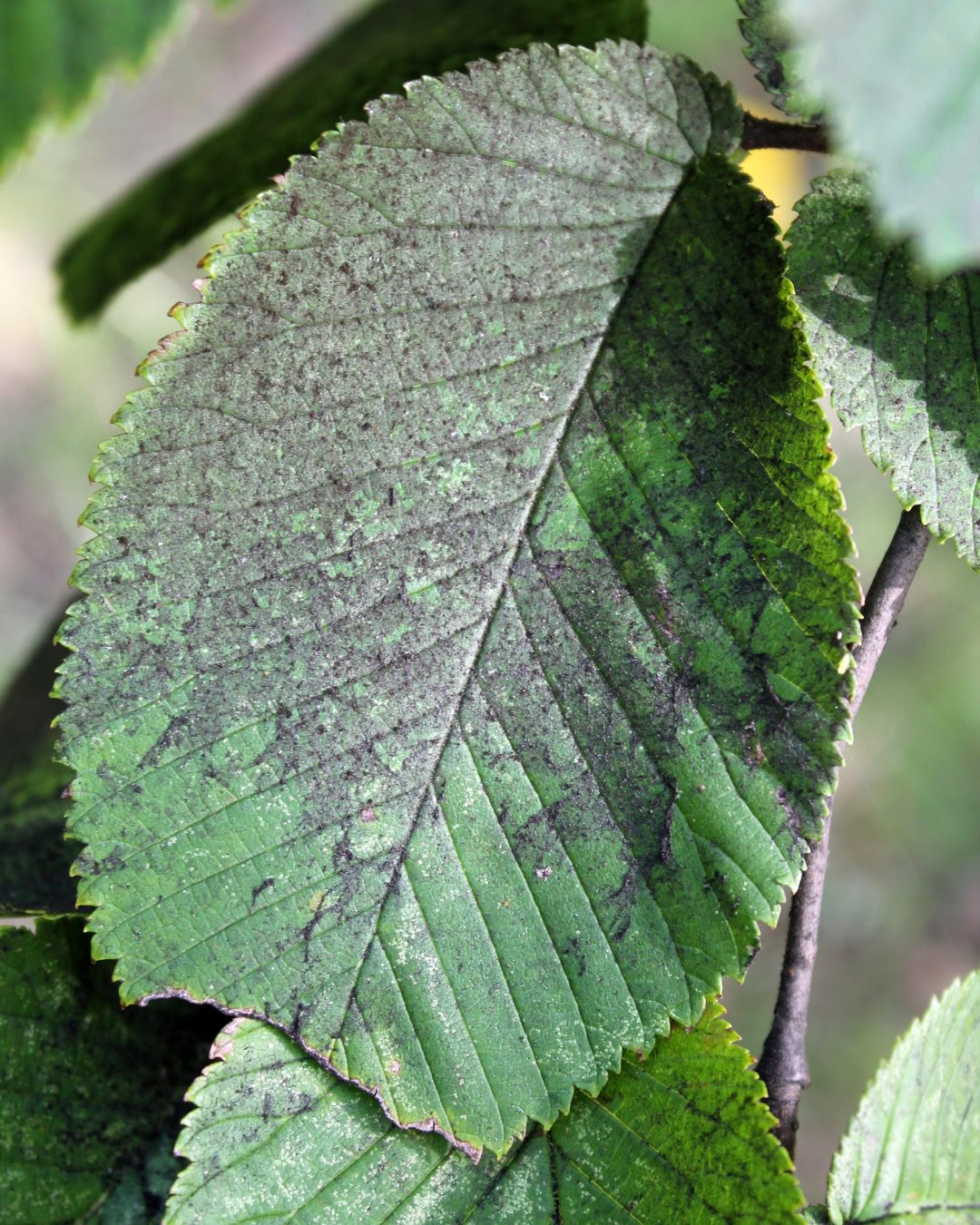
Sooty Mold appears as a dark gray to jet-black film with a powdered charcoal look. At first, dark specks or irregular spots appear; later, these spots merge and can cover much of the leaf. The texture is usually dry, fine, and brittle. A simple test helps a lot: rub it with your finger, a damp cloth, or a soft brush. If the black layer comes off the surface without damaging the leaf, the problem is consistent with Sooty Mold.
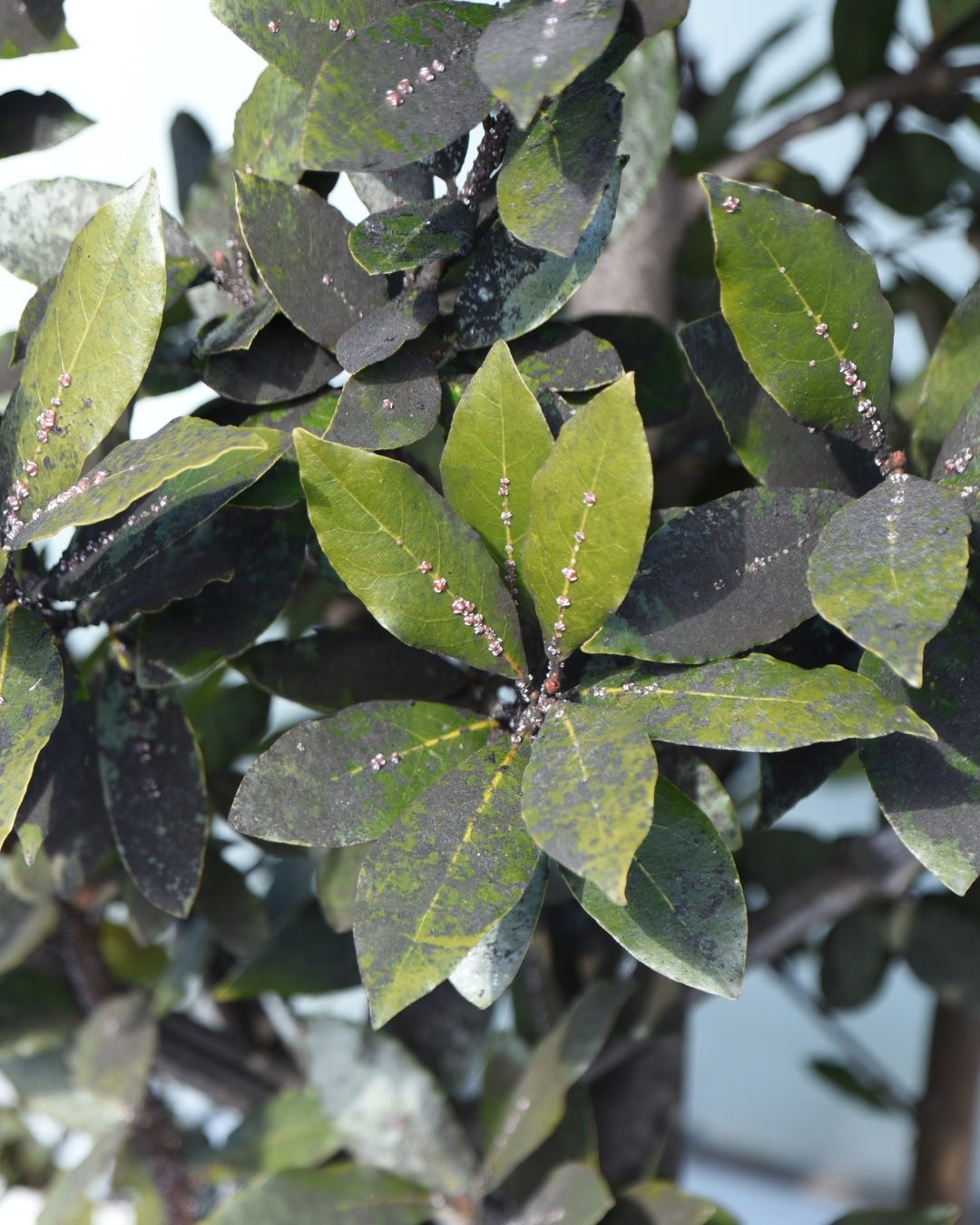
The main damage comes from the shade this dark coating creates over the plant. With less light reaching the leaves, photosynthesis drops, growth loses vigor, flowering and fruiting may decline, and leaves or fruit may drop early in severe cases. Also look for signs of the cause. Honeydew is a translucent, sticky secretion, often accompanied by ants.
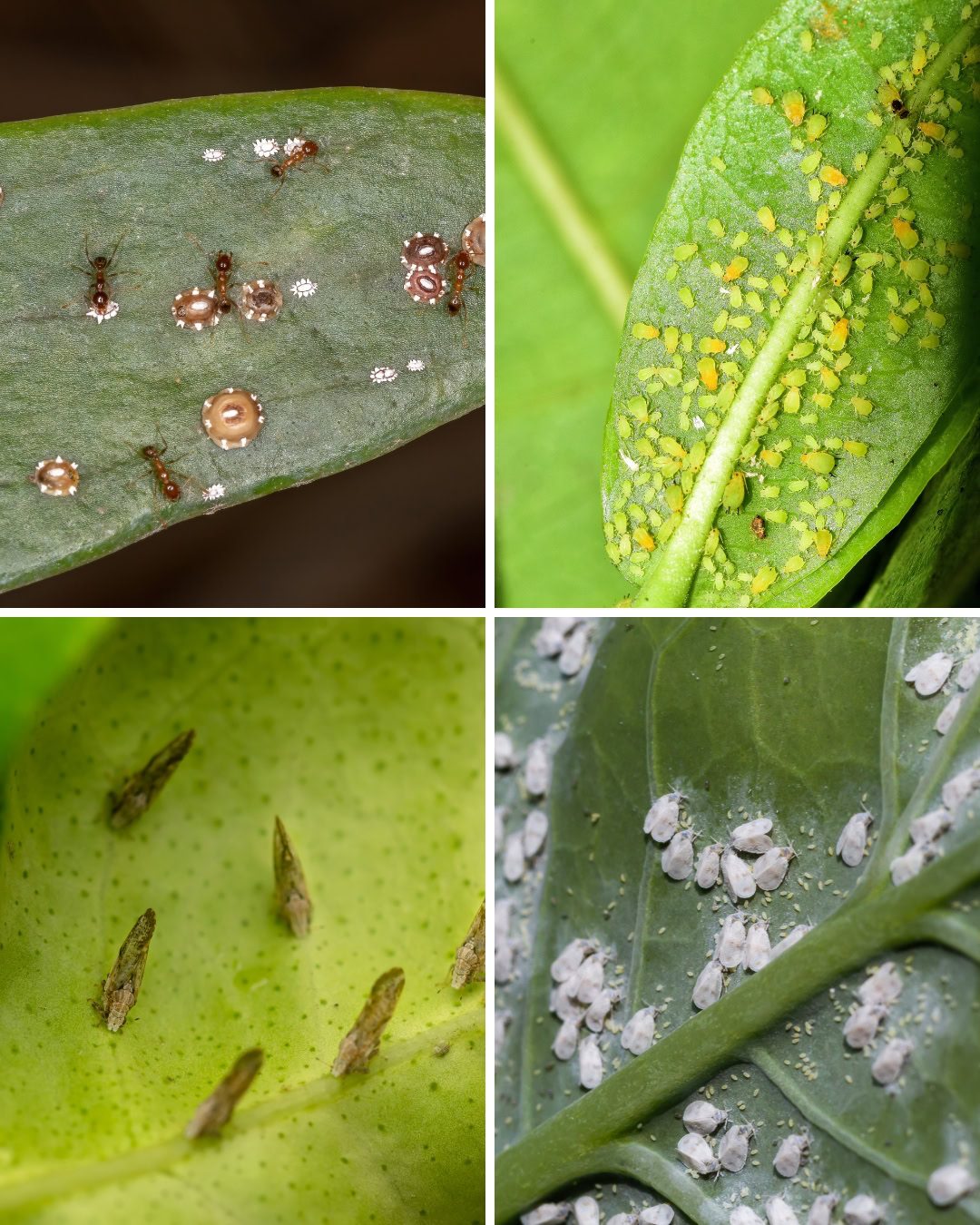
Aphids, scale insects, whiteflies, and psyllids are found on new growth, tender branches, veins, and the undersides of leaves. Sooty Mold differs from molds such as gray mold because it does not have a cottony appearance and does not cause rot. It also does not resemble fungal or bacterial leaf spots, which form lesions, necrosis, halos, or pustules in leaf tissue.
Affected Plants and Favorable Conditions
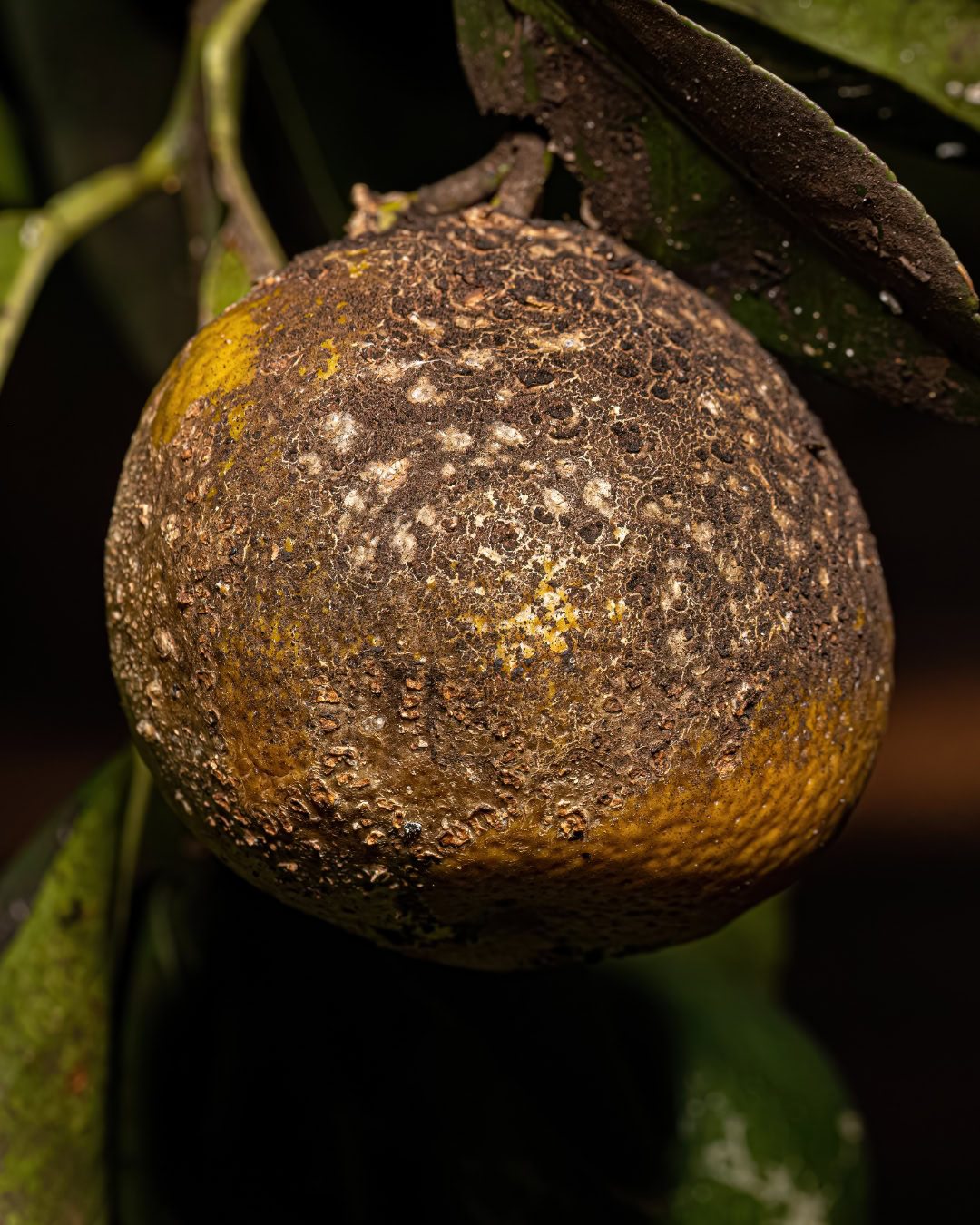
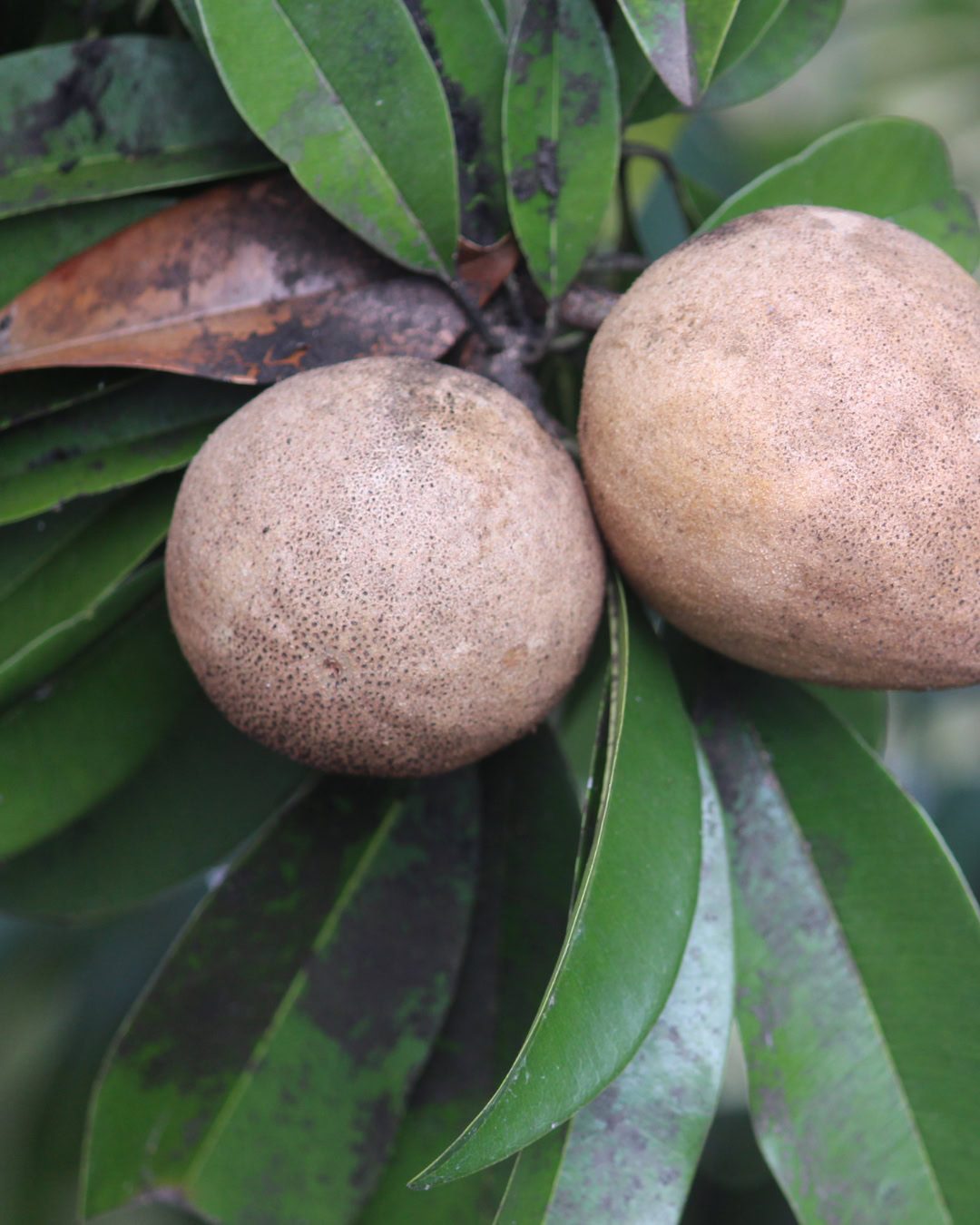
Sooty Mold can appear on practically any plant that is receiving honeydew from sap-sucking insects. It is common on fruit crops such as citrus (orange, lemon, tangerine), mango, persimmon, grape, guava, avocado, olive, apple, pear, and peach. It can also affect vegetables such as tomato, pepper, and cucumber, especially in protected environments.
Among ornamentals, it appears on roses, hibiscus, dracaena, ficus, jasmine, azalea, camellia, and palms, among many others. The problem makes sense when aphids, scale insects, whiteflies, or psyllids are active. Mild temperatures, moderate to high relative humidity, low air circulation, and overly crowded plants favor the pests and, as a result, Sooty Mold.
Excess nitrogen fertilization also works against the plant because it encourages tender, succulent new growth that is more attractive to sap-suckers. Plants under stress from too little or too much water and from nutritional imbalance tend to suffer more attacks.
Biology, Life Cycle, and Spread
Capnodium citri is a fungus in the Ascomycota group and lives saprophytically. That means it feeds on the sugar in insect honeydew without invading the leaf, stem, or fruit. The spores, the fungus’s reproductive structures, are present in the environment and are carried by wind, rain splash, and even the insects themselves. When they find a surface covered with honeydew, they germinate and form the dark layer.
The Sooty Mold cycle continues as long as honeydew is available. That is why washing the leaves helps, but does not solve the problem if aphids, scale insects, whiteflies, or psyllids keep feeding and producing new secretion. Ants make the cycle worse because they are attracted to honeydew and protect sap-sucking insects from their natural enemies. When you see ant trails climbing the plant, it is worth checking carefully for pests.
How to Prevent Sooty Mold
Prevention starts with monitoring. Check new growth, tender branches, veins, and the undersides of leaves, where sap-suckers usually settle. New plants should be inspected before being placed close to others. Keep good spacing between pots and beds, with light and air movement within the canopy.
Air-pruning helps reduce shade and trapped moisture, discouraging both insects and the growth of the fungal layer. Avoid excess nitrogen in fertilization. The goal is balanced nutrition, without forcing weak, overly tender new growth.
Adjust irrigation as well, since stressed plants tend to be more vulnerable to pest attacks. Preserve ladybugs, lacewings, hoverflies, and parasitoid wasps. Avoid broad-spectrum pesticides unless they are truly needed, since they can reduce these beneficial insects and allow sap-sucker populations to build back up.
Treatment and control
- Mild case: wash the plant with water jets to dislodge aphids, scale insects, or whiteflies and remove part of the Sooty Mold. On shrubs and trees with sturdy leaves, such as camellia or orange tree, you can even use a pressure washer set low enough not to injure the plant (Caution here: test the pressure on a small area before applying it to the whole plant). On broad, firm leaves, wipe with a damp cloth or a soft brush with water and mild soap, then rinse well. Watch for ants and reduce their access to the plant, since they keep sap-sucker populations protected. Improve air circulation, space pots farther apart, and hold off on nitrogen-rich fertilization until the plant rebalances.
- Moderate case: repeat the washing and do selective pruning of branches and leaves heavily infested with insects. Discard this material and keep monitoring the undersides of leaves, since Sooty Mold comes back if honeydew reappears. Potassium soap, insecticidal soap, diluted mild detergent, horticultural vegetable or mineral oils, and neem oil can help control sap-sucking insects. Apply with the plant out of strong sun and always follow the product instructions.
- Severe case: when the plant is heavily blackened and overrun with pests, combine thinning cuts, removal of the most infested areas, careful washing, and persistent control of the sap-suckers and ants. Protect nearby plants by inspecting them the same day. Copper fungicides, such as Bordeaux mixture or copper-based products, can help dry out and break up the Sooty Mold after the cause has been controlled. They are an auxiliary measure; by themselves, they do not solve the honeydew problem.
- What to avoid: do not scrape leaves hard, do not make random mixes, and do not apply oil in strong sun. Avoid using fungicide without identifying aphids, scale insects, whiteflies, or psyllids, since the cause of Sooty Mold is almost always these sap-sucking pests. Professional-use pesticides, such as products from groups like neonicotinoids, pyrethroids, or insect growth regulators, require a diagnosis and a prescription from a licensed agronomist. Prioritize cultural, physical, and biological management whenever possible.
Frequently asked questions
Does Sooty Mold kill the plant?
Sooty Mold rarely kills the plant on its own, because it does not invade plant tissues. The problem is that the black coating covers the leaves, reduces photosynthesis, and can weaken the plant over time. In severe, long-lasting outbreaks, it can cause weak growth, less flowering, leaf drop, and smaller or misshapen fruit.
Can Sooty Mold spread to other plants?
The fungus spores can spread by wind, rainwater, or irrigation, but Sooty Mold only develops well where honeydew is present. That is why it usually appears on plants infested with aphids, scale insects, whiteflies, or psyllids. If nearby plants also have these sap-sucking insects, they can end up blackened too.
Do leaves with Sooty Mold return to normal?
Yes, many leaves regain a good appearance after cleaning, because Sooty Mold stays on the leaf surface. It can be removed with water, a damp cloth, a soft brush, or a light water spray. However, leaves that are very weakened, yellowed, or already partly dry may not recover fully. The most important thing is to control the insects that produce the honeydew.
What is the best home remedy for Sooty Mold?
The best “home remedy” for Sooty Mold is to combine leaf cleaning with control of the sap-sucking insects. Wash the plant with pressurized water (only for plants with sturdy leaves) or remove the black coating with a damp cloth (for delicate leaves), without scrubbing hard. Then look for aphids, scale insects, whiteflies, or psyllids, especially on the undersides of leaves, new growth, and branches. Without controlling these pests, Sooty Mold comes back because honeydew keeps being produced.
What is the best fungicide for Sooty Mold?
In most cases, fungicide is not the main solution for Sooty Mold. Because the fungus grows on the honeydew left by sap-sucking insects, the most effective treatment is to control the pest and wash the leaves. Contact fungicides or Bordeaux mixture can reduce the fungus on the surface, but they do not solve the cause.
Instead of trying to “attack the black leaf,” first focus on eliminating aphids, scale insects, whiteflies, psyllids, and the ants associated with them.
How do you treat Sooty Mold on lemon trees?
To treat Sooty Mold on lemon trees and other citrus, start by looking for scale insects, aphids, whiteflies, and psyllids on branches, leaves, and new growth. Remove excess Sooty Mold with a water spray (use a pressure washer adjusted so it is not too strong; otherwise, it can damage and knock off the leaves). Then control the sap-sucking insects and reduce the presence of ants, which often protect these pests in exchange for honeydew. Avoid applying oils or sprays in strong sun, intense heat, or on a stressed plant, since this can burn the leaves.
How do you treat Sooty Mold on camellia?
On camellia, Sooty Mold is usually associated with scale insects, aphids, or other pests hiding on branches, buds, and the undersides of leaves. Clean it off with a gentle water spray (use a pressure washer adjusted so it is not too strong; otherwise, it can damage and knock off the leaves). Then control the sap-sucking insects and improve air circulation around the plant. Camellias like a humid, cool, well-drained environment, but not constant stuffiness.
Why are there ants along with Sooty Mold?
Ants show up because they are attracted to the sugary honeydew produced by aphids, scale insects, whiteflies, and other sap-sucking insects. In many cases, they protect these pests from natural predators, which makes control more difficult. So when there is Sooty Mold, ants moving up and down the plant are almost a neon sign saying: “look for the sap-suckers.”
How long does it take to control Sooty Mold?
The black coating can be removed the same day with a good cleaning, but real control depends on eliminating the insects that produce the honeydew. In light infestations, improvement shows up in a few days. In more persistent cases, it may be necessary to repeat cleaning and pest control for several weeks, monitoring new growth, the undersides of leaves, and the presence of ants.