Have you ever had that feeling that a living room is already complete — new sofa, carefully chosen rug, art on the wall — and yet something still feels missing? Most of the time, what’s missing is a truly large plant. Not a timid little pot on the sideboard, but a presence that takes up space, casts shade, and makes you stop and look.
After years of designing interiors, I’ve learned that ten small plants scattered around rarely create the impact of a single well-chosen specimen. It’s the plant that gives the room scale, fills the empty space near a high ceiling, and turns a dead corner into a focal point. It’s what decorators call a statement plant — the plant that signs the room all by itself.
The trick, though, is not to grab the prettiest one at the store and hope for the best. I like to start with the silhouette, because plant shape is what speaks to the architecture of the room. Before falling in love with a leaf, it’s worth looking at three things:
- Ceiling height: tall ceilings call for vertical lines (palms, fiddle-leaf figs), while lower ceilings pair better with broad, full foliage at eye level.
- Available light: a plant’s beauty won’t last without the light it needs, and this is the variable most people ignore when buying.
- Traffic flow: a statement plant needs room to be admired. If you have to dodge it every time you cross the living room, the charm quickly turns into an obstacle.
That’s why I organized this list by visual effect, not alphabetically or by passing trend. I grouped the plants by the silhouette they create in the room, from jungle-like impact to more architectural lines, so you can quickly find the one that fits your space.
Group 1: Lush tropical foliage: the jungle effect indoors
The plants in this group are the ones that create instant impact. They have broad leaves, striking texture, and a dense presence, working especially well in spacious living rooms, empty corners, areas near windows, and spaces with an urban jungle vibe. These are species for anyone who wants the plant to be part of the decor as a main feature, not just a quiet accessory beside the sofa.
1. White bird of paradise — Strelitzia nicolai
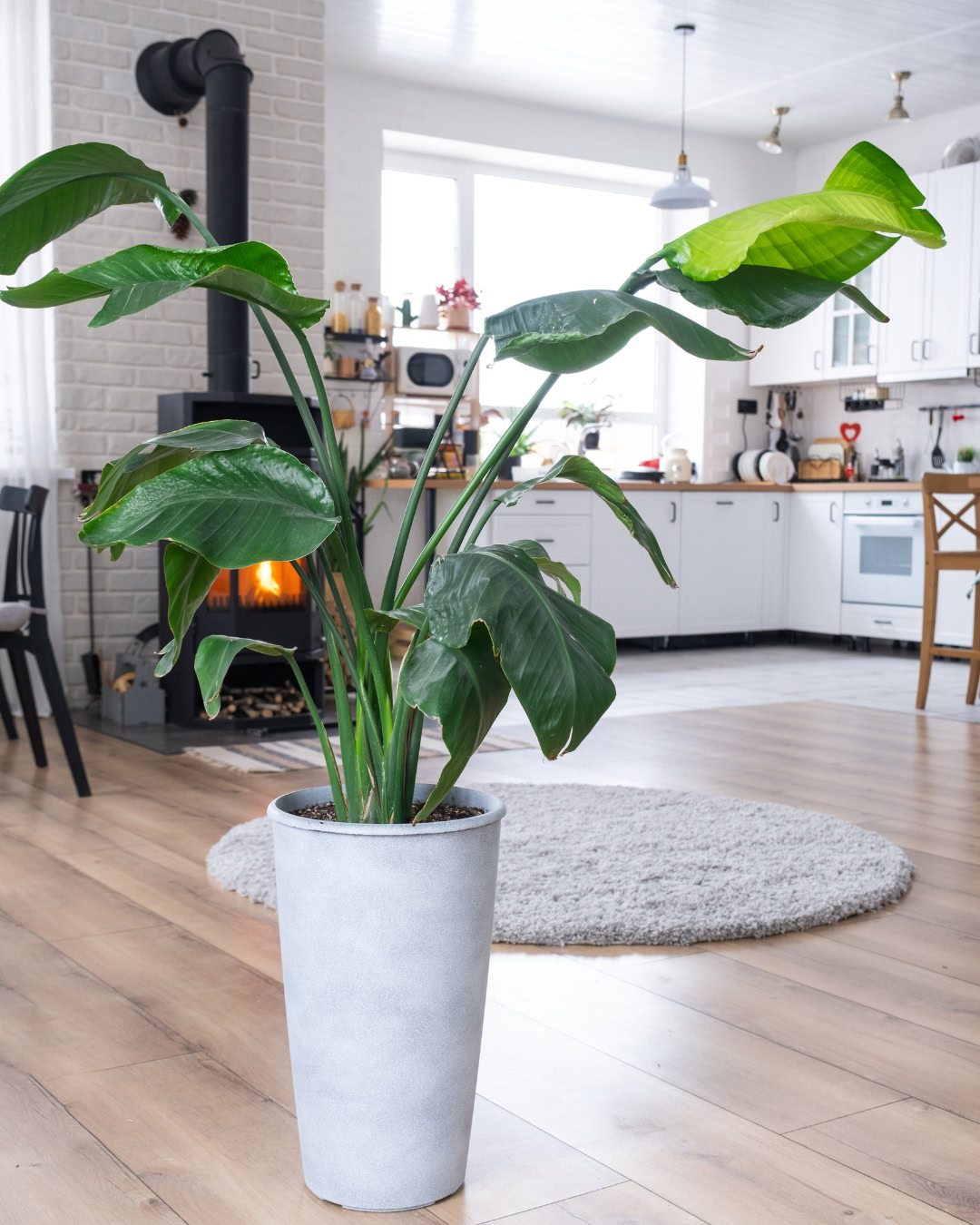
The white bird of paradise, also known as giant bird of paradise, has moved from tropical gardens into living rooms as one of the most sought-after large living room plants in contemporary decor. Its popularity indoors has grown alongside the demand for spaces that feel like a resort, boutique hotel, or upscale beach house. Native to southeastern Africa, from eastern Zimbabwe to KwaZulu-Natal and Botswana, it has a tree-like form and large, banana-like leaves, but with a more upright, architectural habit.
Indoors, Strelitzia nicolai adds height, movement, and a clean tropical feel without looking messy. It needs plenty of natural light to stay attractive, ideally near large windows, glass-enclosed porches, or living rooms with high ceilings. The potting mix should drain well, and watering should allow the soil to dry partially between waterings; too much water in a large pot is the fastest route to stressed roots and a confused gardener.
2. Swiss cheese plant — Monstera deliciosa
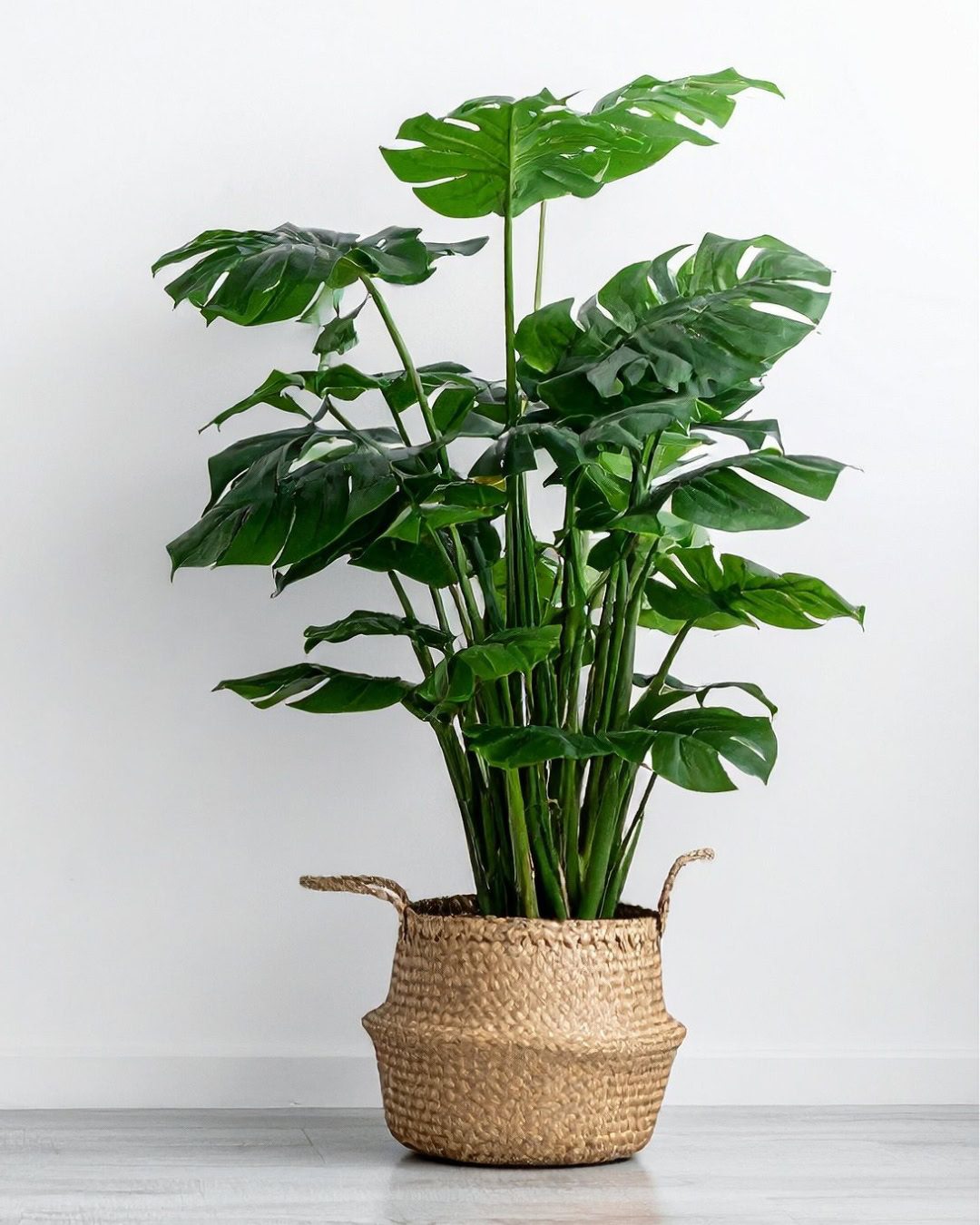
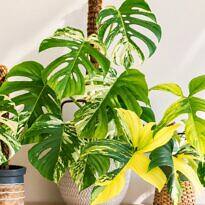
The Swiss cheese plant is a longtime interior-design favorite, and it still feels current because it delivers exactly what you want from a statement plant: large, split leaves that are instantly recognizable and highly decorative. It has become a symbol of the urban jungle aesthetic and shows up in modern apartments, tropical homes, creative offices, and commercial spaces. Native to Mexico, especially Veracruz, Oaxaca, and Chiapas, and extending into Guatemala, it grows as a climbing vine in humid tropical forests.
Indoors, Monstera deliciosa brings volume and an easygoing elegance, as if the living room had gained a controlled piece of the forest.
To look truly beautiful, it needs plenty of bright indirect light and some kind of support, such as a moss pole, trunk, or vertical structure. Without support, it tends to sprawl too much; with support, it grows stronger, produces larger leaves, and takes on a much more elegant presence.
3. Alocasia, or elephant ear — Alocasia macrorrhizos, Alocasia wentii, Alocasia ‘Regal Shields’
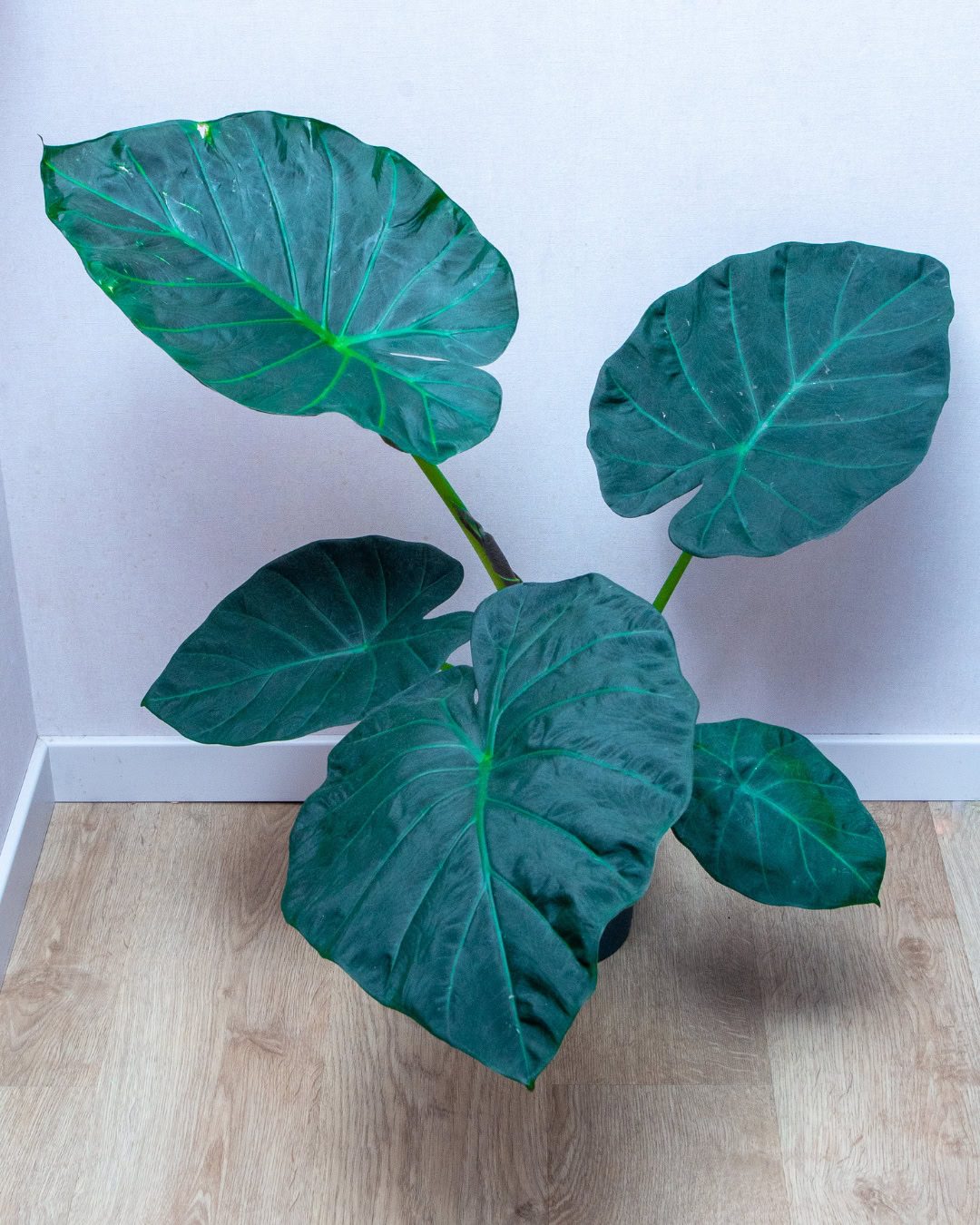
Alocasias are dramatic statement plants: huge leaves, pronounced veins, long petioles, and an almost sculptural habit. There are many very different species and cultivars, but they all share that bold visual language. Alocasia macrorrhizos, for example, is native to a region stretching from Central Malesia to Queensland, Australia, and grows in humid tropical environments; cultivars like ‘Regal Shields’ were selected specifically for the ornamental effect of their dark, glossy leaves.
In the living room, alocasia creates a strong focal point, especially in wide, low pots where the leaves can open up without crowding furniture or walkways. It needs bright indirect light, higher humidity, and a fertile potting mix that stays evenly moist but drains very well. This is a plant for attentive growers: yellowing leaves, dry edges, and spider mites usually signal quickly when the room is too dry, too dark, or the watering routine is inconsistent.
4. Tree philodendron — Thaumatophyllum bipinnatifidum / Philodendron bipinnatifidum
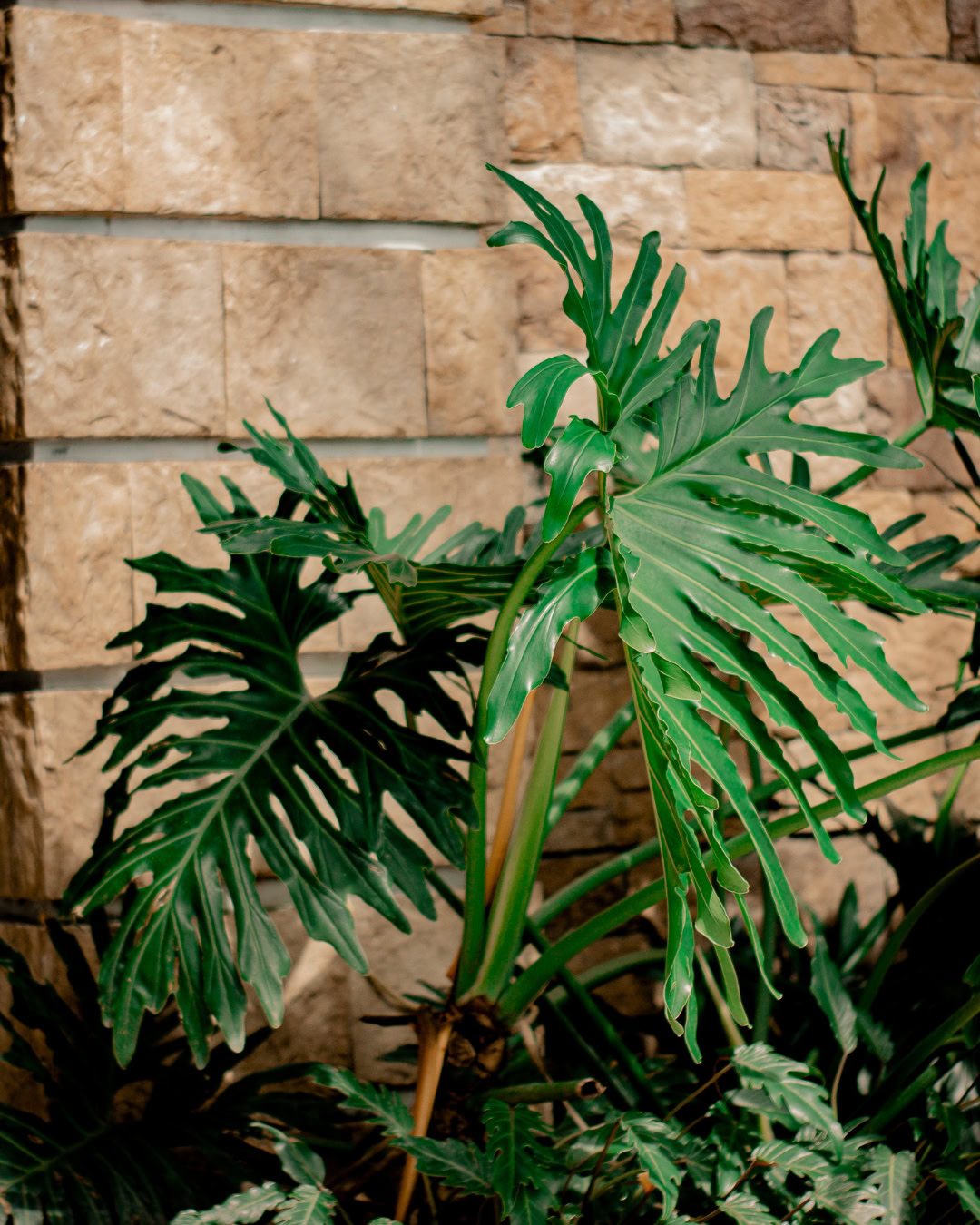
The tree philodendron has a strong history in tropical landscaping and has made its way back indoors precisely because of its generous, sturdy, sculptural form. In the trade, it is still commonly sold as Philodendron bipinnatifidum, although the currently accepted name is Thaumatophyllum bipinnatifidum. Its native range extends from eastern Bolivia to southeastern and southern Brazil and northeastern Argentina.
Indoors, it creates a dense green mass with deeply cut leaves and a mature tropical look. It is excellent for large living room plants, covered patios, and spaces with abundant side light. It needs room, because this is not a tidy shelf plant; over time, it develops a trunk and takes up volume. Water when the top layer of the potting mix begins to dry, and avoid small pots, since the plant loses its impact when it is cramped.
5. Cigar calathea — Calathea lutea
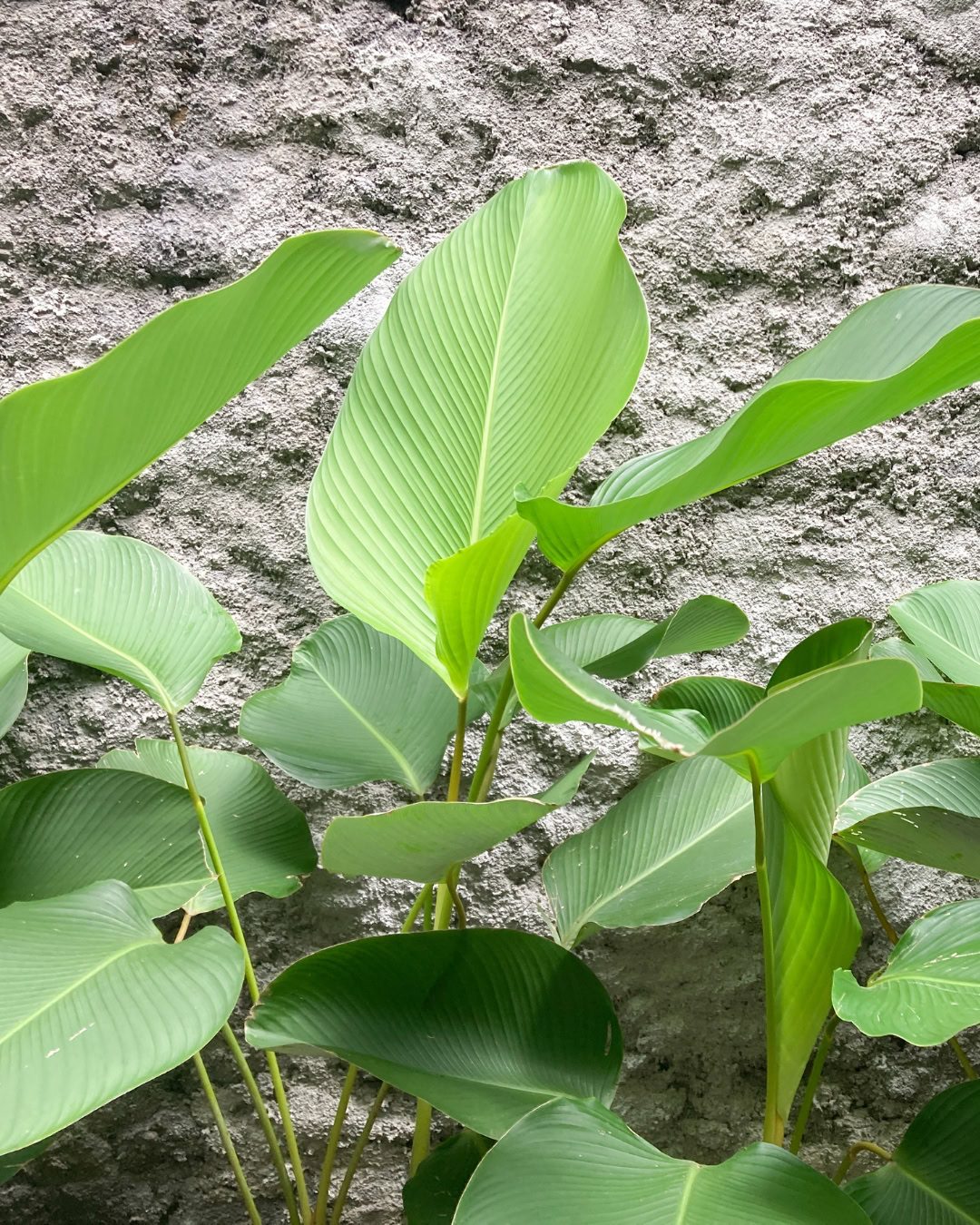
The cigar calathea has a strong place in tropical landscaping, especially in shaded gardens, entryways, and lush foliage compositions. Indoors, it shows up as a bolder choice, ideal for anyone who wants large, upright leaves with the look of a mature tropical garden. The species is native from southern Mexico through Tropical America and grows mainly in humid tropical environments.
In the living room, Calathea lutea creates a green screen effect, with large, upright, highly decorative leaves. It works best in spacious rooms with bright filtered light and higher humidity. It is not a good fit for a dark room or dry air conditioning; in those conditions, it responds with scorched edges and less attractive leaves. The key is to treat it like an understory tropical plant: warmth, filtered light, slightly moist soil, and no harsh direct sun.
Group 2: Figs and canopy trees: bringing a “tree form” indoors
This group brings together plants that add trunk, canopy, and vertical structure. They are perfect for anyone who wants the feeling of having a small tree inside the living room, something that changes the scale of the space and adds more sophistication to the design. They work well in large pots, decorative cachepots, and strategic corners, especially where there is plenty of natural light.
6. Umbrella fig — Ficus umbellata
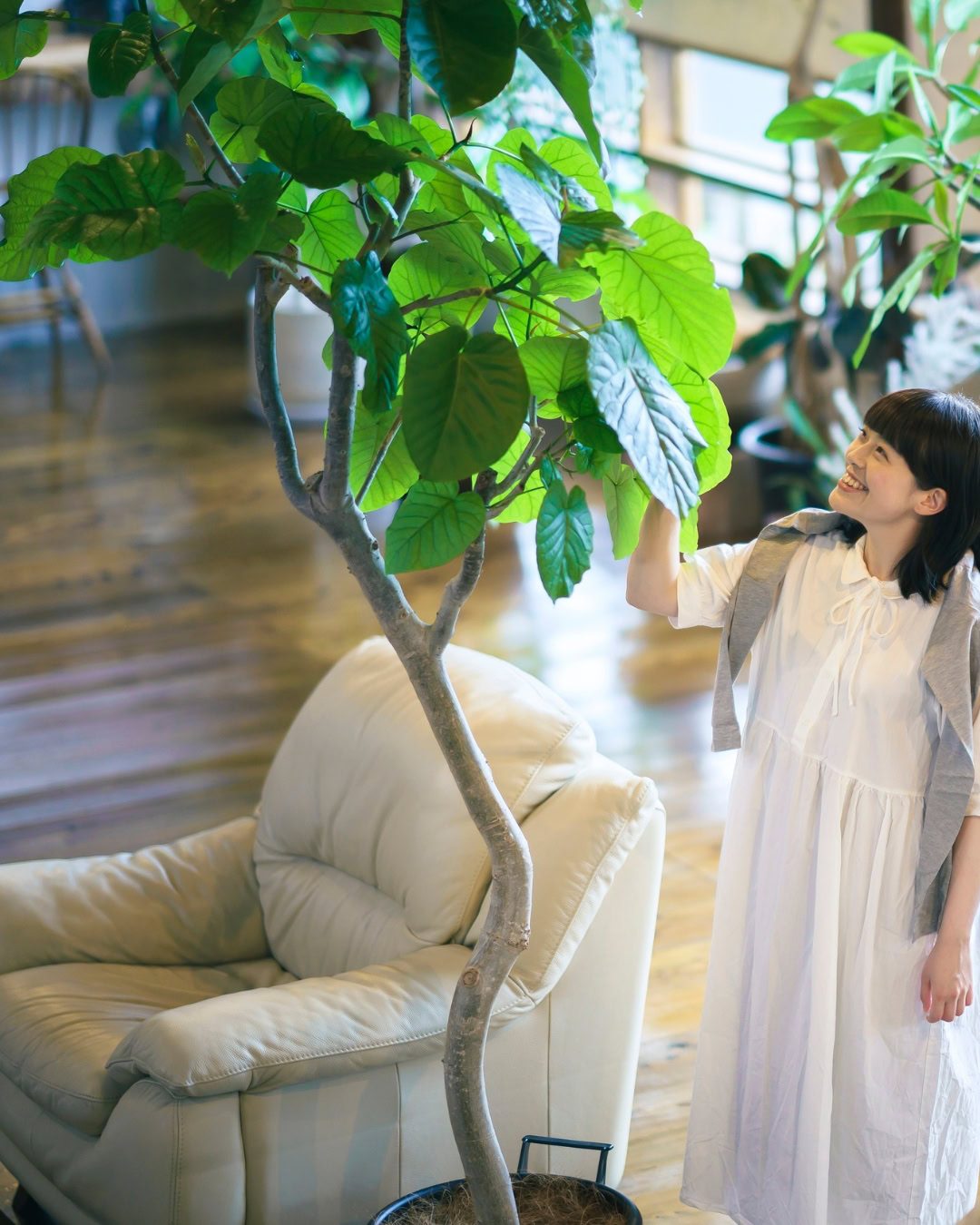
Ficus umbellata is one of the most interesting ficus options for interiors in 2026 because it combines a small-tree form, oversized leaves, and a fresher look than the already overused fiddle-leaf fig. It has been showing up in contemporary decor thanks to its rounded, broad, slightly drooping leaves, which create a clean, tropical, and elegant look. The species is native to tropical western Africa, from the southwest of Ethiopia to Angola.
Indoors, the effect is that of a light, airy tree with an open canopy and a sophisticated presence, without feeling as heavy as some very dense foliage plants. It needs abundant light and stability: ficus, in general, do not like sudden moves, cold drafts, or erratic watering. The ideal setup is near a very bright window, with the pot rotated occasionally to keep the canopy balanced.
7. Fiddle-Leaf Fig — Ficus lyrata
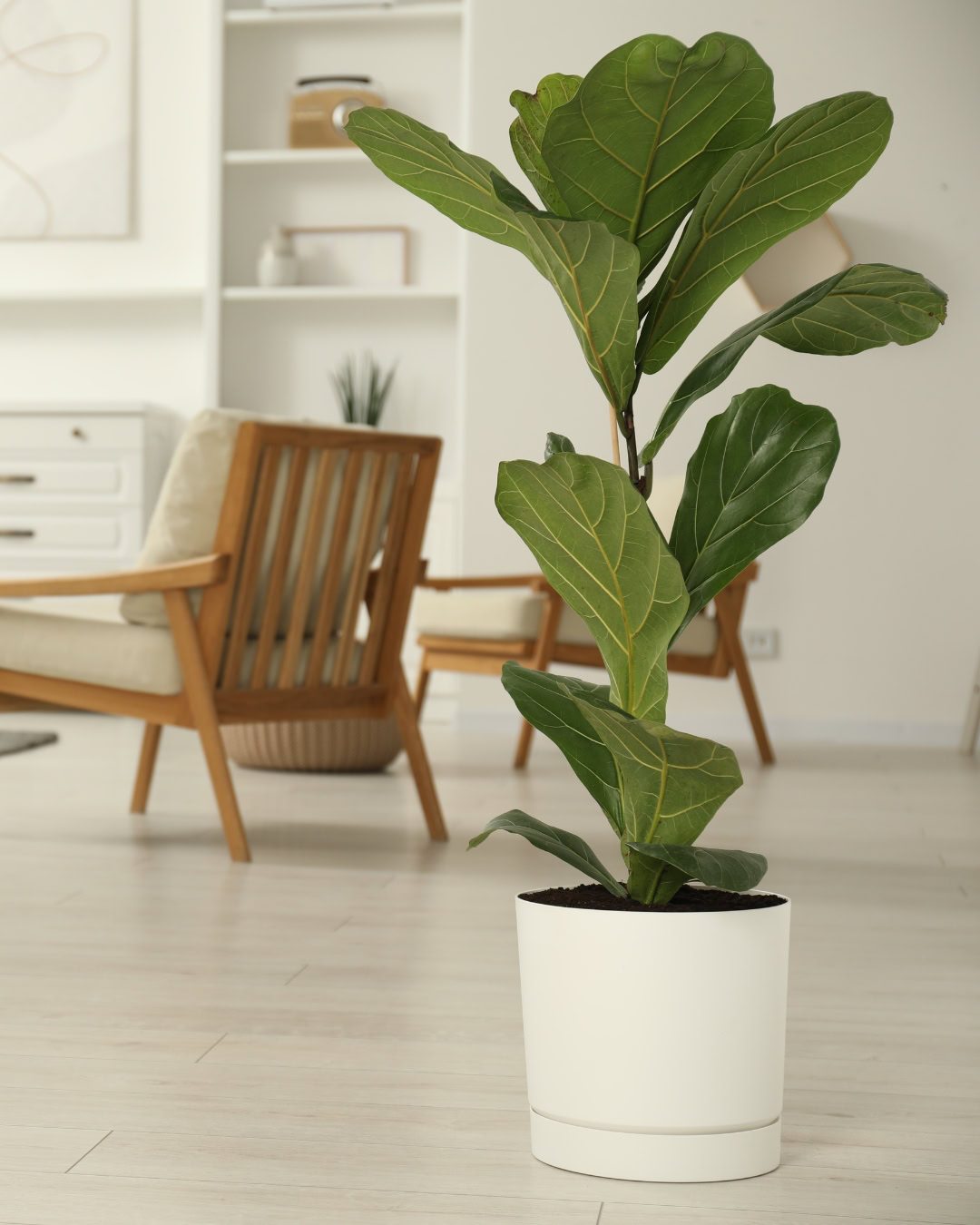
The fiddle-leaf fig may be the most famous large living room plant of the past decade. It became a decor icon in magazines, on Pinterest, in minimalist apartments, and in Scandinavian or contemporary interior design projects. Its name comes from the large leaves shaped somewhat like a lyre or violin. The species is native to tropical western and west-central Africa, where it grows as a hemiepiphytic tree in humid forests.
In the living room, Ficus lyrata creates a tall, elegant focal point, especially when trained with a single trunk and a well-shaped canopy. But it is not as forgiving as it looks in photos: it needs bright indirect light, regular watering, and very little environmental change. It is also important to wipe the leaves, because large leaves collect dust and lose photosynthetic efficiency — a stylish plant also collects grime, unfortunately.
8. Rubber Plant — Ficus elastica
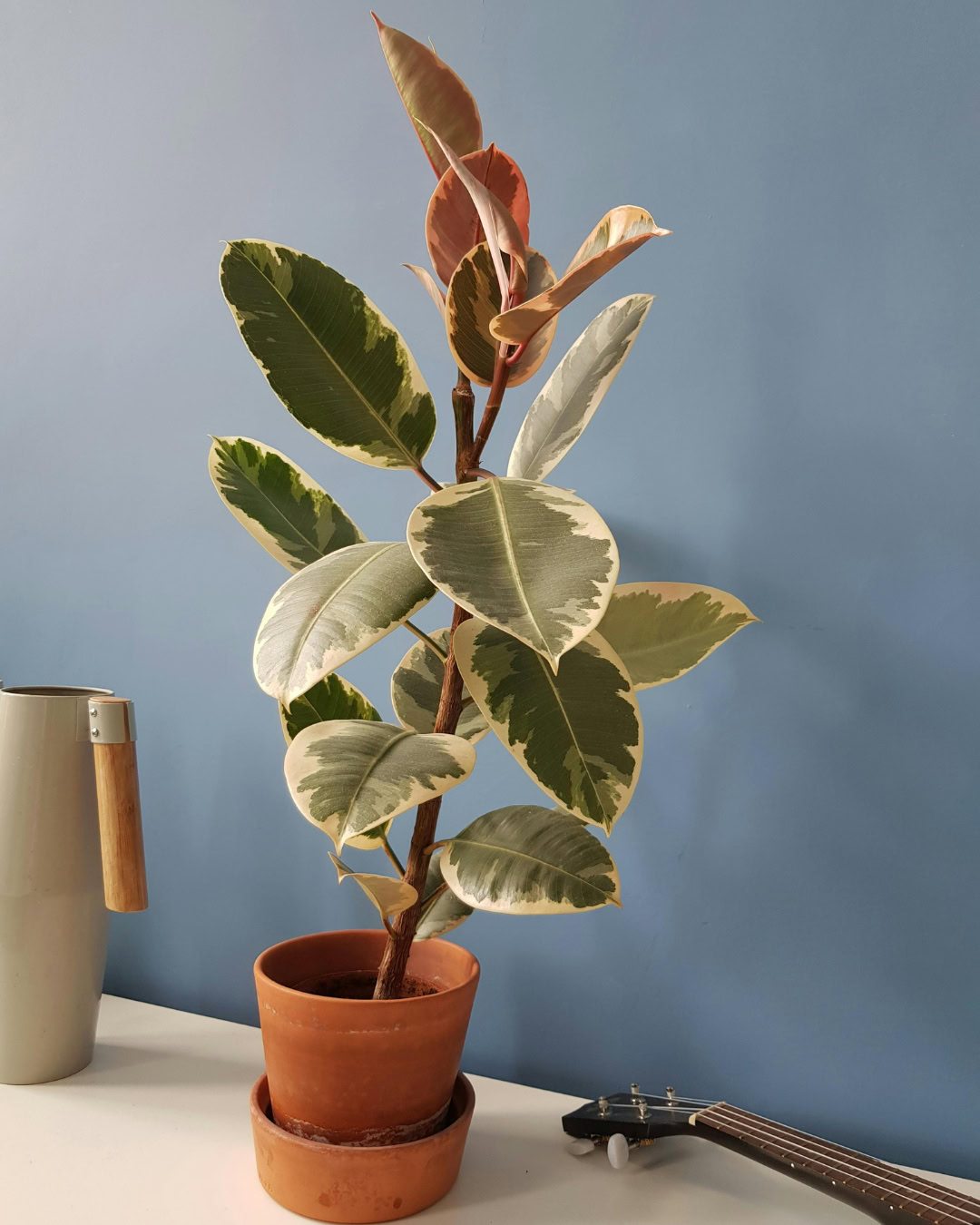
The rubber plant is a classic indoor decor plant. Before the fiddle-leaf fig took over, it was already common in homes, offices, and waiting rooms, especially because of its large, thick, glossy leaves. The species is native to a stretch from Nepal to China, including western Yunnan, and to western Malesia. Indoors, it is usually kept between 24 in and 10 ft (60 cm and 3 m), depending on training and pot size.
The effect in a living room is more restrained and sturdy than that of the fiddle-leaf fig. Cultivars such as ‘Burgundy’, ‘Robusta’, ‘Tineke’, and ‘Ruby’ let you play with green, dark, or variegated foliage. The plant appreciates plenty of brightness, but should be protected from strong direct sun through hot glass. When pruning, wear gloves or wash your hands well, because the latex can irritate skin and stain surfaces.
9. Ficus Audrey or Banyan Fig — Ficus benghalensis ‘Audrey’
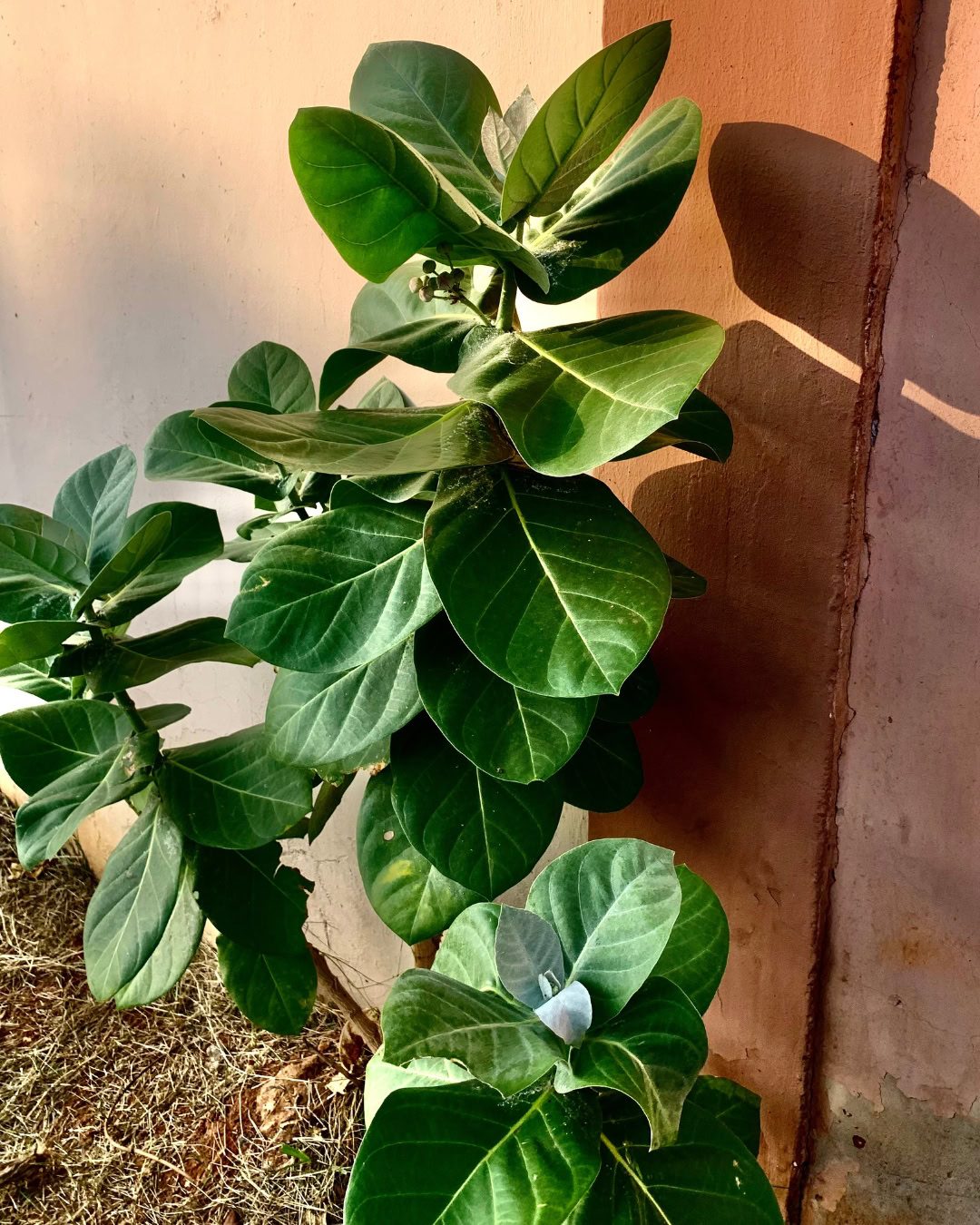
Ficus Audrey is an ornamental selection of the banyan fig, a species famous for forming monumental trees in nature, with a broad canopy and aerial roots. In interior design, it has gained ground as a softer, less over-the-top alternative to the fiddle-leaf fig: oval leaves, velvety texture, medium-green color, and a pale trunk. The species Ficus benghalensis is native to the Indian subcontinent.
In living rooms, ‘Audrey’ works as an elegant statement tree, but with a more organic look and less of a “trendy plant” feel. It needs a bright location, moderate watering, and good drainage. Like other ficus plants, it prefers routine: choose a bright corner and avoid moving it around every week as if it were a decorative chair. It is not.
10. Money Tree — Pachira aquatica
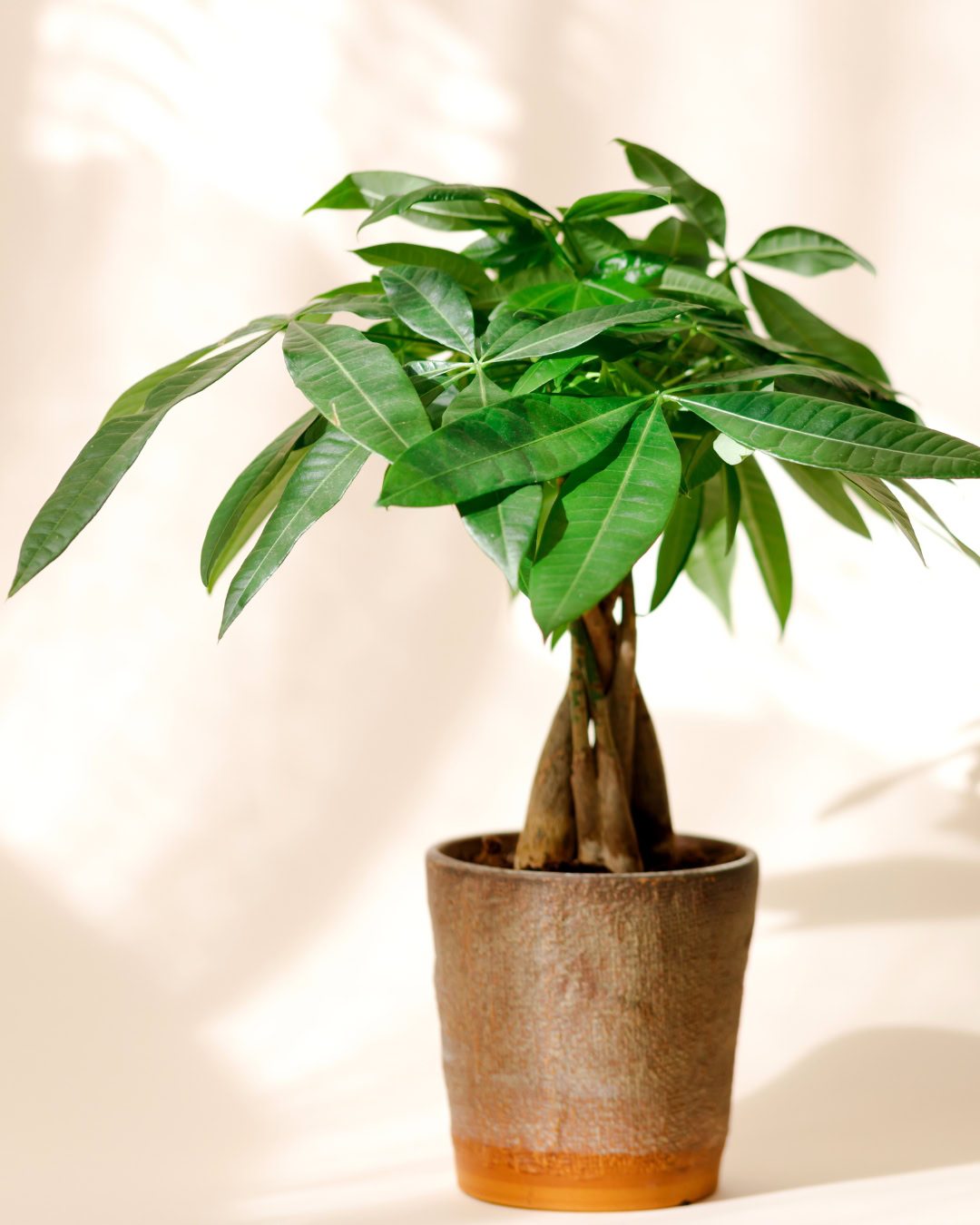
Pachira aquatica is a tropical tree that entered indoor decor with strong symbolic appeal, especially under the common name “money tree.” It is often sold with braided trunks, although that form is the result of nursery training, not an inherent natural trait of the species. Native from Mexico to tropical South America, it grows in humid, tropical environments.
In a living room, the money tree forms a light, pleasant canopy that is less dense than many ficus trees, which makes it a good fit for spaces that need height without blocking too much light. It likes plenty of bright indirect light and moderate watering, with the potting mix allowed to dry partially between waterings. Because the trunk stores some reserves, it handles overwatering worse than a slight delay between waterings. A handsome pot, good drainage, and a light hand: three rare virtues, but necessary.
11. Tree dracaena — Dracaena arborea
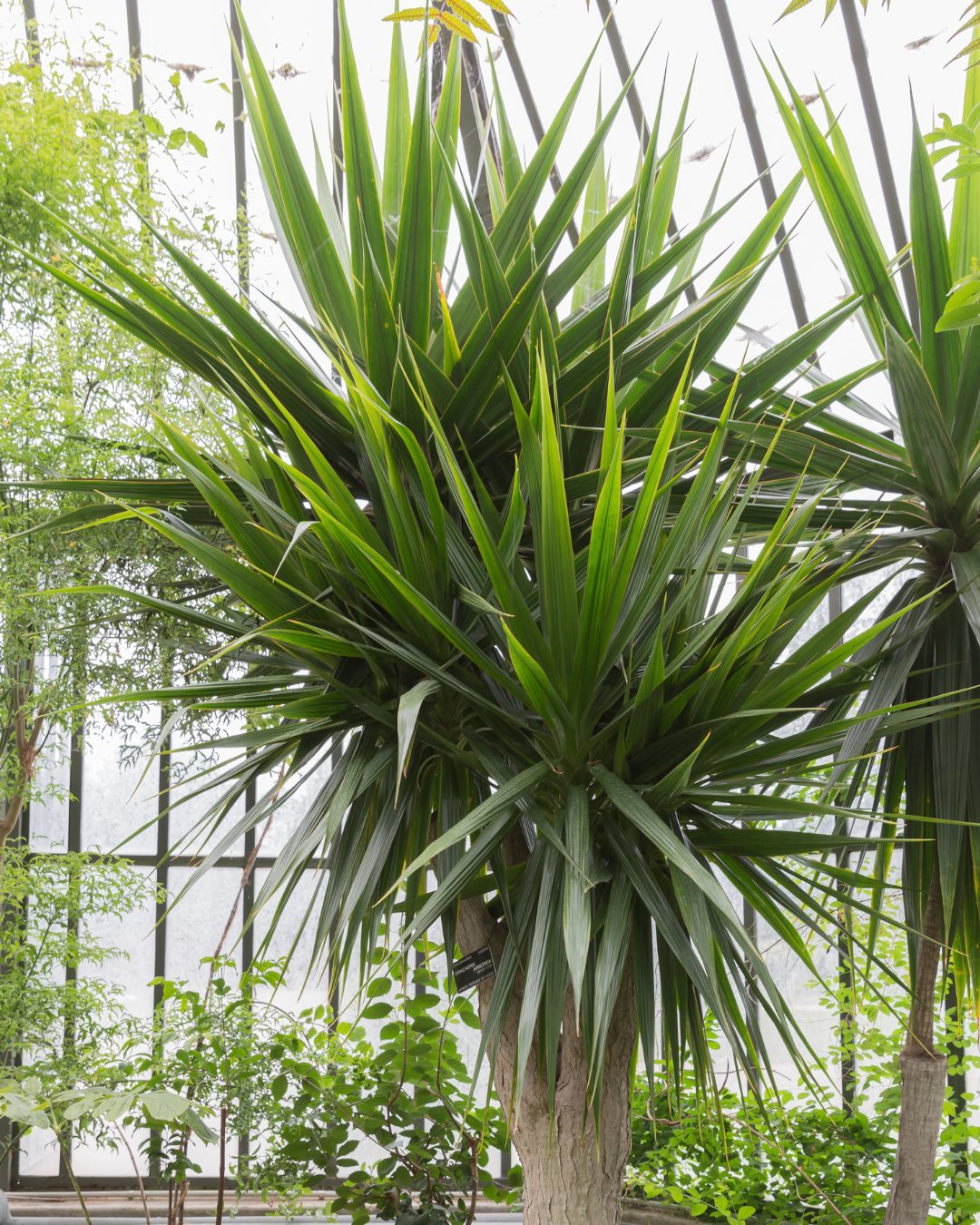
Tree dracaena is a less common choice, but a very interesting one for anyone who wants a large living room plant with a tall, tropical tree-like look. Unlike the more popular dracaenas, it has a naturally tree-form habit and a more imposing presence, with long leaves clustered at the tops of the stems. The species is native from tropical West Africa to Angola, where it grows mainly in humid tropical environments.
Indoors, Dracaena arborea creates an elegant, vertical effect, resembling a palm that is a little stiffer and more architectural. It does best in very bright rooms with room to grow upward. The potting mix should be light and well-draining, and watering should be moderate, avoiding soggy soil. It is a good plant for anyone who wants something a little less obvious, but does not want to enter the dramatic alocasia zone.
Group 3: Palms and fan leaves: light vertical form and tropical style
Indoor palms serve a different purpose than giant foliage plants: they bring movement, light shade, and elegance. Instead of forming a heavy green mass, they create vertical lines and arching fronds, softening corners, windows, and seating areas. They are great for large rooms, spaces with high ceilings, and areas where very dense foliage would steal too much light.
12. Kentia palm — Howea forsteriana
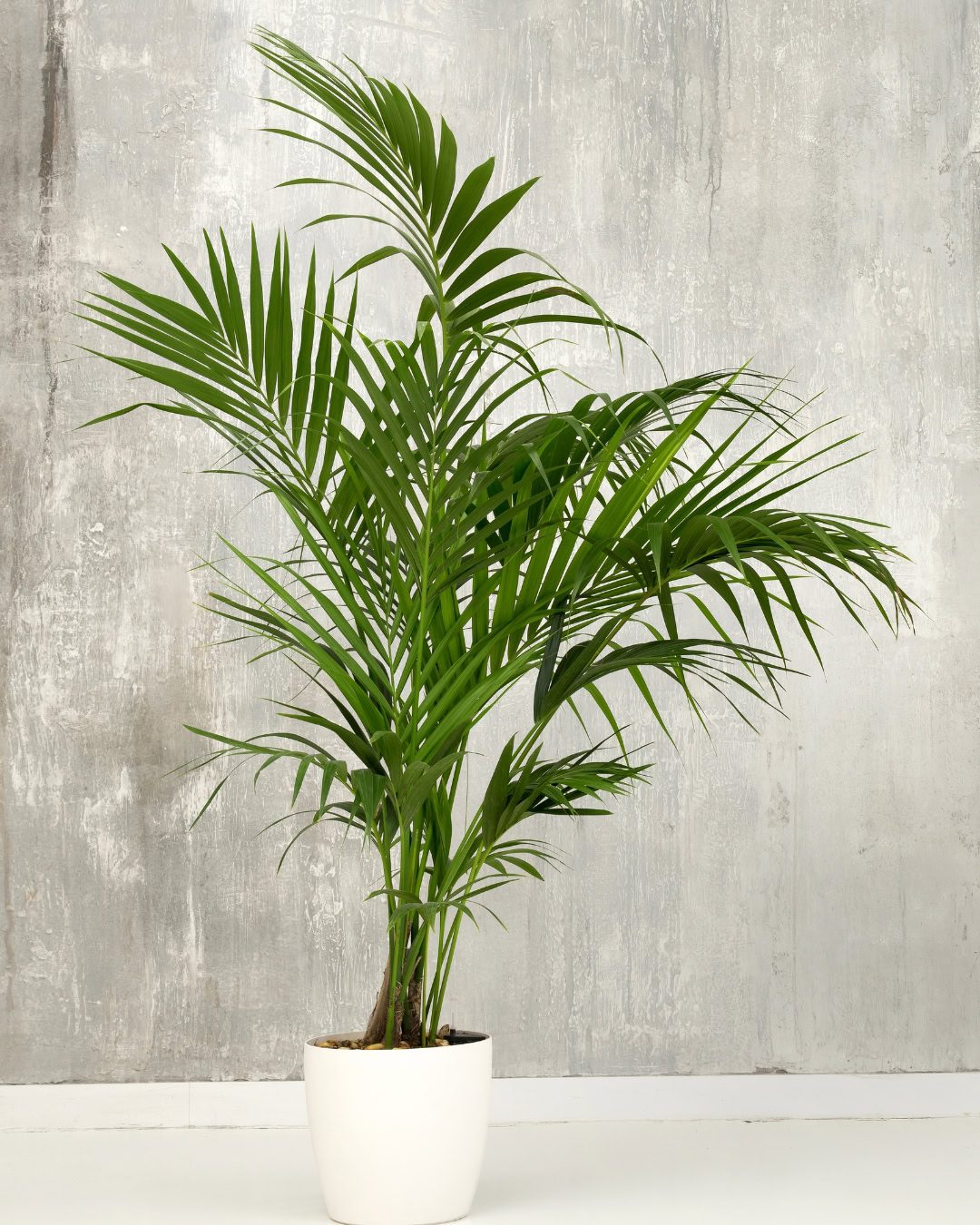
The kentia palm is one of the most traditional and sophisticated indoor palms in the world. Its decorating history goes back a long way: it became popular in parlors, hotels, and elegant homes precisely because it tolerates indoor conditions better than many other palms. The species is endemic to Lord Howe Island, Australia, and its export as an ornamental plant helped shape the island’s economic history.
In the living room, kentia creates a light, arching, classic effect without the overly tropical look that can overwhelm smaller spaces. It is a slow-growing plant, which helps explain its higher price in the market. It prefers bright indirect light, but it can tolerate some bright partial shade. Water when the potting mix begins to dry, and avoid strong direct sun, which can scorch the leaves and ruin that old-mansion charm in just a few afternoons.
13. Lady palm — Rhapis excelsa
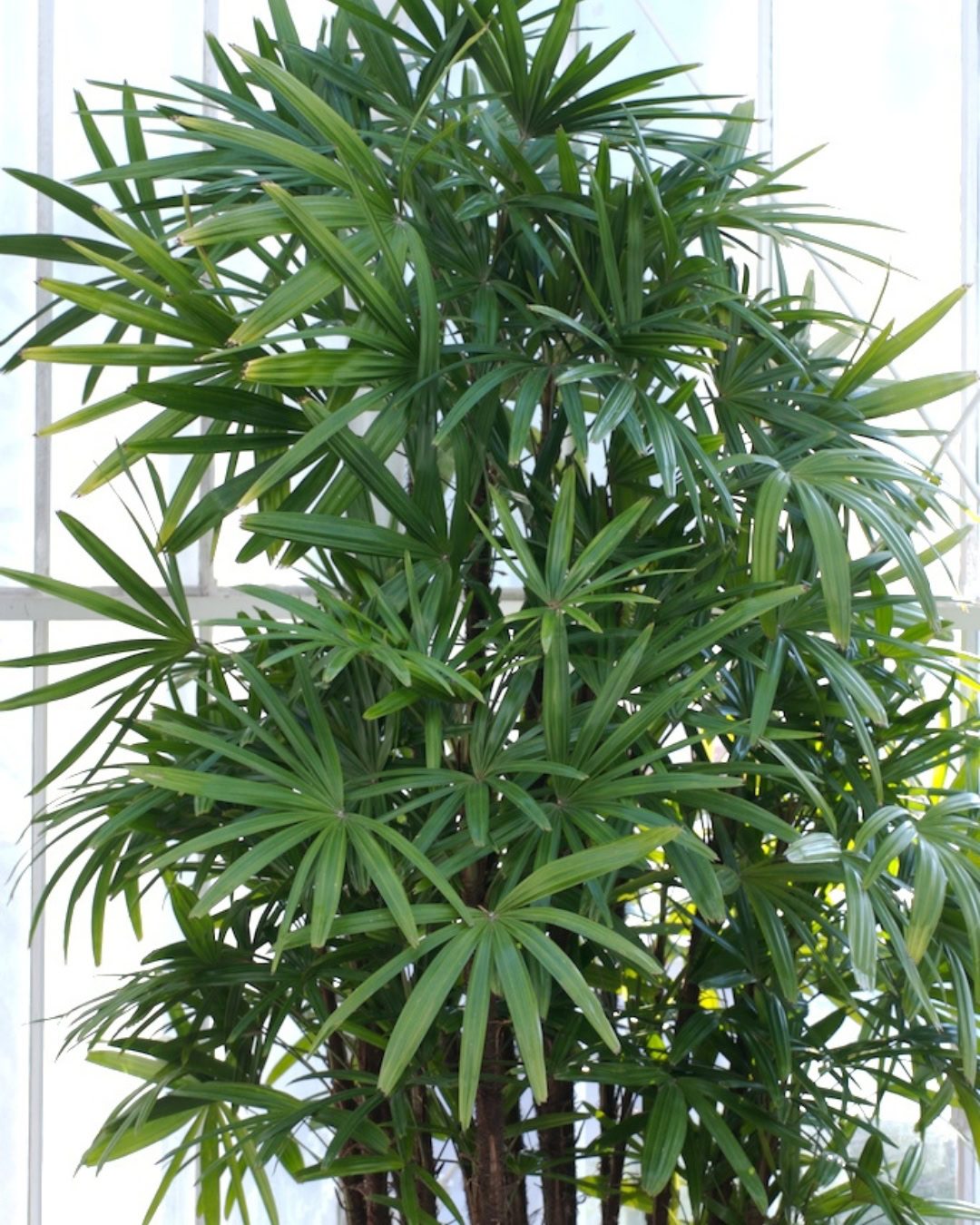
The lady palm is one of the most widely used palms indoors, especially in entryways, offices, large living rooms, and covered patios. Its clumping habit, with multiple slender stems and fan-shaped leaves, creates an elegant and relatively understated look. The species is native to southern China, from Guangdong to northern and central Vietnam.
Indoors, lady palm works like a vertical green curtain: it fills space without feeling heavy and pairs well with both classic and contemporary decor. It tolerates partial shade better than many large plants, but looks best in abundant filtered light. It likes soil that stays lightly moist without becoming waterlogged, and it appreciates periodic leaf cleaning. It is one of the best choices for anyone who wants a large plant with a low-drama personality.
14. Ruffled fan palm — Licuala grandis
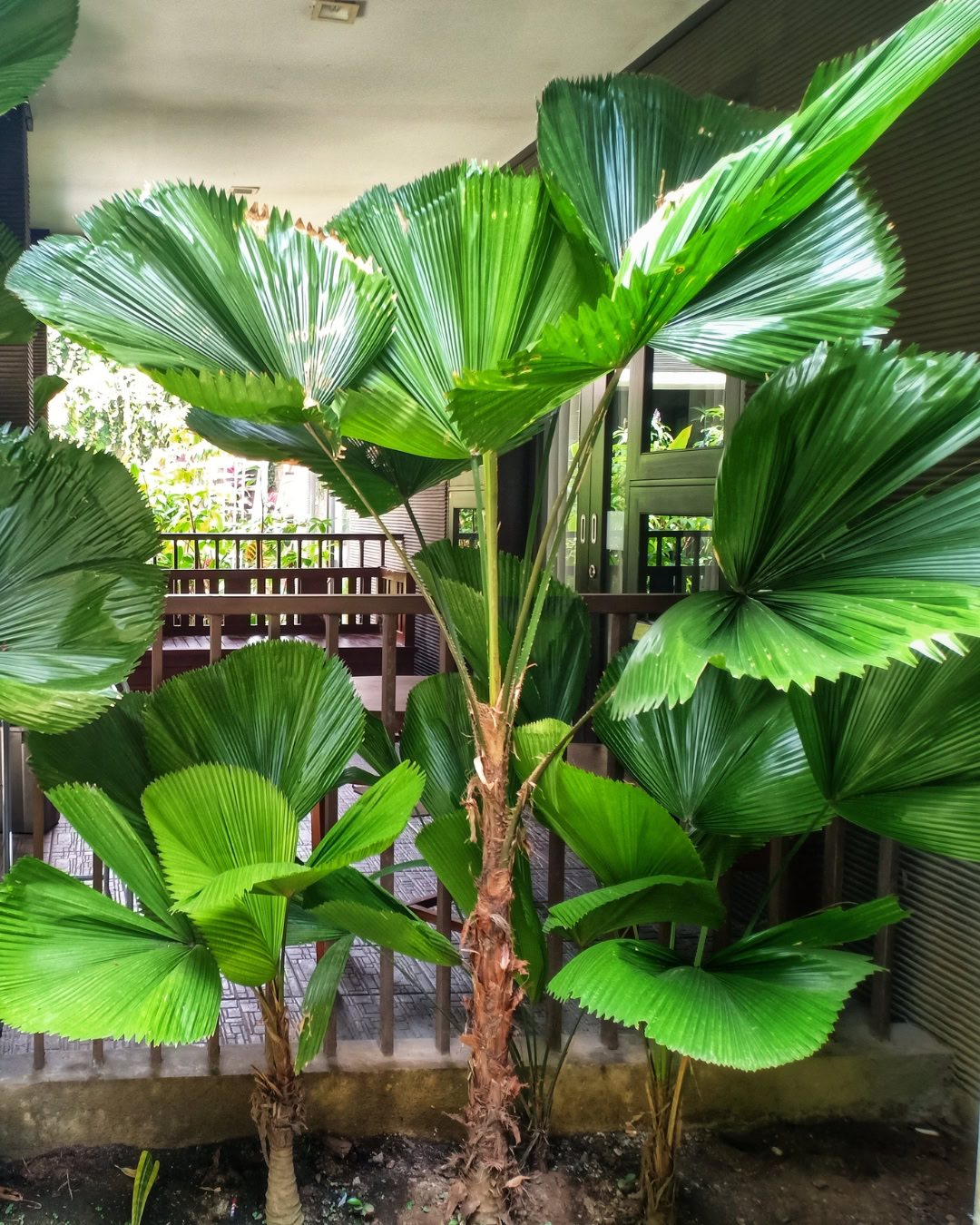
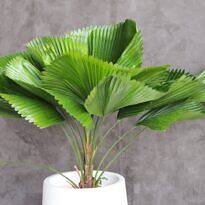
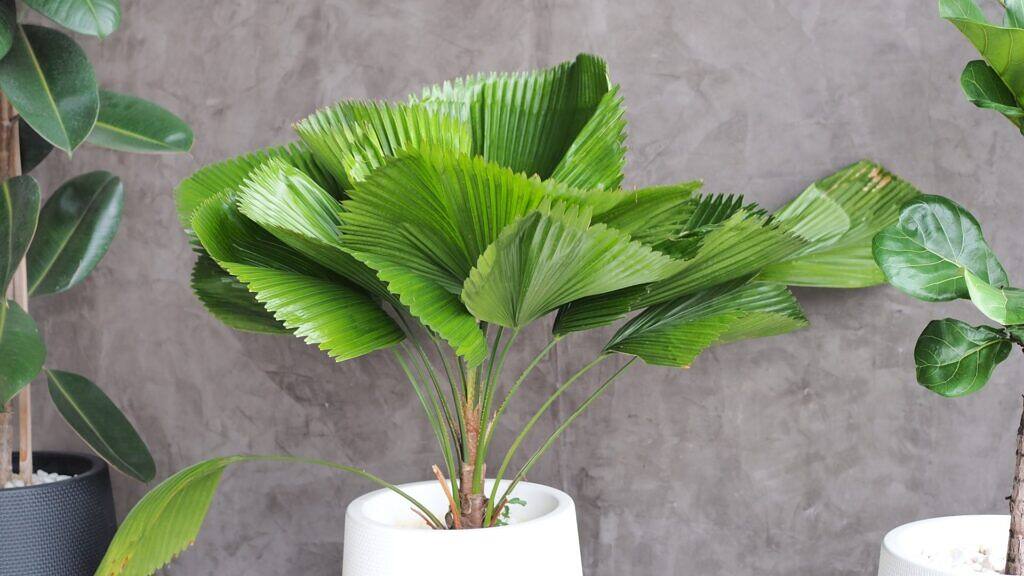
The ruffled fan palm is an immediate-impact plant because of its nearly circular, pleated, fan-shaped leaves. It is less common than kentia and lady palm, but that is exactly why it stands out in sophisticated interiors. The species is native from the Santa Cruz Islands to Vanuatu, in humid tropical environments, and is used in landscaping as a shade palm, highly valued for its graphic foliage.
Indoors, Licuala grandis works like a living sculpture. A single well-formed leaf already has enough visual power to transform a corner of the room. On the other hand, it is more demanding: it needs filtered light, decent humidity, warmth, and protection from dry air. It is a plant for anyone willing to give a little more care in exchange for a visual effect that is hard to replace.
15. Bamboo Palm — Chamaedorea seifrizii
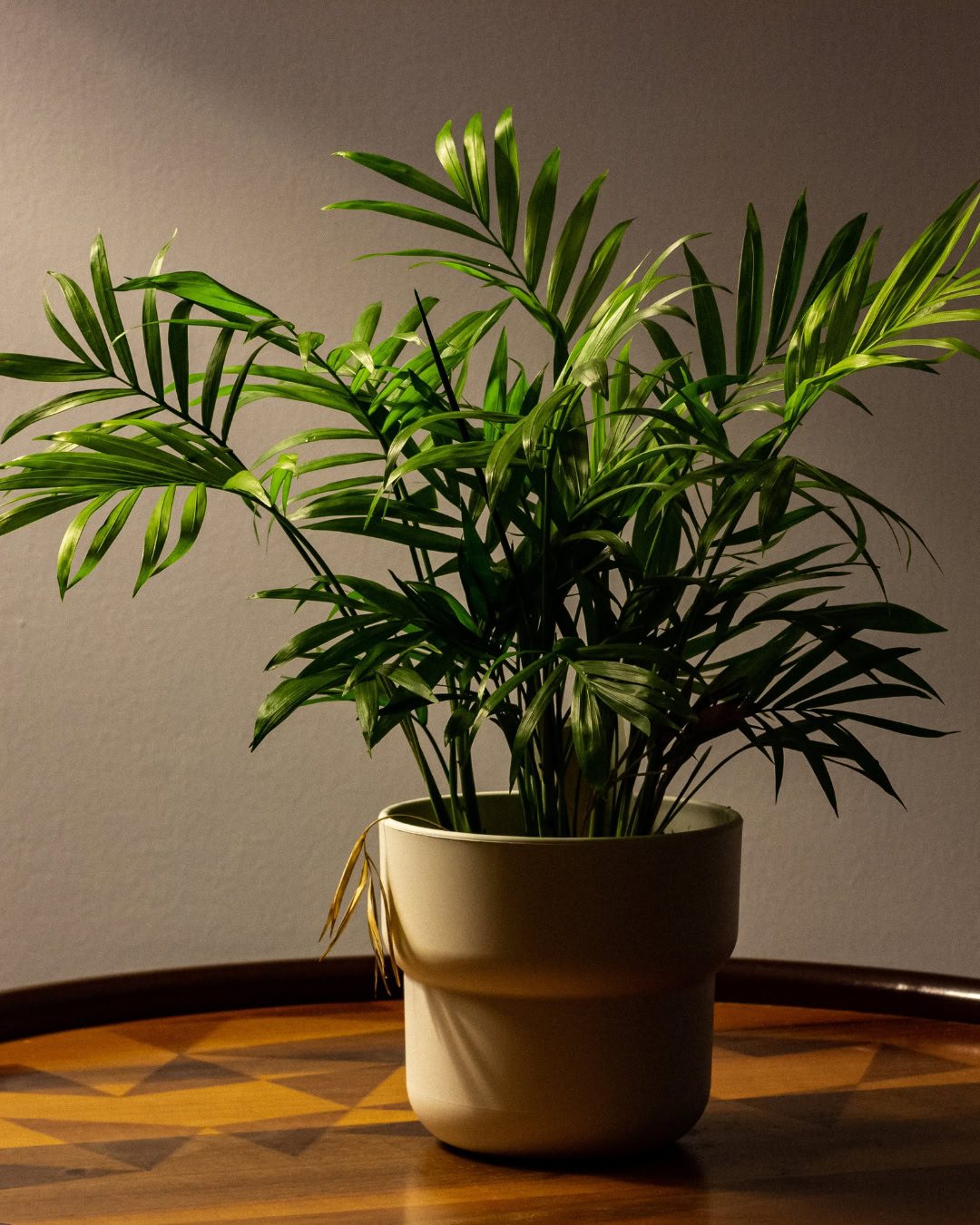
The bamboo palm is a classic indoor plant, especially for offices, waiting rooms, and homes with filtered light. Its common name comes from the slender, segmented stems that resemble bamboo canes. This species is native from southeastern Mexico to Honduras and grows in humid tropical environments.
In the living room, Chamaedorea seifrizii creates a light, vertical, welcoming effect without the formality of a kentia palm or the density of a rhapis palm. It works well in tall containers and is great for softening corners, blank walls, and heavy furniture. It prefers indirect light, slightly moist soil, and good humidity. In dry spaces, it may develop brown leaf tips; in that case, the fix is usually to improve the environment, not soak the pot as if guilt were a fertilizer.
Group 4: Sculptural trunks: strong lines and lower maintenance
This group brings together plants with a more structural presence. They do not rely only on large leaves to stand out; the trunk, the base, the branching structure, and the plant’s overall form are all part of the decorative effect. They are excellent for contemporary living rooms, minimalist spaces, and rooms where a very lush tropical plant would feel too heavy.
16. Ponytail Palm — Beaucarnea recurvata
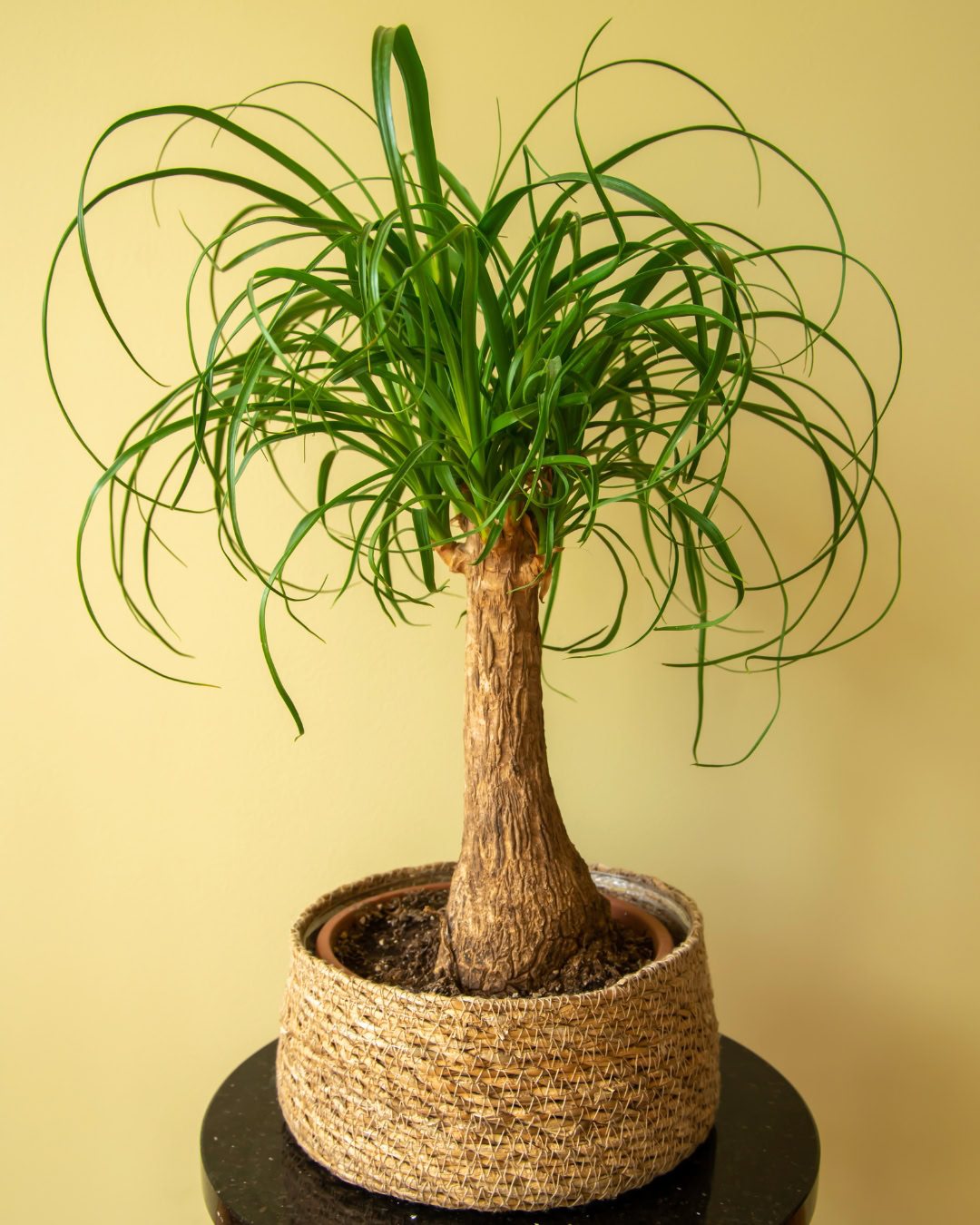
The ponytail palm is sculptural by nature. Its trunk swells at the base, forming a caudex that stores water and gives the plant an almost prehistoric look. Although it has a palm-like appearance, it is not a true palm. This species is native to Mexico, especially states such as Oaxaca, Puebla, San Luis Potosí, Tamaulipas, and Veracruz, and grows in dry or shrubland habitats.
In the living room, Beaucarnea recurvata delivers impact with low maintenance: a strong trunk, arching leaves, and a clean silhouette. It likes lots of light, infrequent watering, and an extremely well-draining potting mix. It is one of the best large living room plants for people who forget to water, but one of the worst for anyone who waters “just a little more” out of horticultural anxiety. With ponytail palm, too much care turns into root pudding.
17. Corn Plant — Dracaena fragrans
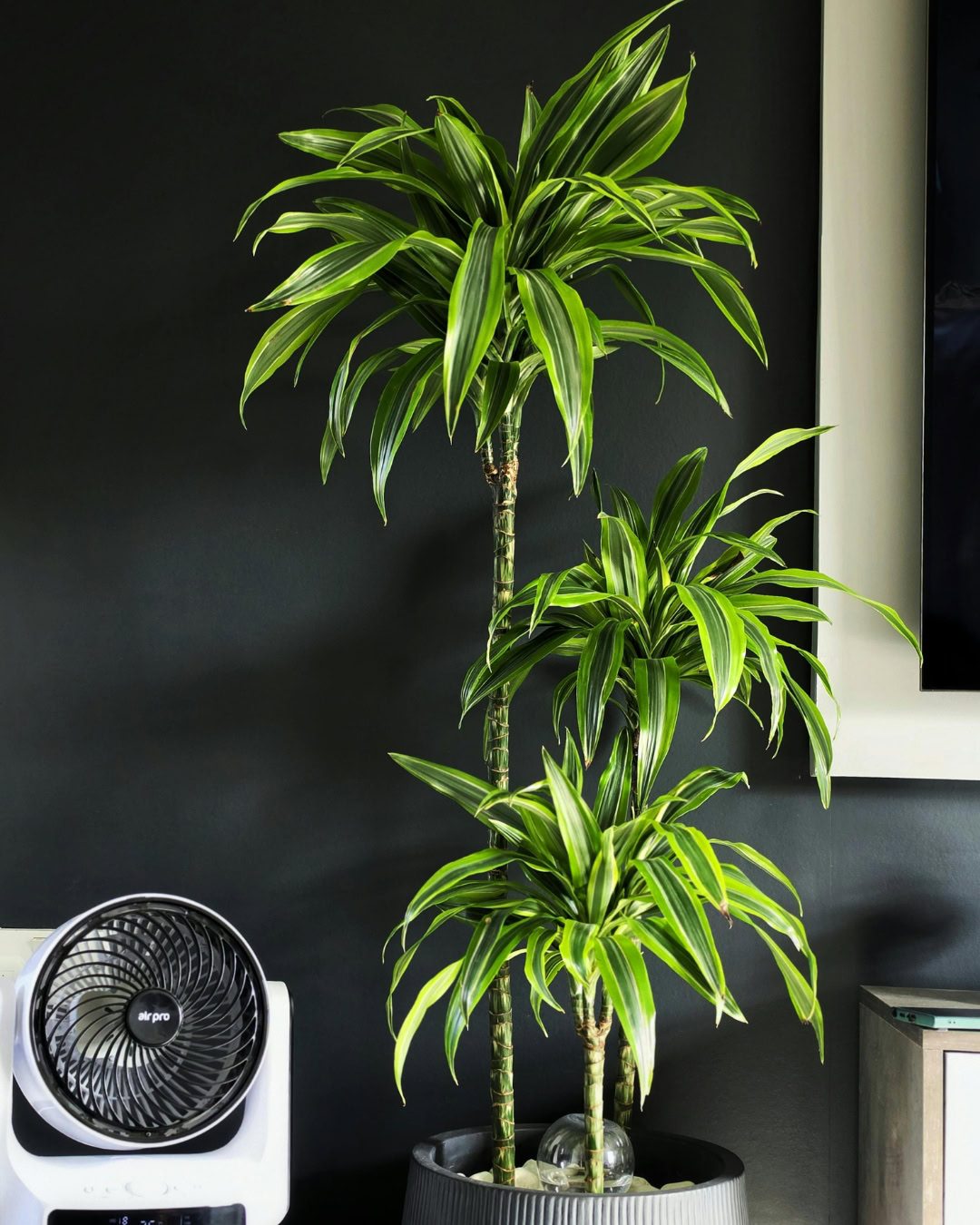
Dracaena fragrans, known in many places as corn plant, is one of the most traditional indoor plants. For decades it has appeared in offices, lobbies, commercial spaces, and homes precisely because it tolerates indoor conditions better than more demanding tropical species. Native to tropical Africa, it grows as a shrub or small tree with long, arching leaves.
Indoors, Dracaena fragrans brings simple, clean, dependable vertical structure. Cultivars like ‘Massangeana’ feature a light stripe down the center of the leaves and pair well with neutral living rooms. It prefers medium to bright indirect light, but it can tolerate lower-light spaces for a while. The most common mistake is overwatering: let the soil dry partially before watering again and avoid standing water in the saucer.
18. Song of India — Dracaena reflexa
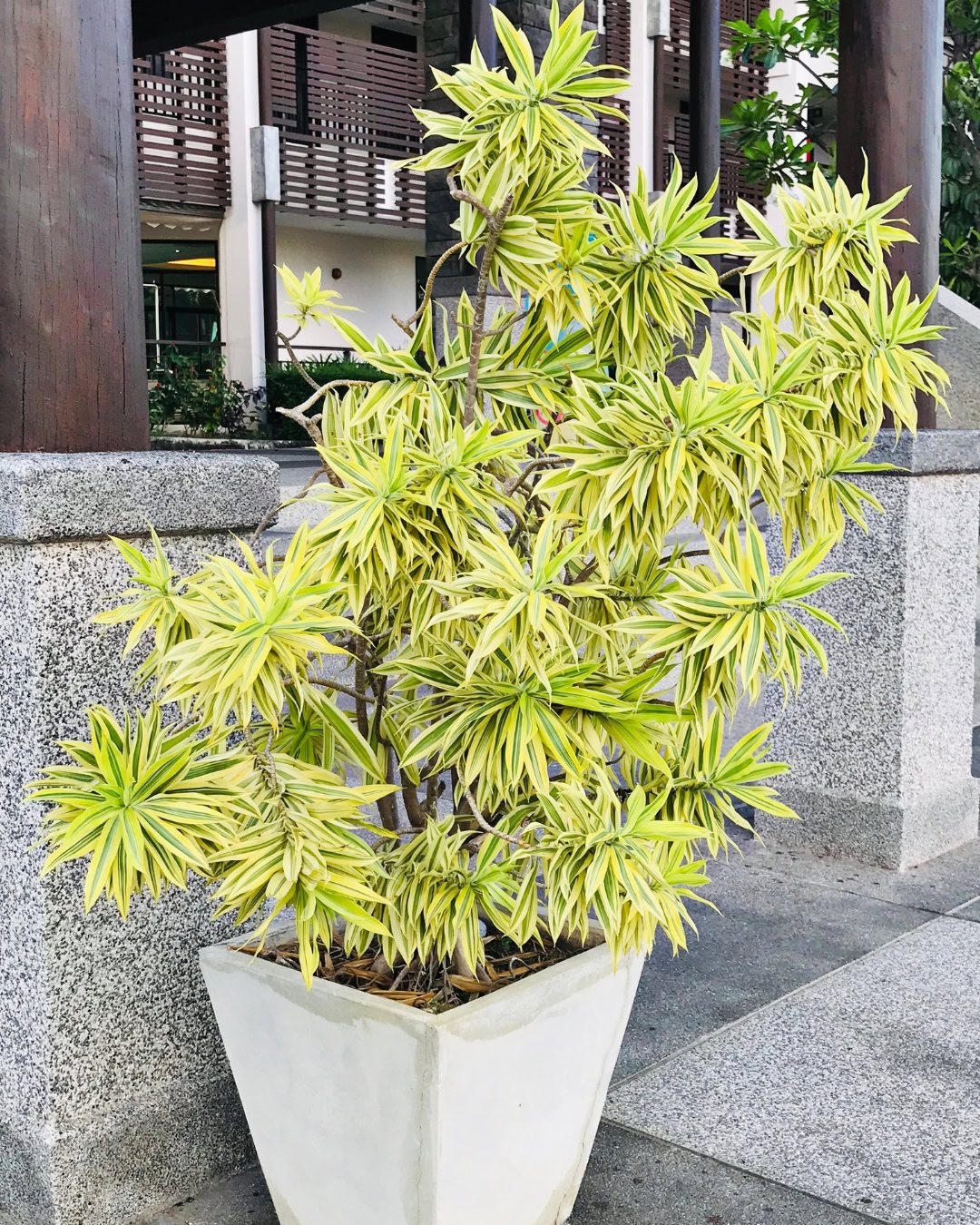
The Dracaena reflexa, better known as Song of India (or pleomele), has a long history as an indoor plant and for protected porches. Its appeal comes from its finer branches, rosettes of leaves, and the ability to train it with twisting trunks. The typical form is native to northeastern Mozambique and islands in the western Indian Ocean, where it grows as a shrub or small tree in humid tropical environments.
In the living room, it works as a more delicate architectural plant than corn plant and less rigid than ponytail palm. It looks beautiful in tall pots, beside consoles, armchairs, or bright windows. It needs good light to keep strong color in variegated forms.
Moderate watering, a well-draining potting mix, and occasional pruning help keep the plant full and prevent that abandoned coat-rack look.
Group 5: Fine, cutout silhouettes: graphic lightness and lacy foliage
These plants are large, but not necessarily heavy. They have dissected, compound, or delicate leaves, creating an interesting graphic effect indoors. They work especially well when a living room already has plenty of furniture, textures, or color, because they add greenery without turning the space into a closed-in jungle.
19. False aralia — Plerandra elegantissima
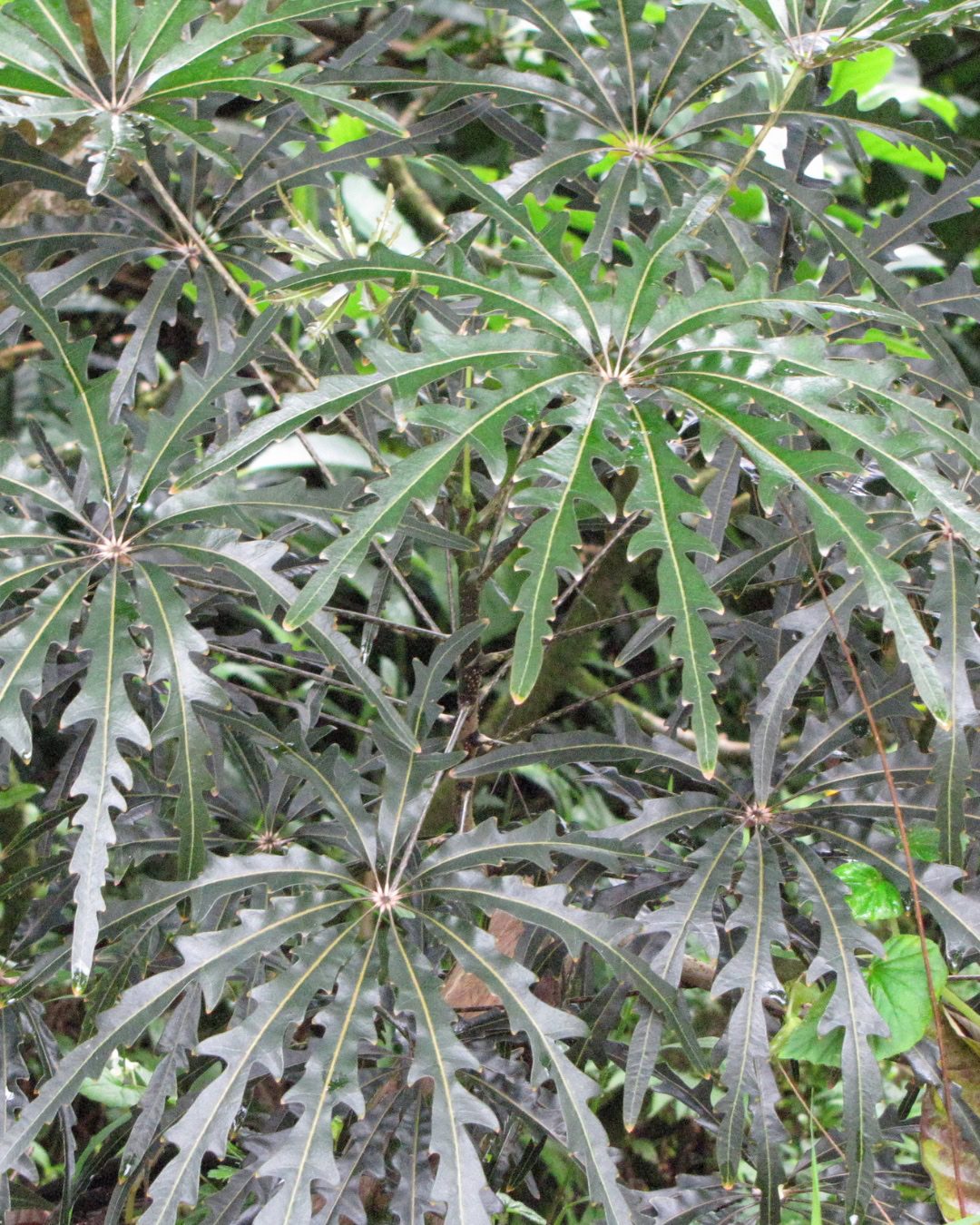
False aralia is a great plant to help diversify this article because it stands apart from the obvious tropical foliage choices. For a long time, it was known in the trade and in gardening books as Schefflera elegantissima, but today it appears in taxonomic databases as Plerandra elegantissima. It is native to southeastern New Caledonia, where it grows as a shrub or small tree in a humid tropical climate.
Indoors, its effect is graphic, airy, and almost lacy, with narrow, deeply cut leaflets that create visual lightness. It is a great fit for elegant living rooms, reading corners, and spaces where a monstera would feel too obvious. It needs bright indirect light, high humidity, and a potting mix that stays lightly moist but never soggy. In dry air, it can drop leaves fairly easily; it is beautiful, but it is not a stoic plant.
20. Ming aralia and geranium aralia — Polyscias fruticosa and Polyscias guilfoylei
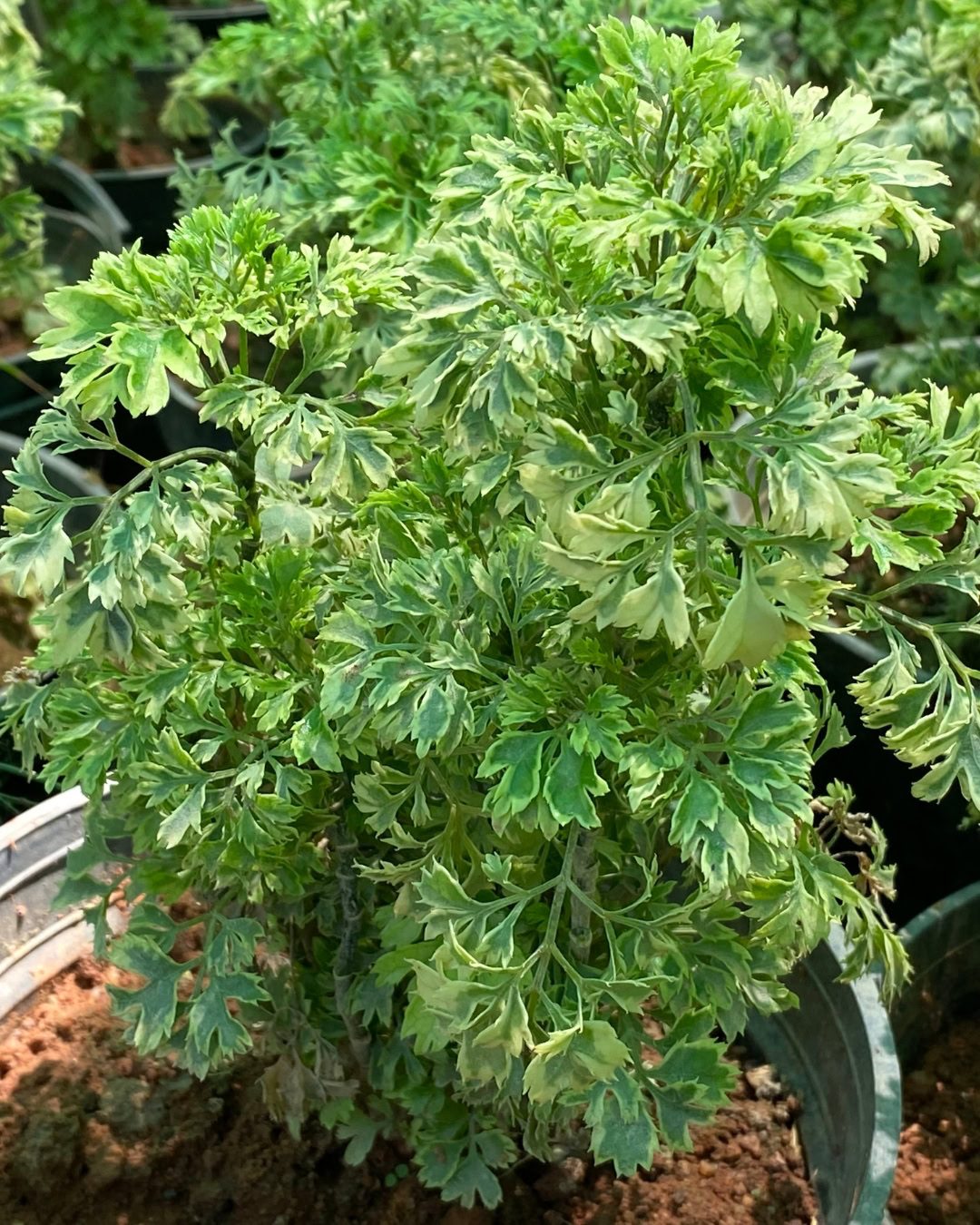
Ming aralia (Polyscias fruticosa) and its cousin geranium aralia (Polyscias guilfoylei) are prized for their finely divided, almost lacy foliage. Ming aralia has feathery, parsley-like leaves, while geranium aralia carries broader, serrated leaflets often edged in cream. Both are tropical shrubs or small trees from the Southwest Pacific and nearby tropical regions, and both have long been grown as elegant, bonsai-like houseplants.
In home decor, these aralias create a light, branched, delicate canopy, working very well in living rooms with an intimate, natural, or Asian-inspired style. They like bright indirect light, warm conditions, moderate to high humidity, and a well-draining potting mix. They do not appreciate sudden changes, cold, or constant air conditioning. The main recommendation is simple: choose a bright, protected spot and let the plant settle in, without weekly wandering around the house.
21. Dwarf umbrella tree — Heptapleurum arboricola
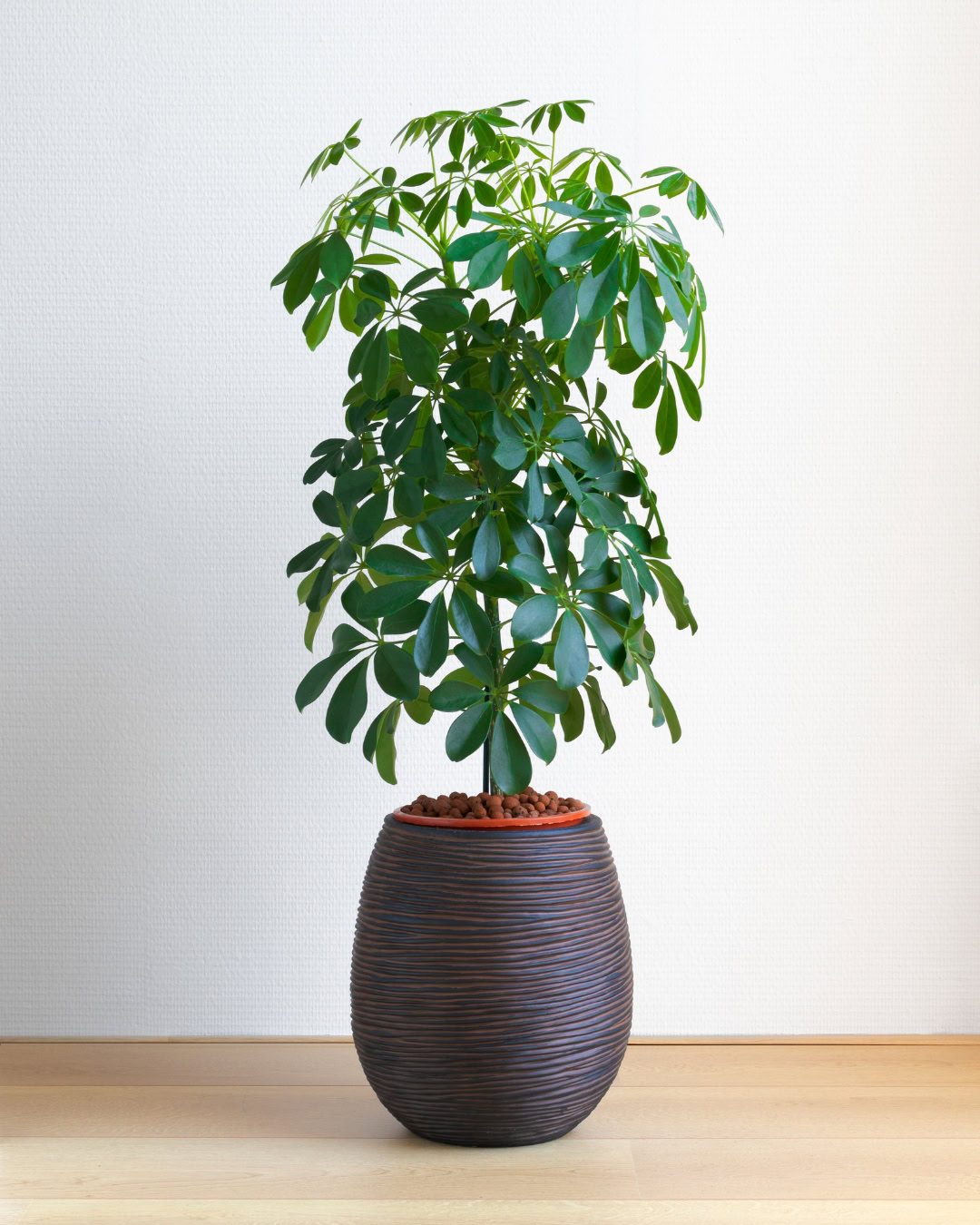
The dwarf umbrella tree is a longtime favorite in indoor decorating, but it has gained renewed attention with its updated taxonomy: the accepted name is Heptapleurum arboricola, although Schefflera arboricola is still the most searched and commonly used name in the trade. The species is native to Hainan and Taiwan, where it grows as a scrambling shrub in humid tropical environments.
Indoors, it forms a rounded canopy with palmate, variegated leaves that look like small umbrellas. It is versatile, tolerates pruning, and can be trained as a full shrub or a small tree with a canopy. It needs good indirect light; in low light, it tends to become sparse and leggy. Water when the potting mix has partially dried out, and pinch back the tips to encourage branching. It is an easy plant to work with, as long as we do not try to grow it in the dark and call that “partial shade.”
How to care for large indoor plants
Now that you have met the stars, let me bring together the basics that really keep a large plant looking good over the long term. The good news is that, no matter which one you chose, the core care is almost the same. And two factors make almost all the difference.
Light: the factor that decides everything
If I could give just one piece of advice about large living room plants, it would be this: place them near the brightest window you have. Most of the plants on this list, in nature, grow in open exposure or high in the forest canopy, receiving far more light than we usually imagine. Bird of paradise, money tree, ponytail palm, and many palms are, in their native habitats, full-sun or nearly full-sun plants. They can tolerate the lower light of a living room, but they will not work miracles in the dark.
The classic mistake is buying a huge plant and shoving it into a dark corner just because “it looks beautiful there.” It may hang on for a few weeks, but it slowly declines: new leaves come in smaller, the stems stretch toward the light (what we call etiolation), and the whole plant leans toward the window. By the time you notice, it has already lost much of the vigor that made it a statement plant.
- Keep it close to the light: ideally, place it within 3 to 6 ft (1 to 2 m) of a large window with bright indirect light all day. The sunniest exposure is a south-facing window in the Northern Hemisphere, or a north-facing one in the Southern.
- Direct sun for full-sun plants: bird of paradise, money tree, and palms can handle (and appreciate) a few hours of gentle direct morning sun. Just avoid harsh afternoon sun hitting the glass directly, which can scorch leaves that are still used to nursery shade.
- Rotate the pot: give it a quarter turn each week so the canopy grows evenly instead of leaning toward the light.
- Add supplemental light when needed: in truly dark rooms, a grow light (LED grow lights) aimed at the plant for a few hours a day is worth it. Better an honest boost than watching a plant die beautifully.
And one detail that helps avoid surprises: when you bring a plant home from the nursery, acclimate it to light gradually. Many are grown in shaded greenhouses, and moving them straight to a sunny window can scorch the leaves. Increase exposure gradually over two to three weeks.
Watering: too much kills more often than too little
A large plant can be deceptive. The pot is bulky and holds moisture much longer than it seems, so the biggest danger is overwatering. Wait until the potting mix dries a few inches down before watering again; stick your finger in to the second knuckle to be sure. In winter, when the plant grows more slowly, space waterings out even more. It’s common to see gardening groups filled with stories of people losing a money tree or a ZZ plant to too much love, watering every week when it wasn’t necessary.
And never leave standing water in the saucer. Waterlogged roots rot, and fixing root rot in a plant this size is expensive and labor-intensive. A pot with drainage holes and an airy potting mix with perlite, bark, or fiber in the blend are non-negotiable.
Pot, ballast, and canopy balance
Here’s a detail almost nobody talks about, but it makes all the difference in a large plant: the balance between the canopy and the base. The taller and fuller the plant, the more weight it carries up top. Without enough counterweight, it only takes a bump, a running child, an excited dog, a wild cat, or a gust of wind through the window to send the whole thing toppling, breaking branches and scattering soil across the room.
The solution is to give the plant ballast—in other words, concentrate weight at the base to lower the center of gravity:
- Choose heavy, wide-based pots: ceramic, concrete, or terracotta hold up a tall canopy much better than lightweight plastic. A base wider than the top of the foliage gives natural stability.
- Use the bottom of the pot to your advantage: a layer of stones, broken pottery, or expanded clay pebbles at the bottom (without blocking drainage) adds weight exactly where it’s most useful.
- Stake the awkward ones: plants with thin trunks or uneven canopies appreciate a discreet stake early on, until the stem thickens and can support itself.
- Move it wisely: plant caddies with casters help you move the plant for cleaning and rotation, but choose a sturdy model and lock the wheels. Flimsy casters under a heavy plant are an accident waiting to happen.
- Think ahead to repotting day: Container-grown plants need repotting every 2 to 3 years. Fresh potting mix, a plant that has outgrown its container, roots coming out of the drainage hole, or a pot that has become visually unbalanced—all of that should factor into your pot choice and practicality.
And it’s worth remembering the obvious thing we always forget: a large plant is a heavy plant. Add up the weight of the pot, the potting mix right after watering, and the plant itself before placing it on a piece of furniture or a delicate floor.
Humidity and leaf cleaning
Big leaves are beautiful—and they’re also dust magnets. And dusty leaves photosynthesize less, which means dirt literally steals energy from the plant. Every one to two weeks, wipe the larger leaves with a soft, damp cloth, from monstera leaves to fiddle-leaf figs. If all goes well, you can take it to the shower and give it a good rinse (with room-temperature water), washing away pests and dust. Besides helping the plant breathe, the shine of clean foliage is half the charm of a statement plant.
Tropical plants like calatheas and alocasias prefer more humidity than what we usually get in our air-conditioned living rooms. An occasional misting, grouping plants close together, or using a humidifier usually solves the problem without drama.
Fertilizing: feeding the plant the right amount
A potted plant depends on you for food. In spring and summer, when it’s actively growing, fertilize every 15 to 30 days. For foliage plants, look for nitrogen-rich fertilizers, the nutrient that supports lush green leaves. Both balanced liquid houseplant fertilizers and organic options like worm castings, castor bean cake (use extra caution if you have pets), or bone meal mixed into the potting mix can work well. In fall and winter, ease up, because the plant eats less when it grows less.
Acclimation: patience during the first few weeks
Don’t be alarmed if the plant drops a few leaves soon after it arrives. A change in light, humidity, and temperature is a shock, and dropping leaves is its way of adjusting to the new home. Choose the final spot carefully, avoid moving the plant from one corner to another every week, and give it about a month to settle in before deciding whether it’s happy or not.
Most common indoor pests
Indoors, with no rain or natural predators, three pests show up often: scale insects (white cottony or brown specks on the stems), spider mites (which leave leaves looking dusty and covered in very fine webbing, a sign of dry air), and thrips (which scrape the leaf surface and leave silvery patches). The good news is that, if you catch them early, a cloth with rubbing alcohol, neem oil, or insecticidal soap usually does the trick. That’s why it’s worth checking under the leaves every time you water.
Pet and child safety
Before you fall in love, an important warning: several plants on this list are toxic if chewed. Monstera deliciosa, alocasias, philodendrons, and figs have irritating sap, and the leaves can cause anything from mouth irritation to more serious problems in cats, dogs, and small children. That doesn’t mean you have to ban large plants from your home; it means placing them out of reach, choosing safer species if you have a pet that loves to nibble everything, and always checking a plant’s toxicity before bringing it into your space.
Choose yours and start today
At the end of the day, there isn’t one best plant for every room—there’s the right one for your space, your light, and your care routine. If you start by looking at the silhouette you want to create, from the urban jungle look to a sculptural trunk, and match that with the light your living room actually gets, it’s almost impossible to go wrong.
So pick the one on this list that makes your eyes light up, measure the corner, check the nearest window, and bring it home. In a few months, with the foliage filling out the room, you’ll wonder how you lived so long with a half-empty living room.