
Have you ever stopped to admire a bicolor leaf with its shades of green and white, pink, or yellow, only to realize it was losing its charm and turning completely green? It’s heartbreaking for any gardener. This change has a name: it’s called reversion. And contrary to what many people think, it doesn’t happen by bad luck or because of poor care. There are very concrete reasons behind it, far beyond a simple “the color disappeared.”
I know how much effort we put into keeping these plants beautiful. Understanding why reversion happens is the first step to acting in time and, in many cases, saving the color we love so much. Come with me and I’ll explain everything clearly, with the perspective of someone who understands the passion behind every new leaf.
The appeal (and fragility) of variegated plants
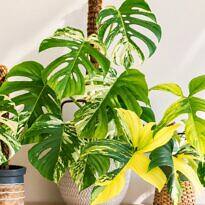
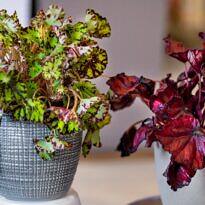
Variegated plants are the stars of any collection. Their leaves display a mosaic of colors—green with creamy white, pale yellow, or even vibrant pink—that makes them irresistible. This trait is called variegation, and it happens because chlorophyll (the green pigment that produces energy) is absent or reduced in certain areas of the leaf or stem.
But why would nature create leaves with less chlorophyll if chlorophyll is so valuable to the plant? That question has intrigued botanists for a long time, and one of the most studied explanations is surprising: in many wild plants, variegation appears to work as a defense against herbivores and pests. The light patches confuse anything trying to attack the leaf. In some cases, they act as camouflage, breaking up the leaf outline and making it harder for an animal to recognize; in others, they create a “blur” effect that throws off an insect when it tries to land or an animal when it decides where to bite.
The most charming example comes from a wild caladium from the Andes (the species Caladium steudneriifolium). In a study published in 2009 in the scientific journal Evolutionary Ecology, botanists from the University of Bayreuth in Germany observed populations of this plant in Podocarpus National Park in Ecuador and noticed that the light patches on the leaves mimicked the trails left by moth larvae that bore small tunnels into leaf tissue. The leaf “pretends” it is already occupied and damaged, and that keeps moths away, since they avoid laying eggs there and move on to another plant.
To test the idea, the researchers did something clever: they painted fake variegation onto fully green leaves. Larval attacks on those painted leaves dropped sharply, which strengthened the hypothesis that the coloration really does protect the plant. But keep one important detail in mind: this evolutionary advantage applies to natural, stable variegation in wild plants. The rare, unstable variegation we collectors love so much (the “albo” types and similar plants) is actually a mutation that does not necessarily provide that benefit. And that is exactly why these plants keep trying to turn green, as you’ll see below.
Here’s the first key point that changes everything: not every variegated plant reverts in the same way. Before you worry, it helps to understand which type of variegation you’re dealing with, because that determines whether your plant is at risk of turning green or not.
The three types of variegation
- Chimeric variegation (the unstable kind): this is the one that matters when we talk about reversion. It comes from a genetic mutation in part of the plant. Imagine that some cells have the full recipe for making chlorophyll (the green areas), while others have an incomplete recipe (the light areas). These two types of tissue, genetically different from each other, live side by side in the same plant. That coexistence is exactly what makes the plant so unstable. Monstera ‘Albo’ and Philodendron ‘Pink Princess’ are classic examples.
- Stable genetic pattern variegation (the well-behaved kind): here, the color pattern is written into the DNA of the entire plant and repeats leaf after leaf with much more predictability. This is the case with prayer plants, calatheas, aglaonemas, and caladiums. These plants practically do not revert in the dramatic way that scares collectors.
- Virus-related variegation (the rare one in home gardens): in some plants, the pattern is caused by a virus (mosaic), and it remains stable as long as the infection persists. It’s a different mechanism from the other two and falls outside our topic here.
In other words: if your plant is a calathea or a prayer plant, you can breathe easy. But if you have a variegated pothos, a variegated syngonium, or any “albo” type plant, it’s worth keeping an eye on it.
Why is your variegated plant turning green?
Nature is wise and ruthless when it comes to efficiency.
Green cells, packed with chlorophyll, are the main drivers of photosynthesis, the process that turns light into energy. Metabolically, they’re the most productive part of the plant.
The lighter sections, on the other hand, especially white or pale pink areas, have little to no chlorophyll. That means they produce very little energy, or none at all. From an evolutionary standpoint, green tissue has a clear growth advantage.
Over time, the green cells tend to divide more vigorously and outcompete the variegated cells. It’s as if they take over, and the plant returns to its original all-green form, what botanists call the “wild type.” This process usually starts with a leaf or even an entire shoot emerging completely green, which the plant then favors because it produces more energy. And here’s the key point: once a leaf emerges without variegation, it will never become variegated later. The only fix comes from our management, encouraging the plant to sprout again from a point that still has color.
Signs your variegated plant is turning green
Keeping an eye out for the earliest signs is essential if you want to act in time. At first, reversion is subtle, but then it can speed up quickly.
- New leaves emerging greener: if the leaves that are unfurling have less color than the older ones, that’s your warning sign.
- Green areas expanding on existing leaves: leaves that were once strongly variegated start developing green patches that spread over time.
- An entire shoot or branch with no variegation: this is the clearest sign of all. When a stem emerges fully green from base to tip, it is literally “stealing” the plant’s energy to grow faster than the rest.
The main causes of reversion
Now that we understand the mechanism, let’s look at the factors that speed all of this up. And I’ll say upfront a truth that not many people mention: in chimera plants, reversion is a natural tendency. It can happen even with the best care, simply because the plant is genetically unstable. What we can control is slowing the process down.
Insufficient light: the most common trigger, but not the only one
This is by far the most commonly cited environmental cause, and the one we can control most easily. In low-light conditions, the plant shifts into survival mode. To make the most of every bit of sunlight it can capture, it ramps up chlorophyll production and prioritizes growth of the green tissues, which are more efficient. The variegated areas, naturally less productive, are the first to be “sacrificed.”
But let’s clear up a myth that needs to go: bright light does not create variegation. Good light helps the plant stay healthy and maintain green dominance, but it won’t bring back a pattern that has already been lost genetically, and it won’t invent color where there never was any. A lot of people make the mistake of putting variegated plants in dark corners, thinking the white sections are delicate and will burn easily. Direct, intense sun can indeed scorch those pale areas, but bright indirect light is exactly what they need most.
The cultivar’s own genetic instability
Some plants are simply more prone to reversion, even under ideal conditions, because their chimera makeup is less stable. The green cells in these cultivars are inherently more vigorous and show up easily. Here are a few examples every collector knows:
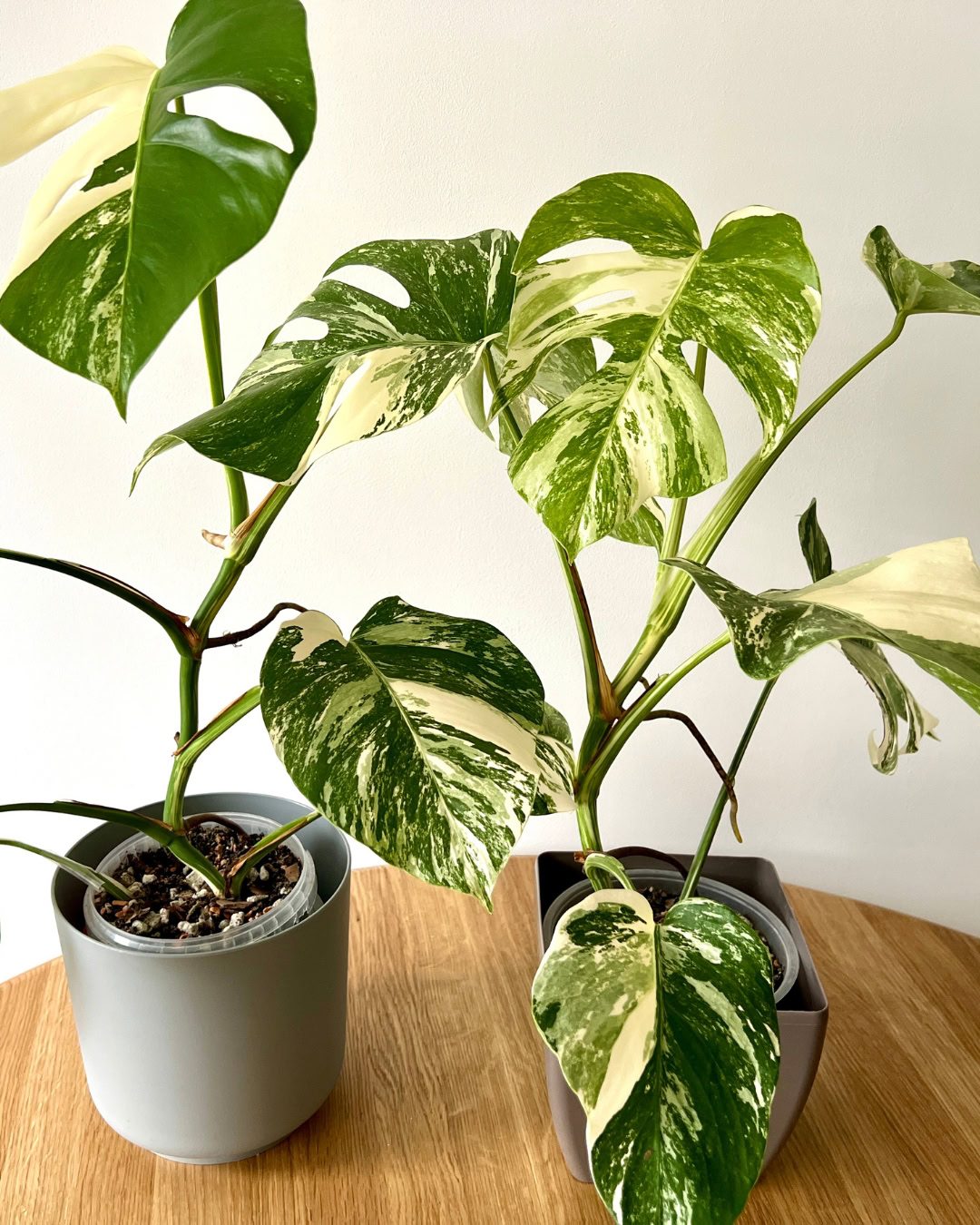
- Variegated Monstera (Monstera deliciosa ‘Albo Variegata’): with its creamy white marbling, this is the classic example of instability. Interestingly, the opposite can happen too: sometimes a leaf emerges almost entirely white (the famous full moon leaves). As beautiful as they are, these chlorophyll-free leaves can’t produce energy and eventually weaken the plant.
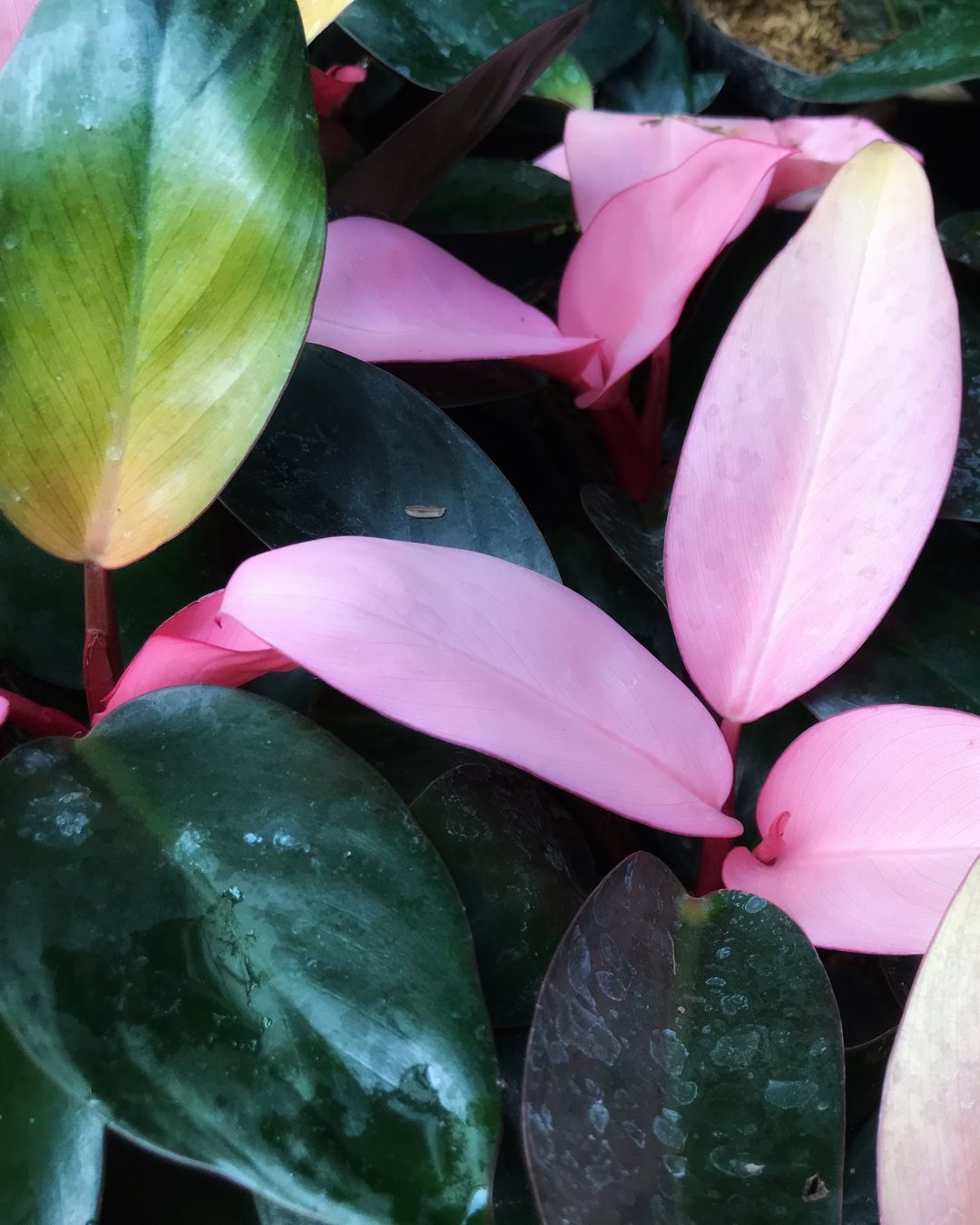
- Philodendron ‘Pink Princess’: its bubblegum-pink variegation is one of the most sought-after on the market, and also one of the most stubborn. Without adequate light and regular pruning, it can easily start producing leaves with very little pink.
- Variegated pothos (Epipremnum): cultivars like ‘Marble Queen’, ‘N’Joy’, and ‘Snow Queen’ are affordable and very common, but they lose their marbling fast in dim spaces. It may be the most frequent case of reversion in American homes.
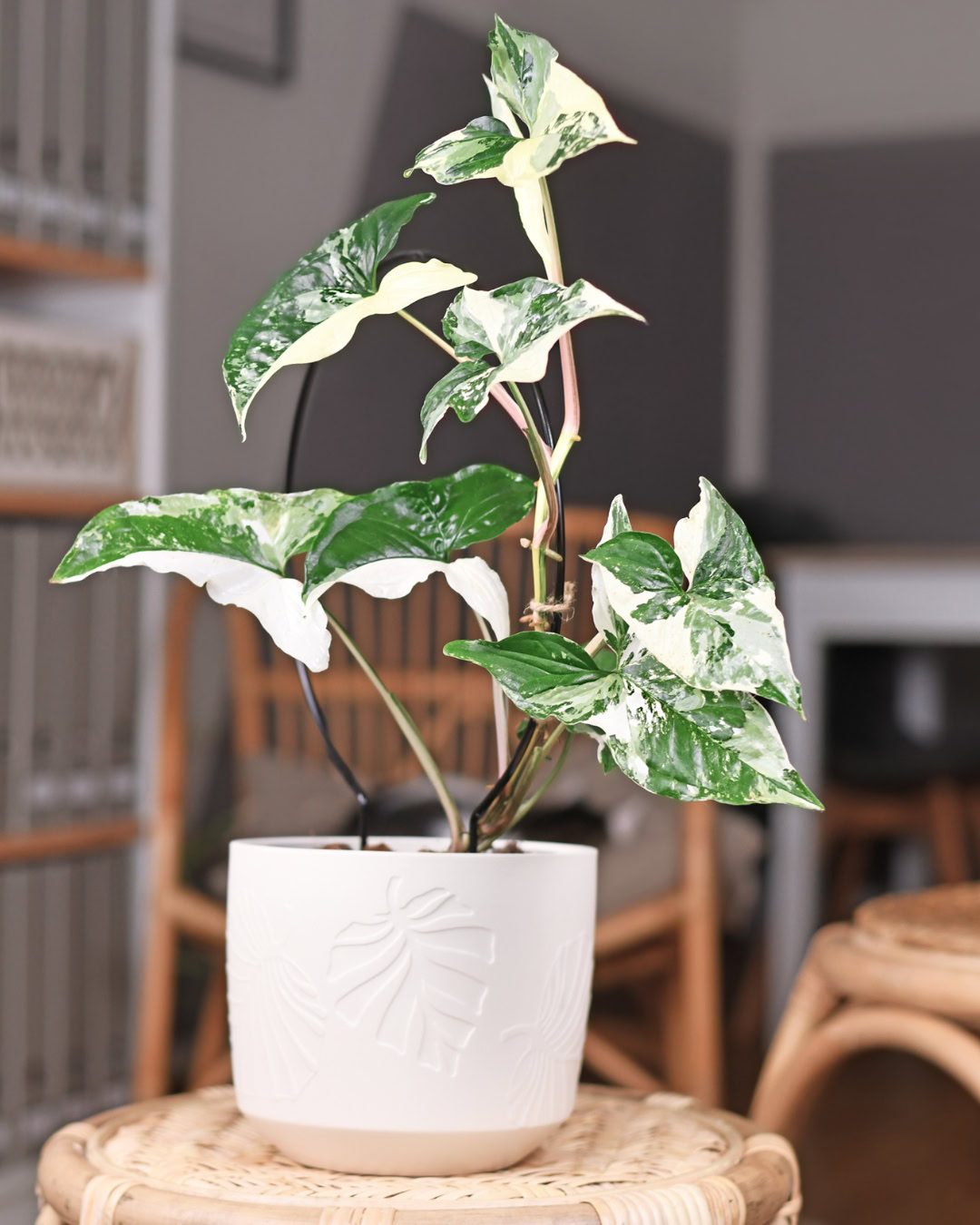
- Variegated arrowhead plant (Syngonium): another reversion champion, and one that turns green easily if the light isn’t doing its part.
- Variegated garden shrubs: reversion isn’t limited to houseplants.
Clusias, ficus, schefflera, and variegated ivy, among others, often send out fully green shoots that, if left in place, can take over the entire shrub.
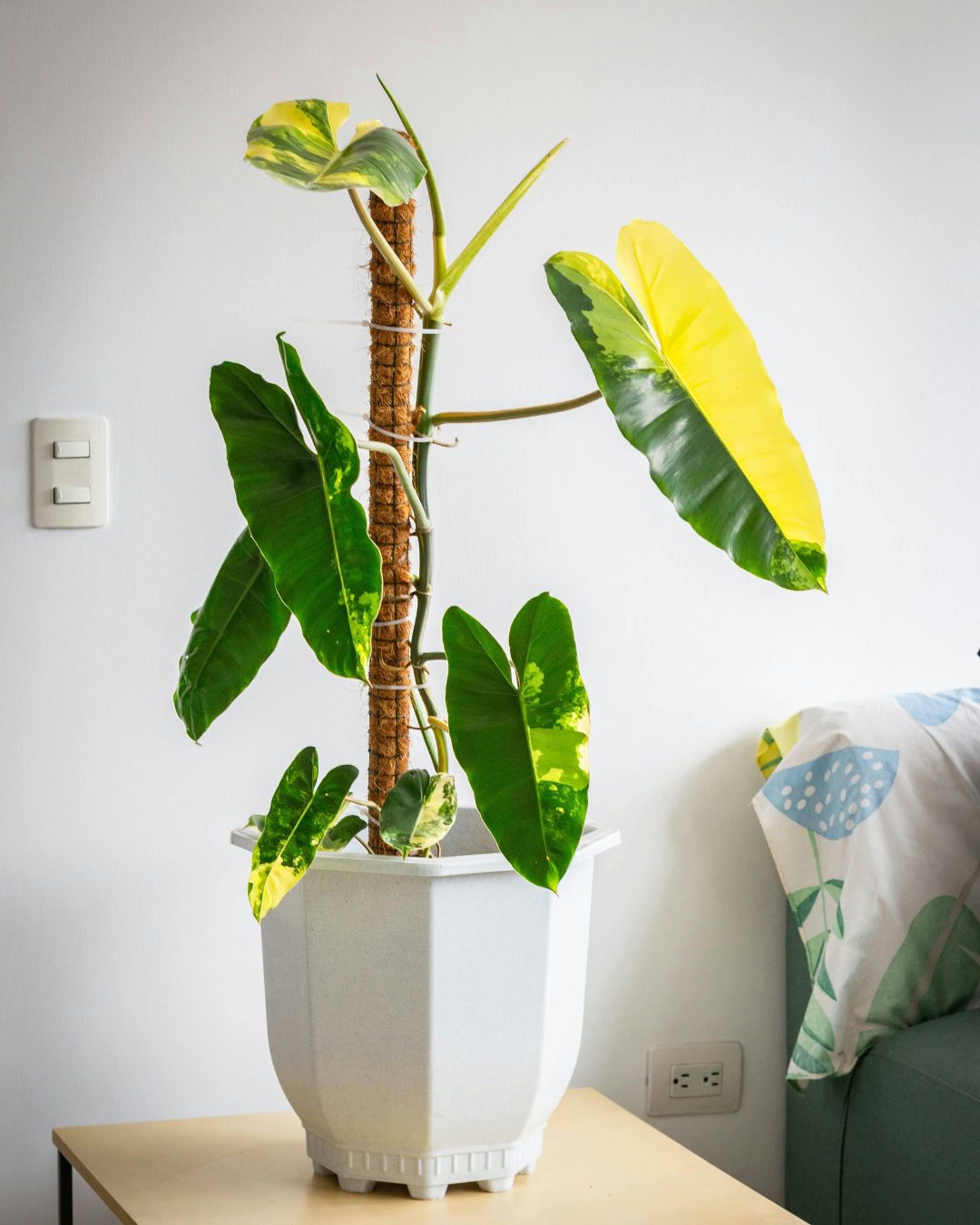
To get a sense of how much genetics matters, it’s worth looking at the counterexample: Monstera deliciosa ‘Thai Constellation’. It’s produced through tissue culture in a lab, with its creamy variegation built in and remarkably stable, so it almost never reverts. That’s a big reason many people prefer it over ‘Albo’, even though the look is different. It’s a good example of how stability depends on the cultivar itself, not just your care.
Too much nitrogen in fertilizer
Nutrition also plays a role, even if more indirectly. Nitrogen is the nutrient that most strongly drives leaf growth and chlorophyll production. When we apply too much fertilizer, or use a product that’s very high in nitrogen, we can accidentally give extra fuel to the green tissue, speeding up its dominance over the lighter sections.
It’s a common mistake: in the rush to see a plant grow fast, we fertilize heavily. I’ve seen this happen in my own garden. For variegated plants, balance matters more than speed.
Stress from temperature, watering, and sudden changes
Finally, it helps to know that any major stress can push a chimeric plant back toward green, since that’s its most resilient form. Sudden temperature swings (extreme heat or cold), soggy potting mix, and abrupt changes in environment are among the factors that often trigger new green growth. Whenever you need to move a plant or change its conditions, do it gradually and give it time to acclimate.
How to stop reversion and save the variegation
The good news is that you can take action and, in many cases, recover much of the variegated beauty. Here’s the step-by-step approach.
Get the light right
The first step is correcting the light. Move the plant to a spot with bright, consistent indirect light. Light intensity is the single biggest factor in helping maintain variegation.
- East-facing windows that get gentle morning sun are ideal.
- West-facing windows, with milder late-afternoon sun, also work well.
- What you want to avoid is strong direct midday sun, especially in spring and summer, because it can scorch the lighter sections, which are more sensitive because they have less chlorophyll to protect themselves.
If you live in an apartment or have indoor spaces with limited natural light, it’s worth investing in full-spectrum grow lights. They’re especially useful in fall and winter, when days get shorter and light levels drop. One tip: keep the light consistent, because a plant that keeps bouncing between good light and dark conditions is more likely to revert than one that gets stable lighting year-round.
The art of strategic pruning
This is one of the most powerful tools in your arsenal, but it’s also where the biggest misunderstanding happens. You’ll often hear, “See a green leaf? Cut it off!” Be careful with that, because green tissue is the plant’s energy factory. If you remove all the green at once, the plant loses its fuel and may decline. The key is to target reverted branches, not every single leaf.
- What to remove: branches and shoots that have fully reverted, meaning entire stems that are green from base to tip and threaten to take over the plant. Those are the priority.
- Where to cut: follow the green stem down until you find a node that still shows variegation, and cut just below that point. The idea is to remove the dominant tissue and encourage a new shoot from a bud that still carries colored cells.
- Don’t overdo it: always keep a good amount of healthy green foliage to support the plant. The goal is balance, not a plant that’s all white.
- The same goes for the white side: those nearly all-white shoots, with no chlorophyll, should also be cut back to a node with balanced foliage (green and color together). It may feel like a sacrilege to cut a beautiful white leaf, but it can’t sustain itself and will only drain the plant.
- Tools: use a sharp, sterilized pruning shear or utility knife. I always clean mine with 70% alcohol before and after each cut so I don’t spread disease from one plant to another.
- Frequency: check the plant closely and prune as soon as you spot a reverted branch. Don’t wait. I once helped a client who waited too long, and her Monstera deliciosa had turned almost entirely green, making it much harder to recover later.
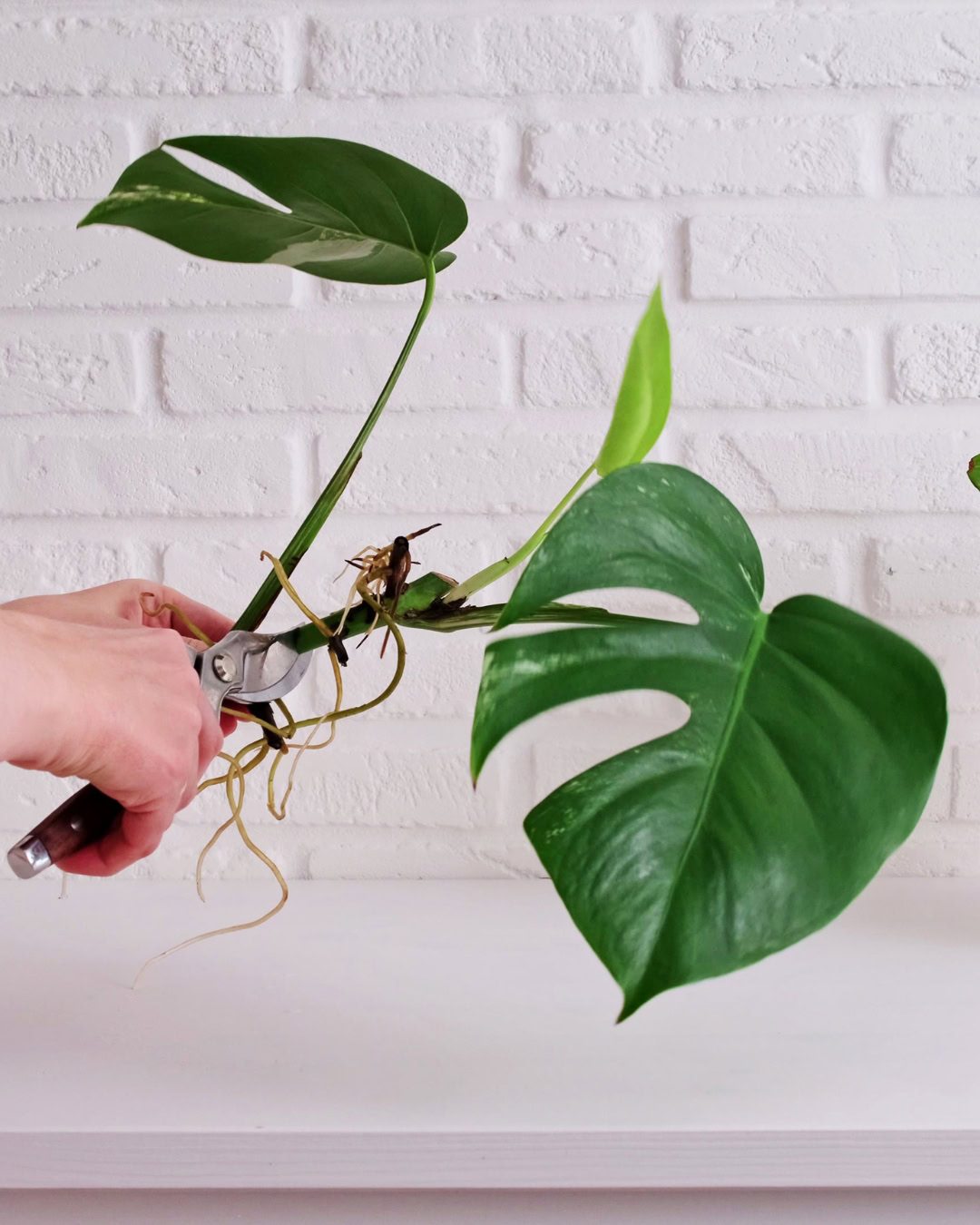
Propagating variegated cuttings: a safeguard for the future
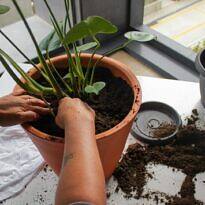
When you do routine pruning, if you cut a stem section that still has healthy variegation, don’t throw it away. That piece can become a new plant and help preserve the color pattern you love, in case the mother plant keeps trying to revert.
- Take cuttings with at least one node and one variegated leaf, or a node with a bud that has colorful potential.
- Root them in water, moist sphagnum moss, vermiculite, or a light seed-starting mix.
- A collector’s trick: on pothos and other vining plants, watch the aerial roots. They often match the color of the tissue they emerge from, so a pale aerial root is a good sign that the section is truly variegated.
- One caveat: many growers avoid using rooting hormone on chimera cuttings because it stimulates cell division and can end up favoring the greener, more vigorous tissue.
Nutrient monitoring: less is more
Use a balanced fertilizer for foliage plants and always follow the manufacturer’s instructions. Avoid going heavy on nitrogen, which pushes green growth. During dormant months (usually fall and winter), fertilize less often or at a lower concentration. With variegated plants, less is almost always more.
Common myths and mistakes in variegated plant care
Good intentions often backfire. Here are the mistakes I see most often:
- Thinking more light creates variegation: bright light helps the plant stay strong, but it doesn’t invent color or bring back a lost pattern. In fact, too much sun can damage pink and yellow pigments.
- Ignoring the first signs: letting green branches grow unchecked gives the plant all the energy it needs to turn fully green.
- Being afraid to prune, or pruning too hard: both extremes cause problems. Not cutting lets the green take over; cutting away all the green leaves the plant without enough energy. The goal is to remove reverted stems while keeping a good amount of healthy foliage.
- Expecting the color to come back on its own: once a leaf emerges green, it won’t become variegated later. Recovery only happens by encouraging new growth from a point that still has color.
- Believing in a “variegation hormone”: some dishonest sellers offer miracle formulas or pass off ordinary plants as variegated. No product can create true variegation; it is genetic.
- Not sterilizing tools: cutting with dirty pruners opens the door to fungi and bacteria through the wound, turning one problem into two.
My golden tip for preserving variegation
Think of the green shoots on your variegated plant as energetic “hitchhikers.” When an entire shoot or branch comes in completely green, don’t hesitate: prune it. Make the cut just below the last point where color was still present. But remember balance: the goal is to remove the dominant shoot, not leave the plant without its healthy leaves. This proactive, measured approach is the best defense for preserving the beauty and health of your plant.
Getting your variegated plant back to its full glory
Caring for variegated plants takes a sharp eye and a good dose of patience, but the payoff is huge. The key is understanding the science behind variegation, knowing what kind of plant you have, and using common sense: not too much, not too little.
With the right light, strategic pruning at the right time, and balanced feeding, you’ll be well equipped to slow down reversion and enjoy your plants at their most beautiful. Why not start now by looking at your foliage with fresh eyes? If you have questions or want to share your experience, leave a comment. I always love hearing how you care for your variegated beauties.