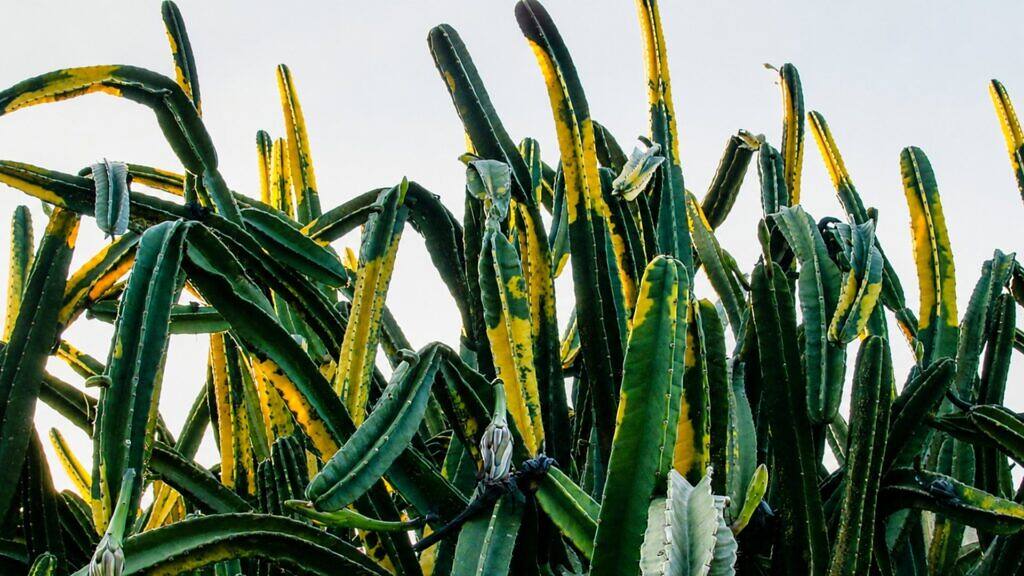
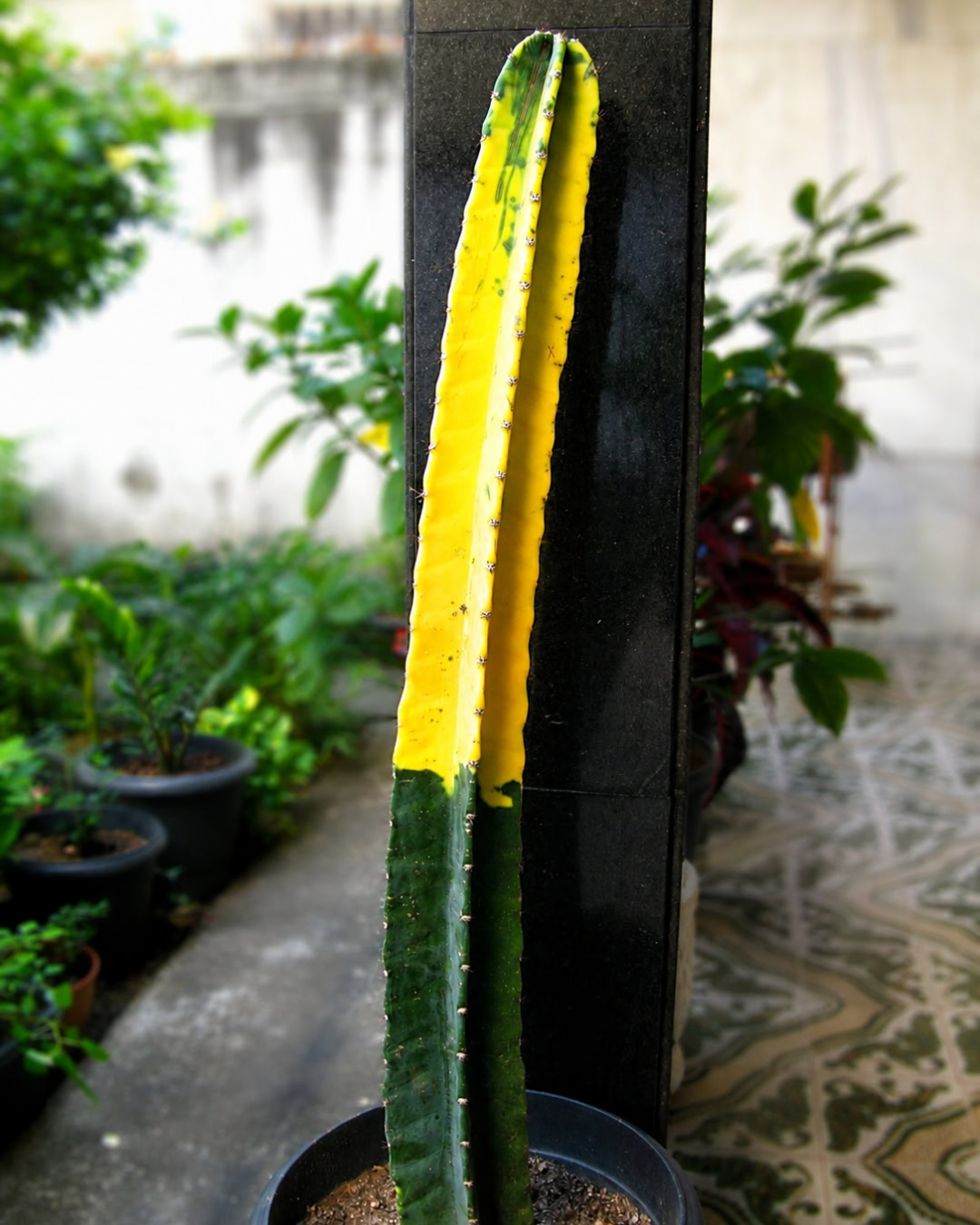
Hedge Cactus (Cereus hildmannianus) is a tree-like, columnar cactus with an imposing presence, a true living sculpture that adds vertical interest and an exotic touch to any setting. Especially in its variegated form, ‘Variegatus,’ it captivates with branches marked by irregular longitudinal bands and streaks of golden yellow, interspersed with deep green, a display of color that recalls the Brazilian flag. Tough and easy to care for, this cactus stands out for its striking presence and the singular beauty of its night-blooming flowers, making it an ideal species for those seeking personality and low maintenance.
More than just a cactus, Hedge Cactus transforms landscapes, offering a dramatic silhouette and a focal point that lasts all year long. Its adaptability and resilience make it a smart choice for a wide range of compositions, from the most minimalist to those that explore the richness of semi-arid settings. Get ready to discover the secrets to growing and appreciating this unique cactus, which promises to be the star of your garden.
Origin, Habitat, and Etymology
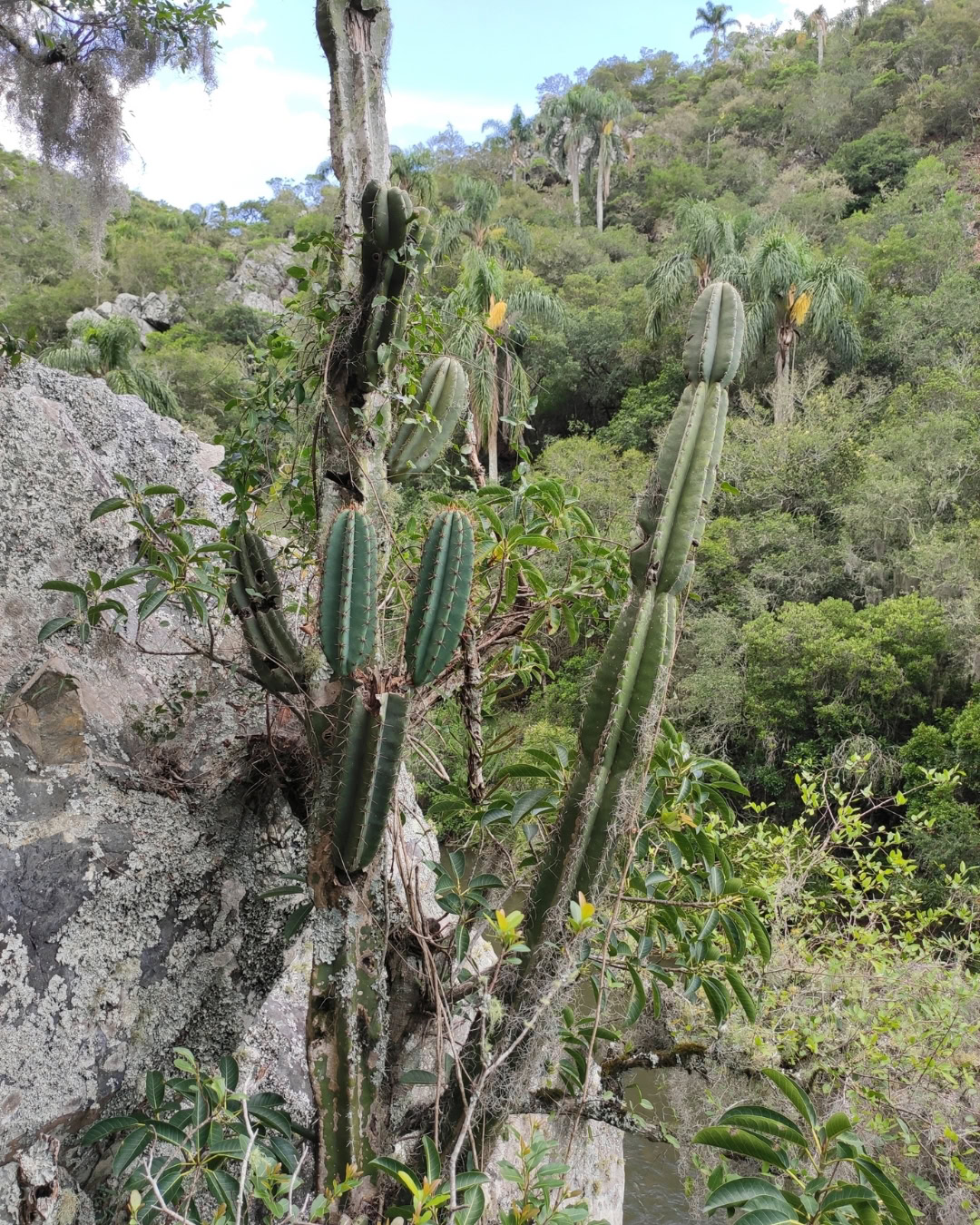
Hedge Cactus is native to open, bright areas of southern South America, especially native grasslands, rocky fields, and outcrops associated with the Atlantic Forest and Pampas biomes. In the wild, it grows among low grasses, small herbaceous plants, and rock crevices, in shallow, mineral, very well-drained soils. Although it occurs in relatively moist regions, its microhabitat is sunny, breezy, and dries quickly after rain, which explains its low tolerance for waterlogged conditions in cultivation. Its native range extends across southern and southeastern Brazil (the states of Rio Grande do Sul, Santa Catarina, Parana, Sao Paulo, and Rio de Janeiro), and also naturally into Paraguay, Uruguay, and northeastern Argentina.
The genus name, Cereus, comes from the Latin “cereus,” meaning “candle,” “cierge,” or “torch.” This name is a clear reference to the upright, cylindrical, columnar form of its stems, which resemble lit candles when seen from a distance. The specific epithet, hildmannianus, honors the notable German horticulturist and cactus specialist Heinrich Hildmann (1840–1895), recognized for his contributions to cactus importation and research during the 19th century.
Landscape Use of Hedge Cactus
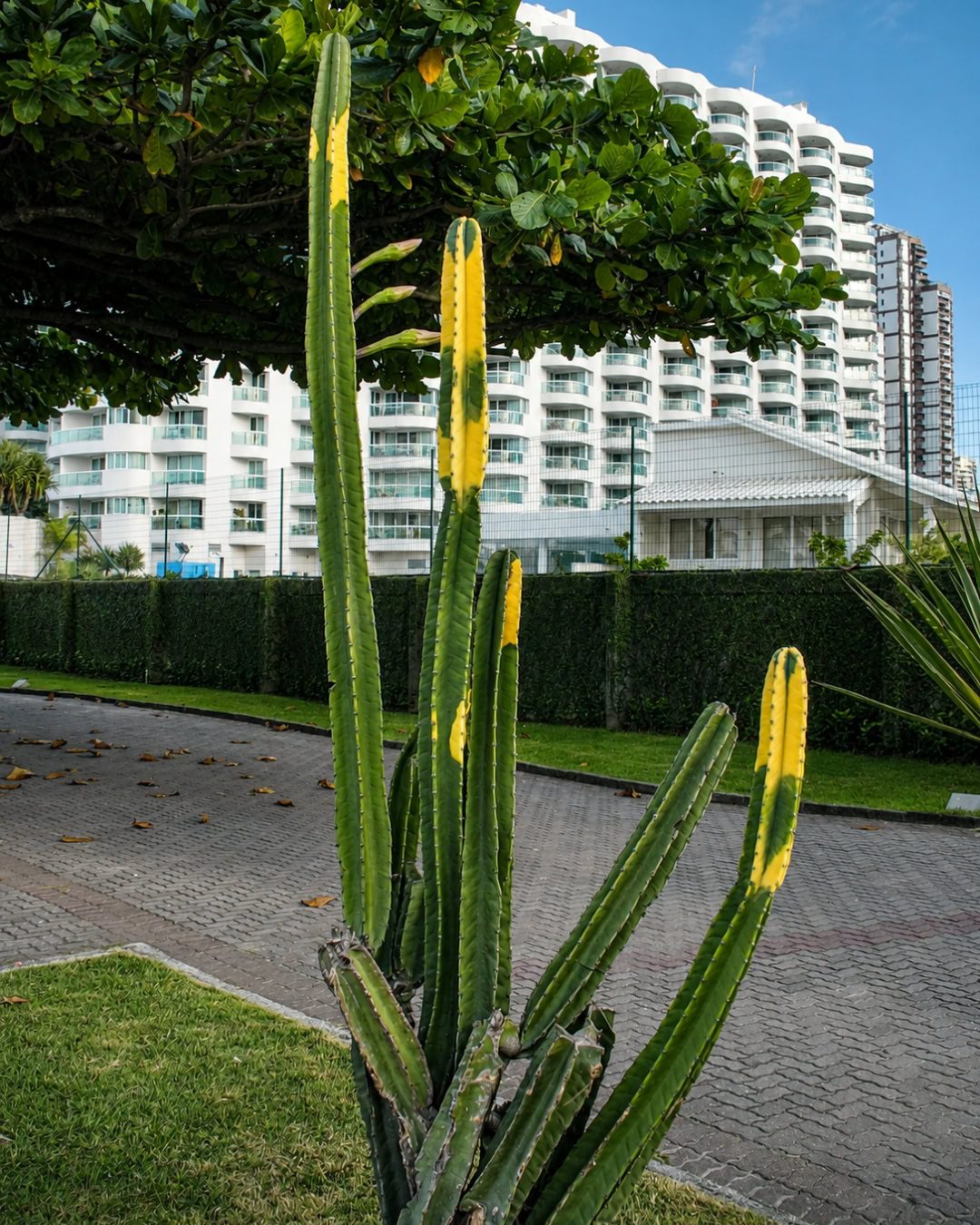
This columnar cactus is a high-impact sculptural element, ideal for adding vertical interest and a contemporary feel to landscape designs. The golden-yellow and green variegation of its stems creates an interesting contrast, especially when planted in compositions that aim for dynamism and originality. It can reach considerable heights in the garden, allowing it to become a striking focal point in large landscapes, or it can be grown in large containers to decorate sunny balconies and patios.
For planting, a minimum spacing of 2.5 to 3.0 meters between plants is recommended. This ensures that each cactus has enough room to develop its branched canopy without competition. Hedge Cactus shows moderate to fast growth, capable of adding 30 to 50 cm in height per year under ideal conditions of sun and well-drained soil. It is extremely rugged, resilient to prolonged drought and strong winds, and its roots are not aggressive, which allows planting near structures such as walls and sidewalks, provided there is overhead space for its canopy.
It pairs beautifully with dense groundcovers, such as stonecrop (Sedum dendroideum) or blue daisy (Evolvulus alsinoides), which create a carpet of color and texture at the base of the cactus, as well as with a simple layer of gravel, highlighting its vertical silhouette. For a contrast of xeric textures, Hedge Cactus can be planted alongside shrubs such as the foxtail agave (Agave geminiflora), creating a low-maintenance garden of singular beauty. It is an excellent choice for contemporary, modernist, xeric (xeriscape), dry tropical, and minimalist garden styles.
In containers, it adapts well to balconies and patios that receive full sun. Indoors, long-term cultivation is not recommended unless it is placed immediately next to north- or east-facing windows that provide at least 5 to 6 hours of direct sun per day. Without this intense light, the cactus may suffer from etiolation (stem thinning, loss of rigidity) and fading of the yellow bands, losing its most valued characteristic.
How to Care for Hedge Cactus: Growing Guide
- Light: Requires full sun.
Bright direct light is crucial for keeping the variegation vivid and preventing the shoots from turning mostly green or becoming etiolated. Place it where it receives as much sunlight as possible throughout the day. - Soil and Growing Medium: It needs an extremely well-draining, porous, sandy medium. The ideal pH ranges from 6.0 to 7.5, meaning neutral to slightly alkaline. A recommended mix for pots or for amending garden soil is: 1 part topsoil, 2 parts coarse washed river sand, and 1 part well-aged organic compost or fine composted pine bark.
- Watering: Water sparingly and moderately. The golden rule is “soak thoroughly and let dry completely.” That means you should wait until the medium is completely dry all the way through the pot before watering again. During winter or in periods of high humidity, cut back watering drastically; it may be only once a month or stopped altogether if the soil stays moist. Overwatering is the main cause of root rot.
- Climate: It adapts well to subtropical to tropical climates, tolerating intense heat and temperatures near 0 °C for very short periods, as long as the soil is completely dry. Frequent or prolonged frosts are harmful and can cause tissue necrosis.
- Air Humidity: It prefers low to moderate relative humidity. Excessively humid environments, especially when combined with poor air circulation, are conducive to fungal diseases and rot.
- Fertilizing: At the start of spring, apply a controlled-release (slow-release) NPK 4-14-8 fertilizer to encourage structural growth and flowering. As an organic alternative, work well-aged barnyard manure into the soil surface once a year. It is important to avoid fertilizers with high nitrogen content (such as NPK 10-10-10 or urea), since they can trigger fast, soft vegetative growth, making the cactus more fragile and prone to breaking, as well as encouraging reversion to fully green growth.
- Pruning: It does not require shaping prunes. Intervention is limited to cleanup pruning to remove damaged, dry, or diseased branches. If Hedge Cactus produces shoots or branches that are entirely green (without the yellow variegation, indicating a chimera reversion), they should be removed immediately. Because green branches have more chlorophyll, they will grow much faster and may eventually dominate and overwhelm the variegated part of the plant. Cut them at their basal joint with a sterilized blade.
- Staking: It is not necessary for well-established adult plants. For young or newly planted taller seedlings, a temporary stake can be used to provide support and prevent tipping caused by strong winds until the root system is fully developed.
How to Propagate Hedge Cactus
Propagation by cladode cuttings (stem segments) is the most effective method and the only recommended way to preserve the yellow variegation. Seed propagation, although possible for the species type, is not recommended for the ‘Variegatus’ variety, since the resulting plants tend to lose the chimera and revert to the green pattern, in addition to developing very slowly.
To propagate by cuttings:
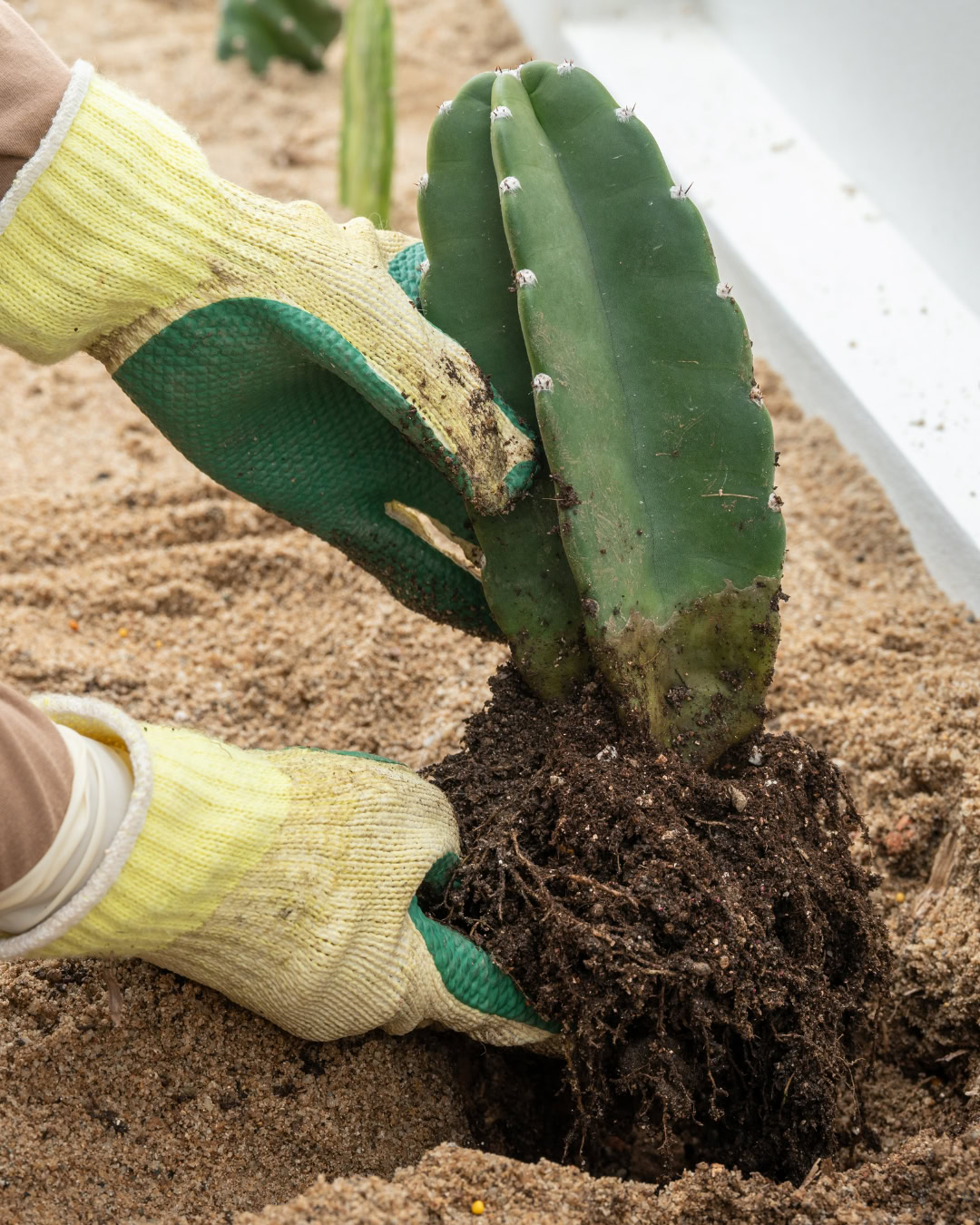
- Choose a mature, healthy article (stem segment). Make a clean cut at a joint (a natural narrowing of the stem) using a sharp, previously sterilized blade to avoid contamination.
- After cutting, leave the cutting in a dry, shaded, and well-ventilated place for 7 to 10 days. This step is crucial so the cut wound can fully heal, forming a callus (a firm protective film) that prevents rot when planted.
- Plant the callused cutting in a sandy, very well-drained medium that is slightly moist. Do not water the cutting for the first 15 days after planting, allowing it to begin rooting without the risk of rot.
- Rooting usually occurs in about 4 to 6 weeks. Once rooted, the new plant can be treated like an adult cactus, following the growing guidelines.
Botanical description of Cereus hildmannianus
Hedge Cactus has a tree-like, columnar habit that, in its natural habitat, can reach an impressive 33 to 49 ft (10 to 15 m) tall, although it usually does not exceed 23 ft (7 m). It develops a broad, well-branched crown from a main trunk that becomes clearly defined with age. In home cultivation, especially in containers, its growth is more limited, usually staying between 5 and 10 ft (1.5 to 3 m).
Its texture is succulent on young stems, a hallmark of cacti, and the base of the main stem becomes woody as the plant matures, giving it strength. The stem and branches are upright and cylindrical, made up of segmented joints (cladodes) that usually have 5 to 6 deep longitudinal ribs, with five being the most common.
While the species type has a dark green to bluish coloration, the variegated form we know as Hedge Cactus is decorated with irregular longitudinal bands and streaks of vibrant golden yellow interspersed with the original green. As it ages, the main trunk becomes woody, turning cylindrical, gray, and woody, with the rib markings fading away.
The areoles, brown to grayish in color, are spaced 0.8 to 1.2 in (2 to 3 cm) apart and are typically spineless or bear extremely short, needle-like, inconspicuous spines, especially in subsp. uruguayanus. As with most columnar cacti, true leaves are absent and photosynthesis is carried out by the green, succulent stems.
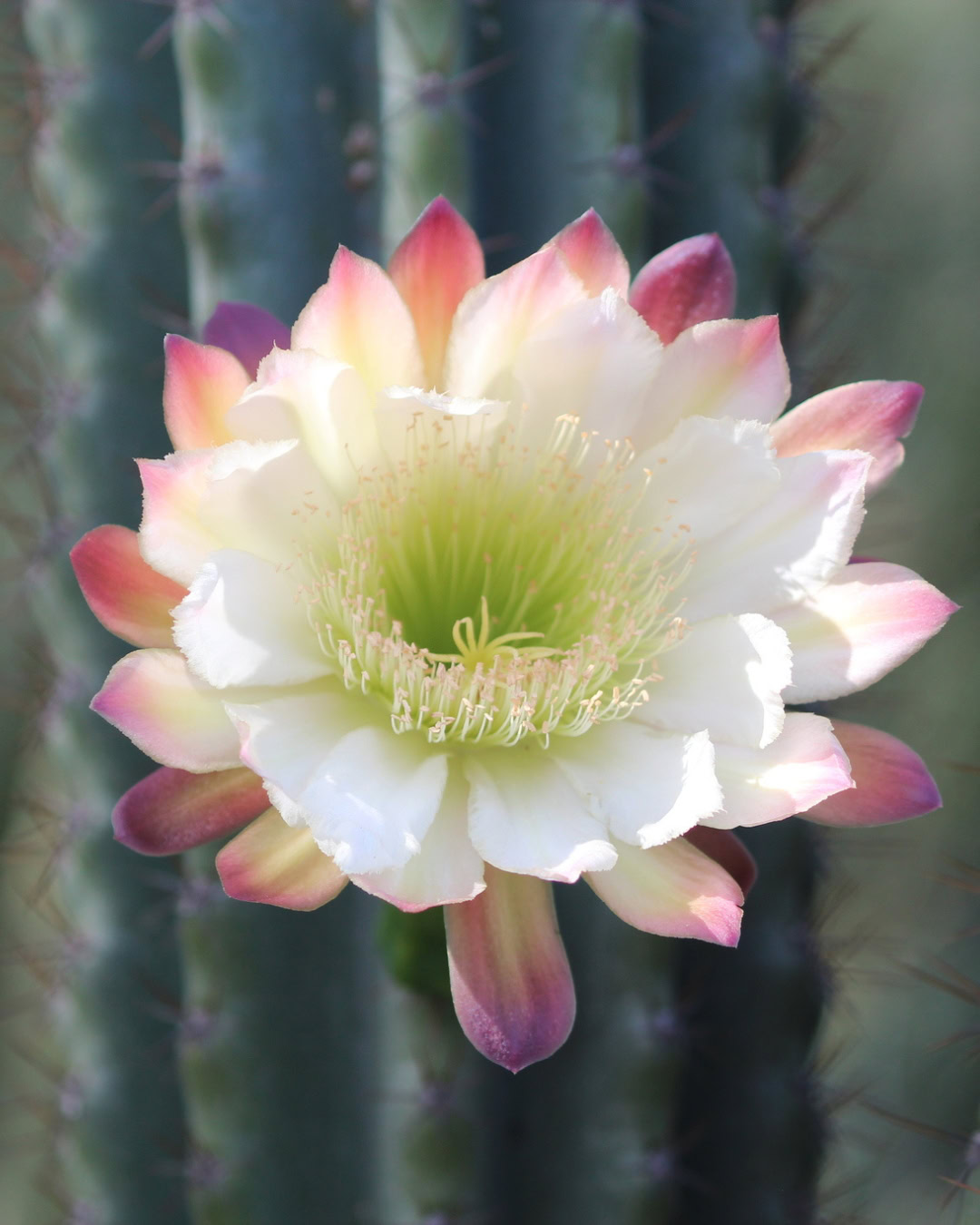
The plant is hermaphroditic, and its inflorescence consists of large, solitary flowers that emerge laterally from the areoles located on the upper parts of mature branches. Blooming occurs from late spring to late summer. Flowering is brief and nocturnal: the buds open majestically at dusk, remain fully expanded through the night, and wilt for good the following morning.
The flowers are funnel-shaped and measure 6 to 10 in (16 to 25 cm) long. The outer tepals range from light green to purplish red, while the inner tepals are a bright, pure white. They have numerous spiraled stamens with yellow anthers and emit a strong sweet fragrance, essential for attracting their nocturnal pollinators. Pollination is carried out mostly by moths in the family Sphingidae, which are drawn to the scent and pale color of the flowers in the dark.
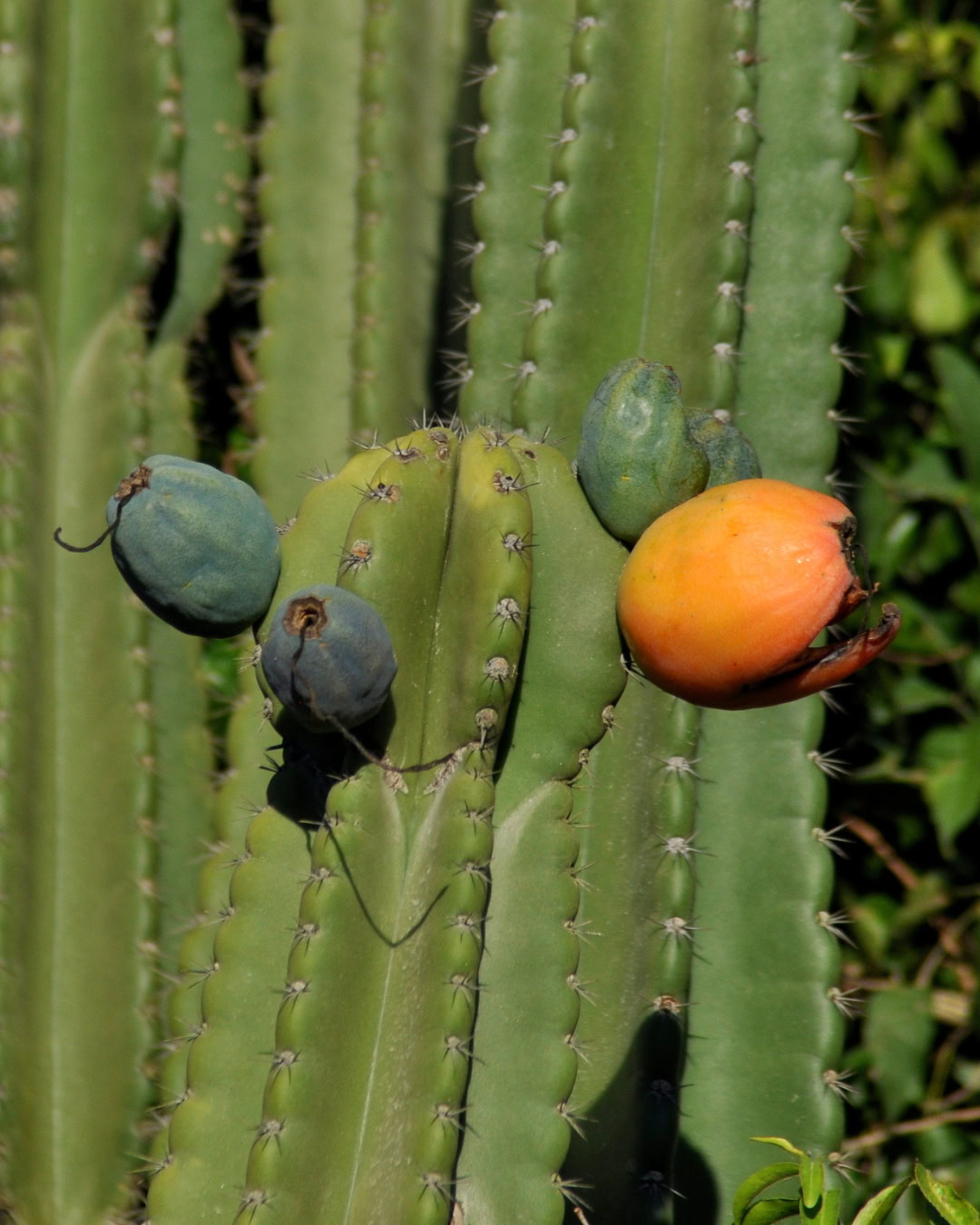
The fruit is a globose to ovoid berry with a smooth, glossy, spineless skin, measuring 2 to 3 in (5 to 8 cm) long. Its outer color changes from reddish purple to orange yellow when ripe. The flesh is fleshy, white, sweet, and edible, splitting open by longitudinal fissures that expose the seeds when mature. The seeds are small, about 0.08 in (2 mm) in diameter, kidney-shaped, with a black, glossy, finely tuberculate coat. Dispersal is zoochorous, mainly by birds and other fruit-eating animals that consume the pulp.
Main varieties and cultivars
- Cereus hildmannianus ‘Variegatus’: This is the form popularly known as “Hedge Cactus.” It is characterized by irregular longitudinal yellow bands, the result of chimerism that causes the absence of chlorophyll in certain tissues. Its growth is slightly slower compared with the species type.
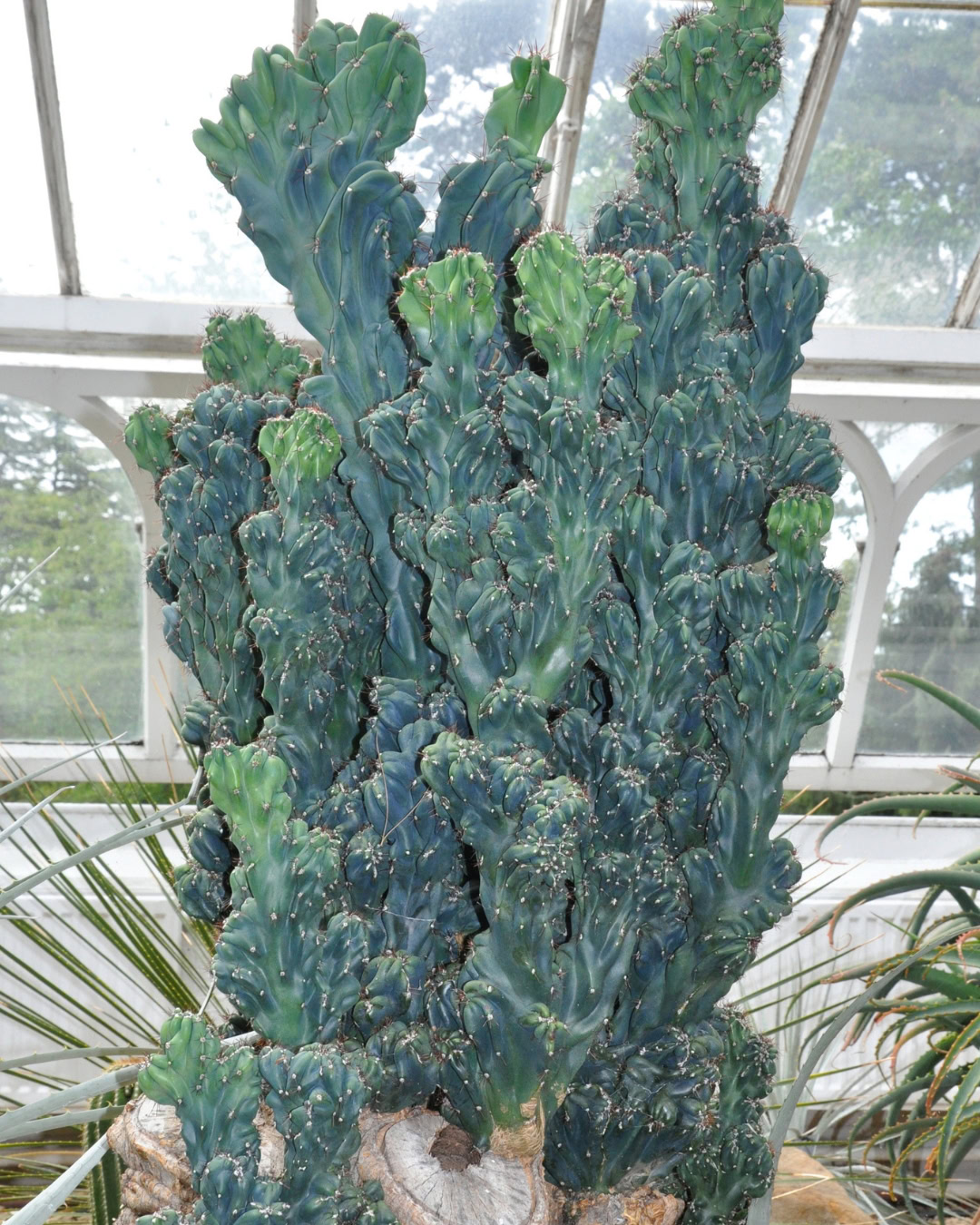
- Cereus hildmannianus ‘Monstruosus’: Commonly called “monstrous cactus,” this variety has a mutation that affects apical growth, resulting in disordered branching, crests, and tubercles with unique sculptural forms, giving it a highly ornamental and distinctive look.
- Cereus hildmannianus subsp. uruguayanus: A large subspecies highly valued in landscaping. Its main feature is its nearly spineless areoles, which make it safer to handle and ideal for use in gardens and high-traffic areas, minimizing the risk of accidents.
Pests, diseases, and solutions
Hedge Cactus is a hardy plant, but it can occasionally be affected by some pests and diseases, especially if growing conditions are not ideal. Mealybugs and scale insects often settle into the rib depressions and areoles of the cactus. In isolated infestations or in small collections, control can be done manually, removing the pests with a soft brush and a mild soap solution.
For more persistent cases, applying neem oil during the coolest parts of the day (morning or late afternoon) is an effective alternative.
Red spider mites appear mainly during prolonged hot, dry periods. Their presence leaves the cactus epidermis looking rough and reddish, with a rust-like appearance. Control comes from increasing airflow in the growing area and applying soluble sulfur, which acts as an acaricide.
Crown and root rot is the most common and dangerous disease, caused by excess water in the soil or by growing plants in pots without adequate drainage holes. The tissue at the base of the cactus or on the roots turns dark, soft, and gives off an unpleasant odor, and in advanced stages it can cause the plant to topple over. Prevention is the best strategy, ensuring perfect drainage in the growing medium. If caught early, it may be possible to save the plant by cutting off the healthy top portion for new rooting and completely discarding the affected base and contaminated soil to prevent the fungus from spreading.
Interesting facts
The fruits of Cereus hildmannianus are edible and, in some inland regions of Brazil, are popularly known as “wild pitayas” or “mandacaru pitayas.” Rich in water and sugars, they have a mild, refreshing flavor and are much appreciated by birds. Traditionally, they are harvested for fresh eating by rural communities, representing a valuable and tasty food resource.
The trait of cacti with few or no spines is a major advantage. The absence or extreme reduction of spines in adult Cereus hildmannianus plants, especially the cultivated forms of the subspecies uruguayanus, is an evolutionary trait highly valued in urban landscaping. It eliminates the risk of accidents in residential gardens, public spaces, or areas where children and pets are present, making the cactus a safer and more accessible option.