
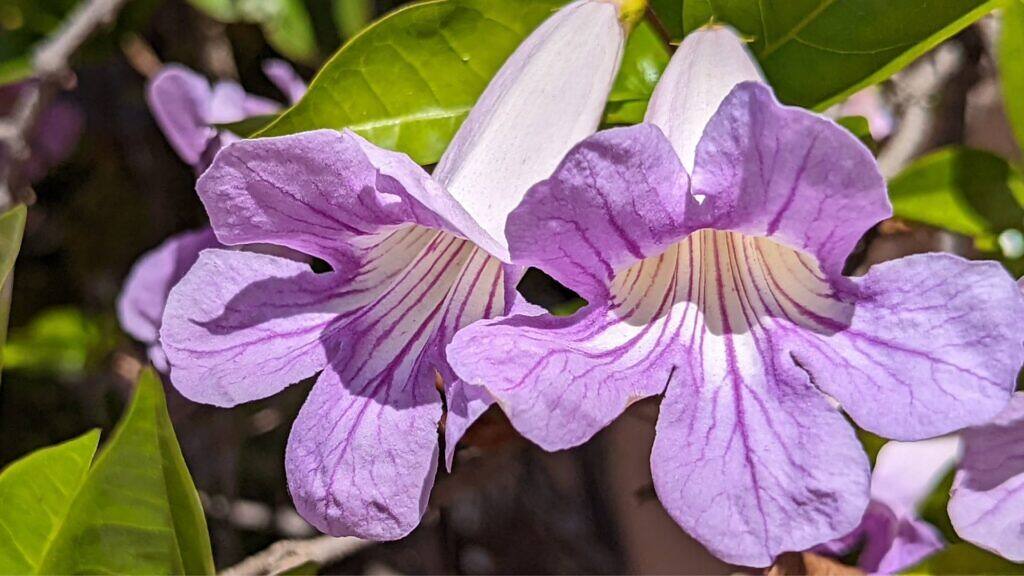
Violet Trumpet Vine (Bignonia callistegioides), also known as pink trumpet vine, is a woody, evergreen, and extremely vigorous climber that stands out in landscape design for its ability to turn rigid structures into cascades of colorful flowers. Belonging to the Bignoniaceae family, the same family as the impressive ipes, this species combines dense, glossy foliage with abundant blooms in shades of lavender and violet. It is an ideal choice for anyone looking for a vine that offers both privacy and a show through the seasons, staying green and lush all year long, even in areas with temperature swings.
Unlike other vines in its family that can become invasive or overly heavy, Violet Trumpet Vine has growth that, while fast, is easier to train and manage. It clings by means of tendrils, allowing it to climb supports gracefully without damaging surfaces with aggressive roots. At the peak of its bloom, which occurs between spring and summer, the plant is covered in fragrant trumpets that not only delight the eye but also turn the garden into a refuge for local wildlife.
Origin, Habitat, and Etymology
Native to the southern part of South America, Bignonia callistegioides has a natural range that includes Brazil (especially in the Atlantic Forest and Pampas biomes), extending into Argentina, Uruguay, and Paraguay. In its habitat, it is classified as a liana — a woody-stemmed vine that grows along forest edges and riparian woodlands. In these conditions, it uses the canopy of neighboring trees as a ladder to reach the upper forest layer, where light is abundant and essential for its full development.
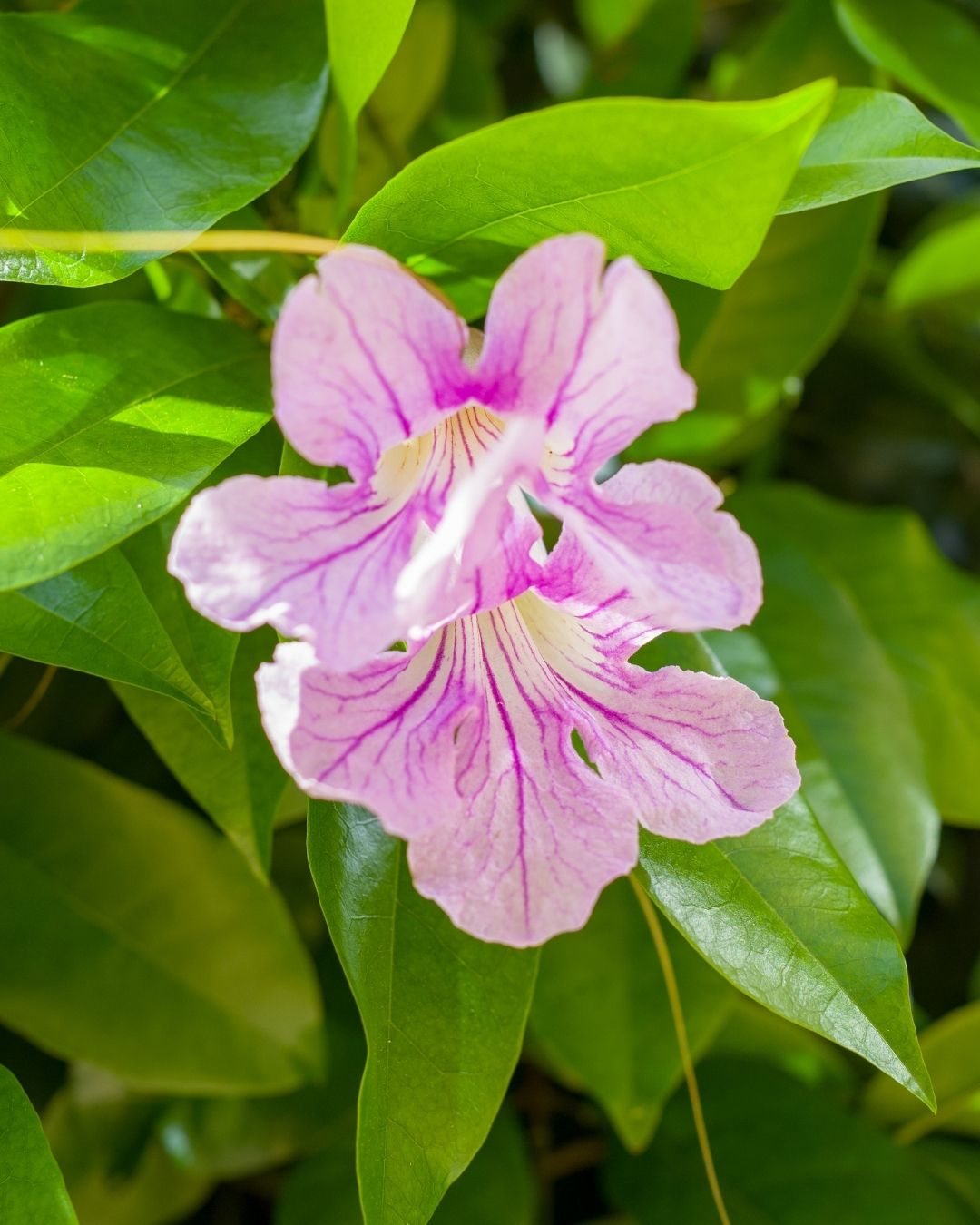
The genus name Bignonia honors Jean-Paul Bignon, librarian to King Louis XIV and an influential French clergyman. The specific epithet callistegioides means “resembling Callistegia,” a genus of vines in the Convolvulaceae family, because of the similarity between their flowers. In botanical literature, the species is still widely known by its synonym Clytostoma callistegioides.
Ornamental Use of Violet Trumpet Vine
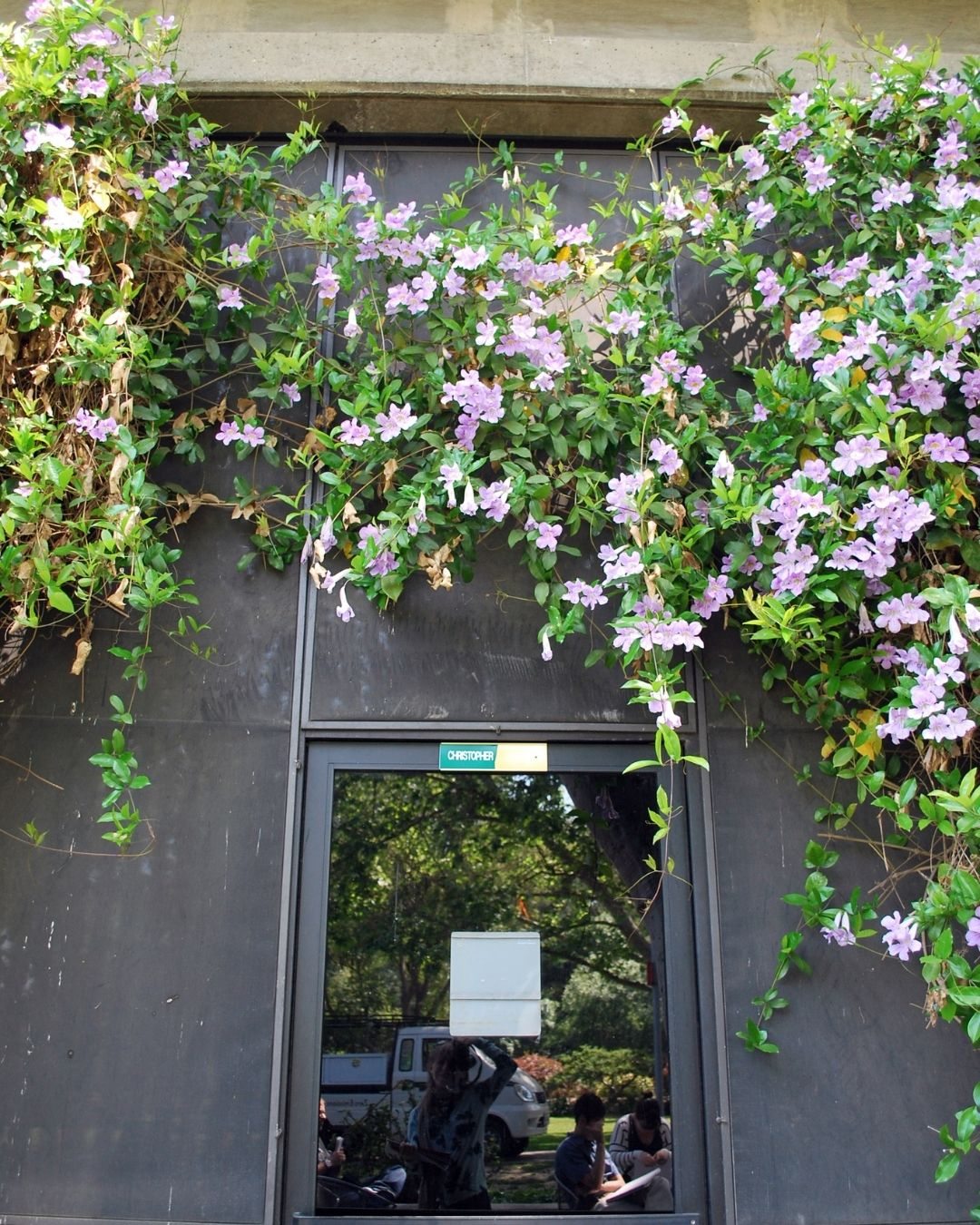
In garden design, Violet Trumpet Vine is valued for its versatility and density. It is widely used to cover wire fences, gates, and trellises, where its dark green, glossy leaves create an effective visual and sound barrier. Because of its vigor, it is one of the best options for covering large pergolas and arbors and entry portals, creating tunnels that combine cool shade and blooms. On masonry walls, it needs support such as steel cables, braces, or mesh to climb, since it does not attach directly to concrete on its own.
To achieve a dense cover quickly, a spacing of 5 to 8 feet (1.5 to 2.5 meters) between plants is recommended. Its growth is considered moderate to fast, depending on soil fertility and water availability. In the landscape, the light lavender tone of its flowers pairs well with species that bloom in contrasting warm colors, such as plants with yellow or orange flowers, like Tagetes (Tagetes patula). By contrast, it is possible to create a classic, sophisticated setting when planted near shrubs with dark green foliage and white flowers, such as Gardenia jasminoides (gardenia) or Moréia (Dietes iridioides).
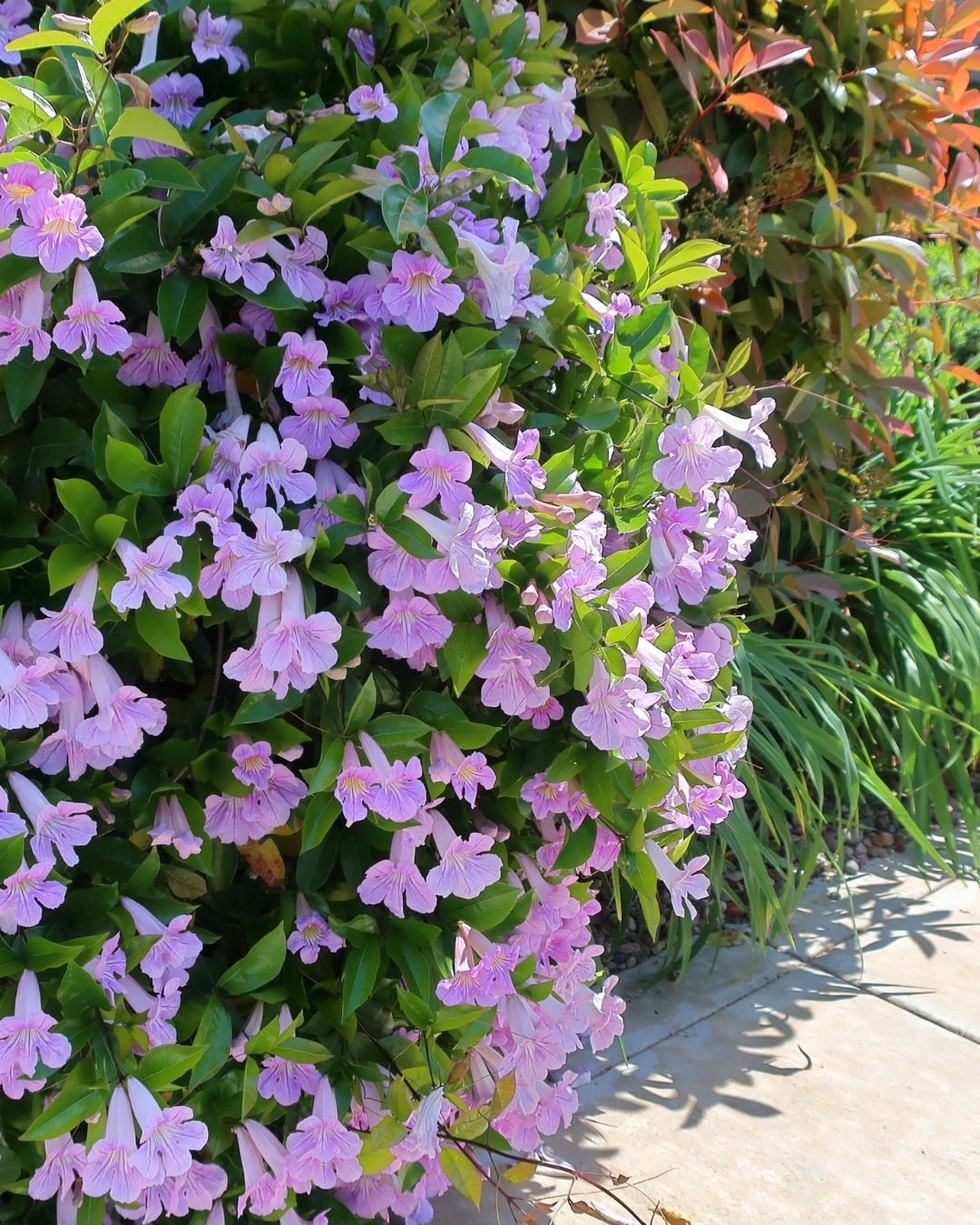
Violet Trumpet Vine can also be grown in large containers (minimum 50 liters) on balconies and patios, as long as it has a support and training structure for climbing. It is important to note that, because it is a large plant, it requires annual pruning so it does not overload more fragile structures or “smother” smaller plants growing beneath its spread. In addition to its beauty, its flowers are rich in nectar and attract pollinators such as bumblebees and several species of hummingbirds.
How to Care for Violet Trumpet Vine: Growing Guide
Growing Violet Trumpet Vine is a rewarding task, given its toughness once established. However, for the bloom to be the expected show, a few care steps should be followed:
- Light: The plant requires full sun to bloom intensely.
Although it tolerates partial shade, this condition results in weak, etiolated growth (with longer internodes and thin stems) and significantly reduced flowering. - Soil: Prefers deep, porous soils with a high organic matter content. Drainage is crucial, since waterlogged roots can lead to root rot. The ideal pH is in the 5.5 to 7.0 range (slightly acidic to neutral).
- Watering: During the first two years after planting, water deeply and frequently, about 2 to 3 times a week, especially in summer. Once established, the plant shows moderate drought tolerance, but it appreciates evenly moist soil during the growing and flowering months.
- Climate: Adaptable to tropical and subtropical climates. It is one of the hardiest Bignoniaceae in cold weather, tolerating light frosts and temperatures down to -5°C without permanent damage. In very dry regions, more frequent watering is recommended, along with regular misting of the foliage to maintain humidity around the plant.
- Fertilizing: For maintenance, apply NPK 10-10-10 at the beginning of spring. To encourage vigorous blooming, use a phosphorus-rich formula, such as NPK 04-14-08 (or commercial fertilizers like Forth Flores), applied in late winter. Organic feedings with compost or well-aged barnyard manure are excellent for improving soil structure, as is the use of mulching.
- Pruning: Perform a cleanup pruning every year after the main flowering period ends to remove dry and poorly formed branches. Training or rejuvenation pruning (hard pruning) should preferably be done in late winter, allowing new growth to emerge along with flower buds.
- Support: Because it is a tendril-climbing vine, it needs wires, slats, or trellises to attach itself at first. Check periodically to make sure the branches are not twining around nearby sensitive plants.
How to propagate Violet Trumpet Vine
The cuttings method is the most common way to propagate the species. For this, use semi-hardwood cuttings taken in late summer or fall. Each cutting should be 6 to 8 in (15 to 20 cm) long, with 2 to 3 nodes (buds). Removing the leaves from the base and using rooting hormone (indole-3-butyric acid, or IBA) increases the success rate. The cuttings should be kept in a light medium (sand and peat) under high humidity and diffused light until rooting, which takes about 4 to 6 weeks.
It is also easy to propagate by layering. Due to the plant’s natural habit, flexible branches that touch the ground tend to root spontaneously at the nodes. To encourage the process, simply pin a young branch to the ground (or to a pot placed nearby) and cover one node of the chosen branch with soil. After vigorous rooting, the branch can be cut from the main plant. Seed propagation is possible, but germination can be low and uneven, and seedlings take many years to grow and begin flowering.
Botanical description of Bignonia callistegioides
Bignonia callistegioides is an evergreen liana that can reach lengths of more than 20 ft (6 meters) if not pruned. Its leaves are opposite and bifoliolate, meaning they are made up of two main leaflets. These leaflets are elliptic to oblong-oval in shape, measuring between 3 to 4 in (7 to 10 cm) long by 1 to 2 in (3 to 5 cm) wide. The blade has a leathery texture and the upper (adaxial) surface is notably glossy, giving the plant a steady shine in sunlight. A distinctive feature is the presence of a simple terminal tendril that emerges exactly between the two leaflets, serving as the main support organ.
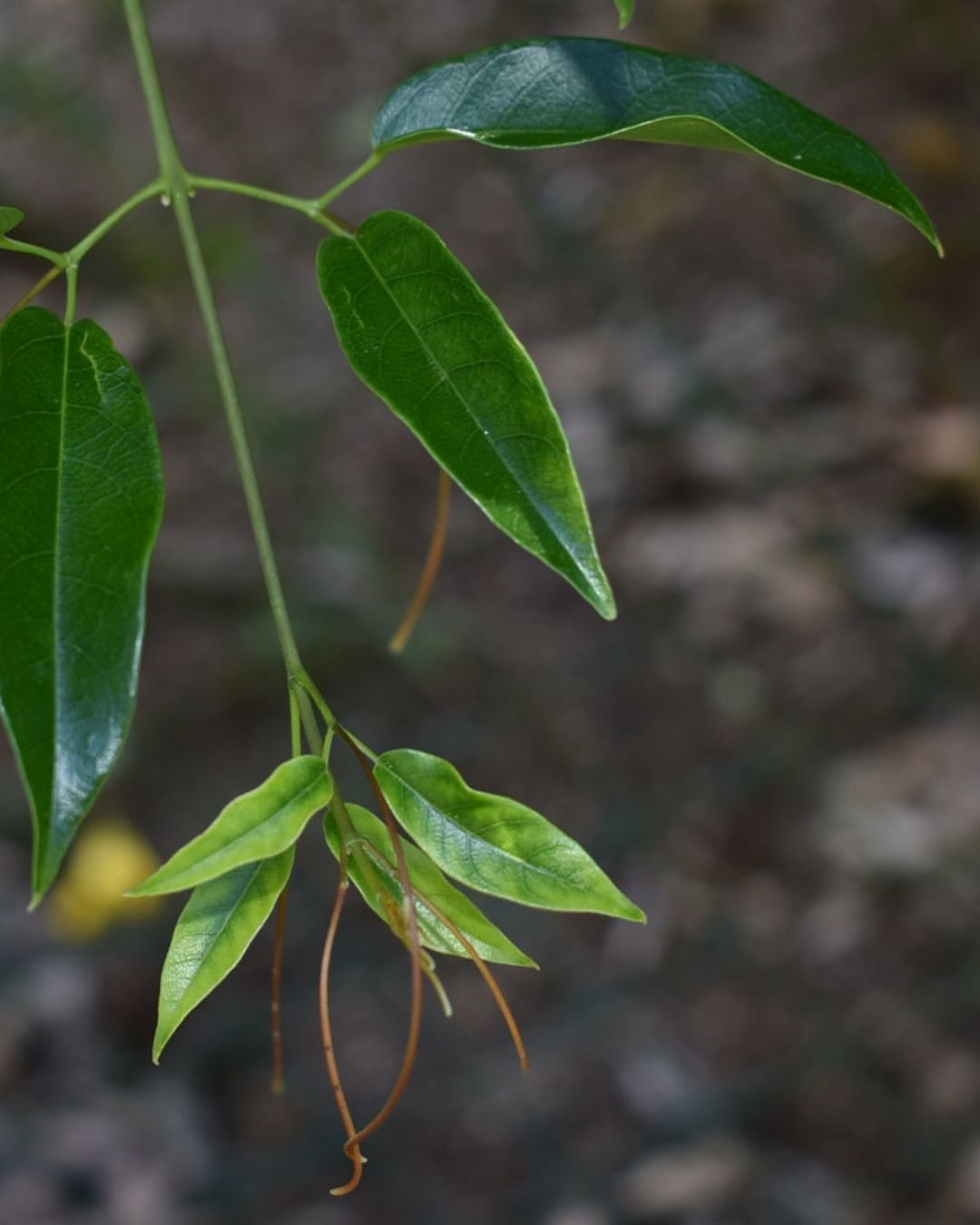
Its branches are flexible and cylindrical when young, with green coloring and small, scattered lenticels. As they mature, the stems become woody and develop a corky, grayish bark. Due to its vigorous growth and abundant branching, the species can reach considerable size, extending 26 to 33 ft (8 to 10 meters).
When grown on supports, its mass of foliage is dense, allowing pergolas or arbors to be completely covered in just a few years.
The flower clusters appear in axillary or terminal cymes, often arranged in pairs. Blooming is long-lasting, occurring mainly from late winter to early summer, with peak flowering concentrated in the spring months. The flower is sympetalous and funnel-shaped, with a corolla 2 to 3 in (5 to 8 cm) long, ending in five rounded, flared lobes.
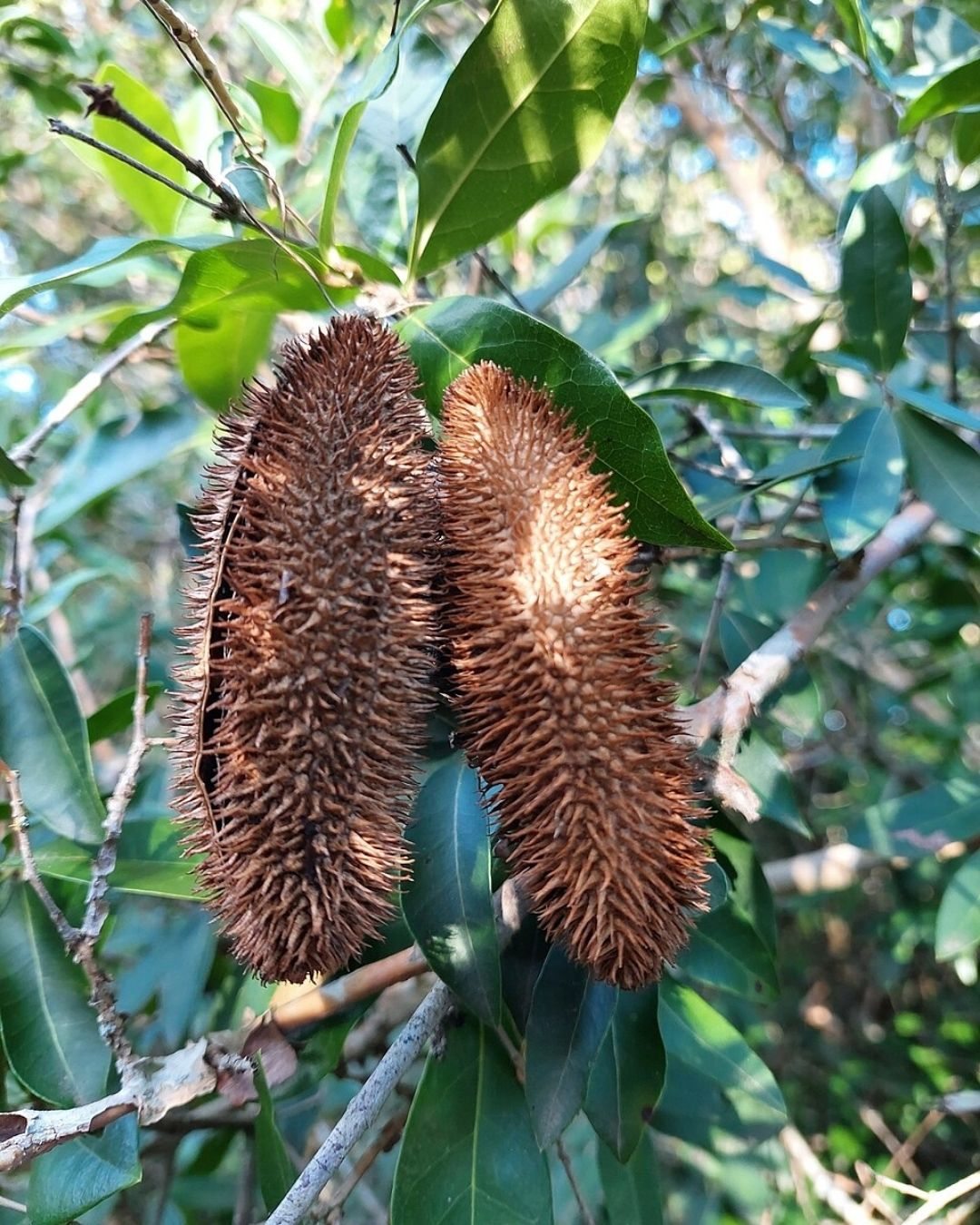
The color ranges from pale violet to lavender, with nectar guides in the form of deep purple longitudinal stripes inside the throat, which has a yellowish base. The fruit is an oblong, woody, densely spiny capsule — covered with projections that resemble short, blunt spines — measuring about 3 to 4 in (8 to 10 cm). When ripe, the fruit releases winged seeds adapted for wind dispersal (anemochory).
Pests, diseases, and solutions
Cross vine is a hardy plant, but it can be affected by a few pest and disease problems if growing conditions are not ideal. Infestations of scale insects and whiteflies are common in places with poor air circulation or excess nitrogen in fertilization. Control can be achieved with neem oil or insecticidal soap. The presence of these sap-sucking insects often attracts sooty mold, a black fungus that develops on the sugary secretion excreted by the pests, coating the leaves and reducing photosynthesis. The solution starts with controlling the insects.
During periods of high humidity combined with mild temperatures and low light, powdery mildew may appear as a white powder on young leaves and flower buds. To prevent this fungus, it is essential to make sure the plant receives direct sun and that cleanup pruning keeps the interior of the foliage open and airy. If the infestation is severe, the use of sulfur-based fungicides or Bordeaux mixture is recommended, always following the manufacturer’s instructions to avoid phytotoxicity.