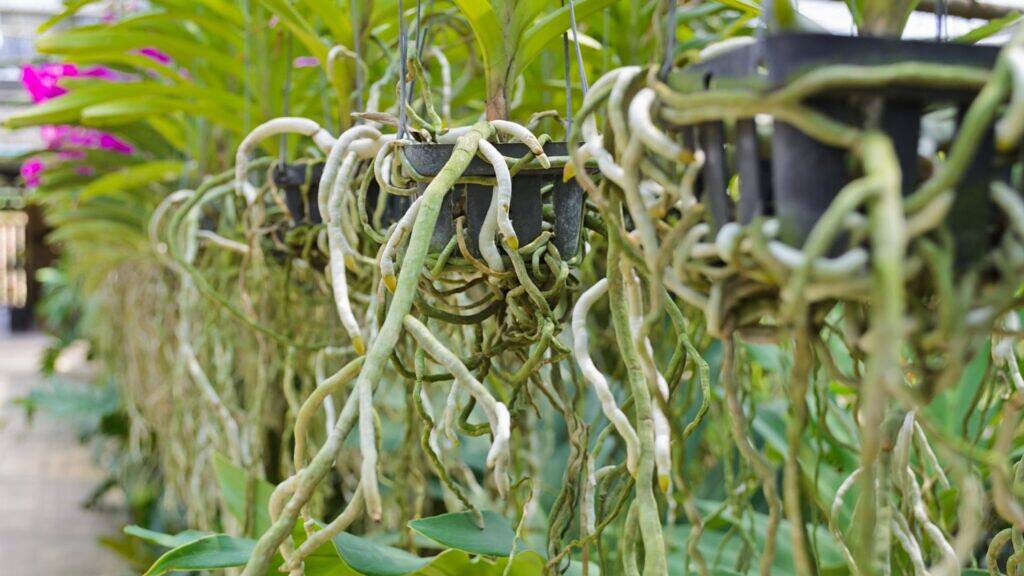
Other day, while texting a friend, she showed me her bathroom orchids with that discouraged look: ‘I don’t get it, Raquel. I water them religiously, but they keep getting sad and never last very long.’ Looking at the photos of the plants, I could tell right away what was happening. The problem wasn’t neglect, but overdoing a strict rule that ignored the plant’s biology.
I pointed to the roots and asked whether she had ever heard of velamen roots. It’s fascinating how understanding how this “invisible” layer works changes the way we care for epiphytes (plants that grow on other plants). Velamen is much more than a “skin” on specialized roots. It is the survival system that allowed orchids and anthuriums to conquer tree canopies, far from the soil. And the good news? It talks to you. You just have to learn its language.
Velamen roots anatomy and botany: the ingenious protective layer of epiphytic plants
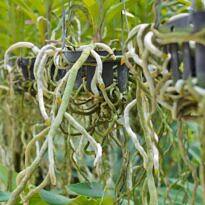
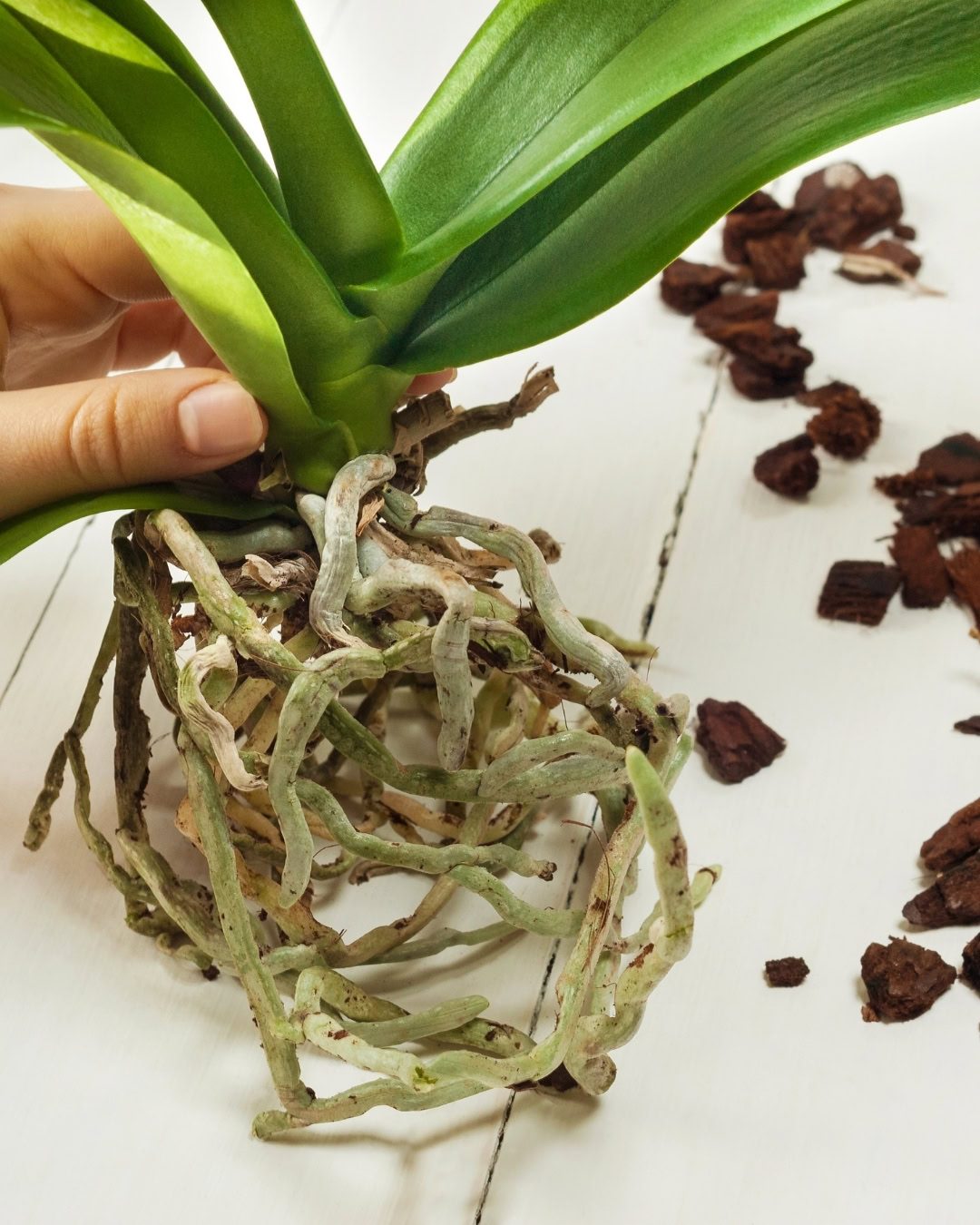
When you see those thick, silvery roots coming out of your Phalaenopsis orchid pot, you’re looking at one of the most sophisticated structures in the plant kingdom. Velamen is an epidermal tissue made up of 2 to 15 layers of dead cells, with lignified or suberized cell walls — something like an ultra-specialized molecular sponge. When the sponge (velamen) is dry, it is light and full of empty spaces (air). The moment water touches this structure, a physical process called imbibition takes place. The dead velamen cells act like tiny reservoirs that fill instantly by capillary action.
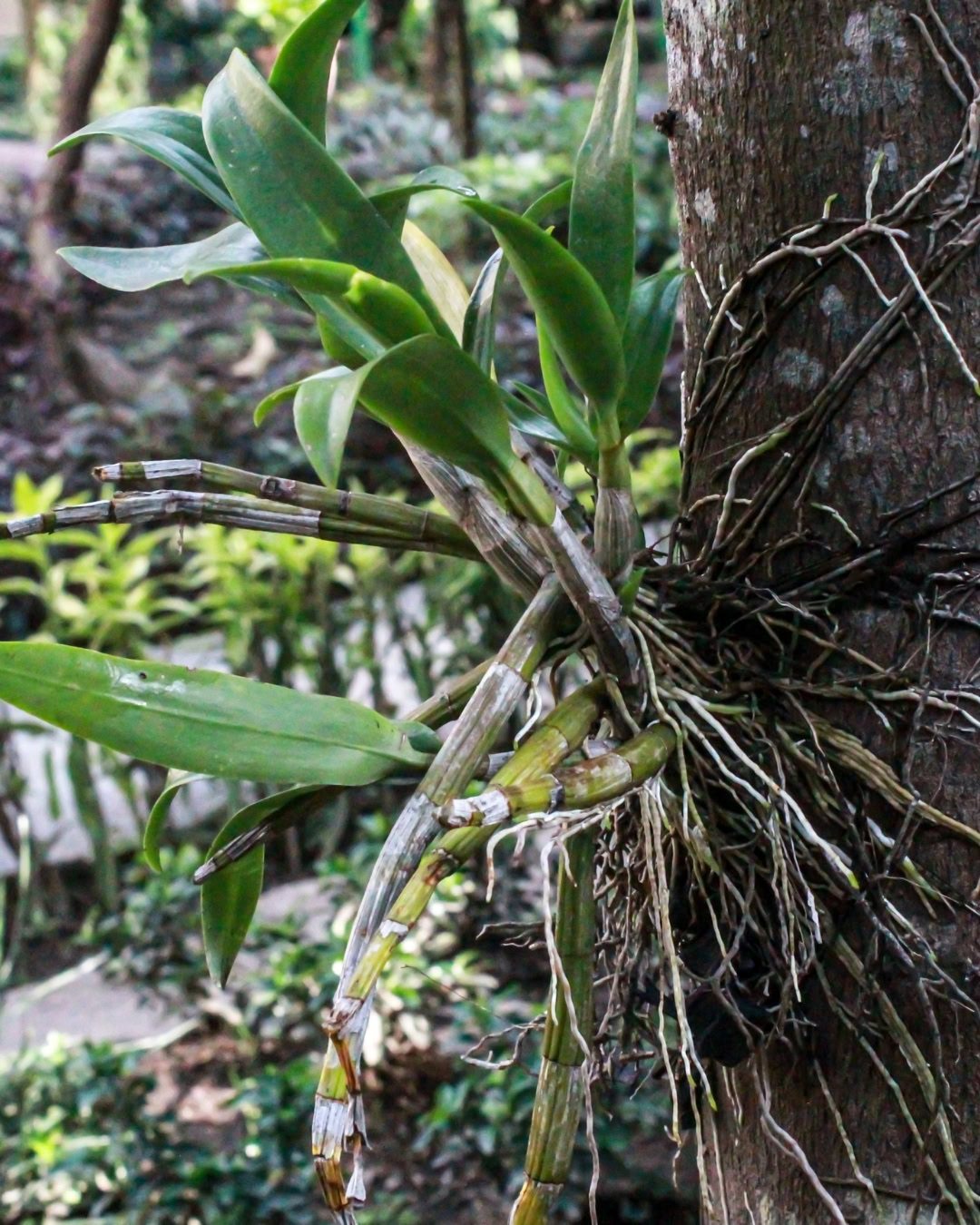
This “sponge” solves the biggest epiphyte dilemma: how do you drink without drowning?
This structure is described as a crucial evolutionary adaptation for plants that live without direct contact with soil. In my garden, that means many orchids can thrive hanging from tree trunks, just as they would in nature (or even without any potting mix at all, like Vandas!).
The magic works like this: when the velamen is dry, its cells are full of air, reflecting that characteristic silvery-white color. But when it rains or you water correctly, it absorbs water by capillary action in a matter of seconds, transferring it immediately to the inner root cortex. It’s like a miniature rain-harvesting system.
And contrary to what many people think, these roots do not suck sap from their host trees. And no: epiphytic plants are not parasites. It’s important to know the difference so you don’t go tearing plants out for the wrong reasons.
Who has velamen roots? Beyond Phalaenopsis
Although orchids are the “poster girls” for this structure, velamen is not exclusive to them. It’s a hallmark of several botanical families that decided soil was optional. For anyone growing ornamentals, it’s essential to recognize this structure in:
- Orchidaceae: Almost all epiphytes (Cattleya, Vanda, Oncidium, Dendrobium, etc).
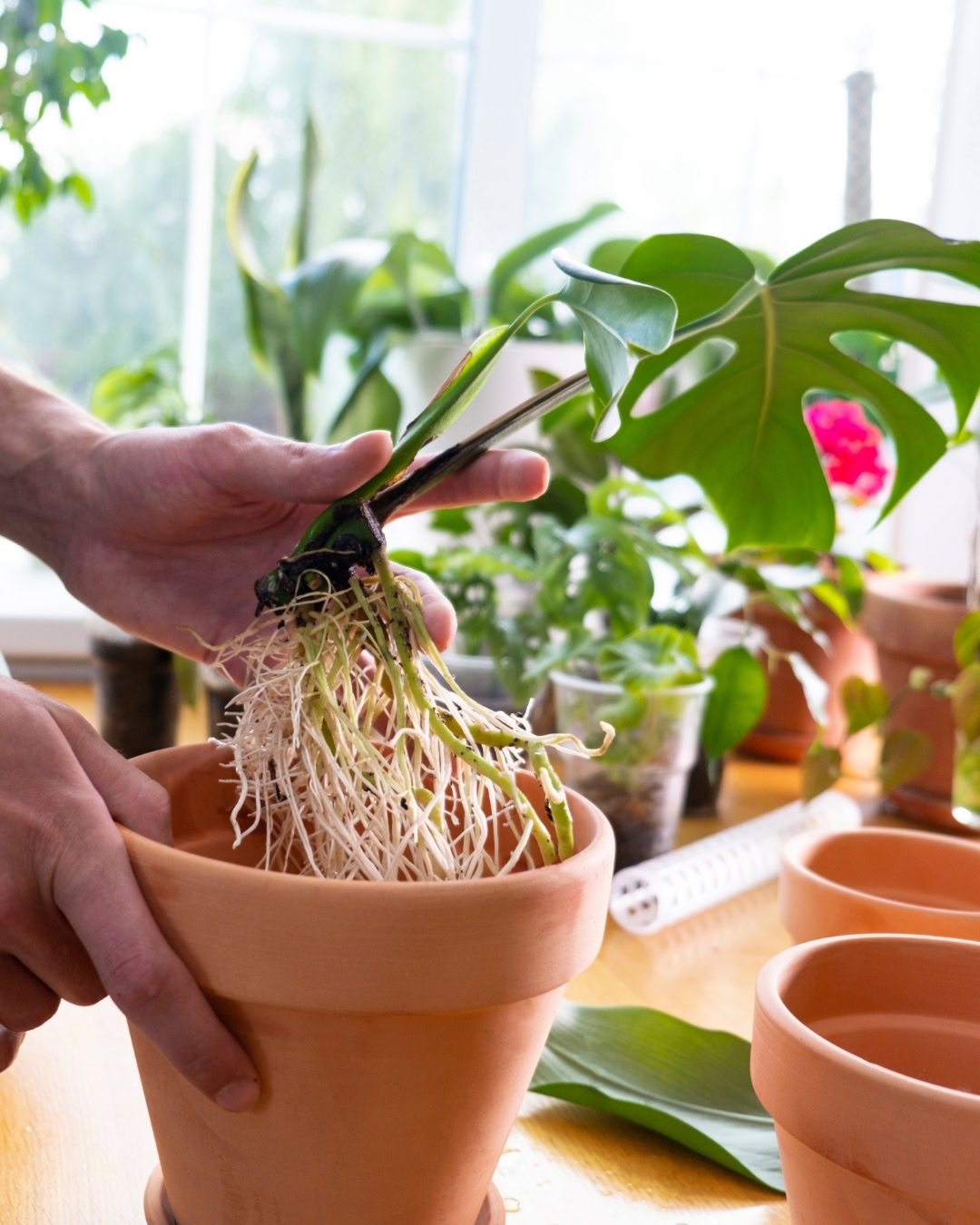
- Araceae: Many of our favorite houseplants, such as anthuriums, philodendrons, and monsteras (the famous aerial roots of monstera have velamen layers).
- Liliaceae and Amaryllidaceae: Surprisingly, some terrestrial plants from arid climates have also developed velamen to cope with water stress.
The phenomenon of negative geotropism
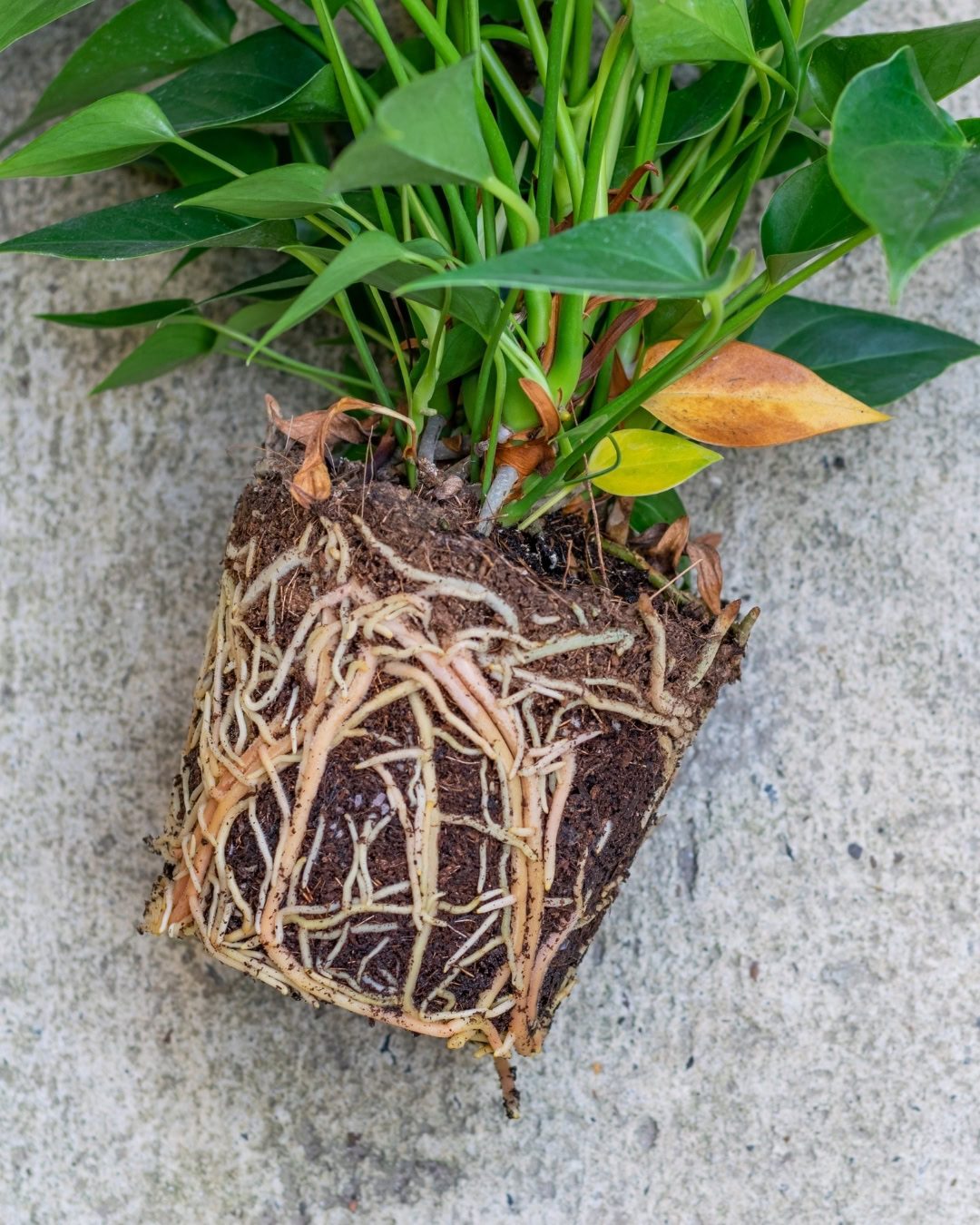
Have you ever noticed that some orchid and anthurium roots look “messy” and grow upward, away from the pot? That happens because of negative geotropism (or negative gravitropism). Unlike ordinary roots that head toward the center of the earth, these roots head toward air and light.
In their natural setting, these aerial roots serve as anchors and collectors of atmospheric moisture. When we try to force them into the potting mix or cut them off for “aesthetics,” we’re removing the plant’s most efficient sensors. They’re not lost; they’re hunting for moisture in the air.
The multiple functions of velamen in the survival and hydration of orchids and anthuriums
I often say velamen roots are the Swiss Army knife of epiphytic roots. They don’t just do one job — they’re a multifunctional tool that solves several problems at once:
- Ultra-fast water absorption: In environments where rain is occasional, they have to capture every drop before it evaporates. The spongy structure makes that possible and holds water longer so the plant can absorb as much as possible.
- Protection against dehydration: When dry, the velamen forms a thermal barrier that shields the inside of the root from direct sun and wind.
- Continuous gas exchange: Even when wet, the velamen allows oxygen to reach the living cells of the cortex, preventing suffocation.
- Root photosynthesis: Here’s a little-known secret: in some orchids such as Phalaenopsis, when the velamen turns transparent (when wet), light passes through and activates the chlorophyll in the green inner cortex. Yes, roots photosynthesize!
The invisible bridge: velamen and mycorrhizal fungi
One role I rarely see mentioned is the velamen’s function as a home for beneficial mycorrhizal fungi. These microscopic partnerships help the plant absorb phosphorus and other nutrients in naturally poor environments, like the tops of trees. In home growing, that means low-organic-matter potting mixes can interfere with this natural symbiosis. It also means that understanding this delicate balance between fungi and plants makes us think twice before applying a pesticide to these plants or using heavy doses of chemical fertilizer.
Practical guide to reading velamen color and watering at the right time
Whenever I see someone losing plants because they insist on fixed watering schedules, I realize the biggest hurdle is the fear of letting the plant get too dry. In practice, it’s a much simpler and more reliable process than any day-of-the-week chart. The plant tells you exactly what it needs — you just have to pay attention.
Step 1: Identifying white or silvery velamen to begin a thorough watering
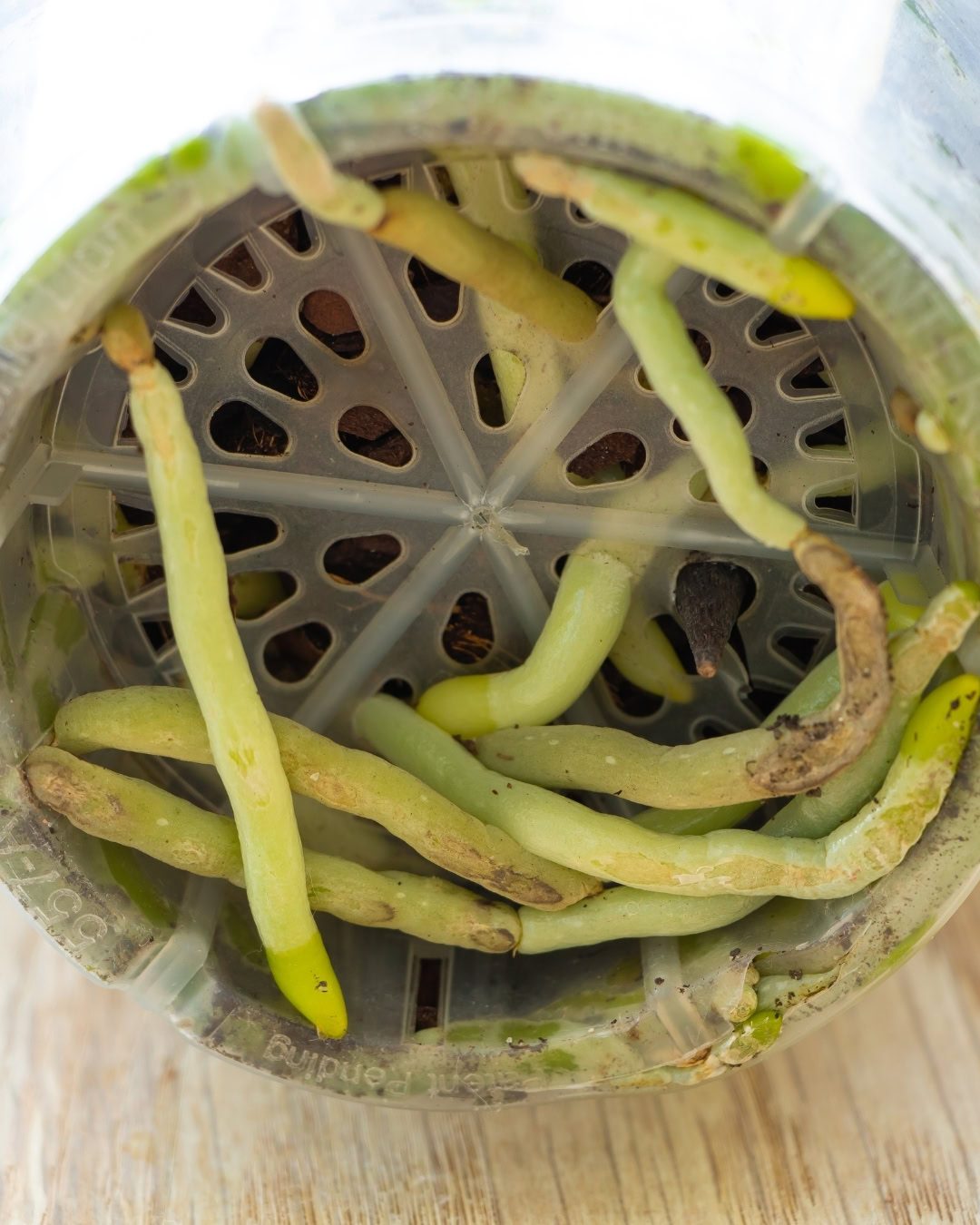
When the roots have that matte white-silver color, it means the velamen cells are full of air. That’s the physiological sign that the plant has used up its surface water reserves. In my case, one of the main reasons to use clear pots for velamen roots is to make this visual cue easier to read.
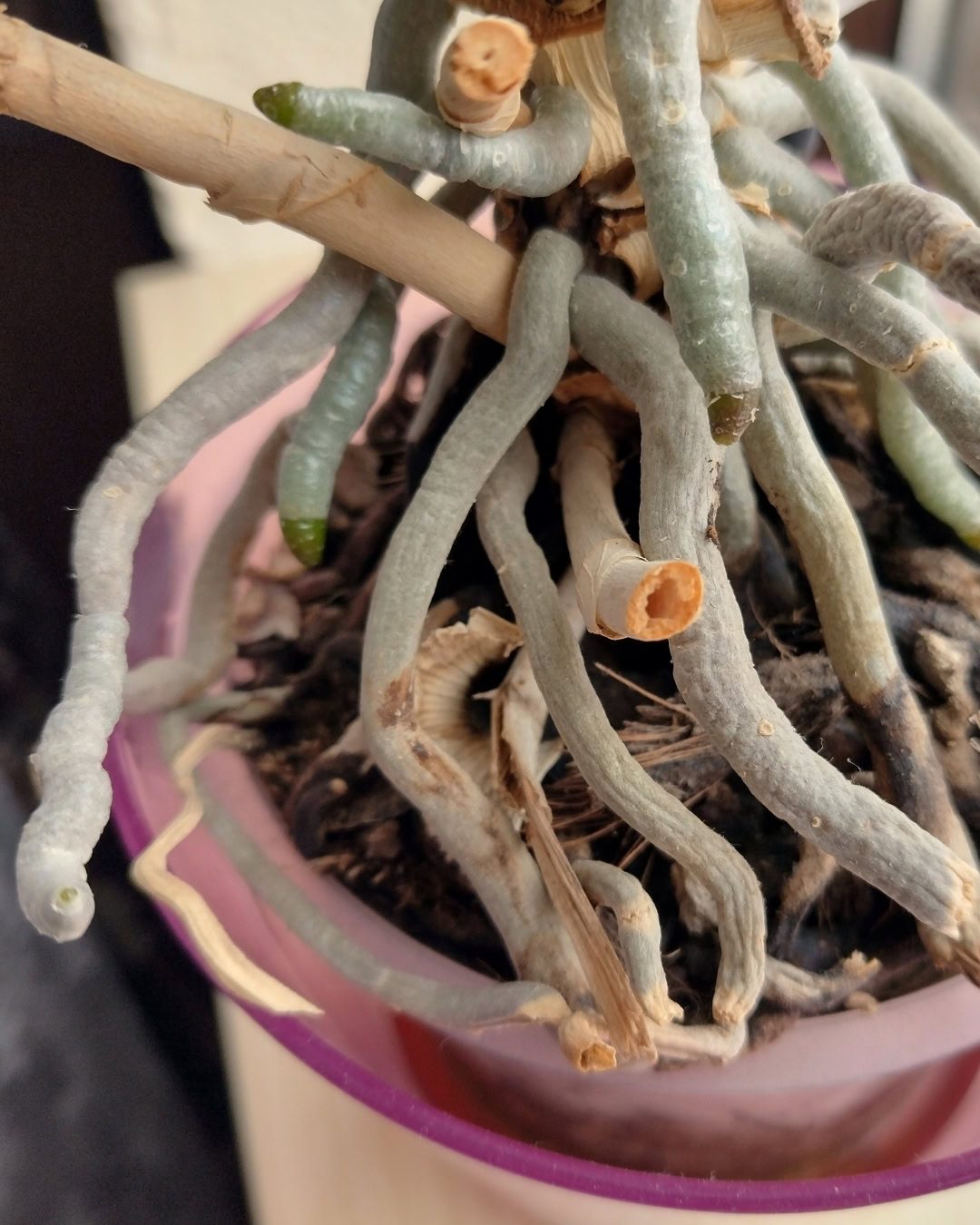
How to water correctly at this stage:
- Take the pot to the sink.
- Water thoroughly until water runs out through the drainage holes.
- Let it drain completely for 5 to 10 minutes.
- Watch: the velamen should change color almost instantly to green or greenish gray.
“The beginner’s mistake is thinking a white root is a dead root. In fact, it’s the healthiest root and the most ready to absorb nutrients.” Exactly. A dead root is brown, mushy, crumbly, and lacks structure — don’t confuse the two.
Step 2: Recognizing bright green velamen and knowing when to pause watering
After proper watering, the velamen shifts to a bright green tone (in orchids) or greenish gray (in Anthuriums). This indicates that water has filled the intercellular spaces and light is activating the internal chlorophyll. That’s the time to do absolutely nothing.
I think of this phase as “standby mode.” The plant is hydrated, performing root photosynthesis (in orchids), and doesn’t need any more water. Watering at this stage is the fastest way to cause root rot.
In very dry regions, the velamen can dry out in 24 to 48 hours. In humid coastal areas, it can take a week. That’s why fixed watering schedules never work — every microclimate is different.
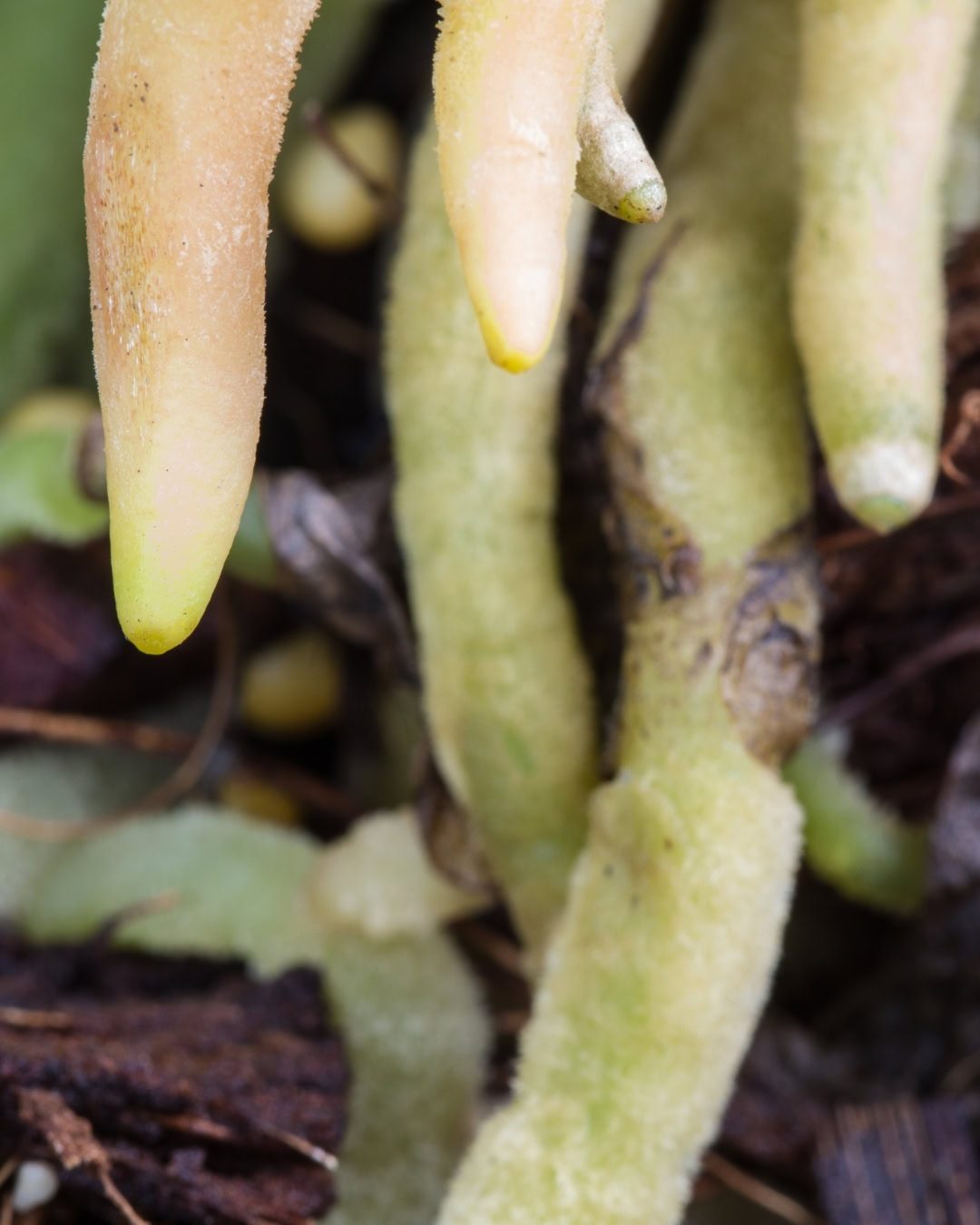
Step 3: Spotting brown, mushy, or dry velamen and how to save roots from rot
Here’s the red flag. Brown and mushy velamen indicates cell collapse from excess moisture or fungal attack. Dark gray, brittle velamen indicates death from severe dehydration or salt buildup from fertilizer.
What to do in each case:
- Brown/mushy/crumbly velamen: Remove the plant from the potting mix. Cut away all damaged roots with sterilized pruning shears (use 70% alcohol or a flame). Apply powdered cinnamon or a copper-based fungicide to the cut areas. Repot in fresh, dry medium, and wait 3 days before the first watering. Important: if the velamen is brown but firm, it is still very much alive. Look at the signs as a whole to avoid serious mistakes.
- Gray/dry/brittle velamen: Give the potting mix a thorough flush: water heavily, let it drain, and repeat 3 times to remove built-up salts. Stop fertilizing for 1 month.
I learned this the hard way: I lost a Cattleya walkeriana because I kept fertilizing weekly. The velamen turned dark gray at the tips, the roots stopped growing, and the plant slowly declined. Since then, I’ve followed the golden rule: less is more when it comes to orchid fertilizer.
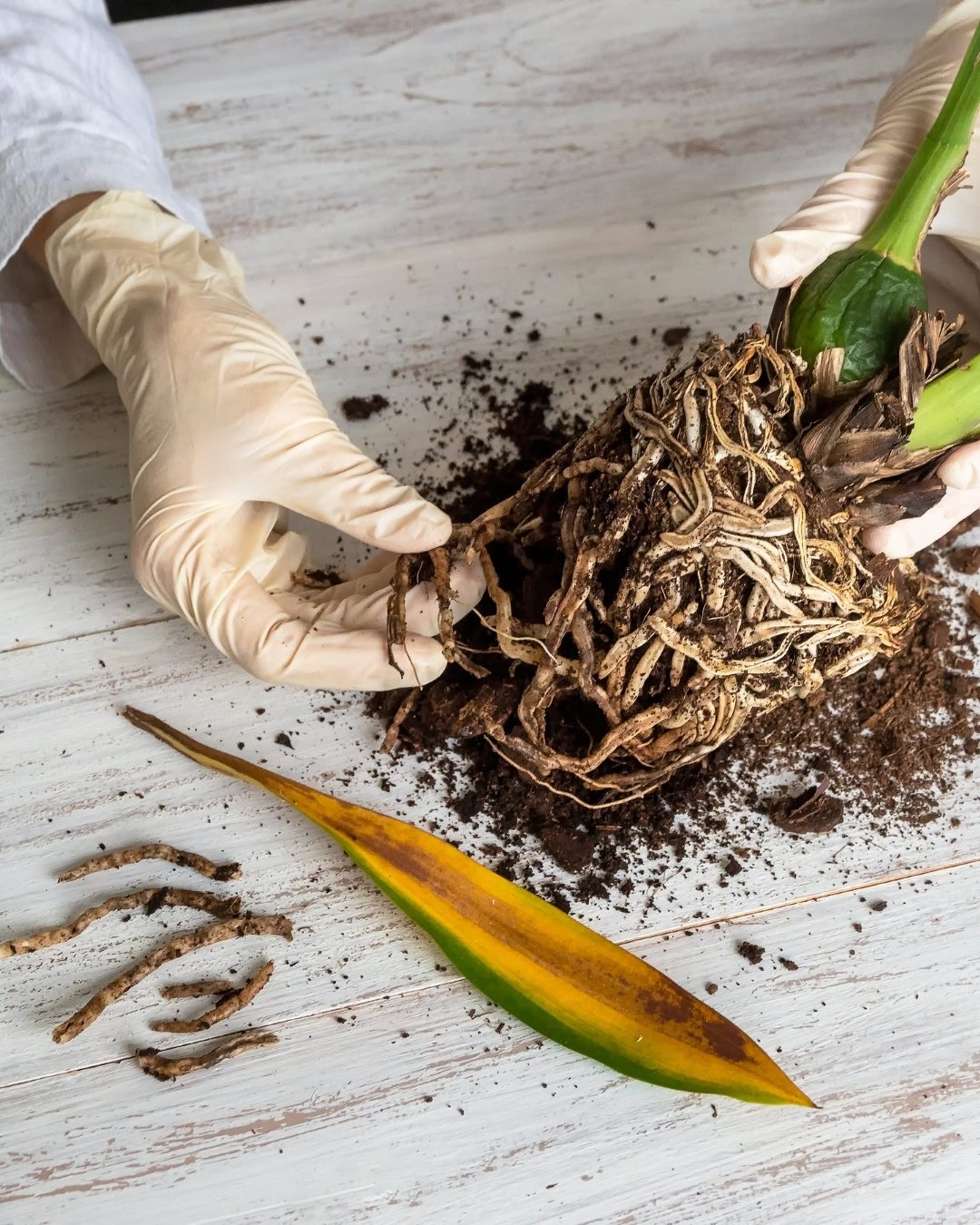
The ideal environment for roots: potting mixes, clear pots, and the right nutrition for velamen roots
If you’ve walked into a garden center and felt lost between “orchid mix,” “pine bark,” and “coconut chips,” I get it. The good news is that the market already offers ready-made blends that respect the velamen’s need for fast drainage.
Potting mixes that protect velamen roots without suffocating them
Look for products labeled “Orchid Mix” or “Epiphyte Mix”. The ideal blend usually includes:
- Pine bark: The main base, providing drainage and aeration.
- Medium-grade coconut chips: Holds moderate moisture without waterlogging.
- Sphagnum moss (Sphagnum): Use sparingly (no more than 20% of the mix). It holds a lot of water—great for dry environments, risky in humid climates.
- Charcoal (small pieces): Helps prevent rot odors and improves drainage.
The fatal mistake I see over and over: burying aerial roots with velamen in ordinary garden soil. Velamen roots rot if they stay buried in a compact mix. That blocks gas exchange, and the plant can die within weeks. For plants with velamen: always, always use a coarse, fast-draining mix with good airflow and little to no dust.
Clear pots: the ultimate diagnostic tool
I strongly recommend using clear polypropylene pots for orchids. They let you:
- Monitor velamen color without removing the plant.
- See the moisture level of the mix in real time.
- Catch root problems before it’s too late.
- Allow root photosynthesis (in species that can do this).
For anthuriums, which prefer a little more moisture retention, I use plastic or ceramic pots without saucers, plus a medium that falls somewhere between orchid mix and a houseplant mix. The velamen breathes better, and I avoid the mistake of keeping the mix soggy.
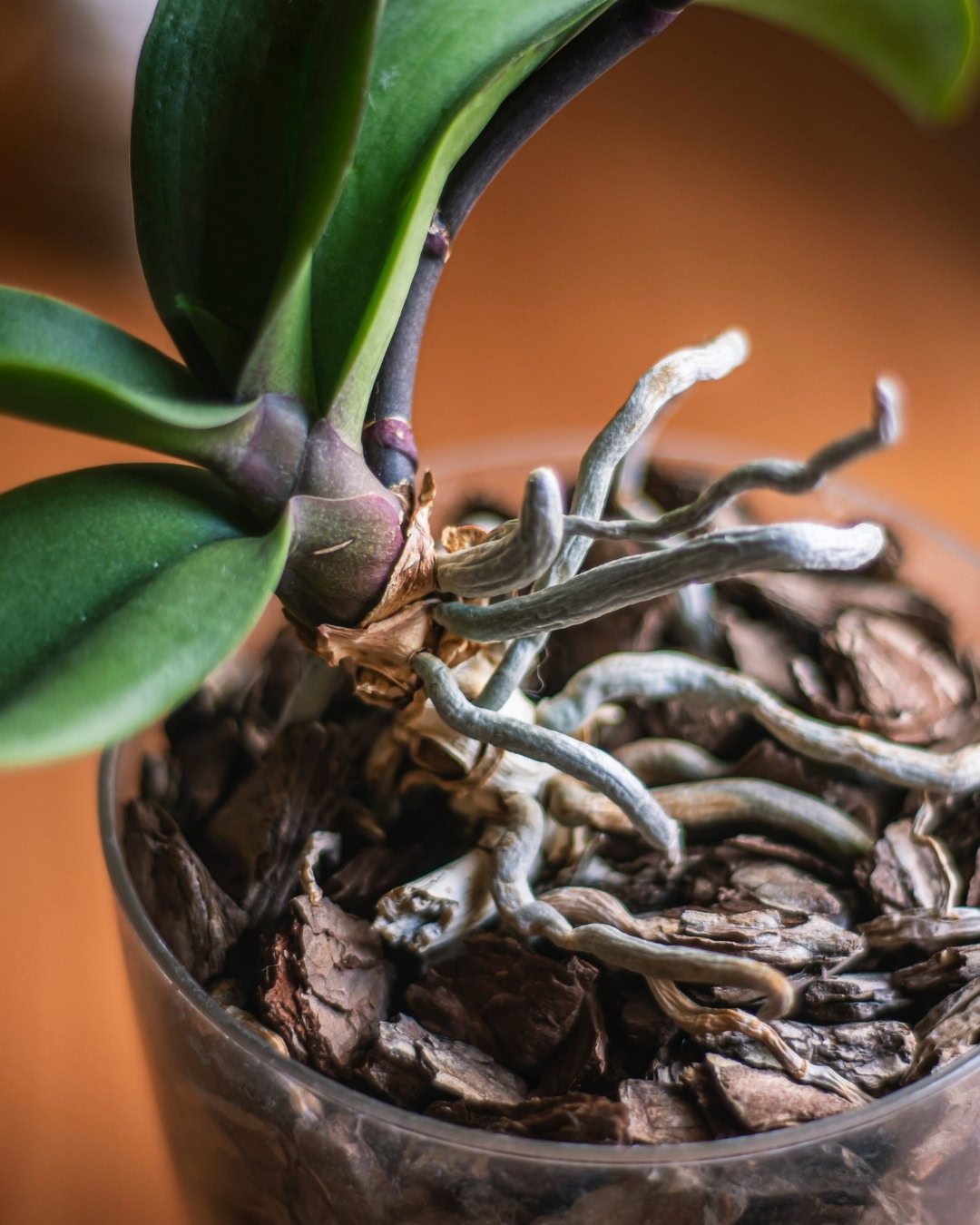
Smart nutrition: feeding without burning
Velamen holds on to mineral salts more than regular roots do. That means overfertilizing causes tip burn quickly. In the garden center, look for orchid-specific fertilizers such as:
- NPK 20-20-20 (vegetative growth): For the leaf and root growth stage.
- NPK 10-30-20 (flower induction): To encourage blooming.
My routine: I fertilize every 15 days in spring/summer (the active growth phase), always at the label rate or even a little weaker. In fall/winter, I cut back to once a month or stop completely. And I always, always do a “flush” watering (plain water, no fertilizer) every 3 feedings to prevent salt buildup.
Granular organic fertilizers, with fermented and living materials like bokashi, for example, are the icing on the cake for velamen roots. Because they have this symbiosis with mycorrhizal fungi, you feed the fungi and the orchid thanks you. But don’t overdo it!
Fatal mistakes that destroy epiphytic velamen
The three mistakes that kill velamen roots (and how to avoid them)
- Watering from above without soaking: A lot of people pour a small cup of water on top and think that’s enough. The velamen barely gets wet, the water runs straight out the drainage holes, and the plant stays dehydrated. Solution: water until the mix is thoroughly soaked and the velamen changes color.
- Using a saucer with standing water under the pot: This keeps the bottom of the mix constantly moist, rotting the lower roots. Solution: if you use a saucer, add pebbles or stones and keep the water level below the bottom of the pot (it raises humidity around the plant without waterlogging the roots).
- Repotting during bloom: Disturbing roots while the plant is flowering stresses it out and can damage young velamen. Solution: always repot after blooming, in early spring, when the plant is in active growth.
- Repotting recently watered plants: If you’ve just watered, wait until your plant dries out before handling the roots. Velamen roots are firm and stiff when wet. If you disturb them at that point, they tend to break more than necessary. When they’re dry, they become a little more flexible, which makes them easier to handle without as much damage.
Frequently asked questions about growing orchids, anthuriums, and the health of aerial roots
Can I cut off aerial velamen roots that grow out of the pot?
I don’t recommend it unless they’re dead or diseased. Aerial roots are functional and help absorb moisture from the air. If they bother you visually, cover them with loose sphagnum moss or leave them free.
Is dark green velamen (almost brown) normal?
It depends. If it’s firm and hydrated, it may just be the natural coloring of certain species. If it’s soft or has an odor, it’s rot. The test is simple: gently squeeze it. If it gives, it’s rotting.
Can I use tap water to water?
Yes, but with a few caveats. Water with a lot of chlorine or high salt content can, over time, damage the velamen. If possible, let water sit for 24 hours before using it (so the chlorine can evaporate), or use filtered rainwater.
How long does it take for velamen to recover after repotting?
Under ideal conditions, 2 to 4 weeks. During that period, avoid fertilizing and keep humidity high (60-70%). If you repotted at the right time, you’ll see new root tips emerging — a sign that the velamen is regenerating.
Is yellowing velamen a sign of disease?
It usually indicates exposure to concentrated fertilizer or too much direct sunlight. Flush the potting medium and move the plant to filtered light. If it doesn’t improve in 2 weeks, consider repotting.
The art of growing through observation: the hidden beauty of root symbiosis
Today, when I look at orchids, anthuriums, and philodendrons, I don’t just see beautiful plants. I see complex survival systems, evolutionary adaptations that took millions of years to refine. Velamen taught me that gardening isn’t about following rules; it’s about observing and responding in kind.
The difference between a beginner grower and an experienced one isn’t the number of plants they own, but the ability to read the signals those plants give. And watching velamen means noticing a very honest signal — it doesn’t lie, it doesn’t hide. If you learn its language, your orchids and anthuriums will thrive in ways you never imagined possible.
So I challenge you: today, before watering any epiphytic plant, stop and look at the roots. Observe the color of the velamen. Feel the texture if you can. Ask yourself, “Does this plant really need water right now?” You may be surprised by the answers the roots themselves give you.
And if you’re just getting started, know that every mistake is a lesson. In my journey as a gardener and landscape designer, I lost plants, learned, and adjusted. Today, my collection is more vibrant than ever. Learning to observe and understand velamen roots transformed me from an anxious gardener into a patient observer — and that’s a valuable skill you can develop in plant care.