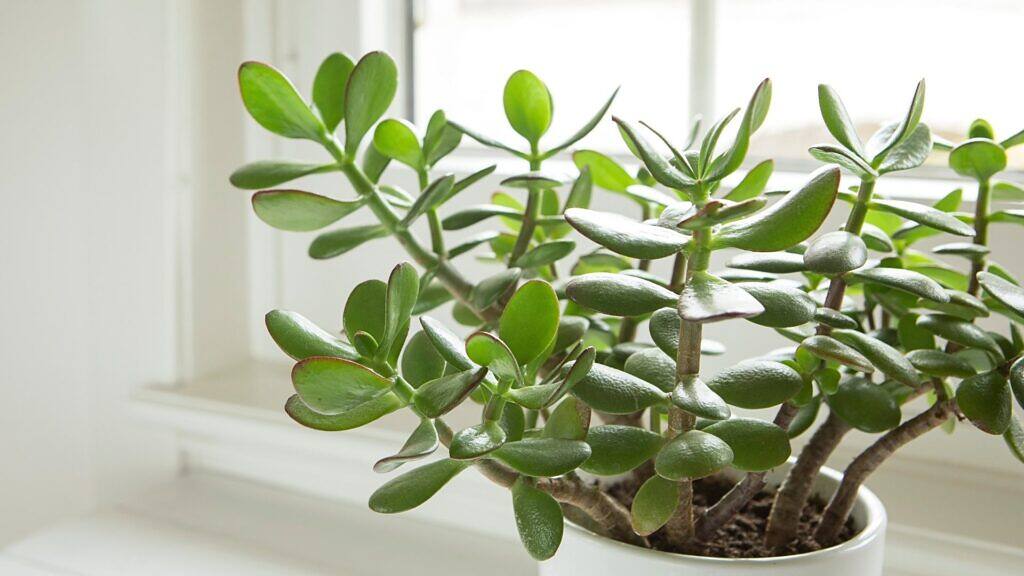
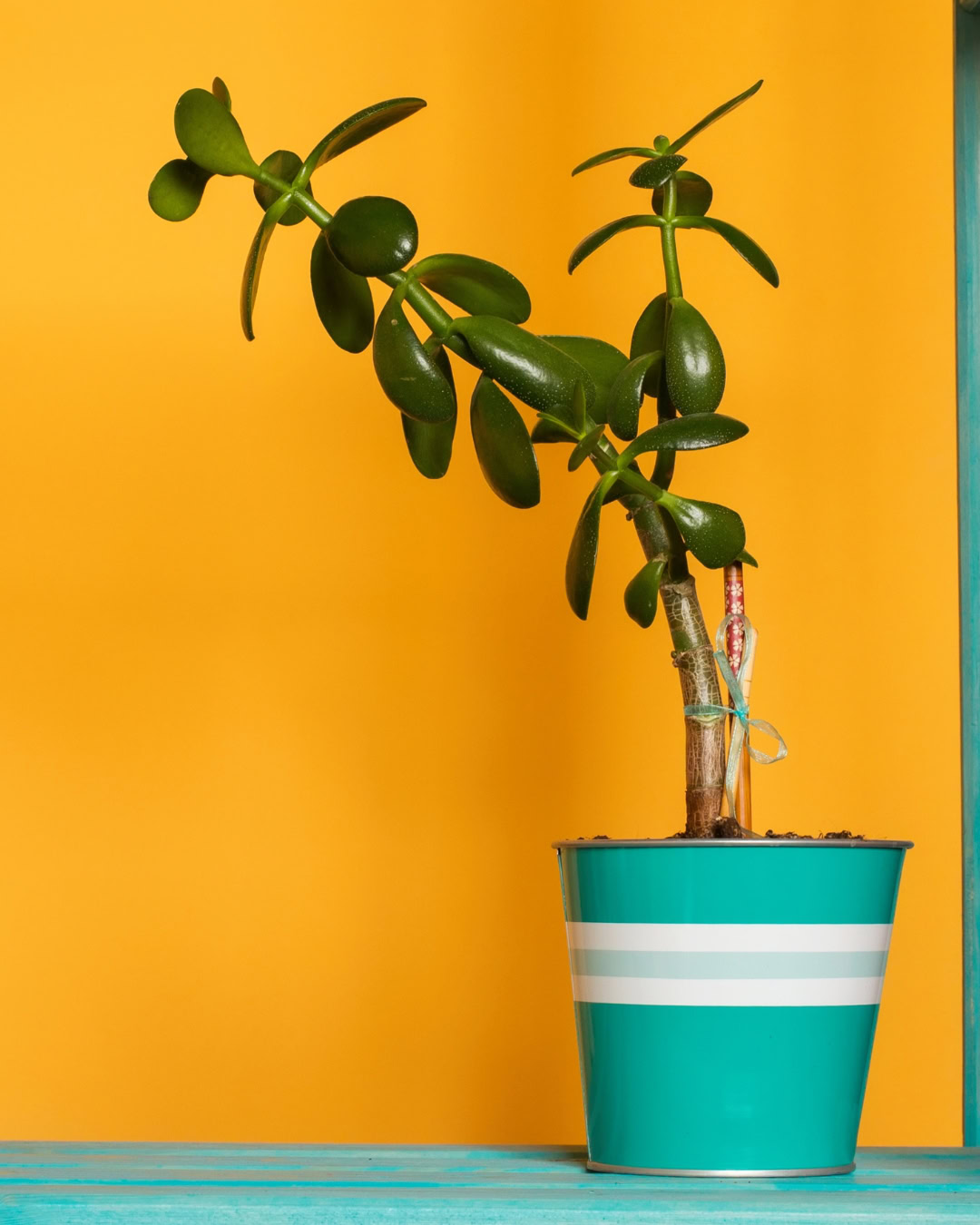
Jade Plant (Crassula ovata) is a succulent shrub that wins people over with its sculptural presence and long lifespan. Over time, it naturally develops a sturdy trunk and branching that perfectly mimic the canopy of a miniature tree, giving it the charm of a natural bonsai without the need for complex pruning or drastic wiring. However, its apparent toughness hides specific sensitivities, especially to excess moisture around the roots and the fragility of its fleshy branches, requiring constant care and close observation from the gardener.
Origin, habitat, and etymology
Native to the Eastern Cape and KwaZulu-Natal provinces of South Africa, Jade Plant thrives in the so-called Albany thickets, a biome characterized by dense xerophytic scrub, rocky slopes, and dry valleys. In these semi-arid regions, the species grows in thin, stony clay-sandy soils with excellent drainage, where rainfall occurs mainly during the warm summer months.
The genus name Crassula comes from the Latin crassus, meaning ‘fat’ or ‘thick,’ in direct reference to the thickness of its fleshy, water-storing leaves. The specific epithet ovata refers to the clearly oval or elliptical shape of its leaves. Historically, the species underwent taxonomic changes: first described by Philip Miller in 1768 as Cotyledon ovata, it was also known by the synonyms Crassula argentea and Crassula portulacea, until in 1917 the botanist George Claridge Druce established the scientific combination used today.
Ornamental use of Jade Plant
In landscape design, Jade Plant is valued for its sculptural effect, slow to moderate growth, and great longevity, and it can remain ornamental for decades. Its shallow, non-aggressive root system makes it suitable for areas near sidewalks, walls, foundations, and pipes, as long as the soil drains well. In the garden, it can be grown as a standout specimen, in groups, mass plantings, formal or informal rows, and even in simple topiary forms. For mass plantings or informal rows in the garden, the recommended spacing is 3.3 to 4 feet (1.0 to 1.2 m) between plants, while isolated specimen plants need a minimum clear radius of 5 feet (1.5 m) so their rounded canopy can develop symmetrically.
It is a particularly interesting species for xeric, rock, coastal, and desert-inspired gardens, where it pairs well with other succulents, cacti, and plants with contrasting foliage, such as agaves (Agave attenuata), elephant bush (Portulacaria afra), and blue senecios (Senecio mandraliscae). For in-ground plantings, spacing of about 3.3 to 4 feet (1.0 to 1.2 m) between plants is recommended; for isolated specimens, it is best to reserve at least 5 feet (1.5 m) of open space so the rounded canopy can develop evenly.
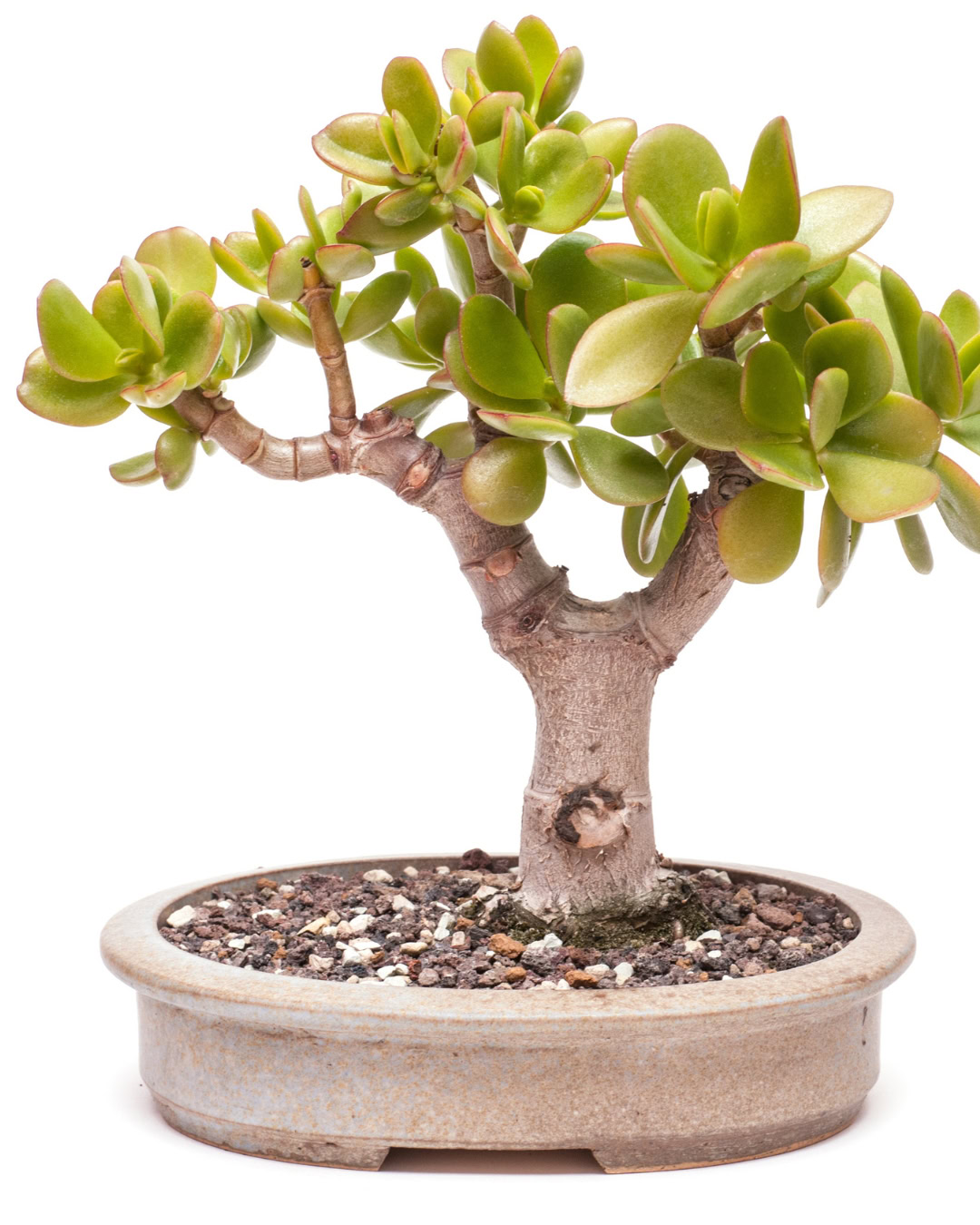
In pots, Jade Plant really shines! It takes on the look of a small tree and is widely used on patios, balconies, terraces, and in bright indoor spaces, preferably placed at eye level so we can appreciate the sculptural form of the trunk and branches. It can also be trained as bonsai, although its fleshy branches are brittle and do not tolerate wiring or abrupt twisting easily. Indoors, it should be kept near sunny windows, with plenty of bright light. Plants kept in shade should be acclimated gradually to direct sun, since sudden exposure can cause leaf scorch.
How to care for Jade Plant: Growing guide
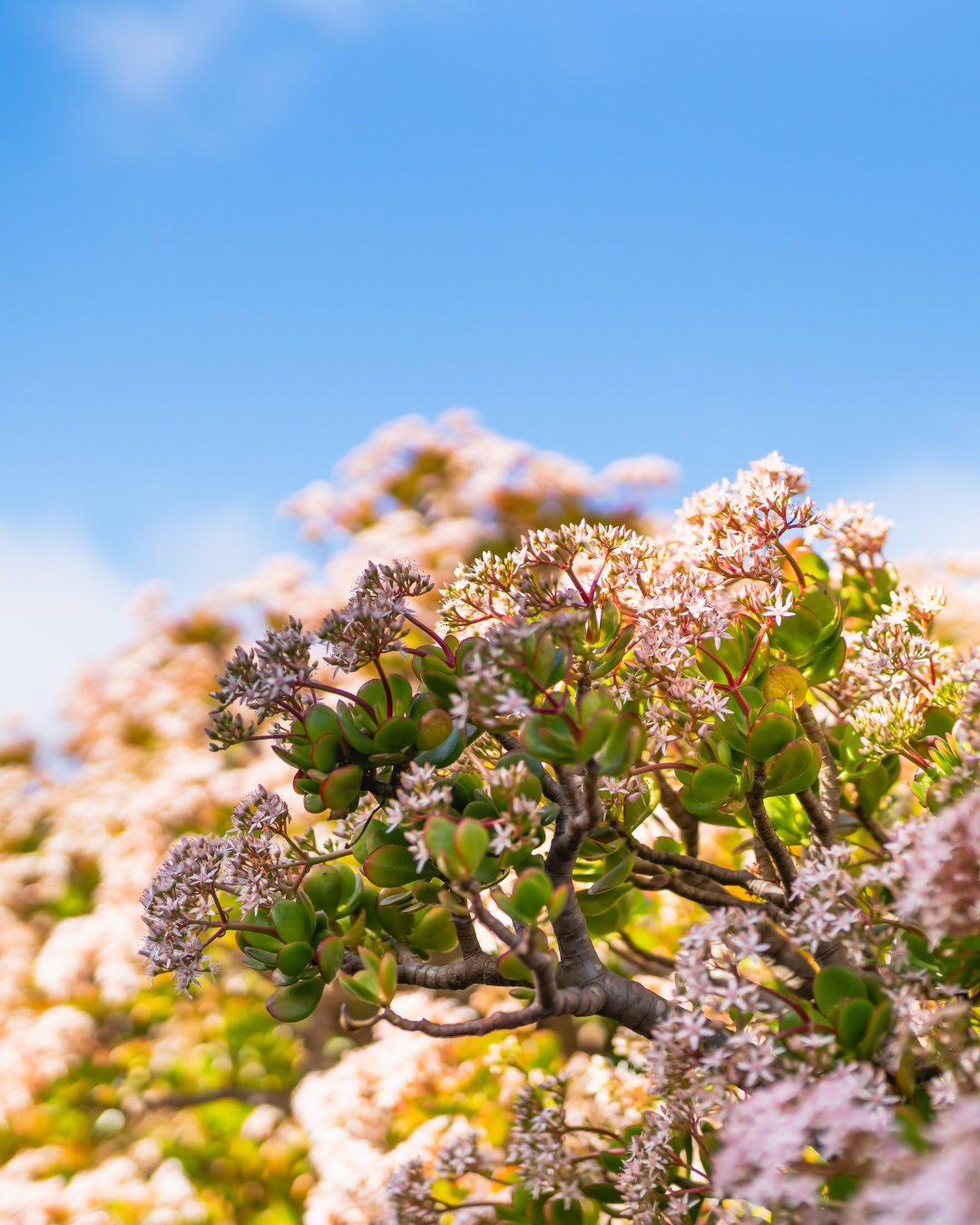
- Light: Full sun. To bloom, it needs at least 6 hours of direct sunlight per day. It tolerates partial shade with bright, diffused light, but in that case it will only maintain vegetative growth and will not produce flowers.
- Etiolation: Indoors with insufficient light, the jade plant tends to etiolate, meaning it begins to produce longer, thinner, weaker and more spaced-out stems, with smaller leaves that may look droopy and sit farther apart from one another, in addition to dropping leaves. This happens because the plant grows “searching” for light, but without enough energy to maintain its compact and sturdy form. In general, correction involves gradually moving the plant to a brighter location. Attention: if the plant is indoors or growing in shade, transition it to direct sun gradually over two or three weeks to avoid severe sunburn, which appears as whitish spots.

Etiolated jade plant with drooping leaves and spacing between the internodes. - Garden soil: It must be extremely porous and sandy, with excellent drainage. It is recommended to mix in coarse river sand and small gravel if the planting area soil is heavier. Raised beds can also be helpful to improve drainage.
- Potting mix: The perfect mix consists of 50% coarse river sand (or expanded perlite), 30% non-clay soil, and 20% high-quality organic matter, such as compost or decomposed pine bark. Avoid purely clay-based or compact mixes that hold water for too long. Place a drainage layer of gravel or broken ceramic pieces at the bottom of pots to ensure good drainage.
- Watering: Use the classic soak-and-dry method. Water thoroughly until water runs out of the drainage holes, and do not water again until the growing medium is 100% dry to the touch deep down. In winter, the plant’s metabolism drops sharply, requiring up to an 80% reduction in watering frequency. Never use saucers under the pot, since standing water causes rapid rot at the crown and roots.
- Climate and Temperature: Its ideal temperature range is between 15°C and 30°C. It tolerates wind and moderate cold down to 5°C, but temperatures below freezing are fatal, freezing the tissues and destroying the plant. In addition, frost is highly destructive specifically during the flowering period, causing immediate bud drop and severe damage to the flower clusters.
- Fertilizing: Apply a mineral NPK 10-30-20 formula monthly during spring and summer (rich in phosphorus and potassium to strengthen cell structure and encourage flowering) or commercial fertilizers specifically made for cacti and succulents. If you use a general-purpose fertilizer, always dilute it to just one-quarter (1/4) of the manufacturer’s recommended rate. Succulents grow slowly and have a lower fertilizer need. Stop fertilizing completely in fall and winter.
- Pruning and Structure: The plant tolerates training prunes to keep the canopy compact, but remember that its branches are highly brittle because of the weight of the stored water. Avoid traditional bonsai wiring techniques, common with other species, since the tension can easily break the branches.
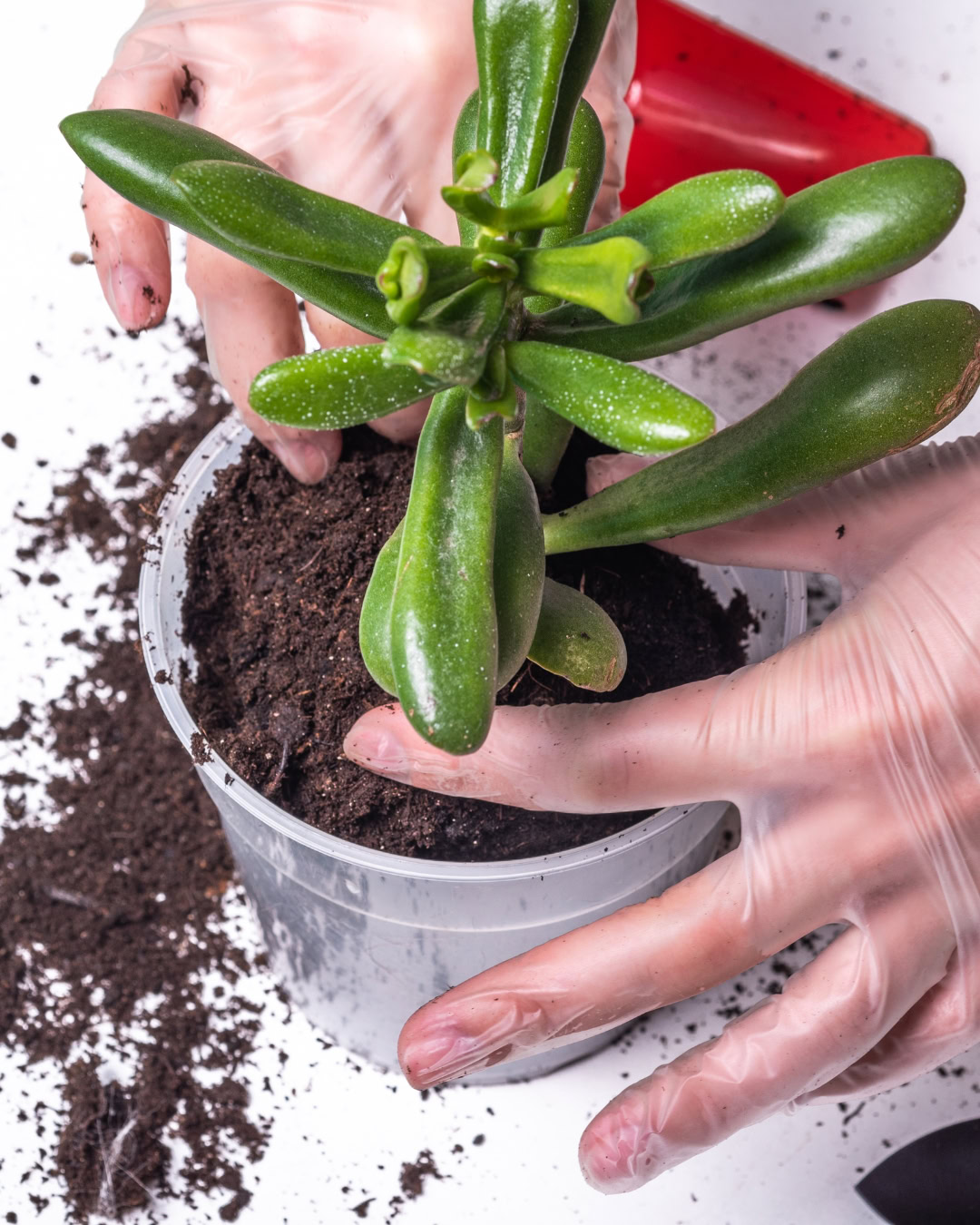
- Repotting: As it grows, the heavy, succulent canopy can tip over lightweight plastic pots. Repot every two or three years into larger, heavier clay or ceramic containers, preferably wider than they are deep, to ensure physical stability for the plant.
How to Propagate Jade Plant
Stem cuttings are the fastest way to propagate Jade Plant. To do this, choose a healthy stem about 10 to 15 cm long and make a clean cut with sterilized pruning shears or a sterile blade. Remove the leaves from the last 5 cm at the base of the stem and let it rest in the shade, in a dry, well-ventilated place, for 3 to 7 days. This healing period is essential so a firm film (callus) forms over the cut, preventing fungi and soil bacteria from entering. After this period, plant the base in a sandy growing medium and mist lightly with water, avoiding heavy watering during the first 10 days to encourage the development of the first roots.
Another option is leaf propagation, widely used to produce many new plants. Remove a mature, healthy leaf with a gentle sideways twisting motion, making sure the base of the leaf comes off completely intact, without tearing. Let the leaf callus in the shade for 2 to 3 days and then simply lay it horizontally on the surface of a moist sandy growing medium, lightly touching the base of the petiole to the soil. Keep it in a spot with bright, indirect light. Within a few weeks, fine pink roots and delicate miniature shoots will begin to emerge from the base of the leaf, giving rise to a new, perfect Jade Plant.
Botanical Description of Crassula ovata
Jade Plant is a succulent, evergreen, upright, densely branched shrub that can reach 1.0 to 1.8 meters in height, although century-old specimens in its habitat can reach up to 3 meters. Its main trunk is sturdy and thick, reaching up to 20 cm in diameter at the base. When young, the stem is light green and photosynthetically active; with age, it undergoes suberization, developing a grayish or brown bark marked by horizontal and ring-like leaf scars that resemble the texture of an old trunk.
Its leaves are opposite, arranged decussately (crossed pairs at 90-degree angles), sessile or with a very short petiole. The leaf blade is obovate to elliptic, measuring 3.0 to 9.0 cm long by 2.0 to 4.0 cm wide, with a glabrous, succulent, and extremely glossy texture, in a deep jade-green tone. The leaf margins are entire and often take on a reddish or purplish color under intense sun stress or cold, due to anthocyanin production.
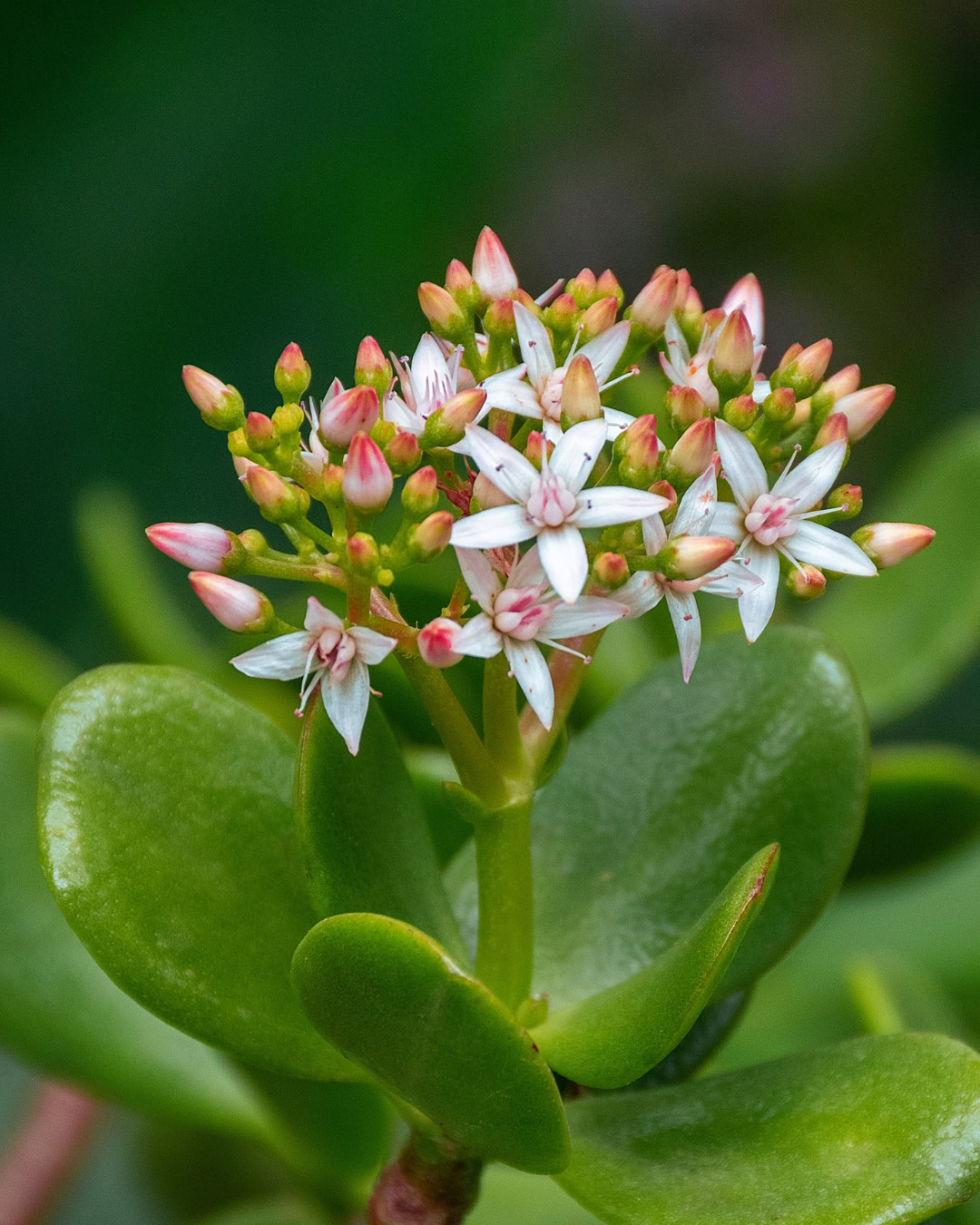
One anatomical detail is the presence of hydathodes (specialized water pores), which appear as tiny dots on the leaf surface and help with atmospheric moisture absorption and guttation. The inflorescences are terminal, formed by compact terminal corymbose cymes 5.0 to 10 cm in diameter. Its flowers are hermaphroditic, actinomorphic, and pentamerous (with radial symmetry and a five-part structure), measuring between 1.2 and 1.5 cm in diameter, with white to pale pink lance-shaped petals, stamens with purple anthers, and a superior ovary with five free carpels.
The flowers give off a sweet fragrance during the day. The fruits are dry follicles that split open, releasing tiny seeds dispersed by the wind (anemochory). The species uses Crassulacean Acid Metabolism (CAM). This means it opens its stomata primarily at night to capture CO2, conserving water during the day.
Main varieties and cultivars
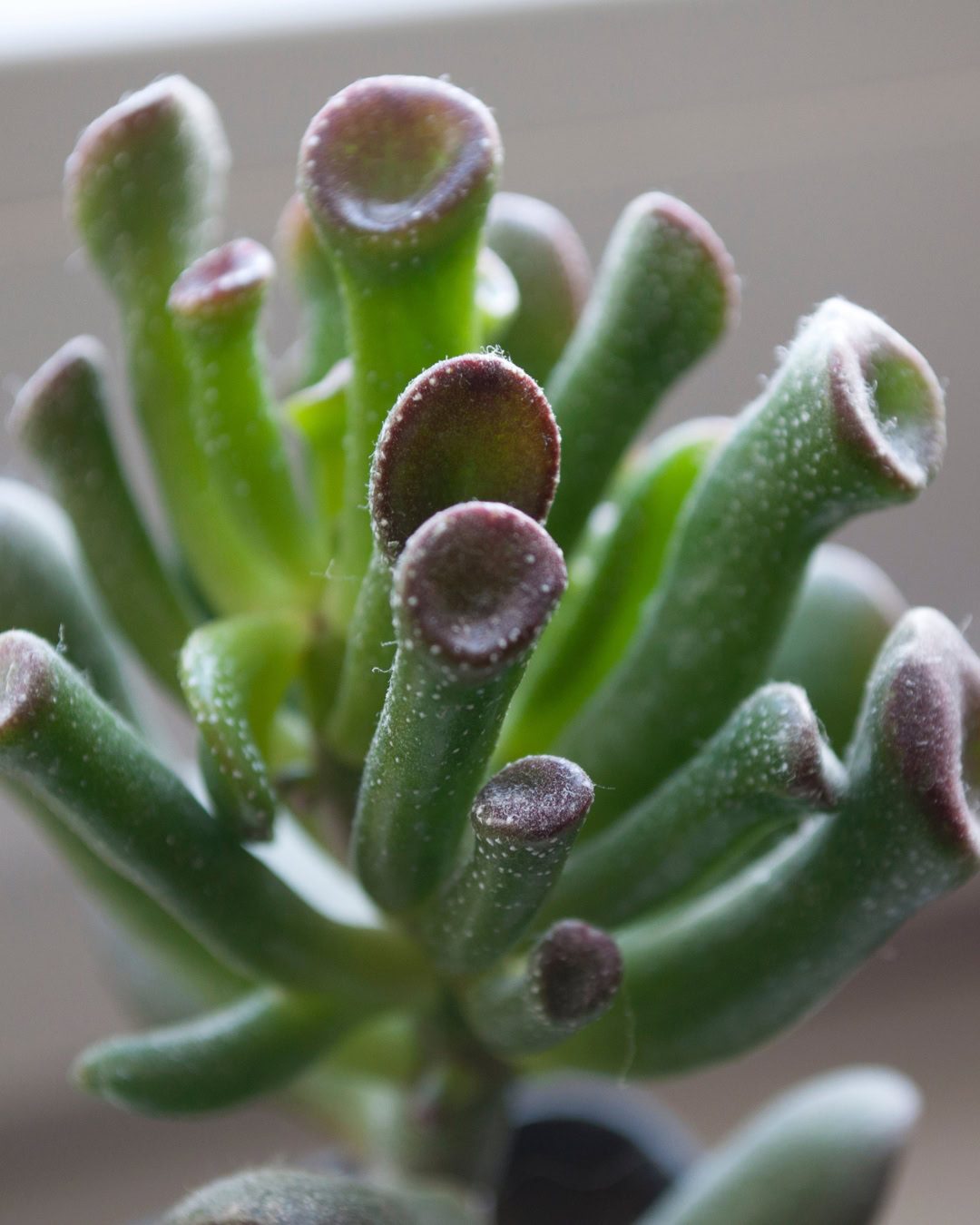
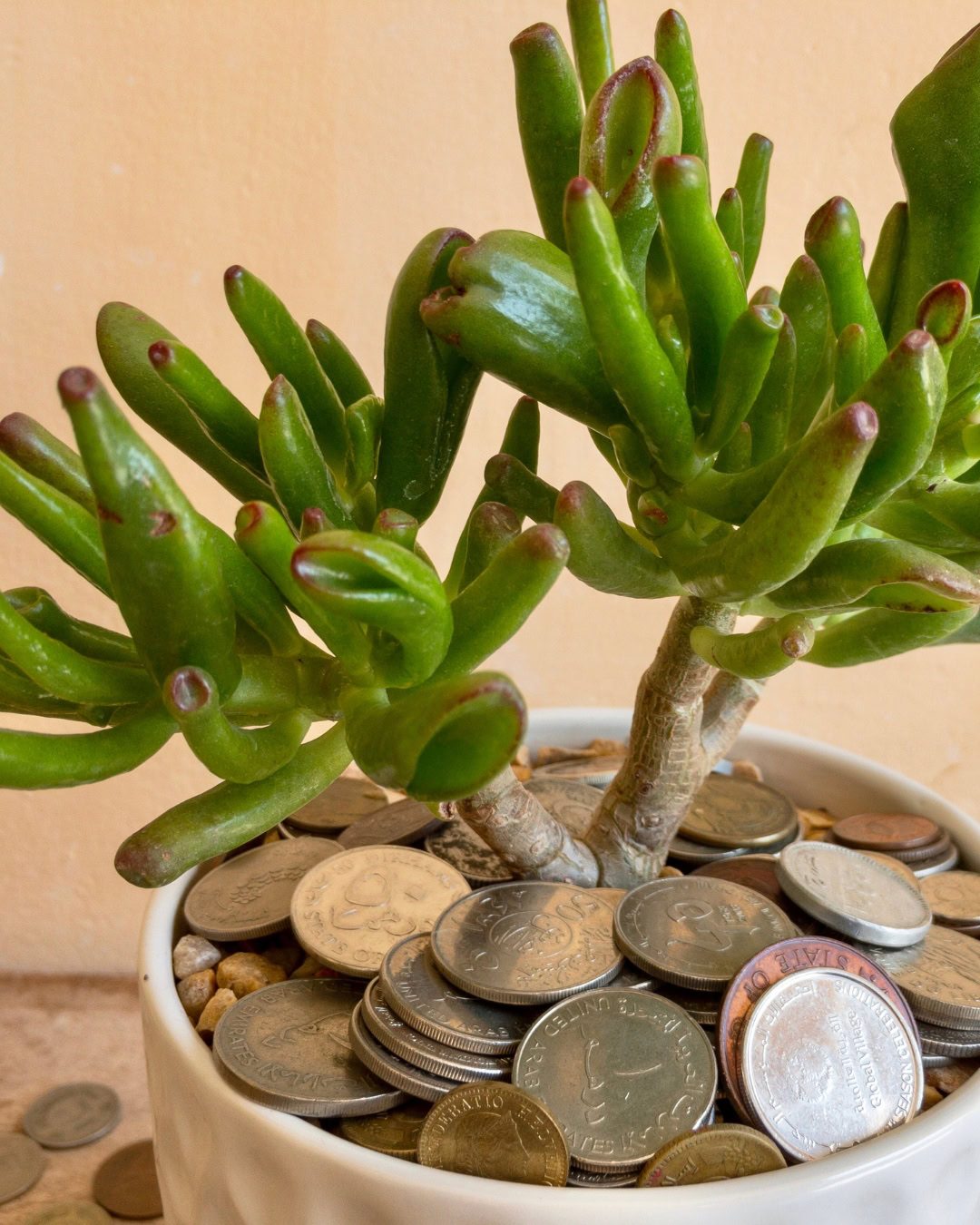
- Crassula ovata ‘Gollum’: Commonly known as ‘Shrek’s ear,’ it has modified, tubular, elongated leaves with a truncated, concave tip that turns reddish in full sun. It grows slightly more slowly.
- Crassula ovata ‘Hobbit’: Similar to ‘Gollum,’ but its leaves are not fully tubular; they curve backward with the margins only partially fused, resembling small spoons or rabbit ears.
- Crassula ovata ‘Hummel’s Sunset’: Awarded the prestigious Award of Garden Merit by the Royal Horticultural Society, this cultivar displays spectacular variegated foliage with golden-yellow and orange tones and bright red margins in fall and winter.
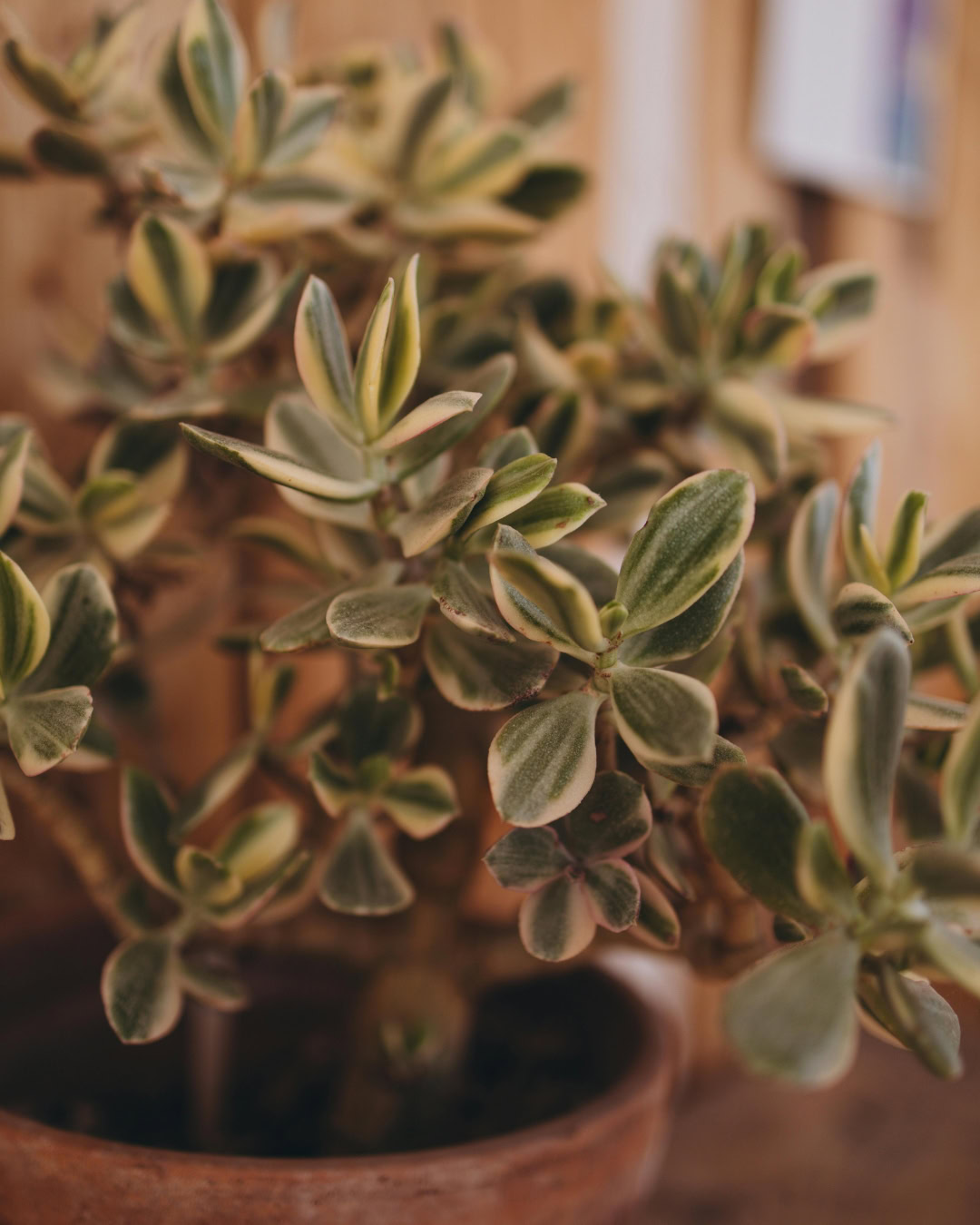
- Crassula ovata ‘Tricolor’: Features leaves with longitudinal stripes in cream white, light green, and hot pink edges. It needs bright filtered light to keep its colorful pattern, but it burns easily in harsh direct sun.
- Crassula ovata ‘Crosby’s Compact’: A dwarf variety with leaves about half the standard size for the species and very dense growth. Under controlled stress, it develops an intense, uniform red-purple color.
Pests, diseases, and solutions
Despite being tough, the Jade Plant can suffer from mealybugs, especially in stuffy, poorly ventilated spaces or when overfertilized. They settle in leaf axils and young stems, sucking sap and encouraging sooty mold. Control can be done by hand removal using cotton swabs with 70% isopropyl alcohol. For larger infestations, spray neem oil combined with potassium soap, always outside of strong sun hours.
Root and crown rot is the most serious problem, almost always caused by too much water and poorly drained potting mix. The tissues turn dark, become soft, and may collapse quickly. Stop watering, remove and discard the rotted parts, and if the base is compromised, save only healthy stems for replanting as cuttings in fresh, dry, well-drained mix. Fungicides can help in early cases, but they do not replace fixing drainage.
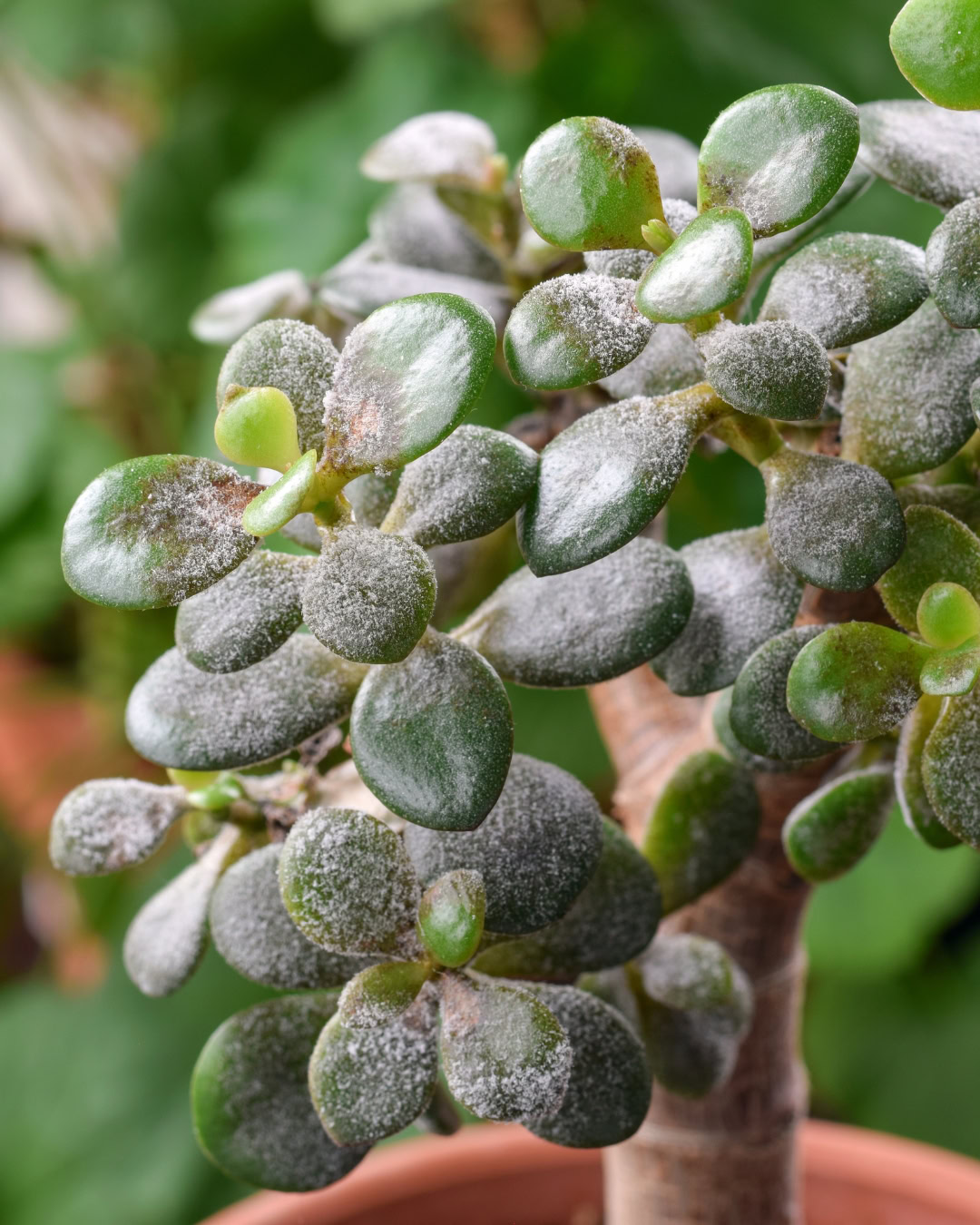
Powdery mildew can appear in humid, shaded, and poorly ventilated spots, forming a whitish film on the leaves. To control it, move the plant to a brighter, airier location, avoid wetting the foliage, and, if needed, use copper-based products or soluble sulfur, following the manufacturer’s instructions.
It is also common to see white crusts along the leaf margins, which do not always indicate a pest. On the Jade Plant, these residues can be mineral salts excreted by hydathodes, especially when watering is done with hard water or water rich in salts. Unlike mealybugs, they do not have a cottony look. To reduce the problem, use filtered, rested, or rainwater.
Fun facts
The Jade Plant carries a rich cultural and symbolic history. Known worldwide as the “lucky plant” or “money tree,” it is associated with prosperity, abundance, financial stability, and steady growth. In Feng Shui, its rounded, glossy, fleshy leaves resemble small jade coins, which is why the species is often placed near the entrance of homes, stores, and offices as a symbol of good opportunities and positive energy flow.
From a spiritual point of view, the meaning of the Jade Plant is tied to the idea of building wealth with patience. Because it is a long-lived, resilient, slow-growing plant, it also represents consistency, protection, renewal, and maturity. For this reason, it is often given as a gift for grand openings, housewarmings, business launches, and new career chapters. More than magically “attracting money,” the Jade Plant symbolizes prosperity built little by little and in a steady way, like the plant’s own growth.
Historically, the species also has ethnobotanical uses among Indigenous peoples of South Africa, such as the Khoikhoi. The roots were traditionally harvested, grated, and cooked to be eaten with sour milk as an energy-rich food. In traditional medicine, the leaves were also boiled in milk to treat dysentery and chronic diarrhea, and were applied directly to the skin as poultices for calluses, wounds, and inflammatory skin conditions. These uses are part of traditional knowledge and should not replace medical advice.