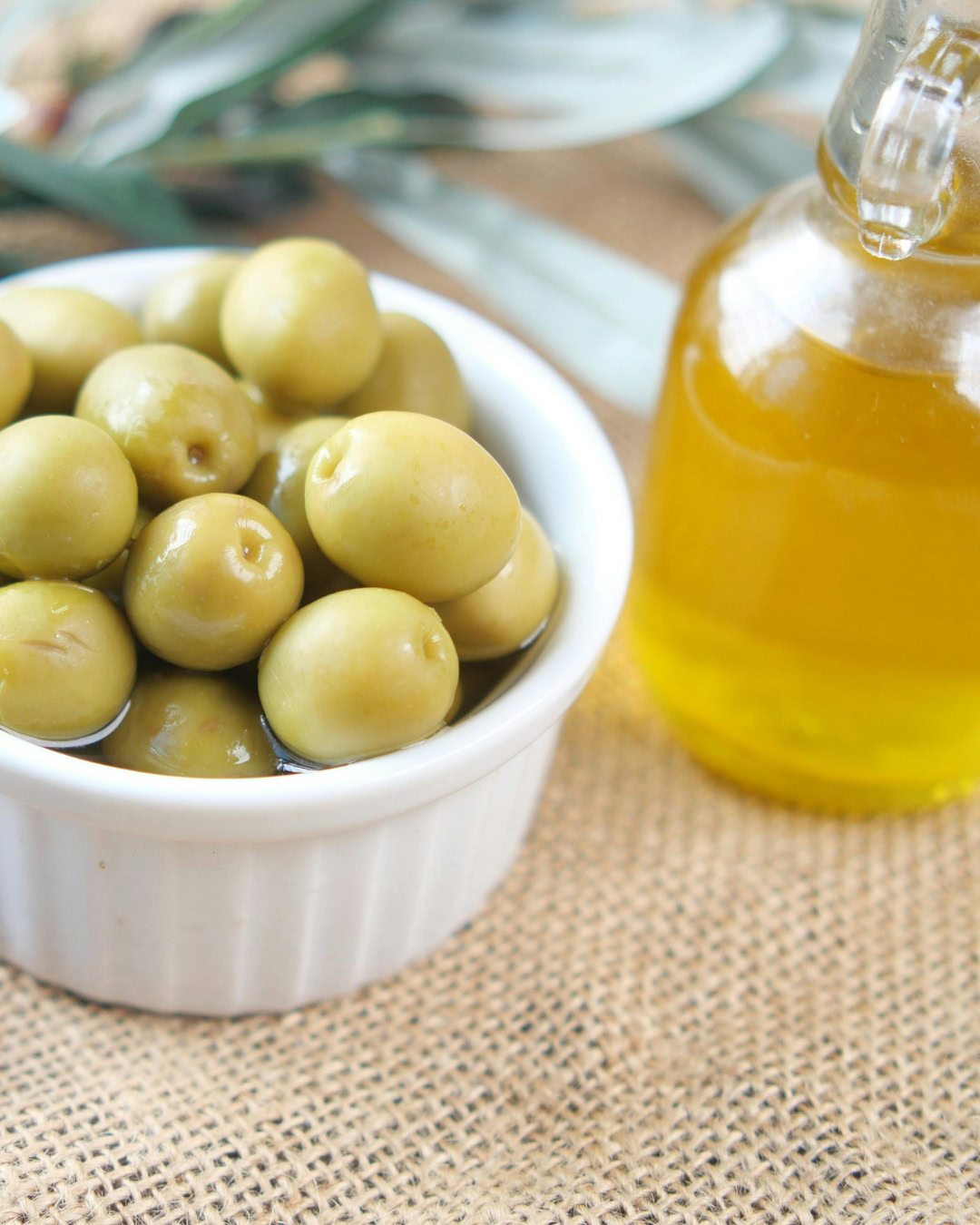
The Olive Tree (Olea europaea) is a fruit-bearing, evergreen, and ornamental tree, cultivated for millennia for the value of its olives, its oil, and its own striking presence in the garden. Its greatest landscaping charm is not a showy bloom, but the combination of a sculptural, twisted trunk, an airy canopy, and gray-green foliage that catches the light and creates a very particular silvery effect. By area planted, the olive tree is among the most widely cultivated fruit trees in the world.
In the garden, it can be grown both for its beauty and for the chance to harvest olives, as long as it receives full sun, very well-drained soil, and, ideally, a distinct winter period to encourage flowering. It is a slow- to moderate-growing plant, extremely long-lived and tough, but it is not suited to every situation: in shaded, damp, or overly tropical spots, it will produce plenty of leaves but tends to set little fruit.
Origin, Habitat, and Etymology
The olive tree’s origin is associated with the eastern Mediterranean, especially the Levant region, which corresponds to areas of present-day Lebanon, Syria, Israel, Palestine, Jordan, Cyprus, and southern Turkey. It is in this dry, sunny Mediterranean context that the species was domesticated and selected over millennia, from wild forms known as oleasters or wild olives. Its native environment includes dry slopes, calcareous or rocky soils, open woodlands, and Mediterranean shrub formations such as maquis and garrigue.
This habitat belongs to the sclerophyllous Mediterranean vegetation, made up of species with persistent, stiff, leathery leaves adapted to dry summers, high sun exposure, wind, and soils of moderate fertility. The olive’s narrow leaves, with their firm texture and silvery underside, are xeromorphic features—that is, morphological adaptations to reduce water loss. For this reason, in cultivation, the species performs best in open, sunny, well-drained, and well-ventilated locations.
The genus name Olea comes from Latin and refers to the olive tree, the olive, and the oil obtained from its fruit. The specific epithet europaea means “European,” reflecting the species’ strong historical association with Mediterranean Europe and its agricultural culture, even though its oldest agricultural origin is tied to the eastern Mediterranean.
Landscaping Uses of the Olive Tree
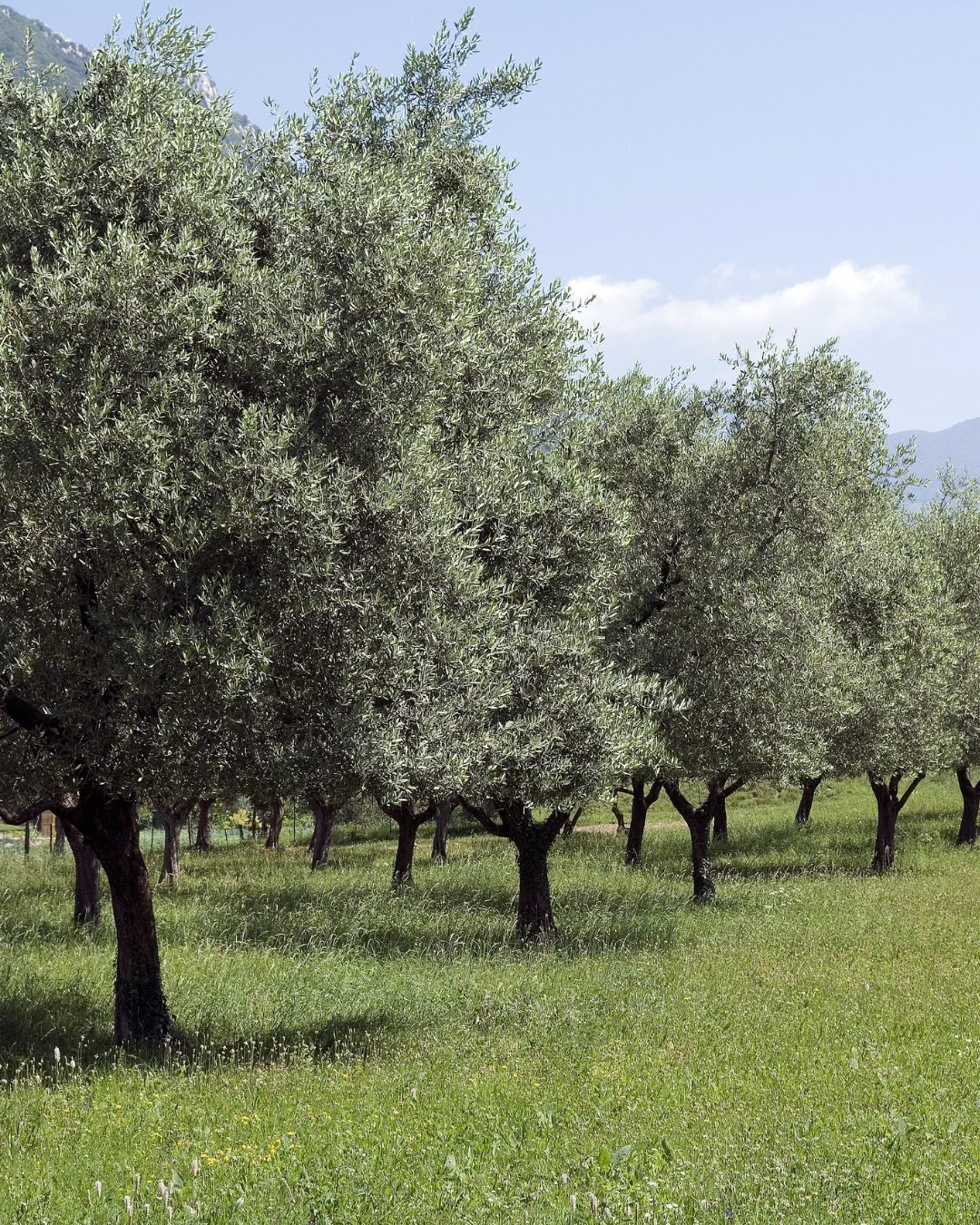
In landscaping, the olive tree is used mainly as a small to medium ornamental tree with strong sculptural value. It does not cast dense shade like an oak or a maple; its canopy is more filtered, light, and dynamic, letting light pass through and pairing well with dry gardens, courtyards, entryways, contemporary gardens, Mediterranean settings, sophisticated rural designs, and compositions with natural stone. The grayish, thickened, irregular trunk gains character with age, and that is precisely why mature or old specimens tend to have high ornamental value.
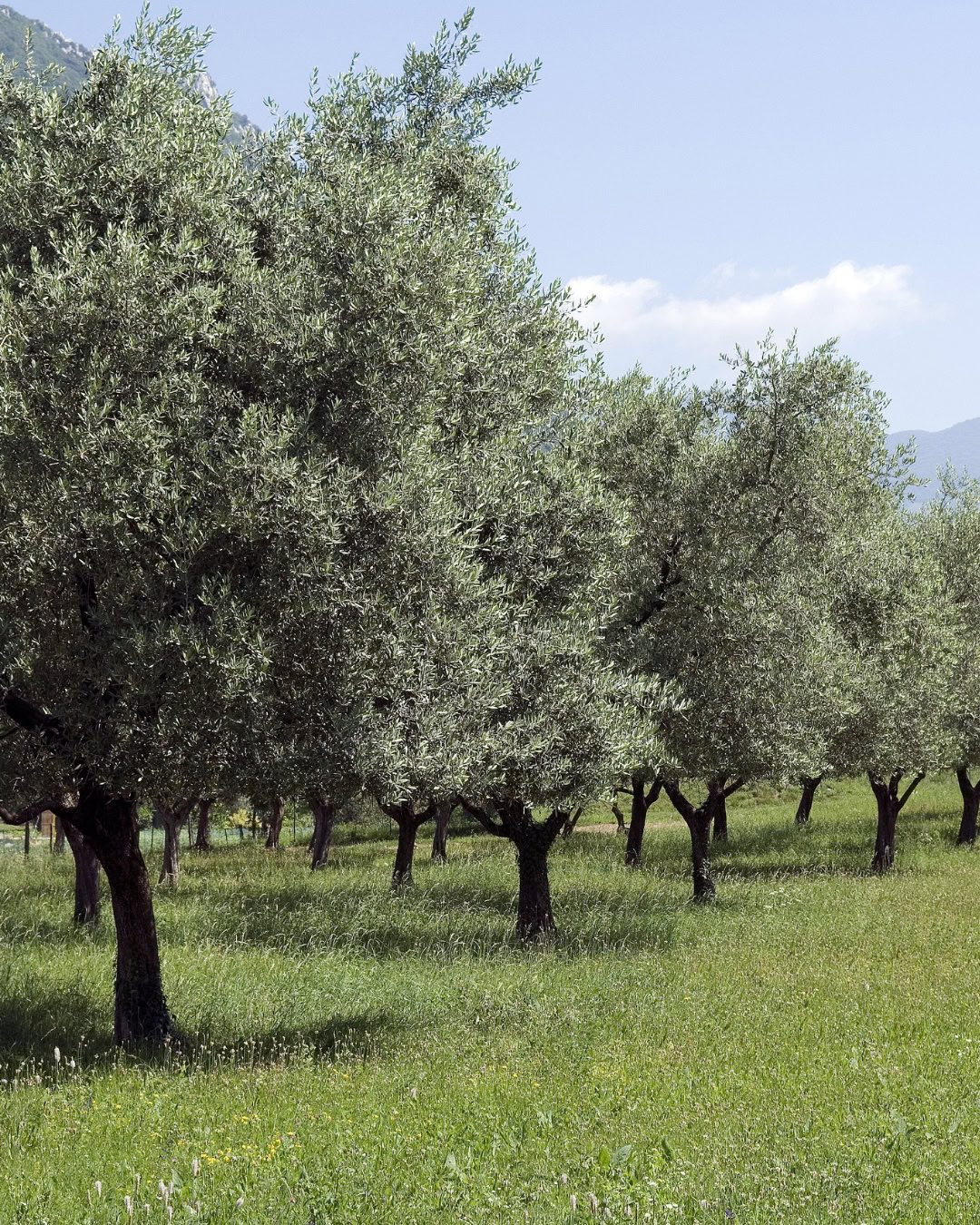
As a focal point, it should be given enough room for the canopy to develop without competition. In residential gardens, it is recommended to plant the olive tree as a stand-alone specimen at least 13 to 20 feet (4 to 6 m) from buildings, walls, pools, and very sensitive paving. Although it is not one of the most aggressive trees when it comes to surface roots, it forms a strong, wide root system and should not be treated as a shrub for a narrow bed. In rows, it can be spaced 10 to 16 feet (3 to 5 m) apart, depending on the desired effect; for small groves or ornamental orchards, a spacing of 16 to 23 feet (5 to 7 m) between plants favors light, ventilation, pruning, and harvesting.
The olive tree pairs especially well with species that have fine, gray, blue-toned, or aromatic foliage, such as lavender (Lavandula dentata), rosemary (Salvia rosmarinus), Mexican bush sage (Salvia leucantha), santolina (Santolina chamaecyparissus), agapanthus (Agapanthus africanus), fortnight lily (Dietes bicolor), and ornamental grasses such as fountain grass (Cenchrus setaceus) and dwarf pampas grass. The logic here is simple: sun-loving plants with good drainage and lower water needs create a coherent grouping. The classic mistake is planting an olive tree in a damp bed, surrounded by thirsty tropicals and a substrate far too rich in organic matter. The tree will try to cooperate, but it can’t work a Mediterranean miracle in a gourmet swamp.
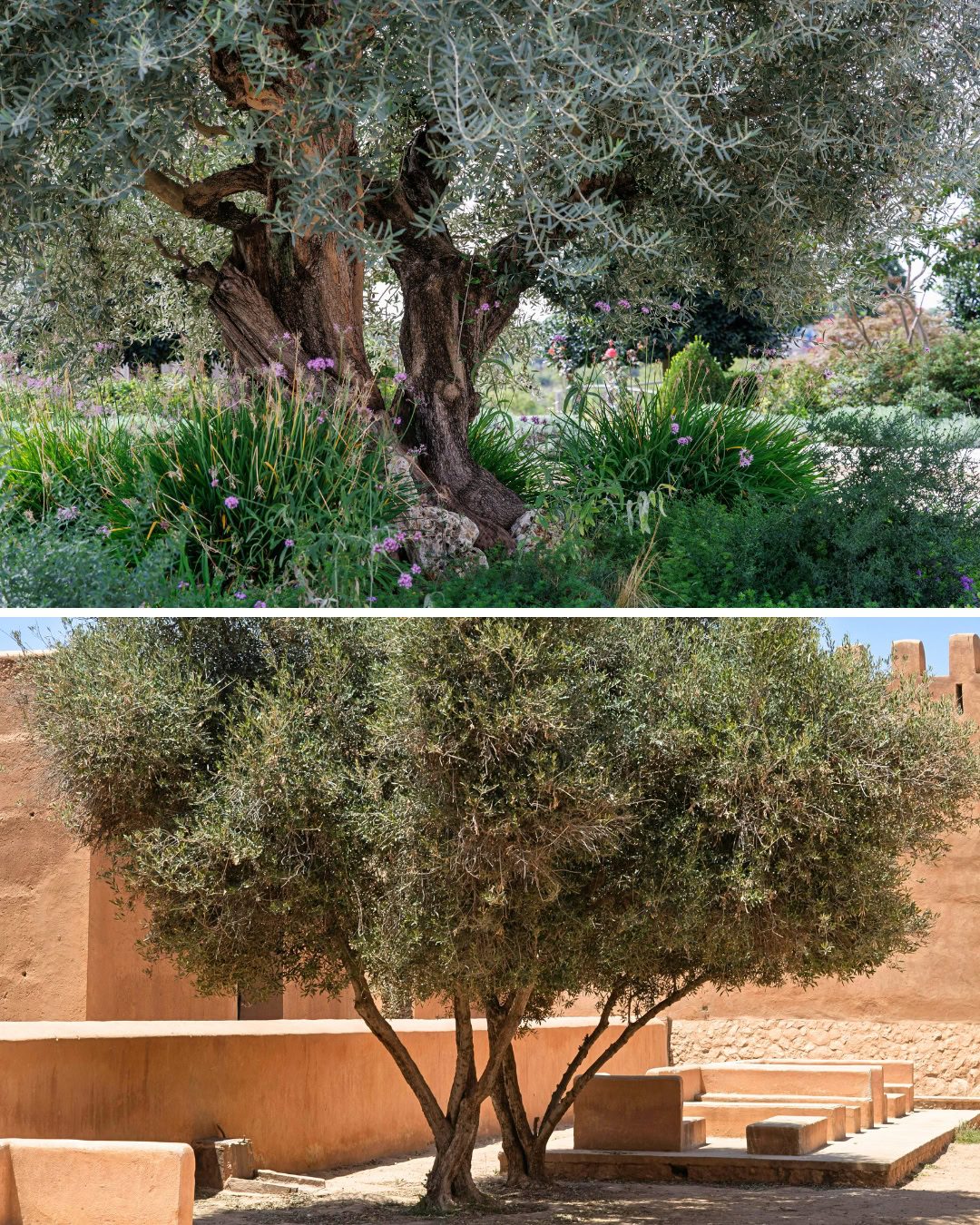
In recent years, the demand for centuries-old olive trees in high-end landscaping has raised an important warning: not every old tree on the market has a legitimate origin. Before buying, require an invoice, clear provenance, grower or nursery registration, import documentation when applicable, and a responsible technical professional. An old olive tree can be an extraordinary piece in the garden, but a monumental tree with no paperwork is a problem planted with a crane.
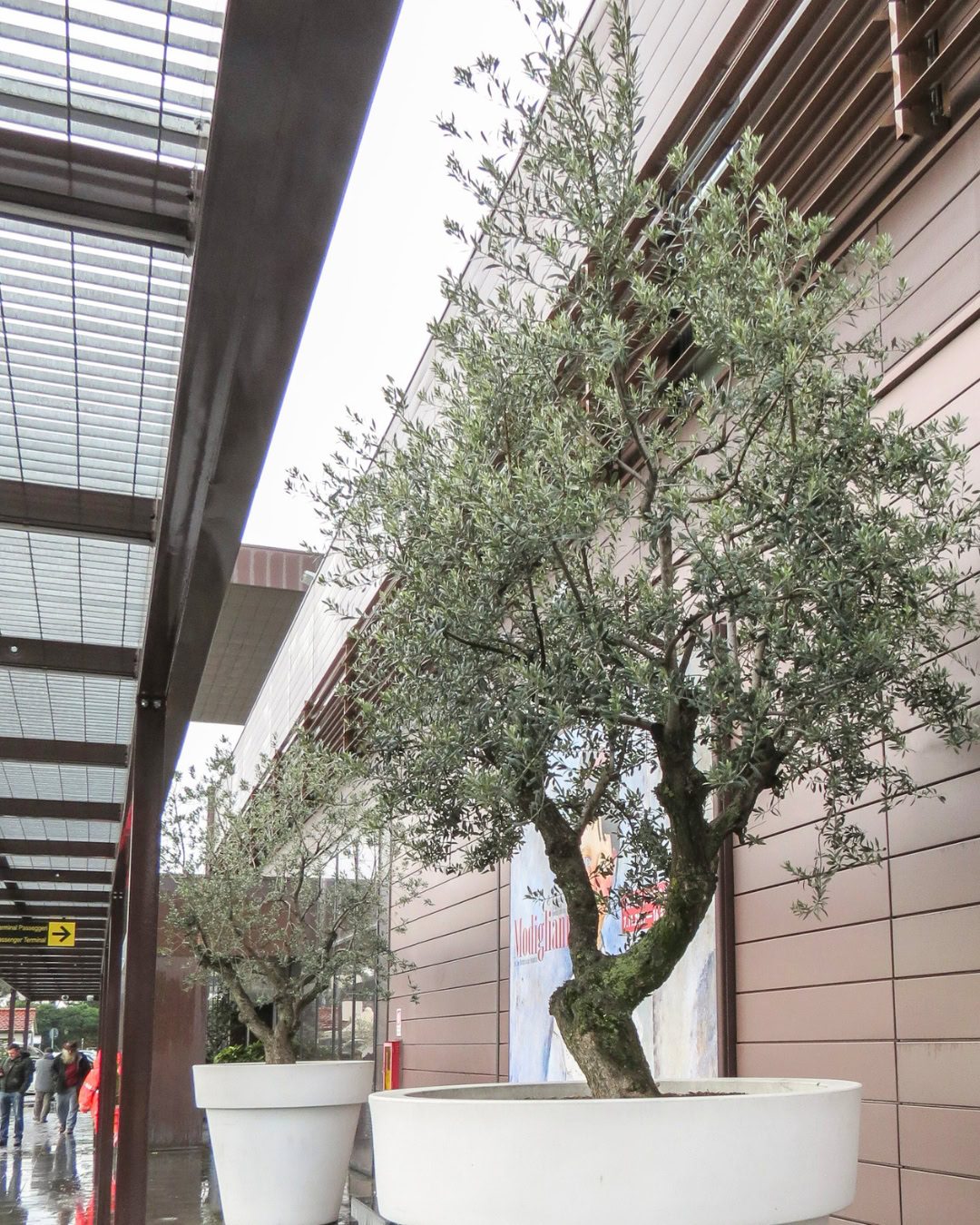
In containers, the olive tree performs very well as long as it gets direct sun and a sufficient volume of substrate. Pots of 16 to 26 gallons (60 to 100 L) are the starting point for well-formed young specimens; larger plants need proportionally sized, heavy, stable containers, preferably ceramic, concrete, sturdy polyethylene, or another material that won’t tip over in the wind. On balconies and patios, it is excellent for creating an elegant, permanent look, although producing olives in a pot requires more careful conditions, as we’ll see below.
The main landscaping contraindication is using it in damp, shaded, or compacted-soil spots. It is also wise to avoid planting it immediately beside paths, parking areas, light-colored decks, and pools when the cultivar is fruit-bearing, since dropping olives can stain paving and create seasonal mess. For gardens where the goal is purely ornamental, low-fruiting cultivars or plants kept in check by pruning can greatly reduce this nuisance.
How to Care for the Olive Tree: Growing Guide
- Light: Grow in full sun, with at least 6 hours of direct sun per day; 8 hours or more is ideal. Light is decisive for forming a compact canopy, encouraging flowering, and allowing fruit to ripen. In very hot, dry regions, young potted plants may appreciate light protection from the harshest afternoon sun in the first few weeks after transplanting, but mature olive trees need full sun to produce well.
- Garden soil: The soil should be deep, well-drained, and aerated. The olive tree tolerates rocky, sandy, slightly calcareous soils of moderate fertility, but it suffers in compacted clay soils prone to waterlogging. Before planting, dig a wide hole and test the drainage: if water remains pooled for many hours, plant on a mound, raise the bed, or choose another spot. Soils with a pH between 6.5 and 8.0, from nearly neutral to moderately alkaline, are usually suitable.
- Container substrate: Use a mineral, light, free-draining mix. A practical blend might include 40% good-quality topsoil or sifted sandy soil, 25% washed coarse sand, 20% composted pine bark or well-cured compost, and 15% gravel, perlite, pumice, or crushed expanded clay. The pot needs large drainage holes and a functional drainage layer. Correct the substrate pH with dolomitic lime and avoid leaving a saucer of standing water under the pot.
- Watering: In the first year, watering should be deep and regular to help the plant put out roots. During hot, dry spells, water 2 to 3 times a week, soaking the entire root ball and letting the soil dry partially between waterings. Once established in the garden, the olive tree tolerates long dry spells, but supplemental irrigation during flowering, fruit set, and olive filling improves vigor and reduces fruit drop. In a pot, the plant dries out faster; water when the first inch or two (a few centimeters) of substrate is dry.
- Climate: It develops best in a subtropical, mild temperate, or high-altitude tropical climate, with a noticeable winter and a sunny summer. The mature olive tree tolerates moderate cold and light frosts, but hard frosts can burn new growth, harm flowering, and reduce the crop. In hot, humid tropical regions without enough cold, the tree may grow but tends to flower and fruit poorly. Some winter chill is important for floral induction in many cultivars.
- Maritime exposure and wind: The olive tree tolerates wind and light salinity well, so it can be used in coastal areas, as long as the soil is well-drained and does not stay wet from excess rain or a high water table.
- Air humidity: It prefers dry to moderately humid air and good circulation. Stuffy, shaded environments with frequent wetting of the leaves favor fungal diseases, especially leaf spots. In sprinkler-irrigated gardens, direct the water to the soil and avoid wetting the canopy at night. In pots, place the plant in a well-ventilated spot, not pressed against a damp wall or in a dark corner.
- Fertilizing: For ornamental growing, fertilize sparingly. In early spring, apply a small amount of well-cured manure and a balanced fertilizer or one formulated for fruit trees, such as NPK 10-10-10 or 04-14-08, following the manufacturer’s rate. In pots, slow-release fertilizers such as Osmocote or Basacote make management easier and reduce salinity spikes. For olive production, the ideal approach is to adjust fertilizing based on a soil test. Excess nitrogen produces lots of new growth, a dense canopy, and less fruiting. As organic alternatives, use organic compost, bokashi, and bone meal in modest doses, keeping in mind that excess organic matter is harmful to the olive tree.
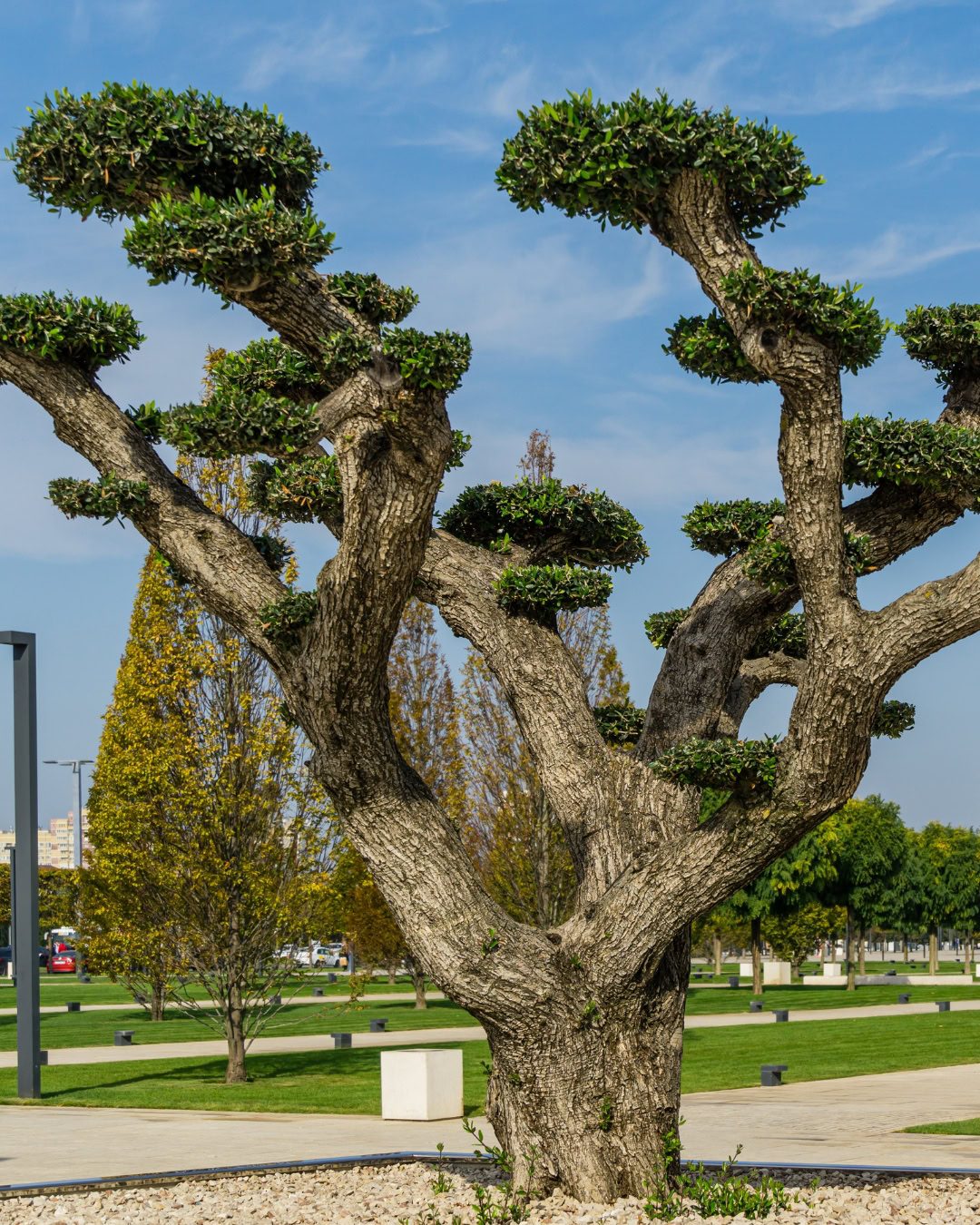
- Pruning: Pruning should balance form, ventilation, and production. On young plants, do formative pruning to decide whether the olive tree will be trained with a single trunk, multiple trunks, or a low canopy, keeping branches well distributed and removing poorly placed shoots. On mature plants, clean out dead, crossing, broken, or inward-facing branches in late winter or early spring, preferably during a dry period. To harvest olives, don’t overdo it: the olive tree fruits mainly on branches formed the previous year, and drastic annual pruning removes part of the productive potential. The ideal is to open the canopy to let light in, renew part of the branches, and keep the tree at a height that is manageable for care and harvesting.
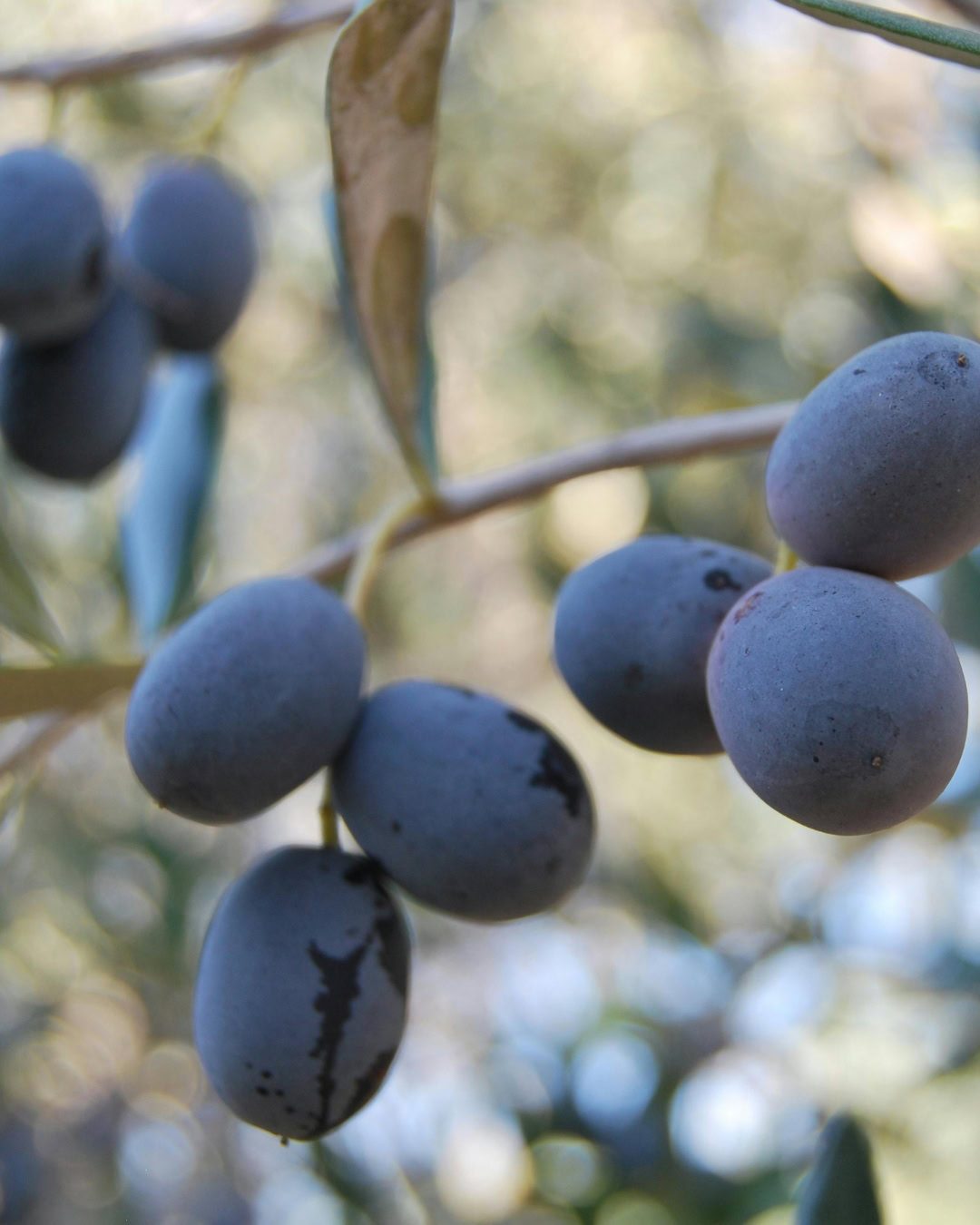
- Harvesting: The harvest point depends on the intended use. For green table olives, pick the fruit while still firm, green to greenish-yellow, before full ripening. For darker olives or for oil extraction, wait for the gradual change to purplish, violet, or black tones, depending on the cultivar. At home, harvesting can be done by hand, gently twisting the fruit off or using small shears, always taking care not to break productive branches. Freshly picked olives are intensely bitter and must be cured before eating.
- Staking: This is useful for young plants trained as small trees, especially in windy spots, tall pots, or newly planted gardens. Use flexible figure-eight ties, without squeezing the trunk and allowing some movement, since moderate sway strengthens the plant. Remove the stake once the tree is stable, usually after 12 to 18 months. A permanent stake is a crutch, not management.
- Repotting and replanting: Olive trees in pots should be repotted every 2 to 3 years, or when the substrate is compacted, depleted, or full of roots. Keep the pot proportional to the root ball, going up only one or two pot sizes at a time, to avoid an excess of wet substrate around the roots. On large plants, when changing the container isn’t possible, remove part of the surface substrate and replace it with a fresh, free-draining, lightly fertilized mix.
How to Propagate the Olive Tree
The olive tree can be propagated by cuttings, air layering, grafting, and seeds, but each method serves a different purpose. To preserve the cultivar’s characteristics—such as fruit size, oil content, growth habit, and climatic adaptation—vegetative propagation is the most advisable. Plants grown from seed are genetically variable and do not faithfully reproduce the mother plant.
Semi-hardwood stem cuttings are one of the most commonly used methods. Choose healthy branches, neither too green nor fully woody, about 5 to 8 inches (12 to 20 cm) long. Strip the leaves from the lower portion, keep a few leaves at the tip, and plant in a light substrate such as coarse sand, perlite, vermiculite, or a mix made for rooting. Using an IBA-based rooting hormone increases the success rate, especially with more difficult cultivars. The environment should have high humidity, good indirect light, and moderate warmth, with no direct sun scorching the cuttings.
Air layering is useful for obtaining larger plants that take shape more quickly. Choose a vigorous branch, remove a narrow ring of bark, wrap the area with moist sphagnum or a fibrous substrate, and cover it with plastic, keeping it moist until roots form, which can take several months. The branch is then separated from the mother plant and potted in a well-drained substrate. It is a more labor-intensive method, but useful for forming well-shaped ornamental specimens.
Grafting is used when you want to combine a productive cultivar with a vigorous rootstock or one adapted to a particular condition. For the everyday gardener, however, a plant bought from a reputable nursery remains the safest path, especially if the goal is to grow an olive tree that will actually produce olives at home.
The time to first harvest varies with the cultivar, climate, plant size, and management. Plants propagated by cuttings or grafting can begin to fruit in 3 to 5 years, with more consistent production once the canopy and roots are well established; seed-grown plants can take 8 years or more and are not recommended when the goal is predictable production.
Botanical Description of Olea europaea
Olea europaea is a woody, evergreen species, shrubby to tree-like in habit, usually 13 to 33 feet (4 to 10 m) tall in cultivation, and capable of exceeding that under favorable conditions. The canopy is rounded, irregular to broad, with dense branching when unpruned and a more open look when trained for production. The roots are vigorous, wide-spreading, and adapted to explore the soil both deeply and laterally.
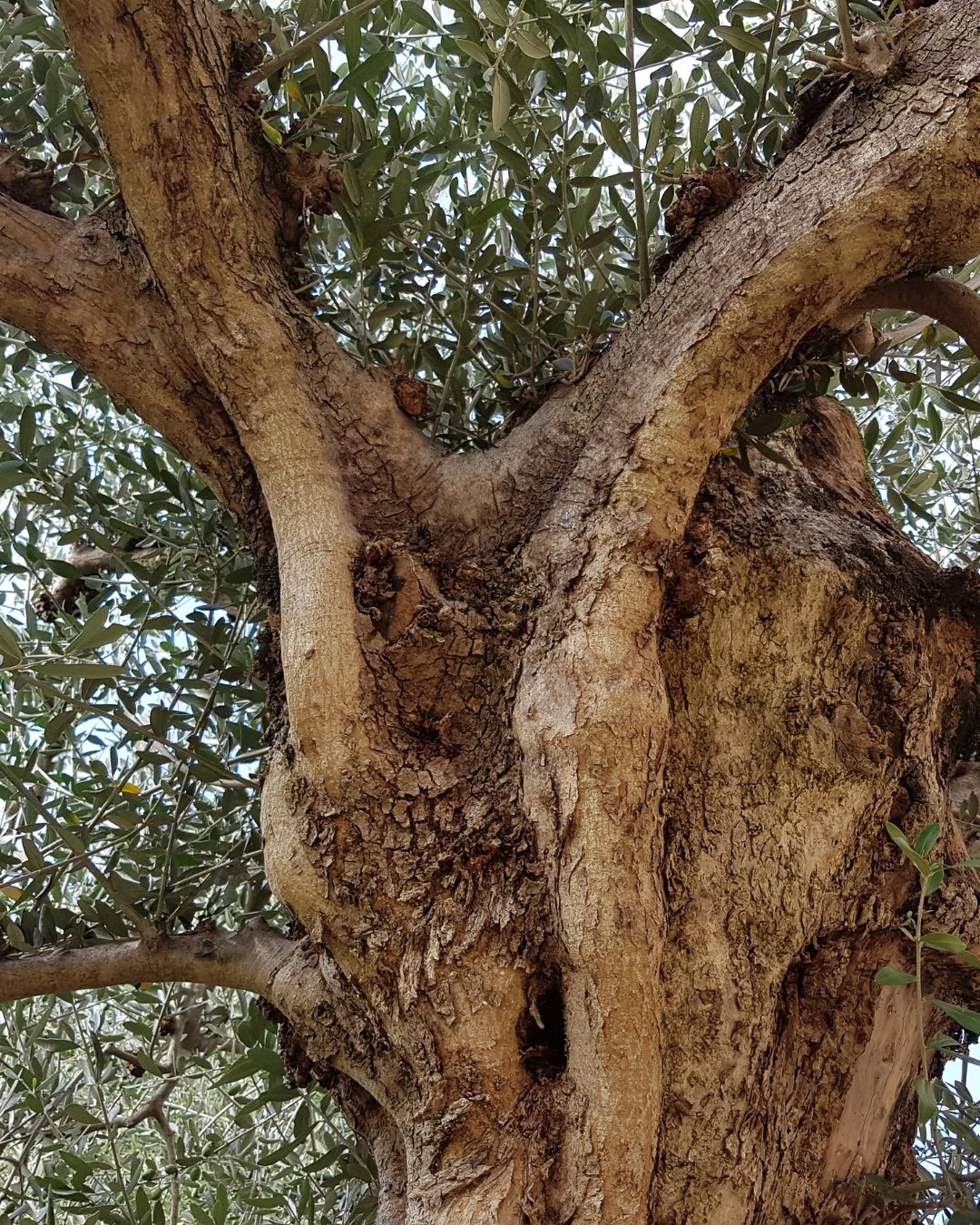
The trunk is gray to dark gray, initially smoother, becoming fissured, gnarled, twisted, and thickened with age. On old plants, it may show cavities, twists, and sculptural shapes, without this necessarily indicating disease. Young branches are thinner, angular to slightly rounded, gray-green or light brown, and give rise to the productive growth of the following cycle.
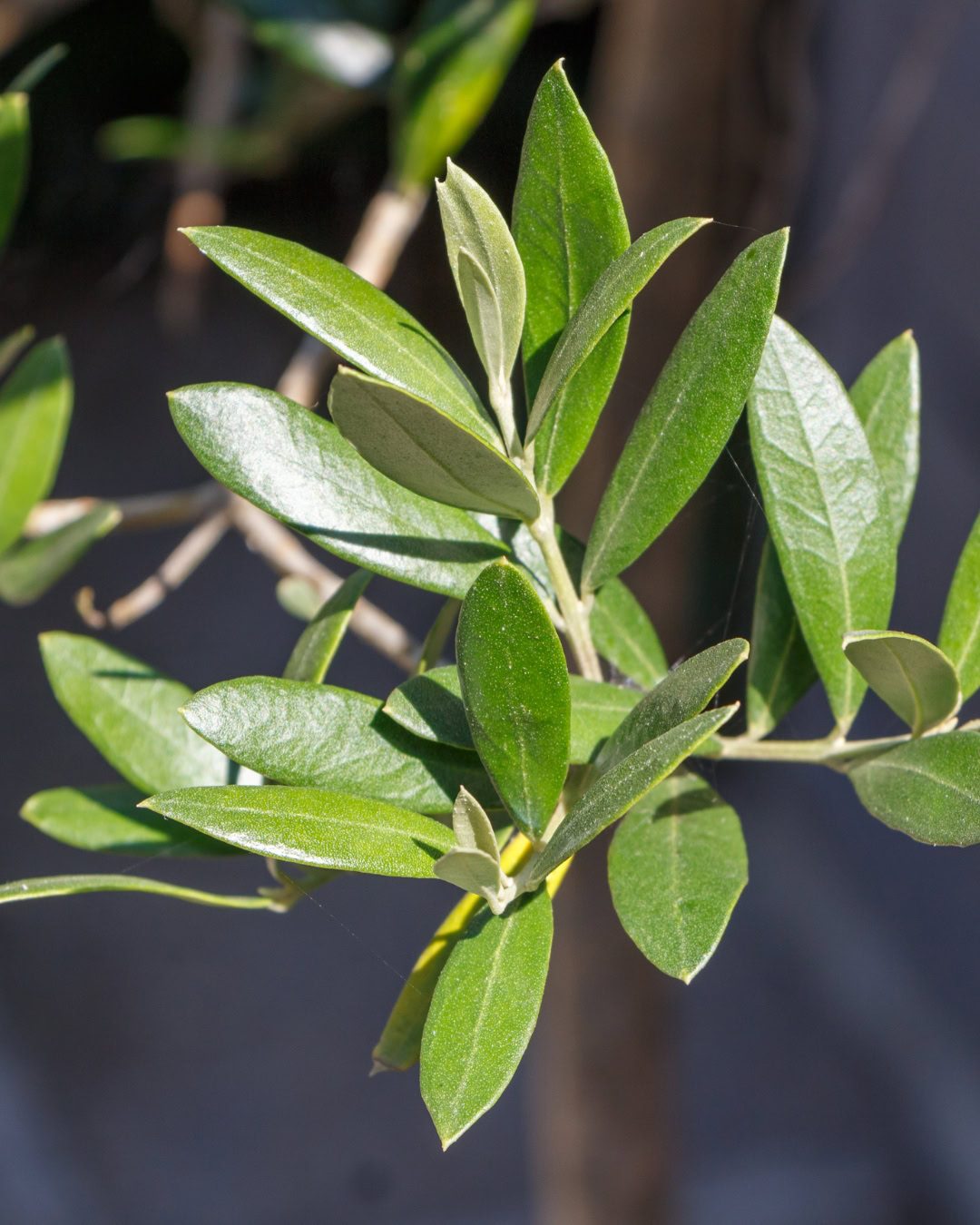
The leaves are simple, opposite, and persistent, with a short petiole and leathery texture. The blade is narrow, elliptic to lanceolate, usually 1 to 3 inches (3 to 8 cm) long and about 0.2 to 0.8 inches (0.5 to 2 cm) wide, with an entire, slightly revolute margin—that is, rolled a bit downward. The upper surface is gray-green, matte to slightly glossy, while the underside is paler and silvery.
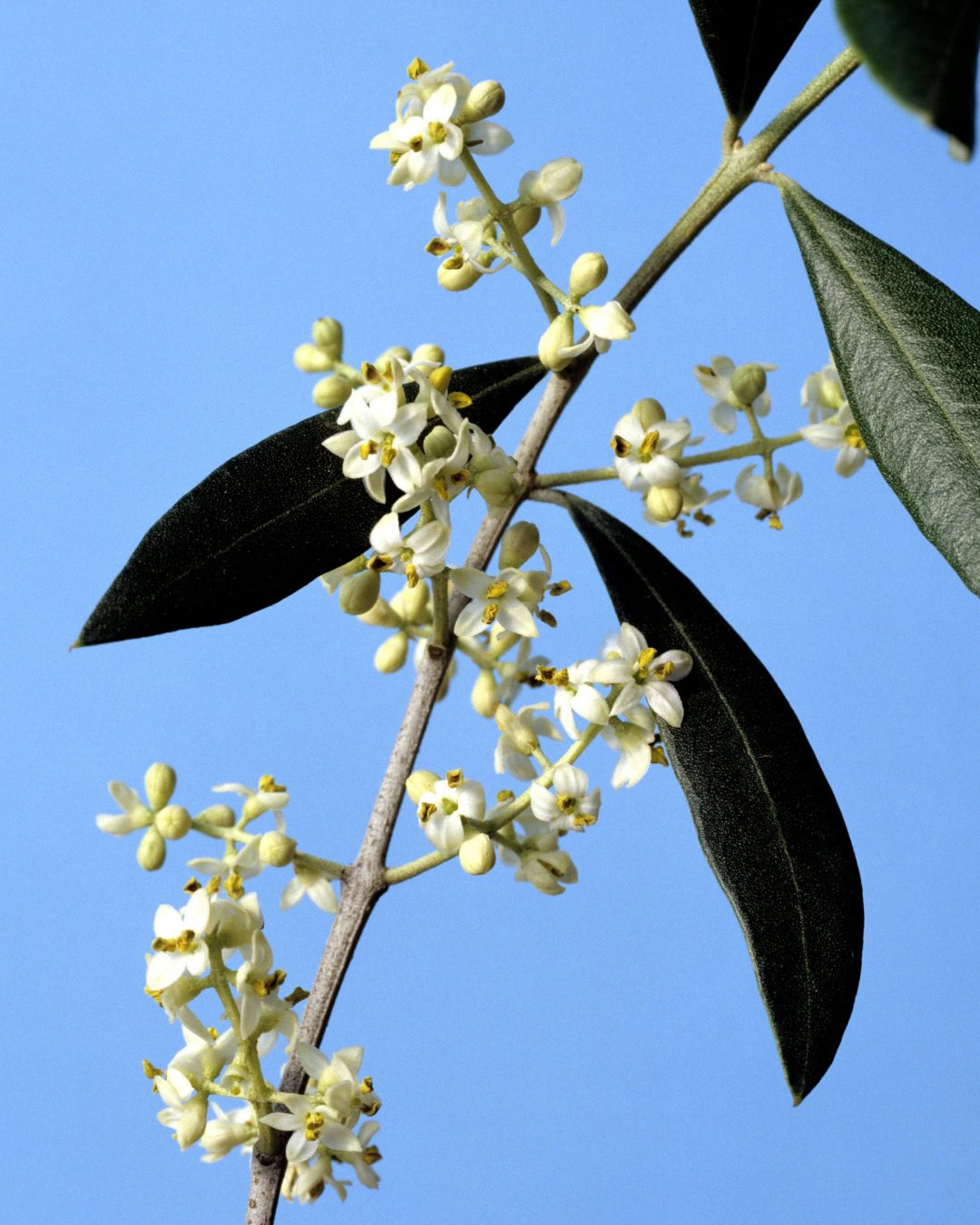
The inflorescences appear as axillary panicles or racemes, formed in the leaf axils, mainly on the previous year’s branches. The flowers are small, numerous, cream-white to yellowish, of little ornamental importance but decisive for production. They have a short calyx, a corolla with four lobes, two stamens, and a superior ovary with a bifid stigma.
The species has hermaphroditic flowers, with both male and female structures, and can also produce functionally male flowers in variable proportions, depending on the cultivar and environmental conditions. Pollination is predominantly anemophilous—that is, carried out by the wind. Many cultivars have some degree of self-pollination, but the presence of compatible cultivars nearby usually improves fruit set and the regularity of production.
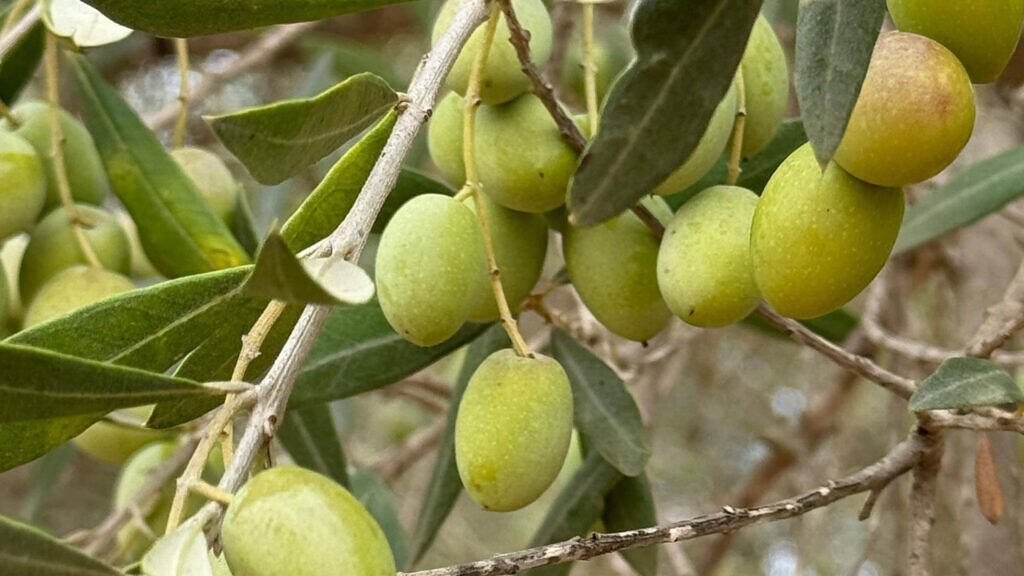
The olive fruit is an ellipsoid to oval drupe, with thin skin, fleshy, oily pulp, and a hard endocarp, commonly called the pit, that encloses the seed. The color shifts from green to purplish, violet, or black as it ripens.
Main Varieties and Cultivars
- Arbequina: A Spanish cultivar widely planted in California and across Australia, as well as in other olive-growing countries. It has a relatively compact habit, early entry into production, and small fruit, geared mainly toward oil extraction. It is a good choice for gardens and large containers when you want a fruit-bearing olive tree that’s easier to manage.
- Koroneiki: A traditional Greek oil cultivar, with small fruit and good quality potential. It tends to be vigorous and well-adapted in growing regions, but it demands sun, drainage, and proper pruning management. It is more appealing to those who want oil production than table olives.
- Arbosana: A cultivar of Spanish origin, used in modern super-high-density production systems and also suitable for smaller areas when well managed. It has moderate vigor and oil-oriented fruiting. In gardens, it should be kept in check with formative pruning so the canopy doesn’t get too dense.
- Frantoio: A well-known Italian cultivar, prized for oil production and very popular in Australian groves, and also useful as a pollinizer in some orchard arrangements. It has good ornamental value thanks to its fine canopy and its association with classic Mediterranean gardens, but it needs a suitable climate to express its productive potential.
- Mission: The historic cultivar of California, descended from trees brought by the Spanish missions, and also grown in Australia. It is dual-purpose, valued for both table olives and oil, and known for its cold hardiness and ornamental, upright habit. Availability is good through specialized nurseries, so it’s worth buying labeled plants of reliable provenance.
Pests, Diseases, and Solutions
The most common problem for olive trees in gardens is not a spectacular pest but excess water. Waterlogged soils favor root and crown rots, especially from pathogens associated with wet environments, such as Phytophthora. The signs include yellowing, leaf drop, weak new growth, dieback of tips, and general decline. The solution begins before the disease: plant high, drain well, avoid irrigating right against the trunk, and never put an olive tree in a low spot where water collects.
Among the aboveground diseases, peacock spot, also called olive leaf spot, can appear in humid, poorly ventilated conditions. It forms dark circular spots on the leaves, sometimes with a yellow halo, and can cause defoliation. To reduce the problem, keep the canopy airy, avoid wetting the leaves at night, gather up heavily affected leaves, and do light thinning pruning. In productive orchards, control may require professional guidance and the use of products registered for the crop.
Olive knot, caused by a bacterium, produces galls and swellings on twigs, branches, and wounds. The bacterium enters easily through pruning cuts and damage from frost, hail, or mechanical injury, especially in humid weather. Prevention is straightforward: prune during dry weather, disinfect tools, remove heavily affected branches, and avoid wounding the plant unnecessarily. Pruning a diseased olive tree on a rainy day is practically inviting the bacterium to open a branch office.
Scale insects can attack leaves and branches, sucking sap and encouraging sooty mold, that superficial black layer that grows over the sugary honeydew the insects excrete. Management includes frequent inspection, hand removal on small plants, jets of water, and horticultural mineral or vegetable oils in formulations made for gardening, always respecting the dose, cooler times of day, and a prior test on a small area. Controlling ants also helps, since they protect the scale insects in exchange for the honeydew.
Mites, borers, and caterpillars can show up occasionally, especially on stressed plants. The best control is keeping the olive tree in the right growing conditions: sun, drainage, balanced nutrition, and a well-ventilated canopy. The olive fruit fly (Bactrocera oleae) is one of the main olive pests in Mediterranean regions and in California, attacking the fruit, but its relevance depends on local occurrence. In home growing across the United States and Australia, it’s worth watching for punctured fruit, premature drop, and larvae, but any significant suspicion in a productive area should be assessed by technical support, since fruit-tree pests carry phytosanitary implications.
Fun Facts
The olive tree is one of the most symbolic agricultural trees in human history. From it we get olives and the precious olive oil, which humans learned to extract back in the Neolithic—the oldest archaeological records of oil production are about 8,000 years old—for use as food, fuel, and ointment, which made the olive tree revered by many peoples. These are extremely long-lived trees, capable of exceeding 2,000 years of age. The historical association of the olive tree with peace, resilience, fertility, and longevity did not arise by chance: few plants combine useful production, long life, and the ability to resprout even after severe pruning.
The intense bitterness of fresh olives comes from phenolic compounds, especially oleuropein. That is why they go through curing in brine, water, alkaline solutions, or other traditional processes before reaching the table. And worth knowing: not every black olive ripened on the tree—some are darkened by specific industrial processing techniques.
Olive leaves also have traditional uses in infusions and extracts, but this should not be confused with authorization for medicinal use without good judgment. People being treated for blood pressure or diabetes, or who are pregnant, breastfeeding, or taking medication, should talk to a healthcare professional before consuming concentrated extracts. In the garden, the olive tree is best appreciated as a tree: sturdy, water-thrifty, and far more beautiful when we don’t try to turn it into a tropical plant.