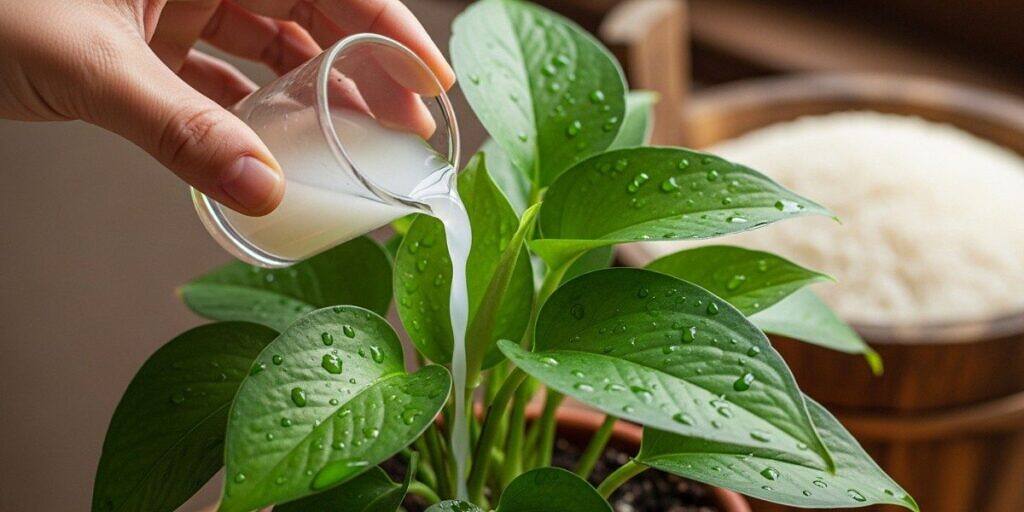
If you have come across tutorials claiming that rice water will turn any plant into a lush giant, the reality is more complex — and more interesting. This cloudy liquid, obtained when rinsing uncooked rice, is not a miracle fertilizer, but rather a homemade biostimulant that works indirectly by feeding the microscopic life in the soil.
The key factor is the starch. When you wash rice, you release carbohydrate granules that serve as fuel for beneficial bacteria and fungi — the real agents of transformation. Along with the starch come traces of B-complex vitamins (especially thiamine) and minimal residues of nitrogen, phosphorus, and potassium. However, these nutrients are present in such small amounts that they can never replace a proper base fertilization.
The idea is related to practices in Korean Natural Farming, where fermented rice serum is used to capture native microorganisms from the environment. In organic and regenerative agriculture around the world, various homemade biofertilizers and biostimulants based on rice water are being studied and used, with consistent emphasis that the true effect depends on sound technical management — not on myths.

Chemical composition: what is really in rice water?
Starch as a prebiotic: feeding the soil microbiome
Starch is not absorbed by the roots. It works instead as a banquet for beneficial microorganisms — nitrogen-fixing bacteria, mycorrhizal fungi, and actinomycetes that help solubilize nutrients locked in the potting mix. It is as if you were setting up an underground restaurant where the real soil workers grow stronger to support your plant.
Vitamin B1 (Thiamine) and post-stress recovery
Thiamine supports cellular metabolism and may offer mild protection against transplant shock. However, scientists still debate whether plants can efficiently absorb external vitamins through their roots. Does it work? Yes, in some situations — but do not expect the same effect as a commercial rooting product based on plant hormones.
Residual NPK: trace amounts, not real nutrition
Anyone hoping that rice water can replace an NPK fertilizer is likely to be disappointed. The levels of nitrogen, phosphorus, and potassium are so low that they barely show up in laboratory analyses.
Think of it as a stimulating supplement, never as a primary nutritional source.
The dangers of incorrect use: why not every plant benefits
The fatal mistake: using cooked rice water
This is the fastest way to kill a plant. Cooking water contains salt (sodium chloride), oils, and fats that seal the porosity of the potting mix, suffocating the roots. The potting mix becomes waterlogged, oxygen cannot circulate, and root rot begins. Use only rice wash water from uncooked rice, with no seasoning at all.
Fungal proliferation and damping-off in seedlings
Starch is a feast for fungi—both beneficial and pathogenic. In young seedlings, excess rice water can cause damping-off, a disease that kills the seedling at the base of the stem. For this reason, never use the solution undiluted. Dilution is mandatory, and applying rice water to seedlings should always be done sparingly.
Attracting household pests: ants and fruit flies
The sweet smell of fermenting starch attracts leaf-cutting ants and fruit flies (Drosophila). If you notice an invasion of insects after applying rice water, stop using it immediately and cover the soil with a layer of dry potting mix or ground cinnamon, which has a natural antifungal effect.
Technical step-by-step: extraction and fermentation method
Preparing dechlorinated water and cold washing
Start with clean water. Chlorine in tap water kills beneficial microorganisms, so let the water sit in an open bucket for 24 hours before use. Then:
- Wash 1 cup of white rice in 2 cups (500 ml) of dechlorinated water.
- Shake vigorously for 1 to 2 minutes to release the starch.
- Strain and set aside the milky liquid.

The advantage of fermentation: creating lactic acid bacteria (LAB)
The fermented version is superior to raw rice water. Pour the liquid into a glass container, cover it with a cloth (do not seal it airtight), and leave it in a dark place for 2 to 4 days. The pH will drop, becoming slightly acidic, and lactic acid bacteria will develop—the same type found in plain yogurt.
These bacteria compete with pathogens, help break down organic matter, and improve soil structure. It is the KNF technique applied to the houseplants in your living room, turning simple rice water into a multifunctional rice water fertilizer.
Odor control and gas management
Anaerobic fermentation of rice water produces sulfur compounds (a rotten egg smell). This is normal, but it can be bothersome indoors. To minimize it:
- Keep the container in a well‑ventilated area (balcony, porch, utility area).
- Use a wide‑mouth jar covered with a cotton cloth.
- Discard the solution if the smell becomes unbearable or if black mold appears on the surface — a clear sign of contamination.
The golden rule of application: dilution and frequency
Why the 1:10 ratio is crucial to prevent rot
Concentrated rice water solution can cause root suffocation and fungal overgrowth. Always dilute 1 part rice water in 10 parts clean water before applying. This equals about 3.4 fl oz (100 ml) of solution for every 34 fl oz (1 liter) of water.
Fertigation vs. foliar spray: why to avoid the leaves
Never spray rice water on the leaves. The starch dries and forms a sticky film that attracts the sooty mold fungus Fumagina (that black crust that looks like soot). In addition, foliar application of carbohydrates favors the development of opportunistic bacteria. Always apply via the soil, watering directly into the potting mix.
Usage schedule: balancing stimulation and excess
Ideal frequency:
- Ornamental plants and vegetables: Every 15 days.
- Young transplants and seedlings: Every 30 days (or skip rice water entirely and prioritize commercial rooting products).
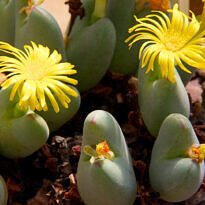
- Succulents and cacti: Avoid completely. These plants naturally prefer lean, fast‑draining, and relatively dry soils.
Using rice water every week disrupts the potting mix pH and can lead to salt buildup.

Comparative analysis: rice water vs. professional biostimulants
Seaweed extracts and thiamine/IBA‑based rooting products
If you want more predictable results, commercial biostimulants supply plant hormones (auxins, cytokinins) in standardized concentrations.
Reliable options include:
- Seaweed extracts: Brands such as Acadian contain bioactive compounds that are far more effective than starch.
- Rooting stimulants: Commercial products often combine synthetic thiamine with IBA (indole‑3‑butyric acid), a hormone that truly stimulates root growth.
Soil inoculants: when to use Trichoderma or Bacillus subtilis
If the goal is to improve soil microbiology, professional soil inoculants are much more efficient than rice water. Products based on Trichoderma harzianum or Bacillus subtilis suppress pathogenic fungi and colonize the roots in a controlled way. Rice water, on the other hand, feeds microorganisms at random — both beneficial and harmful.
Diagnosing common problems (based on real experience)
“My plant developed a sour smell”: causes and solutions
“I used it on my orchids and in 2 weeks green tips appeared on the roots, but the pot started to smell sour.”
Diagnosis: Lack of dilution or poor drainage. The potting mix retained excessive moisture, triggering anaerobic fermentation inside the container.
Solution:
- Stop using the rice water immediately.
- Allow the potting mix to dry out completely.
- Learn to dilute it correctly at a 1:10 ratio (1 part rice water to 10 parts clean water).
- If the problem continues, replace the potting mix with a faster‑draining blend (pine bark, perlite, charcoal).
“White fungi appeared in the potting mix”: what to do with succulents
“On my succulents it was a disaster, the base turned mushy and white fungi appeared in the potting mix.”
Diagnosis: Succulents evolved in very poor, arid soils. The starch in rice water creates a rich, humid environment — completely unsuitable for these plants. The white fungus is saprophytic mycelium feeding on the excess sugar from the rice water.
Solution:
- Remove the plant from the pot, rinse the roots under running water, and trim away any rotten parts.
- Repot in a dry, well-draining potting mix formulated for cacti (coarse sand, gravel).
- Never use rice water on succulents again.
How to reverse infestations using ground cinnamon and dry mulch
If ants have appeared after applying rice water to plants:
- Sprinkle ground cinnamon over the surface of the potting mix (it has antifungal activity and acts as a natural repellent).
- Cover with a 0.75 in (2 cm) layer of dry soil or pine bark.
- Reduce watering frequency until the soil stabilizes.
Frequently Asked Questions (FAQ)
Can I use rice water on orchids and succulents?
Orchids: Yes, but only the diluted version (1:10) and only in an exceptionally well-draining orchid mix. Avoid applying rice water to orchids with sensitive roots, such as Phalaenopsis in recovery.
Succulents: No. The starch and extra moisture are incompatible with the metabolism of these plants.
Does rice water replace traditional NPK fertilizer?
Absolutely not. The nutrient levels are too low. Use it only as a supplemental stimulant for plants, and keep up a regular fertilizing schedule with a balanced NPK product (such as 10-10-10 for growth or 4-14-8 for flowering).
How long can I store the fermented solution?
Up to 7 days in the refrigerator, in a sealed glass container. After that, the risk of contamination by pathogens increases. Always prepare small batches.

Can I use brown rice, or only white rice?
You can use both, but white rice releases more starch when rinsed (because the bran has been removed). Brown rice works, but it is less efficient for rice water.
Does rice water help plants bloom?
Not directly. Flowering depends on phosphorus, potassium, and an appropriate photoperiod. Rice water can improve overall plant health via beneficial microbes, but it does not replace a fertilizer rich in P and K (such as bone meal or bokashi).
Use it wisely, not with blind faith
Rice water is not a magic potion, but a complementary tool for gardeners who understand the basics of soil ecology. Fermented rice water works best on tropical plants, foliage ornamentals, and small home vegetable gardens — as long as you respect proper dilution, frequency of use, and plant selection.
If you want convenience and predictable results, commercial biostimulants are still the safest choice. But if your goal is to practice sustainable gardening, reuse kitchen waste, and learn through hands-on experience, fermented rice water is an excellent field of experimentation.
The key is technical management. Do not follow internet recipes without questioning them. Observe each plant, adjust the doses, and record the results. And remember: the best fertilizer is always the one you choose based on knowledge — not wishful thinking.
Get started today: grab some rice from your pantry, rinse it thoroughly, let the rice water ferment for 3 days, and test it on a tough houseplant (such as snake plant or pothos). Dilute the rice water at 1:10, apply it to the potting soil, and monitor the plant for 30 days. Gardening is applied science — and the best way to learn is by getting your hands dirty.