January marks the peak of summer in the temperate regions of the Southern Hemisphere, bringing hot days, generous rainfall, and an ideal setting for growing a wide range of vegetable garden crops. For anyone maintaining a vegetable garden in areas with a mild to warm summer climate, this is a strategic month to take advantage of favorable weather conditions and ensure abundant harvests in the coming months.
Unlike very hot regions where extreme heat can limit what you can grow, temperate southern areas have a significant advantage: relatively cool nights. This daily temperature range, with daytime temperatures around 28–35°C (82–95°F) and nighttime temperatures near 18–24°C (64–75°F), makes it possible to cultivate a wider variety of species, including some that would not tolerate constant heat in hotter climates.
Enjoyed this guide? There's more where it came from.
Understanding why plants behave the way they do is what turns guesswork into a thriving garden. That's exactly what we share in the Shrubz newsletter — free, straight to your inbox:
- Seasonal care reminders timed to your gardening calendar
- Propagation and pruning techniques, explained step by step
- Pest and disease alerts — catch problems before they spread
In this complete guide, you will discover more than 50 options of vegetables, herbs, and seasonings that are ideal to plant in January in mild-summer regions, along with practical tips to ensure the success of your summer vegetable garden.
January Climate Characteristics in Mild-Summer Regions
The climatic advantage of temperate southern areas
Summer in temperate southern regions has unique characteristics that make it especially favorable for a vegetable garden. While some areas face scorching heat and constant humidity, regions with milder summers maintain a more moderate balance, especially at night.
The mild nighttime temperatures are a major asset for any vegetable garden: they reduce heat stress on plants, decrease evapotranspiration, and create ideal conditions for essential physiological processes. Many vegetables use the cooler nights to “rest” and recover from daytime heat, resulting in more vigorous growth and a lower tendency to bolt prematurely (early flowering, which causes leafy greens to become elongated, bitter, and produce milky sap).
Rainfall and humidity patterns
January in these regions is often marked by frequent rains, interspersed with sunny periods. This distribution of rainfall is generally beneficial for a vegetable garden, as it keeps the soil moist without the need for constant irrigation. However, it also demands special attention to bed drainage.
Intense summer storms can waterlog the soil, compact it, and even wash away newly sown seeds. For this reason, proper structuring of the vegetable garden beds — raised about 15 to 20 centimeters (6 to 8 inches) and well amended with organic matter — is essential for successful planting in January.
Advantages for the vegetable gardener
The combination of moderate heat, regular rainfall, and a favorable daily temperature range gives the vegetable gardener in mild-summer regions remarkable flexibility in planning and managing the vegetable garden.
It’s possible to grow everything from heat-tolerant warm-season vegetables (such as okra and squash) to cool-season crops (such as lettuce and carrots), as long as you choose the right varieties and adopt proper management practices.
In addition, heat speeds up growth cycles, allowing for faster harvests and the possibility of successive plantings – a smart strategy to ensure a continuous supply of leafy greens and short-cycle vegetables throughout the summer.
Leafy Vegetables and Greens
January offers excellent opportunities to grow a wide range of leafy vegetables in regions with mild to warm summers. With the right strategies, you can keep the vegetable garden lush and productive even on the hottest days.
1. Lettuce
Although it prefers cooler weather, lettuce is still feasible in January in many temperate regions, but it requires careful variety selection. Choose cultivars bred for heat tolerance that take a little longer to bolt under high temperatures. Looseleaf and frilly types generally perform better in the heat than crisphead lettuces, which form tight heads and are more sensitive to high temperatures.
A successive planting strategy is essential: sow small amounts every 2 weeks to ensure staggered harvests before bolting occurs. On exceptionally hot days (above 91°F / 33°C), light shade using 30% shade cloth can make a significant difference.

Red Lettuce and Oakleaf Lettuce
Diversifying lettuce varieties is not just about appearance – some red cultivars contain anthocyanins that provide greater resistance to heat stress. Oakleaf lettuce, with its delicate, frilled leaves, also tends to be more tolerant than standard crisphead types.
2. Arugula
One of the leafy vegetables best suited to summer, arugula has a very short cycle of 25 to 30 days, allowing you to harvest before heat triggers flowering. Its slightly peppery flavor becomes even more pronounced when grown in warmer temperatures. Sowing every 2–3 weeks ensures a constant supply for fresh salads.
3. Watercress
Both watercress and land cress thrive in midsummer. Watercress prefers very moist or even waterlogged soil, taking full advantage of frequent irrigation or naturally wet areas. It grows vigorously in clean, slow-moving or still water. In summer, with heat and high humidity, it practically grows on its own, providing spicy, nutrient-rich leaves.
Meanwhile, land cress tolerates heat well and adds a pronounced flavor to salads and stir-fries. Growing cycle of 40–50 days.
4. Collard Greens
Collard greens are among the most resilient leafy vegetables for hot-summer regions. A perennial plant that can be established year-round in mild climates, it tolerates high temperatures very well as long as it receives adequate irrigation. The main challenge is caterpillars, which proliferate in summer – regular inspection of the leaves and hand-picking, or the use of Bacillus thuringiensis, usually solves the problem.
Kale and other collard varieties are also excellent options, providing continuous harvests for months. Always harvest the outer leaves, allowing the center of the plant to keep producing.
5. Swiss Chard
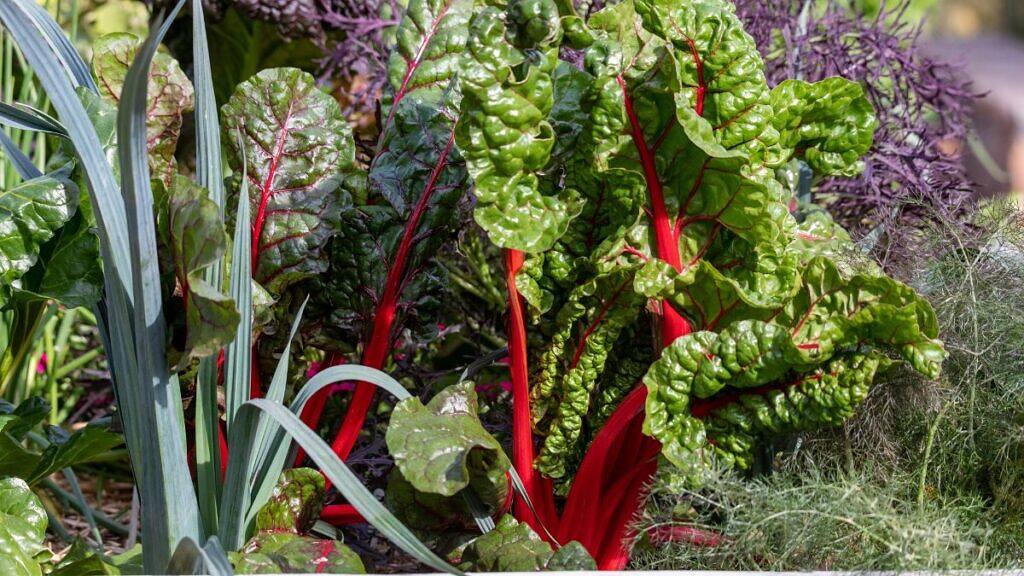
Often underestimated in home gardens, Swiss chard (also called leaf beet) is outstanding for its heat tolerance. Its broad leaves and succulent stalks can be harvested continuously, and the plant virtually ignores the temperature swings typical of summer. It is an excellent substitute for spinach in sautés, pies and other cooked dishes.

6. Escarole and Endive
These bitter leafy greens adapt surprisingly well to moderate heat, although they do prefer cooler weather. Sugarloaf escarole and catalogna endive offer crisp leaves for salads and, when more mature, are perfect for sautéing. Average growing cycle of 60–70 days, with good resistance to bolting when well irrigated.
7. New Zealand Spinach
While traditional European spinach (Spinacia oleracea) struggles in hot weather, there is a perfect summer alternative: New Zealand spinach (Tetragonia tetragonioides). This low-growing plant with succulent leaves thrives in heat and produces abundantly throughout the summer. It is not a true spinach botanically, but its flavor and culinary uses are very similar.
8. Malabar Spinach
Also known as Indian spinach, Malabar spinach is a vigorous climbing vine with succulent leaves that loves heat and humidity. Perennial in warmer climates, it can be trained on trellises or fences. The leaves develop a slightly mucilaginous texture when cooked, similar to okra, and are very rich in iron and calcium.
9.
Mustard Greens
Leaf mustard (Brassica juncea) tolerates heat well and offers peppery leaves for baby salads or for sautéing when more mature. Varieties such as curly mustard or mizuna (Japanese mustard greens) add diversity to the vegetable garden. Growing cycle: 40–50 days.
10. Tatsoi and Bok Choy Chinese Cabbages
These Asian brassicas (Brassica rapa) have become increasingly popular in home gardens. Although they prefer mild weather, selected varieties tolerate summer conditions well, especially with light shade. They produce tender, flavorful leaves in 40–45 days, perfect for stir-fries and soups.
Herbs and Seasonings
Summer is the peak season for growing aromatic herbs. Warm weather intensifies essential oils, resulting in more concentrated flavors and aromas. It’s an excellent time to produce in abundance, and you can freeze fresh herbs to use throughout the year. I personally like to make mint and basil extracts, and keep fresh sauces and green juices on hand for quite a while.
11. Basil
If there is one herb that defines summer in the garden, it is basil. Italian basil (Ocimum basilicum) grows vigorously during the hottest months, often doubling in size each week with heat and consistent watering. Harvest terminal shoots regularly to encourage branching and prevent flowering.
Diversify with different varieties: purple basil (deep purple leaves), lemon basil (citrusy aroma), cinnamon basil, and Thai basil. Each offers a unique flavor profile for different dishes.
12. Chives
Chives (Allium fistulosum) are practically indestructible in the summer garden. They grow vigorously in the heat, as long as they receive regular watering. Divide old clumps to rejuvenate and multiply your plants. Both common chives and bulb-forming chives (which produce small bulbs) thrive during this season.
13. Parsley
Parsley (Petroselinum crispum) is biennial and, once established, tolerates summer conditions well. Germination can be slow in hot weather (10–20 days), so keep seed trays consistently moist. Both curly parsley and flat-leaf (Italian) parsley perform well. With good care, parsley provides harvests for many months.
14. Cilantro
Cilantro (Coriandrum sativum) can be challenging in summer because it tends to bolt quickly with long, hot days. The strategy is to make small, successive sowings every 2 weeks, harvesting the leaves while still young at 20–25 days. Broadleaf varieties such as robust, large-leaf cilantro types hold up slightly longer than fine-leaf strains.
Fun fact: letting some plants bloom is not a waste – the flowers attract beneficial insects, and the seeds (known as whole coriander seeds) can be harvested for culinary use.
15. Mint
Mint (Mentha spp.) thrives in consistently moist soil, but during very hot days it can suffer leaf scorch in full sun. The solution is to grow it in spots with partial shade, especially during the hottest afternoon hours. Spearmint, peppermint, and chocolate mint are all suitable. Important: grow mint in containers or with root barriers, as it is highly invasive.

16. Oregano
Oregano (Origanum vulgare) is a perennial herb and, once established, it tolerates heat very well. In mid‑summer you can harvest leaves for fresh use or for drying. Oregano benefits from regular pruning, which encourages denser, bushier growth. It prefers full sun and well‑drained soil.
17. Thyme
Several types of thyme (Thymus vulgaris) perform well in warm summer climates. This classic Mediterranean herb loves heat, as long as the soil is sharply drained. Lemon thyme adds a distinctive citrus note. Compact plants are ideal for edging beds or growing in containers.
18. Rosemary
Rosemary (Rosmarinus officinalis) is a perennial shrub that thrives in full sun and heat. In mid‑summer it is in active vegetative growth. Harvest sprigs as needed – regular trimming keeps the plant compact and productive. It is an excellent choice for dry, low‑water areas of the herb garden.
19. Tarragon
French tarragon (Artemisia dracunculus) is less commonly grown than many other herbs, but it truly deserves a place in herb gardens. It prefers moderately warm conditions rather than extreme heat and offers a unique anise‑like flavor that is essential in classic French cuisine. It is propagated by dividing established clumps.
20. Savory
Savory (Satureja hortensis – summer savory, annual; S. montana – winter savory, perennial) is traditionally known as the “bean herb” because of its historic use with legumes. It grows well in warm weather, producing aromatic foliage reminiscent of thyme and oregano. Excellent for beans, meats, and sauces.
21. Nasturtium
Although technically an edible flower, nasturtium (Tropaeolum majus) fully deserves a place in the herb garden.
Flowers and leaves are edible, with a mildly peppery flavor. It grows vigorously in summer, can be trailing or climbing, and also attracts aphids (working as a trap crop to protect other plants).
22. Holy basil (Tulsi)
Holy basil or tulsi (Ocimum tenuiflorum) is a sacred variety in India, with well-known medicinal properties. More resilient than common basil, it tolerates temperature fluctuations well. It has a slightly peppery, camphor-like flavor.
23. Lemon balm
Lemon balm or melissa (Melissa officinalis) prefers mild weather, but performs well in partial shade during the summer. Its lemon-scented leaves are perfect for soothing herbal teas. It is a vigorous plant that can be harvested continuously.
24. Marjoram
A close relative of oregano, marjoram (Origanum majorana) has a milder, sweeter flavor. It grows well in warm weather, forming compact, small shrubs. It is excellent for delicate dishes where oregano would be overpowering.
25. Sage
Sage (Salvia officinalis) is a perennial subshrub that tolerates summer heat well. Its velvety leaves have an intense flavor, ideal for meats and pasta dishes. In regions with mild winters, it remains productive throughout the year.
26. Bay laurel
Bay laurel (Laurus nobilis) is actually a tree that can be kept pruned as a shrub. In mid-summer it is in active growth. Fresh or dried leaves are essential in stews, braises and bean dishes. The ideal time to plant is in fall, but in areas with temperate summers it can also be safely planted in summer, as long as it is well irrigated.
Fruiting vegetables
Summer heat is especially favorable for fruiting vegetables, which require warm temperatures for proper flowering and fruit set.
27. Tomato
Tomatoes can be planted in mid to late summer in many regions, especially in late plantings that will produce into fall. The key is to choose disease-resistant tomato varieties or hybrids with multiple resistances (usually indicated as HR or IR on seed packets).
Cherry-type tomatoes (cherry, grape, pear) are generally more robust and tolerant than large-fruited types. Well-adapted varieties include Sweet Million, Carolina and Santa Cruz Kada.
Staking plants is essential, as is applying mulch to prevent raindrops from splashing soil-borne pathogens onto the leaves.

Cherry tomatoes and mini tomatoes
In addition to the classic cherry tomatoes, try varieties such as grape tomatoes, which are more elongated, or small pear tomatoes. These tomato plants are typically more productive, disease-resistant, and perfect for salads and appetizers. Many cultivars produce clusters with 20–30 fruits.
28. Bell pepper
Bell pepper (Capsicum annuum) needs warm weather to set fruit, making mid-summer ideal for transplanting seedlings in many regions. Varieties in different colors (green, red, yellow, orange) are not just ornamental – each color represents a different stage of ripeness and a distinct nutritional profile.
Bell peppers require balanced nutrition (especially calcium to prevent blossom-end rot) and consistent irrigation. Light staking helps support the heavy fruits.
29. Hot peppers
Mid-summer is the perfect time for growing hot peppers of all kinds. From mild types (sweet peppers, bell peppers) to hot ones (jalapeño, chile pepper, cayenne, habanero), all these tomato companions thrive in the heat. In warm climates, pepper plants are perennial and can produce for 2–3 years.
Ornamental peppers such as rounded, lantern-shaped, or tiny teardrop types also serve a dual purpose: decorative and culinary.
30. Eggplant
Eggplant (Solanum melongena) is one of the vegetables best adapted to hot summer conditions. Vigorous plants reach about 32–48 inches (80–120 cm) in height, producing purple, white, or striped fruits. Japanese eggplants (more elongated) tend to be more productive than the globe types.
Harvest the fruits while the skin is still glossy – once the surface turns dull, they are overripe, with developed seeds and increased bitterness.

31. Scarlet eggplant
Scarlet eggplant (Solanum gilo), a close relative of common eggplant, is extremely heat-tolerant. Widely used in traditional home cooking in some regions, it produces small green or yellowish fruits with a mildly bitter flavor. This is a hardy, low-maintenance plant that requires virtually no special care.
32.
Zucchini
The Italian zucchini or courgette has a very short growth cycle of about 45–55 days from planting to the first harvest. Sow in mid to late spring for harvesting in early to mid-summer. A single vegetable plant can produce 15–20 fruits if picked while still small (6–8 in / 15–20 cm), which stimulates the formation of new fruits.
Dark green, light green, and yellow zucchini varieties offer great diversity. The round zucchini (Rondini type) is perfect for stuffing.

33. Winter squash and pumpkins
Several varieties of winter squash and pumpkin (Cucurbita spp) can be planted in mid to late spring: kabocha squash, Cinderella-type pumpkins, neck pumpkins (Italian-type) and spaghetti squash. They need plenty of room for their vines (6–10 ft / 2–3 m) and full sun. The growth cycle ranges from 90–120 days.
Long-fruited squash varieties are especially productive and well adapted. Heirloom, flattened, orange-skinned pumpkins are traditional in many regions and are excellent for hearty stews and baking. They produce large, flattened fruits with orange rind and keep very well after harvest.
Kabocha squash deserves special mention. This Japanese squash, with a flattened shape and dark green rind, has become increasingly popular. Its flesh is sweet and dense, perfect for soups, pies, and roasting. It is very productive and well adapted to a wide range of temperate climates.
34. Cucumber
Cucumber (Cucumis sativus) has a 60–70 day cycle and produces best when trained on trellises or fences. Japanese-type cucumbers (longer and slimmer) and pickling or slicer types (medium-sized, dark green) adapt very well. Training the cucumber plants on supports improves air circulation and reduces fungal diseases.
Harvest cucumbers frequently—fruits left on the plant inhibit the formation of new ones.
Japanese cucumber
This cucumber variety deserves special mention because it is more disease-resistant than many traditional cucumber types. Fruits are long (10–12 in / 25–30 cm), slender, and have few seeds. They are ideal for salads and pickling.
35. West Indian gherkin
West Indian gherkin (Cucumis anguria) is a spiny cucumber relative. Extremely hardy and productive, it tolerates fluctuations in soil moisture very well. Small fruits (2–3 in / 5–8 cm) are harvested green for pickles and sautés. It can be grown along a fence or left to sprawl on the ground.
36. Okra
Okra (Abelmoschus esculentus) is a warm-season vegetable plant that thrives in the heat of mid to late summer. Although it may be less traditional in some cooler regions, it adapts very well wherever summers are hot. Deer-horn–type okra and long-pod okra varieties produce elongated pods. Harvest every 2–3 days while the pods are still tender (3–5 in / 8–12 cm).
37.
Chayote
January is an excellent time to plant chayote seedlings (Sechium edule). This vigorous climbing vine needs sturdy structures (such as a pergola or strong fence), as it produces dense foliage and heavy crops of fruit. A single chayote plant can yield hundreds of chayotes in one season.
38. Watermelon and Melon
For gardeners with space, watermelon and melon can be planted in January for harvesting in April–May. They require full sun, consistent warmth, and well-drained soil. Popular watermelon varieties like Crimson Sweet and Charleston Gray are well adapted to warm climates. Among melons, netted types (cantaloupe) and yellow-fleshed melons perform very well.
Roots and Tubers
January offers excellent opportunities for growing roots and tubers, which benefit from soil moisture maintained by regular rainfall or consistent irrigation.
39. Carrot
Carrots (Daucus carota) can be sown in January in warm regions using heat-tolerant varieties. Cultivars that tolerate higher temperatures still develop good-sized roots when properly managed. The key is to keep the soil consistently moist during the first 15 days after sowing to ensure even germination.
Deep (12 in / 30 cm), loose, stone-free soil is essential for straight, well-formed roots. The crop cycle ranges from 70–100 days, depending on the variety.

Purple Carrot and Yellow Carrot
In addition to traditional orange types, try growing colorful carrots. Purple carrots are rich in anthocyanins, while yellow carrots are high in lutein. They are not just decorative – they also offer unique nutritional profiles.
40. Beetroot
Beetroot (Beta vulgaris) tolerates heat well as long as it is watered regularly. It can be direct-sown or transplanted from plug trays. Cylindrical varieties such as Cylindra are great for slicing, while traditional types like Detroit and similar cultivars produce round roots.
Do not discard the leaves – beet greens are excellent sautéed and are rich in iron and vitamins. The crop cycle is about 55–70 days.
41. Radish
Radish (Raphanus sativus) is the fastest vegetable in the garden, taking only 25–30 days from sowing to harvest. It is perfect for impatient gardeners and children. Sow every 1–2 weeks to have a continuous supply of fresh radishes.
In addition to the classic round red radishes, try white radishes (baby daikon), elongated radishes (French Breakfast), purple radishes, and watermelon radishes (white on the outside and pink on the inside).
42.
Turnip
The turnip (Brassica rapa) prefers mild weather, but early varieties can be sown in late January for a fall harvest. The white roots can be round or elongated and are commonly used in stews. Young leaves are also edible.
43. Sweet Potato
The sweet potato (Ipomoea batatas) is planted from slips (pieces of stem with leaves), not from seeds. January planting is possible in warmer regions, although the traditional time is spring. It forms a vigorous vining plant that quickly covers the soil. There are varieties with white, yellow, orange and even purple flesh. Growing cycle is about 120–150 days.
44. Arracacha (Peruvian Parsnip)
Arracacha (Arracacia xanthorrhiza) is more demanding in terms of mild climate, but in cooler highland or temperate regions it can be planted in January. This aromatic root is excellent for broths and soups. It has a long growing cycle of about 8–10 months.
45. Yam and Taro
Although more tropical, yam (Dioscorea) and taro (Colocasia esculenta) can be grown in the warmest areas. Planting seed tubers in January takes advantage of seasonal rains for establishment. Harvest usually occurs in 8–10 months.
46. Horseradish
Horseradish (Armoracia rusticana) is a perennial and can be established in January by planting sections of root. It thrives in temperate climates. The white roots are extremely pungent and used for sauces and seasonings. Once planted, it can remain productive for years.
47. Ginger
Ginger (Zingiber officinale) is a rhizome that can be planted in January. It prefers warmth and humidity, but needs partial shade. Bury fresh rhizomes (often found at farmers’ markets) with the “eyes” facing upward, in soil rich in organic matter. Harvest time is typically 8–10 months.
48. Turmeric
A close relative of ginger, turmeric (Curcuma longa) is grown in a similar way. Its orange rhizomes produce turmeric powder, a spice and natural coloring. Growing cycle is about 9–10 months.
49. Green Beans
Green beans (Phaseolus vulgaris) can be sown in January in regions with a temperate or warm climate, and planting can often continue through March. There are pole (climbing) and bush types. Pole beans produce over a longer period and make better use of vertical space, while bush beans have a more concentrated cycle of about 55–60 days.
Some varieties produce flat, tender pods that are especially suitable as fresh green beans.
Yardlong bean (Vigna unguiculata sesquipedalis) produces pods up to 20–24 in (50–60 cm) long and is highly productive in hot weather.
50. Snow pea
The snow pea or mange-tout (Pisum sativum var. macrocarpon) is better adapted to mild climates, but in regions with cooler summers it can be sown in late January for a fall harvest. The entire pods are eaten, without discarding any part.
Other Vegetables and Edible Plants
In addition to the traditional categories, several other species deserve a place in the January vegetable garden.
51. Sweet corn
Corn (Zea mays) thrives in the heat and summer rains of January in warm regions. Sweet corn varieties produce ears for fresh eating in about 90–100 days. Corn can also serve as a living trellis for climbing beans in the traditional three-sisters companion planting of corn, beans, and squash.
52. Ora-pro-nóbis
Ora-pro-nóbis (Pereskia aculeata) is a climbing cactus with leaves that are rich in protein. Although it is a perennial grown year-round in suitable climates, it can be propagated from cuttings in January in warm areas. The leaves are eaten sautéed, in omelets, or dried and ground into powder. Extremely hardy and practically indestructible.
53. Taioba (Brazilian spinach)
Taioba (Xanthosoma sagittifolium) is a leafy vegetable with large leaves, related to taro. It prefers partial shade and abundant moisture, conditions that are easily found in mid to late summer. The leaves are eaten cooked (never raw!) and have a flavor reminiscent of spinach. The rhizomes are also edible.
54. Roselle
Roselle (Hibiscus sabdariffa) is a relative of okra. It produces tangy leaves eaten in salads or sautéed, and red calyces used for teas and jams. This annual plant loves heat and is widely grown in tropical and subtropical summers.
55.
Amaranth
Amaranth (Amaranthus spp.) is often considered a weed, but its leaves are highly nutritious and flavorful. Cultivated varieties such as red amaranth or giant amaranth produce abundant foliage for sautéing and stir-fries. Some types also produce edible grains.
56. Arrowroot
Arrowroot (Maranta arundinacea) is a rhizome used to produce a fine starch, an alternative to tapioca starch. It prefers warm, humid climates. When planted in January, it can be harvested in about 10–12 months. The leaves can also be used to wrap foods for cooking or storage.

Essential Summer Vegetable Garden Care
Keeping a productive vegetable garden in January involves more than just choosing the right species. Proper management of the vegetable garden is essential for long-term success.
Soil preparation and structure
The foundation of any productive vegetable garden is well-prepared soil. In January, when many regions experience heavy rainfall, good drainage is critical. Build raised beds about 6–8 inches high (15–20 cm) to prevent waterlogging. If your plot is on a slope, install the beds on contour lines (level terraces) to reduce erosion.
Incorporate plenty of organic matter into the vegetable garden beds: about 0.6–1.0 pounds per square foot (3–5 kg/m²) of well-matured compost or 0.4–0.6 pounds per square foot (2–3 kg/m²) of well-rotted cow manure. This organic matter works like a sponge, holding moisture without waterlogging, and also acts as thermal insulation, protecting roots from excessive heat.
If you have not done a soil test recently, this is the right time. For most vegetables in the vegetable garden, the ideal soil pH ranges between 6.0 and 6.8.
If the soil is acidic (pH below 5.5), apply dolomitic lime 30 days before planting, following the rates recommended by your soil test.
Irrigation strategies
Even in regions with frequent rainfall, supplemental irrigation is necessary. Intense heat and wind increase evapotranspiration, and short dry spells can occur even in midsummer.
The best times for irrigation are early morning (6–8 a.m.) and late afternoon (5–7 p.m.). Avoid watering around noon (thermal shock, loss through evaporation) and late at night (favors fungal diseases). The ideal amount varies with soil type, but generally about 2–3 liters per square meter per day (0.5–0.7 gallons per 10 sq ft per day) during dry periods.
Drip irrigation systems are ideal: they save water, keep soil moisture more stable, and do not wet the foliage (reducing disease pressure). If you use a hose or watering can for irrigation, direct the water to the base of the plants, not over the leaves.
Check soil moisture with your finger: insert it 5–7 cm (2–3 inches) into the soil. If it comes out clean and dry, you need to irrigate. If it comes out with moist soil sticking to it, the moisture level is adequate. If water oozes out when you squeeze the soil, it is waterlogged.
Mulch: the secret to summer success
Mulch, or mulching, is quite possibly the most important irrigation-support technique for the summer season.
It consists of covering the soil around the plants with organic material: grass straw, dry leaves, aged sawdust, rice husks, dried grass clippings or shredded cardboard.
Benefits of mulch:
- Conserves moisture, reducing evaporation by up to 70%
- Regulates soil temperature, keeping it up to 5°C (9°F) cooler
- Suppresses weeds, saving time and labor on hand weeding
- Prevents erosion and compaction caused by heavy rains
- Reduces soil splashing onto leaves (helping prevent diseases)
- Gradually decomposes, adding organic matter
Apply a 5–8 cm (2–3 inch) layer of mulch after seedlings are established or seeds have germinated. Leave a 3–5 cm (1–2 inch) gap around the base of the plants to avoid excessive moisture against the stems. Replenish the mulch layer as it breaks down.
Side‑dressing fertilization
Periods of intense rainfall can leach nutrients, especially nitrogen. In addition, heat accelerates plant metabolism, increasing nutrient demand. Therefore, side‑dressing fertilization is essential in vegetable gardens.
For long‑season vegetables (tomatoes, peppers, kale, eggplant), apply the first side‑dressing 15–20 days after transplanting, then every 20–30 days. Use mature compost (1 kg/m² / 2.0 lb per 10.8 sq ft), well‑aged manure (200–300 g/m² / 0.4–0.6 lb per 10.8 sq ft) or NPK formulations (20–30 g/m² / 0.04–0.06 lb per 10.8 sq ft of 10‑10‑10).
For fast‑growing leafy greens (lettuce, arugula), a single side‑dressing halfway through the growth cycle is usually enough.
For root vegetables (such as carrots and beets), avoid excessive nitrogen, which stimulates foliage growth at the expense of roots – use fertilizer formulations with higher phosphorus and potassium content instead.
Liquid biofertilizers (fermented manure tea, aerated compost tea) can be applied every two weeks as a foliar spray or directly to the soil, supplying nutrients and stimulating beneficial soil microbiota.
Strategic shading
On extremely hot days (above 95°F/35°C), some vegetables benefit from temporary shading. Leafy greens in particular may wilt or scorch under intense, direct sun combined with low air humidity.
Use 30%–50% shade cloth suspended 20–32 in (50–80 cm) above the plants. It can be installed on permanent frames or temporary supports (bamboo poles, PVC pipes). Shading also lowers the garden’s ambient temperature by about 5–9°F (3–5°C).
Alternatively, use the layout of the vegetable garden itself: plant tall crops (such as corn, pole beans, or staked tomatoes) on the north side of the beds (south side in the Southern Hemisphere), creating partial shade for leafy greens planted on the opposite side.
Integrated pest management
Summer heat accelerates the life cycle of insects. An aphid generation that would take 15 days to develop in cooler weather may complete in just 7 days in hot conditions. Close monitoring of the vegetable garden is essential.
Regular inspection: Check your vegetable garden every 2–3 days, especially the undersides of leaves, new shoots, and flower buds.
Pests detected early are easily controlled.
Physical controls:
- Hand-picking caterpillars, beetles, and egg clusters
- Using a strong jet of water to knock aphids off plants
- Yellow sticky traps to capture whiteflies, winged aphids, and leafhoppers
- Physical barriers: lightweight row cover or fine mesh over sensitive crops
Biological controls:
- Bacillus thuringiensis (Bt) for caterpillar control
- Neem oil for sap-sucking and chewing insects
- A 2% solution of mild liquid soap for aphids and scale insects
- Encouraging natural predators: ladybugs (ladybirds), green lacewings, and tiny parasitic wasps
Companion plants that repel pests: Basil, marigolds (Tagetes), calendula, flowering cilantro (coriander), rue, and mint help deter various insect pests. Interplant them throughout the beds.
Managing leaf-cutting ants: In regions where leaf-cutting ants are present, their activity often increases in warm weather. Granular ant baits applied along their foraging trails at dusk are effective. Organic methods include lime or wood-ash barriers around garden beds.
Disease prevention
Heat combined with high humidity creates ideal conditions for fungal and bacterial diseases in the garden.
Prevention is more effective than treatment.
Preventive cultural practices:
- Proper spacing between plants (for good air circulation)
- Watering at the base of the plant, keeping foliage dry
- Immediate removal of diseased leaves and fruits
- Disinfecting tools between plants
- Crop rotation (avoid growing the same plant family in the same spot)
- Mulching to prevent soil from splashing onto leaves
Preventive sprays:
- Bordeaux mixture (copper sulfate + lime): preventive treatment for tomatoes, peppers, and potatoes against late blight and early blight
- Baking soda (1 teaspoon per quart [1 teaspoon/liter] of water) for powdery mildew
- Raw milk diluted to 10% for powdery mildew and downy mildew
- Aerated biofertilizers: strengthen plants and boost disease resistance
Common diseases and symptoms:
- Powdery mildew: white, powdery coating on leaves (common in squash and cucumbers)
- Downy mildew: yellowish spots on the upper leaf surface, grayish mold on the underside
- Early blight: dark, concentric spots on leaves (especially on tomatoes)
- Late blight: brown lesions that spread quickly (tomatoes and potatoes)
Harvest Calendar
One of the great pleasures of the vegetable garden is harvesting what you planted.
ss=”whitespace-normal break-words pl-2″>Carrot: 70–100 days
Long‑cycle vegetables (90–120+ days)
- Tomato: 90–120 days
- Bell pepper: 90–120 days
- Eggplant: 90–110 days
- Winter squash/pumpkin: 90–120 days
- Watermelon: 90–110 days
- Melon (cantaloupe or similar): 90–100 days
- Chayote: 120–150 days
- Sweet potato: 120–150 days
Perennial crops and continuous harvest
- Basil: continuous harvest after 40 days
- Collard greens: continuous harvest after the first pruning
- Chives/green onions: continuous harvest
- Parsley: continuous harvest after 60 days
- Ora-pro-nobis (Pereskia spp.): continuous harvest
- Chili peppers: continuous production for years

Frequently Asked Questions
Can I start my vegetable garden from scratch in January? Yes!
January is an excellent time to start a vegetable garden in cooler and temperate regions of the Southern Hemisphere. Begin with fast-growing crops such as radishes and arugula to get quick results and stay motivated, then expand to other species. The abundance of rainfall at this time of year helps seedlings and transplants establish more easily.
How many times a week should I water in January? It depends on rainfall. During rainy periods, you may not need to irrigate at all. In dry, hot spells, water daily. Always check soil moisture before watering your vegetable garden – it is better to water deeply 2–3 times per week than to water lightly every day.
Which vegetables are easiest for beginners? Radishes, arugula, chives (or green onions), basil, zucchini and beets are practically foolproof for a home vegetable garden. They grow quickly, have few pest and disease problems, and do not require advanced techniques.
How can I protect my vegetable garden from very heavy rain? Build raised beds with good drainage, apply a generous layer of mulch, and if possible install gutters or simple water-diverters along the paths between beds. For recently transplanted seedlings, temporary covers (perforated plastic, garden fabric/frost cloth) during intense storms can save your plantings.
Do I need to use pesticides in a home vegetable garden? No. A well-managed vegetable garden with good biodiversity, companion planting, cultural controls and organic products (such as neem oil, Bt and homemade organic sprays) can produce abundantly without synthetic pesticides. The key is to prevent problems rather than trying to fix them later.
Is it true that I can’t grow lettuce in summer? In warm summers, you can still grow lettuce in January if you choose heat-tolerant varieties, provide light shade during the hottest hours of the day, and harvest promptly. Alternatively, focus on other leafy greens that handle heat better, such as Swiss chard, escarole and arugula, to keep your vegetable garden productive.
How can I keep ants from carrying off my seedlings? Granular ant baits are the most effective method. Apply them along ant trails in the early evening.
Preventive methods include creating barriers of crushed limestone or wood ash around the beds and keeping the area around the vegetable garden clean (ants prefer spots with groundcover where they can hide).
Can I grow vegetables in pots and planters? Absolutely. Many vegetable garden crops adapt very well to containers: all leafy greens, culinary herbs, radishes, beets, carrots (in deep pots), cherry tomatoes, hot peppers and bell peppers. Use containers at least 12 inches (30 cm) deep and a potting mix rich in organic matter.
How much space do I need for a productive vegetable garden? It depends on your expectations. A 10.8 sq ft (1 m²) raised bed can produce about 20 heads of lettuce, or 30 radishes, or 11 lb (5 kg) of tomatoes. For a family of four to enjoy a continuous supply of fresh salads, 108–161 sq ft (10–15 m²) of well-managed beds are usually enough.
Already chosen your vegetable garden crops?
Mid-summer in many temperate regions of the English-speaking world is a month of endless opportunities for the home vegetable gardener. Warm days moderated by cooler nights, combined with regular rainfall or efficient irrigation and long daylight hours, create ideal conditions to grow an impressive diversity of vegetables, herbs, roots and fruits.
This guide has presented more than 50 different options of edible plants perfectly suited to the summer season. From ultra-fast crops (radishes in 30 days) to perennials (such as perennial spinach and rosemary), there is always something being planted, growing and ready to harvest in a well-planned vegetable garden.
The secrets of a successful vegetable garden are simple but essential: soil rich in organic matter, good drainage, consistent watering at the right times of day, a generous layer of mulch, and preventive attention to pests and diseases. Start small, observe your plants daily, learn from each crop, and expand gradually.
A summer vegetable garden generously rewards those who care for it. In addition to ultra-fresh, nutritious and flavorful food, it provides outdoor physical activity, a deeper connection with nature, reduced stress, and the unique satisfaction of eating what you have grown yourself.
Mid-summer is here, the soil is moist, the sun is shining brightly. It is time to get your hands in the soil and plant your vegetable garden!
Whether you’re an experienced gardener looking to diversify or a beginner planting your first seeds, the Southern summer provides ideal conditions to make your vegetable garden thrive.
Start today. Choose three or four crops from this list that appeal to you most, prepare a garden bed, plant them with care, and wait for your vegetable garden to reward you.