
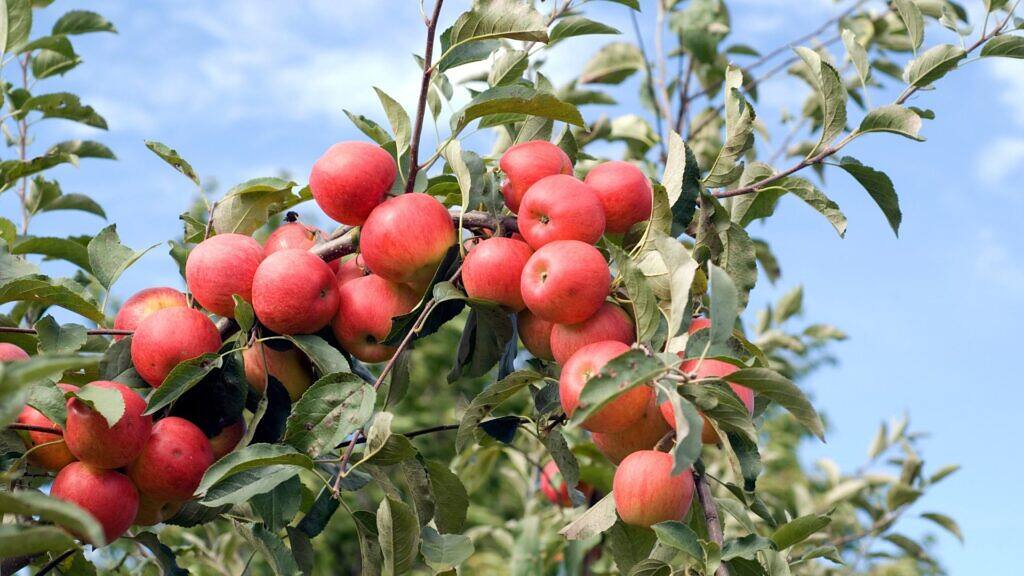
Apple (Malus domestica) is one of the most widely grown temperate fruit trees on the planet, found in commercial and home orchards on every continent. Its fruit, the apple, is among the most consumed in the world, and cultivation of the species dates back thousands of years, following the expansion of trade routes and the history of agriculture itself.
Small to medium in size, Apple combines ornamental and productive value, making it a classic choice for the home orchard and garden. In spring, it is covered in pink-and-white blossoms in a concentrated bloom and, in the following season, produces fruit whose color and flavor vary by cultivar. Although associated with cold regions, the development of low-chill varieties has expanded its cultivation to backyards and orchards in areas where, until just a few decades ago, production was considered unfeasible.
Origin, habitat, and etymology of Apple
Cultivated Apple originated in the Tian Shan mountains of Central Asia, a region that is home to its center of genetic diversity. There, its most likely wild ancestor, Malus sieversii, still grows, with populations that produce fruits of remarkably varied size, color, and flavor. From this core, the apple spread along trade routes linking Asia and Europe, and along the way it hybridized with local species, including European crabapple (Malus sylvestris), which contributed to the hardiness and complex flavors of today’s varieties.
The domestication of the species is closely tied to the development of grafting. Because apple trees do not reproduce their characteristics faithfully from seed, clonal propagation by grafting made it possible to preserve desired varieties and multiply them reliably, a practice the Romans already mastered.
The genus name, Malus, comes from classical Latin and means “apple tree.” The specific epithet domestica also comes from Latin and means “domestic” or “cultivated,” referring to the species’ long presence around homes, backyards, and cultivated areas. One taxonomic note is worth recording: the name Malus domestica is more recent than the synonym Malus pumila, but it was officially conserved by the international botanical community, becoming the accepted and preferred name for orchard apple.
Landscape use of Apple
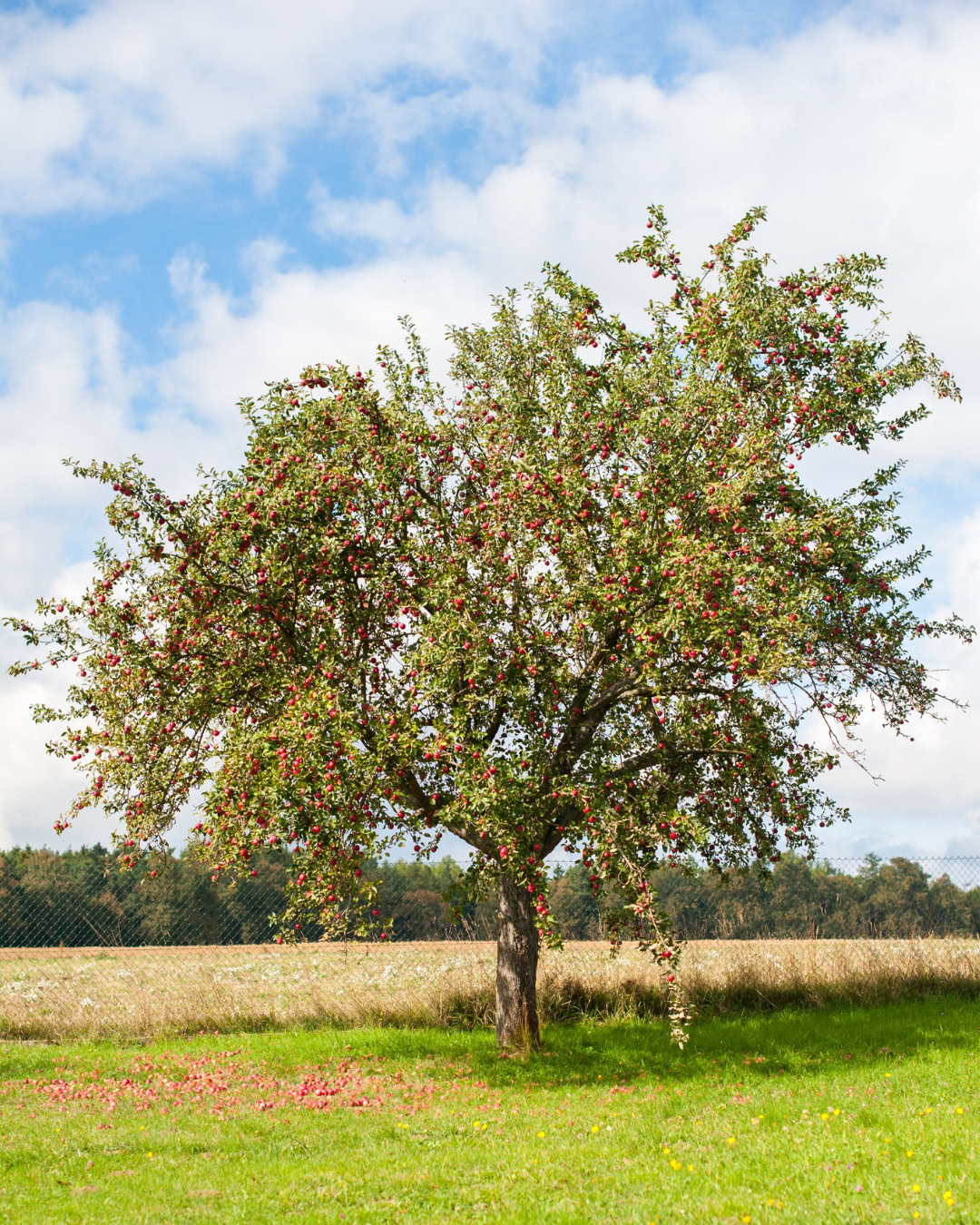
Apple fits well into a range of landscape designs, making it a strong choice for anyone looking to combine beauty with fruit production in the garden. Its height ranges from 6.5 to 33 ft (2 to 10 m), though it is best kept smaller to make hand harvesting easier. Apple is a good choice for rustic and country-style gardens and, above all, for home orchards and edible gardens that combine beauty and utility. During bloom, the clusters of pink-and-white flowers create strong visual appeal and signal the arrival of spring.
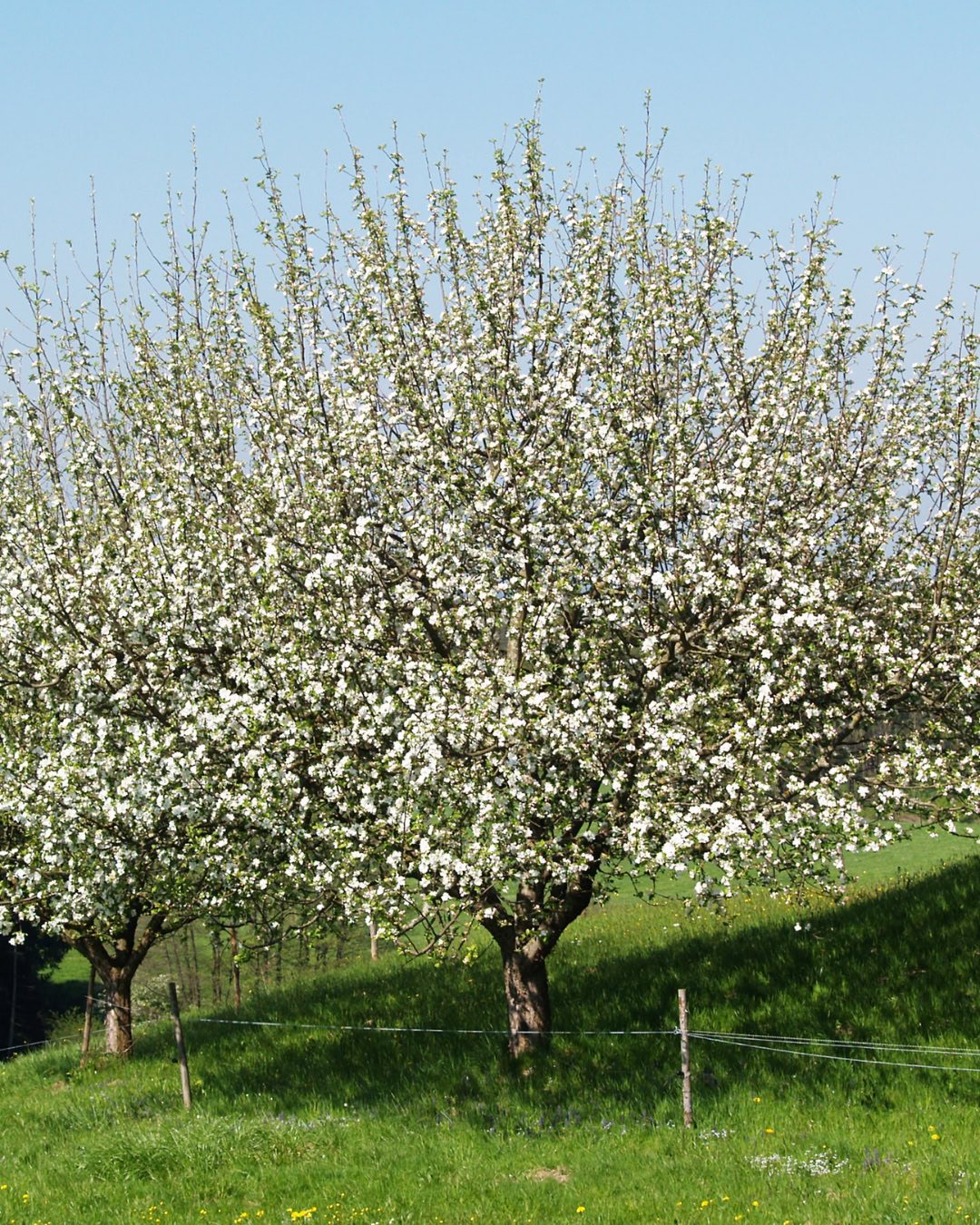
The spacing you choose depends on the rootstock. For standard-size trees, 13 to 20 ft (4 to 6 m) between plants is recommended. In orchards that use dwarfing rootstocks, which produce smaller trees, spacing can be reduced to 3 to 10 ft (1 to 3 m) between plants and 10 to 16 ft (3 to 5 m) between rows, optimizing the use of space. The species’ moderate growth allows for gradual landscape planning.
For layered plantings, Apple can be combined with low-growing groundcovers that tolerate full sun, such as peanut grass (Arachis repens) or white clover (Trifolium repens), which help conserve moisture, increase soil nitrogen levels, and suppress weeds. Shrubs such as azalea (Rhododendron simsii) and camellia (Camellia japonica) add structure and color in different seasons, complementing the apple tree’s temperate-climate setting. In this way, it fits perfectly into Italian, Mediterranean, formal and informal, rustic, and even cottage gardens.
The species adapts to growing in large containers, at least 13 gallons (50 liters), on sunny balconies, terraces, and patios, as long as grafted cultivars on dwarfing or semi-dwarfing rootstocks are chosen.
Not recommended for indoor environments, since it needs plenty of direct sunlight and a period of cold accumulation to fruit properly.
How to care for Apple: growing guide
- Light: Apple needs full sun to grow and fruit well, requiring at least 6 to 8 hours of direct sunlight per day. Adequate light is essential for plant development and for the color and quality of the fruit.
- Soil: Prefers deep soils that give roots room to develop, along with excellent drainage, an essential condition to prevent root rot. It should be fertile and rich in organic matter, with ideal pH between 6.0 and 6.5, that is, slightly acidic, while tolerating values close to neutral.
- Watering: Water regularly, keeping the soil evenly moist without waterlogging. A steady supply of water is especially important during dry spells and while flowers and fruit are developing, stages when lack of water reduces crop size and quality.
- Climate: Apple is a temperate-climate plant. Most cultivars require a period of cold accumulation, with temperatures below 45.0 °F (7.2 °C), to break dormancy and begin flowering and fruiting. This requirement varies widely: traditional cultivars such as those in the ‘Gala’ and ‘Fuji’ groups need several hundred to more than 1,000 chill hours, while low-chill cultivars need only about 300 to 450 hours. Choosing varieties adapted to the local climate is the most critical factor for successful growing.
- Bud break induction: In regions with mild winters, where natural cold is insufficient even for adapted cultivars, bud break may be irregular. In these cases, growers use bud-break inducers, usually formulations based on hydrogen cyanamide combined with mineral oil, applied in late winter to even out bud opening. This is a technical practice, limited to commercial fruit production. Attention: Do not use products not licensed for garden use. If in doubt, talk to a specialized agricultural extension professional.
- Air humidity: Prefers moderate humidity. Good air circulation around the plant is beneficial because it reduces the development of fungal diseases on leaves and fruit.
- Fertilizing: At planting, work in compost and well-aged manure to enrich the soil and improve its structure. For maintenance, apply a balanced NPK fertilizer such as 10-10-10 every spring, or a fruit-tree formula such as 4-14-8 or 10-20-10. Complementary organic fertilizers, such as bone meal, a source of phosphorus, and wood ash, a source of potassium, can also be used. Foliar feeding is an aid in specific cases of nutrient deficiency.
- Pruning: Pruning is an essential, multi-purpose practice. In the first few years, training pruning establishes the canopy shape and branch structure. Fruiting pruning, done every year in winter during dormancy, removes old, diseased, unproductive, or poorly positioned branches, encouraging renewal and production. The goal should be an open, well-lit, low canopy that makes harvesting easier. Dead, damaged, or diseased branches should be removed at any time of year in what is called cleanup pruning.
- Staking: Recommended in the first few years after planting, especially for cultivars grafted onto dwarfing rootstocks, whose root systems provide less anchorage. The stake helps keep the trunk straight and supports the plant, preventing branch breakage under the weight of the fruit.
- Fruit thinning: This consists of removing excess small fruit, leaving one to two per cluster. Thinning prevents overloading the tree, encourages larger, higher-quality fruit, and helps prevent alternate bearing, the phenomenon in which the plant produces heavily one year and lightly the next.
- Pollination: Most cultivars are self-sterile and require cross-pollination. You need to plant at least two compatible varieties that bloom at the same time, ensuring fertilization and fruit set. The presence of bees is essential in this process. Many beekeepers offer orchard pollination services; look for a professional in this field in your city to rent a few hives during the bloom period.
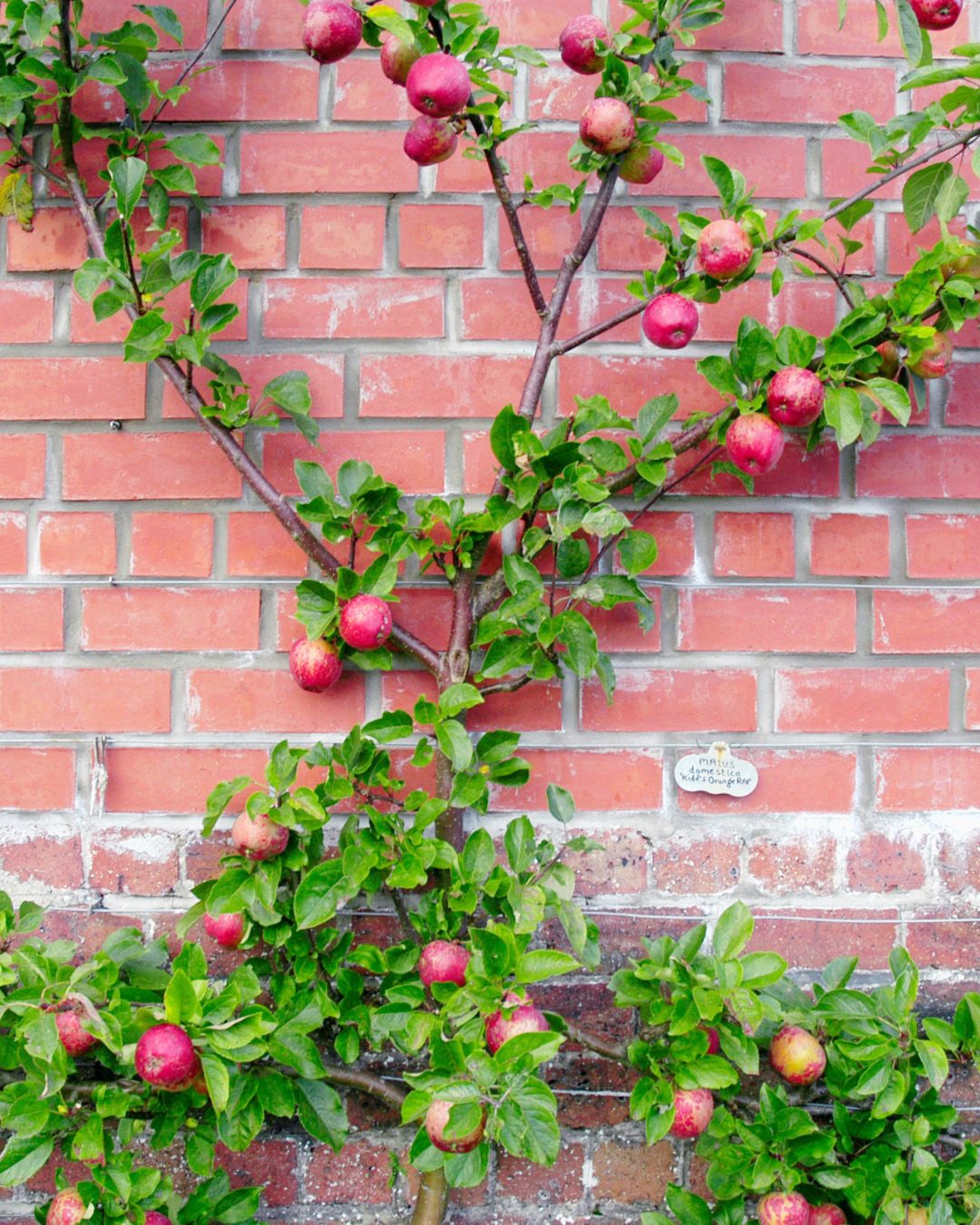
- Espalier training: In the home garden, espalier lets you grow the plant in a small space, along walls, fences, or wires, while also serving as an ornamental feature. A single-plane canopy improves light penetration and air circulation, helping fruit color develop and reducing disease. It also makes pruning, thinning, pest control, and harvest easier. To train an espalier, use a grafted sapling on a dwarfing or semi-dwarfing rootstock and install posts with horizontal wires spaced every 16 to 20 in (40 to 50 cm). On walls, choose the north-facing side in the Southern Hemisphere and the south-facing side in the Northern Hemisphere. The most common forms include horizontal cordon, palmette, U-shape, candelabra, and Belgian fence.
How to propagate Apple seedlings
Apple propagation is done predominantly by grafting, either budding or whip grafting, joining the desired cultivar to specific rootstocks. Rootstocks are selected for traits such as vigor, disease resistance, tolerance to different soils, and, above all, the effect they have on the plant’s final size. Dwarfing rootstocks produce compact trees that are easier to manage and harvest, while more vigorous ones produce larger, hardier plants. In Brazil, it is common to use combinations that bring together the hardiness of a vigorous rootstock with the dwarfing effect of an interstock.
Cuttings can be used to multiply some rootstocks, but this is a technique rarely used for fruit cultivars themselves. Propagation by seed is not recommended for fruit production, since the resulting plants do not keep the genetic characteristics of the mother plant. This method is used mainly in breeding programs, to create new varieties, and to produce seedling rootstocks.
Botanical description of Malus domestica
Apple is a small to medium deciduous tree, usually reaching 6.5 to 33 ft (2 to 10 m) tall. Under ideal conditions and without size-controlling pruning, it can reach 49 ft (15 m), depending on the cultivar and rootstock used. Its entire structure is woody.
The reproductive system is hermaphroditic, with flowers that contain both male and female organs. Even so, many cultivars are self-sterile and depend on cross-pollination with another compatible variety to set fruit (it does not help to plant clones of the same variety). The root system varies according to the rootstock: plants grown from seed tend to develop a taproot, while those grafted onto dwarfing rootstocks have more fibrous, shallow roots, which reinforces the importance of staking.
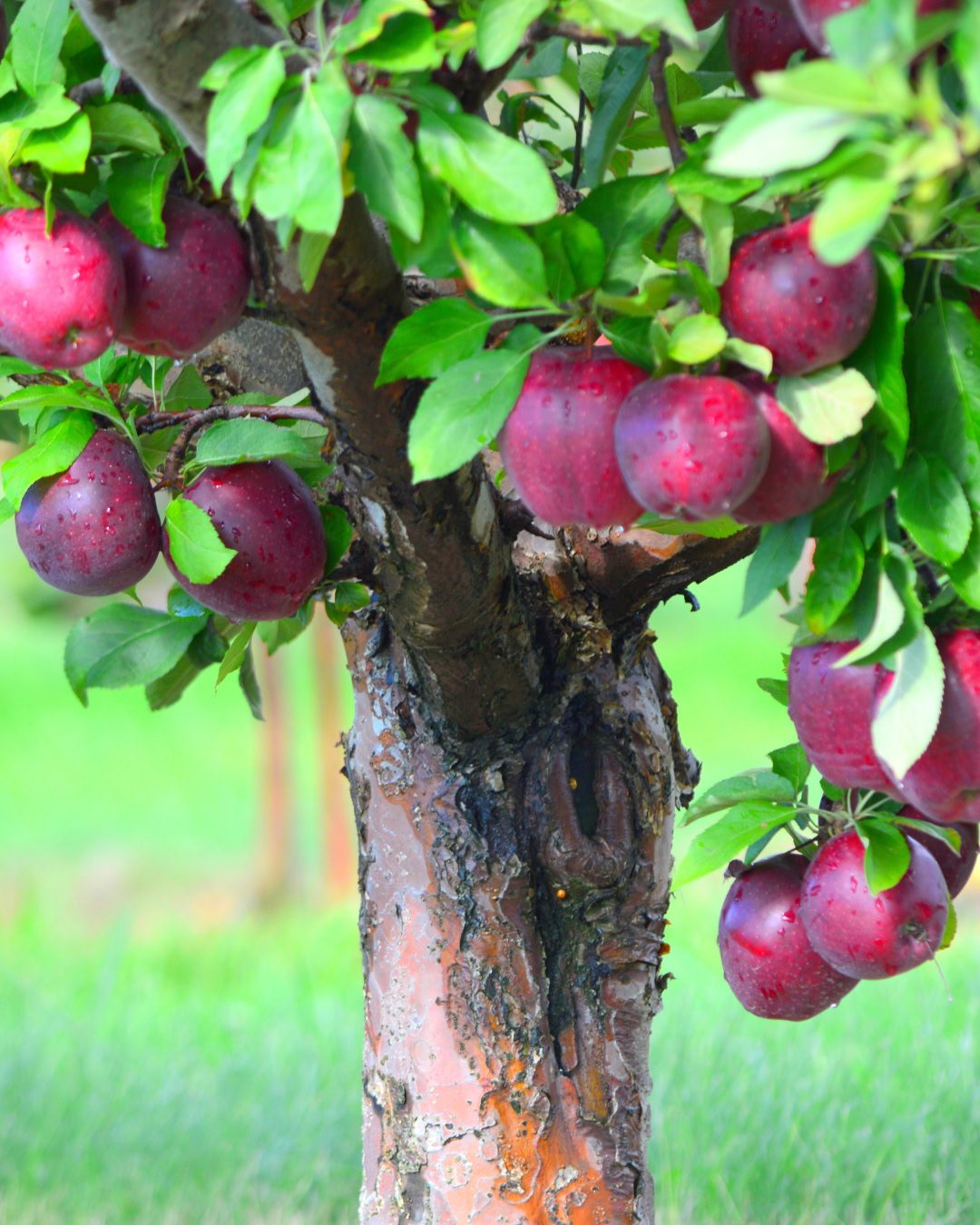
The main stem is woody, with smooth, grayish bark on young plants that gradually becomes rougher, fissured, and peeling with age. The branches spread out, forming a rounded to oval canopy. Lenticels are visible on young branches, whose color ranges from reddish to greenish brown.
The leaves are alternate and simple, oval to elliptical in shape, with a serrated or crenate margin, an acuminate tip, and a cuneate or rounded base. Length ranges from 2 to 5 in (5 to 12 cm). The upper surface is dark green and usually glabrous, while the lower surface is lighter and may be pubescent, covered with fine hairs. Venation is pinnate.
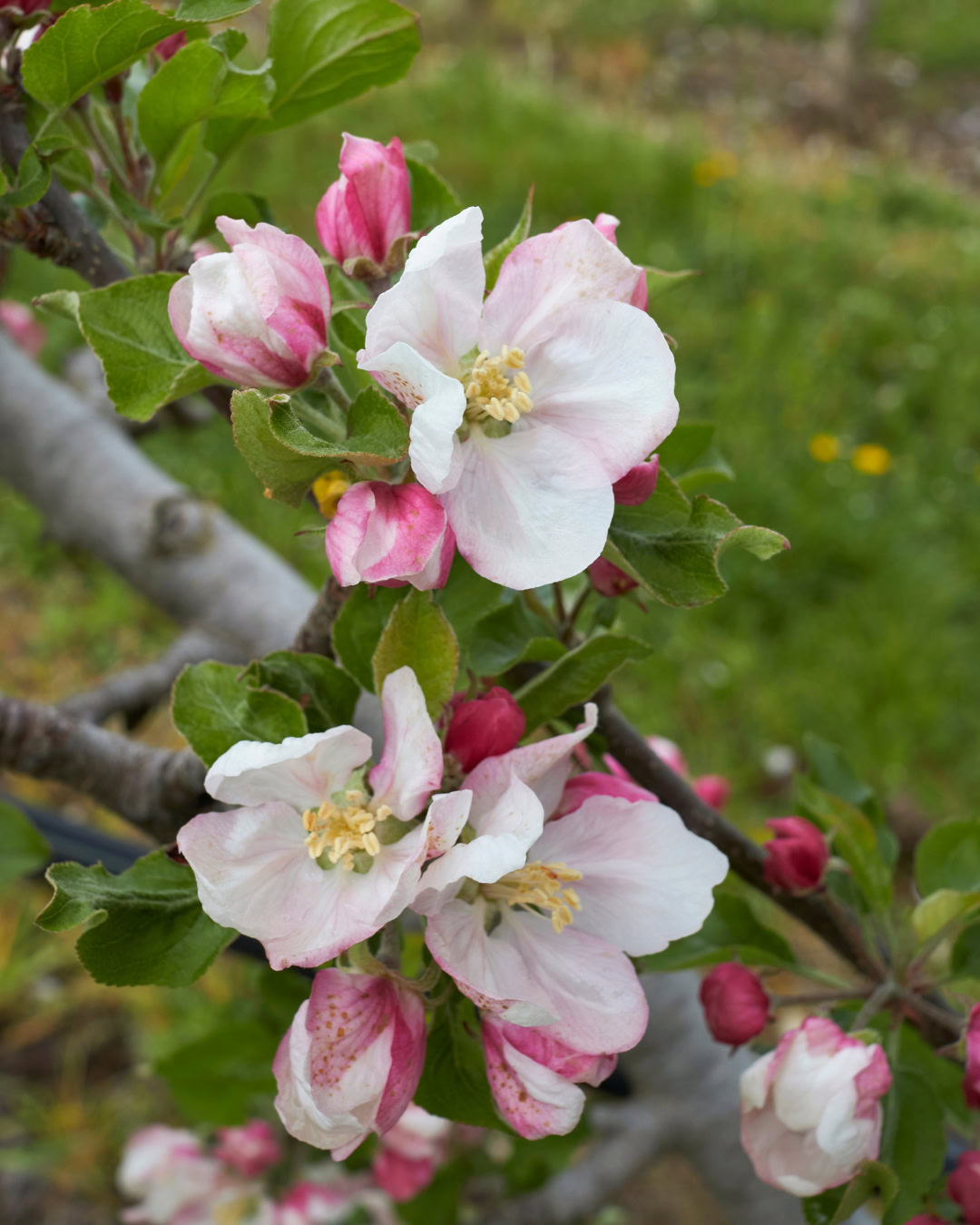
The inflorescence is a corymb, usually with 4 to 6 flowers, which appear on spurs or short shoots. The central flower, known as the “king bloom,” is the first to open and stands out as the largest and most vigorous. Blooming occurs from late winter to early spring, depending on the cultivar and the accumulation of chill hours, and is concentrated into a period of a few weeks.
The flowers are pentamerous, with five petals in shades from white to light pink, sometimes more pink on the outer side. They are 1 to 1.6 in (2.5 to 4 cm) across and have numerous yellow stamens. Nectar is produced at the base of the stamens and attracts pollinators. Pollination is entomophilous, carried out predominantly by bees (Apis mellifera) and other insects.
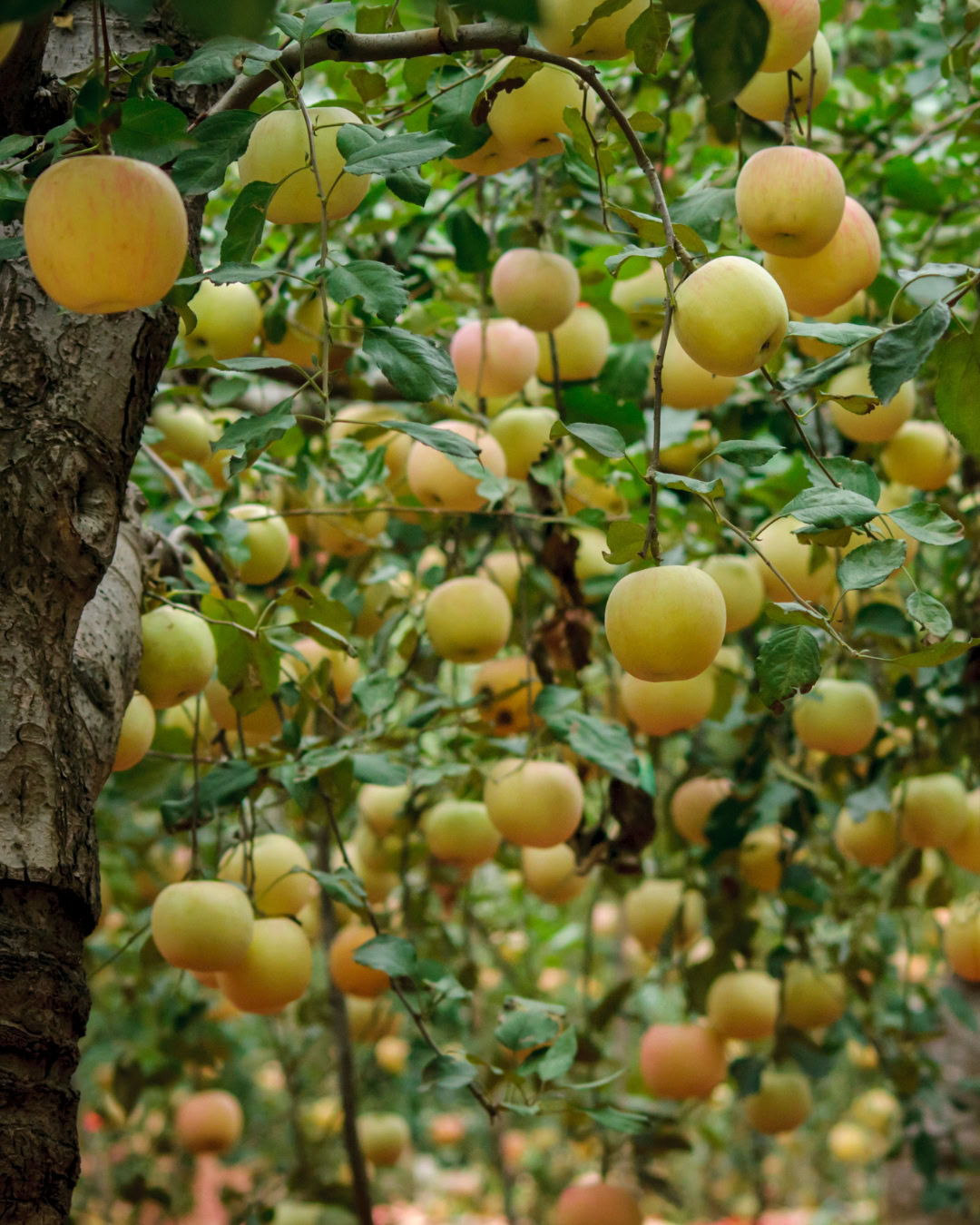
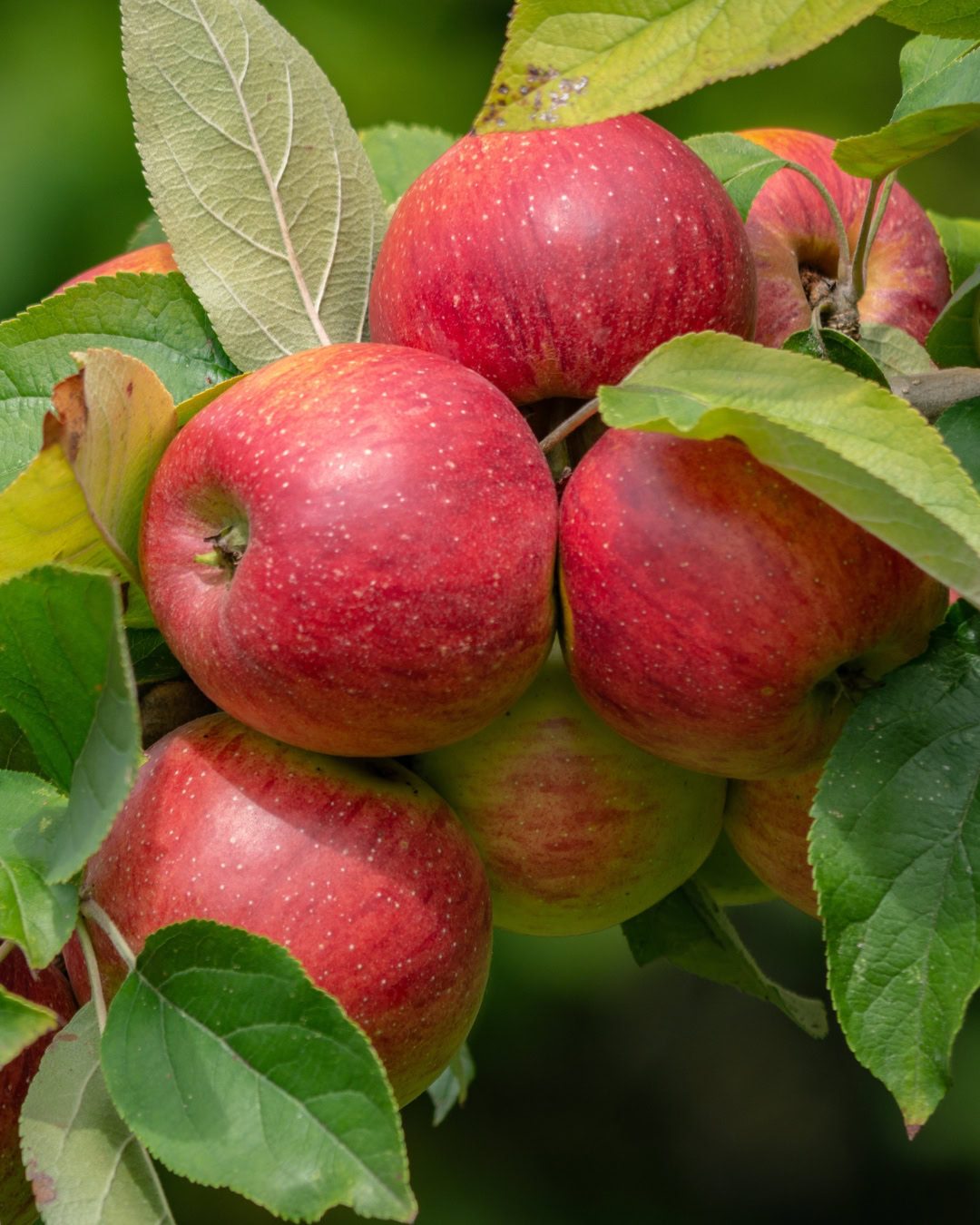
The fruit is a pome, a fleshy accessory fruit that develops from the floral receptacle, with the true fruit corresponding to the central core that houses the seeds. It is round to oval, measuring 2 to 4 in (5 to 10 cm) in diameter depending on the cultivar. The skin may be smooth, glossy, or matte, in green, yellow, red, pink, or combinations and stripes. The flesh is firm, juicy, and aromatic. The seeds are small, smooth, dark brown, and teardrop-shaped. Dispersal occurs mainly through animals eating the fruit, a process known as zoochory.
Main varieties and cultivars
There are thousands of cataloged apple cultivars, the result of centuries of selection and breeding.
They differ in color, flavor, texture, ripening time, culinary use, and, above all, chilling requirement, a trait that determines where each one can be grown.
Globally Important Cultivars
- ‘Gala’: Fruit with reddish skin over a yellow background, with crisp, sweet flesh. It is one of the most widely planted cultivars in the world and in Brazil.
- ‘Fuji’: Produces large, very crisp, sweet fruit with pink to reddish skin and distinct striping. Also widely grown in southern Brazil.
- ‘Cripps Pink’ (Pink Lady): Bright pink skin, firm flesh, and a sweet-tart flavor, with late ripening.
- ‘Granny Smith’: Recognizable by its deep green skin, firm flesh, and tart flavor, highly valued both for fresh eating in natura and for culinary use.
- ‘Golden Delicious’: Yellow, sweet, aromatic fruit, a classic standard cultivar used as a reference in breeding programs.
Brazilian Low-Chill Cultivars
The development of cultivars adapted to mild winters, led mainly by the Agronomic Institute of Paraná (IAPAR) and Epagri in Santa Catarina, was decisive in expanding the crop beyond the traditional highland growing areas of southern Brazil. These varieties made planting possible in parts of the Southeast, the Central-West, and even high-elevation areas of the Northeast.
- ‘Eva’ (IAPAR 75): Brazilian cultivar resulting from a cross between ‘Anna’ and ‘Gala’, released in 1999. It requires 300 to 350 chill hours, has early ripening, good productivity, and resistance to apple scab. It is grown from Santa Catarina to warmer states such as Minas Gerais and Bahia.
- ‘Julieta’ (IPR Julieta): Developed by IAPAR as a pollinator for ‘Eva’, it needs 300 to 450 chill hours and shows good resistance to apple leaf blotch.
- ‘Princesa’: Low-chill cultivar adapted to warm regions, with reddish-skinned fruit and sweet flesh.
- ‘Condessa’ (Epagri 408): Santa Catarina cultivar with low chilling requirement, valued for its hardiness and productivity, with greenish-yellow fruit and balanced flavor.
Pests, Diseases, and Solutions
Apple can be attacked by several pests. Aphids, scale insects, and mites suck sap from leaves and shoots, harming plant development. The South American fruit fly (Anastrepha fraterculus) and the Mediterranean fruit fly (Ceratitis capitata) damage the fruit directly, making it unfit for consumption. In southern Brazil, another important pest is the oriental fruit moth (Grapholita molesta), whose larvae bore into fruit and shoot tips, and the leafroller (Bonagota salubricola), a native pest that attacks the ‘Fuji’ cultivar in particular. Worldwide, the most emblematic pest of the crop is the codling moth (Cydia pomonella), a constant target of phytosanitary monitoring.
Among diseases, apple scab (Venturia inaequalis) is the most important, causing dark spots on leaves, fruit, and branches. Powdery mildew (Podosphaera leucotricha) appears as a white powder on leaves and shoots. Brown rot (Monilinia fructicola) rots the fruit, and Gala leaf blotch, associated with the Glomerella complex, causes severe defoliation and is one of the main concerns in Brazilian orchards.
Two diseases deserve special attention because they are quarantine concerns. European canker of pome fruits, caused by the fungus Neonectria ditissima, attacks branches, limbs, and the trunk, and can kill plants. In Brazil, it is present in the states of Paraná, Santa Catarina, and Rio Grande do Sul and is considered a quarantine pest under official control, which makes the use of certified seedlings essential. Fire blight, caused by the bacterium Erwinia amylovora, is one of the most destructive diseases of apples and pears in the Northern Hemisphere, but it remains an absent quarantine pest in Brazil, under constant monitoring to prevent its introduction.
For management, prevention is always the best approach. Keep the plant healthy with proper fertilization and watering, and prune to improve air circulation. Removing and destroying fallen leaves, mummified fruit, and diseased branches reduces the source of inoculum for the next season.
Against sap-sucking pests such as aphids and scale insects, solutions based on diluted coconut soap or potassium soap and neem oil can be used. Fungal diseases can be prevented with Bordeaux mixture applied annually in late winter, right after pruning. In commercial orchards, integrated management combines monitoring, biological control, and targeted applications. To help identify problems, growers and gardeners can use diagnostic tools such as the Uzum system, from Embrapa. In cases of severe infestations, it is advisable to consult an agronomist.
Harvest and fruit storage
The right harvest time is determined by indicators such as the background color of the skin, the firmness of the flesh, the sugar content, and how easily the fruit detaches from the branch. Harvesting at the right moment is key to the quality and keeping ability of the apple, since fruit picked too green will not finish developing flavor, and overripe fruit has a short shelf life.
Apple is a climacteric fruit, meaning it continues ripening after harvest. This characteristic allows for extended storage under refrigeration and, on a commercial scale, in controlled-atmosphere rooms, a technology that reduces fruit respiration and makes it possible to offer good-quality apples throughout the year. At home, apples keep for several weeks in the coldest part of the refrigerator. Because they release ethylene, a gas that speeds ripening, it is recommended to keep them separate from leaves and sensitive fruits that you want to store longer.
Apple in the home orchard: importance and interesting facts
Anyone who plants an apple tree in the backyard is growing one of the most important fruit trees in agricultural history. Apple ranks among the most widely produced fruits in the world, with annual harvests exceeding 80 million tons, and China alone accounts for more than half of that volume, followed by the European Union, Turkey, the United States, and India. For the home gardener, that scale has a practical effect: centuries of selection have resulted in thousands of cultivars and a wide range of rootstocks that make it possible to adapt the plant to different types of gardens and backyards, including containers.
In Brazil, production is around 1.3 million tons per harvest and is concentrated almost entirely in the South, where winters are more severe. Santa Catarina leads, with São Joaquim and Fraiburgo standing out, followed by Rio Grande do Sul, in the Vacaria region, and Paraná. Outside this range, success in the garden and orchard depends directly on choosing low-chill cultivars, such as those developed by IAPAR and Epagri, without which the plant may even grow, but will not bear fruit.
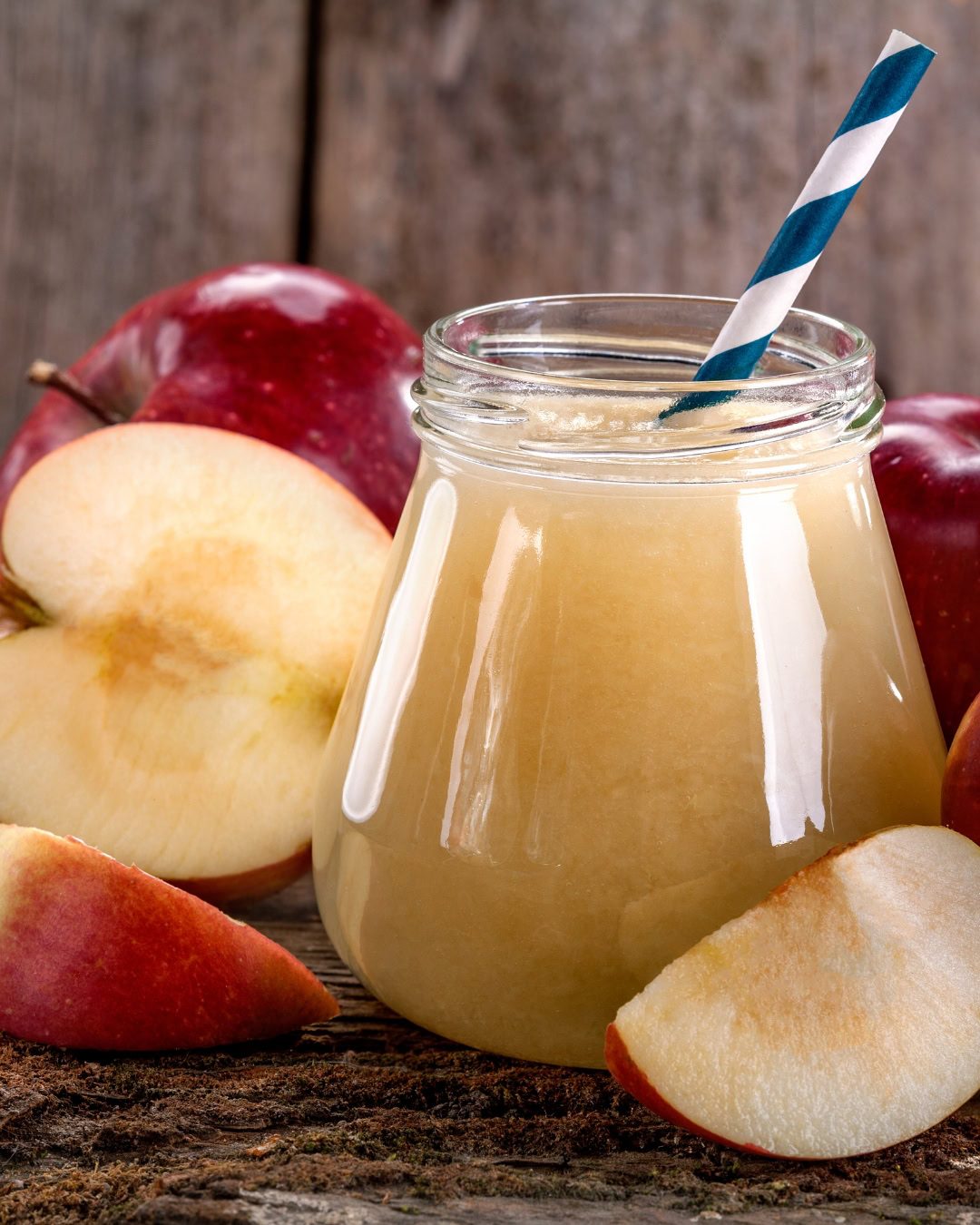
The reward of a home orchard goes beyond fresh eating. A good harvest can be used in juices, purees, jellies, pies, and preserves, as well as dried apple, apple cider vinegar, and cider, the latter a fermented beverage with a long tradition. From a nutritional standpoint, apple is a source of fiber, vitamin C, and antioxidants, which adds to its appeal for anyone growing their own food. In addition, its wood is dense and fine-grained, occasionally used in fine woodworking and highly valued for smoking foods, which it gives a sweet flavor.