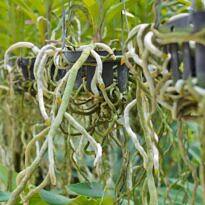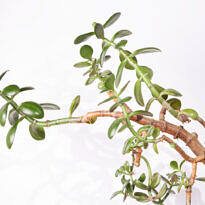
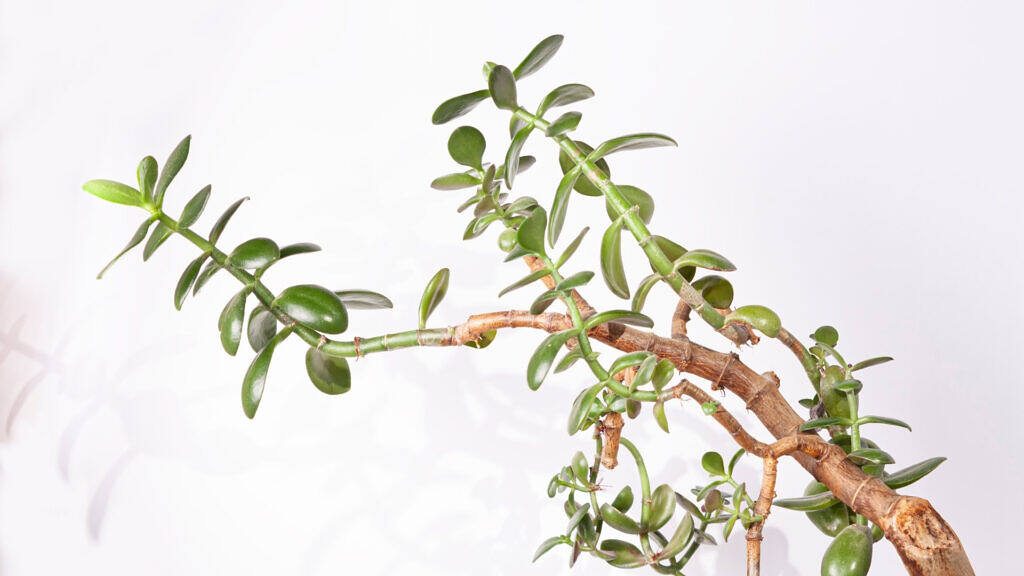
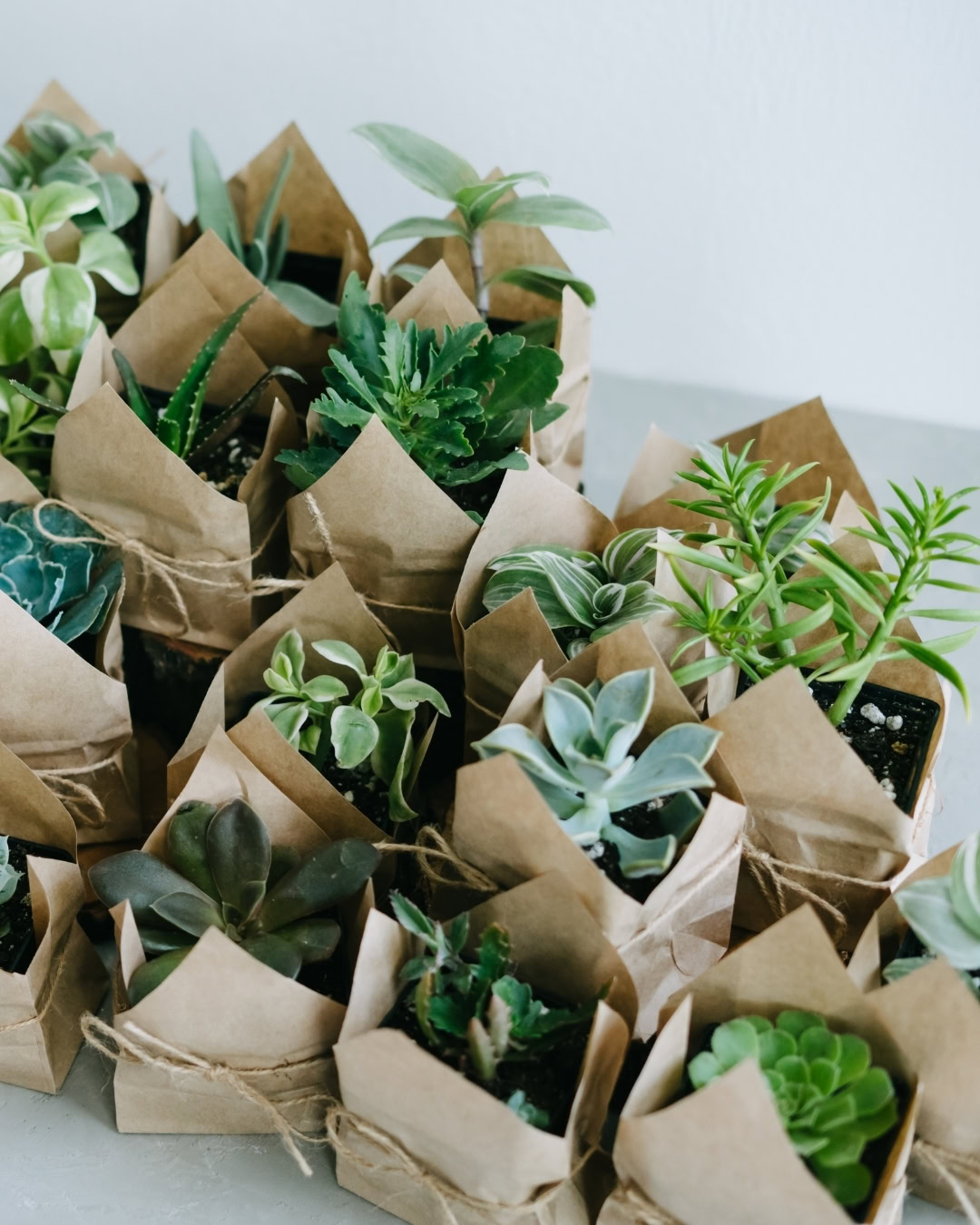
The other day, while having coffee at a friend’s house, I came across a scene that made me laugh and broke my heart at the same time: a row of mini succulents she had bought at the supermarket, arranged on a shelf far from any window. In less than two months, those plump, compact little plants had turned into a line of crooked tiny towers, with stretched, pale stems and leaves falling off. My friend looked at me a little embarrassed and said, “I think they’re dying, right?”
They weren’t dying — they were etiolated. And that made me reflect: when we talk about etiolation, the subject almost always revolves around cacti and succulents, precisely because they show the problem very quickly and visibly. But the truth is that any plant can become etiolated — from the orchid sitting in a windowless bathroom to the tomato plant in your vegetable garden, as well as ferns, philodendrons, anthuriums, and even lettuce seedlings in trays. Etiolation is a universal plant language. And learning how to decode it is a game changer in the garden.
What etiolation is and why any plant can show this symptom
Etiolation (or etiolization, if you prefer the more common spelling in scientific literature) is a natural physiological response that plants develop when they do not receive enough light to keep their metabolism balanced. It is not a disease, nor a pest, nor a defect — it is a survival mechanism shaped by millions of years of evolution.
In nature, imagine a seed germinating under a layer of fallen leaves or buried in the soil. It needs to grow quickly to reach the light before its reserves run out. That is where etiolation comes in: the plant lengthens stems and internodes in a race against time, saving energy by reducing the production of chlorophyll and other pigments (which are only useful when light is available).
The problem is that, in the garden or indoors, this strategy stops being useful. When an ornamental plant becomes etiolated, it is not escaping fallen leaves — it is warning us that the place where we put it simply does not have enough light to keep it healthy.
Phytochromes: the “eyes” your plant uses to measure light
Inside each leaf are photoreceptor proteins called phytochromes. They act like tiny sensors that measure not only the amount of light, but also its quality — mainly the ratio between red light and far-red light.
When light is abundant and balanced, the phytochrome stays in its active form (Pfr) and signals to the plant: “everything is fine, grow in a balanced way.” When light is scarce or filtered by other leaves, the phytochrome changes to its inactive form (Pr) and raises the alarm: “we need light, stretch the stems!” The result is an increase in the production of auxins — hormones that cause excessive elongation of stem cells.
How to recognize etiolation symptoms in different plant groups
Etiolation appears in different ways depending on the type of plant. Knowing how to recognize the specific signs of each group helps you act before the problem becomes irreversible.
Foliage ornamentals (philodendrons, pothos, anthuriums, ferns)
- Excessively long petioles: the little “stalk” that connects the leaf to the stem becomes disproportionately long.
- Small, pale leaves: the plant cannot develop large leaves because it does not have the energy to do so.
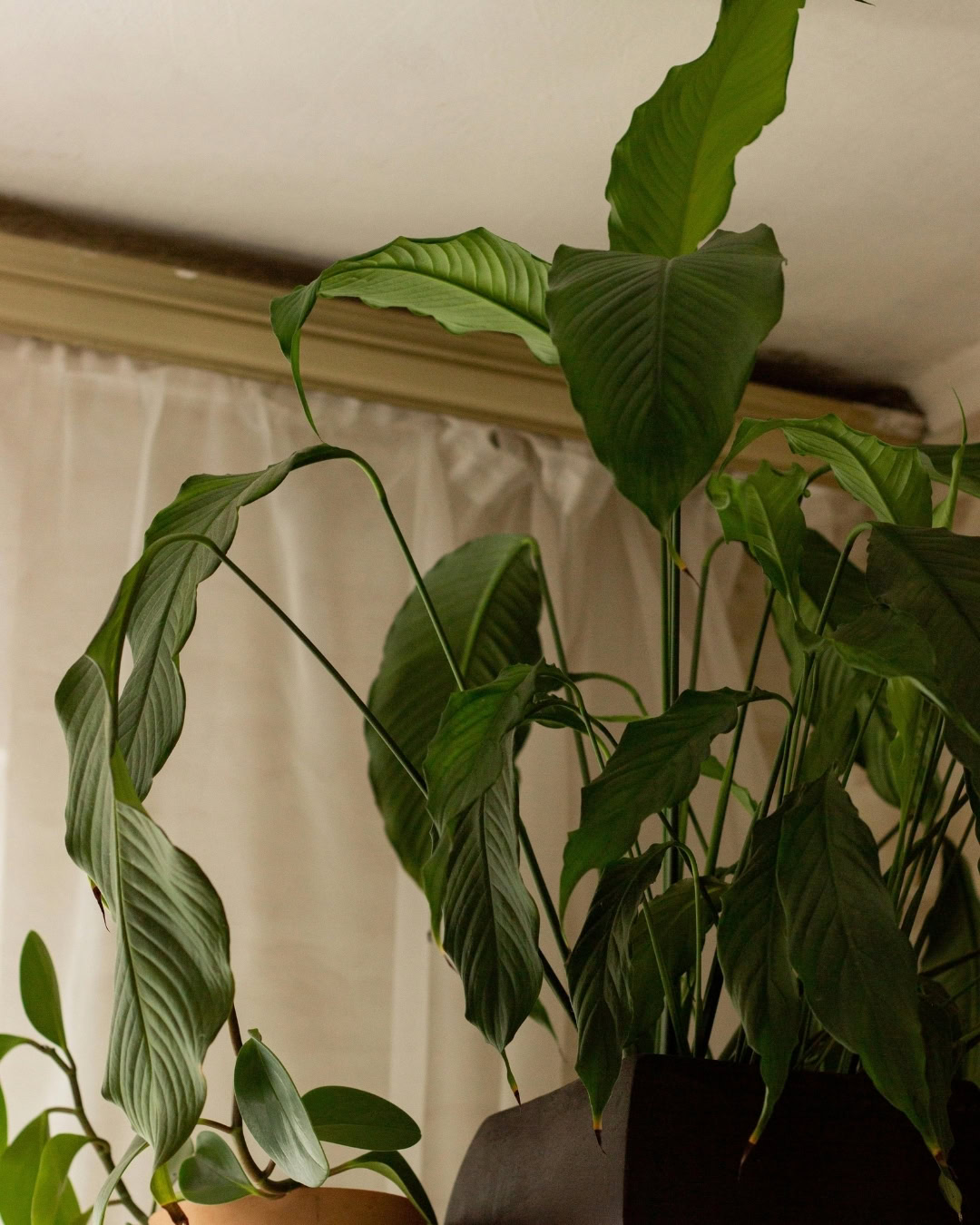
- Dark leaves: in these species, chlorophyll production is usually increased. The plant takes on a bottle-green tone. It is nature trying to compensate for the lack of light by increasing chlorophyll concentration.
- No flowering: a classic case in peace lilies, violets, anthuriums, or phalaenopsis orchids. The plant simply stops blooming because there is not enough light for it.
- Loss of variegation: marble pothos, variegated philodendrons, and calatheas may lose their light markings and revert to being entirely green — a desperate attempt to maximize light absorption.
- “Necked” stems between leaves: in plants such as pothos, philodendrons, and monsteras, the distance between one node and the next increases noticeably.
Herbaceous plants, seedlings, and vegetables
In the case of lettuce, tomato, pepper, and other vegetable seedlings, etiolation is one of the horticulturist’s main enemies. Inexperienced gardeners often germinate their seeds in places protected from strong sun, but forget to acclimate the plants to the sun at the right time. The result is good germination, but seedlings that are too weak.
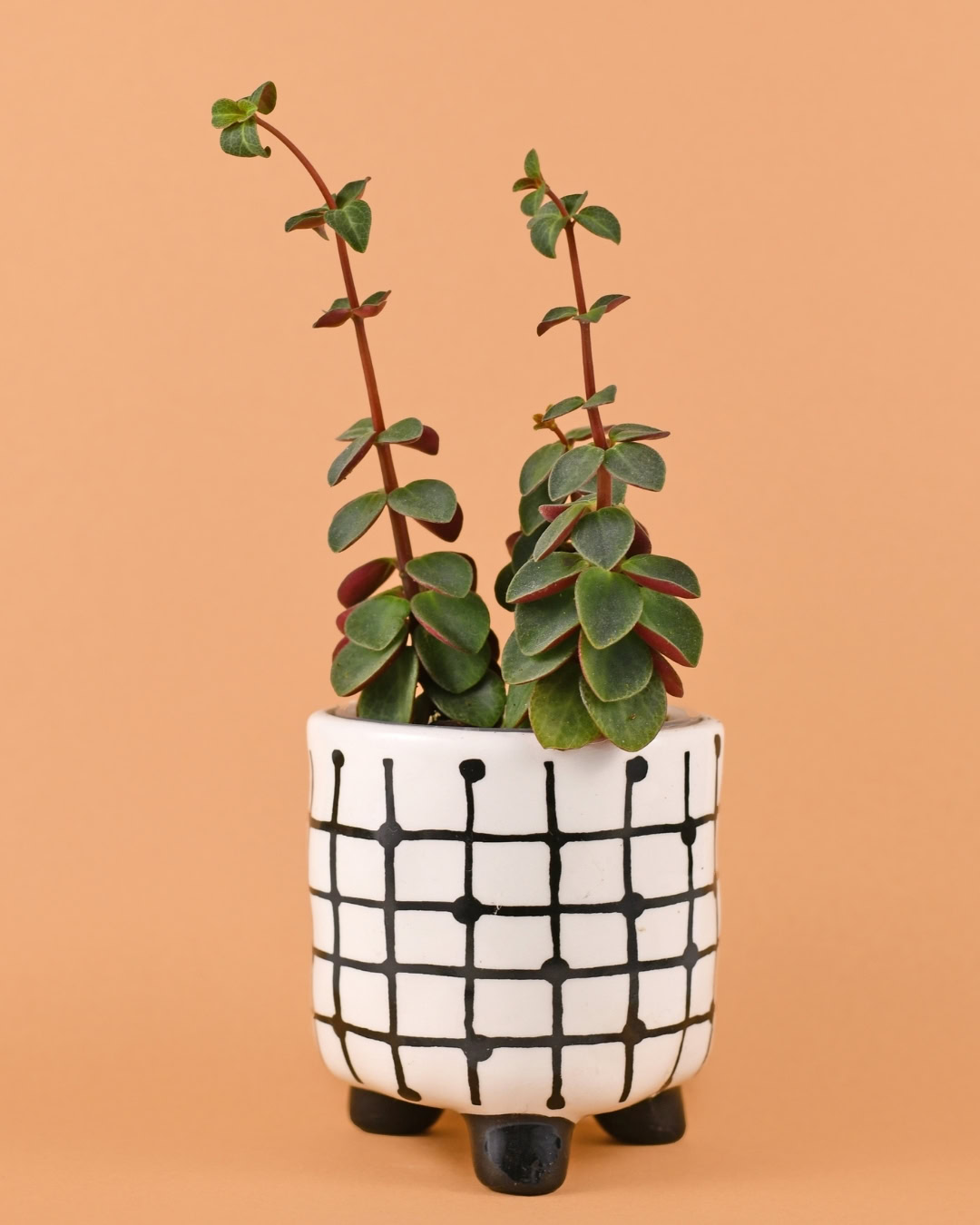
Seedlings that become etiolated have thin, long, fragile stems that topple over and break easily and pale or purplish leaves. These “leggy” seedlings suffer greatly when transplanted and rarely result in productive plants—significant waste for anyone maintaining a home vegetable garden.
Woody plants and ornamental shrubs
Shrubs such as Buxus, Hibiscos, and rose bushes grown in shaded locations develop long, thin branches with few lateral branches and sparse flowering. The plant spends all its energy trying to reach light upward, forgetting to form a dense canopy. The lower part of the shrub is usually the first to suffer.
Succulents, cacti, and other full-sun plants
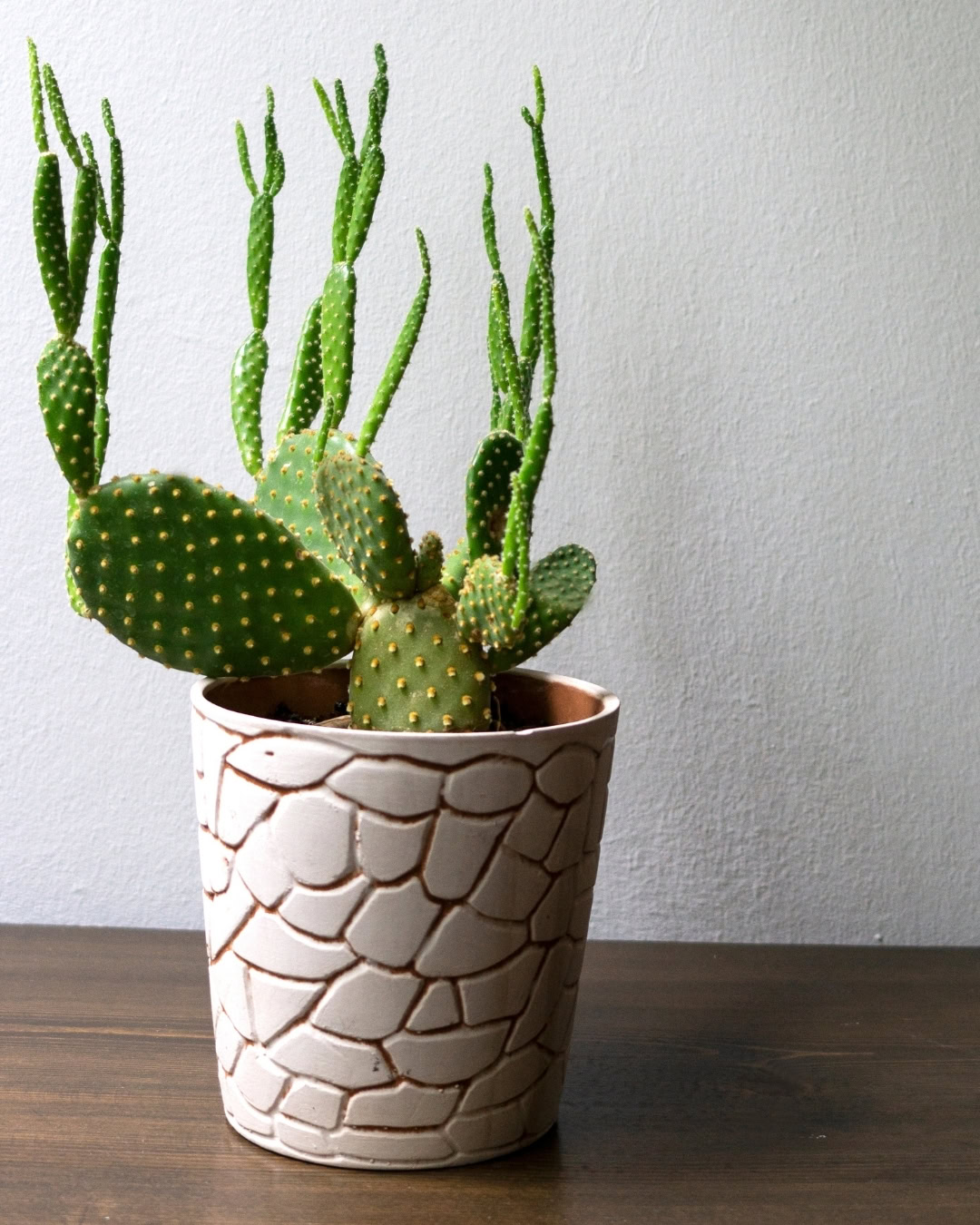
This is the easiest group to identify: the classic succulent “Tower of Pisa.” Rosettes that were once compact come apart, stems become elongated and thin, and the leaves lose color, texture, the waxy bloom, and fall off. Because these are plants adapted to extremely high light levels, the symptoms appear quickly—within weeks, not months. And this is where I usually apply a specific technique called beheading, which I have already explained in detail in an article dedicated to recovering etiolated succulents.
The shade-avoidance syndrome: why even “resistant” plants become etiolated
Here is an interesting fact that completely changes the way we position plants in the home. There is a scientific phenomenon known as “shade avoidance syndrome” (shade avoidance syndrome, in English), which affects virtually all plants—including those sold as “ideal for shady environments.”
What happens is this: plant leaves absorb mainly red light (wavelength around 660 nm) and reflect far-red light (around 730 nm). When a plant is beneath other foliage or in an environment where light reaches it filtered by curtains, blinds, and furniture, it receives a higher proportion of far-red light. For phytochromes, this confirms that the plant is being “shaded by competitors” and triggers the elongation response.
A doctoral study developed at Unesp demonstrated that this response involves a complex interaction between phytochromes and auxins, explaining why even shade-tolerant plants show abnormal elongation in environments with inadequate light. In other words: “tolerating shade” does not mean “living well in the dark.” Every plant, absolutely every plant, needs light—the difference is in intensity and duration.
How to address the cause: light adjustments that reverse early etiolation
The good news is that etiolation, when identified early, can be stopped—and in some cases the plant can recover without drastic interventions. The key is to address the cause before worrying about the consequence.
Gradual repositioning of the plant
If you identified etiolation at the very beginning (stems a little longer than normal, but without severe deformation), the first step is to move the plant to a brighter spot. But pay attention: never do this abruptly. Plants that have lived in low light develop leaves adapted to lower light, with more exposed chlorophyll. Putting them directly into strong sun causes irreversible burns, even if they are full-sun plants.
The rule is simple: increase light exposure in 5- to 7-day steps, starting with bright indirect light, then filtered morning sun, then partial shade (sun in the morning and afternoon), and only then direct sun (when the species requires it). This process usually takes about 30 days.
For plants established in the garden, such as shrubs, the solution is sometimes to prune the tree that is casting too much shade, or remove that barrier that was forgotten after construction. Formal plantings, such as hedges with geometric shapes, can often be restored with the proper pruning technique. If changing the environment is not possible, seriously consider replacing the species with one that is more tolerant of low-light conditions.
Periodic rotation of pots
A practice I have used for years and that makes all the difference: turn the pots every 10 to 15 days. This prevents the plant from growing crooked toward a single light source and ensures more symmetrical development. Simple, free, and effective.
But be careful: rotation is only recommended for plants in which radial symmetry is desired, such as ferns, succulents, cacti, bromeliads, pilea, African violets, etc. Don’t keep turning your pothos or philodendron if the goal is for it to climb the wall, or an orchid with its leaves facing the window: just leave it alone in the same position.
Supplemental artificial lighting
In apartments and spaces without enough natural light, artificial lighting is a modern solution that is here to stay. Look for lamps labeled “grow LED full spectrum” or “LED grow strip for plants” at garden centers and online stores. You don’t need to spend a fortune—standard LED bulbs with a 6500K color temperature (cool white light) already help a lot when placed 8-12 inches (20-30 cm) above the plant canopy and left on for 10-12 hours a day. Caution: Do not place heat-emitting bulbs too close to your plants, or instead of a well-lit plant, you’ll end up with a baked one.
Reviewing watering and fertilization
Etiolated plants are often in environments with excess moisture (less light usually means less evapotranspiration). Reduce watering, let the potting mix dry out between waterings, and avoid excessive nitrogen fertilizers—nitrogen stimulates vegetative growth and can worsen etiolation. Prefer balanced fertilizers with even NPK or a higher phosphorus and potassium content.
How to address the consequences: restoring the appearance of an already etiolated plant
If etiolation is already advanced—with deformed stems, very long internodes, and significant leaf drop—adjusting the light alone will not solve it. Etiolated tissue is permanent: that thin, elongated stem will not “shrink” back to its original compact form. In this case, we need to intervene.
Training pruning for ornamental and shrub plants
For philodendrons, pothos, ficus, hibiscus, roses, and most woody or semi-woody plants, one solution is heading back pruning. Cut back the etiolated branches, leaving 4 to 8 inches (10 to 20 cm) of stem, always above a node or lateral bud. This stimulates the sprouting of new branches from the lateral buds, which will develop under adequate light conditions (provided you have already corrected the environment).
Always use pruning shears sterilized with 70% alcohol and make clean, slightly angled cuts without crushing the tissue. In plants that produce milky latex, such as euphorbias and ficus, wear gloves—this latex can irritate the skin.
Air layering: recovering indoor trees and shrubs without losing the plant
For ornamental trees and shrubs grown indoors—such as Ficus lyrata (fiddle-leaf fig), Ficus elastica (rubber plant), older aglaonemas, dracaenas, and pachiras that have ended up with a long, skinny, bare trunk at the bottom and a “tuft” of leaves up top—air layering is the dream technique. It allows you to “turn the top part of the plant into a new rooted cutting” without running the risk of losing everything in a drastic cut.
As I usually explain to my students: air layering fools the plant. You force the stem to produce roots at a specific point while it is still connected to the mother plant, and only then do you separate that rooted section to plant it in a new pot. Before moving on to this technique, remember to correct the environment (the cause of etiolation).
The step-by-step process is as follows:
- Choose the cutting point just below the still-healthy area (generally about 6 to 12 inches (15 to 30 cm) below the last leaves).
- Girdle the stem: with a clean utility knife, remove a circular strip of bark about 0.8 to 1.2 inches (2 to 3 cm) wide, exposing the wood. In more delicate herbaceous plants, a diagonal cut halfway through the stem, held open with a toothpick, is enough.
- Apply powdered rooting hormone (IBA) to the exposed area.
- Wrap with moist growing media: use sphagnum moss (sphagnum), previously hydrated and well squeezed out. This is the most traditional and effective option. If unavailable, a good growing medium for orchids or coconut fiber will also work.
- Cover with black or clear plastic and tie both ends with twine or electrical tape, forming an airtight “ball” around the stem. This humid chamber is what stimulates root formation.
- Check the moisture from time to time: If you notice the ball is drying out, find a way to water inside it, opening the top part or using a syringe.
- Wait 4 to 12 weeks, depending on the species.
When you see several white roots visible through the plastic (if it’s transparent), it’s time to cut just below the root ball and plant it in the permanent pot.
What I love about air layering is that you recover both the top and the bottom of the plant. The new plantlet goes straight into a pot with roots already formed (without the stress of rooting cuttings), and the remaining mother trunk usually resprouts vigorously from dormant buds, giving rise to a new, compact plant. It’s practically two plants for the price of one—and nothing gets thrown away.
Cuttings: turning etiolated stems into new plantlets
Here’s one of my favorite tips: don’t throw away the stems you pruned. Many of them can become new plantlets. Cut 4 to 6 inch (10 to 15 cm) pieces, remove the leaves from the lower portion, and plant them in a light, moist potting mix or growing media. To improve your chances, you can use powdered or liquid rooting hormone.
Plants such as pothos, philodendrons, hibiscus, rose bushes, succulents, and hydrangeas root easily this way. You turn a problem into an opportunity to multiply your collection.
Drastic pruning and beheading for extreme cases
In severely etiolated succulents and cacti, the specific technique is beheading—where you cut off the top rosette, let it callus in open air, and replant it as a new plantlet, while the remaining stem often produces lateral shoots (pups). For full details on this technique, including callusing time, recommended growing media, and post-pruning care, I recommend my article on beheading succulents.
Prevention: the best treatment is never needing one
Preventing etiolation is much simpler than correcting it. Here are some preventive practices I’ve adopted over the years and that I’m happy to share:
- Research the true light requirements of each species before buying. Read labels that say “indoor plant” with skepticism—almost always, “indoor” means “near a bright window,” not “in a dark corner of the living room, under the stairs.”
- Observe the plant during the first few weeks after it arrives. If after 3-4 weeks you already notice long petioles or pale leaves, move it.
- Prioritize north-facing windows (in the Southern Hemisphere) for light-demanding plants, and east-facing windows for plants that prefer partial shade.
- Avoid overcrowding plants in dense arrangements—they compete with each other for light and can trigger shade-avoidance syndrome even in reasonably well-lit spaces.
- Avoid places that are too high indoors: shelves and tall cabinets look great styled in an Instagram photo. At home, prefer placing plants in lower spots. Exceptions to the rule are hanging plants or places with supplemental artificial lighting.
- Make regular shaping prunings on woody plants, encouraging lateral branching and keeping the plant compact from a young age.
Frequently asked questions about etiolation in plants
If I increase the light, will the plant return to its original compact size?
No. The etiolated tissue—that thin, long stem—is permanent. Increasing the light will only prevent the deformity from continuing. To restore the plant’s appearance, pruning is necessary.
Do shade plants etiolate too?
Yes, absolutely. Pothos, snake plants, ZZ plants, philodendrons—all of them can etiolate if they receive insufficient light. What changes is the minimum tolerance threshold: they can handle less light than a succulent, but they still need bright indirect light to stay healthy.
How do I tell etiolation apart from phototropism?
Phototropism is just the plant leaning toward the light—if you rotate the pot, it straightens up in a few days. Etiolation is structural deformity: long internodes, thin stems, pale leaves. Phototropism is normal and correctable; etiolation requires intervention.
Can a plant that has etiolated bloom normally again?
It depends. If you correct the light and, if necessary, prune the deformed stems, the plant tends to resume normal flowering on the new growth. But while it is etiolated, it will hardly flower—the plant prioritizes searching for light before investing in reproduction. In addition, stems that are too long make it harder for sap to reach where it needs to go; reducing them often means restoring the plant’s vigor.
Does etiolation permanently weaken the plant?
Heavily etiolated plants really do become weakened. They spent a lot of energy on elongation and little on structural strengthening.
Complete recovery can take anywhere from a few months to more than a year, depending on the species and its initial condition. Patience and good care make all the difference.
Does fertilizing help recover a leggy plant?
It can even make things worse if done incorrectly. A plant without enough light has no way to process nutrients properly. First correct the light, then fertilize gradually with balanced formulas. Never start with nitrogen-rich fertilizers—this will only stimulate even more weak vegetative growth. The tip is to choose fertilizers with micronutrients and those formulated for rooting and flowering stages, which have less nitrogen.
Etiolation is the plant teaching you to observe better
After years of caring for plants, I learned that etiolation is not a problem—it is a teacher. It teaches us to observe, to question our placement choices, and to respect what each species truly needs, not what we want to impose on it. Those succulents from my friend that I mentioned at the beginning? I took a few baby plants home with me, cut off the rosettes, repotted them in a free-draining potting mix, and placed them on a very sunny windowsill. Within a few months, they were unrecognizable—compact, colorful, some even producing offsets at the base. And the old stem my friend kept in the original pot, with a bit more light, produced beautiful new shoots.
If you’re looking at a stretched-out plant right now, take a deep breath. It’s not the end. It’s just the beginning of a more attentive conversation between you and it. Grab the pruning shears, move the pot, adjust the light, repot the cuttings. Every etiolated plant in your garden can become two, three, five healthy plants—and a lesson you’ll carry forever.
Why not put this knowledge into practice now? Choose an etiolated plant or one that has stopped blooming and test a change in environment. By adjusting the quality of the light it receives, you take control of its development and ensure a much more vigorous landscape.