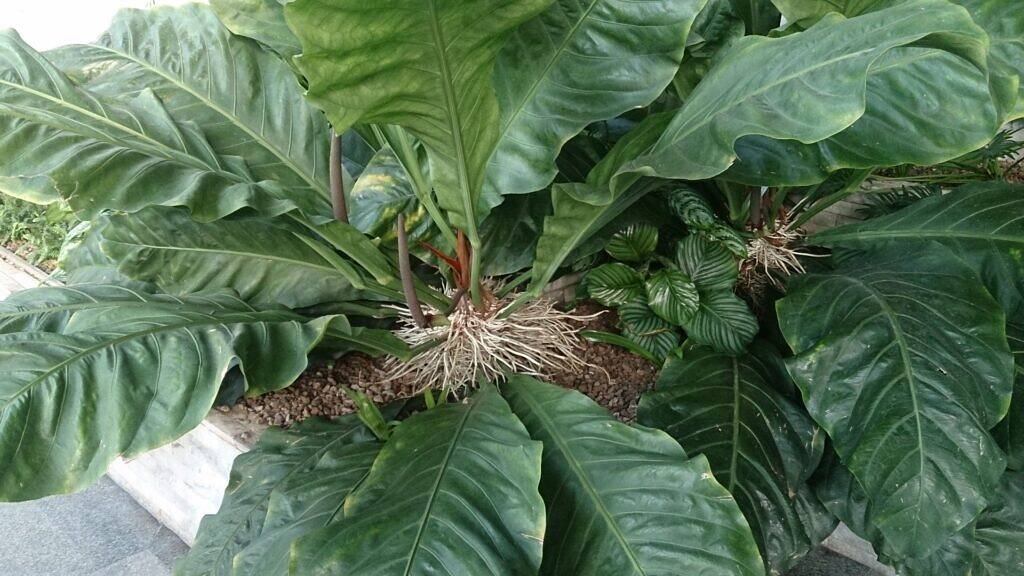
The Bird’s Nest Anthurium (Anthurium plowmanii) is a bold, sculptural foliage plant with a commanding presence, native to South America. Unlike traditional anthuriums grown for their colorful flowers, this species is celebrated for the lush abundance of its huge leaves, which unfurl in a symmetrical rosette capable of transforming any indoor space. Its exceptional toughness and wavy leaf margins make it a striking choice for both landscaping and sophisticated interior decor.
In the garden, it acts as a magnetic focal point, drawing the eye with the texture and sheen of its dark green leaves. As a perennial, hardy plant with moderate growth, investing in this plant ensures a long-lasting bed that gains value over time, becoming increasingly robust and ornamental. Its adaptability to shade and partial shade, along with greater tolerance for low humidity than other members of the Anthurium genus, positions it as one of the most versatile and resilient plants in the Araceae family for cultivation.
Origin, Habitat, and Etymology
Anthurium plowmanii is a herbaceous epiphyte native to the heart of South America, with a natural range that includes Brazil (especially the North and Central-West regions), Bolivia, Paraguay, Ecuador, and Peru. Unlike many anthuriums that live exclusively in humid tropical forests, this species shows remarkable resilience by growing in the understory of seasonal deciduous and semi-deciduous forests. This habitat, marked by well-defined dry periods, has given the plant a thicker leaf cuticle and the ability to survive on rocky outcrops, where it also grows as a lithophyte.
The etymology of the genus name Anthurium goes back to Ancient Greek, combining the words anthos (flower) and oura (tail), a direct reference to its distinctive spadix inflorescence, which emerges as an elongated, tail-like appendage. The specific epithet plowmanii is a fitting tribute to the renowned American botanist Timothy Plowman (1944–1989). Plowman was a central figure in Neotropical taxonomy and devoted much of his life to studying South American flora, carrying out expeditions that led to the cataloging of countless species.
Ornamental Use of Bird’s Nest Anthurium
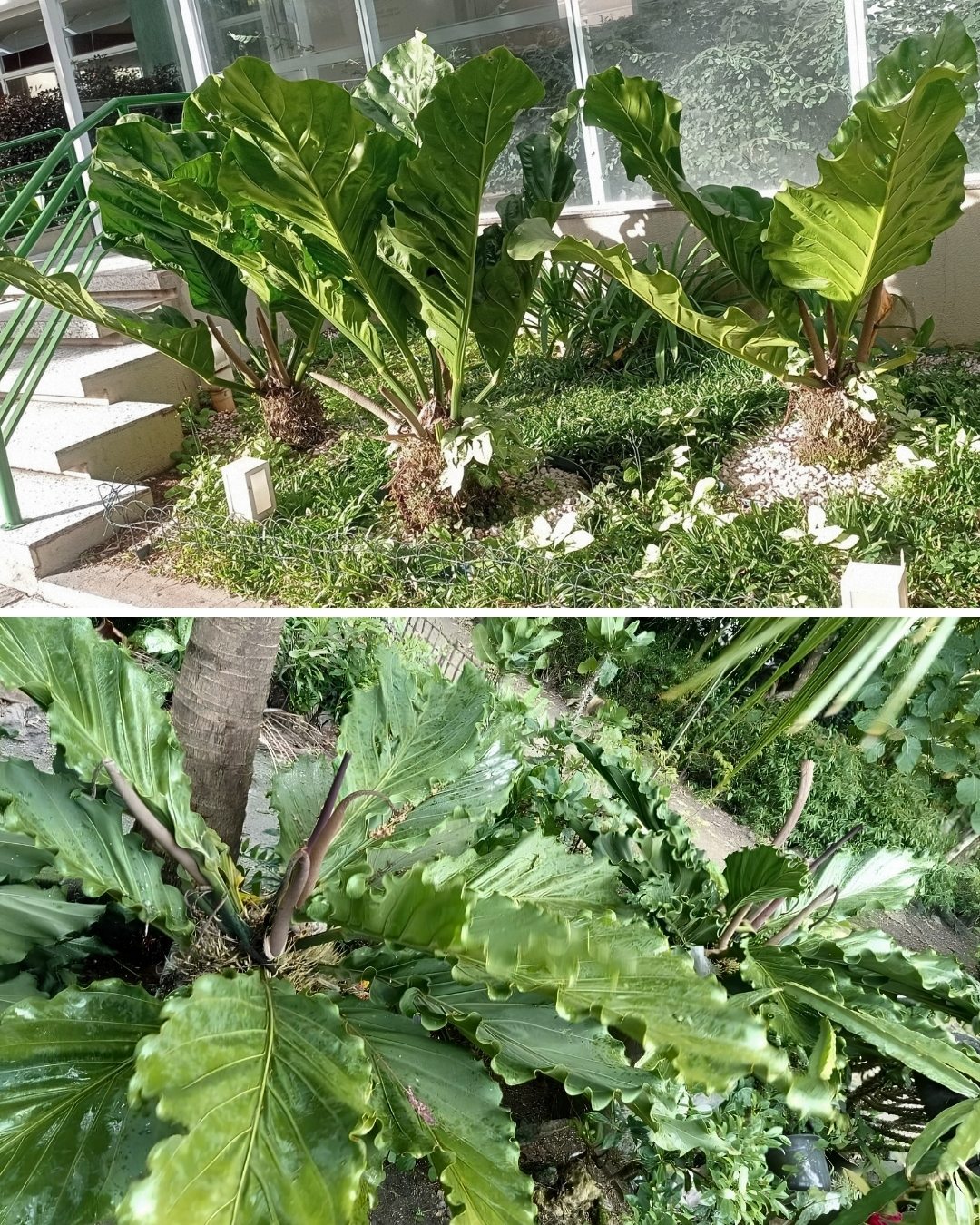
In contemporary landscaping, Bird’s Nest Anthurium is valued as a structural plant, making it ideal for tropical, contemporary, or so-called tropical xeriscape gardens, which use visually lush species that require less frequent irrigation. Because of its large size, with leaves that can exceed five feet in ideal conditions, it should be placed as a focal point in beds sheltered by tree canopies or in strategic corners of patios. The recommended spacing is 4 to 5 feet between plants, ensuring the rosette has room to expand without blocking circulation or overlapping too heavily with other plants.
The plant is extremely versatile and performs well when grown in large containers, becoming a standout feature in entry halls, covered porches, and living rooms with good natural light. Unlike more delicate foliage plants, it tolerates air conditioning in office environments for moderate periods, as long as the light is adequate. Its role in interior design is to bring a vertical line and green volume that few species can offer with such toughness, while staying visually impeccable throughout the year.
To create harmonious compositions, combine Bird’s Nest Anthurium with plants that offer contrasting textures. It pairs perfectly with Syngonium (Syngonium podophyllum), which works as a contrasting low groundcover beneath its leaves, or with the lacy texture of Guaimbé (Philodendron bipinnatifidum). In shade gardens, mixing it with broad-leaved Alocasias, such as Alocasia macrorrhizos, creates a dense, luxurious forest-like setting. Avoid planting it too close to narrow paths, since the spread of the leaves and the wavy edges can interfere with passage and suffer mechanical damage from constant foot traffic.
How to Care for Bird’s Nest Anthurium: Growing Guide
- Light: Prefers bright, filtered light or partial shade.
Direct sun should be avoided during the hottest hours of the day (10 a.m. to 5 p.m.), as it can cause yellowish necrotic burns on the leaves. In milder climates, it tolerates gentle morning sun. - Garden Soil: It should be rich in organic matter and extremely well drained. Incorporating organic compost and one part coarse sand or fine gravel is recommended to ensure water does not collect around the roots, mimicking its natural epiphytic/rock-dwelling habitat.
- Potting Mix: Use an epiphyte mix: 1 part potting soil, 1 part ground pine bark, 1 part coconut coir, and 1 part perlite. The goal is an airy medium that allows the thick roots to breathe.
- Watering: Water regularly, keeping the potting mix slightly moist. In summer, water 2 to 3 times a week. In winter, reduce the frequency, allowing the first 3 cm of soil to dry out completely before watering again. The plant tolerates short dry spells, but not prolonged waterlogging.
- Climate: It grows best in warm tropical and subtropical climates, with temperatures between 18°C and 32°C. It does not tolerate frost and goes dormant or suffers severe damage below 10°C. In colder climates, grow it in protected conditions.
- Air Humidity: Although hardier than other anthuriums, it appreciates relative humidity above 50%. In dry indoor spaces, mist the leaves or use a humidifier to prevent the leaf tips from turning brown.
- Fertilizing: Use slow-release fertilizers, such as Osmocote Plus, at the beginning of spring. Alternatively, apply foliage fertilizer NPK 10-10-10 monthly during the growing season (spring/summer). Applying magnesium chelate twice a year helps intensify the deep green color of the foliage.
- Pruning: Do only cleanup pruning, removing basal leaves that are naturally yellowing or dry. Always use tools sterilized with alcohol to prevent the spread of fungi.
- Pots: Rotate the pots of Anthurium plowmanni weekly to keep the plant symmetrical.
How to propagate Bird’s Nest Anthurium
Propagation by clump division is the most effective and fastest method for amateur or professional gardeners. Over the years, mature specimens tend to produce side shoots at the base of the main stem. To make a new plant, remove the plant from its pot or dig it up partially and, with a sharp, clean knife, separate the shoot, making sure it comes with a portion of healthy roots and at least one active growth bud. Plant the new division immediately in a porous medium and keep it in a shaded, humid spot until it shows signs of new growth.
Propagation by seeds is a fascinating but slower process. After pollination, the spadix produces vibrant red berries. These seeds should be harvested as soon as they are ripe and cleaned of the gelatinous pulp, then sown immediately on a layer of moist sphagnum moss, since they lose viability within a few days. At an industrial scale, micropropagation (tissue culture) is used to ensure the production of thousands of identical, disease-free clones, especially for selected cultivars such as ‘Fruffles’.
Botanical description of Anthurium plowmanii
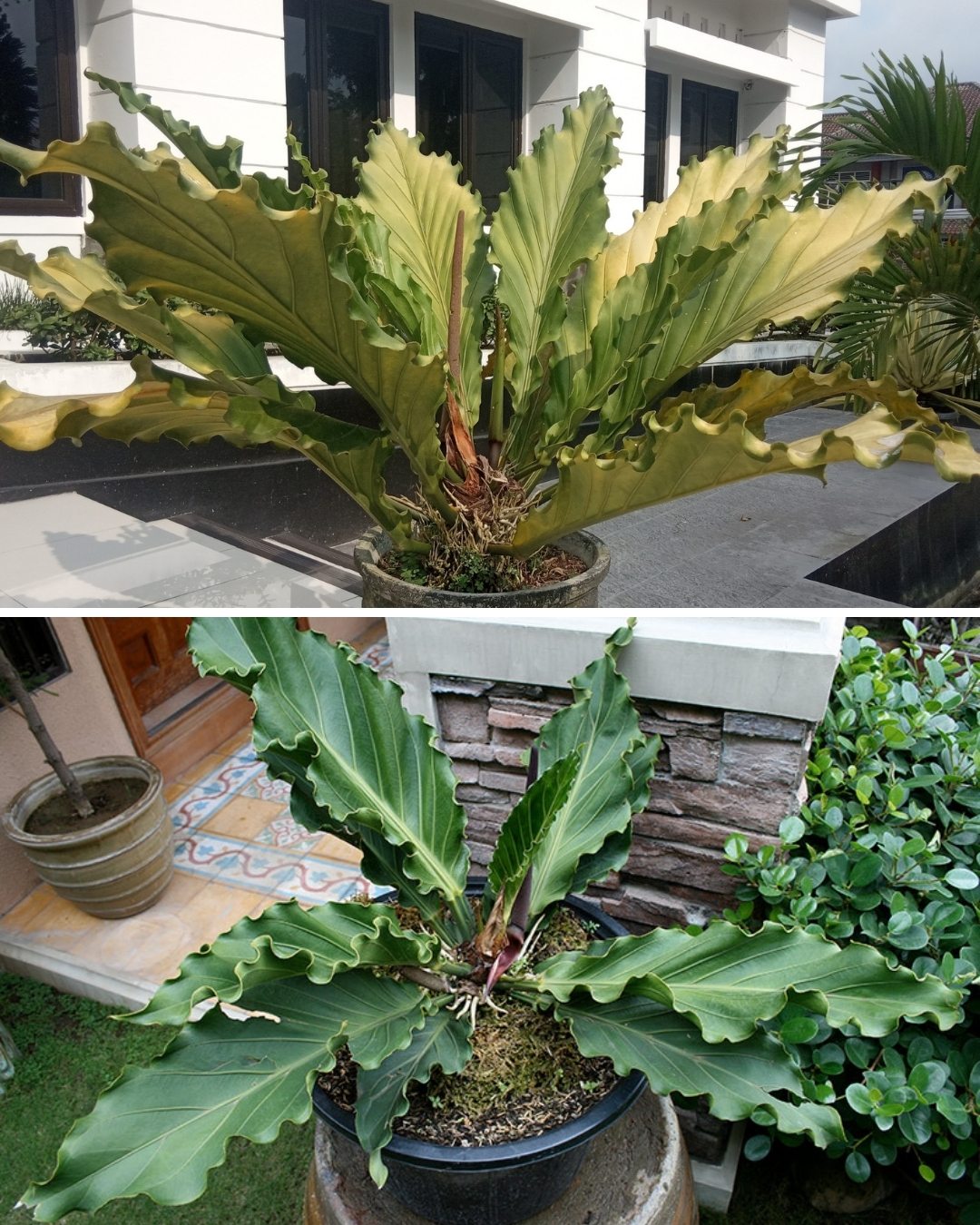
Anthurium plowmanii is a perennial herb with a rosette growth habit, and it can reach considerable size, with the leaf rosette growing to 2 meters in diameter. Its stem is short, sturdy, and often hidden by the leaf bases and the abundant adventitious roots. The leaves are its most striking feature: they have a leathery texture, are enormous, and are elliptic to oblanceolate, with the blade (leaf blade) showing strongly wavy or crisped margins. The upper (adaxial) surface is dark green and matte, while the lower (abaxial) surface shows a prominent, keeled central vein.
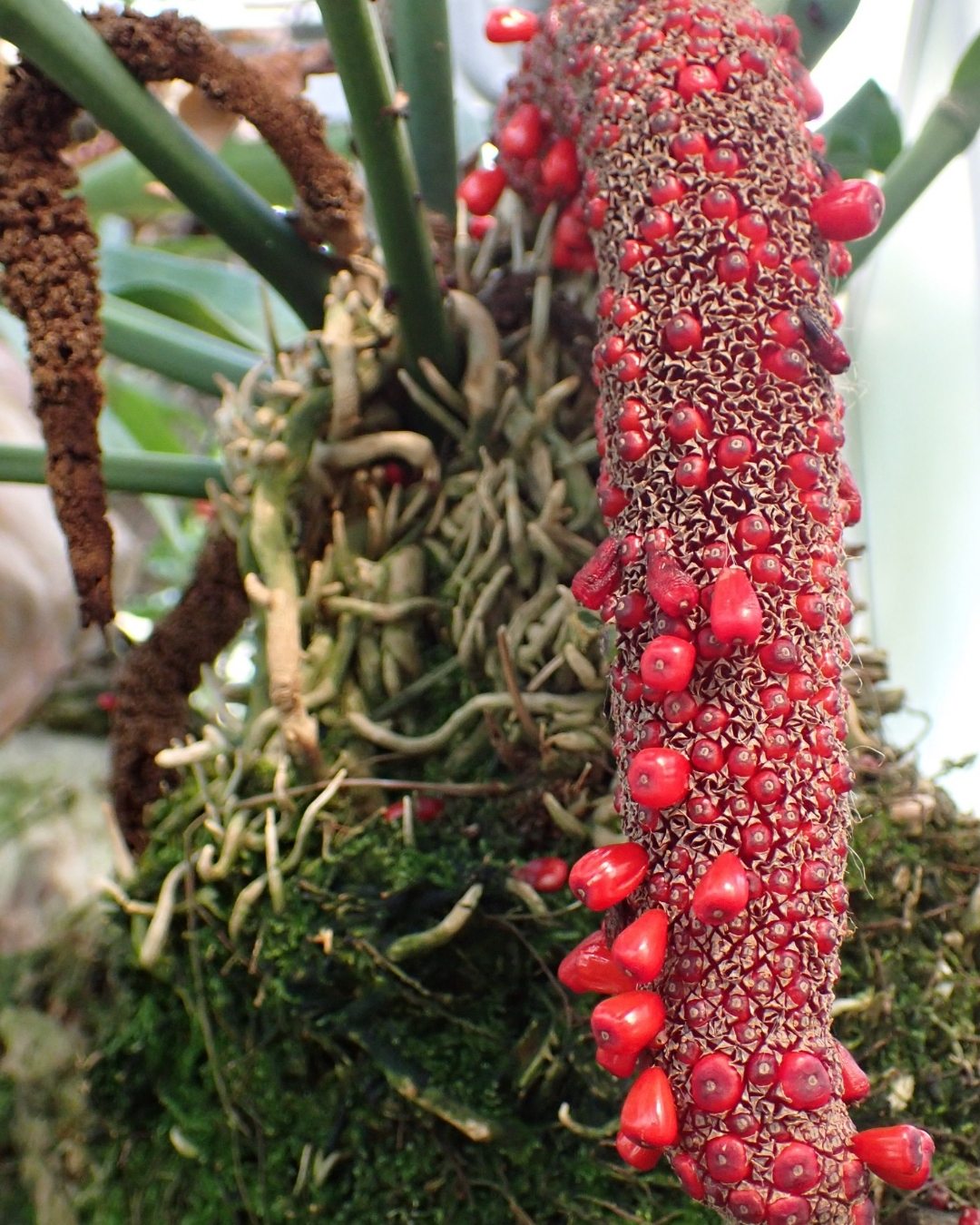
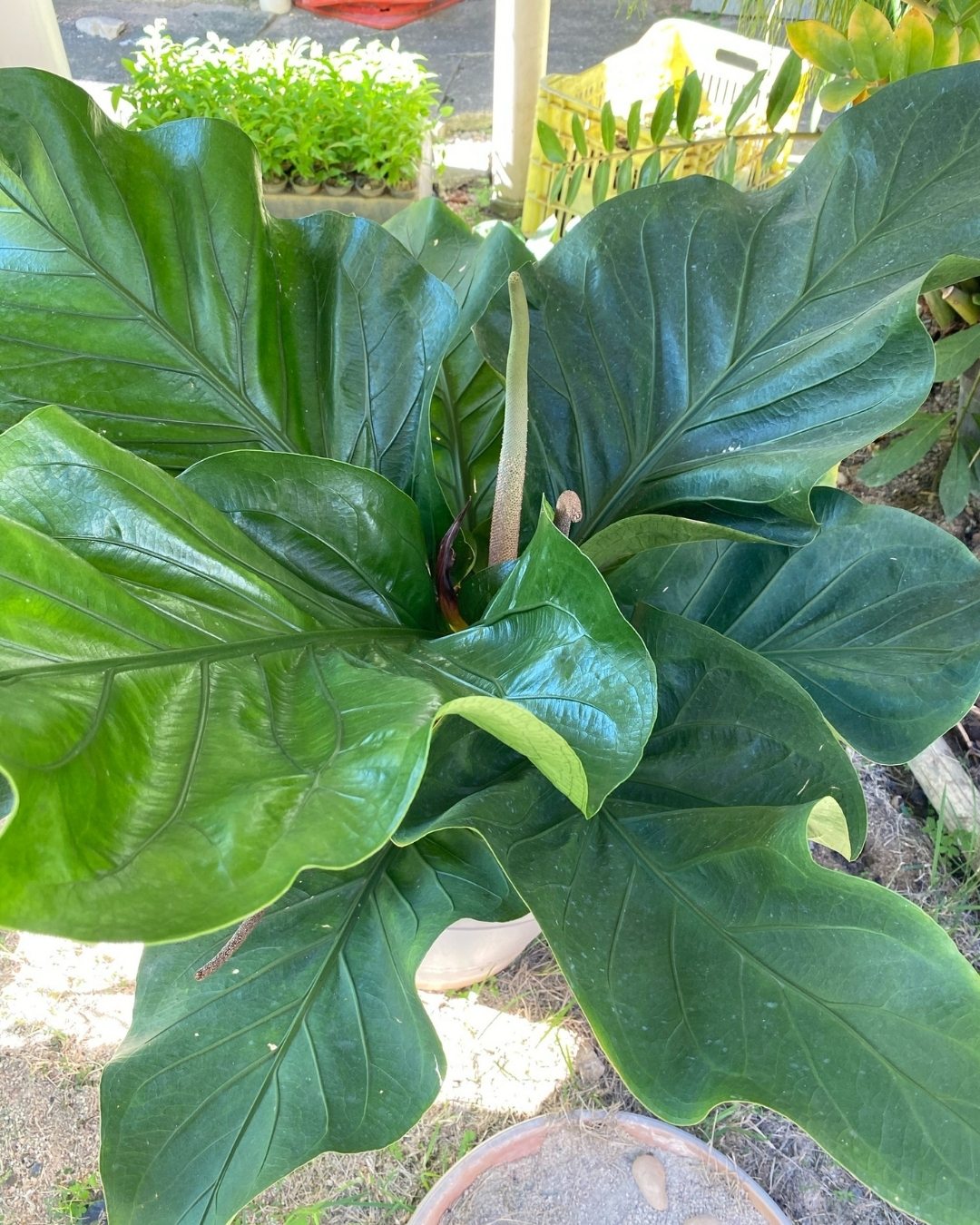
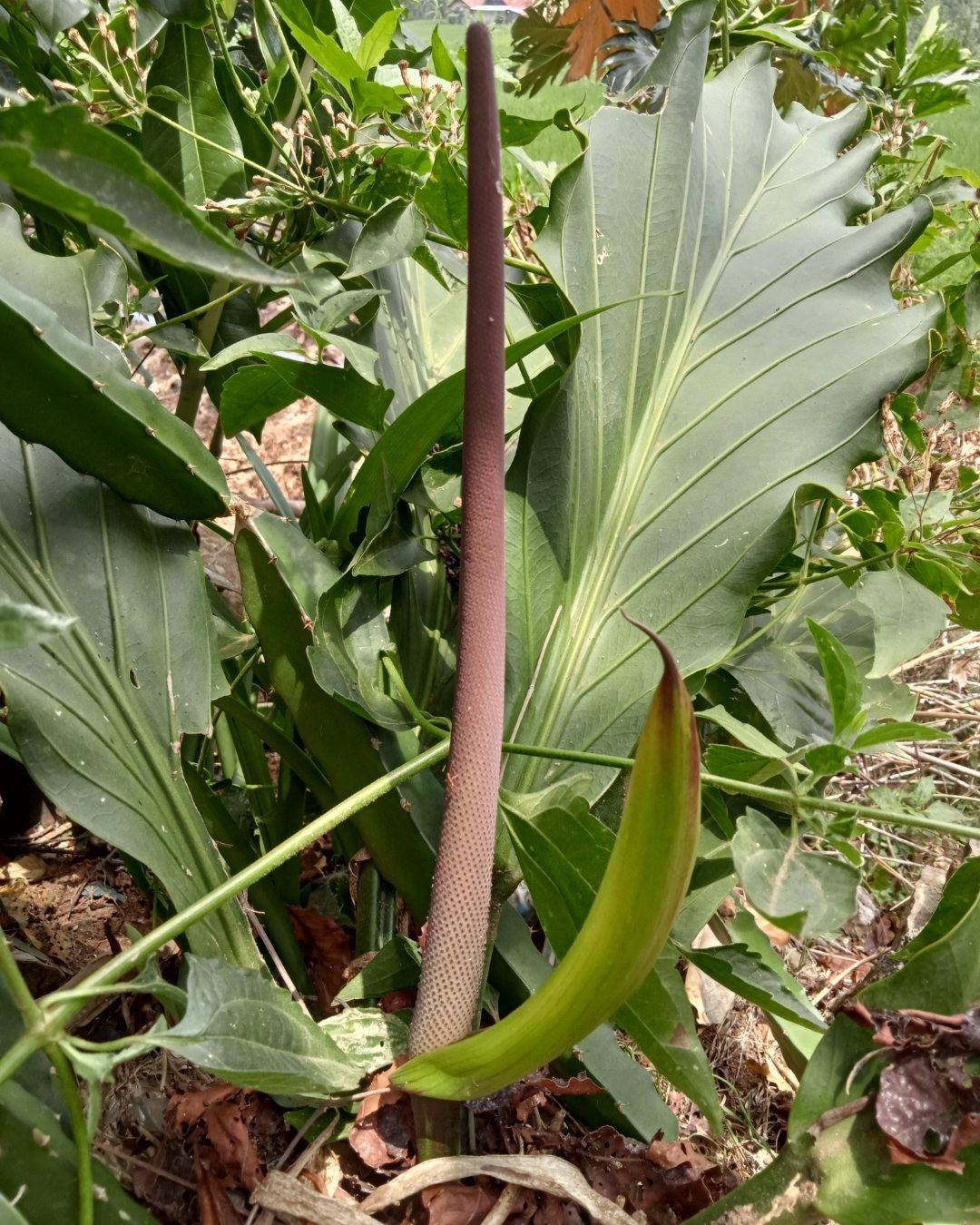
The inflorescence is typical of the arum family, made up of a spathe (the bract that surrounds the flower) and a spadix (the axis where the flowers are attached). The spathe is narrow, lance-shaped, and gray-green to purplish, usually turned backward (reflexed) when the plant reaches sexual maturity. The spadix is cylindrical, ranging from dark violet to reddish brown, measuring 15 to 40 cm. The flowers are tiny, bisexual, and densely packed. After pollination, which usually occurs by small insects, berry-type fruits form, obovoid and a bright blood red, creating a beautiful color contrast with the green leaves.
Anthurium plowmanii is quite similar and for that reason is often confused with Anthurium hookeri. Learn the differences between these two species in the corresponding section of the article about A. hookeri.
Main varieties and cultivars
- Anthurium plowmanii ‘Fruffles’: A highly sought-after cultivar among collectors, with even more pronounced and compact waviness along the leaf margins than the species type, giving the plant an almost “frilled” look.
Pests, diseases, and solutions
The main fungal disease that affects this species is anthracnose (Colletotrichum gloeosporioides), which appears as circular spots of dead tissue (necrosis) on the leaves. Control involves removing affected parts, reducing overhead watering, and applying copper-based fungicides. Good air circulation between plants is the best preventive measure against this fungus, especially during periods of frequent rain and high humidity.
As for pests, scale insects and mealybugs often settle at the base of the petioles and on the undersides of the leaves, sucking sap and weakening the plant. They can be removed manually with a cotton ball soaked in isopropyl alcohol or controlled with neem oil or insecticidal soap. In very dry indoor environments, spider mites can attack, leaving the leaves looking dusty and bronzed; control is achieved by increasing ambient humidity, using miticides, and washing the leaves periodically.