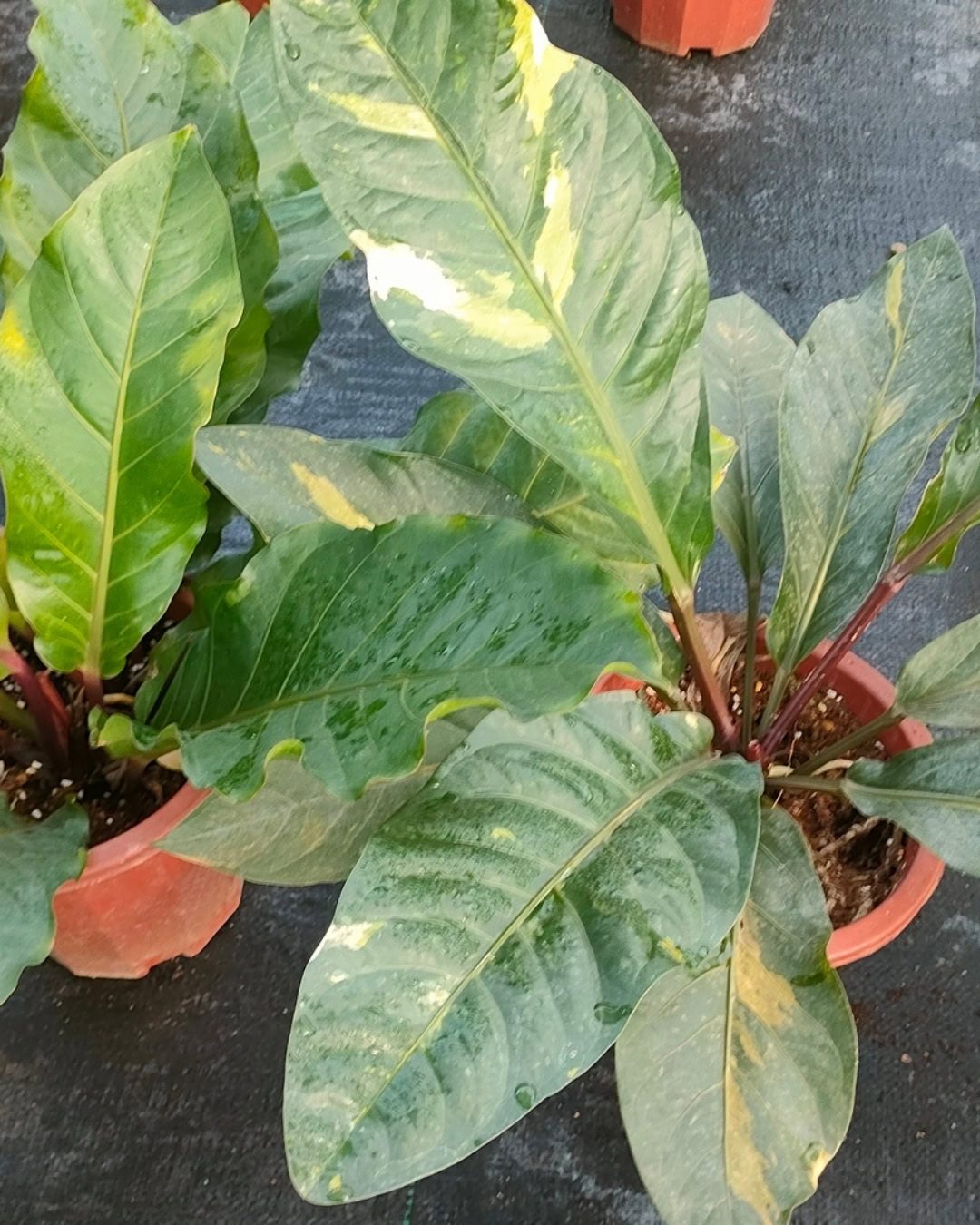
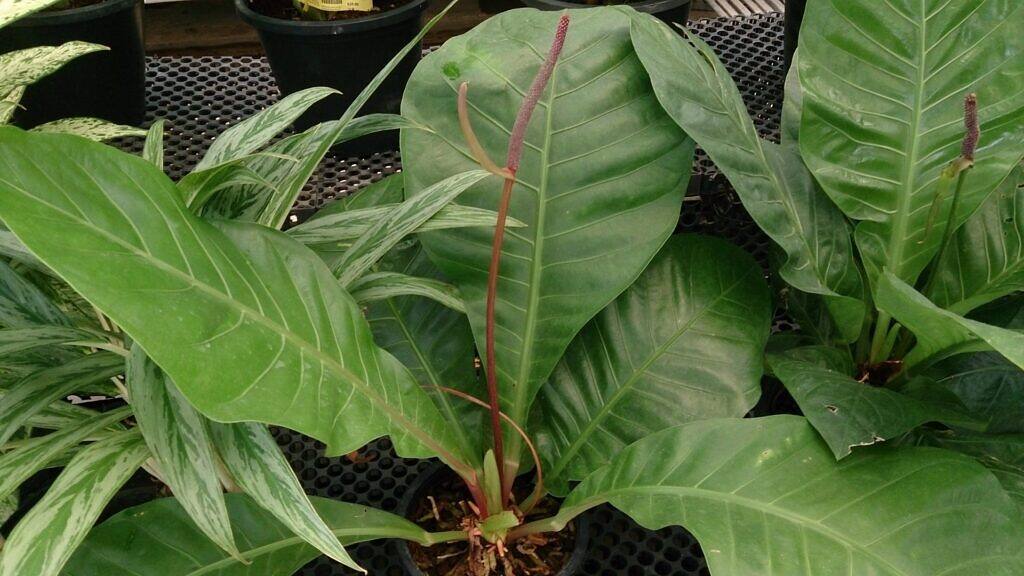
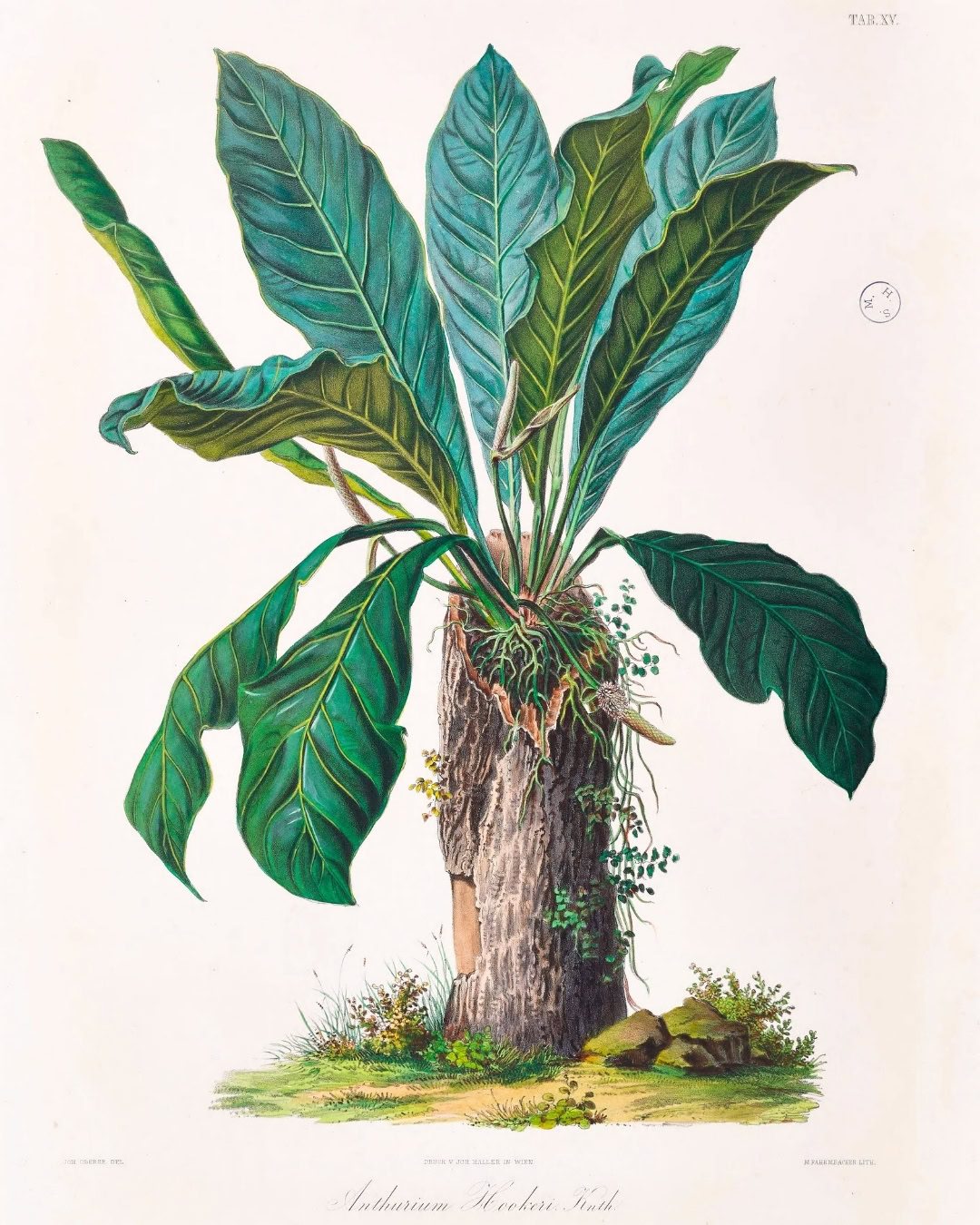
Bird’s Nest Anthurium (Anthurium hookeri) is a herbaceous, perennial plant with fascinating foliage in the Araceae family, native to the Caribbean. Unlike most anthuriums, which are known for their colorful, showy spathes, Hookeri does not rely on flowers to make an impression — the star here is the foliage: huge, sturdy, and glossy, with no need for embellishment. Its distinctive rosette form is not just visually appealing, but a clever solution from nature: in the wild, the plant often grows as an epiphyte, hanging from tree branches, where the center of this organic bowl catches rainwater and collects nutrients from the surrounding environment.
In the context of Urban Jungle, Anthurium hookeri fills a role few plants can: an anchor for the interior design project. Placed in a corner with good indirect light, a mature specimen fills the space with a presence that goes far beyond aesthetics — it evokes the real feeling of being inside a tropical forest. And the best part is that this is a very low-maintenance species for anyone who already understands the basics of growing aroids: it does not need direct sun, tolerates the humidity typical of apartments, and responds vigorously to a well-drained potting mix and regular fertilization. Maximum impact, with minimal drama.
Origin, Habitat, and Etymology
Anthurium hookeri is native to the Caribbean islands, with a strong presence in the Leeward Islands, Windward Islands, and the Trinidad and Tobago archipelago. Unlike many of its relatives that live exclusively on tree trunks as true epiphytes, this species shows remarkable adaptive versatility and is often found in its native habitat growing as a lithophyte as well (on moss-covered rocks) or even as a terrestrial plant in soils rich in leaf litter in low-elevation tropical rainforests.
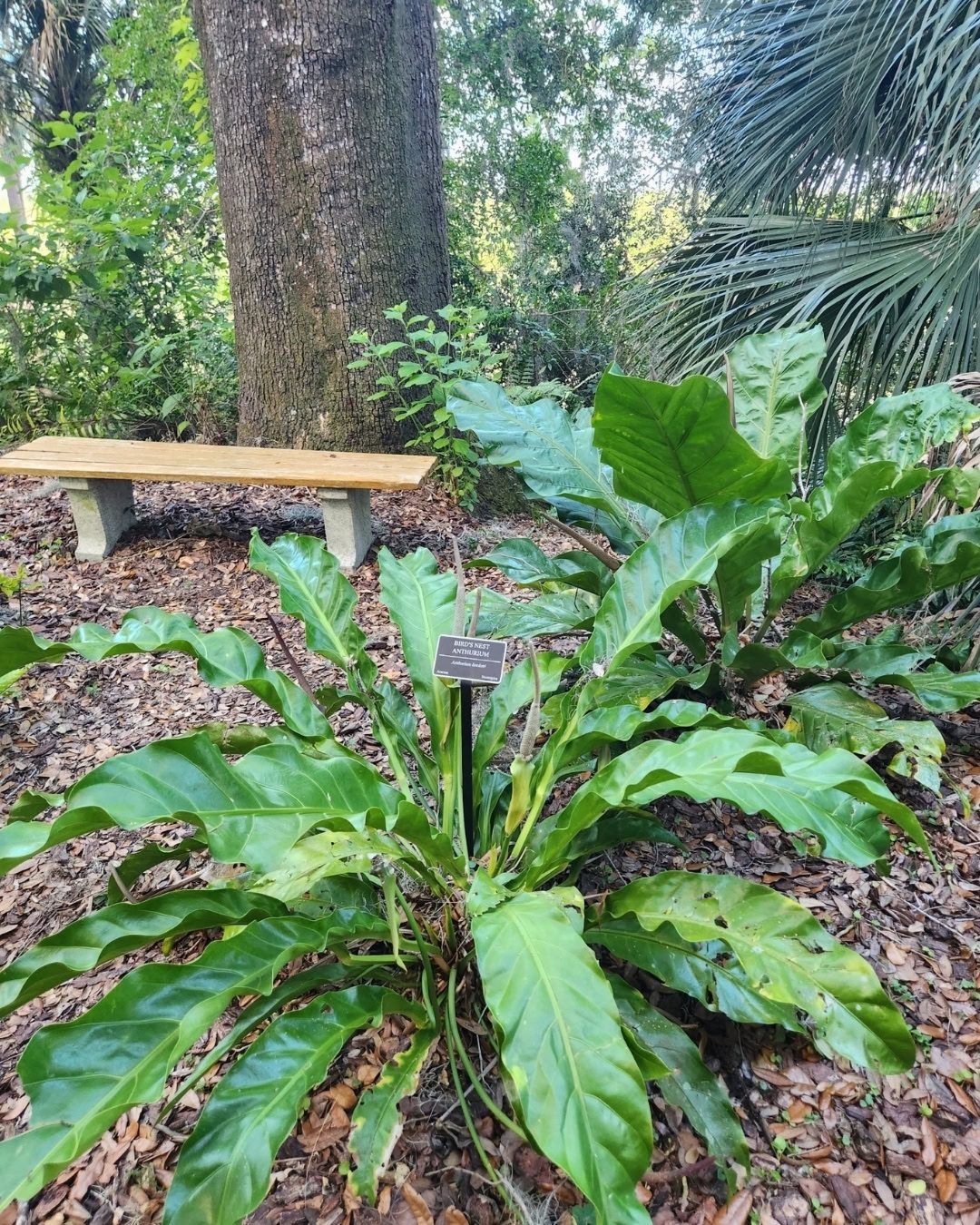
The etymology of the genus Anthurium goes back to Ancient Greek, where anthos means “flower” and oura translates as “tail,” a direct reference to its spadix inflorescence, which resembles a tail. The specific epithet hookeri is a posthumous honorific tribute to Sir William Jackson Hooker, one of the most influential British botanists and former director of the Royal Botanic Gardens, Kew. The common name “bird’s nest” is an interesting popular description: the arrangement of the leaves creates a central funnel that, in nature, acts as a collector of debris and water.
Ornamental Use of Anthurium hookeri
In contemporary landscaping, Bird’s Nest Anthurium can be used as a strategic focal plant or in mass plantings for a textural effect. Its ability to form a symmetrical rosette, with its large sculptural leaves, makes it ideal for planting on its own in shaded areas or as the central element in tropical beds. To create a sense of depth and contrast, it should be paired with plants that have finer, more delicate textures, such as monkey grass (Ophiopogon japonicus) or different varieties of ferns (Nephrolepis), which soften the boldness of its leathery leaves.
The ideal spacing for planting in the garden should respect the plant’s mature width, ranging from 1.2 to 1.5 meters between plants. This ensures that the leaf tips are not damaged by rubbing and that air circulation between the rosettes helps prevent disease. Its growth rate is slow to moderate, which is an advantage for anyone looking for a garden that keeps its original design for longer without the need for constant intervention. In urban settings, using oversized ceramic or concrete containers on patios and covered porches highlights the elegance of its form.
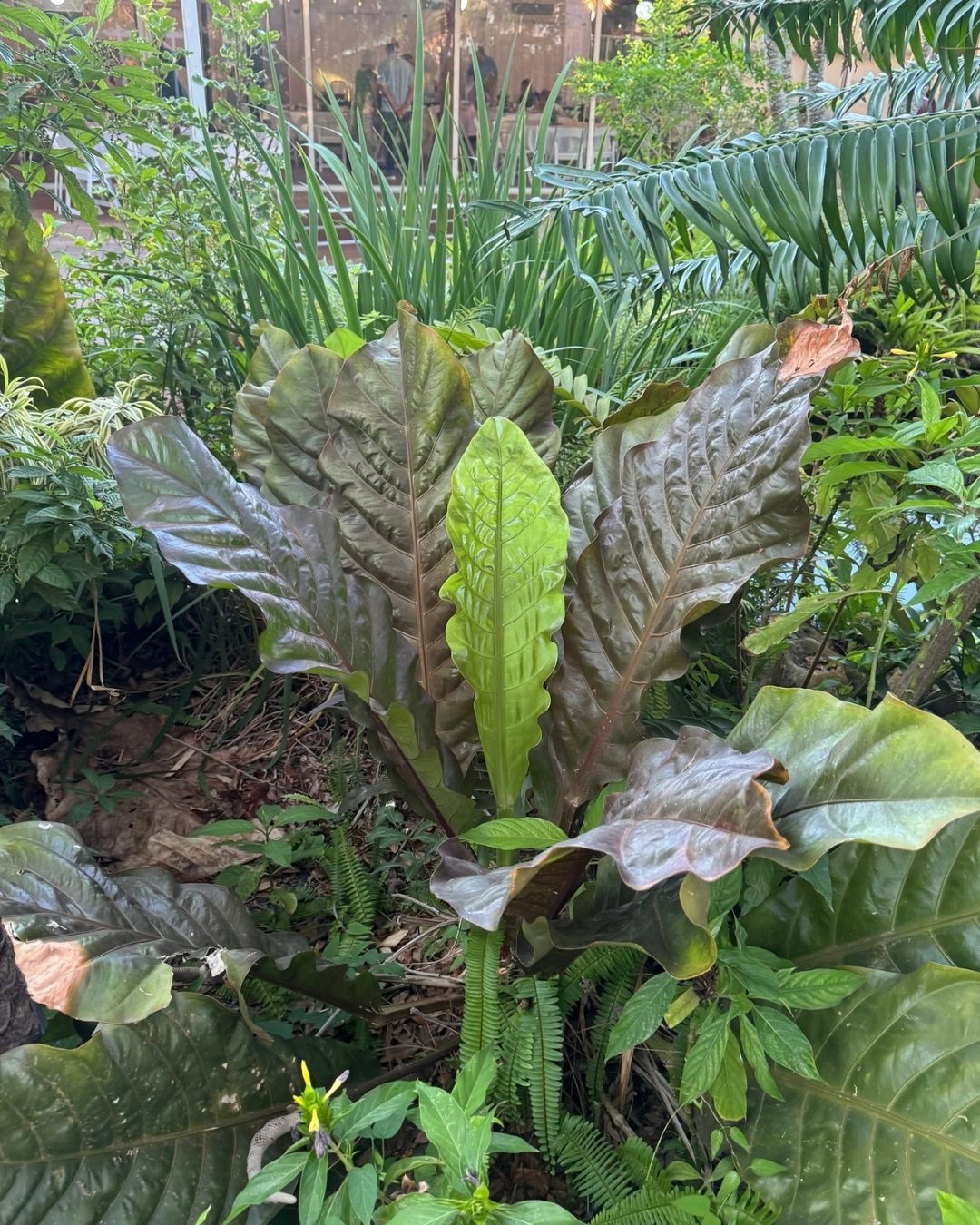
In addition to outdoor garden use, Anthurium hookeri is one of the best options for interiors with good indirect light. In spacious living rooms or entryways, it works as a botanical sculpture.
However, it is important to note that in urban settings, the center of its rosette can collect dust or small debris; periodic cleaning with a damp cloth or a gentle spray of water is essential to keep the leaves healthy and ensure the plant continues to breathe and carry out photosynthesis efficiently.
How to Care for Bird’s Nest Anthurium: Growing Guide
- Light: Prefers partial shade or filtered light. Direct sun, especially between 10 a.m. and 4 p.m., causes irreversible leaf burn, resulting in brown, dry spots. Indoors, place it near bright windows, but protected by sheer curtains.
- Soil and Growing Medium: If planted in the garden, the soil should be rich in organic matter and have excellent drainage. For pots, the ideal setup is to mimic its epiphytic habitat using a mix of medium-grade pine bark, coconut coir, charcoal, and a little high-quality potting soil (pH ideal between 5.5 and 6.5). A mix made for orchids also works well.
- Watering: The growing medium should stay lightly moist, but never soggy. During summer and on dry days, watering should be more frequent (about 2 to 3 times per week). In winter, reduce the frequency, waiting for the top layer of the growing medium to dry before watering again.
- Air Humidity: This species appreciates high relative humidity (above 60%). In air-conditioned spaces, mist the leaves daily or use humidifiers near the plant to prevent the leaf edges from becoming brittle.
- Climate: It grows best in tropical and subtropical climates, with temperatures between 18°C and 30°C. It is extremely sensitive to frost; if temperatures drop below 10°C for extended periods, the plant may go dormant or suffer severe damage. In mountainous regions and in the southern part of the country, it is best grown indoors in a protected setting.
- Fertilizing: Use slow-release fertilizers, such as NPK 14-14-14 (Osmocote type), or liquid foliage formulas (NPK 10-10-10) applied every two months during spring and summer. Supplementing with micronutrients, especially magnesium, calcium, and iron, helps maintain the deep green color of the leaves.
- Pruning: Does not require shaping prunes. Only do cleanup pruning, removing old, yellowing, or damaged leaves at the base of the rosette to keep the plant clean and help prevent pests.
How to Propagate Bird’s Nest Anthurium
Propagation of Anthurium hookeri can be done in three main ways. The first and most accessible is division of clumps or separation of lateral shoots (offsets). Mature plants occasionally produce small plantlets at the base of the main rosette. Using a sterilized knife, separate these plantlets, making sure each one has its own root system. Plant them immediately in a light growing medium and keep them in a shaded, humid spot until they show signs of new growth. Some advanced growers encourage these plantlets to emerge by making small cuts in the main stem and applying gel or powder with growth hormones, seaweed-based products, and others.
The second way is by seeds, which are produced in its oblong berries. Anthurium seeds are recalcitrant, which means they lose their viability very quickly after being harvested. They should be cleaned of the fruit pulp and sown immediately on a layer of moist Sphagnum moss in a controlled environment. Germination occurs in a few weeks, but initial growth is slow. Commercially, large-scale production of selected cultivars, such as the variegated form, is done through tissue culture (micropropagation), ensuring healthy plants and clones identical to the mother plant.
Botanical Description of Anthurium hookeri
Anthurium hookeri belongs to the Araceae family and has a herbaceous, rosette-forming growth habit. Its leaves are arranged in a very dense basal rosette. The leaf blade is oblanceolate to obovate-elliptic in shape, and can reach impressive dimensions of 60 cm to more than 1 meter in length, with a width ranging from 15 to 25 cm. The texture is distinctly leathery and the margins are entire, though slightly wavy in larger specimens. In A. hookeri, new leaves emerge in a supervolute pattern (one leaf rolled inside the other, like a cigar), while in most other common Bird’s Nest Anthuriums in Brazil, vernation is involute (the edges roll individually toward the central vein).
A crucial botanical detail for correctly identifying this species is the tiny black glandular dots present on the abaxial (lower) side of the leaves, known as punctate glands. The venation is pinnate, with a very prominent central vein and primary lateral veins that run almost parallel until they join a collecting vein near the leaf margin. The petiole is short relative to the size of the blade, reinforcing the nest-like look.
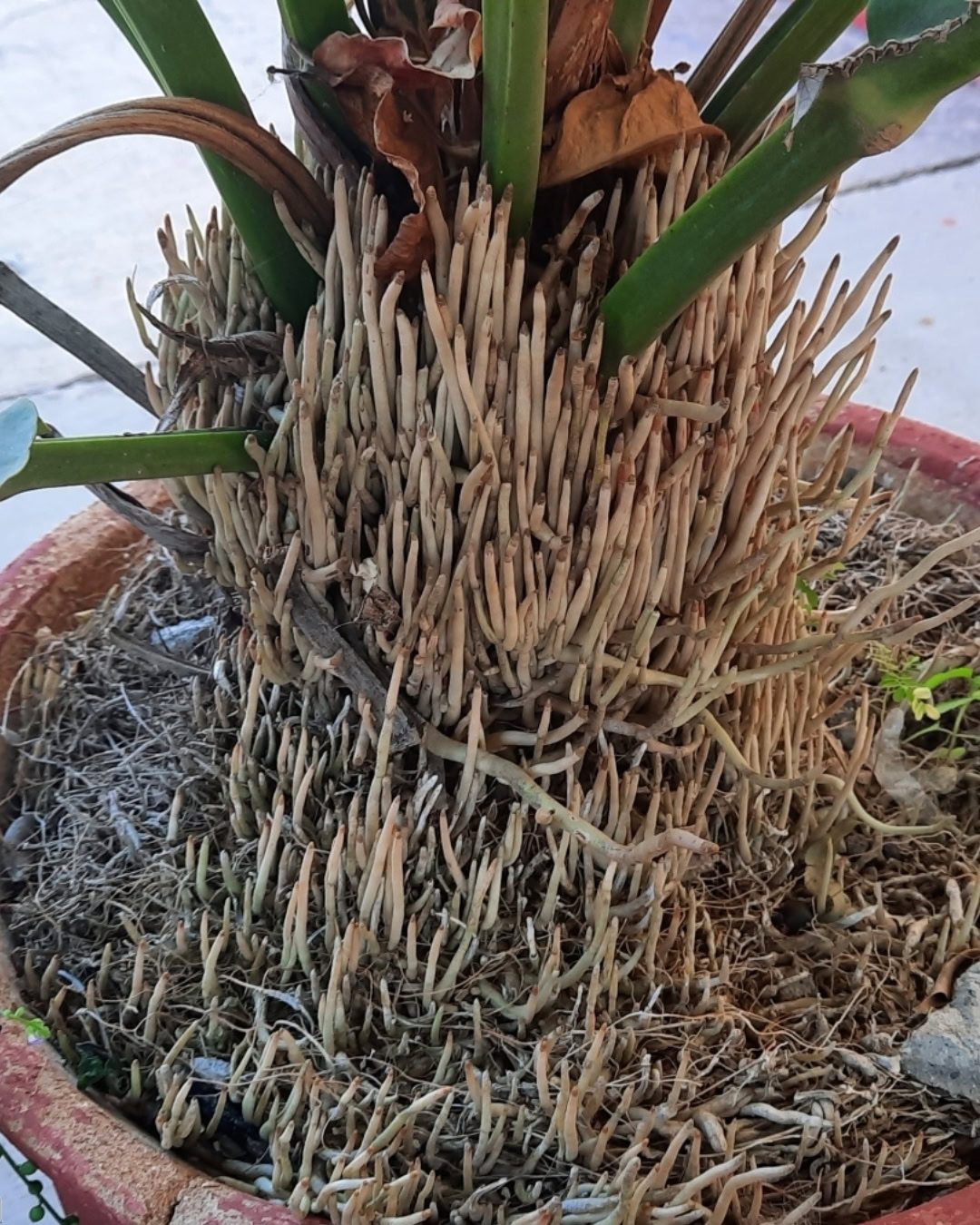
This leaf arrangement is supported by a short, thick stem, with compressed internodes hidden by cataphylls that break down into a mass of brown, leathery fibers that remain attached to the stem. This network of fibers acts like an organic sponge, holding moisture and debris that serve as fertilizer for the plant. From the stem extends a dense, specialized root system; its roots, covered in a dense velamen for moisture absorption, often show negative geotropism, growing upward between the leaf bases to capture organic debris.
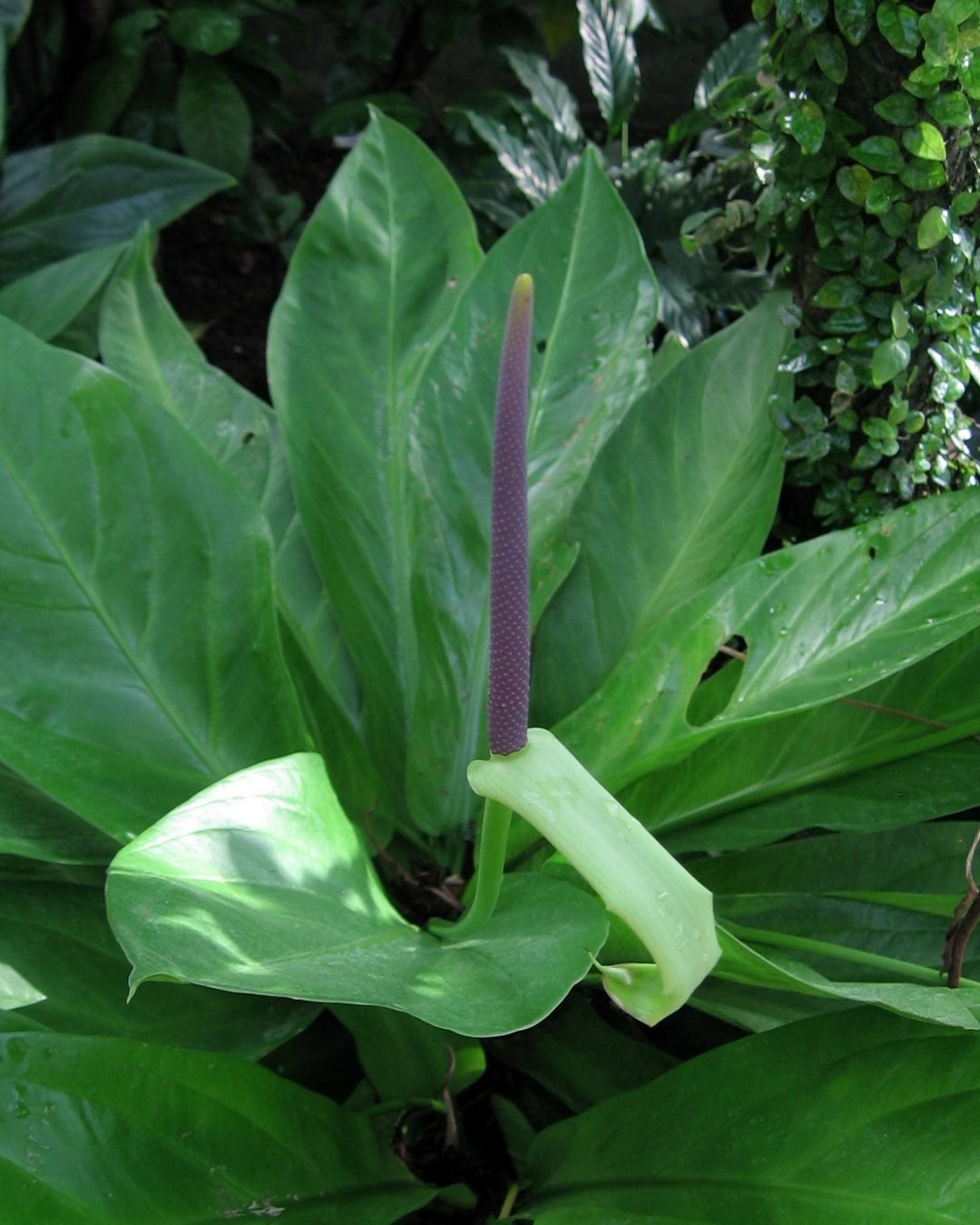
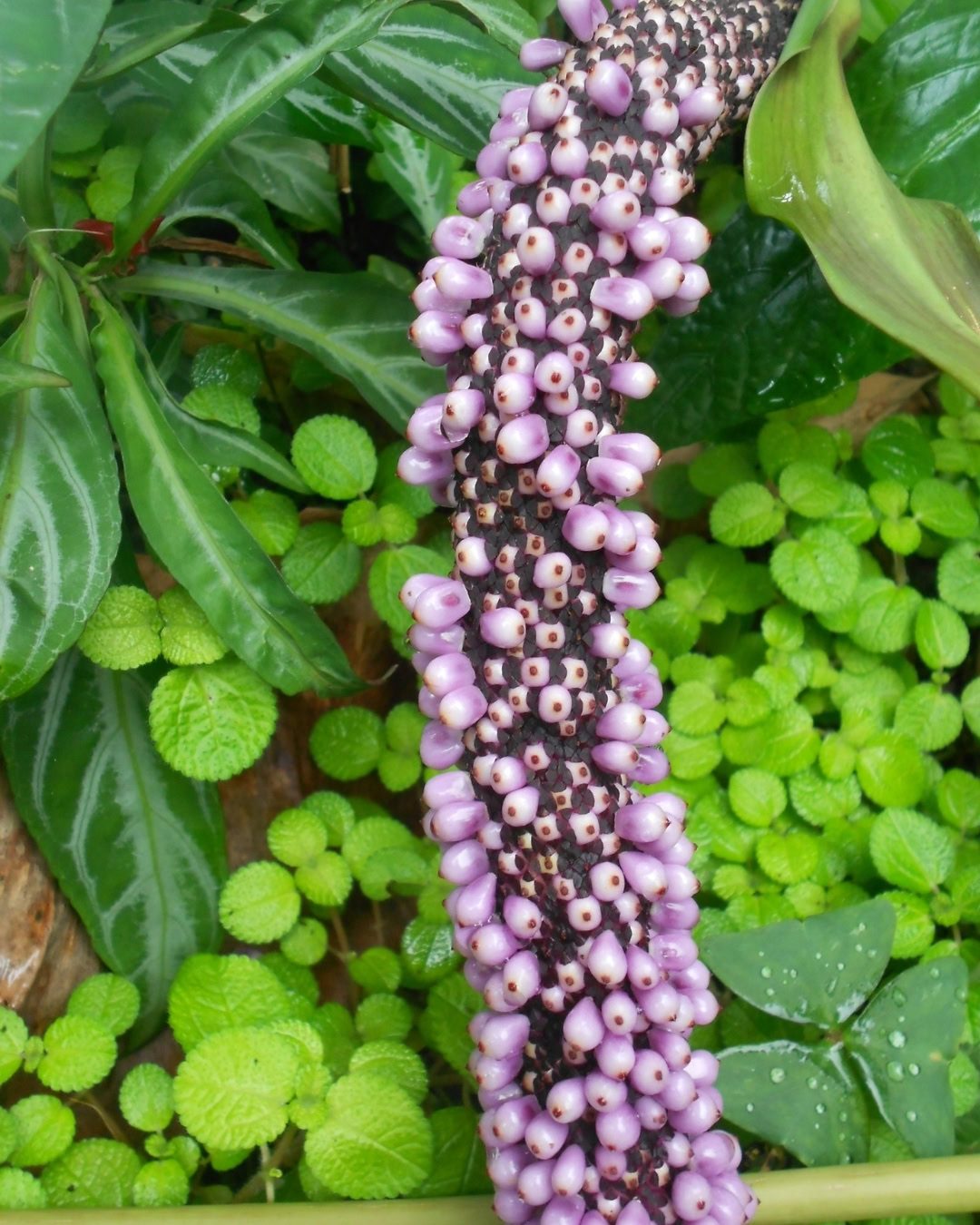
The inflorescence emerges on a short peduncle. The spathe is narrowly lanceolate, pale green with purplish tones, measuring 10 to 20 cm. The spadix is cylindrical, sessile, elongated, and shifts in color from dark purple to bluish or gray tones when it reaches sexual maturity. The fruits that result from pollination are oblong berries, which when ripe turn white or slightly pink, containing seeds surrounded by a mucilaginous pulp.
How to tell Anthurium hookeri apart from Anthurium plowmanii
The confusion is inevitable, but although both belong to section Pachyneurium and share the rosette growth habit (“bird’s nest”), the difference between A. hookeri and A. plowmanii is clear when you look at specific details. The most reliable distinction lies in the glandular dots: true A. hookeri has tiny black dots (glands) on both leaf surfaces, while A. plowmanii is completely smooth, without these glands.
In addition, A. plowmanii leaves tend to be significantly more wavy and rigid, with a revolute margin that creates a much more pronounced “frilled” look than A. hookeri. Another definitive marker is berry color (fruit): A. hookeri produces purplish inflorescences and white berries, while A. plowmanii produces pink inflorescences and bright red berries.
Main varieties and cultivars
- Anthurium hookeri ‘Variegata’: This is the most sought-after variety among collectors. It shows irregular patterns of spots, sectors, and streaks in cream or pale yellow over emerald green. Because it has less chlorophyll, its growth is considerably slower than the species type.
- Anthurium aff. ‘Hookeri Black’: This plant has been gaining attention in the “statement plant” market for its dark coloration. The term “aff.” (affinis) indicates that, although sold under this name, its exact taxonomy is still debated among specialists and it may be a hybrid or an as-yet undescribed close species. It is characterized by leaves that are such a deep green, with wine-colored tones that border on black, with central veins that are often purplish.
- Anthurium hookeri ‘Aurea’: The ‘Aurea’ cultivar displays variegation in golden-yellow or neon tones. This pattern can appear as solid spots or translucent sectors, and the leaves often have a ‘mint’ type of variegation.
- Commercial Hybrids: Many plants sold under this name are actually hybrids with A. plowmanii or A. schlechtendalii. True hookeri will always show the black punctate dots on the underside of the leaf, a trait absent in most hybrids.
Pests, diseases, and solutions
The main enemy of this plant is excess moisture in the potting mix combined with poor airflow, which predisposes the plant to root rot caused by fungi such as Phytophthora sp. If you notice that the central leaves are softening or turning dark at the base, stop watering and check the roots. For management, copper-based fungicides can be used to control circular leaf spots (caused by Septoria or Colletotrichum), which usually appear when leaves stay wet for too long overnight.
As for pests, scale insects or mealybugs are the most common, hiding strategically where the petioles meet the stem or in the folds of new leaves. Hand inspection is essential. If there is an infestation, use neem oil or potassium soap solutions applied with a brush or sprayer, making sure the product reaches the deepest crevices of the rosette. Always remember to apply any treatment in the late afternoon to avoid sunburn on the leaves.